
Reviewed · KAMAKURA & ENOSHIMA DAY TRIPS
Private Kamakura Early Morning Tour (Tokyo Departure Available)
Kamakura packs a remarkable amount into a compact seaside city: a towering bronze Buddha, hillside temples, a bamboo grove, and Japan’s most important shrine to samurai power. This six-hour private tour gives you a clear route through the highlights without leaving you to decode local trains and temple maps on your own.
I like the small size, capped at eight people, and the warm, personal style offered by local student guides. I also like the choice of starting in Tokyo or meeting at Kamakura Station, though you should note that Tokyo departure includes the ride to Kamakura, not the return trip. Admission fees and food are extra.
In This Review
- Key things to know before you book
- Why Kamakura makes a good break from Tokyo
- Starting at Tokyo Station or Kamakura Station
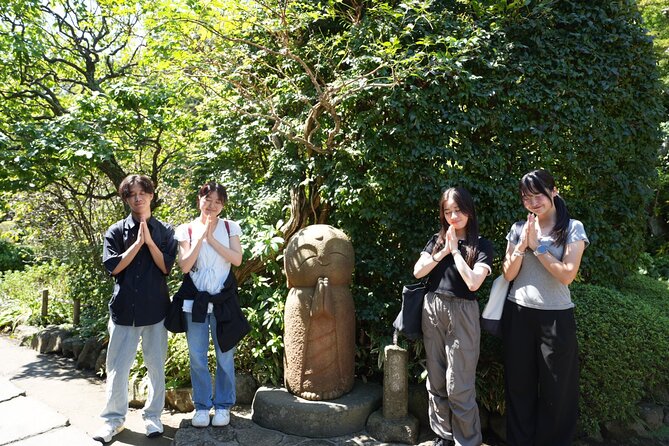
- Hasedera and the Kannon temple hillside
- Meeting the Great Buddha at Kotoku-in
- A quiet hour at Hokokuji’s bamboo grove
- Tsurugaoka Hachimangu and Kamakura’s samurai story
- What the six-hour schedule really gives you
- What the $54.87 price includes
- Private does not mean completely flexible
- Who should book this Kamakura tour
- Should you book it?
- FAQ
- How long does the Kamakura tour last?
- Where does the tour start?
- Is transportation from Tokyo included?
- Is transportation back to Tokyo included?
- Can I stay in Kamakura after the tour?
- What sights are included?
- Are admission tickets included?
- Is food included?
- How many people can join the tour?
- What level of fitness is needed?
- Is the tour offered in English?
- Can I cancel for a full refund?
Key things to know before you book
- Four major Kamakura sights: Visit Hasedera, Kotoku-in, Hokokuji, and Tsurugaoka Hachimangu in one morning-to-afternoon route.
- Small private group: Only your own party participates, with a maximum group size of eight.
- Tokyo transport is one-way: The Tokyo Station option covers transportation to Kamakura, while the tour finishes in Kamakura.
- English-speaking local guide: Guides such as Hana bring a friendly, personal touch and can help you get oriented at the station.
- Allow extra money for admissions: Entry tickets are not included at the four temple and shrine stops.
- A moderate walking day: You should be comfortable walking between stations, temple grounds, shrine paths, and hillside areas.
Why Kamakura makes a good break from Tokyo
Kamakura was once the political center of medieval Japan. Today, it feels far calmer than Tokyo, with old religious sites spread around wooded hills and quiet streets. The city is compact enough for a focused day trip, yet varied enough that you are not looking at the same kind of monument all day.
This route works because each stop offers a different side of Kamakura. Hasedera gives you temple gardens and coastal views. Kotoku-in provides the famous Great Buddha. Hokokuji brings a quieter Zen setting and tall bamboo. Tsurugaoka Hachimangu ties the day back to the city’s samurai past.
The early timing matters. A morning start gives you a better chance to see Kamakura before the day’s crowds build. It also makes the six-hour schedule feel useful rather than rushed, though you will still spend much of the day on your feet.
The tour is private, but the advertised maximum is eight people. That is a useful middle ground. You get more personal attention than on a large coach outing, while the price can work better for a family or group than booking several separate private guides.
A few more Tokyo tours and experiences worth a look
Starting at Tokyo Station or Kamakura Station
You have two basic ways to begin. If you choose the Tokyo Station departure, transportation to Kamakura is included. The important catch is that the ride back to Tokyo is not included because the visit ends in Kamakura.
That arrangement can be a benefit rather than a problem. You can stay in Kamakura after the guided portion, continue exploring, eat on your own, or make your own way elsewhere. If you need to return to Tokyo, plan and pay for that trip separately.
The listed meeting point is Kamakura Station, at 1-chome-1-15 Onarimachi. This may seem confusing if you are choosing the Tokyo departure option, so check the option you select at booking. The practical point is simple: confirm where you are expected to meet and what transport is covered.
Meeting a guide at a busy station can be stressful, especially in a city you do not know. Guide Hana has been praised for finding her group quickly at Tokyo Station when they were having trouble getting oriented. That kind of station help is one of the real advantages of a guided day trip.
Hasedera and the Kannon temple hillside
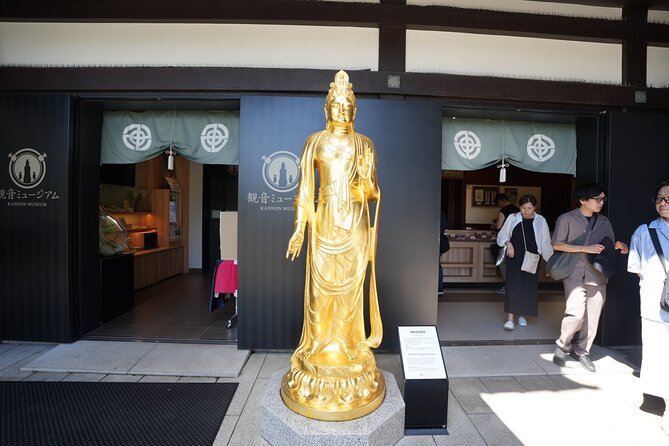
Hasedera is the first major stop and gets about an hour. The temple is known for its 11-headed statue of Kannon, the Buddhist goddess of mercy, as well as its hillside setting and views toward the coast.
This is a good opening stop because it combines religious art, gardens, and a sense of Kamakura’s physical setting. You are not simply looking at a building. You are moving through a temple complex that rises above the surrounding city and gives you a wider view of the area.
The hillside location also explains the fitness warning. You should expect walking and some changes in elevation. The tour is not described as strenuous, but it is not a sit-down sightseeing experience either.
Admission is not included, so budget for a separate ticket. The one-hour allocation gives you enough time to see the main features and take in the views, but not to linger over every corner. If Hasedera is your favorite kind of stop, you may wish you had more time here.
Meeting the Great Buddha at Kotoku-in
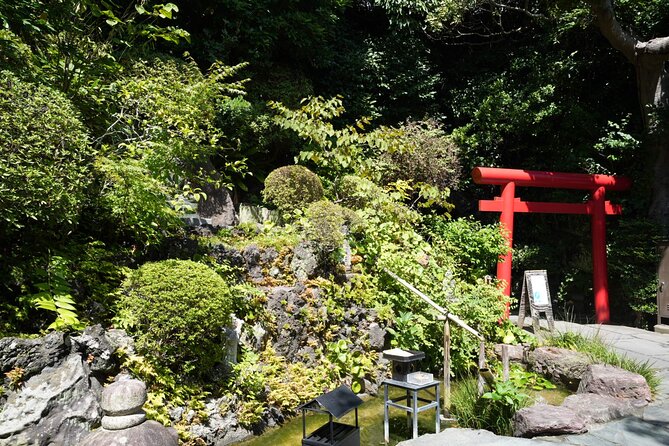
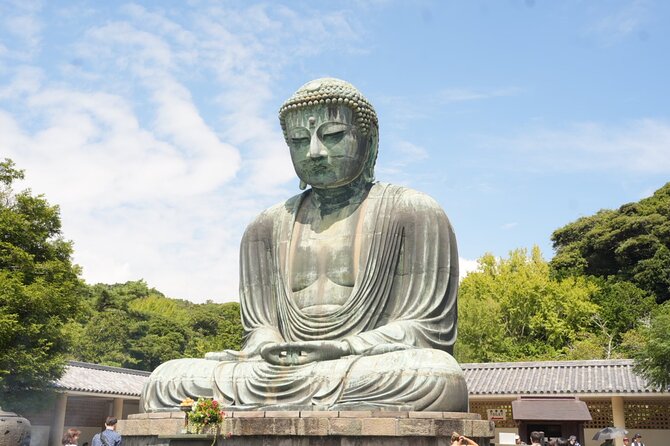
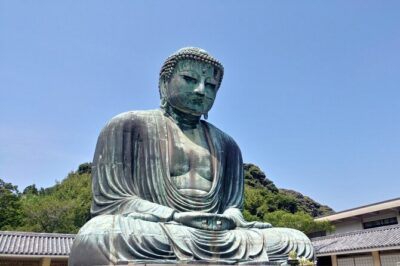
Kotoku-in is home to Kamakura’s Great Buddha, a bronze statue more than 11 meters tall. The figure dates from the 13th century and is the sight most people picture when they think of Kamakura.
The scale is the point. Even with other visitors around, the statue has a calm, simple presence that photographs often fail to capture. You can take in the figure from the temple grounds and use your guide to place it within Kamakura’s Buddhist tradition.
The planned visit lasts about an hour, and admission is extra. That should be enough for the main viewing area and an explanation of the site, but do not expect a long museum visit or a full archaeological tour. The value here comes from seeing the city’s signature monument as part of a larger day rather than treating it as an isolated photo stop.
I like the order of the first two stops. Hasedera gives you a broad temple setting and views, while Kotoku-in follows with one strong visual focus. The change keeps the morning from feeling repetitive.
A quiet hour at Hokokuji’s bamboo grove
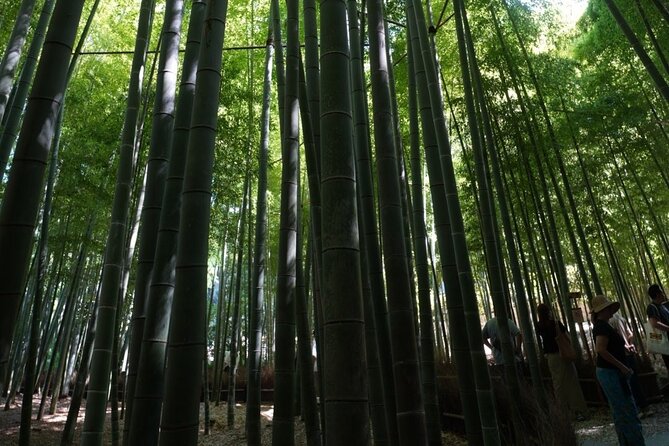
Hokokuji is known as Kamakura’s Bamboo Temple. Its grove of tall bamboo creates the most peaceful pause in the itinerary, and the one-hour stop gives you time to take in the narrow paths and Zen atmosphere.
This part of the tour may appeal most to you if you prefer texture and quiet over grand monuments. The bamboo changes the mood completely after the open setting of the Great Buddha. It is also a useful reminder that Kamakura’s appeal is not only its famous landmarks. Small religious sites and wooded spaces are part of the city’s character.
Hokokuji is described as a hidden gem in the supplied information, but the practical point is that it is less immediately familiar than the Great Buddha or Tsurugaoka Hachimangu. A guide helps you understand why this modest temple belongs on a first visit.
Again, admission is not included. The temple is another reason to wear comfortable shoes and allow for walking on paths and around temple grounds. If you want a slow, contemplative visit, one hour may feel brief. If you are seeing Kamakura for the first time, the focused stop keeps the day moving.
Other private tours in Tokyo


Tsurugaoka Hachimangu and Kamakura’s samurai story
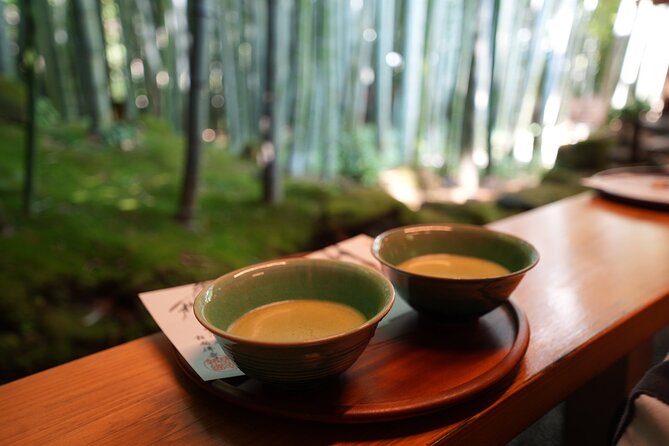
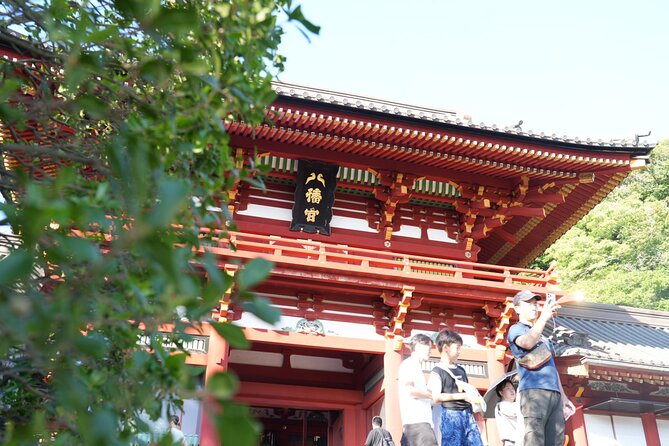
Tsurugaoka Hachimangu is Kamakura’s major Shinto shrine and the clearest link to the city’s samurai heritage. Minamoto no Yoritomo, Japan’s first shogun, founded the shrine, which sits at the heart of Kamakura.
This is a larger and more formal site than Hokokuji. The shrine gives the final part of the route a sense of scale and historical weight, while the earlier temples provide more intimate settings. You can expect about an hour here, with time to see the main shrine grounds and hear how the site connects to Kamakura’s ruling families.
A guide is especially useful at a shrine like this because the meaning is not always obvious from the architecture alone. An English-speaking local can explain what you are seeing without requiring you to read every sign or research the site in advance.
The stop also works well as an ending point. After four different religious and cultural sites, you have a fuller picture of Kamakura: Buddhist devotion, Zen calm, sacred statues, and Shinto links to political power.
What the six-hour schedule really gives you
The four named stops are each allotted about one hour, using roughly four hours of the day. The remaining time covers travel between sites, station logistics, and transitions. That makes the schedule practical, but not leisurely.
You should think of this as a highlights tour with context, not a slow temple retreat. You will see the major places, hear explanations, and get a useful introduction to Kamakura. You may not have time to explore every garden, shop, side path, or neighborhood street.
The early start is a plus for anyone who wants a calmer beginning. It is also a consideration if you are adjusting to a long-haul flight or staying far from the meeting point. Check the start time tied to your selected departure option before booking.
The moderate fitness requirement is worth taking seriously. Hasedera is on a hillside, and the day involves several temple and shrine grounds. You do not need to be an athlete, but you should be ready for steady walking.
What the $54.87 price includes
At $54.87 per person, the tour is priced as an accessible guided day trip rather than a luxury private outing. The price includes an English-speaking guide and transportation from Tokyo to Kamakura when you select the Tokyo Station departure option.
It does not include admission tickets or food and drinks. That matters because four listed stops have separate entry costs. Your final total will be higher than the advertised price, especially if everyone in your group needs a ticket at each site.
The value comes from the structure and the guide. You are paying to connect four important sights in one efficient route, get help with station navigation, and ask questions in English. For a small group of friends or family, group discounts may improve the value further.
The price is less compelling if you already know Kamakura well, are comfortable arranging local transport, and want to spend long stretches at one temple. In that case, a self-guided visit may give you more freedom. For a first visit from Tokyo, the included one-way transport and organized route make the cost easier to justify.
Private does not mean completely flexible
Only your group participates, which is a meaningful advantage. You can ask questions without competing with a busload of people, and the guide can respond to your interests more easily.
Still, the day follows a set four-stop plan. The advertised route gives about one hour to each location, so this is not an open-ended custom tour where you can replace every stop or linger as long as you want.
The best fit is a group that wants a personal guide but also wants the main sightseeing decisions made in advance. You get a clear plan without the rigid feel of a large organized excursion.
The local student guide format also shapes the experience. You should expect a warm and engaging setting rather than a formal lecture. Guide Hana, specifically praised for her kindness and quick help at Tokyo Station, is a good example of the personal assistance that can make the day easier.
Who should book this Kamakura tour
I would recommend this tour to first-time visitors who want Kamakura’s essential sights in one organized outing. It suits couples, families, and small friend groups who value an English-speaking guide and do not want to manage every transfer themselves.
It is also a good choice if you want to end the day in Kamakura. Since the tour finishes there, you can choose to continue on your own instead of immediately heading back to Tokyo.
You may want another option if you need a wheelchair-friendly itinerary, since the information only says that a moderate fitness level is required and does not provide accessibility details. You should also think twice if you dislike fixed schedules or want a food-focused day, since meals are not included.
Free cancellation is available up to 24 hours before the start time. Changes or cancellations made inside that window are not accepted for a refund, so keep the local cut-off time in mind.
Should you book it?
Book this tour if you want a well-paced first look at Kamakura, personal guidance, and the convenience of Tokyo-to-Kamakura transport. The strongest parts are the small group, the mix of major sights, and the chance to finish in Kamakura rather than being forced onto a return bus.
Before paying, check three things: the exact meeting point for your selected option, the admission costs for all four stops, and how you will return to Tokyo if you do not plan to stay in Kamakura. If those details suit your day, $54.87 per person is a sensible price for a focused introduction to one of Japan’s most rewarding day-trip towns.
FAQ
How long does the Kamakura tour last?
The tour lasts approximately six hours.
Where does the tour start?
The listed meeting point is Kamakura Station at 1-chome-1-15 Onarimachi, Kamakura, Kanagawa 248-0012, Japan. A Tokyo Station departure option is also available.
Is transportation from Tokyo included?
Transportation from Tokyo to Kamakura is included when you book the Tokyo Station departure option.
Is transportation back to Tokyo included?
No. The Tokyo departure option includes transportation to Kamakura, but not the return trip because the tour ends in Kamakura.
Can I stay in Kamakura after the tour?
Yes. You can choose to stay in Kamakura or return toward Tokyo with the guide, according to the available tour arrangement.
What sights are included?
The route includes Hasedera Temple, Kotoku-in and the Great Buddha, Hokokuji Temple, and Tsurugaoka Hachimangu Shrine.
Are admission tickets included?
No. Admission tickets for the listed temple and shrine stops are not included.
Is food included?
No. Food and drinks are not included.
How many people can join the tour?
The tour is private to your group, and the advertised maximum group size is eight people.
What level of fitness is needed?
A moderate level of physical fitness is recommended. The route includes walking through temple and shrine grounds, including the hillside setting of Hasedera.
Is the tour offered in English?
Yes. An English-speaking guide is included.
Can I cancel for a full refund?
Yes, if you cancel at least 24 hours before the experience start time. Cancellations or changes made less than 24 hours in advance are not eligible for a refund.
More Morning in Tokyo


More Private Tours in Tokyo
More Kamakura & Enoshima Day Trips in Tokyo
More tours in Tokyo we've reviewed





Kamakura & Enoshima Day Trips, compared.
 ★ 4.5Tokyo: Kamakura & Enoshima Day Trip including Temple TicketsFrom $589 hours - 570 minutes
 ★ 4.5Tokyo: Mt. Fuji, Kamakura, Big Buddha, & Lake Ashi Day TripFrom $4910 - 11 hours
 ★ 4.5From Tokyo: Kamakura & Enoshima 1-Day Bus TourFrom $66
 ★ 5.0Kamakura Historical Walking Tour with the Great BuddhaFrom $98
 ★ 5.0Kamakura Private Tour: Temples, Nature, and the Great BuddhaFrom $98
 ★ 5.0Kamakura Walking Tour – The City of ShogunFrom $35