
Reviewed · KAMAKURA & ENOSHIMA DAY TRIPS
Kamakura Walking Tour – The City of Shogun
Kamakura’s best sights fit neatly into one memorable half-day: a grand Shinto shrine, a lively shopping street, a giant bronze Buddha, and a hillside temple with views toward the sea. This small-group walking tour ties those places together with the stories that make them meaningful.
I like the clear route from Kamakura City Tourist Information Center to Hase Station, and I like the guides’ personal touch. Maki, Miyu, and Midori are repeatedly praised for explaining customs in plain language, helping with photos, and suggesting places to explore afterward. The main drawback is that the $35 price does not include transportation or entrance fees, which add up to about 1,200 yen.
In This Review
- Key points at a glance
- Why this route works so well in Kamakura
- Meeting at Kamakura Station at 10:00 a.m.
- Tsurugaoka Hachimangu, Kamakura’s grand first chapter
- Komachi Street, with time for a quick taste of local life
- Riding to the Great Buddha in the Hase district
- The Kamakura Great Buddha in 30 minutes
- Hasedera, gardens, and views toward the coast
- What the guides add to the experience
- The $35 price and the extra 1,200 yen
- Who should book this Kamakura walk?
- Should you book the City of Shogun tour?
- FAQ
- Where does the Kamakura walking tour start?
- What time does the tour begin?
- Where does the tour end?
- How long does the experience last?
- Which main sights are included?
- Are admission tickets included?
- How many people can join the tour?
- Can I cancel for a full refund?
Key points at a glance
- Four important Kamakura stops: See Tsurugaoka Hachimangu, Komachi Street, the Great Buddha, and Hasedera in one organized route.
- Guides who explain the culture: Maki, Miyu, and Midori are known for making shrine rituals, Buddhist temples, and local customs easy to understand.
- A practical start-to-finish route: Begin near Kamakura Station at 10:00 a.m. and finish at Hase Station, ready for more sightseeing.
- Enoden railway included in the flow: The route uses the local train between central Kamakura and the Hase area, though transport is paid separately.
- Small group size: The tour accepts no more than 10 people, allowing time for questions and personal help.
- Good value for first-time visitors: You get a guide and a useful introduction to Kamakura, while paying separately for the sights you enter.
Why this route works so well in Kamakura
Kamakura can feel scattered when you first arrive. The major sights lie between the station area and the coast, and it is easy to lose time deciding which temple or shrine deserves your limited hours. This tour gives you a sensible first look at the city without turning the day into a race.
The route also moves through two different parts of Kamakura. Around Kamakura Station, you see the city’s political and religious center, along with Komachi Street’s food shops and small stores. Near Hase, the mood shifts toward large religious monuments, gardens, and ocean views.
The three-and-a-half-hour schedule is long enough for explanation and photographs, but short enough to leave your afternoon open. That matters because Kamakura has more places to see than this tour can cover. You can continue around Hase, return to the center, or use the guide’s suggestions to plan the rest of your day.
A few more Kamakura tours and experiences worth a look
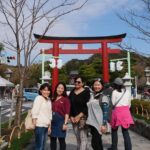
Meeting at Kamakura Station at 10:00 a.m.
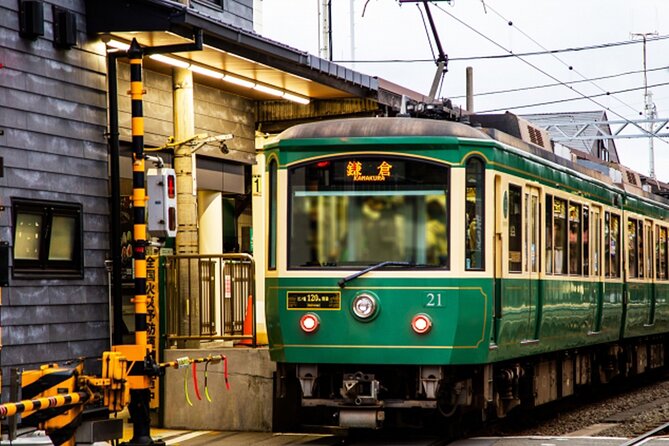
The tour begins at the Kamakura City Tourist Information Center, at 1-chōme-1-1 Komachi. This is a practical meeting point near Kamakura Station, and the start time gives you a full morning and afternoon in town.
Arrive with comfortable shoes and some flexibility. The experience combines walking, sightseeing, and a train ride, so it is not simply a series of short photo stops. Most people can participate, and service animals are allowed. The tour is also near public transportation, which makes it easy to fit into a wider day trip.
The group limit of 10 is one of the better features here. A guide can answer questions from a group this size without turning the walk into a private tour. It also gives you a better chance to hear explanations at busy sights.
Tsurugaoka Hachimangu, Kamakura’s grand first chapter
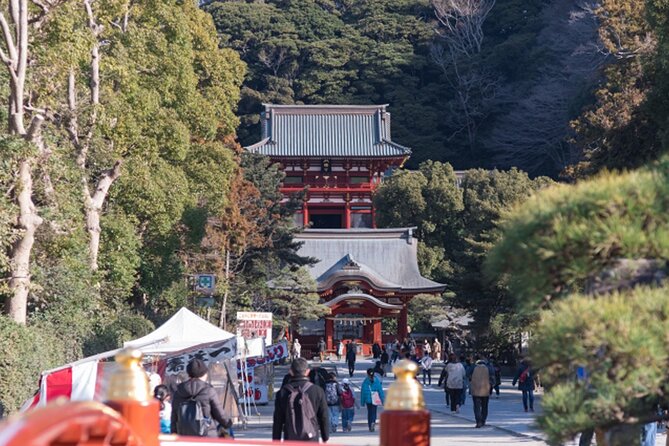
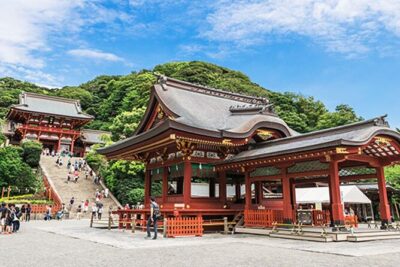
The first major stop is Tsurugaoka Hachimangu, Kamakura’s most important Shinto shrine. It was founded in the 12th century by Minamoto no Yoritomo and is dedicated to Hachiman, a Shinto deity linked with warriors and the Minamoto family.
You spend about 30 minutes here, enough to see the main setting and learn why the shrine mattered to Kamakura’s rise as a seat of military government. This background gives the rest of the tour more shape. Instead of seeing shrines and temples as similar-looking religious sites, you begin to understand the difference between Shinto practice and Buddhism.
Admission is free, so this part of the tour gives you a substantial cultural stop without an extra ticket. Your guide can also explain the traditional rituals you see, including how people approach a shrine respectfully. This is especially useful if you are visiting Japan for the first time and want more than attractive architecture.
The time limit is also worth noting. Tsurugaoka Hachimangu is a large complex, and 30 minutes will not cover every path or detail. You are getting an introduction, not a complete visit. If the shrine interests you most, plan to return later in the day.
Komachi Street, with time for a quick taste of local life
From the shrine area, the route includes about 20 minutes on Komachi Street. This pedestrian shopping street is named after the poet Ono no Komachi and is one of Kamakura’s best-known places for snacks, souvenirs, and casual browsing.
This is the least formal stop, and that is precisely why it helps balance the temples and shrine. You get a glimpse of Kamakura as a modern town, not only as a historic monument. The tour description also includes local cuisine, traditional dishes, and lesser-known food spots, so your guide may point out ideas for eating after the walk.
Twenty minutes is enough to get oriented, but not enough for a leisurely shopping trip. You may have time to sample something or note a shop for later. If you enjoy Japanese sweets or small food stalls, save room in your schedule and budget for a return visit.
I would not treat Komachi Street as a full food tour. The central purpose is still historical sightseeing, and the food element works best as guidance and context rather than a meal-by-meal tasting program.
Riding to the Great Buddha in the Hase district
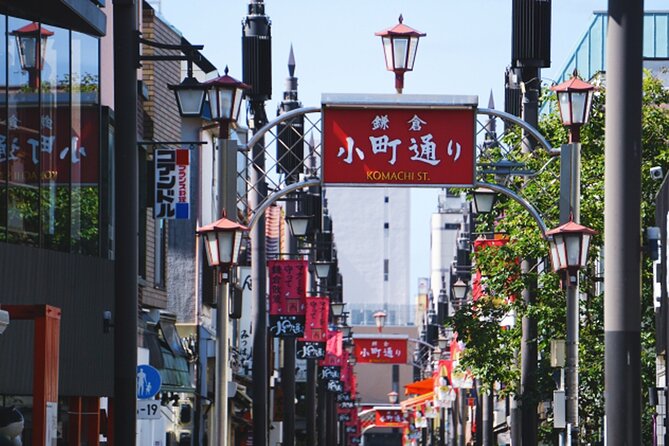
The route continues toward Hase, including a ride on the Enoden railway. This short local train experience is an important part of the day because it connects Kamakura’s station district with its coastal temple area.
Transportation is not included in the tour price. The stated combined cost for transport and admission is about 1,200 yen, so carry enough yen or be prepared to pay these expenses separately. The exact breakdown is not provided, but you should budget for the train and the two paid sights.
Using the Enoden also makes the route more practical than walking the entire distance. You cover more ground while keeping the focus on Kamakura’s major places. The train ride itself is not presented as a separate attraction with a long sightseeing explanation, but it adds a local feel to the transfer.
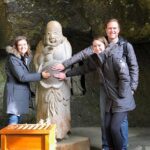
The Kamakura Great Buddha in 30 minutes
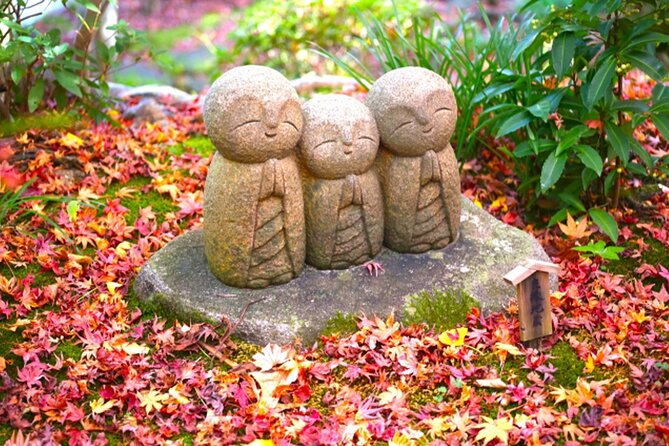
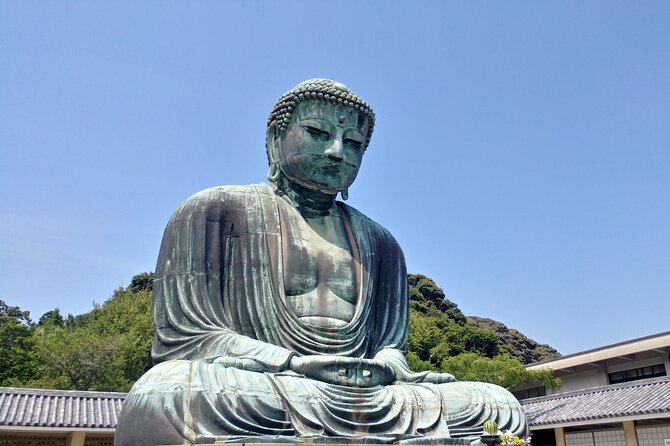
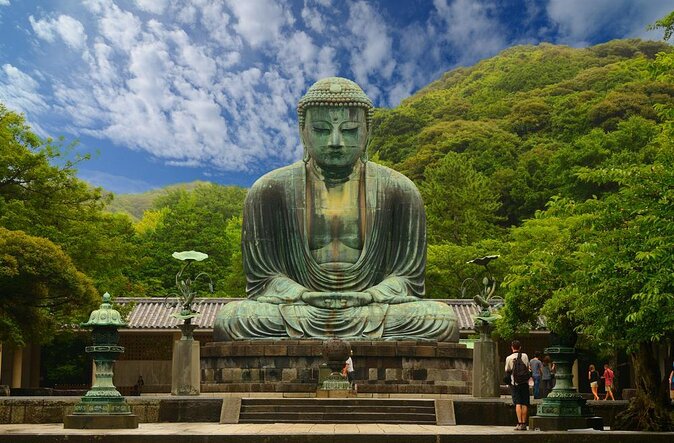
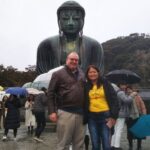
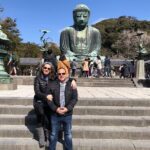
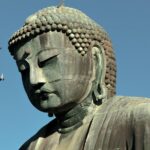
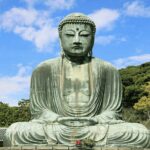
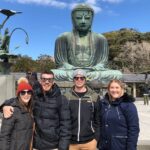
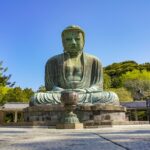
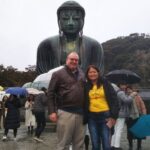
Kotoku-in is home to the Kamakura Great Buddha, a bronze statue about 13.35 meters tall, or roughly 44 feet. The scale is impressive, but the setting is also part of its appeal. After the city streets and shrine paths, the open space around the statue gives you a clear view of one of Kamakura’s defining images.
The planned visit lasts about 30 minutes. That allows time to see the statue, listen to its background, and take photographs without spending the entire afternoon at one site. The entrance fee is not included.
This is one of the places where a guide adds real value. A giant Buddha can easily become a quick stop for a photograph unless someone explains its place in Kamakura’s Buddhist tradition and the way the monument has endured over time. Guides such as Miyu and Maki are praised for making Buddhist ideas easier to follow, including the difference between temples and Shinto shrines.
You should keep your expectations realistic. Thirty minutes is a compact visit, and the tour does not promise an extended examination of every feature at Kotoku-in. If you want a slower look, you may need to come back after the tour or allow extra time before your next plan.
Hasedera, gardens, and views toward the coast
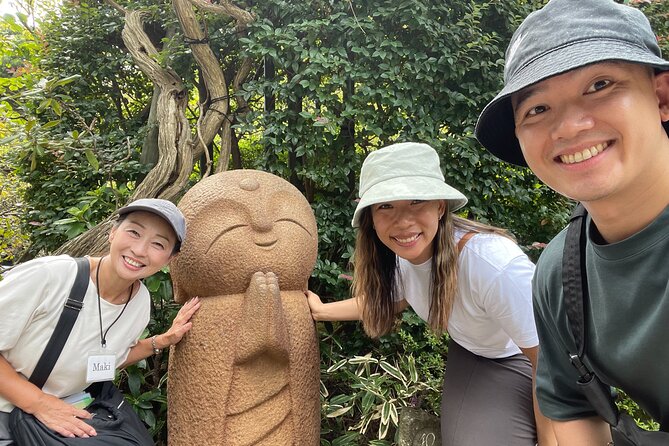
The final major stop is Hasedera, also called Hase Kannon Temple. You spend about 40 minutes here, the longest scheduled visit of the day. The temple is known for its calm setting, gardens, and tall wooden statue of Kannon, the Buddhist figure associated with compassion.
Hasedera gives the tour a gentler finish. Tsurugaoka Hachimangu introduces Kamakura’s political and Shinto importance, while the Great Buddha delivers a single powerful monument. Hasedera brings together religious art, garden views, and the coast.
The temple entrance fee is not included, so include it in the additional 1,200-yen estimate. The hillside setting may require some uphill walking or steps, though the supplied information does not specify the exact route or level of difficulty. If you have mobility concerns, ask the provider before booking.
The views are another reason not to rush this stop. The tour includes coastal scenery and viewing points, and the guides have helped visitors find good places for photographs. Still, 40 minutes is an introduction. You may want more time for the gardens, religious buildings, and views if Hasedera is high on your list.
What the guides add to the experience
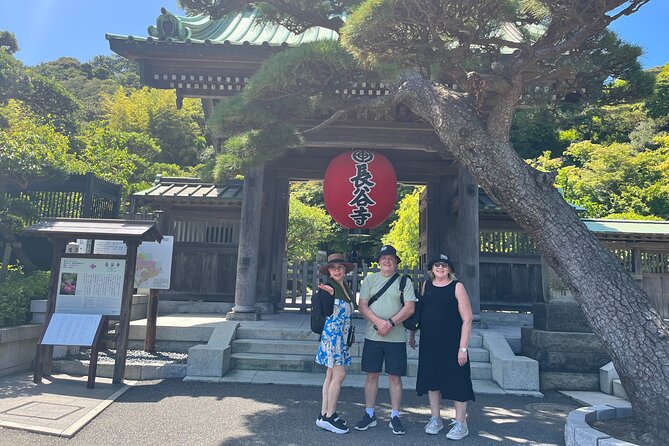
The strongest part of this tour is the human explanation. Maki is described as energetic, friendly, personal, and clear. Miyu is praised for making Japanese culture and history easy to understand, while Midori is noted for showing fun spots along the way and taking good photographs.
The useful distinction here is not simply that the guides know facts. They explain how people today carry Japanese customs forward, and they clarify the difference between Buddhist temples and Shinto shrines. That helps you read the places you see later on your own.
The guides also appear willing to tailor the conversation. You can ask questions, request a photo, and ask what to do in the afternoon. That last point makes the tour more useful than a fixed walk that ends with a polite goodbye and no further help.
Guide quality can vary from one departure to another, of course. The repeated names and consistently strong feedback suggest a dependable guiding team, but the person leading your date may be different. Book this tour for the route and format first, then treat the individual guide as an important bonus.
The $35 price and the extra 1,200 yen
At $35 per person, this is a reasonable price for a guided three-and-a-half-hour introduction to Kamakura. You are paying for route planning, cultural interpretation, and a small group rather than for a private car or a meal package.
The important catch is the extra cost. Transportation and admission are not included, with a stated total of about 1,200 yen. That covers the practical expenses associated with the Enoden ride and the paid temple and Buddha visits, but you should also allow money for food on Komachi Street if you plan to snack.
I see the value most clearly if you are visiting Kamakura for the first time. A guide helps you avoid wasting time and gives you a framework for returning to the places you want to see more slowly. If you already know Kamakura well, the tour may feel less essential unless you want a guided cultural explanation or company for the walk.
The free cancellation policy is helpful. You can cancel for a full refund up to 24 hours before the start time. Poor weather can also lead to a new date or a full refund, since this is an outdoor walking experience.
Who should book this Kamakura walk?
I would recommend it to first-time visitors who want the main sights explained in one morning-to-afternoon route. Families can also benefit from the clear pace and personal style, and the available feedback specifically describes children enjoying the experience.
It suits anyone who wants to learn how Shinto shrines and Buddhist temples differ. It is also a good fit if you prefer a guide who can suggest what to do next rather than a tour that ends at the final monument.
You may want another option if you dislike walking, need a very slow schedule, or want extended time at each temple. The itinerary covers a lot, and the stop lengths are fixed. You should also choose another plan if your main goal is a long food tasting experience, since local cuisine is part of the flavor of the route, not its central product.
Should you book the City of Shogun tour?
Book it if you want an efficient first look at Kamakura with clear explanations, a manageable group, and a route that ends near Hase Station. The combination of Tsurugaoka Hachimangu, Komachi Street, the Great Buddha, and Hasedera gives you the city’s essential outline in one half-day.
The strongest reason to choose this experience is the guiding. Maki, Miyu, and Midori are praised for kindness, cultural explanations, useful photo help, and afternoon suggestions. Add the separate 1,200 yen for transport and entry fees, wear practical shoes, and leave the rest of your day open.
If you want to linger at every shrine, shop slowly, or build a day around food, use the tour as an introduction rather than your complete Kamakura visit. For a first visit, though, it offers a sensible route and a good cultural foundation.
FAQ
Where does the Kamakura walking tour start?
The tour starts at the Kamakura City Tourist Information Center, located at 1-chōme-1-1 Komachi, Kamakura, Kanagawa 248-0006, Japan.
What time does the tour begin?
The tour starts at 10:00 a.m.
Where does the tour end?
The tour ends at Hase Station, located at 2 Chome-14 Hase, Kamakura, Kanagawa 248-0016, Japan.
How long does the experience last?
The tour lasts approximately 3 hours and 30 minutes.
Which main sights are included?
The route includes Tsurugaoka Hachimangu Shrine, Komachi Street, Kotoku-in and the Kamakura Great Buddha, and Hasedera Temple.
Are admission tickets included?
No. Transportation and admission fees are not included. The stated combined additional cost is about 1,200 yen.
How many people can join the tour?
The tour has a maximum group size of 10 travelers.
Can I cancel for a full refund?
Yes. You can cancel at least 24 hours before the start time for a full refund. Cancellations or changes made less than 24 hours before the start time are not refunded or accepted. If poor weather cancels the experience, you will be offered another date or a full refund.
More Walking Tours in Kamakura
More Kamakura & Enoshima Day Trips in Kamakura
More tours in Kamakura we've reviewed


Kamakura & Enoshima Day Trips, compared.
 ★ 4.5Tokyo: Kamakura & Enoshima Day Trip including Temple TicketsFrom $589 hours - 570 minutes
 ★ 4.5Tokyo: Mt. Fuji, Kamakura, Big Buddha, & Lake Ashi Day TripFrom $4910 - 11 hours
 ★ 4.5From Tokyo: Kamakura & Enoshima 1-Day Bus TourFrom $66
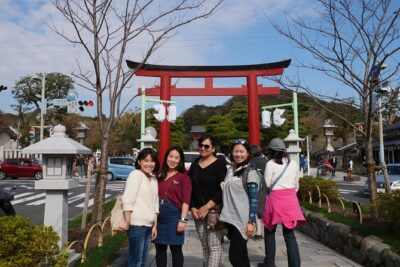 ★ 5.0Kamakura Historical Walking Tour with the Great BuddhaFrom $98
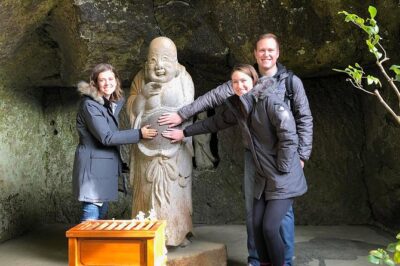 ★ 5.0Kamakura Private Tour: Temples, Nature, and the Great BuddhaFrom $98
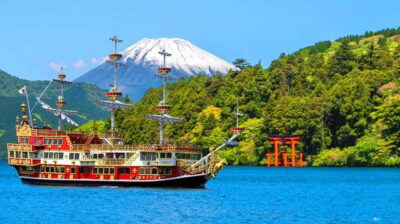 ★ 4.9Tokyo:Sea of Mount Fuji, Hakone Ropeway, Ōwakudani, EnoshimaFrom $5010 hours