
Reviewed · SUMO EXPERIENCES
Tokyo: Sumo Morning Training Visit
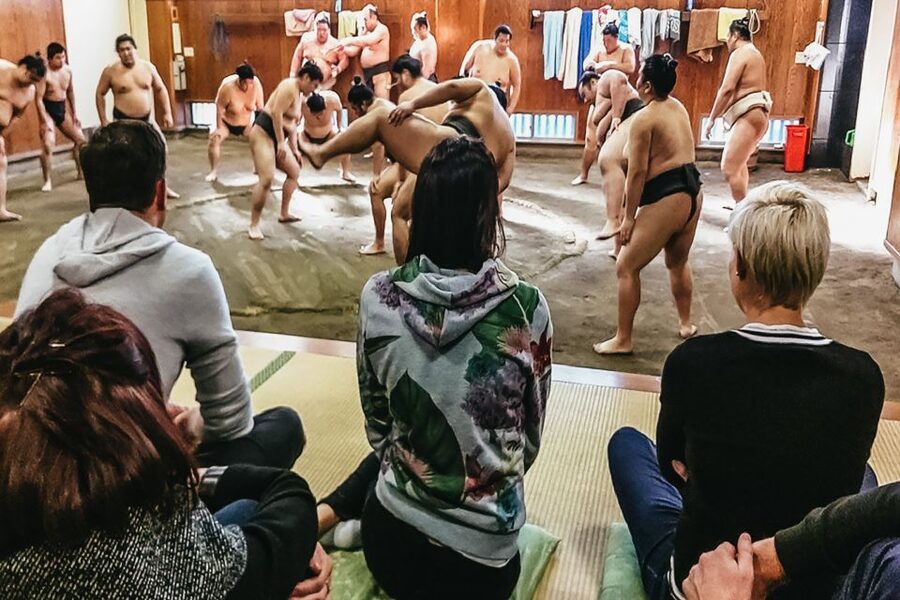
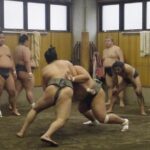
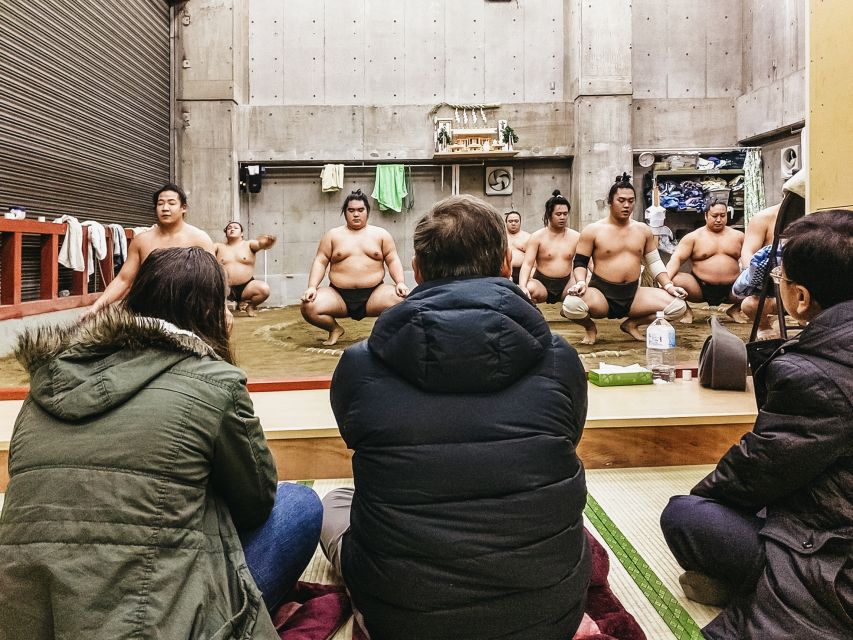
The most unusual part of this Tokyo morning visit is its setting: you watch professional sumo wrestlers train inside a real stable, not actors performing a tourist show. The wrestlers warm up, practice their footwork and pushing drills, and may spar close enough for you to hear the impact.
I like the direct look at the sport, and I like that the visit ends with a group photo with the wrestlers. You can see the strength, balance, discipline, and repetition that a tournament bout compresses into a few dramatic seconds. The main drawback is that you must sit quietly on the floor for the session, sometimes for 90 minutes or longer, with no food, drinks, or casual breaks.
In This Review
- Key points
- Inside a Working Tokyo Sumo Stable
- What the Morning Training Looks Like
- Sitting Close to the Dohyo
- The Quiet Rules Matter
- The Guide and the Missing Explanation
- Finding the Stable Without a Wrong Turn
- The Group Photo With the Wrestlers
- Tournament Months Change the Value
- Is $77 a Fair Price?
- Optional Hotel Transfer
- Who Will Enjoy This Most?
- Booking and Timing Advice
- Should You Book the Sumo Morning Training Visit?
- FAQ
- Where does the sumo morning training visit meet?
- How long does the visit last?
- Will I watch professional sumo wrestlers?
- Is a group photo included?
- Is the activity guided in English?
- Can I record video or use flash photography?
- Can I bring food, drinks, or luggage?
- Can I arrange hotel pickup?
Key points
- Watch real morning training: This is a working stable, so the session is practice rather than a staged performance.
- Hear and see the impact up close: Warmups, drills, pushing exercises, and sparring can make the sport far more understandable than watching from stadium seats.
- Arrive early for a better view: Seating is generally on the floor, and a late arrival may leave you at the back with blocked sightlines.
- Expect limited commentary: The English-speaking host helps you enter and check in, but the visit may include little or no explanation of rituals, technique, diet, or sumo life.
- Plan around the date: Training can last about an hour, but it may run 90 minutes to two hours. During Tokyo tournament months, it can shrink to about 30 minutes.
- Treat the stable like a place of work: Keep your phone silent, avoid talking and flash photography, and enter only with the guide.
Inside a Working Tokyo Sumo Stable
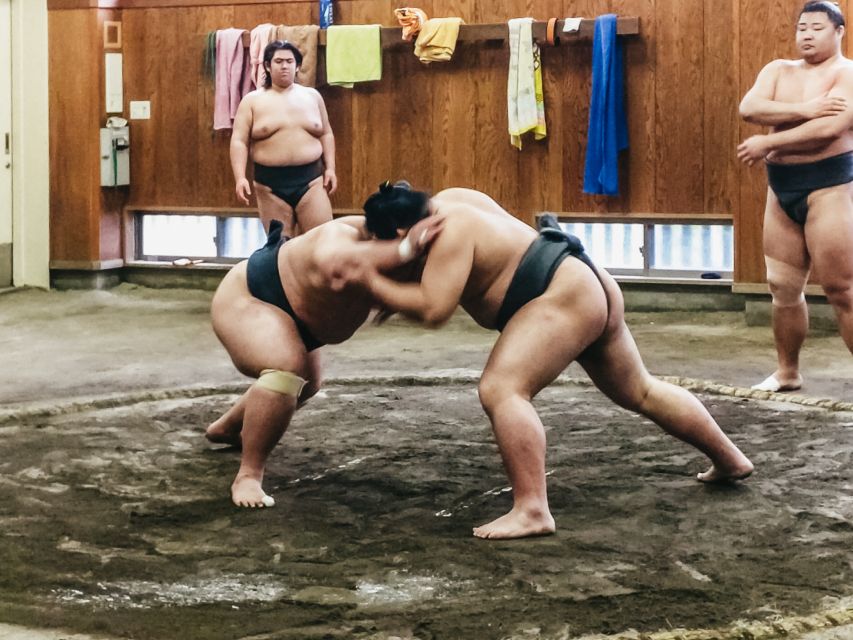
This experience gives you something a tournament ticket cannot: a close view of the wrestlers before the public spectacle begins. You are not watching a polished contest with an announcer, clear bout schedule, and comfortable stadium seating. You are watching athletes repeat hard movements under strict rules of behavior.
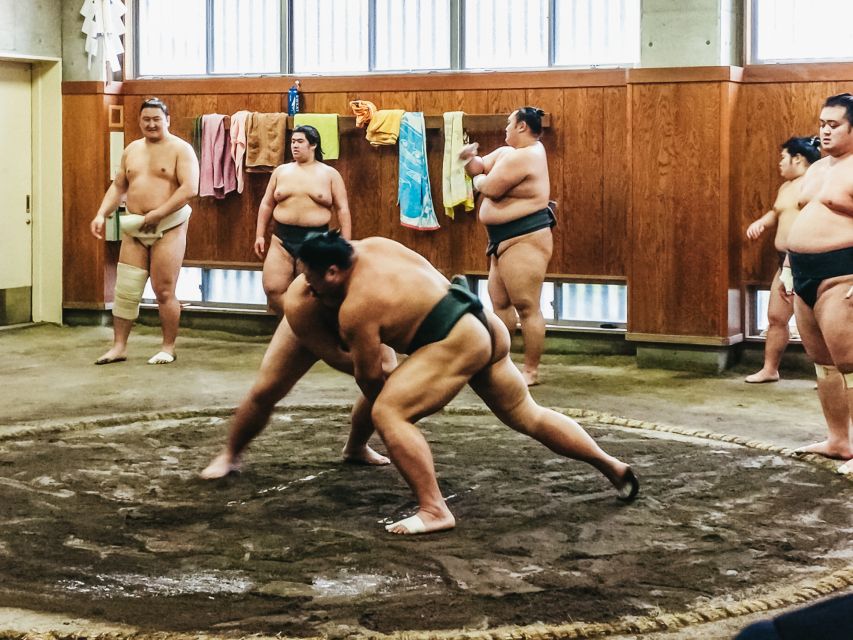
That difference matters. Sumo can look simple from a distance: two enormous men collide, and one is pushed out of the ring. From close range, you begin to notice the low stance, quick footwork, balance, grip, timing, and sudden bursts of power. The wrestlers may seem heavy, but their speed can be startling.
The stable visit is also a look at the discipline around the sport. The training area is treated seriously, and visitors are expected to fit into its quiet rhythm. You sit, watch, and avoid becoming part of the show.
A few more Tokyo tours and experiences worth a look

What the Morning Training Looks Like
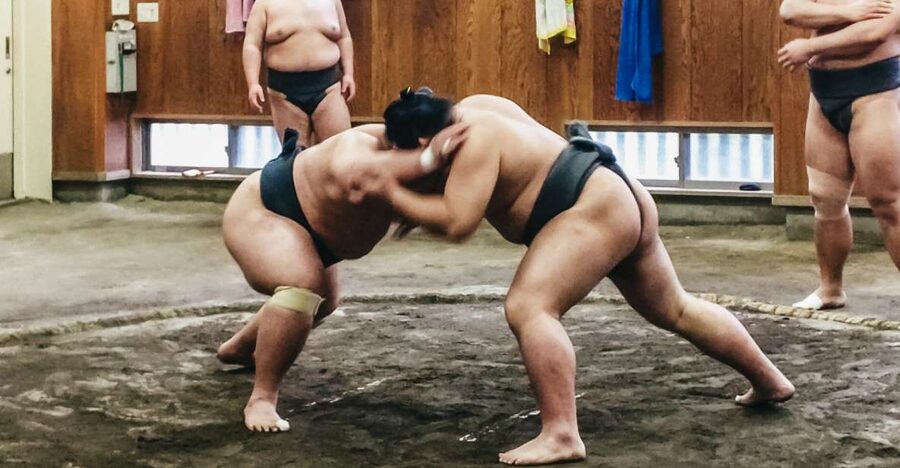
The advertised visit lasts one hour, and a normal session is usually around 60 minutes. In practice, the timing can vary. Some sessions have lasted 90 minutes or two hours, while a tournament-season visit may involve only about 30 minutes of training.
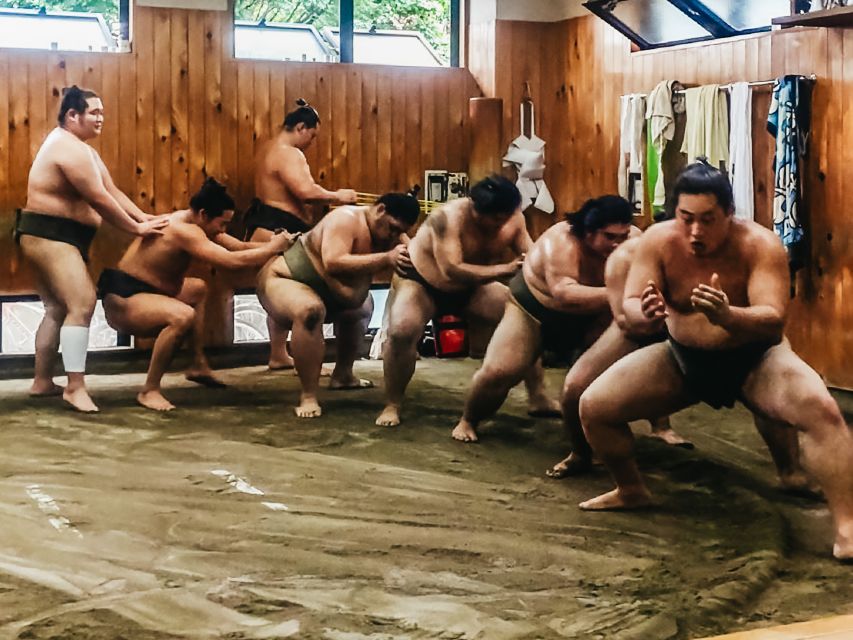
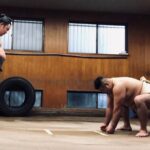
The session generally begins with warmups and basic exercises. You may see the wrestlers work on stretching, stance, balance, and repeated pushing movements. These drills can appear slow at first, but the effort is visible in the wrestlers’ breathing, posture, and the force behind each movement.
Later, the training may become more active, with wrestlers pushing across the clay or practicing sparring exchanges. You will not necessarily see a formal bout. That is an important point when deciding if this experience suits you. The best moments come from watching real practice unfold, not from expecting a scheduled performance.
The sound is part of the lesson. A body hitting the floor or two wrestlers driving into one another gives you a better feel for the physical demands than television can. You can also watch how the wrestlers reset, wait, and repeat the same actions with control.
During some visits, the work may look fairly restrained. The wrestlers’ condition and the stable’s schedule affect what takes place. The activity provider notes that the training plan can change, so no specific drill or matchup is guaranteed.
Sitting Close to the Dohyo
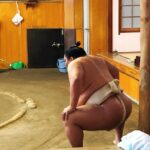
You will usually sit on the floor near the training area. That gives you a close view, but it also creates the experience’s biggest physical challenge.
You may need to sit in one position without talking or moving around much. Several people have found the floor uncomfortable, especially without a cushion. If you have knee, hip, or back problems, ask about a chair before the visit. Seating arrangements may need to be made in advance, and you should not assume that a chair will be available on the morning.
Your feet should not point toward the training area, and leaning against walls or shifting around can be viewed negatively. This is not the moment for casual stretching, snacking, or getting up whenever you wish. You may leave early, but leaving before the end means you will not receive the group picture.
Arrive on time, and preferably a little early once the confirmed meeting details are clear. Seating is free, so arriving late can place you behind other people. From the back, views may be partly blocked, particularly when the group is seated close together.
The tradeoff is fair: the floor seating helps put you near the action, but it asks you to show patience and respect. If you need frequent movement or cannot sit on the floor, this may not be the right morning activity.
The Quiet Rules Matter
The rules are not decoration. You are entering a functioning sumo stable, and the wrestlers are training rather than entertaining an audience.
Keep your phone on silent. Do not talk loudly, make unnecessary noise, eat, or drink. Hats and sunglasses are not allowed, and large bags or luggage should be left elsewhere. Smoking indoors is forbidden.
Flash photography is not permitted. Video recording requires prior permission, so do not assume you can film the entire session. Still photography may be restricted by the stable or guide, so listen carefully before using your camera.
You should also enter only with the guide. The meeting point is not necessarily the location shown on Google Maps, and the stable address can change depending on the date. Wait for the guide rather than ringing a doorbell or entering early.
These rules can feel strict if you are expecting a casual sightseeing stop. They make more sense once you see the wrestlers training at close range. A quiet room allows you to hear the drills and keeps the visit from disturbing the work.
The Guide and the Missing Explanation
An English-speaking host or greeter is listed for the activity, but you should set your expectations carefully. The guide’s role may be mainly to meet you, confirm your name, explain the basic rules, and bring you inside.
You may receive little commentary during the training. The most useful missing material would be a short explanation of the movements, the rituals, the ranking system, the wrestlers’ route into the sport, and the training routine. Several people have wished for a simple English handout or a two-minute introduction before the session began.
That lack of narration is the experience’s weak point. If you already know something about sumo, you can watch body language and technique with more understanding. If you are new to the sport, you may spend the first part trying to work out what each movement means.
You can still learn by careful observation. Watch how a wrestler lowers his center of gravity, how he places his feet, and how quickly a controlled push turns into a full-body effort. A little reading about sumo rituals before you go will make the morning more rewarding.
Communication can also vary. The host is described as English-speaking, but English ability may be limited, and a few people have experienced confusion around meeting instructions. The emergency contact number in your confirmation email is useful if you are lost or delayed.
A few more Tokyo tours and experiences worth a look

Finding the Stable Without a Wrong Turn
The meeting place is the most important practical detail to manage. The location shown on Google Maps may not be correct, and the final stable and route instructions are normally sent by email about three days before the visit.
Check both the voucher and the separate confirmation email. The stable named on the voucher is the one to follow, not the automatic sample location shown on an account page. The meeting point and start time can change by date, and specific location requests cannot be accommodated.
Do not arrive early and enter on your own. Check-in starts at the stated meeting time. If you have trouble finding the place, call the number supplied in the confirmation email rather than guessing at a nearby door.
This arrangement requires more planning than a standard museum visit. Save the email, check the route from your hotel, and allow time for Tokyo’s large stations and confusing exits. A wrong address can cost you part of the training, and late entry is disruptive.
The Group Photo With the Wrestlers
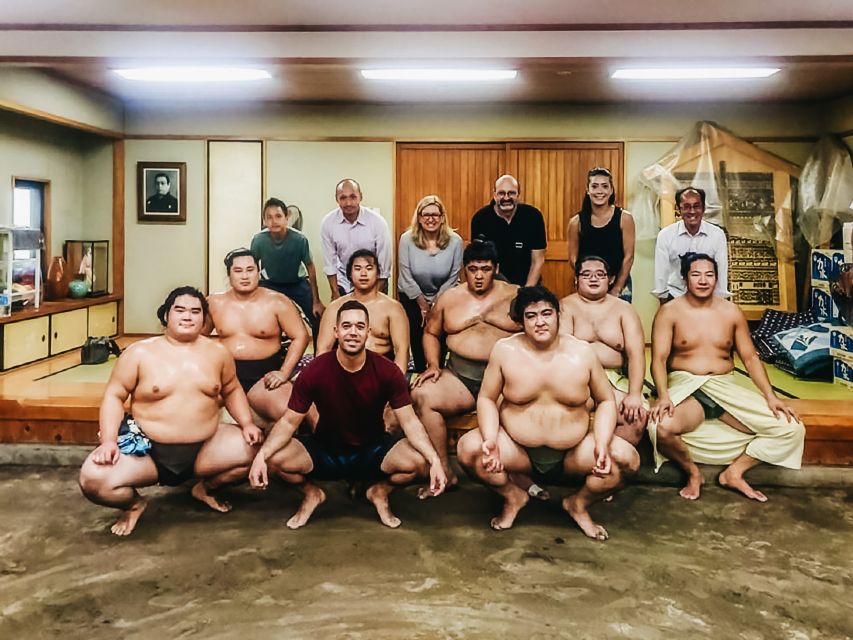
At the end, you can take a group picture with the sumo wrestlers. This is a memorable finish because it changes the feeling of the morning. You have watched them work in silence, then you get a brief chance to stand near them for a photograph.
The picture is included in the activity. However, you must stay until the end to receive it. If you leave early because of the long sitting period or another appointment, the photo is not provided.
The photo is not the main reason to book. The training is the real attraction. Still, it gives you a tangible reminder of a visit that can otherwise feel quiet and observational.
Be respectful during this part as well. Follow the host’s directions, wait your turn, and do not treat the wrestlers as costumed photo props. You are being allowed into a private working environment.
Tournament Months Change the Value
Tokyo’s Grand Sumo Tournaments take place in January, May, and September. During those months, morning training can last only about 30 minutes because the wrestlers are preparing for competition.
The shorter session does not necessarily make the visit poor. You may still see serious preparation and get close to professional wrestlers. But the activity costs the same even when the training is reduced, and no refund is provided for the shorter duration.
This creates a clear choice. If you want to see sumo up close and care about access to a stable, a tournament month can still make sense. If you want a long training session with repeated sparring, choose a date outside January, May, or September when possible.
If your main goal is to watch actual tournament bouts, use your budget for a tournament ticket instead. A stable visit is better for proximity and training. An arena is better for the full competition atmosphere and official matches.
Is $77 a Fair Price?
At $77 per person, this is not a cheap way to fill an hour. You are paying for access to a real stable, advance coordination, an English-language meeting service, and the group photo, rather than for a long guided tour.
The value depends on what you want from Tokyo. If you only want to see sumo, a television broadcast or a tournament ticket may offer more action. If you want to understand the preparation behind the sport and see professional wrestlers only a short distance away, the stable visit offers something a normal sightseeing ticket cannot.
The price feels stronger when the session includes active drills and sparring and weaker when the visit falls during tournament season or provides only a short warmup. It also feels less satisfying if you expect a detailed cultural lecture and receive only basic check-in help.
I would consider it a good use of money for a first visit to Japan when sumo is high on your list. I would be more cautious if you have limited time, severe knee problems, or a strict expectation of formal guiding.
Optional Hotel Transfer
A one-way hotel transfer can be added, but it is not included in the basic price. Pickup is limited to hotels within Tokyo’s 23 wards, and no more than four passengers can ride.
The drivers speak Japanese and do not speak English. Your hotel must have a front desk, and you need to send the hotel name, check-in date, reservation name, and a Japanese mobile number after booking.
The pickup time is sent by email at least one day before the visit. If you are not present within 10 minutes of that time, the transfer is treated as a no-show. This option may help if the early start and changing stable location make navigation stressful, but it does not remove the need to check your final instructions carefully.
Who Will Enjoy This Most?
I would choose this experience for you if you have a strong interest in Japanese culture, traditional sports, or athletic technique. It also suits anyone who prefers a real working setting to a staged demonstration.
Older children may enjoy the intensity and unusual setting, though you must be confident they can stay quiet and seated. The training can hold a child’s attention, but the rules are strict and there is no promise of a child-focused explanation.
You should think twice if you need a cushioned seat, frequent toilet breaks, snacks, or a flexible schedule. The stable may not provide those comforts, and you cannot count on leaving without missing the group photo.
It is also less suitable if your main aim is to learn the full structure of sumo from an expert guide. You may need to prepare in advance, observe closely, and accept that the host’s spoken explanation could be brief.
Booking and Timing Advice
Cancellation is free up to 11 days before the scheduled date. After booking, watch for the final meeting email rather than relying on the automatic map or sample details.
Bring a face mask or protective covering. Leave luggage and large bags behind, remove your hat and sunglasses, and keep food and drinks out of the stable.
Give yourself enough time to reach the meeting point, but do not enter before check-in. The most practical plan is to confirm the route the night before, keep the contact number ready, and arrive in time to secure a clear spot without creating a disturbance.
Should You Book the Sumo Morning Training Visit?
Book it if you want authentic access, close views, and a quiet look at the work behind sumo. The physical power is impressive, but the repetition and discipline are just as revealing. The group photo is a nice extra, not a substitute for the training.
Skip it if you want a polished show, constant English narration, comfortable seating, or guaranteed bouts. Also compare dates carefully if your visit falls in January, May, or September, when practice may last only about 30 minutes.
For the right visitor, this is one of Tokyo’s more memorable cultural activities. Go prepared to sit still, observe respectfully, and let the wrestlers’ movements explain the sport.
FAQ
Where does the sumo morning training visit meet?
The meeting place is decided according to the date and is normally sent by email about three days before the activity. Google Maps may show a different location, so follow the stable and route information in your confirmation email and voucher.
How long does the visit last?
The listed duration is one hour, and normal training sessions usually last about 60 minutes. Some sessions can continue for 90 minutes to two hours. During Tokyo Grand Sumo Tournament months in January, May, and September, training may last only about 30 minutes.
Will I watch professional sumo wrestlers?
Yes. The activity takes place at a real sumo stable and includes watching active, professional wrestlers train. The exact drills and amount of sparring depend on the stable’s schedule and the wrestlers’ condition.
Is a group photo included?
Yes. A group picture with the sumo wrestlers is included. You must stay until the end of the session to receive it, since leaving early means giving up the photo.
Is the activity guided in English?
An English-speaking host or greeter is provided. The host may mainly handle check-in and stable rules, and the amount of spoken explanation can be limited.
Can I record video or use flash photography?
Flash photography is forbidden. Video recording is allowed only with prior permission, so ask before filming. Phones must be switched to silent mode.
Can I bring food, drinks, or luggage?
No. Food and drinks, luggage, and large bags are not allowed inside. Hats and sunglasses are also prohibited, and indoor smoking is not allowed.
Can I arrange hotel pickup?
An optional one-way hotel transfer is available for hotels within Tokyo’s 23 wards. Pickup is limited to four passengers, requires a hotel with a front desk, and uses Japanese-speaking drivers who do not speak English.
More Morning in Tokyo
More Sumo Experiences in Tokyo

More tours in Tokyo we've reviewed








Sumo Experiences, compared.
 ★ 4.8Tokyo: Sumo Show Experience with Chicken Hot Pot and a PhotoFrom $1032 hours
 ★ 4.8Tokyo: Sumo Show and Dining ExperienceFrom $7990 minutes - 2 hours
 ★ 5.0the SUMO showFrom $89
 ★ 5.0Tokyo Shinjuku Sumo Show & Experience with PhotoFrom $79
 ★ 4.8Tokyo: Sumo Show and Experience in ShinjukuFrom $691h 30m
 ★ 4.6Tokyo: Sumo Tournament Tour with Chair Seat TicketsFrom $141