
Reviewed · TSUKIJI MARKET TOURS
Private Tokyo’s Famed Tsukiji Fish Market Tour
Tsukiji is best approached with a plan, and this private morning tour gives you one. Guru-San guides you through the outer market, points out foods and customs that are easy to miss, and adds two nearby religious sites for a fuller picture of the neighborhood. Snacks are included, so you can taste as you go instead of stopping to guess what to buy.
I like the personal format and the food focus. Your guide can adjust the pace, answer questions, and explain how to behave in a working market. I also like the mix of stops: the striking Tsukiji Hongwanji Temple, the market’s small food counters and shops, and Namiyoke Inari Shrine. The main consideration is that lunch is not included, and the market portion may feel short if you want a long, unhurried meal.
In This Review
- Key points to know before you book
- Why a private Tsukiji walk can save you time
- Tsukiji Hongwanji Temple at the start
- Two hours among Tsukiji’s food stalls
- Learning etiquette while you taste
- Namiyoke Inari Shrine and the protective side of Tsukiji
- What the $84.54 price means
- Morning hours, meeting point, and pace
- Who will get the most from this experience
- How cancellation and booking affect your plans
- Final verdict: book it for context, not just seafood
- FAQ
- How long does the Tsukiji tour last?
- What time does the tour operate?
- Where does the tour begin?
- Where does the tour end?
- Is the tour private?
- Are snacks included?
- Is lunch included?
- Are admission fees included?
- Does the tour include a guide?
- Can I cancel for a full refund?
Key points to know before you book
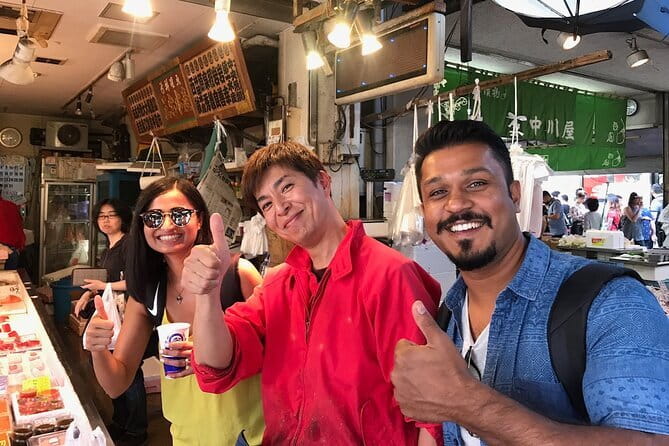
- Private attention from Guru-San: Only your group takes part, so you can ask questions freely and set a comfortable pace.
- Tsukiji outer market, not the wholesale auction: The two-hour market visit focuses on food, etiquette, shops, and snack tasting.
- Snacks are included: You can sample Japanese street food and sweets you may not have found alone.
- Two meaningful cultural stops: Tsukiji Hongwanji Temple and Namiyoke Inari Shrine add context beyond seafood.
- Morning timing matters: The tour runs from 8:00 a.m. to noon on Monday through Saturday during the listed operating periods.
- A short, focused outing: Plan on roughly 2 to 3 hours, with the tour returning to its meeting point.
Why a private Tsukiji walk can save you time
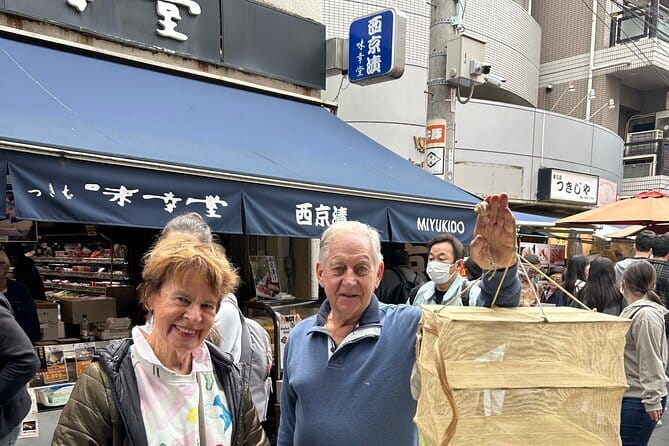
Tsukiji’s outer market is compact in one sense, yet it can be confusing on a first visit. Shops sit close together, signs may not explain every food, and local customs are not always obvious. A guide helps you spend less time wondering where to begin and more time tasting and looking.
This is not simply a seafood shopping trip. The tour is designed to explain Japanese food culture and market manners while you move from stop to stop. That matters in Tsukiji, where a good experience depends on knowing when to browse, when to step aside, and how to approach small food stalls respectfully.
The private setup is the biggest practical advantage. You do not need to keep up with a large group or wait while strangers decide what to eat. If your group wants more time with a certain snack, a question about shrine customs, or a slower walk through the market, you have a better chance of getting it.
Guru-San is named in the tour feedback as a warm guide who shares Tokyo’s culture, history, and love of food. That personal quality seems to be a major part of the experience. You are not just being marched between fixed points. You are getting a local companion for a few hours, with the useful caveat that the exact style and pace will depend on your guide and your group.
A few more Tokyo tours and experiences worth a look



Tsukiji Hongwanji Temple at the start
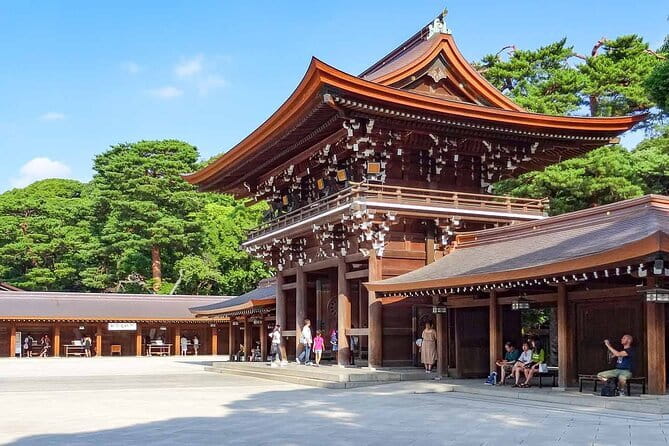
The tour begins at Tsukiji Hongwanji Temple, where you have about 20 minutes. Admission is free, and the stop gives you a calm opening before entering the market.
The temple is described as one of the most beautiful in Tokyo. Your time here can include photos, a short history lesson, and a look at the site’s role in the Tsukiji area. You can also get gifts, and there is a cafe at the temple if you want to pause there.
Twenty minutes is enough for an introduction, but not a long visit. If you are hoping to sit quietly, study every architectural detail, and spend time at the cafe, you may want to return on your own later. As a first stop, though, the temple works well because it gives you a cultural frame before the food tasting begins.
I especially like that the tour does not treat Tsukiji as only a place to eat. Starting at a temple encourages you to notice the neighborhood as a living part of Tokyo, not just a convenient food stop.
Two hours among Tsukiji’s food stalls
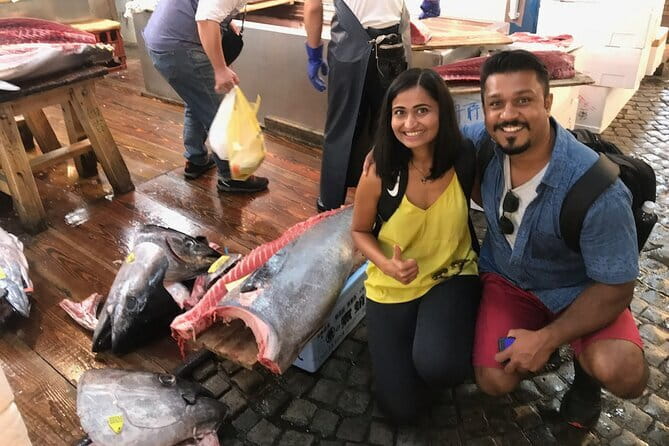
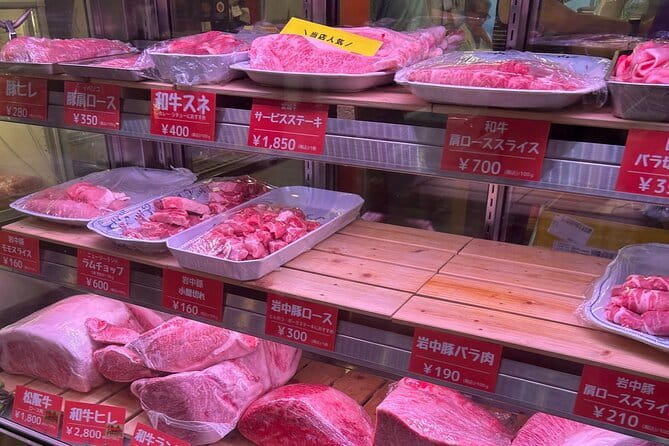
The main part of the experience takes place at Tsukiji Jogai Market, the outer market. You spend about two hours looking around, tasting snacks, and learning how the market works.
The tour includes Japanese street food and sweets. The precise selection is not specified, so you should think of the snacks as guided tastings rather than a promised meal or fixed menu. That distinction is important. You will get food along the way, but you should not book this expecting a full lunch.
The guide’s role adds value here. You may find it hard to judge which places are aimed at local shoppers, which foods are easy to eat while walking, or how to order politely. Guru-San can explain the difference between browsing and blocking a narrow passage, show you how to approach food counters, and point out items you might otherwise pass without noticing.
The tour also promises tips about tourist traps and where to find high-quality bites. Since the information does not name specific shops or dishes, do not expect a guaranteed list of particular restaurants. Instead, the useful result is guidance you can apply during the walk and perhaps later in Japan.
You should expect the market to be an active working area rather than a staged attraction. That means the pace may involve short stops, standing, looking closely, and moving when space is needed. Comfortable shoes are a sensible choice, even though this is only a few hours.
The two-hour market section is generous for a guided introduction. It gives you time to try several snacks and ask questions without making the entire morning about food. Still, serious eaters may find it limited because lunch is separate. If you want a sit-down meal afterward, plan for that on your own.
Learning etiquette while you taste
The most useful part of the tour may be the practical instruction. Japanese food customs can be subtle, and Tsukiji adds the challenge of narrow spaces and busy counters. A local guide can explain what is polite without turning the visit into a lecture.
You can ask about how to visit a food stall, how to handle snacks, and how to read the mood of a place. These small details help you avoid the common problem of arriving at a famous market and feeling unsure about every move.
I also like that the tour connects the food to Japanese culture. The guide is not only identifying ingredients. You are learning why certain foods matter, how the market fits into daily life, and how local habits shape the experience.
The private format is particularly useful for this. If one food raises a question, you can stop and ask it. In a large group, that kind of exchange is harder. Here, the guide’s attention stays with your party.
Keep your expectations practical. The description does not promise a cooking lesson, a market shopping allowance, or a complete survey of Japanese cuisine. It offers a guided introduction, snack tasting, and cultural explanation. For a first morning in Tsukiji, that is a sensible scope.
Namiyoke Inari Shrine and the protective side of Tsukiji
After the market, the tour visits Namiyoke Inari Shrine for about 10 minutes. The shrine is connected with protection for the area, and the guide explains its history and the proper way to visit.
The stop includes a chance to take a photo with the large lion. That detail gives the brief visit a clear focus, while the etiquette lesson helps you do more than simply walk in, take a picture, and leave.
Ten minutes is short, so this is an introduction rather than an extended shrine visit. You will not have much time for a long personal ritual or careful exploration. Even so, the stop rounds out the morning nicely. You have seen a temple, a market, and a shrine, all within the Tsukiji area.
The cultural sequence is one of the tour’s strongest features. You begin with a religious site, move into the food center of the neighborhood, then finish with another place of local significance. That gives you a better sense of Tsukiji than a food-only walk would.
Other private tours in Tokyo




What the $84.54 price means
At $84.54 per person, this is not the cheapest way to wander through Tsukiji. You can enter the outer market without paying an admission fee, and independent visitors can buy snacks one at a time.
The price makes more sense if you value private guidance. Your fee covers the guide, the planning, the included snacks, and help with language and etiquette. It also buys a compact morning that combines three different parts of the neighborhood.
For one person, the cost may feel high for a 2 to 3 hour outing. For a small group, the private format can feel more reasonable because the guide’s attention is shared only with your party. The value depends on how much you want to improvise. If you are confident ordering food and navigating Japanese markets, you may prefer to explore independently. If you want context and a smoother start, the price is easier to justify.
Lunch is extra, and that should be part of your budget. The included snacks can keep you going, but they are not presented as a full meal. You are paying for access to local guidance and tastings, not an all-inclusive food crawl.
Morning hours, meeting point, and pace
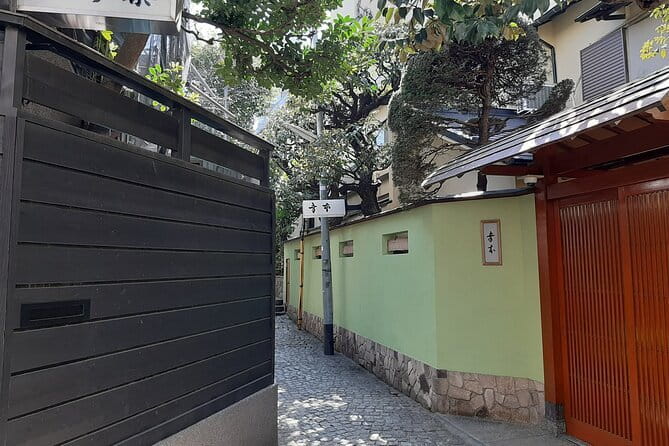
The meeting point is Eni Kaita Mochi Tsukiji Store at 4-75 Tsukiji, Chuo City, on the first floor. The tour ends back at the same meeting point, which makes the outing easy to combine with the rest of your Tokyo plans.
The listed operating hours are 8:00 a.m. to noon, Monday through Saturday, during April 26 to May 18, 2026, and again from August 31 to September 30, 2026. The schedule excludes Sunday, so check the date carefully before booking.
The morning slot is a good fit for Tsukiji. You can visit before the day gets away from you and still have most of the afternoon free. Since the tour is scheduled within a four-hour window but lasts about 2 to 3 hours, your exact finish time may depend on the pace of your group.
The meeting point is near public transportation. A mobile ticket is provided, and confirmation arrives at booking. A nursing room is available, and the activity lists a restroom on board. Most people can participate, though the market setting means you should be comfortable walking and standing for the length of the tour.
Who will get the most from this experience
This is a strong choice for a first visit to Tokyo, especially if Tsukiji is high on your list but you do not know how to approach it. You will get a guided start, several tastings, and a basic understanding of local manners.
It also suits repeat visitors who want more meaning from the area. One piece of tour feedback came from people who had already visited Tokyo several times, yet found the guide’s explanation of culture, history, and food made this visit feel different. That is a useful clue: you do not have to be new to Tokyo to benefit from a local perspective.
Food-focused visitors should enjoy the snack portion, but serious food hunters may want to add a separate lunch reservation or free afternoon in the market. Families and small groups may appreciate the private arrangement because they can ask questions without worrying about a large party.
This may not suit someone who wants a long temple visit, a full meal, or a highly structured list of named restaurants. The schedule is short, and the market visit is only one part of the morning.
How cancellation and booking affect your plans
You can cancel for a full refund up to 24 hours before the experience begins. Changes or cancellations made less than 24 hours before the start time are not accepted for a refund.
That policy is fairly flexible for a morning activity, but Tokyo plans can shift quickly. If you are booking around weather, jet lag, or a changing food itinerary, keep the 24-hour cut-off in mind.
The activity is offered by GuruGuruTour Tokyo. Since it is private, only your group participates. Book about a week ahead if possible, as that is the typical advance booking pattern provided for this experience.
Final verdict: book it for context, not just seafood
I would book this tour if you want an easy, personal introduction to Tsukiji with food, etiquette, and nearby cultural sites all in one morning. The strongest reason to choose it is the guide’s individual attention, especially if Guru-San leads your visit and you enjoy conversation about Japanese culture as much as eating.
I would skip it if your main goal is simply to browse freely, eat a large lunch, or spend hours comparing every stall. You can explore the outer market on your own and keep your budget lower.
For most first-time visitors, the combination of a private guide, included snacks, Tsukiji Hongwanji Temple, and Namiyoke Inari Shrine gives the $84.54 price a reasonable purpose. Just arrive ready to walk, keep lunch money aside, and treat the experience as a guided introduction rather than a complete day of eating.
FAQ
How long does the Tsukiji tour last?
The experience lasts approximately 2 to 3 hours.
What time does the tour operate?
The listed operating hours are 8:00 a.m. to noon, Monday through Saturday, during the provided operating periods.
Where does the tour begin?
It begins at Eni Kaita Mochi Tsukiji Store, Japan, 104-0045 Tokyo, Chuo City, Tsukiji, 4-chōme 7-5, Tsukiji Ky Building, first floor.
Where does the tour end?
The activity ends back at the meeting point.
Is the tour private?
Yes. Only your group participates in the activity.
Are snacks included?
Yes. Snacks are included during the tour.
Is lunch included?
No. Lunch is not included.
Are admission fees included?
The listed stops at Tsukiji Hongwanji Temple and Namiyoke Inari Shrine have free admission. The Tsukiji Jogai Market portion does not list an admission ticket.
Does the tour include a guide?
Yes. A guide is included, and Guru-San is named in the tour information and feedback.
Can I cancel for a full refund?
Yes. You can cancel at least 24 hours before the experience start time for a full refund. Cancellations or changes made less than 24 hours before the start time are not accepted for a refund.
More Shopping Tours in Tokyo

More Private Tours in Tokyo
More Tsukiji Market Tours in Tokyo

More tours in Tokyo we've reviewed




Tsukiji Market Tours, compared.
 ★ 5.0Tokyo Tsukiji Fish Market Food and Culture Walking TourFrom $99
 ★ 5.0Tokyo: Tsukiji Fish Market Food and Walking tourFrom $30
 ★ 4.9Tokyo: Tsukiji Fish Market Guided Walking TourFrom $222 hours
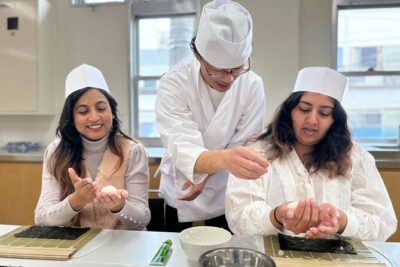 ★ 5.0Tokyo Sushi Making Class in Tsukiji with Professional ChefFrom $49
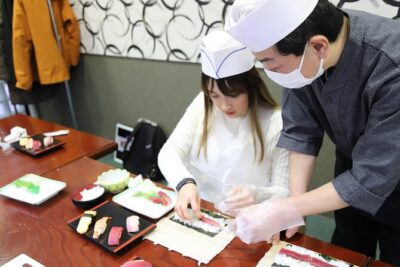 ★ 5.0Tsukiji Fish Market Guided Tour and Sushi Making with Pro ChefFrom $104
★ 4.7Tokyo: Tsukiji Fish Market Food and Culture Walking TourFrom $963 hours