
Reviewed · SUSHI MAKING CLASSES
Create Your Own Party Sushi Platter in Tokyo
Tokyo sushi is often treated as restaurant food, but this two-hour cooking class shows you how to make party sushi with your own hands. You learn futomaki, temari sushi, miso soup, and tamagoyaki, then sit down to eat the lunch you prepared.
I like the mix of pretty celebratory dishes and practical home cooking. I also like that English-speaking instructors work beside you rather than leaving you to follow a distant demonstration. The main point to consider is the fixed booking policy: the experience is non-refundable and cannot be changed after purchase.
In This Review
- Key points
- Party sushi instead of restaurant sushi
- What happens during the two-hour class
- Futomaki teaches the art of the big roll
- Temari sushi brings shape and color
- Miso soup and tamagoyaki make it a full meal
- English support keeps the lesson approachable
- Price and group size: who gets good value
- The fixed booking policy deserves attention
- Who will enjoy this Tokyo cooking class
- My take on the experience
- Should you book it?
- FAQ
- Where does the cooking class take place?
- What time does the class start?
- How long does the experience last?
- What types of sushi will I learn to make?
- What is futomaki?
- What is temari sushi?
- Will I learn dishes besides sushi?
- Is lunch included?
- Is the class taught in English?
- How many people are required to book?
- Is transportation included?
- Can I cancel or change my booking?
Key points
- Make two kinds of party sushi: Learn thick futomaki rolls and round temari sushi topped with sashimi and vegetables.
- Cook a complete Japanese lunch: Miso soup and tamagoyaki add useful home-style skills beyond sushi.
- Get side-by-side English support: Instructors chat with you and offer help during the lesson.
- Start at 11:30 am in Minato City: The class ends back at its meeting point after about two hours.
- Best for groups of four or more: The minimum booking size makes this a natural choice for friends, families, and team activities.
- Eat what you prepare: Lunch, ingredients, and the cooking experience are included in the price.
Party sushi instead of restaurant sushi
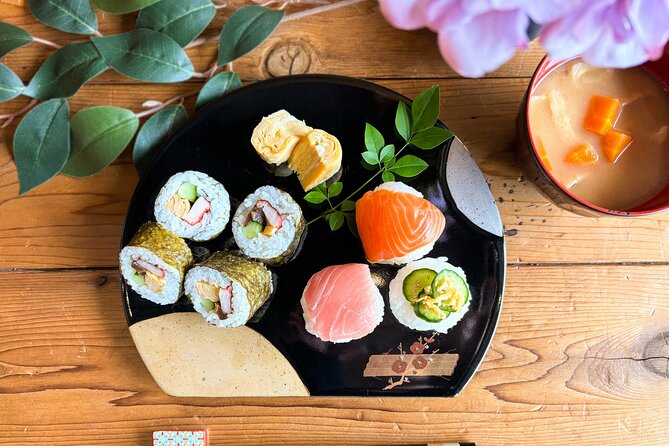
The appeal here is simple: you are not just looking at a plate of sushi. You are learning how several festive Japanese dishes come together.
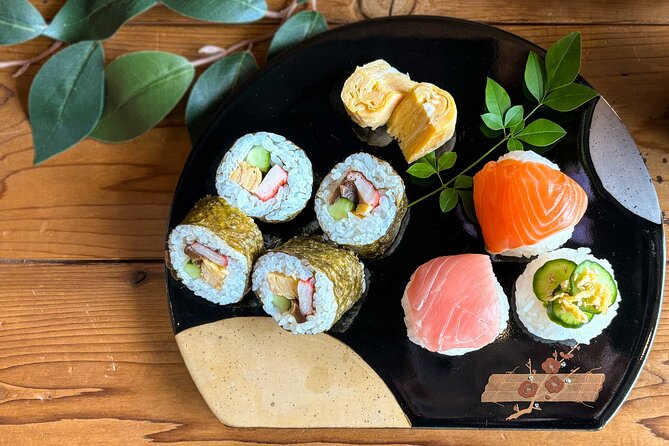
Futomaki is the large, thick roll. It uses sushi rice, nori, and several fillings, giving you a generous cross-section when sliced. Temari sushi takes a different shape. Rice is formed into a small round piece, then topped with sashimi and vegetables. The result is neat, colorful, and designed for special occasions.
That makes this class a good match for anyone who wants more than a standard sushi-making lesson. You get to work on both rolling and shaping, two different skills with different results. The finished food is meant to look attractive on a party table, not only taste good.
I especially like the practical idea behind the menu. You can picture making these dishes for a birthday, family gathering, or casual dinner at home. The class connects Japanese food culture with a useful skill you can try again after your trip.
A few more Tokyo tours and experiences worth a look
What happens during the two-hour class
The class begins at 11:30 am in Minato City, Tokyo. The exact lesson flow is not broken into a published minute-by-minute schedule, so you should expect the instructor to guide you through the recipes during the two-hour session rather than follow a rigid sightseeing itinerary.
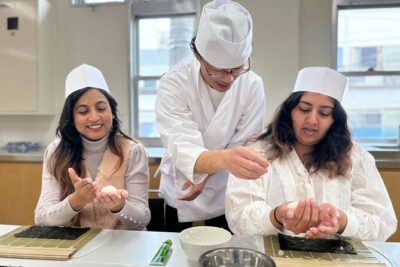
The core lesson covers futomaki and temari sushi from scratch. You learn how to handle the rice, use the ingredients, and shape the dishes into their finished forms. Since both types are visually important, careful preparation matters as much as simply putting food together.
The instructors provide support in English. That matters in a hands-on class, where a small mistake in shaping or assembly can be easier to fix with a quick explanation beside you. The teaching style is described as friendly and attentive, with conversation and help throughout the activity.
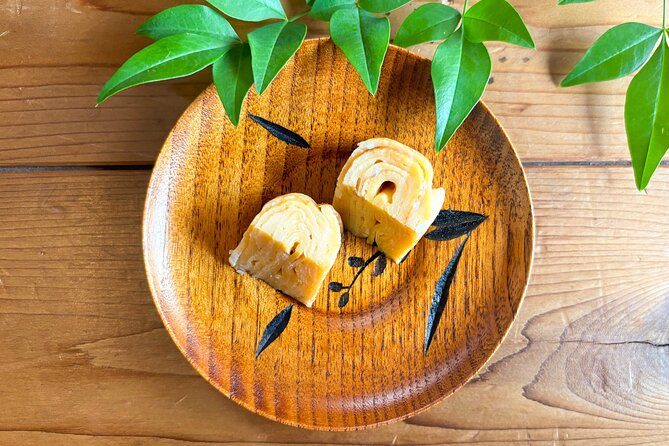
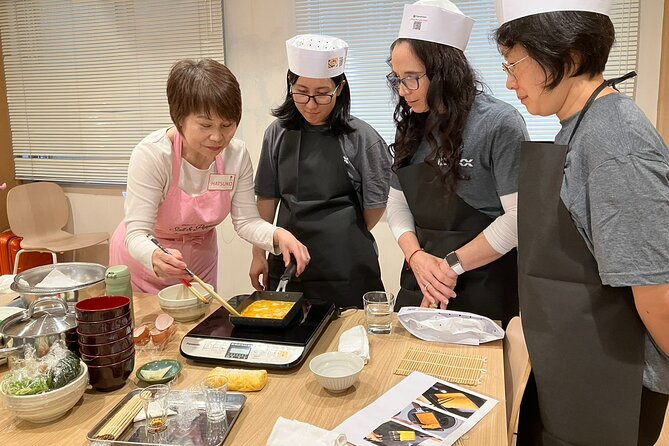
You also prepare miso soup and tamagoyaki. Miso soup is a basic Japanese home-style dish, while tamagoyaki is the rolled Japanese omelet often served with breakfast, bento meals, or sushi. Adding these two recipes makes the session feel like a complete lunch lesson rather than a narrow demonstration about rolls.
At the end, lunch is included. You eat the dishes prepared during the class, which gives the lesson a satisfying finish and lets you see how the separate parts work together as a meal.
Futomaki teaches the art of the big roll
Futomaki is likely the most familiar part of the class to many people, but its size makes it less simple than a small maki roll. A thick roll has room for several ingredients, so balance and placement matter.
You work with sushi rice and a sheet of nori, then add multiple ingredients before forming the roll. The finished slice reveals the fillings inside. That visual effect is a major part of the dish’s appeal, especially when it is prepared for a celebration.
I like futomaki as a travel cooking lesson because it gives you an obvious before-and-after result. You start with separate ingredients and finish with a roll that can be cut and shared. It is also the recipe most likely to appeal to someone hoping to recreate a Japanese-style party platter at home.
The class is not presented as a professional chef course, and that is a benefit for most visitors. You are there to understand the method, get hands-on practice, and enjoy lunch. Expect a careful introduction to the process, not a long technical study of sushi knife work or fish preparation.
Temari sushi brings shape and color
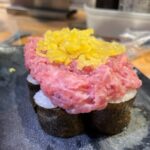
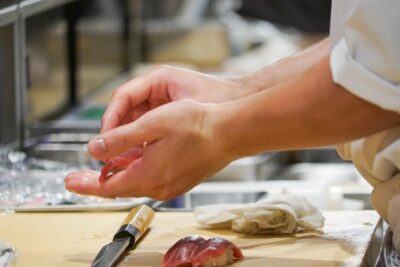
Temari sushi offers a different kind of challenge. Instead of rolling ingredients inside nori, you form rice into a round shape and add sashimi and vegetables on top.
The name refers to a traditional handball shape, and the finished sushi is designed to look decorative. This is one reason the dish fits parties and celebratory meals so well. Each piece can be small, tidy, and visually distinct.
For you, the value is in learning another way to present sushi. Futomaki focuses on the inside of the roll, while temari sushi puts the topping in full view. Making both in one class helps you understand that Japanese cooking pays close attention to appearance, proportion, and neat handling.
The description does not specify the exact sashimi, vegetables, or other ingredients used on the day. That is worth keeping in mind if you have a particular food preference. The class does include ingredients, but the supplied details do not promise substitutions or list allergy arrangements, so ask the provider before booking if that matters to you.
Miso soup and tamagoyaki make it a full meal
Sushi alone can make for a fun lesson, but miso soup and tamagoyaki give you two more useful recipes.
Miso soup is a familiar Japanese staple and a good example of everyday home cooking. It provides a warm, savory part of the meal beside the sushi. Tamagoyaki is a rolled omelet, and its shape requires a little care. Including it adds another preparation style to the class and gives you a recipe that can fit breakfast, lunch, or a packed meal.
This combination is one of the strongest parts of the experience. You do not leave knowing only how to assemble one type of sushi. You have worked with rice, soup, fish and vegetable toppings, and a rolled egg dish.
I also like the balance between special-occasion food and ordinary Japanese cooking. Futomaki and temari sushi are attractive enough for a celebration, while miso soup and tamagoyaki are tied to the daily food culture that many visitors want to understand.




English support keeps the lesson approachable
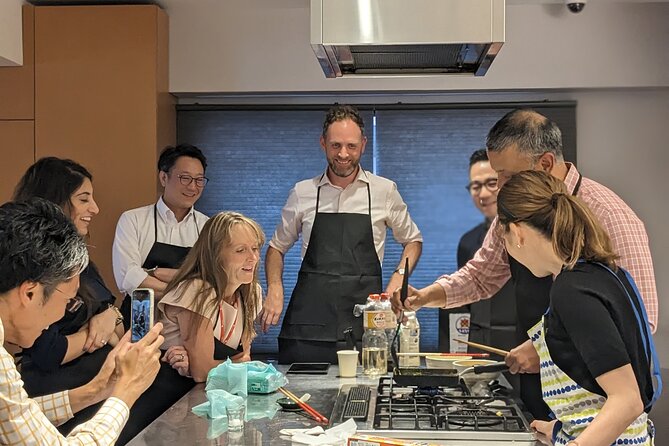
The class is designed for English-speaking participants, with instructors offering side-by-side guidance and conversation. That is important because cooking instructions can be hard to follow when you are watching from a distance or trying to translate every step.
You can expect help as you prepare the dishes, rather than simply receiving ingredients and being left alone. The emphasis is on a relaxed, social class where the instructors help you enjoy the process.
This also makes the experience suitable for a mixed group with different cooking levels. If one person in your party cooks often and another rarely cooks, personal support can make the gap less awkward. The published information does not identify the instructors by name, so you should not expect a named chef-led event.
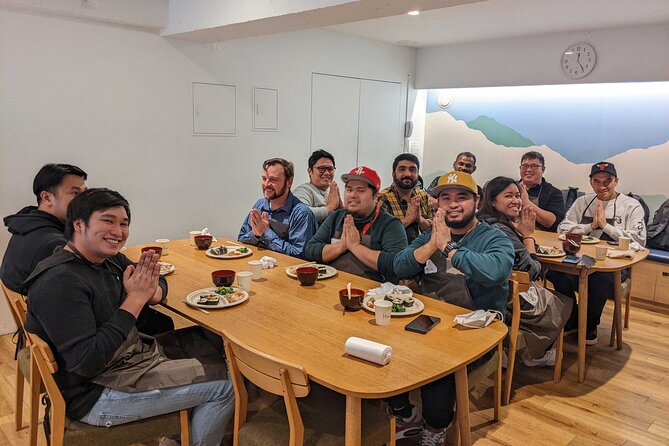
The social side is a real part of the appeal. The activity has been used for team-building and group bonding, and the format gives people something practical to do together. You are chatting while preparing lunch, then sharing the result at the end.
Price and group size: who gets good value
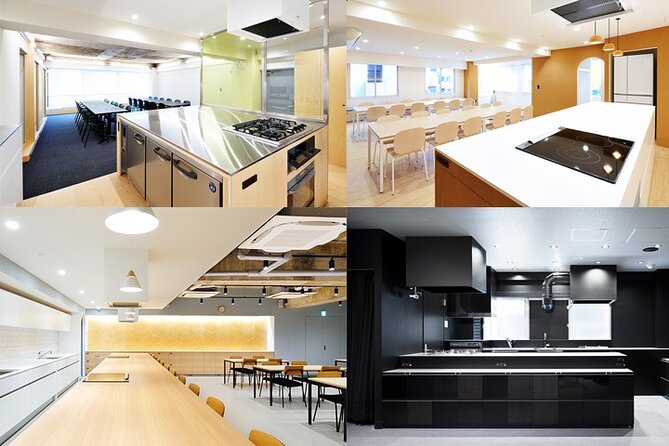
The listed price is $100.73 per person. That is not a low-cost lunch, but the price includes ingredients, the cooking experience, and the meal you prepare.
I would judge the value by what you want from the morning. If you only want to eat sushi, a restaurant will usually be a simpler choice. If you want instruction, a social activity, and the chance to make several Japanese dishes, the price covers more than food.
The minimum booking requirement is four people. This is not a small private lesson for one or two independent visitors. It works best for a group of friends, a family, or colleagues planning a shared activity. The maximum is 40 people, so the possible group size is fairly broad. A larger session may feel more social, but it could also feel less personal than a smaller booking.
You should also factor in the lack of private transportation. You make your own way to Minato City, and the class ends back at the meeting point. The activity itself lasts about two hours, so it fits well into a day when you want a structured lunch activity without giving up the entire afternoon.
The fixed booking policy deserves attention
This experience requires careful planning. Your booking is confirmed at the time of purchase, but the activity is non-refundable and cannot be changed for any reason.
That means you should check your Tokyo schedule before paying. Do not book it as a loose backup plan if your plans may shift. The fixed policy is the biggest practical drawback in an otherwise straightforward experience.
There is one exception outside your control. If the provider cancels because the minimum number of participants is not met, you will be offered another date or experience, or you can receive a full refund.
The activity is available as a mobile ticket, which is convenient for showing your booking on your phone. You still need to arrive at the stated meeting point in Minato City, since transportation is not included.
Who will enjoy this Tokyo cooking class
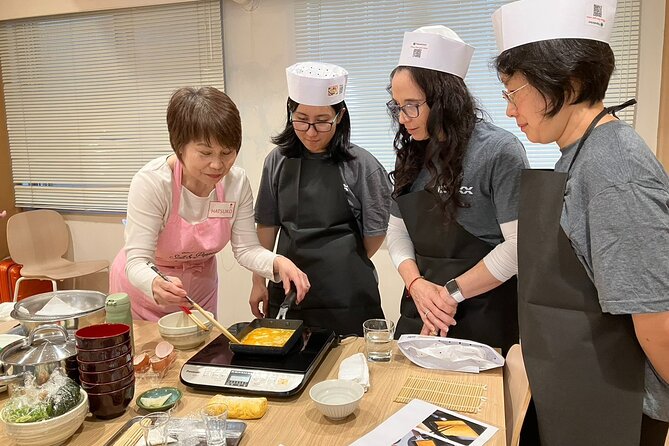
I would recommend this class to:
- Friends who want a shared activity rather than another restaurant meal
- Families looking for a food lesson with a clear finished result
- Visitors interested in Japanese home cooking as well as sushi
- Corporate or informal groups seeking a team-building activity
- Anyone who wants recipes that can be repeated at home
- First-time sushi makers who prefer English support during the process
It may be less suitable if you are seeking a quiet, private lesson for one or two people. The four-person minimum and possible maximum of 40 people make the group format central to the experience.
It may also not suit someone with strict dietary needs unless the provider confirms that the ingredients can be adjusted. The supplied information does not list allergy, vegetarian, or substitution options.
My take on the experience
The strongest feature is the menu. You learn two attractive types of sushi, then add miso soup and tamagoyaki to create a complete Japanese lunch.
The second strength is the practical, social format. You are not only watching a chef work. You are making the food yourself with English-speaking support, then eating the result. That combination helps the techniques stick and gives your group a shared story from the trip.
The drawbacks are clear and manageable: the price is higher than simply buying lunch, the booking requires at least four people, transportation is not included, and the cancellation policy is strict. None of these are surprises, but they matter when you compare this with a casual sushi meal or a smaller cooking lesson.
Should you book it?
Book this class if you have at least four people, want an interactive lunch, and like the idea of learning food you can prepare for a party at home. The mix of futomaki, temari sushi, miso soup, and tamagoyaki gives you more range than a sushi-only lesson.
Skip it if your main goal is a quick, inexpensive meal, or if your schedule is likely to change. For a planned group activity in Tokyo, though, this is a friendly and useful choice, with the added reward of eating a lunch you helped make.
FAQ
Where does the cooking class take place?
The class starts in Minato City, Tokyo, Japan. It ends back at the meeting point.
What time does the class start?
The stated start time is 11:30 am.
How long does the experience last?
The cooking class lasts approximately two hours.
What types of sushi will I learn to make?
You will learn to make futomaki and temari sushi.
What is futomaki?
Futomaki is a thick sushi roll made with sushi rice, several ingredients, and a sheet of nori.
What is temari sushi?
Temari sushi is made with a round formed piece of rice topped with sashimi and vegetables.
Will I learn dishes besides sushi?
Yes. The class also teaches you how to make miso soup and tamagoyaki, a Japanese rolled omelet.
Is lunch included?
Yes. Lunch, ingredients, and the cooking experience are included.
Is the class taught in English?
English-speaking instructors provide support during the class.
How many people are required to book?
A minimum of four people per booking is required. The activity can accommodate a maximum of 40 participants.
Is transportation included?
No. Private transportation is not included, and you must make your own way to the meeting point.
Can I cancel or change my booking?
No. The experience is non-refundable and cannot be changed for any reason. If the provider cancels because the minimum number of participants is not reached, you will be offered another date or experience, or a full refund.
More Sushi Making Classes in Tokyo
More tours in Tokyo we've reviewed



Sushi Making Classes, compared.
 ★ 5.0Sushi Making Tokyo Roll and Authentic Japanese Sushi ClassFrom $59
 ★ 4.9Tokyo: Roll and Authentic Sushi Making Class in AsakusaFrom $581h 40m
 ★ 5.0Make Sushi and Create Unforgettable Memories in TokyoFrom $79
 ★ 4.9Tokyo: Sushi Making Class in a Happi Coat near a Famous SpotFrom $421h 30m
 ★ 5.0Tokyo Sushi Making Class in Tsukiji with Professional ChefFrom $49
 ★ 5.0Tokyo Night Foodie Tour in Shinjuku – Seasonal Sushi, Wagyu BeefFrom $111