
Reviewed · SUMO EXPERIENCES
Tokyo: Sumo Morning Practice Viewing Tour
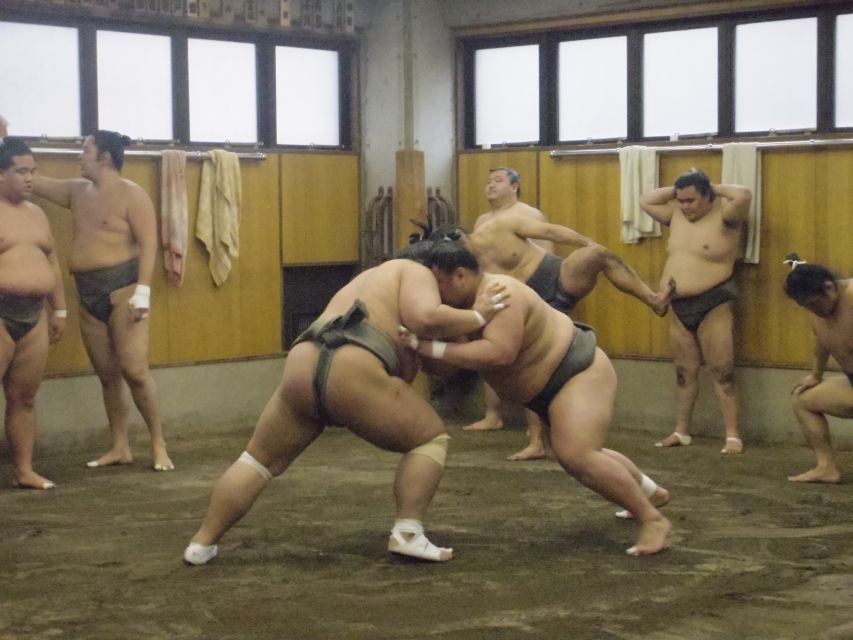
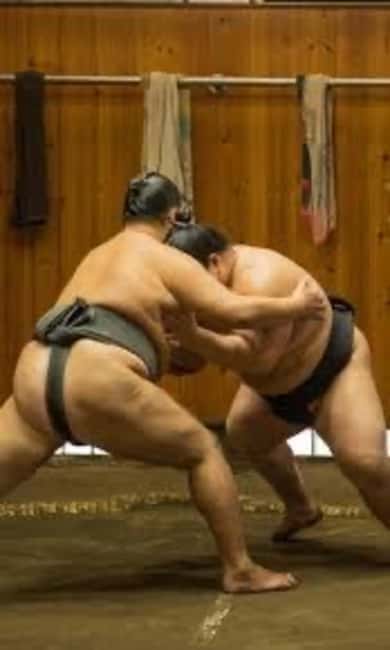
The remarkable part of this Tokyo experience is simple: you sit only a few feet from wrestlers training inside a real sumo stable. This is not a staged dinner show or a tournament viewed from the far side of an arena. You watch the athletes repeat drills, bouts, and rituals in the place where they live and work.
I like two things most. First, the close view of genuine training makes sumo feel physical and demanding. You hear the impact of each bout and see how little room there is for error. Second, the English-speaking guides, including Yuko, Noriko, Oku San, Mako, and Kaz, explain the rules and customs without drowning out the practice.
The main consideration is that this is a quiet, disciplined visit to a workplace. You must remain seated and silent during training, and you must stay until the session ends, usually around 9:00 to 10:00 AM. The practice can also run longer or shorter than expected, so do not schedule a tight morning appointment afterward.
In This Review
- Key points to know before booking
- Why a sumo stable is more special than a tournament seat
- Meeting in Ryogoku and reaching the stable
- The first few minutes inside a working stable
- Sixty to ninety minutes of powerful, repetitive training
- The stable master, questions, and possible photos
- What the $81 price buys you
- Dress, behavior, and practical limits
- Who will enjoy this morning in Ryogoku
- Should you book the Tokyo sumo practice tour?
- FAQ
- How long does the sumo practice viewing tour last?
- Where does the tour take place?
- Can I take photos or record video?
- Do I have to stay for the entire practice?
- Is the tour suitable for children?
- What language is the tour conducted in?
Key points to know before booking
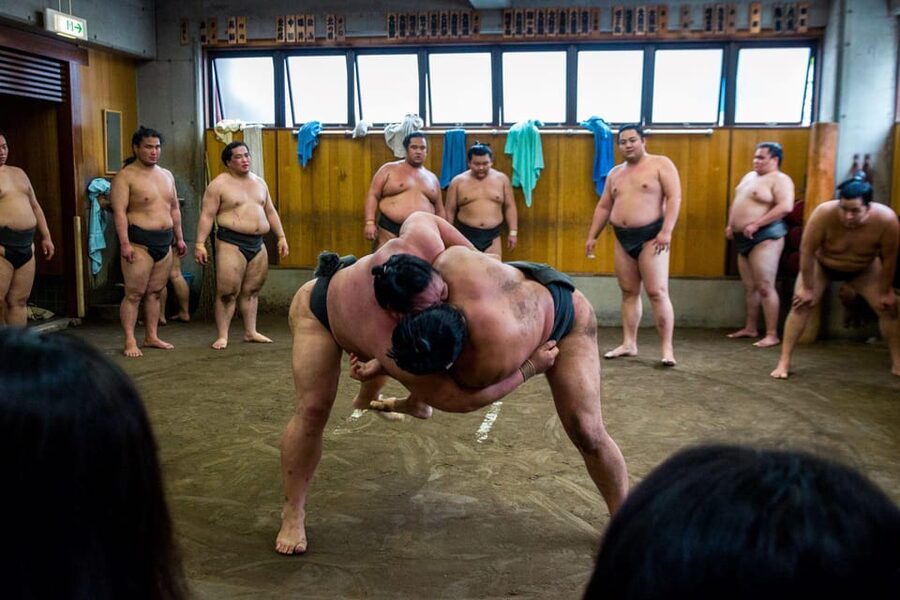
- Watch a real morning practice: See wrestlers train for 60 to 90 minutes inside a working stable.
- Ryogoku is sumo country: The stable is near the National Sumo Arena and other sumo facilities.
- Guides add essential context: English explanations cover history, customs, techniques, and the wrestlers’ path toward higher rank.
- Seats are close but not guaranteed: Arrive early for the best chance at a front-row place.
- Photos depend on the day: You may be able to take a picture with wrestlers after practice.
- Quiet rules matter: No video, flash, food, drinks, hats, or sunglasses are allowed inside.
Why a sumo stable is more special than a tournament seat
A Tokyo tournament is exciting, but it shows you the finished product. This morning visit gives you the daily work behind it. Sumo wrestlers train almost every morning, often from an early hour, as they prepare for the six annual tournaments.
A stable is both a home and a training center. Young wrestlers live together and work toward the highest ranks, while senior wrestlers and the stable master supervise their progress. You are not simply watching a sport. You are seeing a strict daily routine built around strength, balance, timing, and tradition.
Sumo is tied to Shinto beliefs and follows customs that can seem mysterious at first. The wrestlers’ movements, preparation, and conduct all carry meaning. Your guide helps you understand what you are seeing, including the basic aim of the bout: force an opponent out of the ring or make any part of the body other than the feet touch the ground.
That context changes the experience. Without it, a training session can look like a series of short, forceful clashes. With it, you begin to notice footwork, positioning, ritual, fatigue, and strategy.
A few more Tokyo tours and experiences worth a look

Meeting in Ryogoku and reaching the stable
The experience takes place in Ryogoku, Tokyo’s sumo district. Meeting points can vary by booking option, so check your confirmation carefully. After meeting your guide, the group may take a train to the stable, followed by a walk.
The route itself adds something useful. Ryogoku is associated with the National Sumo Arena, and the walk may take you past other stables and sumo-related places. One visitor described reaching a stable less than ten minutes from the arena, while another enjoyed the guide’s short introduction to this old part of Tokyo.
This is also why I would avoid treating the meeting time casually. The stable is a working place, not a public attraction with a large sign and a ticket booth. One booking party had trouble finding the exact meeting spot, so arriving early gives you time to get your bearings without making the group wait.
Guides such as Oku San and Yuko are praised for keeping the group together and explaining what will happen before you enter. That briefing is important. It tells you where to sit, when to remain still, and how to behave around the athletes.
The first few minutes inside a working stable
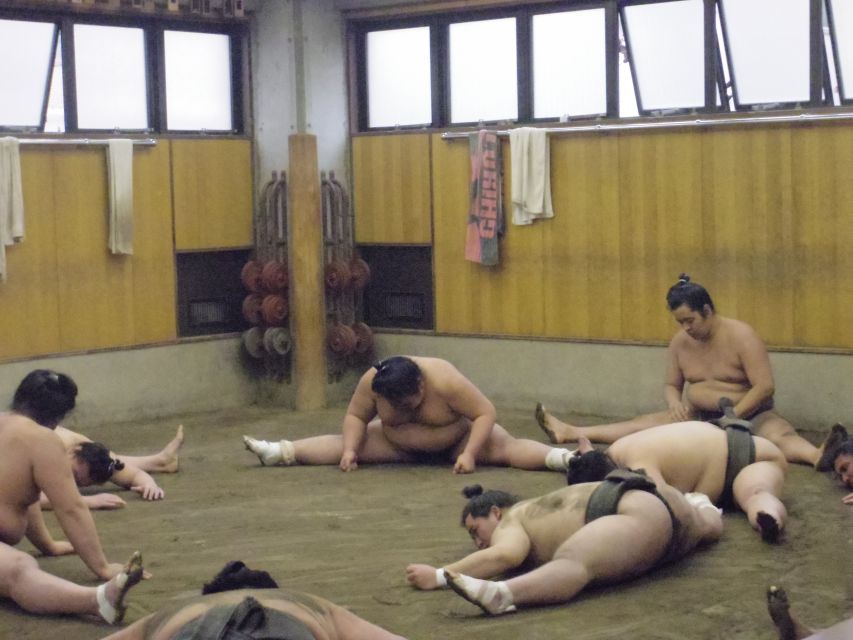
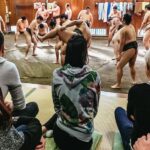
Entering the stable is the moment the tour shifts from sightseeing to observation. Space can feel limited, with only a small number of seats in some sessions. You may sit on the floor, and you should be ready to remain there quietly for a considerable period.
The stable is not arranged like a theater. Your view depends on arrival order, group size, and where the operator places the group. Several people had front-row seats after arriving first, while another group found a different tour occupying the entire front row. If photographs matter to you, arrive early and accept that a second-row seat may be possible.
The intimate setup is a major strength. You are close enough to see the wrestlers’ preparation and feel the force of their practice. It can also make the rules feel stricter than at an arena. Keep your phone on silent, do not stand or shift around during the session, and do not speak while the wrestlers are training.
This is not the right activity for someone who needs to move often or cannot sit quietly. The experience is not suitable for children under 11, and it is not recommended for people with mobility impairments.
Sixty to ninety minutes of powerful, repetitive training
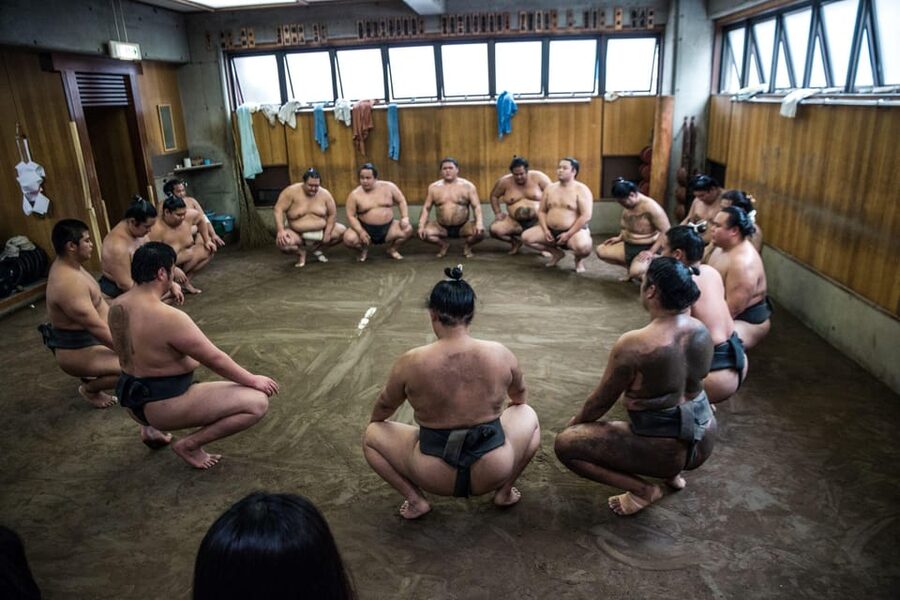
The main session lasts about 60 to 90 minutes, although the exact length depends on the stable’s schedule. You watch the practice through to the end rather than leaving whenever you like. Once you leave, there is no re-entry.
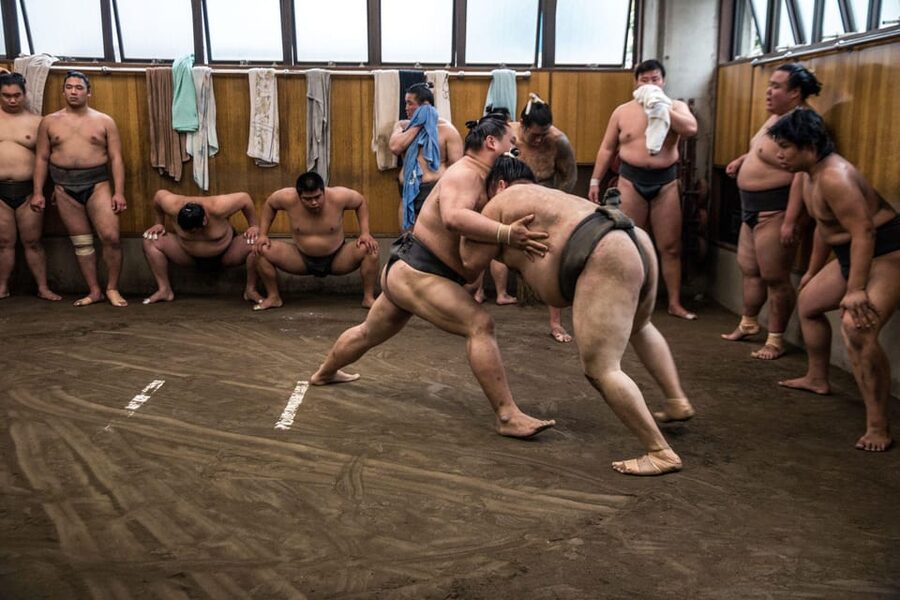
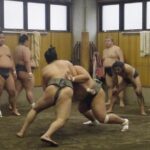
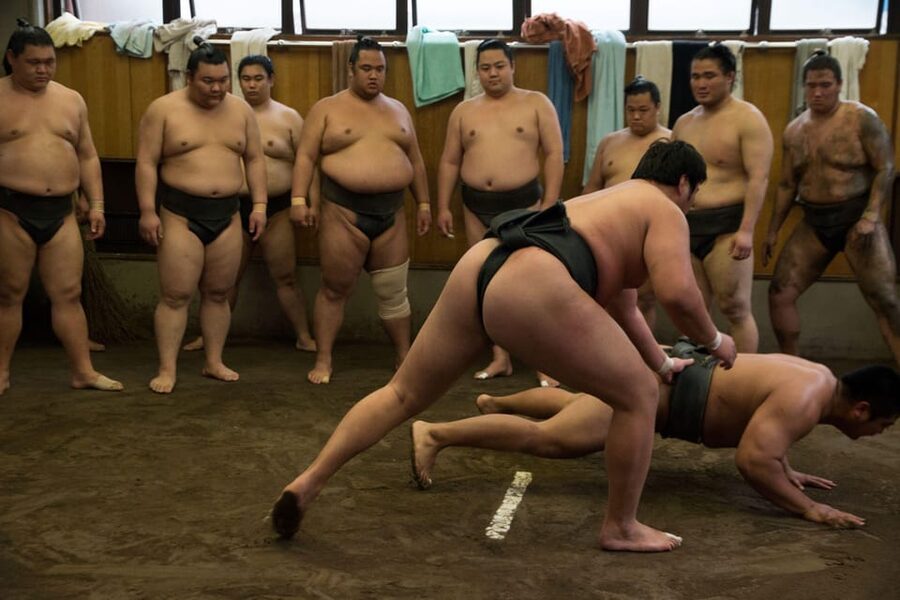
At first, the practice may seem repetitive. That is part of the point. Sumo wrestlers repeat movements and bouts until their bodies can respond under pressure. The impact is more impressive in person than on television. One person described the sound and force of the duels as strong enough to make you shudder until you adjust to it.
The bouts themselves can be surprisingly brief. A match may end in seconds, but the details leading to that result matter. A small shift in balance or a missed position can decide everything. The wrestlers must stay focused because there is little margin for error.
You may see different stages of training during the same session. Some wrestlers work through drills, some face one another in live practice, and senior figures observe or direct the activity. One particularly fortunate group saw former yokozuna Terunofuji presiding over a large group of wrestlers at Isegahama Stable, along with well-known wrestlers such as Enho and Takerufuji. The stable available on your date will depend on the schedule, so do not book expecting a particular wrestler.
Your guide may explain things through quiet notes or printed cards rather than spoken commentary. This is a smart compromise. You receive help with names, movements, and customs while the athletes can train without a running tourist narration.
The quiet format has one drawback: it can be hard to hear whispered explanations during a forceful bout. I would read the information sheets carefully and save detailed questions for before or after the practice.
The stable master, questions, and possible photos
After the practice, the atmosphere may relax. Depending on the day, you might be able to ask questions of the stable master or coach. One session included a question-and-answer period with the stable master, while another included explanations from a former wrestler who helped run the stable.
This is where the guide’s value becomes clear. A good guide does more than translate. Yuko has been praised for detailed explanations and gentle organization, while Noriko has helped visitors understand the history and rules before the practice begins. Guides such as Taku, Mako, and Nobu have also been singled out for making the visit easy to follow.
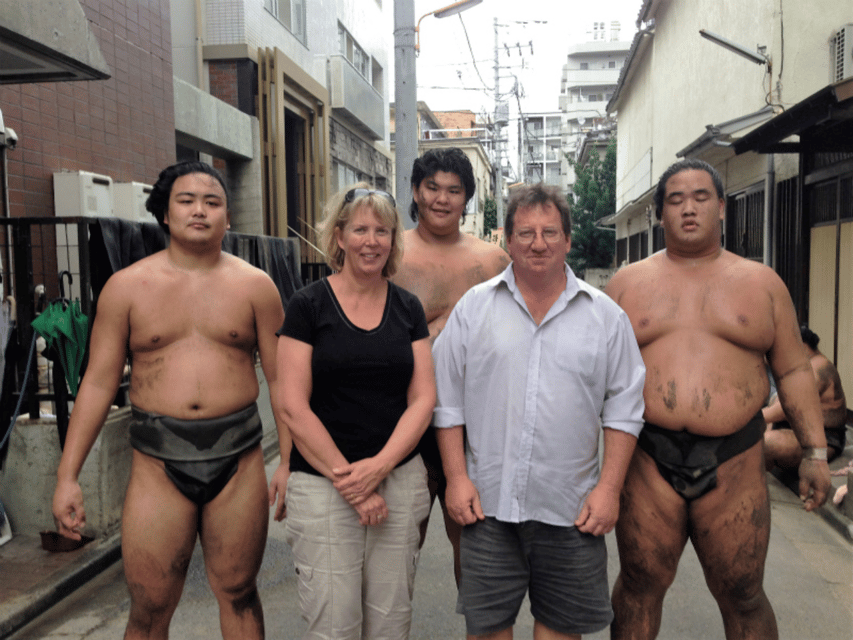
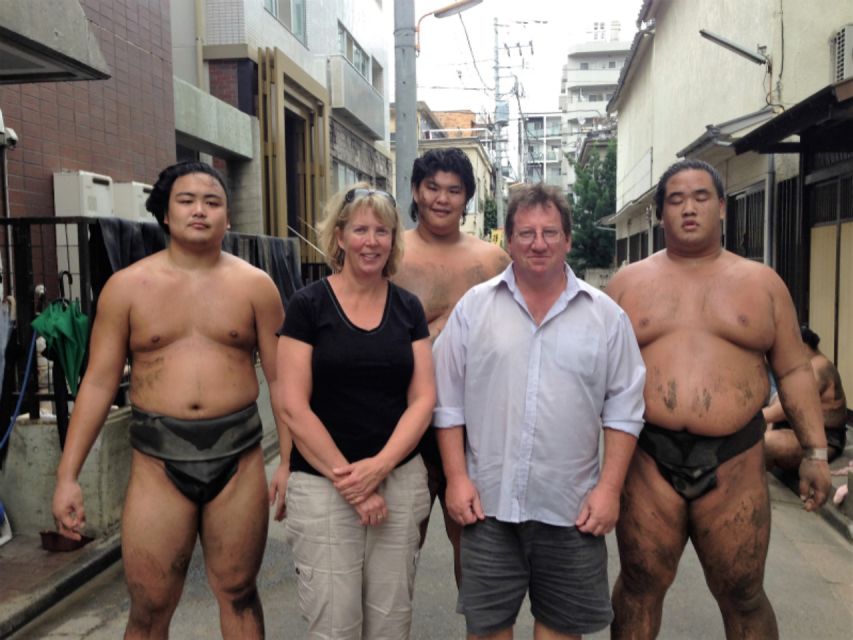
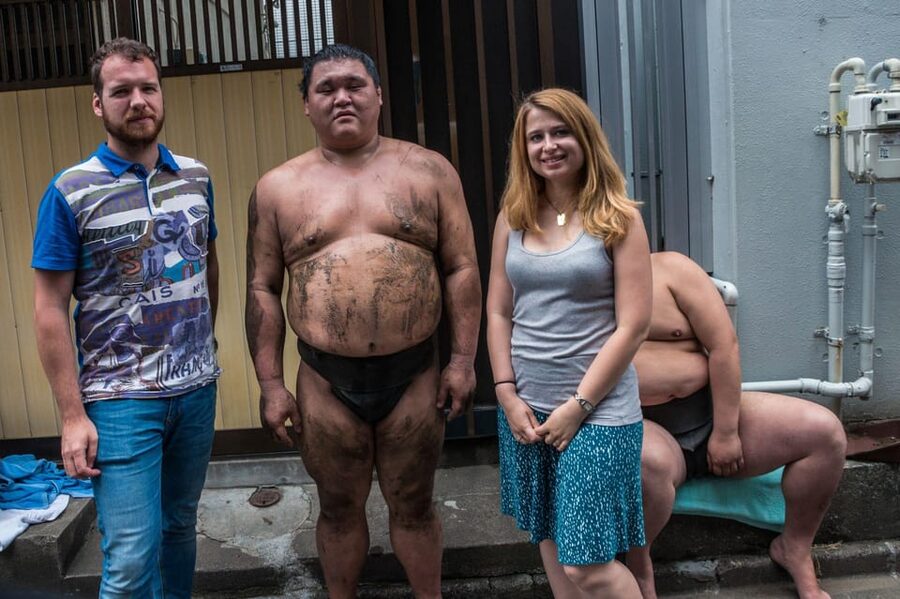
Photo opportunities with wrestlers may be available after training, but they are not guaranteed. Several people were able to take pictures with one or more wrestlers, yet the activity information makes clear that this depends on the day. Do not treat the photo as the main purpose of the visit.
You cannot use flash photography, and video recording is forbidden. That may disappoint anyone hoping to capture the loudest collisions, but it also protects the stable’s working atmosphere. Bring your attention rather than expecting to leave with a film archive.
A few more Tokyo tours and experiences worth a look

What the $81 price buys you
At $81 per person, this is not a cheap way to fill an hour in Tokyo. The value comes from access. Ordinary visitors generally cannot walk into a training stable, and these spaces have traditionally been more accessible to sponsors than casual sightseers.
You are paying for more than a seat. The price includes a licensed English-speaking guide, the transfer or walk to the stable, an explanation of sumo customs, and access to a practice session that you would have difficulty arranging on your own. The chance to ask questions and possibly take photos adds further value.
I think the cost makes sense if you want a close look at Japanese culture and do not have a tournament ticket. It also makes sense if you plan to attend a tournament later in your trip. Watching practice first can help you follow the action in the arena and recognize the techniques and wrestlers.
The value is less clear if you mainly want a dramatic competition. Training is not a tournament. It may lack the crowd, ceremony, and clear win-or-lose excitement of a match day. It can also feel repetitive to anyone who is not interested in athletic technique or traditional routines.
Group size varies. Some days have been nearly private, while one session had around 30 people. A larger group can still be well organized, but it may affect your seat and how easily you hear the guide. That is another reason to arrive early.
Dress, behavior, and practical limits
Wear modest clothing. Avoid hats and sunglasses, and do not bring food or drinks into the stable. Keep your phone silent and remain seated during practice.
Plan your morning around the fixed ending. You must stay until the end of the session, usually around 9:00 to 10:00 AM. The practice may finish earlier or later, so tell the operator in advance if you have an important commitment afterward.
The tour is conducted in English. Guides explain the sport and help you follow the etiquette, but you should still expect periods with no spoken commentary. Silence is not a flaw here. It is part of respecting the wrestlers’ concentration.
I would also avoid dressing for a casual tourist outing. This is a place of work with its own customs. Your behavior affects the athletes and the stable’s willingness to host future visitors.
Who will enjoy this morning in Ryogoku
I recommend this experience to anyone curious about how sumo works beyond the television image. You do not need to know the rankings or techniques in advance. The guide gives you enough background to make sense of the practice.
It is especially good for:
- People who could not obtain tournament tickets
- Visitors interested in Japanese traditions and Shinto-linked customs
- Martial artists and sports fans who enjoy watching drills and technique
- Adults who can sit quietly for an extended period
- Anyone looking for an activity outside the usual Tokyo sights
I would think twice if you need constant movement, want to film everything, or prefer a polished performance built for tourists. Families with younger children should choose another activity, since children under 11 cannot join and the quiet rules are firm.
Afterward, you can stay in Ryogoku for a sumo meal. The district is also convenient for visiting the National Sumo Arena area and continuing toward Asakusa. The tour ends after the stable visit, and the ending point may differ from the meeting place, so keep your afternoon route flexible.
Should you book the Tokyo sumo practice tour?
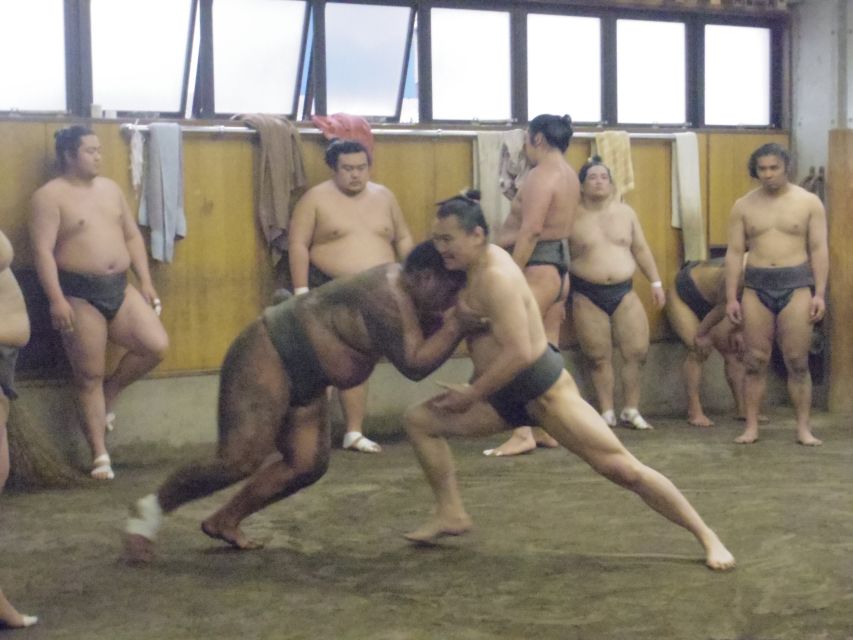
Book it if you want access rather than spectacle. The chance to sit close to athletes in a real stable is rare, and the setting feels far more personal than a staged sumo show. The best parts are the force of the practice, the quiet concentration, and the guide’s help in reading what is happening.
Before booking, make sure you can sit on the floor, remain silent, avoid video, and stay until the end. Arrive early for a better seat, keep your schedule open until around 10:00 AM, and treat the photo opportunity as a bonus.
For $81, I see this as a strong choice for a first look at sumo, especially if a tournament is sold out. It is not a universal crowd-pleaser, but for the right visitor, it can become one of the most memorable mornings in Tokyo.
FAQ
How long does the sumo practice viewing tour last?
The activity lasts about 90 minutes to two hours. The practice itself usually runs for 60 to 90 minutes, and the exact duration depends on the day’s schedule.
Where does the tour take place?
The tour takes place at a real sumo stable in Ryogoku, Tokyo, on Honshu. The meeting point can vary by booking option, and the group may take a train to the stable after meeting the guide.
Can I take photos or record video?
You cannot record video or use flash photography. Photos with wrestlers may be possible after practice, but this depends on the day.
Do I have to stay for the entire practice?
Yes. You must stay until the practice ends, usually around 9:00 to 10:00 AM. Once you leave the stable, you cannot re-enter.
Is the tour suitable for children?
The tour is not suitable for children under 11. All participants must also be able to sit quietly and remain still during the practice.
What language is the tour conducted in?
The tour is conducted in English with a live English-speaking guide. The guide explains sumo’s history, rules, customs, and the training you are watching.
More Morning in Tokyo
More Sumo Experiences in Tokyo

More tours in Tokyo we've reviewed






Sumo Experiences, compared.
 ★ 4.8Tokyo: Sumo Show Experience with Chicken Hot Pot and a PhotoFrom $1032 hours
 ★ 4.8Tokyo: Sumo Show and Dining ExperienceFrom $7990 minutes - 2 hours
 ★ 5.0the SUMO showFrom $89
 ★ 5.0Tokyo Shinjuku Sumo Show & Experience with PhotoFrom $79
 ★ 4.8Tokyo: Sumo Show and Experience in ShinjukuFrom $691h 30m
 ★ 4.6Tokyo: Sumo Tournament Tour with Chair Seat TicketsFrom $141