
Reviewed · PRIVATE
Private Custom Tour: Tokyo in a Day
Tokyo is too large for a one-size-fits-all sightseeing route, and this private tour gets that right. You plan the day with your guide, then mix major sights such as Meiji Shrine, Asakusa, and Tsukiji with neighborhoods that match your interests.
I like the choice between public transit and a private vehicle, and I like that hotel pickup and drop-off are included within Tokyo’s 23 wards. The main drawback is the pace: an eight-hour public-transit day can mean more than 20,000 steps, stairs included.
In This Review
- Key points at a glance
- Why a custom Tokyo day can work so well
- What the 4-hour and 8-hour options really mean
- Tsukiji Market: a strong opening for food lovers
- Hamarikyu Gardens and Tokyo’s calm center
- Asakusa and Senso-ji: Tokyo’s old-town feel
- Meiji Shrine, Harajuku, and Takeshita Street
- Yanaka Ginza for a slower neighborhood walk
- Ginza, Shibuya, and Akihabara: choose your modern Tokyo
- Public transport or private vehicle?
- Lunch, drinks, and the value of the price
- The guides and the importance of communication
- Who should book this private Tokyo tour?
- Should you book Private Custom Tour: Tokyo in a Day?
- FAQ
- How long is Private Custom Tour: Tokyo in a Day?
- Is hotel pickup included?
- Is this a private tour?
- Can I choose the places I visit?
- Which Tokyo sights can be included?
- Can I use Tokyo’s subway and trains?
- Can I choose a private vehicle?
- Is lunch included?
- How much walking is involved?
- Can I cancel for a refund?
Key points at a glance
- Build the route around your interests: Choose temples, food, shopping, gardens, history, anime, sake, or a mix.
- See old and new Tokyo together: Pair Meiji Shrine or Senso-ji with Shibuya, Harajuku, Ginza, or Akihabara.
- Choose your transport style: Use trains and subways for a practical lesson in Tokyo, or pay for a private vehicle for easier transfers.
- Get useful local help: Guides including Shuhei, Sabina, Roy, Keiji, Yuki, and Minoru have tailored days around food, families, mobility needs, and literary interests.
- Expect a full day of walking: The public-transport option averages about 14 kilometers and more than 20,000 steps.
- Know what costs extra: Optional attraction fees are not included, and the full-day option includes lunch while the half-day option does not.
Why a custom Tokyo day can work so well
The best feature here is not a particular shrine or shopping street. It is the ability to shape the day before you arrive and keep adjusting it as you go.
You might ask for a first look at Tokyo that includes Tsukiji, Asakusa, Meiji Shrine, and Shibuya Crossing. You might instead build a food day around the old Tsukiji market, ramen, sake, and small local stops. Families can focus on Harajuku, character goods, Akihabara, or shopping. A history-minded visitor can request the Imperial Palace, temples, shrines, and the tombs of the 47 ronin at Sengaku-ji.
Your guide is not simply leading a fixed procession. The guide asks what matters to you, considers the time available, and adjusts the route. Shuhei has been especially good at mixing major sights with local food and explaining how to use the train system. Sabina has shaped routes around Japanese history, religion, and art, while Roy and Keiji have helped first-time visitors cover a surprising amount of ground.
The tour is private, so only your group participates. That matters in Tokyo. You can stop for a family member, change the order of sights, linger over lunch, or cut a stop when the heat and crowds begin to wear you down.
Other private tours in Tokyo


What the 4-hour and 8-hour options really mean
You choose either a half-day of about four hours or a full day of about eight hours. Four hours is enough for a useful introduction, but you must keep the route tight. A half-day could cover Meiji Shrine and Harajuku, or Asakusa and another nearby area, depending on your meeting point and interests.
The eight-hour option gives you room to connect different sides of Tokyo. A common day might include Tsukiji, Hamarikyu Gardens, Asakusa, Meiji Shrine, and Harajuku. Another group might replace one or more of those stops with Ginza, Shibuya, Akihabara, Yanaka, or the Imperial Palace.
Do not treat the full day as six leisurely museum visits. The listed stops add up to eight hours, and the public-transit format includes walking between stations, platforms, shrines, markets, and shopping areas. The practical payoff is seeing a lot of Tokyo while learning how the city works, but the physical cost is real.
I would choose the half-day if you have limited stamina, a late arrival, or a busy evening plan. Choose eight hours if this is your first day in Tokyo and you want an orientation before exploring alone.
Tsukiji Market: a strong opening for food lovers
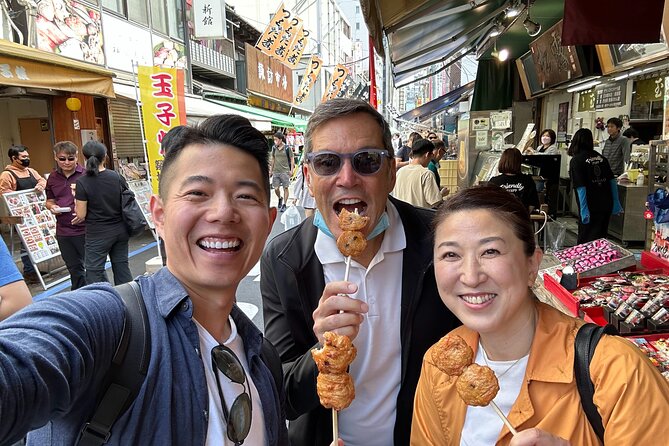
The old Tsukiji market area is a natural place to begin for anyone interested in Japanese food. The former wholesale fish market has changed, but the outer market area remains useful for browsing food stalls, seafood, snacks, and kitchen-related shops.
The experience here is less about checking off a single attraction and more about learning how to look at Japanese food. Your guide can help you make sense of unfamiliar seafood and point you toward samplings or local choices. One full-day route included tastings of different fish and seafood, followed by a lunch recommendation that became a highlight of the day.
Allow about two hours if Tsukiji is a priority. That gives you time to walk, sample, ask questions, and eat without turning the stop into a hurried pass-through. Food and sake interests can be built into the plan, but specific activities or purchases may cost extra.
The market can be crowded, and it is not a quiet place for a slow breakfast. Still, it gives you a quick sense of Tokyo’s food culture and makes a good contrast with the city’s formal shrines and polished shopping districts.
Hamarikyu Gardens and Tokyo’s calm center
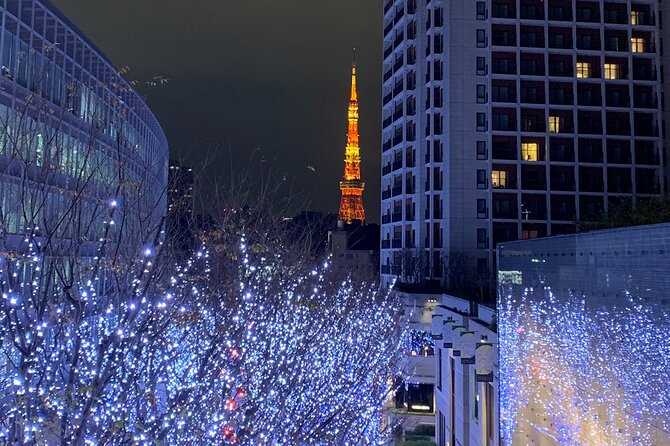
Hamarikyu Gardens offers a welcome change of pace after Tsukiji. The garden is associated with the old shogunal and imperial world, and the setting gives you open space and views amid central Tokyo.
The suggested visit lasts about an hour. You can combine it with traditional sweets and green tea, though optional activities may have an extra fee. Koishikawa Korakuen Gardens is another possible choice if gardens are more important to you than shopping.
I like this type of stop because it keeps a custom tour from becoming a string of train stations and major intersections. You get a chance to slow down, see a more formal side of Japan, and talk with your guide about the country’s customs and past.
Garden visits are weather-sensitive and may not suit every route. If you want to cover as much city as possible, you may prefer to use the hour for another neighborhood. Discuss that tradeoff before the day begins.
Asakusa and Senso-ji: Tokyo’s old-town feel
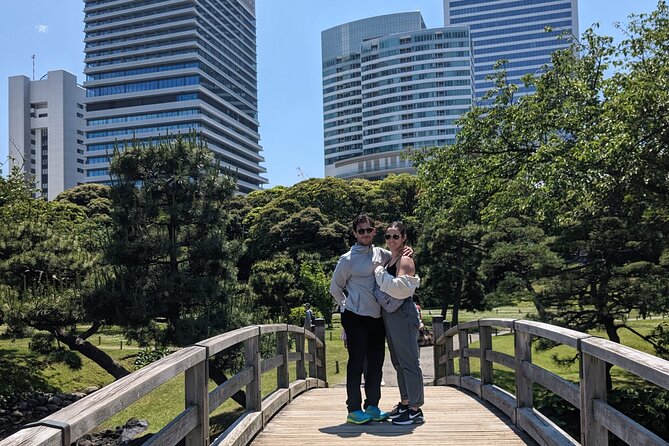
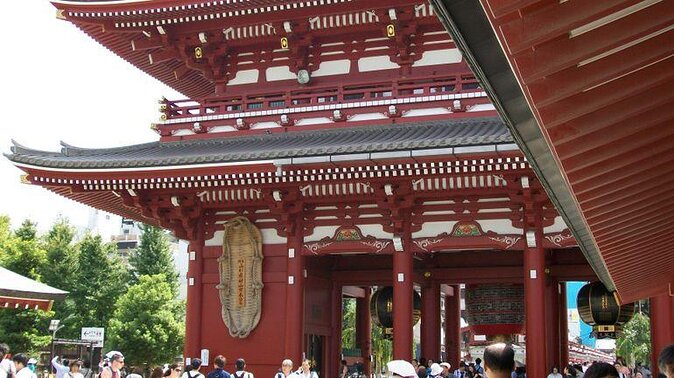
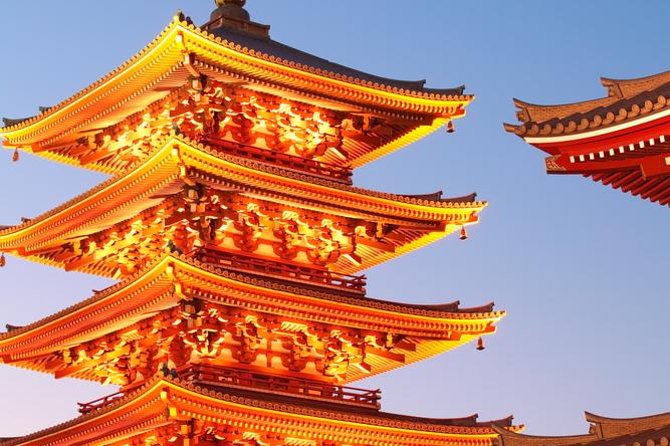
Asakusa is one of the most rewarding choices for a first Tokyo visit. The district centers on Senso-ji, the city’s best-known Buddhist temple, and offers a very different mood from Shibuya or Ginza.
Expect around two hours here. You can visit the temple grounds, explore the approach, browse traditional goods, and look for snacks and souvenirs. The district also works well for families because there is plenty to see without requiring a long museum visit.
A guide adds useful context at Asakusa. The details of Buddhist worship, shrine etiquette, incense, temple architecture, and seasonal customs are easier to understand when someone explains what you are seeing. You can also ask about goshuin, the calligraphic stamps collected at shrines and temples. One family was able to include shrine stamps as part of its day.
Asakusa is popular, so expect crowds at the main temple approach. If you want a quieter experience, ask your guide to include side streets or arrange the timing around your other stops.
Meiji Shrine, Harajuku, and Takeshita Street
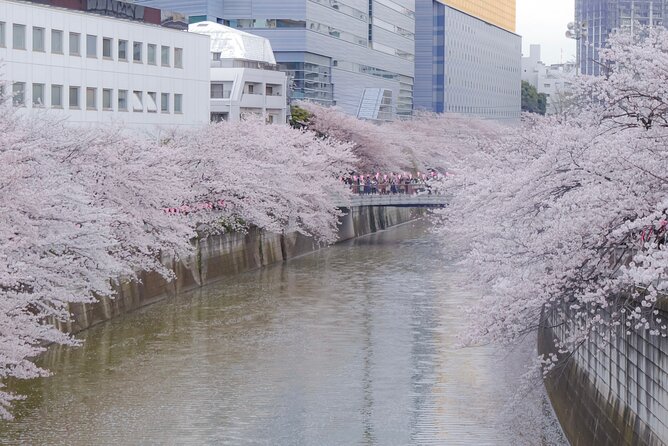
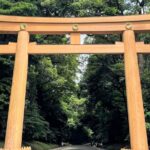
Meiji Jingu Shrine gives you a broad tree-lined setting and a chance to see Shinto traditions in practice. The shrine is dedicated to Emperor Meiji and Empress Shoken, and the visit can be a good introduction to shrine manners and Japanese religious life.
The suggested time is about an hour. That is enough for the principal grounds, but not for a slow walk through every path. Your guide can explain how to bow, purify yourself, and make an offering without making the process feel awkward.
From there, the route can move into Harajuku and Takeshita Street. The contrast is the point. You go from a quiet shrine setting to a narrow shopping street aimed at youth fashion, snacks, and novelty goods.
Takeshita Street is fun, but it can be crowded and intense. It is a better fit for shoppers, teenagers, and people curious about modern youth culture than for anyone seeking a peaceful stroll. One family used the tour to satisfy a shopping-focused 13-year-old, and the guide adjusted patiently to those priorities.
Omotesando offers a more polished shopping and architecture route nearby. If your group has different tastes, your guide can split the emphasis between Takeshita Street, Omotesando, and Shibuya.
Yanaka Ginza for a slower neighborhood walk
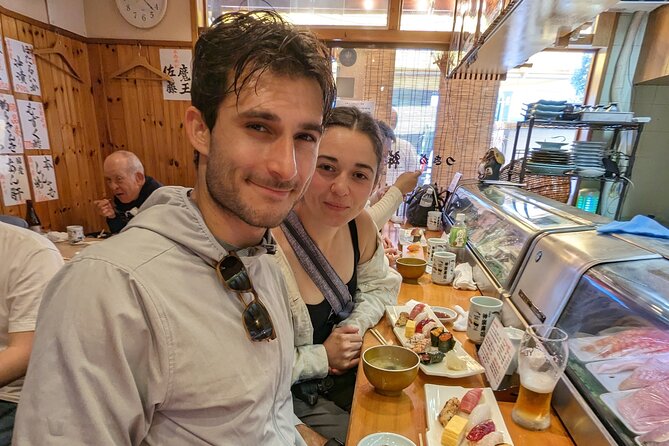
Yanaka Ginza is a useful alternative to Tokyo’s high-energy shopping districts. The street has a more traditional neighborhood atmosphere, with crafts, small shops, souvenirs, and everyday local character.
The suggested visit lasts about an hour. It will not provide the grand scale of the Imperial Palace or the visual drama of Shibuya Crossing. Its value is quieter: you can browse at a more relaxed pace and look for a small keepsake without being surrounded by major brand stores.
I would request Yanaka Ginza if you have already seen the main central districts, or if you want a less polished side of Tokyo. It also gives your guide room to point out traditional crafts and explain the difference between souvenir shopping and ordinary neighborhood commerce.
Ginza, Shibuya, and Akihabara: choose your modern Tokyo
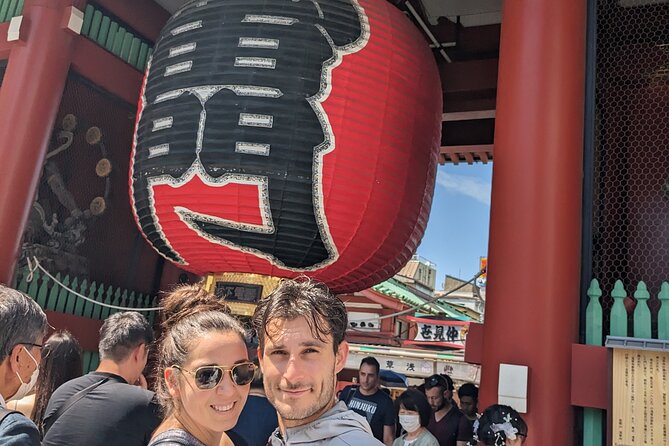
A custom day lets you pick the modern Tokyo that suits you.
Ginza is the choice for department stores, luxury brands, design, and polished streets. It can be paired with Tsukiji because the two areas are close enough to make a sensible central Tokyo route.
Shibuya is the choice for major city energy and the famous crossing. It is also useful for visitors interested in modern Tokyo, popular culture, and Haruki Murakami. One particularly personal route included Shibuya Crossing and a jazz bar connected with Murakami’s novel Norwegian Wood. That kind of request shows what a private guide can add when you share a specific interest in advance.
Akihabara is the obvious pick for electronics, video games, manga, and anime. It is a strong choice for families with older children and young adults, but it may not fit a group more interested in temples or gardens.
You cannot give all three districts equal time in a single day while also covering Tsukiji, Asakusa, and Meiji Shrine. Tell your guide your top two priorities, then let the route reflect them.
Public transport or private vehicle?
The public-transport option is more than a way to get from one sight to another. It teaches you how to move around Tokyo on your own. Guides have helped first-time visitors understand the subway system, station transfers, and routes they later used independently.
This option also gives you a closer view of ordinary city life. You walk through stations and neighborhoods rather than watching Tokyo pass by through a vehicle window. The cost is effort. The operator notes that an eight-hour public-transit tour averages more than 20,000 steps, or about 14 kilometers, with stairs and some routes that are not barrier-free.
A private vehicle makes sense for families, older adults, groups with mobility concerns, and anyone who wants to cover distant districts with less walking. One group used a van to connect shrines, temples, old-style shopping streets, and modern areas. Another selected a driver and guide together, which made it easier to include a street-food lunch.
The vehicle option may feel less like learning Tokyo’s transit system, and additional expenses are discussed based on the route. If mobility is a concern, explain it before the tour. Sabina and Keiji have adjusted pacing and routes for people with physical limitations, but no custom day can remove every stair or long walk.
Lunch, drinks, and the value of the price
The listed price is $159.18 per person. For a private eight-hour day with hotel pickup and drop-off, an English-speaking guide, transportation fares on the public-transit option, and lunch included on the full-day option, that can be solid value if your group wants personal planning and a broad introduction to Tokyo.
The value is weaker if you want a single attraction with plenty of free time. Most major stops have no admission charge, but the tour price pays for the guide’s time, route planning, hotel transfers, and help with transport. Optional attraction fees, food beyond the included full-day lunch, and other additional activities can raise the final cost.
Lunch is one of the more personal parts of the day. Guides have recommended ramen, street food, seafood, and local restaurants based on the group’s interests. The quality of that choice depends on communication, so tell your guide about allergies, dislikes, budget, and the kinds of food you want to try.
The full-day option includes lunch and a drink. The half-day option does not include lunch. Ask about any optional activity fees before agreeing to add them.
The guides and the importance of communication
The strongest part of this tour is the guide’s ability to listen and adjust. Shuhei has shaped routes around food, family interests, shrine visits, and first-day city orientation. Roy has helped groups cover a wide area by subway while keeping the day informative. Yuki has been praised for warm, flexible guidance, and Keiji has worked well with visitors who wanted both modern districts and older neighborhoods.
Sabina is a good name to request if Japanese history, art, religion, or careful pacing matters to you. Minoru is worth considering if you have a strong interest in Murakami and want a literary angle. Guide availability is not guaranteed, so treat these names as requests rather than promises.
English ability may vary by guide. Most feedback is highly positive, but one lower-rated experience raised concerns about communication, and another noted that the guide’s English was not strong enough for a walking tour. Be clear in your pre-tour messages and confirm the key places you want to see.
The tour has a 4.9 rating from 1,432 ratings and a 98 percent recommendation rate. Those figures point to a reliable service, but they do not erase the need to choose the right route, guide, and transport format for your group.
Who should book this private Tokyo tour?
I would book this for a first day in Tokyo, especially if you want help getting your bearings fast. It is also a smart choice for families, multigenerational groups, food-focused visitors, and people with a narrow interest that a standard sightseeing route would ignore.
It suits you best if you are willing to discuss your priorities before arrival. Give the guide a short list with three levels: must see, would like to see, and only if there is time. That makes the eight-hour schedule far more useful.
I would be cautious if you dislike walking, stairs, crowds, or a full schedule. Choose the private vehicle if moving between districts matters more than practicing public transit. Choose four hours if you want a gentle introduction, and eight hours if you want a serious overview.
Pickup and drop-off are included for hotels in Tokyo’s 23 wards. Confirmation is provided when you book, and the tour requires good weather. You can cancel up to 24 hours before the start for a full refund, but late cancellations and changes are not accepted.
Should you book Private Custom Tour: Tokyo in a Day?
Book it if you want a personal introduction rather than a fixed checklist. The real strength is the combination of famous sights, flexible neighborhood choices, local food advice, and practical help with Tokyo’s trains and subways.
Before paying, decide three things: your must-see districts, your preferred transport, and how much walking your group can handle. Ask about optional fees and request a guide whose interests match yours. If you do that homework, $159.18 per person buys more than transportation between sights. It buys a well-planned day that can help the rest of your Tokyo visit make sense.
FAQ
How long is Private Custom Tour: Tokyo in a Day?
You can choose a half-day tour of about four hours or a full-day tour of about eight hours.
Is hotel pickup included?
Yes. Hotel pickup and drop-off are included for hotels within Tokyo’s 23 wards.
Is this a private tour?
Yes. Only your group participates in the private activity.
Can I choose the places I visit?
Yes. You design a sightseeing plan with your guide around interests such as food, temples, shrines, shopping, history, sake, or Japanese culture.
Which Tokyo sights can be included?
Possible stops include the old Tsukiji market, Hamarikyu Gardens, Asakusa, Meiji Jingu Shrine, Takeshita Street, Yanaka Ginza, the Imperial Palace, Ginza, Shibuya, Omotesando, Harajuku, and Akihabara.
Can I use Tokyo’s subway and trains?
Yes. You can explore by public transportation, and transportation fares are included for the public-transit option.
Can I choose a private vehicle?
Yes. You can select private transportation, with a private vehicle provided for that option.
Is lunch included?
Lunch is included with the full-day option only. The tour also includes a drink. Additional food and optional activities may cost extra.
How much walking is involved?
An eight-hour public-transit tour averages more than 20,000 steps, or about 14 kilometers. Some routes include stairs and are not barrier-free.
Can I cancel for a refund?
You can cancel at least 24 hours before the experience starts for a full refund. Cancellations and changes made less than 24 hours before the start are not accepted. If poor weather causes the tour to be canceled, you are offered another date or a full refund.
More Private Tours in Tokyo

More tours in Tokyo we've reviewed











Private, compared.
 ★ 5.0Tokyo 6hr Private Tour with Government-Licensed GuideFrom $155
 ★ 5.0Private Tour to Mt. Fuji and Hakone (Fully Licenced Operator)From $497
 ★ 5.0Tokyo Customized Private Tour (Must See Places in 1 Day)From $145
 ★ 4.9Mount Fuji Full-Day Private Tour from Tokyo (Customizable)From $393
 ★ 4.8Tokyo: Private City Highlights Tour with Local GuideFrom $1064 - 8 hours
 ★ 5.0Tokyo 4hr Private Tour with Government-Licensed GuideFrom $109