
Reviewed · SUMO EXPERIENCES
Tokyo Sumo Morning Practice Tour at Stable
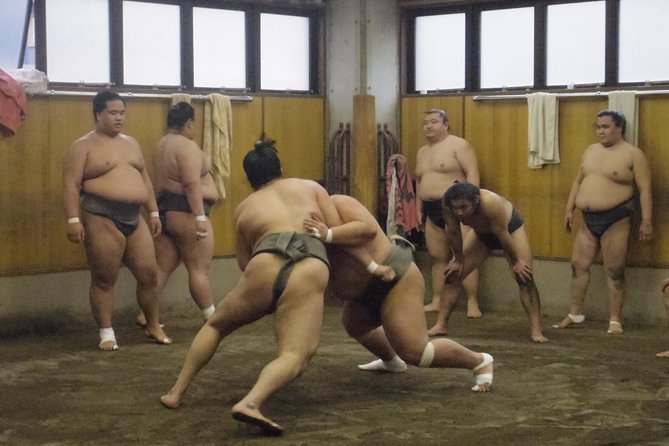
The striking part of this morning tour is simple: you sit close to professional sumo wrestlers while they train in a real stable, not on a stage built for tourists. There may be repeated sparring bouts, hard slaps, heavy footwork, and long stretches of quiet concentration. You are watching athletes prepare for competition, not a polished dinner show.
I like the close view of practice and the chance to learn how sumo works before you see it on television or at a grand tournament. I also like the guides, including Seiji, Yumi, Noriko, Nobu, and Cameo, who explain the rituals and daily discipline in clear English. The main drawback is the early start and the strict rules: you must sit quietly, phones stay silent, videos are forbidden, and summer heat inside the stable can be rough.
In This Review
- Key points before you book
- Why morning practice is different from a sumo tournament
- Meeting near Ryogoku Station at 7:45am
- Entering a real sumo stable
- What you see during the 90-minute practice
- The sumo calendar and competition system
- Photos, questions, and the end of the visit
- How much value do you get for $83.57?
- Heat, silence, and other rules you should take seriously
- Who will enjoy this sumo experience most?
- Should you book the Tokyo Sumo Morning Practice Tour?
- FAQ
- Where does the Tokyo Sumo Morning Practice Tour begin?
- How long does the experience last?
- Is the sumo stable a real training facility?
- What age is required to join?
- Can I take photographs?
- Can I take a photo with the wrestlers?
- Can I eat or drink inside the stable?
- Can I wear a hat or sunglasses inside?
- Can I leave during the practice and come back?
- What is the cancellation policy?
Key points before you book
- Practice takes place in a working sumo stable, where wrestlers train for official competitions.
- Meet at 7:45am near Ryogoku Station, with the exact point depending on your booking option.
- Expect about 90 minutes inside the stable, plus roughly 15 minutes for meeting and walking.
- Guided explanations cover Shinto traditions, rankings, training, and the six annual Grand Tournaments.
- You may see many practice bouts, often with far more continuous action than a formal tournament.
- The experience costs $83.57 per person, which is fair for direct access but high if you want a short, highly interactive tour.
Why morning practice is different from a sumo tournament
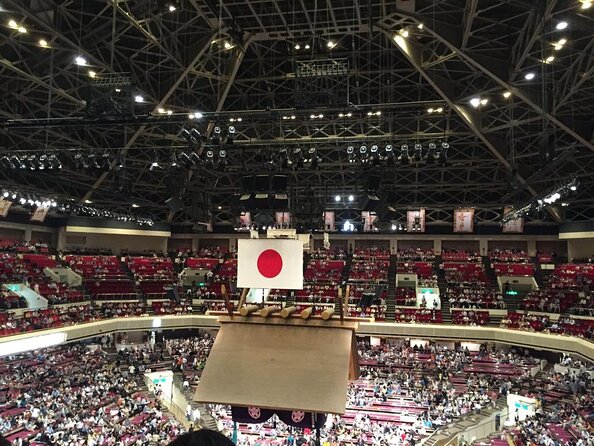
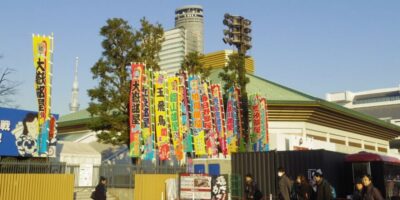
A formal tournament is a major public event with ceremony, entrances, judging, banners, and carefully timed bouts. Morning practice gives you something else: repetition. Wrestlers may work through drills and sparring exchanges again and again, with little decoration around the action.
That difference matters. At a tournament, you see the finished performance. At the stable, you see the work behind it. You notice the strain, the pauses, the correction of technique, and the way wrestlers keep going after demanding exchanges.
The atmosphere is not designed as entertainment. The wrestlers are concentrating on their training, so your role is closer to that of a respectful observer than a spectator at a show. That can feel unusually intimate, but it also means the tour requires patience and good manners.
You might see seasoned wrestlers testing each other, younger athletes working through exercises, or a practice session that ends sooner than expected. The length and intensity depend on that day’s training. One especially fortunate group saw a sponsor of the stable arrive, which led to a longer session and more intense wrestling. That kind of variation is part of the appeal, but it also means the morning cannot be scripted.
A few more Tokyo tours and experiences worth a look

Meeting near Ryogoku Station at 7:45am
Your morning begins at 7:45am at or near Ryogoku Station. The meeting location can change with the option you choose, so check the confirmation message carefully rather than relying only on a map pin.
This is one part of the experience where you should leave room for error. One person found that Google Maps placed the location about a block away, and another had confusion because no guide was immediately visible at the station. The experience still worked out, but you do not want to begin a short morning tour by searching busy streets in a hurry.
After meeting the guide, your group may take a train to the stable. The walk and transfer help place sumo in its home district, but the station meeting is mainly a practical starting point. There is no sightseeing stop at the station gallery itself.
Use the restroom before meeting. Facilities inside the stable are not presented as part of the tour, and once you leave the building, you cannot re-enter. This is a small detail, but it matters when you are expected to remain seated and quiet for most of the morning.
Entering a real sumo stable
A sumo stable is the wrestlers’ training base and living community. The tour takes you into one of roughly a dozen stables in the area that prepare athletes for competitions held around Japan.
Before you take your seat, the guide explains the place you are entering and the customs that shape the sport. Sumo is linked to Shinto, and its ceremonies preserve rituals that reach back many centuries. The sport has religious roots, yet it is also a modern professional competition with rankings, scheduled tournaments, sponsors, and a large national audience.
This background makes the practice easier to understand. A stomp is not just a warm-up movement. The ring is not simply a patch of sand. The space has sacred meaning, which is why you must never step onto the ring or sandy area, and why you should not point your feet toward it.
The stable is not a museum. It is a place where athletes train, so your behavior affects the people working there. Keep your phone on silent, avoid sudden movement, and do not speak during the practice. Hats and sunglasses are not allowed inside.
What you see during the 90-minute practice
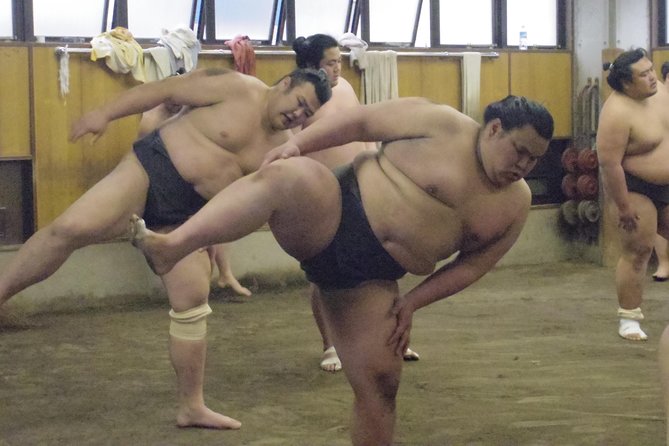
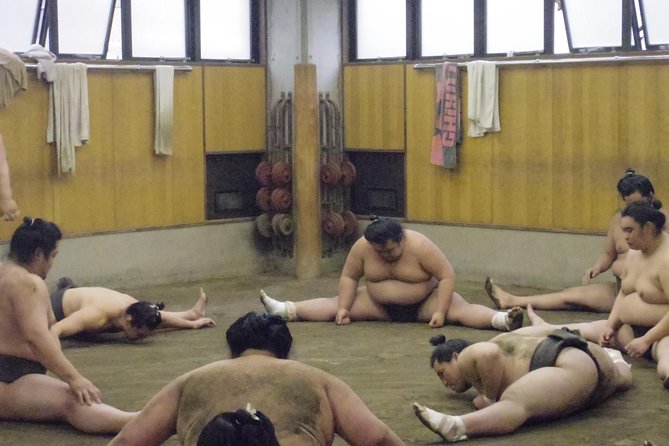
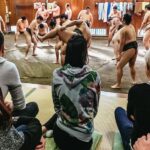
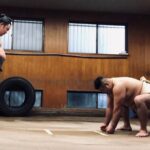
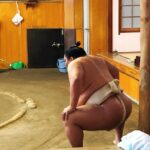
Once seated, you watch the wrestlers go through their daily routine. Depending on the day, this can include stretching, exercises, footwork, drills, and practice matches. The force is startling at close range. These are large athletes, but the training also reveals balance, timing, conditioning, and control.
The best seats are close to the ring, and the space is small enough that most seats provide a good view. Still, seating can affect what you see. The front row may be reserved for sponsors or other special parties, and arriving early can improve your position. One useful strategy is to line up promptly so you have a better chance of sitting in the second row.
The seating itself varies. One person described sitting on stools, while the general instructions refer to sitting on the ground. Do not assume a Western-style chair or generous personal space. Ask about your own comfort needs before booking if floor seating could be difficult.
The viewing is quiet by design. A guide may provide commentary through an earpiece, pointing out techniques, rankings, rituals, or details about the wrestlers’ lives. Several guides have been praised for making the sport easier to follow, especially for people who know little about sumo.
There is a tradeoff. Listening to a guide while watching fast exchanges can split your attention. Some people find the commentary helpful, while others find the headsets distracting or difficult to hear because of static. If your equipment sounds poor, tell the guide as soon as it is practical. You may prefer to focus on the action and listen only when the guide points out a specific movement.
The sumo calendar and competition system
The introductory explanation covers Japan’s six annual Grand Tournaments, each lasting 15 days. Three take place in Tokyo, with one each in Osaka, Nagoya, and Fukuoka.
This is useful context because the training you see is aimed at those regular competitions. The stable is not putting on a special demonstration for your group. The wrestlers are preparing for the same demanding professional schedule that you can later follow on television or attend in person.
You also learn about rankings and the lifestyle required of the athletes. Sumo is more than a single bout. A wrestler’s rank, training routine, stable relationships, and daily discipline all shape his career.
The guide’s explanation is especially valuable before a first tournament visit. Without it, the ceremonies and rules can seem mysterious. With a basic introduction, you can watch the movement and understand at least some of what is at stake.
That said, the rules may not be explained as fully as some people want. If you are new to sumo, prepare a few questions in advance. Some sessions include time for questions after practice, but the amount of interaction can vary.
A few more Tokyo tours and experiences worth a look

Photos, questions, and the end of the visit
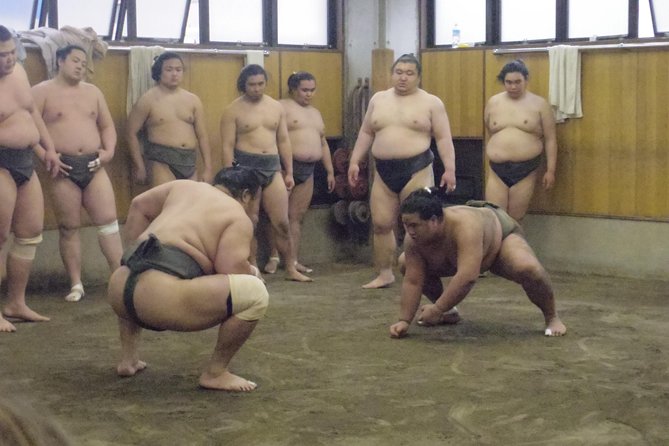
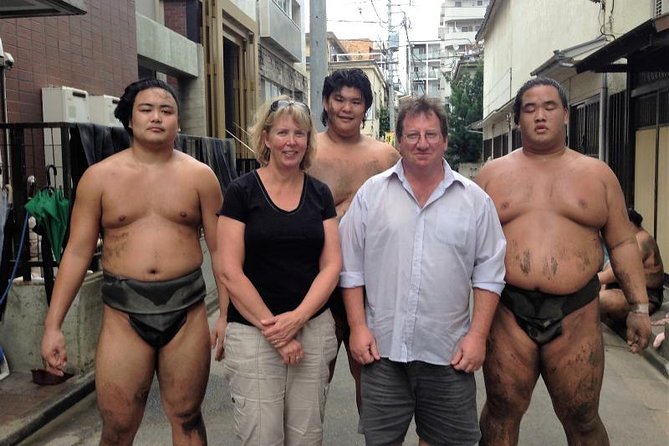
At the end of practice, there may be a short chance to take photographs with wrestlers. This is not guaranteed in the same form every time, but several people were able to pose with one or more athletes after the training. The photo moment can be a memorable finish, especially after watching the wrestlers work at close range.
Keep your expectations modest. Photo time may last only a few minutes, and you cannot ask wrestlers to pose while practice is still underway. You also cannot leave halfway through and return later, so plan to stay until the end.
Photos are allowed without flash or shutter sounds. Videos are not allowed, and unauthorized use of photographs is prohibited because of privacy and image rights. Ask before posting or using images commercially, and follow any instructions from the guide.
Afterward, the guide walks you back to the train station, where the tour ends. The full experience lasts about two hours, though the practice may run shorter or longer depending on the stable’s schedule.
How much value do you get for $83.57?
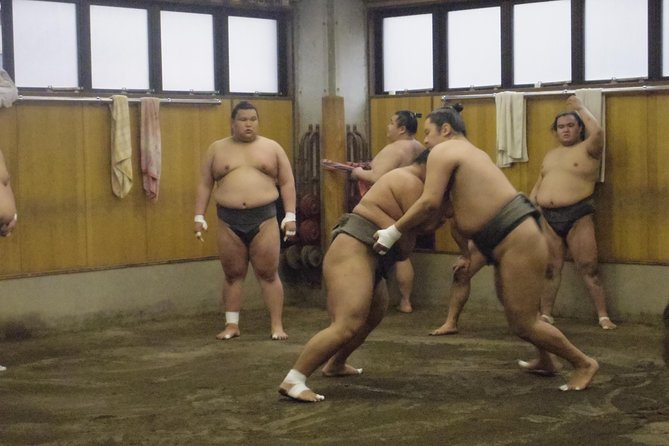
At $83.57 per person, this is not a budget activity. You are paying for access to a place most independent visitors cannot simply enter, along with a guide who helps you understand what you are seeing.
The price makes the most sense if you value direct access and cultural context. You get close to professional wrestlers, see repeated training exchanges, and learn about a sport tied to Japanese religion and national competition. For many people, that is more memorable than spending the same money on a staged sumo performance.
The value is less clear if you expect a polished show, a long question-and-answer period, guaranteed photo time, or perfect audio equipment. The experience is real partly because it is not fully controlled. Seating, practice length, commentary quality, and wrestler interaction can vary.
I would compare it with the cost of attending an official tournament, but not treat the two as substitutes. A tournament offers ceremony and public spectacle. This morning visit gives you a close look at preparation. If your schedule does not match this tour, other Tokyo morning practice options are available, including versions in Sumida City and one with an audio guide.
Heat, silence, and other rules you should take seriously
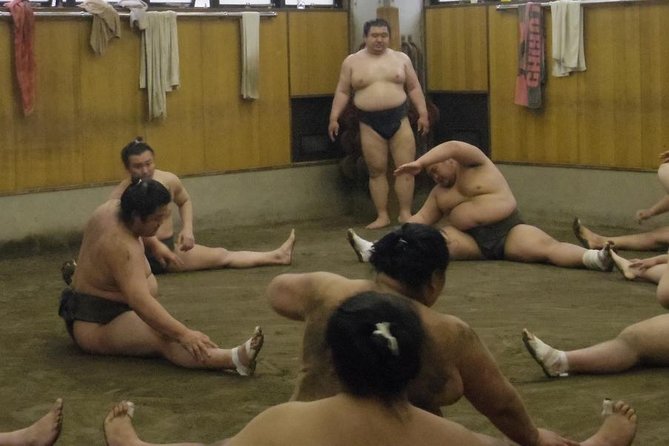
Tokyo can be very hot in summer, and the stable has no air conditioning. During summer, water and sports drinks are permitted inside, but eating is not. Bring water, and consider an ice pack or cold towel for comfort.
The stable is not a place for casual conversation. Watch silently and avoid movements that could distract the wrestlers. Do not stretch your legs toward the ring, since showing the soles of your feet toward the athletes is considered rude.
You should also avoid leaving during practice. The instructions ask you to stay through the end whenever possible, and re-entry is not permitted after you leave. If you feel unwell, do not join the tour.
The minimum age is 12. Children 11 and under cannot enter the stable, so this is not a suitable choice for younger families. Most people can participate, but anyone concerned about floor seating, heat, or remaining still should consider those limits before paying.
Who will enjoy this sumo experience most?
I would choose this tour if you want a close, serious look at Japanese culture and do not need every moment packaged as entertainment. It suits first-time visitors who want an introduction to sumo, as well as fans who already know the basic rules and want to see training from a different angle.
It is also a strong choice if you cannot attend one of the six Grand Tournaments. The morning schedule is short enough to fit into a Tokyo sightseeing day, though you must be ready early.
You may want another activity if you dislike early mornings, hot indoor spaces, strict etiquette, or audio commentary. It is also not ideal if your main goal is to take photographs or chat with wrestlers. The athletes are there to train, and your access depends on respectful observation.
The overall rating is 4.8 from 298 ratings, with 96 percent recommending the experience. Those numbers match the main strengths: close viewing, strong guides, and a genuine training setting. The weaker points are clear too: some complaints about price, seating, limited photo time, and headset quality.
Should you book the Tokyo Sumo Morning Practice Tour?
Yes, if you want to see the effort behind sumo rather than only its public ceremony. The chance to watch repeated practice bouts inside a working stable is unusual, and the guides give you the basic tools to understand the rituals, rankings, and training.
Book it with realistic expectations. Check the meeting point, arrive early for better seating, use the restroom first, bring summer cooling supplies, and stay ready to watch in silence. If you accept those rules, $83.57 can buy a memorable morning and a much clearer sense of why sumo matters in Japan.
Free cancellation is available until 24 hours before the start time. Changes or cancellations made later are not accepted for a refund.
FAQ
Where does the Tokyo Sumo Morning Practice Tour begin?
You meet your guide at 7:45am near Ryogoku Station. The exact meeting point can differ by booking option, so check your confirmation email.
How long does the experience last?
The tour takes about two hours in total. The stable visit itself lasts roughly 90 minutes, and the practice may be shorter or longer depending on the day.
Is the sumo stable a real training facility?
Yes. The tour takes you inside a local sumo stable where wrestlers train for regular professional competitions.
What age is required to join?
The minimum age is 12. Children aged 11 and under cannot enter the stable.
Can I take photographs?
Photos are allowed without flash or shutter sounds. Videos are not allowed, and unauthorized use of photographs is prohibited.
Can I take a photo with the wrestlers?
A short photo opportunity may be available after practice. You cannot ask wrestlers to pose while training is still in progress.
Can I eat or drink inside the stable?
Eating and drinking are not allowed. During summer, water and sports drinks are permitted because the stable has no air conditioning.
Can I wear a hat or sunglasses inside?
No. Sunglasses and hats are not allowed inside the stable.
Can I leave during the practice and come back?
No. Once you leave the stable, you cannot re-enter. You should also try to remain until practice ends.
What is the cancellation policy?
You can cancel for a full refund up to 24 hours before the local start time. Cancellations or changes made less than 24 hours before the start time are not accepted.
More Morning in Tokyo
More Sumo Experiences in Tokyo

More tours in Tokyo we've reviewed








Sumo Experiences, compared.
 ★ 4.8Tokyo: Sumo Show Experience with Chicken Hot Pot and a PhotoFrom $1032 hours
 ★ 4.8Tokyo: Sumo Show and Dining ExperienceFrom $7990 minutes - 2 hours
 ★ 5.0the SUMO showFrom $89
 ★ 5.0Tokyo Shinjuku Sumo Show & Experience with PhotoFrom $79
 ★ 4.8Tokyo: Sumo Show and Experience in ShinjukuFrom $691h 30m
 ★ 4.6Tokyo: Sumo Tournament Tour with Chair Seat TicketsFrom $141