
Reviewed · KAMAKURA & ENOSHIMA DAY TRIPS
Kamakura Full-Day Private Tour
Kamakura’s best sights are spread across a compact but busy coastal city, and this private tour links them by local train and foot. You’ll see Hasedera, the Great Buddha, Hokoku-ji’s bamboo garden, Tsurugaoka Hachimangu, and Komachi Dori without having to manage the route alone. Yumi and Harry are among the guides associated with the experience, and both are praised for warmth and careful preparation.
I like the private format, which lets you ask questions, set a comfortable pace, and adjust the day to suit your interests. I also like the use of public transport, since it keeps the price lower than a private car tour and puts you closer to everyday Kamakura. The main caution is cost: at $162.59 per person, you still pay separately for admission, food, and transport, and six and a half hours of walking can be tiring.
In This Review
- Key points at a glance
- Why a private Kamakura day works well
- Meeting at Kamakura Station
- Hasedera: flowers, slopes, and temple atmosphere
- Kotoku-in and the Great Buddha
- Hokoku-ji and Kamakura’s bamboo garden
- Tsurugaoka Hachimangu and the center of Kamakura
- Komachi Dori for a short food and shopping break
- The guide makes the difference
- What $162.59 per person really buys
- Who should book this Kamakura tour?
- Should you book it?
- FAQ
- Where does the Kamakura tour begin?
- Where does the tour end?
- How long does the tour last?
- Is this a private tour?
- Is an English-speaking guide included?
- Does the tour use public transportation?
- Are temple and shrine admission fees included?
- Is food included?
- What is the cancellation policy?
Key points at a glance
- Five major Kamakura stops: Visit Hasedera, Kotoku-in, Hokoku-ji, Tsurugaoka Hachimangu, and Komachi Dori in one carefully packed day.
- Private English-speaking guide: Your group tours alone, with guides such as Yumi or Harry providing personal attention.
- Public transport keeps costs down: You travel around Kamakura by train and other local transport rather than by private vehicle.
- The Great Buddha and bamboo garden: The route pairs Kamakura’s famous outdoor bronze Buddha with the quiet bamboo grounds of Hokoku-ji.
- Moderate walking required: Expect temples, streets, station connections, and shrine grounds to form a full active day.
- Bring extra money: Admission fees, food, drinks, and transport to and from the meeting point are not included.
Why a private Kamakura day works well
Kamakura is easy to underestimate. On a map, its sights look close together. In practice, you need to connect stations, temple grounds, shopping streets, and short walks through the city. A guide removes much of that small-scale planning.
This is not a luxury chauffeur tour. You meet at Kamakura Station and use public transport, so the experience feels more like having a local companion than hiring a private car. That keeps the outing economical while giving you a person to explain what you are seeing.
The private setup matters most at the temples. You can ask why a site matters, pause when something catches your eye, or spend less time at a stop that does not suit you. The tour is advertised at about six hours and thirty minutes, with roughly an hour at each major temple or shrine and thirty minutes on Komachi Dori.
That schedule is efficient. It is also full. You should expect a moderate amount of walking and be ready to move on when the group timetable calls for it. If you want a slow temple day with long café stops, this route may feel rushed.
A few more Kamakura tours and experiences worth a look
Meeting at Kamakura Station
The tour begins at Kamakura Station, at 1-chome-1-15 Onarimachi in Kamakura. The activity also ends back at the meeting point, which makes the arrangement simple for a day trip.
One useful advantage is that Kamakura Station puts you near the city’s main sights and Komachi Dori. You do not need to find a remote hotel pickup point or spend the first part of the morning locating a vehicle.
The tour uses public transport, and those fares are your responsibility. The same applies to transport getting to and from the meeting point. Plan for this when comparing the price with a car-based tour.
Your guide may meet you at the station’s West Exit. Harry’s tour response specifically notes a punctual arrival there, so check the final meeting instructions carefully and arrive early. A mobile ticket is available, and booking confirmation normally arrives at once unless you book within two days of departure. In that case, confirmation can take up to 48 hours and depends on availability.
Hasedera: flowers, slopes, and temple atmosphere
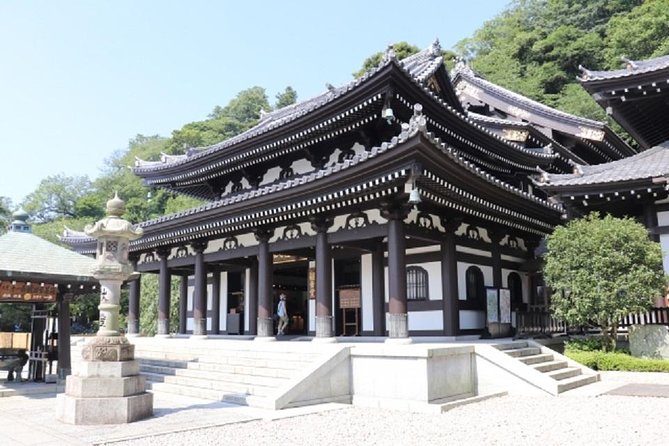
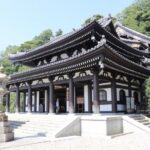
The first listed stop is Hasedera, one of Kamakura’s major temples. It is known as a temple of flowers, with seasonal color changing through the year. That gives the visit a different feel depending on when you go.
You get about an hour here, with admission paid separately. The grounds are not simply a single building beside the street. You should be prepared for some walking within the temple area, and the tour’s moderate fitness rating is worth taking seriously.
Hasedera is a good opening stop because it introduces the quieter side of Kamakura before the route reaches the city’s busiest points. Your guide can help explain the religious setting and point out details you might otherwise pass without noticing.
One small detail from the guiding style is especially appealing. Catherine bought a driver’s safety charm, called an o-mamori, for her car-racing husband in Texas. That is the kind of practical cultural detail that can turn a temple visit into something personal rather than a quick photo stop.
Keep a little cash available for admission and possible temple purchases. The tour price does not cover the entrance fee, and food and drinks are also separate.
Kotoku-in and the Great Buddha
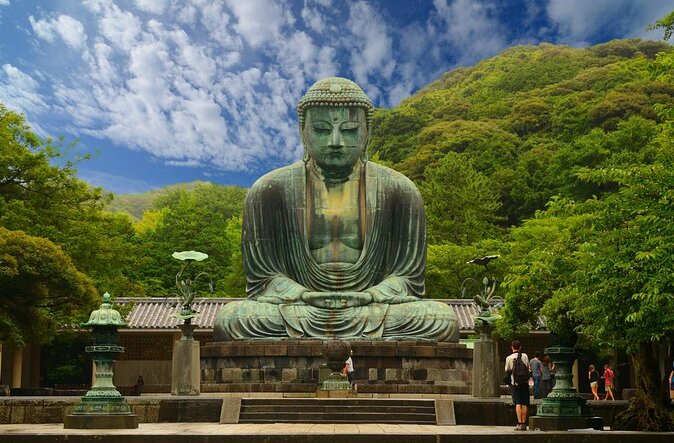
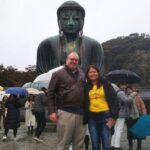
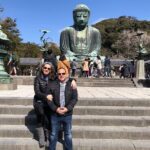
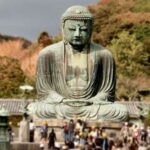
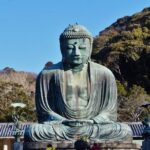
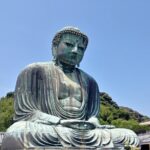
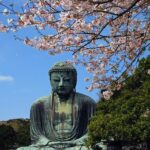
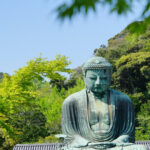
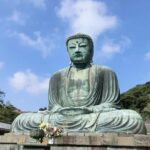
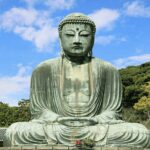
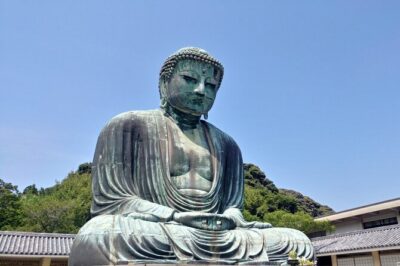
Kotoku-in is home to Kamakura’s Great Buddha, an outdoor bronze statue of Amida Buddha. At about 13.35 meters tall, it is one of the city’s defining sights and the clearest single image on this route.
The statue is outdoors rather than enclosed in a large hall. That changes the experience. You can see its full form against the open air, and the scale becomes clear as you approach it. Your guide can provide the setting and meaning behind the statue while you take in the physical details.
You have about an hour here. Admission is not included, so budget for another separate entry fee. The stop is famous, and it can be one of the more crowded parts of the day, but a private guide helps in a simple way: you can hear explanations without trying to keep up with a large group.
This is also a good place to consider your personal interests. If you care most about major monuments, you may want to give the Great Buddha your full attention. If you are more interested in small architectural details or quiet gardens, you may prefer to keep the visit focused and save energy for Hokoku-ji.
Hokoku-ji and Kamakura’s bamboo garden
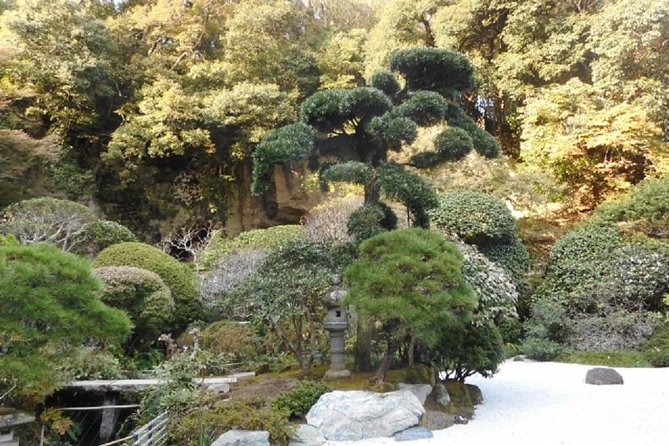
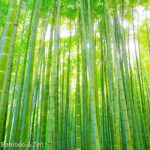
Hokoku-ji is often called the Bamboo Temple because of its large bamboo garden. The grounds offer a cooler, more enclosed setting after the open-air Great Buddha.
The bamboo area is described as cool and mysterious, and that contrast is the point. You move from a monumental bronze statue to tall bamboo and a calmer temple setting. It gives the day a change of rhythm instead of presenting five similar stops.
You have about an hour here, with admission again paid separately. The bamboo garden is a strong reason to choose this route if you want more than Kamakura’s standard headline sights. It is also the stop most likely to appeal to photographers and anyone who prefers natural settings mixed with religious architecture.
Do not assume that bamboo means no walking. The tour still includes temple paths and public transport connections, and the entire day requires moderate fitness. Comfortable shoes matter more here than fashionable ones.
Other private tours in Kamakura
Tsurugaoka Hachimangu and the center of Kamakura
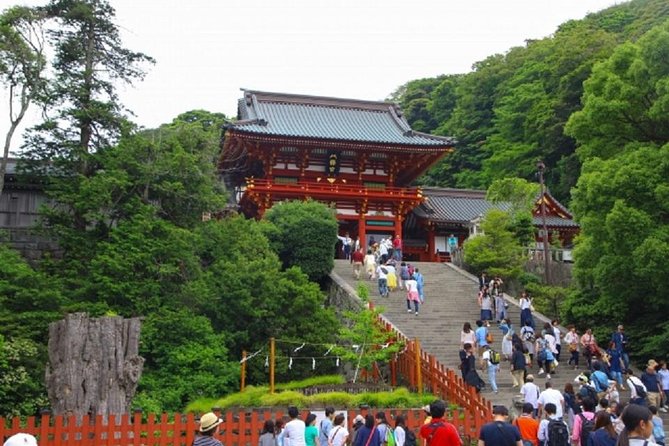
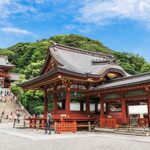
Tsurugaoka Hachimangu is the central shrine of the city. For centuries it was honored as the home of gods of war, giving it a different character from the Buddhist temples earlier in the route.
Its position in the middle of Kamakura helps connect the sacred and civic sides of the city. You are not visiting an isolated religious site. You are seeing a shrine woven into the center of local life.
The itinerary allows about an hour. That is enough to take in the main setting and hear the guide’s explanation, though a visitor who wants to study every structure in detail may want more time. Since this is a private tour, you can discuss your priorities with the guide, but the route still has several stops to cover.
This is one place where context adds real value. A large shrine can look impressive without being easy to understand. Knowing its association with warriors and its long role in Kamakura helps you read the buildings, approaches, and ceremonies as more than attractive scenery.
Komachi Dori for a short food and shopping break
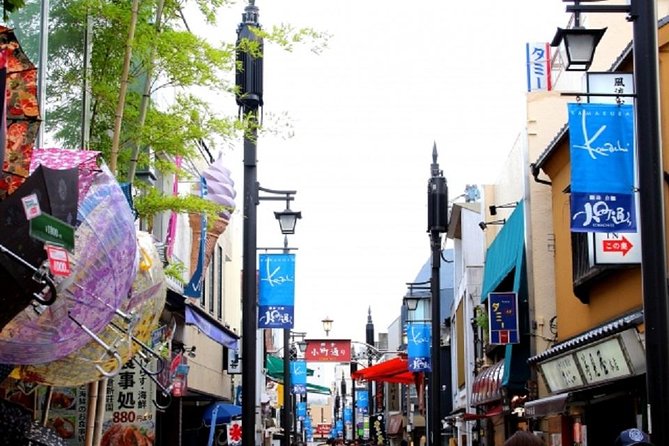
Komachi Dori gives the tour a change of pace. The thirty-minute stop is for strolling, food, and distinctive shops. It is the only listed stop without an admission fee.
Thirty minutes is enough for a quick browse or snack, but not a leisurely meal. Food and drinks are not included, so you pay directly for anything you buy. If you have a long shopping list, you may need to return to the street after the tour ends.
The timing is useful because it comes after several cultural stops. You can look for a small local treat, browse the shops, or simply take a short break before returning to the station meeting point.
I would not count on this being a full lunch stop. Bring a plan for eating before or after the tour if you need a substantial meal. The guide may help you decide how to use the short break, but the published schedule gives you only half an hour.
The guide makes the difference
The strongest feature of this experience is not a special vehicle or an included meal. It is the chance to spend the day with one English-speaking guide who can respond to your interests.
Yumi is praised for being very nice and well informed, with particular appreciation for her handling of the Kamakura area and the bamboo visit. Harry is described as kind and interesting, and his preparation for the day comes through clearly.
Harry’s account also includes personal touches from the people he guided. He noticed Catherine choosing a driver’s safety charm for her husband, and he connected with Stephanie’s two years of work in Darwin. These details suggest a guide who pays attention to the people in front of him, not only to the official facts.
Guide assignments can vary, so you should not assume Yumi or Harry will lead your particular date. Still, the private arrangement gives you a better chance to build a conversation around your own questions than a large group tour would.
What $162.59 per person really buys
The listed price is $162.59 per person. That is not the cheapest way to see Kamakura, especially because admission tickets, food, drinks, and local transport are extra.
The value comes from time and personal help. You are paying for a private English-speaking guide, a planned route, and the ability to cover five well-known places without working out each connection yourself. For a couple or small family that wants structure but not a large group, the price can make sense.
Group discounts may improve the per-person cost for a larger private party. You should compare the final total with the cost of arranging separate transport, entrance fees, and a guide on your own.
Public transport is both a saving and a tradeoff. It avoids the higher cost of a private vehicle, but you must use stations and walk between stops. If you want door-to-door comfort, this is not the right product. If you want a more grounded day in the city, public transport is part of its appeal.
Who should book this Kamakura tour?
I would recommend it for first-time visitors who want the major sights in one organized day. It suits couples, families, and small groups who value private attention and want to ask questions along the way.
It also fits you if your interests are broad. The route covers Buddhist temples, a major shrine, a famous statue, a bamboo garden, shopping, and local transport. You get a useful first look at Kamakura rather than spending the entire day in one temple district.
You should think twice if you dislike walking, have limited stamina, or want a slow schedule. The tour is six and a half hours, and the published description calls for moderate physical fitness. You also need to pay several costs beyond the headline price.
The tour requires good weather. If poor weather cancels the outing, you can choose another date or receive a full refund. For any cancellation you make yourself, cancel at least 24 hours before the start time for a full refund. Changes or cancellations inside that window are not accepted.
Should you book it?
Book this tour if you want Kamakura’s main sights explained by a private English-speaking guide and you are comfortable using public transport. The combination of Hasedera, the Great Buddha, Hokoku-ji, Tsurugaoka Hachimangu, and Komachi Dori gives you a solid first day in the city.
Skip it if you want a car, included entrance fees, or long unscheduled breaks. At $162.59 per person plus extras, the value depends on how much you value personal guidance and a ready-made route. For the right group, that convenience and flexibility are the main reason to pay for it.
FAQ
Where does the Kamakura tour begin?
The tour begins at Kamakura Station, at 1-chome-1-15 Onarimachi, Kamakura, Kanagawa 248-0012, Japan.
Where does the tour end?
The activity ends back at the meeting point.
How long does the tour last?
The tour lasts approximately 6 hours and 30 minutes.
Is this a private tour?
Yes. Only your group participates in the activity.
Is an English-speaking guide included?
Yes. An English-speaking professional guide is included.
Does the tour use public transportation?
Yes. Public transport is used to move around Kamakura. Transport costs to and from the meeting point are not included.
Are temple and shrine admission fees included?
No. Admission fees are paid by you separately.
Is food included?
No. Food and drinks are not included.
What is the cancellation policy?
You can cancel at least 24 hours before the start time for a full refund. Cancellations or changes made less than 24 hours before the start time are not accepted. If poor weather cancels the activity, you can choose another date or receive a full refund.
More Full-Day in Kamakura
More Private Tours in Kamakura
More Kamakura & Enoshima Day Trips in Kamakura
More tours in Kamakura we've reviewed

Kamakura & Enoshima Day Trips, compared.
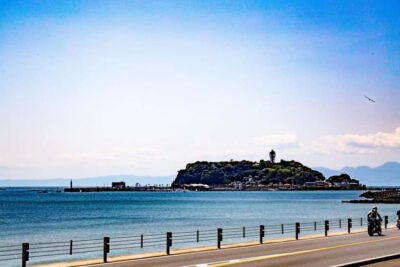 ★ 4.5Tokyo: Kamakura & Enoshima Day Trip including Temple TicketsFrom $589 hours - 570 minutes
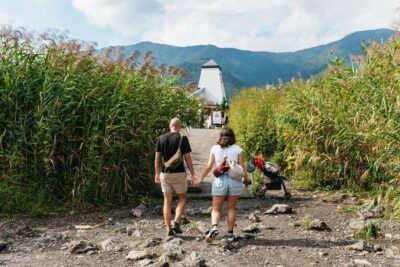 ★ 4.5Tokyo: Mt. Fuji, Kamakura, Big Buddha, & Lake Ashi Day TripFrom $4910 - 11 hours
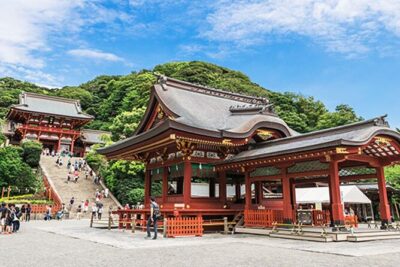 ★ 4.5From Tokyo: Kamakura & Enoshima 1-Day Bus TourFrom $66
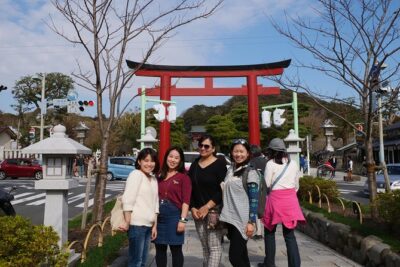 ★ 5.0Kamakura Historical Walking Tour with the Great BuddhaFrom $98
 ★ 5.0Kamakura Private Tour: Temples, Nature, and the Great BuddhaFrom $98
 ★ 5.0Kamakura Walking Tour – The City of ShogunFrom $35