
Reviewed · TOKYO FOOD TOURS
Dive into Tsukiji Fish Market Walking Friendly Food Tour
Tsukiji is where Tokyo’s food culture gets very practical: fish, shellfish, kitchen tools, tamagoyaki, and snacks are packed into roughly 400 shops around the outer market. I like the way this tour combines eating with Tsukiji Hongwanji Temple and Kachidoki Bridge, so you get more than a series of food samples. I also like the small group, limited to 10 people, which gives guides such as Akira and Amber room to adjust the walk to the group.
The main consideration is the price, $173 per person, which is a serious sum for four hours. You are paying for a full meal, several seafood tastings, two soft drinks and water, a professional guide, and cultural context, but budget-minded eaters may prefer to explore the market on their own.
In This Review
- Key points to know before you book
- Why Tsukiji works so well for a food tour
- Beginning at Tsukiji Hongwanji Temple
- A 30-minute look inside Tsukiji Hongwanji Temple
- Finding the food shops in the outer market
- What you will eat during the four hours
- A guide can change the value of the market
- Kachidoki Bridge and the waterfront view
- Namiyoke Inari Jinja and the return to the temple
- Is $173 a fair price?
- Who should book this Tsukiji experience?
- Should you book it?
- FAQ
- Where does the Tsukiji food tour begin?
- How long does the experience last?
- How many people can join the tour?
- Which languages are available?
- What food is included?
- Are drinks included?
- Which places are visited?
- Is shopping part of the tour?
- Can I cancel for a full refund?
Key points to know before you book
- Four hours of food and sightseeing: The route includes Tsukiji Hongwanji Temple, the outer market, Kachidoki Bridge, and Namiyoke Inari Jinja.
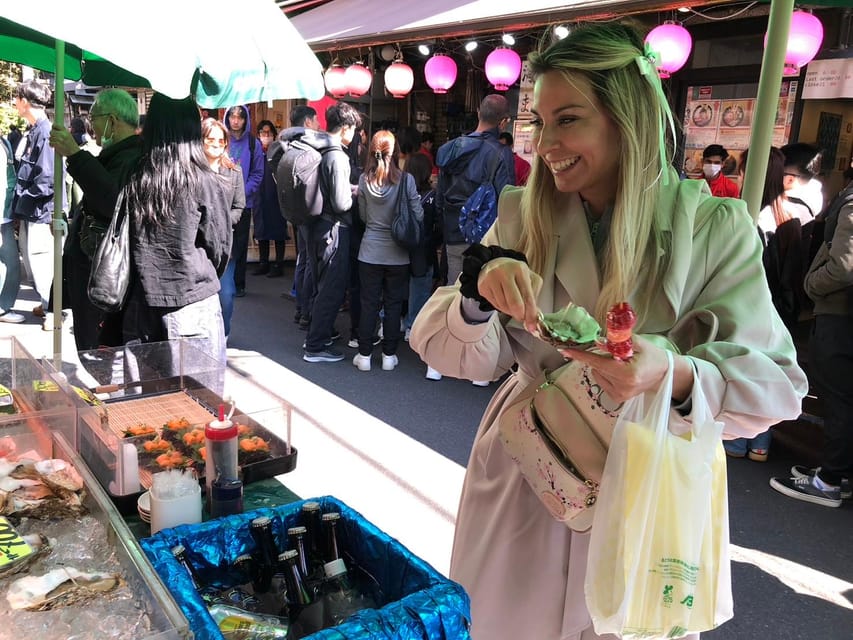
- A proper seafood spread: Expect sushi, fresh sashimi, grilled tuna and salmon, grilled oysters, tamagoyaki, desserts, snacks, soft drinks, and water.
- Small groups matter here: With no more than 10 participants, you can ask questions and keep the group together in crowded market lanes.
- A useful starting point: The meeting place is in front of Tsukiji Hongwanji Temple, about 50 meters from Exit A1 at Tsukiji Station.
- Guides who add personal attention: Akira is praised for explaining what you see, while Amber is noted for being flexible and thoughtful with a teenage participant.
- Easy booking terms: You can cancel up to 24 hours ahead for a full refund, and you can reserve now while paying later.
Why Tsukiji works so well for a food tour
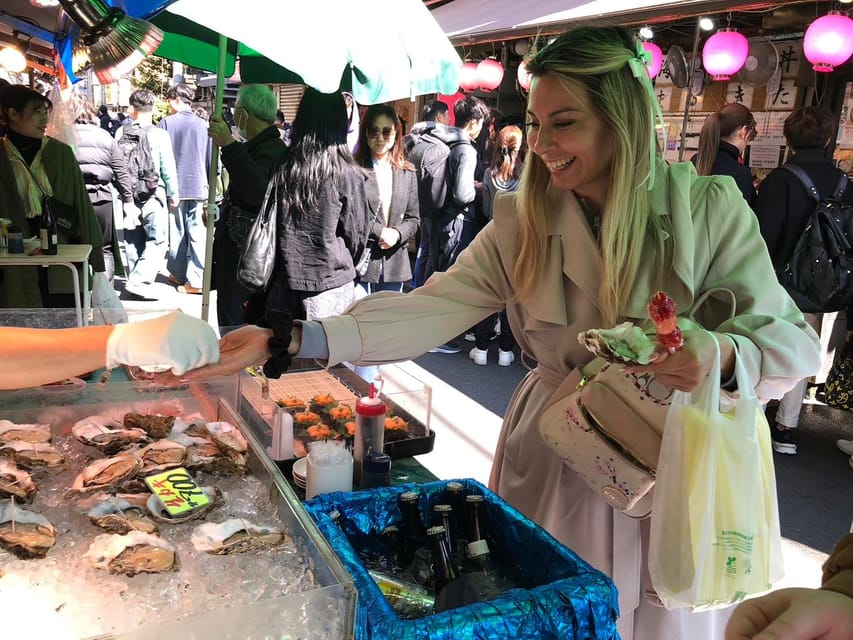
Tsukiji is not simply a place to grab sushi. It is a working food district in central Tokyo, with about 400 shops selling fresh foods, seafood, prepared bites, and kitchen utensils. The market offers a direct look at how Japanese cooking connects ingredients, tools, timing, and presentation.
The old wholesale market moved to Toyosu, but the outer Tsukiji area remains a major destination for food shopping. This tour focuses on that outer market, where the streets are lined with small businesses and food counters rather than one large indoor hall.
That difference matters. You are not being led through a polished museum display. You are walking through a commercial area where chefs shop for ingredients and where the food is part of everyday work. The experience can feel more useful than a standard sightseeing stop because your guide can explain what you are seeing as you eat.
I especially like that the tour does not treat the market as an isolated attraction. The visit begins at a major Buddhist temple and continues to a historic bridge and a shrine connected with the market district. Food remains the main event, but the route gives you a better sense of Tsukiji as part of Tokyo.
A few more Tokyo tours and experiences worth a look

Beginning at Tsukiji Hongwanji Temple
The meeting point is in front of Tsukiji Hongwanji Temple, also written as Tsukiji Hongan-ji. From Tsukiji Station on the Hibiya Line, take Exit A1, turn left, and look for the temple entrance about 50 meters away.
This is a good meeting point because it is close to the station and easy to identify. You do not need to wander into the market lanes looking for a guide. Start with a little extra time if you want to get your bearings around the temple before the group leaves.
The guided visit lasts about 30 minutes. That gives the guide enough time to explain the temple and its place in the neighborhood without turning the tour into a long religious lecture.
The temple also helps set the tone. Tsukiji is famous for seafood, but this area has a spiritual and civic side as well. Beginning here makes the market feel like part of a wider Tokyo neighborhood rather than a food-themed stop detached from local life.
A 30-minute look inside Tsukiji Hongwanji Temple
The first formal stop is Tsukiji Hongwanji Temple. You will have a guided visit lasting around half an hour, followed by the move toward the outer market.
The supplied details do not specify every architectural feature covered by the guide, so you should expect interpretation of the temple and its local importance rather than a fixed list of rooms or displays. That is a useful distinction when planning your expectations.
I like this opening because it gives you something to see before the eating begins. If you arrive hungry, the wait may feel long, but the temple stop keeps the tour from becoming a simple march between food counters.
The route then shifts toward the outer market. You will want comfortable shoes, since the experience is a four-hour walking tour with several stops and shopping time. No special transport is included because the core experience takes place on foot.
Finding the food shops in the outer market
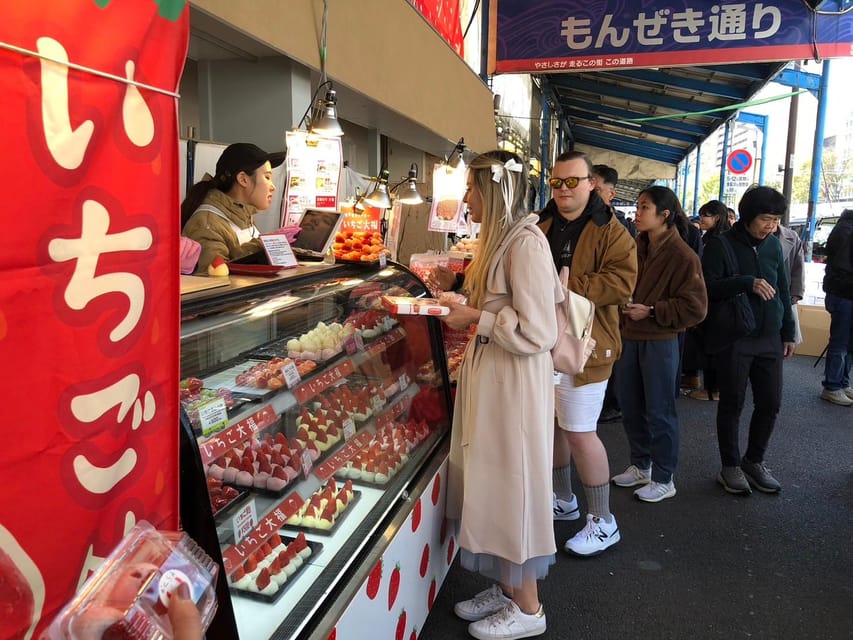
The outer market receives about 30 minutes of guided touring and another 30 minutes for shopping. The market has around 400 shops, so an organized walk is useful. Without a guide, you can easily spend your time deciding where to look instead of understanding what makes each shop interesting.
The guide can help you connect what is on display with Japanese culinary practice. That might include fresh seafood, market foods, and kitchen utensils, all of which are part of the district’s appeal. The focus is not only on eating something tasty, but also on seeing the ingredients and equipment behind Japanese meals.
You should also expect the market to feel busy and compact. Shops line the streets, and the food is close to the public walkway. Keep your attention on the group and follow the guide’s instructions around shop entrances and food counters.
The separate shopping period is helpful. During the guided portion, you can concentrate on the explanation. During the later 30 minutes, you have a chance to browse and decide if you want to buy something. The tour does not state that purchases are included, so plan to pay separately for anything you take home.
What you will eat during the four hours
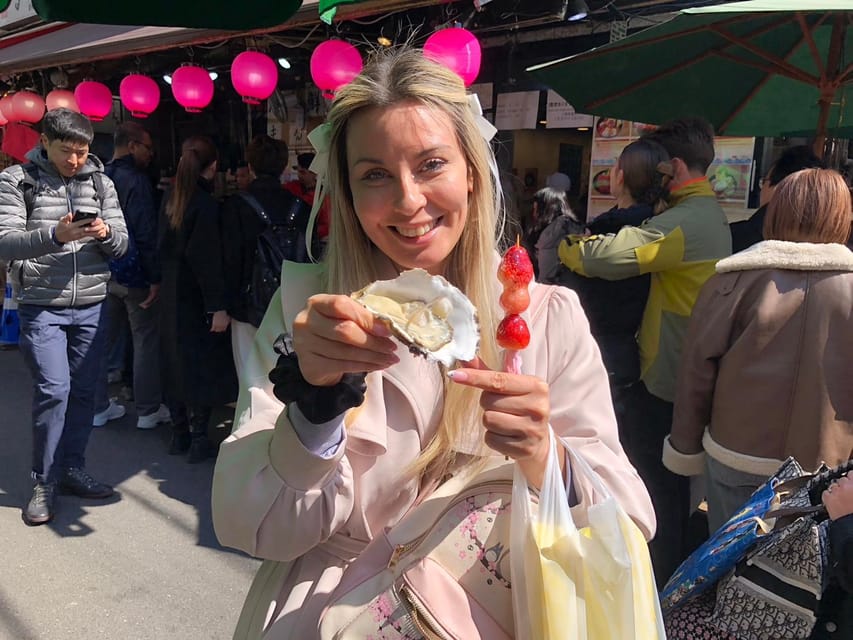
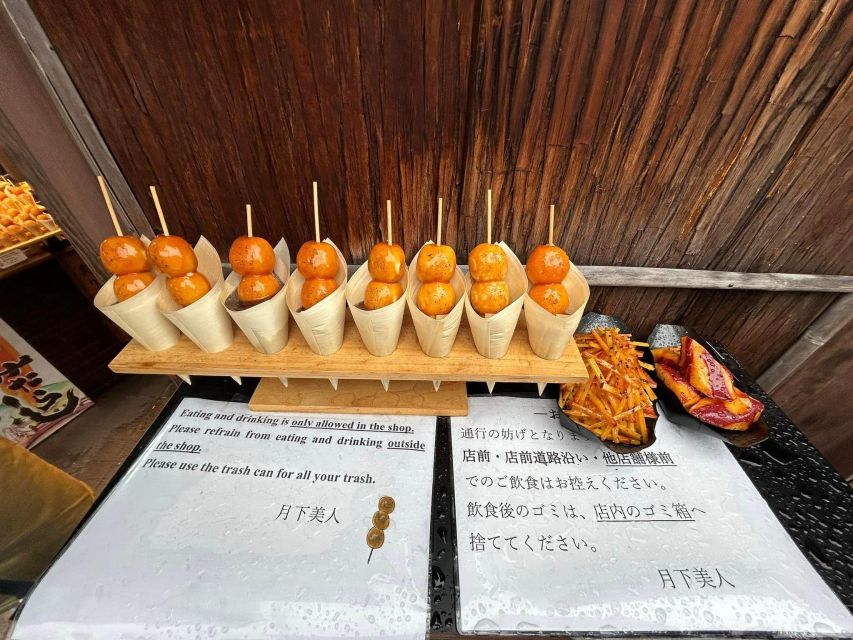
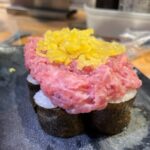
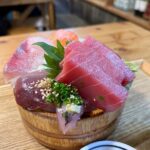
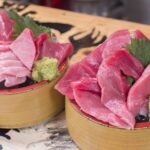
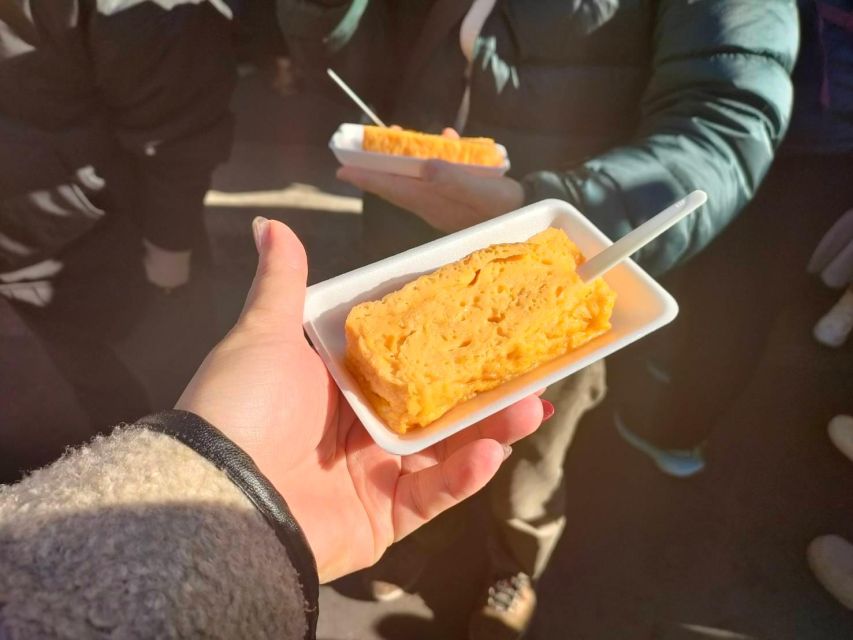
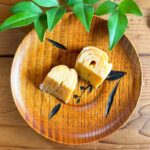
The included food is substantial. You will be served sushi, fresh sashimi, grilled tuna and salmon, grilled oysters, and tamagoyaki, along with desserts and snacks. Two soft drinks and water are included, while alcoholic drinks are available to buy separately.
This list gives the tour a broad range of textures and preparations. Sashimi shows the freshness and simplicity of the seafood. Grilled tuna, salmon, and oysters bring heat and a more savory character. Tamagoyaki adds a familiar Japanese favorite that is not seafood, while desserts and snacks keep the meal from feeling one-note.
The food is also spread through the walk rather than presented as one large restaurant meal. That format suits Tsukiji. You can connect each bite to the market around you, and you are less likely to feel stuck at one table for the entire experience.
If you have dietary restrictions, the information provided does not explain how substitutions are handled. Contact the provider before booking if you need changes. The listed menu includes several seafood items, so this tour is best for someone who wants seafood to be the center of the meal.
Alcohol is not included. You can purchase alcoholic drinks, but the tour price covers only the listed nonalcoholic drinks, food, desserts, and snacks.
A few more Tokyo tours and experiences worth a look
A guide can change the value of the market
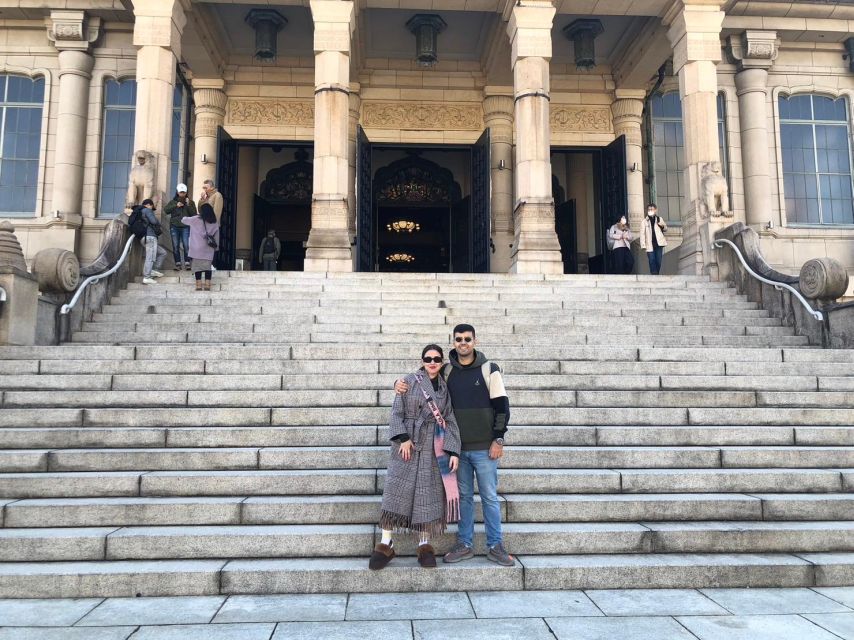
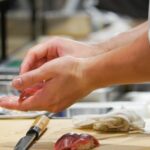
A food market is easy to visit badly. You can eat well and still miss why the place matters. The guide is what turns this experience from a tasting route into a lesson about Tokyo’s culinary culture and market traditions.
Akira is specifically praised for explaining the context of the sights and food. That is important in Tsukiji, where a fish, cooking tool, or shrine may mean little if you do not know how it fits into local life.
Amber brings a different strength. She is noted for being thoughtful and flexible with a teenage son, and for changing plans gracefully when needed. That detail makes this tour more appealing for families or mixed-age groups, especially when not everyone has the same appetite or attention span.
The small-group limit of 10 supports this personal style. You can ask why a particular food is prepared in a certain way, what an item is used for, or how the market relates to Tokyo’s past. A large group would make those exchanges harder.
The tour is offered in English and Japanese. If you book in English, confirm the language you want when checking availability.
Kachidoki Bridge and the waterfront view
After the market, the route continues to Kachidoki Bridge for about 30 minutes of guided sightseeing. This changes the pace from tight market lanes to a broader urban setting.
The bridge is valuable as a viewpoint and as a piece of Tokyo history. It helps you see how the market district connects with the city around it. After several food stops, a pause with a wider view also gives you time to reset before the final shrine visit.
The supplied details do not promise a specific river view, bridge opening, or special event, so keep expectations focused on a guided visit to the bridge. The appeal is the change in setting and the guide’s explanation, not a guaranteed spectacle.
This is also one reason to wear practical shoes and avoid treating the tour like a short tasting appointment. The walking sections connect the attractions, and the bridge stop adds another half hour to the route.
Namiyoke Inari Jinja and the return to the temple
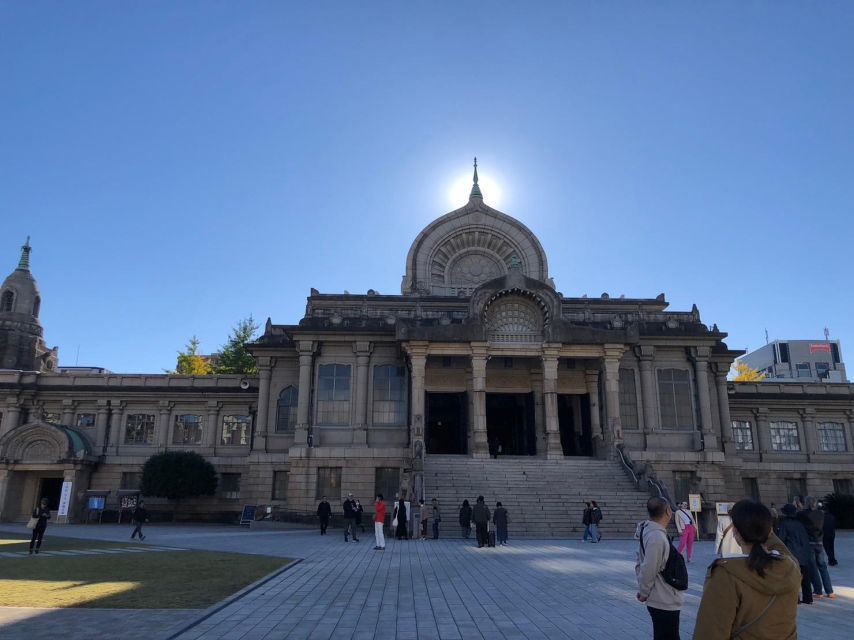
The final major stop is Namiyoke Inari Jinja, with about 30 minutes of guided touring. The shrine provides another link between the market and the beliefs of the people who work around it.
Together, the temple and shrine give the food tour a stronger sense of place. You are not only consuming products from Tsukiji. You are seeing religious sites that help frame the neighborhood and its working traditions.
The tour returns to Hongwanji Temple, where it began. This simple ending is practical. You finish near Tsukiji Station rather than being left at an unfamiliar point across central Tokyo, and you can continue exploring the market or leave by the Hibiya Line.
The schedule allows for guided sightseeing at the temple, outer market, bridge, and shrine, plus a separate shopping period. Actual start times depend on availability, so check the date you want before booking.
Is $173 a fair price?
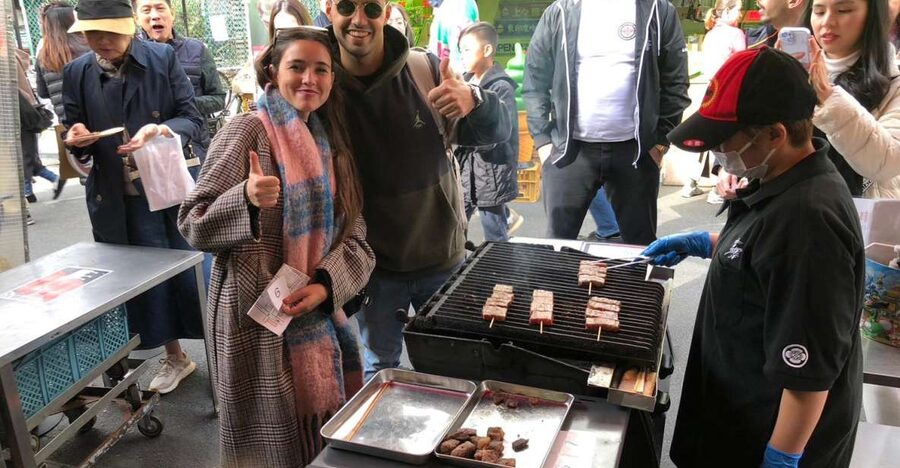
At $173 per person, this is not a casual market snack tour. The value depends on how much you want the food, interpretation, and structure.
The price includes four hours with a professional guide, a wide selection of food, desserts, snacks, two soft drinks, and water. It also covers the time spent visiting four distinct parts of the district. If you would otherwise book a separate guided walk and pay for several seafood dishes, the cost becomes easier to justify.
The small group adds value, too. A maximum of 10 people is not private touring, but it is much more manageable than a large coach group. You are more likely to hear the guide and ask questions without holding up a crowd.
Still, you should be honest about your priorities. If you mainly want the freedom to browse, choose your own stalls, and control your spending, $173 may feel high. The tour gives you a set food program, and alcohol costs extra.
I see the price as reasonable for a visitor who wants a guided introduction to Japanese seafood and market culture in one half-day. It is less attractive for repeat Tokyo visitors who already know Tsukiji well.
Who should book this Tsukiji experience?
I would recommend this tour to first-time Tokyo visitors who want a clear introduction to Tsukiji without spending hours guessing where to eat. It also suits people who enjoy seafood and want context with their meal.
Families may appreciate the small group and the guides’ ability to adjust the experience. Amber’s flexibility with a teenager is a useful sign that the tour is not rigidly focused on adult food enthusiasts.
It is also a good match for solo visitors. A small group gives you company during the meal and walking route without the formal feel of a private tour.
You should think twice if you dislike seafood, need a highly customized menu, or want an inexpensive market wander. The included food is strongly seafood-based, and the tour has a planned four-hour structure.
Booking is flexible: you can cancel up to 24 hours in advance for a full refund, and the reserve-now, pay-later option lets you keep your plans open. Those terms reduce the risk, but they do not change the central question: do you want a guided food experience rather than independent browsing?
Should you book it?
Book this tour if you want to taste a wide range of Japanese seafood while learning how Tsukiji fits into Tokyo’s food culture. The combination of sushi, sashimi, grilled fish, oysters, tamagoyaki, sweets, temple visits, a bridge, and a shrine gives you a full half-day with plenty of variety.
I would skip it if you are seeking the cheapest way to eat at Tsukiji or if you prefer choosing every dish yourself. For the right person, the guide is the key value, especially with Akira’s contextual explanations and Amber’s thoughtful flexibility. At $173, it is a special-occasion food tour, but the meal and cultural stops make it more useful than a simple tasting crawl.
FAQ
Where does the Tsukiji food tour begin?
The tour begins in front of Tsukiji Hongwanji Temple. From Tsukiji Station on the Hibiya Line, take Exit A1 and turn left. The temple entrance is about 50 meters from the station.
How long does the experience last?
The walking tour lasts four hours. Check availability for the starting times offered on your chosen date.
How many people can join the tour?
The group is limited to a maximum of 10 participants.
Which languages are available?
The tour is offered in English and Japanese, with a live tour guide.
What food is included?
The included food consists of sushi, fresh sashimi, grilled tuna and salmon, grilled oysters, tamagoyaki, desserts, and snacks.
Are drinks included?
Two soft drinks and water are included. Alcoholic drinks are not included, but they are available to purchase.
Which places are visited?
The route includes Tsukiji Hongwanji Temple, Tsukiji Outer Market, Kachidoki Bridge, and Namiyoke Inari Jinja. The tour returns to Hongwanji Temple.
Is shopping part of the tour?
Yes. The route includes guided time in Tsukiji Outer Market and a separate 30-minute shopping period.
Can I cancel for a full refund?
Yes. You can cancel up to 24 hours in advance for a full refund. You can also reserve now and pay later.
More Walking Tours in Tokyo
More Tokyo Food Tours in Tokyo
More Tsukiji Market Tours in Tokyo
More tours in Tokyo we've reviewed



Tokyo Food Tours, compared.
 ★ 5.0Tokyo: Shinjuku Food Tour (13 Dishes at 4 Local Eateries)From $86
 ★ 4.9Tokyo: Shinjuku Food Tour (15 Dishes and 4 Eateries)From $853 hours
 ★ 5.0Best of Shinjuku: Izakaya Food Tour (4 Stops, 14+ Tastings)From $92
 ★ 5.0Tokyo Night Foodie Tour in Shinjuku – Seasonal Sushi, Wagyu BeefFrom $111
 ★ 5.0Eat and Drink Like a Local: Tokyo Ueno Food Tour-Taverns&RamenFrom $95
 ★ 5.0Tokyo: Shibuya Food Tour (13 dishes and 4 Eateries)From $77