
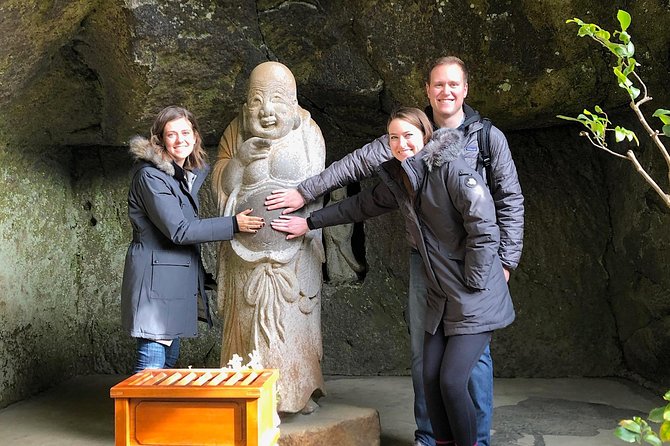
Reviewed · KAMAKURA & ENOSHIMA DAY TRIPS
Kamakura Private Tour: Temples, Nature, and the Great Buddha
Kamakura’s best surprise is how quickly you can leave the train station and enter a forested mountain path. This private five-hour tour links quiet Jochiji Temple, small shrines, the Great Buddha, Hasedera’s ocean views, and Yuigahama Beach in one well-planned route.
I like two things right away: the private format, which lets your guide adjust the pace and explain Buddhist and Shinto customs clearly, and the mix of famous sights with less-visited mountain shrines. The drawback is just as clear: this is a proper hike, with at least 5 kilometers of walking and uphill sections, not an easy stroll.
In This Review
- Key points at a glance
- Why this Kamakura route works so well
- Jochiji Temple begins the morning quietly
- The Kamakura Hiking Trails add real exercise
- Zeniarai Benten brings legend and ritual together
- Sasuke Inari is the route’s local legend
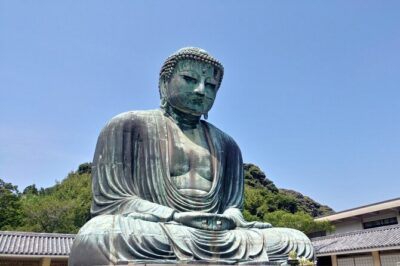
- The Great Buddha supplies the famous Kamakura moment
- Hasedera combines gardens, worship, and sea views
- Yuigahama Beach closes the route with open views
- What the private guide adds
- Price, timing, and physical effort
- Weather, families, and who should book
- Practical tips before you go
- Should you book this Kamakura tour?
- FAQ
- How long is the Kamakura private tour?
- Where does the tour begin?
- Where does the tour end?
- Is the tour private?
- What admissions are included?
- How much walking is involved?
- Is hotel pickup available?
- What happens if the weather is poor?
Key points at a glance
- Walk from Kita-Kamakura to Hase Station: The route crosses temples, forest trails, shrines, and seaside streets without requiring private transport.
- Three admissions are included: Your fee covers Jochiji Temple, Kotoku-in and the Great Buddha, and Hasedera Temple.
- The mountain pass is the test: Expect uneven paths, uphill walking, and roughly 40 minutes on the hiking trails alone.
- Your guide can shape the day: Guides including Yumi, Yu, Teiko, Noriko, Yoko, and Naho have adjusted pacing, changed plans in rain, helped families, and arranged lunch.
- You get both quiet and famous Kamakura: Remote shrines provide calm, while the Great Buddha and Hasedera supply the major sights.
- The finish is by the sea: The tour ends at Hase Station, usually with the guide accompanying you toward Kamakura Station as well.
Why this Kamakura route works so well
Kamakura makes a fine day trip from Tokyo, but its sights are spread across a compact yet hilly area. You can visit the Great Buddha on your own, but connecting it with the mountain trails, Jochiji, Zeniarai Benten, Sasuke Inari, Hasedera, and the beach takes planning.
This tour begins at Kita-Kamakura Station, a useful starting point because the town’s quieter temple district lies here. From there, you walk south through historic religious sites and wooded paths before reaching Hase. The route has a satisfying sense of progress: serene Zen grounds first, mountain shrines next, major monuments later, and the ocean at the end.
The private arrangement matters. Your guide can stop for questions, shorten a section if the weather turns unpleasant, or slow down for children and older family members. Past guides have included Yumi, Yu, Teiko, Noriko, Yoko, Naho, and others. The strongest part of the experience is not simply getting from one place to the next. It is having someone explain how Buddhism, Shinto, samurai-era politics, local legends, and everyday customs fit together.
A few more Kamakura tours and experiences worth a look
Jochiji Temple begins the morning quietly
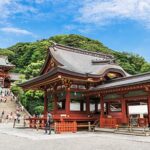
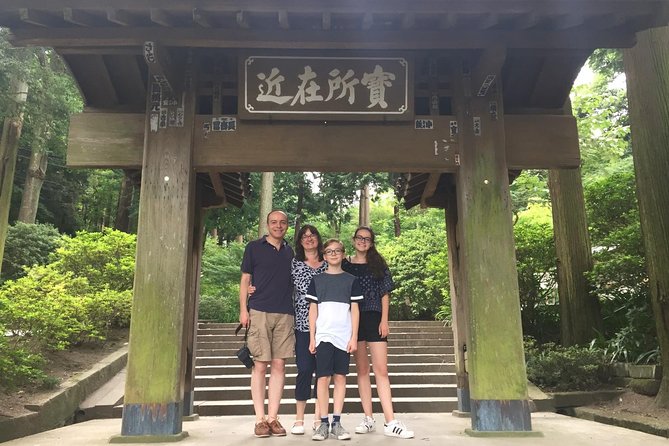
Jochiji Temple was founded in 1281 by Hojo Tokiyori to honor his young son. It is one of the tour’s gentler openings, with forest around the grounds and a calm atmosphere that feels far removed from central Tokyo.
You have about 25 minutes here, with admission included. That is enough time to stroll through the grounds, look at the temple buildings, and ask your guide about Zen practice and Kamakura’s role during the shogunate period.
I like beginning here because the temple sets the tone without demanding too much energy. You are not rushed into a famous photo stop. Instead, you start with a place where the setting and the religious purpose matter as much as the architecture.
The short visit also gives you a useful comparison point. Later, the Great Buddha will be much larger and more visually dramatic. Jochiji is smaller and quieter, so listen closely to your guide rather than expecting a grand monument.
The Kamakura Hiking Trails add real exercise
After Jochiji, the route enters the Kamakura hiking trails. The scheduled trail time is about 40 minutes, but the full tour includes walking between all the sites, so the total distance reaches at least 5 kilometers.
This is the section that determines if the tour suits you. The pass is described as moderately strenuous, and several parts are uphill. You will want shoes with a good grip and enough support for uneven ground. In hot, humid weather, the trail can feel much harder than the distance suggests. One group needed extra breaks in 95°F, or 35°C, heat and had to see fewer sites than planned.
The reward is access to a side of Kamakura that is difficult to understand from the main streets. You pass through forest and reach shrines that many independent visitors skip because the paths are not always clearly signposted in English. Your guide handles the route and can explain what you are seeing instead of leaving you to guess.
Rain can change this section. The trail may become slippery, and the guide may replace part of the walk with local buses or trains. That is sensible, but it means the experience can become more of a temple-and-town tour than a mountain walk in bad weather.
Zeniarai Benten brings legend and ritual together
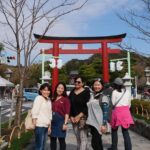
The next stop is Zeniarai Benten Ugafuku Shrine, reached along the Daibutsu Hiking Course. The shrine is associated with a narrow opening in the hillside framed by a torii gate. Passing through it leads to a small, unusual setting that feels different from the larger temple grounds.
You have about 25 minutes here, and there is no separate admission charge. The shrine is especially useful for learning about Japanese religious practice. Your guide can explain the customs and the difference between Shinto and Buddhist sites, including the respectful behavior expected at each.
The shrine’s appeal is partly visual, but the story and ritual give it more weight. This is not just another red gate on a walking route. It is a place where local belief, money, luck, and daily worship meet.
The path to it is part of the experience. If you are carrying a large bag, wearing slick shoes, or dealing with a sore knee, the route may be tiring. Tell your guide at the start if you need a slower pace.
Sasuke Inari is the route’s local legend
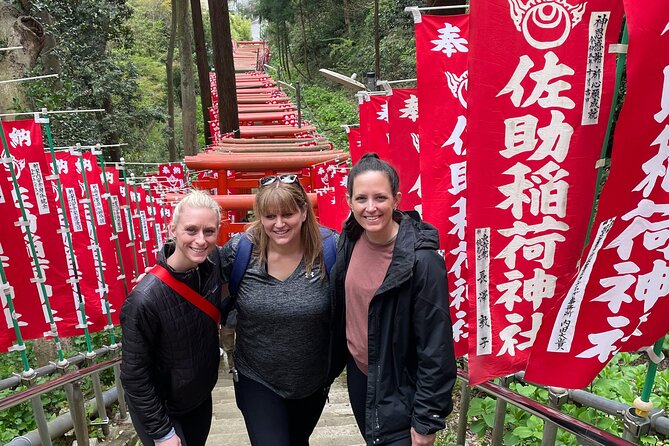
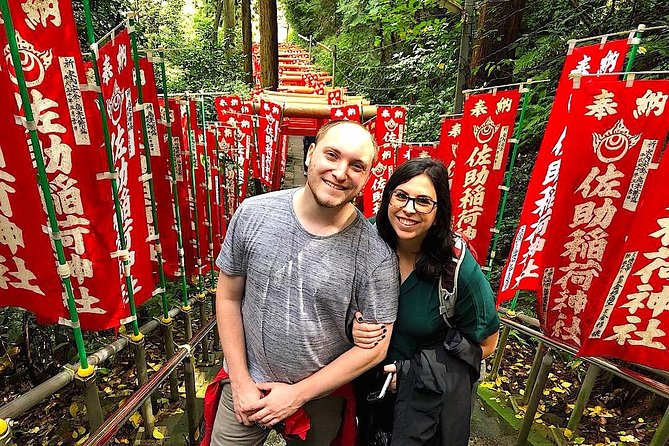
Sasuke Inari Shrine takes about 20 minutes. Its story reaches back to Minamoto Yoritomo, Kamakura’s first shogun, who was said to have received battle advice in a dream from a white fox, or Inari.
This is one of the stops that shows why a guide adds value. Without context, a small shrine can be easy to pass through quickly. With the legend, you begin to understand why fox imagery and Inari worship appear across Japan.
Sasuke Inari also helps break up the larger attractions. The Great Buddha is the obvious headline sight, but the smaller shrines give the tour its character. You get a sense of Kamakura as a living religious town, not only a collection of famous monuments.
Do not expect a long visit here. Twenty minutes is enough for an introduction, photographs, and questions, but not an extended exploration. The walking route remains the main event.
Other private tours in Kamakura
The Great Buddha supplies the famous Kamakura moment
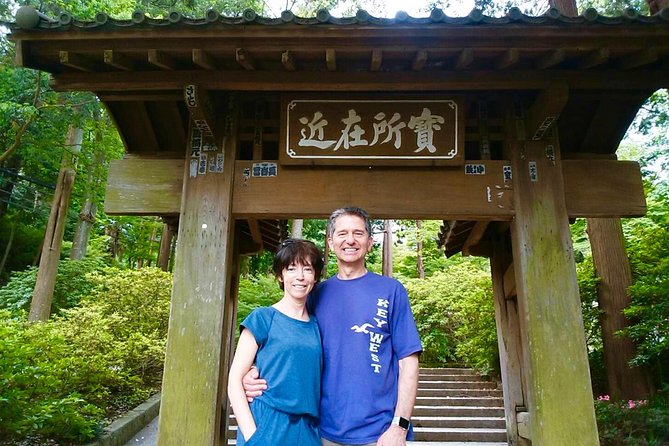
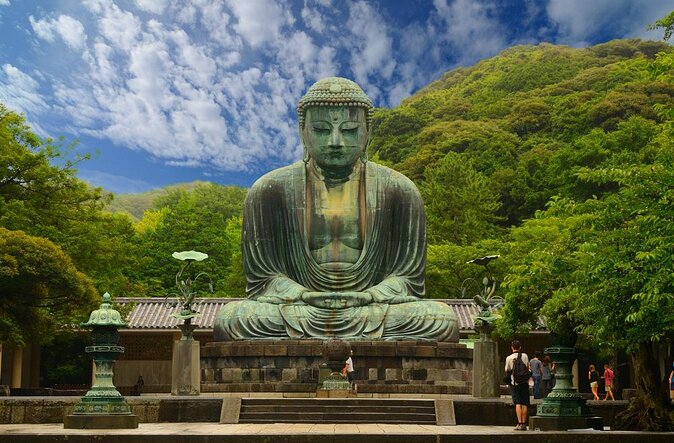
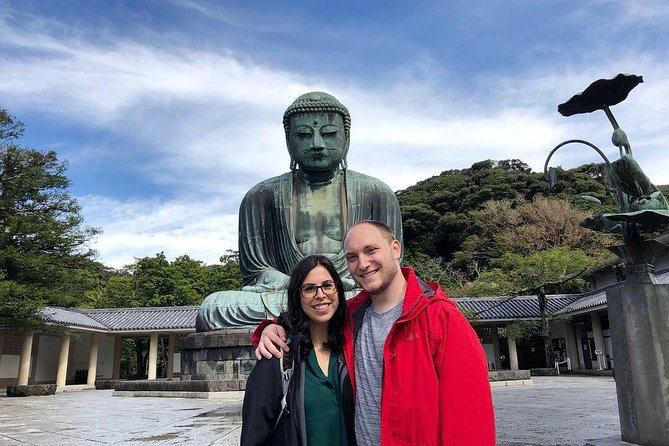
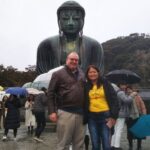
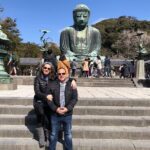
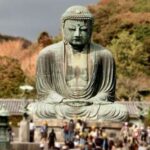
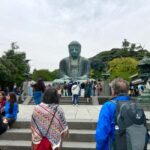
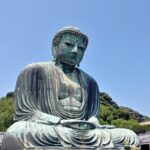
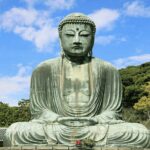
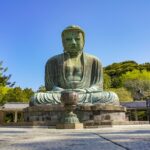
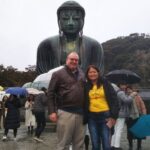
At Kotoku-in, you finally reach the Great Buddha of Kamakura. The bronze statue is 13.35 meters tall and weighs about 121 tonnes. The statue in its present bronze form dates from 1252, giving this stop a powerful sense of age and scale.
Admission is included, and the visit lasts about 20 minutes. That is enough for a close look from outside and, when available under the day’s conditions, a visit inside the statue. One family specifically appreciated seeing both the interior and exterior.
The Great Buddha is a major sight, so this is the point where the peaceful trail gives way to a more popular attraction. You may encounter more people here than at Jochiji or Sasuke Inari. Still, the statue earns its place. Its size is hard to grasp in photographs, and standing near the base gives you a better sense of the craftsmanship.
Your guide can add the historical and religious background, helping you see more than a large bronze figure. Ask about the statue’s construction, its place in Kamakura, and how Buddhist imagery differs from the Shinto shrines visited earlier.
Hasedera combines gardens, worship, and sea views

Hasedera Temple sits partway up Mount Kamakura and is scheduled for about 30 minutes. Admission is included. The temple is known for its gardens, religious buildings, and high position above the coast.
The view south toward the ocean and Yuigahama Beach is a highlight. In June and July, hydrangeas add seasonal color to the grounds, though the garden experience naturally depends on when you visit.
Hasedera is a good late stop because it brings several parts of the day together. You have the hillside setting from the trail, the religious detail of the earlier shrines, and a broad view toward the coast. The climb within the temple grounds can still be demanding after the mountain pass, so take your time.
This stop can feel short if you want to inspect every garden and building. The tour covers a lot in five hours, and Hasedera is one of several major stops. If gardens matter more to you than the beach, ask about spending extra time here. Extensions cost 1,000 yen per person for each additional half hour, payable in cash.
Yuigahama Beach closes the route with open views
The final scheduled stop is Yuigahama Beach, with about 15 minutes to relax. The beach faces south, so you look out over the ocean rather than toward a harbor or inland view.
This is a simple finish, but it works. After temples, steps, and forest paths, the open shoreline gives you room to pause. During summer, an open-air market called Umi-no-ie operates along the beach area.
The beach is not meant to replace a full seaside afternoon. Fifteen minutes is a brief stop, and the tour ends at Hase Station. Still, it gives the day a pleasant change of pace and confirms how different Kamakura is from Tokyo.
What the private guide adds
The guides are central to the experience. The tour includes an English-speaking guide, and the private format means only your group participates.
Guides such as Yumi and Yu have been especially praised for adapting the day to families, children, older adults, and changing weather. Teiko has explained Japanese history, Buddhism, and Shinto in a way that helps the sites make sense. Noriko has tailored days around personal interests and arranged alternatives when weather disrupted the original plan. Naho has helped with temple etiquette, local lunch, and the journey back to the station.
These details matter because Kamakura is not only about seeing buildings. A guide can show you how to behave at a shrine, explain why a site matters, translate a sign, answer an unexpected question, or point out a less obvious feature.
The guide may also help with lunch, but food and drinks are not included. Some groups have eaten at a local restaurant during an extended or personalized day. Plan to pay separately, and remember that any local bus, train, or taxi fares are also outside the listed tour inclusions.
Price, timing, and physical effort
The listed price is $98.44 per person, with group discounts available and a minimum booking of two people. For a private five-hour tour with three temple admissions and a guide, that can be fair value, particularly if you are a couple or small family that wants help with the route and cultural context.
It is less attractive if you mainly want transportation. Private taxis, cars, and buses are not included, and hotel pickup costs an additional 8,000 yen per person. The tour is built around walking and public transport access, not a chauffeured sightseeing circuit.
Start at Kita-Kamakura Station and finish at Hase Station. The guide usually accompanies the group toward Kamakura Station afterward, which is helpful when you are continuing by train. Confirmation arrives at booking, and the experience is near public transportation.
Plan on five hours, but do not treat the schedule as a race. The listed stop times add up to roughly three hours, leaving time for walking, explanations, pauses, and changes. If you want a longer lunch or a slower visit, pay for extra time in half-hour blocks.
Weather, families, and who should book
You need moderate physical fitness. At least 5 kilometers of walking, a mountain pass, uphill sections, and temple steps make this a poor choice for anyone seeking a flat, low-effort outing.
Families can do well here if children are comfortable walking. Guides have adjusted explanations for 11-year-old twins and helped groups with small children. Older family members may need a modified route. Rain can also lead to skipped mountain sections because slippery paths are not worth the risk.
The best match is a small group that wants a day with history, nature, and flexibility. It suits first-time visitors who want the major sights but also want quiet places that are harder to reach alone.
You should think twice if your priorities are extensive shopping, a long beach stay, or a slow temple photography session. The tour covers a lot of ground, and the half-day schedule keeps moving.
Practical tips before you go
- Wear comfortable walking shoes with reliable traction. This is the most important preparation.
- Bring water, especially in summer. Heat and humidity can make the mountain section demanding.
- Tell the guide early about knee problems, older relatives, children, or a preferred pace.
- Keep some cash for lunch, local transport, and any half-hour extension.
- Treat the trail as a hike. Do not assume a normal city walking tour.
- If you visit in June or July, ask about the hydrangeas at Hasedera.
- Leave room in your day after Hase Station if you want more time at the beach or additional Kamakura sights.
- Avoid tight connections after the tour. Weather and walking speed can change the finish time.
Free cancellation is available up to 24 hours before the start time for a full refund. Changes made within 24 hours are not accepted, and poor weather can lead to a new date or a full refund.
Should you book this Kamakura tour?
Book it if you want Kamakura explained rather than simply photographed. The route gives you a rare combination: a quiet Zen temple, a genuine forest walk, small shrines, the enormous Great Buddha, Hasedera’s coastal outlook, and a final pause at the beach.
The strongest reason to choose it is the private guide. You can ask questions, adjust the pace, and get help with Japanese religious customs and local transport. The best reason not to choose it is the physical demand. Five kilometers with a mountain pass is a real outing, especially in summer or rain.
For fit couples, families, and small groups coming from Tokyo, the $98.44 price is reasonable for a private, culturally focused half-day. Wear good shoes, allow for weather changes, and you will get a far fuller sense of Kamakura than a quick visit to the Great Buddha alone.
FAQ
How long is the Kamakura private tour?
The tour lasts approximately five hours.
Where does the tour begin?
It begins at Kita-Kamakura Station in Yamanouchi, Kamakura.
Where does the tour end?
The scheduled end point is Hase Station. The guide usually accompanies the group toward Kamakura Station.
Is the tour private?
Yes. Only your group participates in the activity.
What admissions are included?
Admission to Jochiji Temple, Kotoku-in and the Great Buddha, and Hasedera Temple is included.
How much walking is involved?
You will walk at least 5 kilometers, including a mountain pass and uphill sections. Moderate physical fitness is required.
Is hotel pickup available?
Yes, hotel pickup can be arranged for an additional 8,000 yen per person. Hotel drop-off is not included in the standard tour.
What happens if the weather is poor?
The experience requires good weather. If it is canceled because of poor weather, you will be offered another date or a full refund.
More Private Tours in Kamakura
More Kamakura & Enoshima Day Trips in Kamakura
More tours in Kamakura we've reviewed

Kamakura & Enoshima Day Trips, compared.
 ★ 4.5Tokyo: Kamakura & Enoshima Day Trip including Temple TicketsFrom $589 hours - 570 minutes
 ★ 4.5Tokyo: Mt. Fuji, Kamakura, Big Buddha, & Lake Ashi Day TripFrom $4910 - 11 hours
 ★ 4.5From Tokyo: Kamakura & Enoshima 1-Day Bus TourFrom $66
 ★ 5.0Kamakura Historical Walking Tour with the Great BuddhaFrom $98
 ★ 5.0Kamakura Walking Tour – The City of ShogunFrom $35
 ★ 4.9Tokyo:Sea of Mount Fuji, Hakone Ropeway, Ōwakudani, EnoshimaFrom $5010 hours