
The first time I tried to meet a friend at the Hachiko statue I stood on the wrong side of it for twenty minutes. There are roughly three hundred people around the dog at any given moment. I was texting increasingly panicky messages, she was texting increasingly panicky messages, and it turned out we were both staring at Hachiko’s actual bronze tail from about four metres apart. Welcome to Shibuya, which is the loudest, brightest, and most disorientating corner of Tokyo I’ve ever spent a week in. And yes, I’ve been back. Many times.
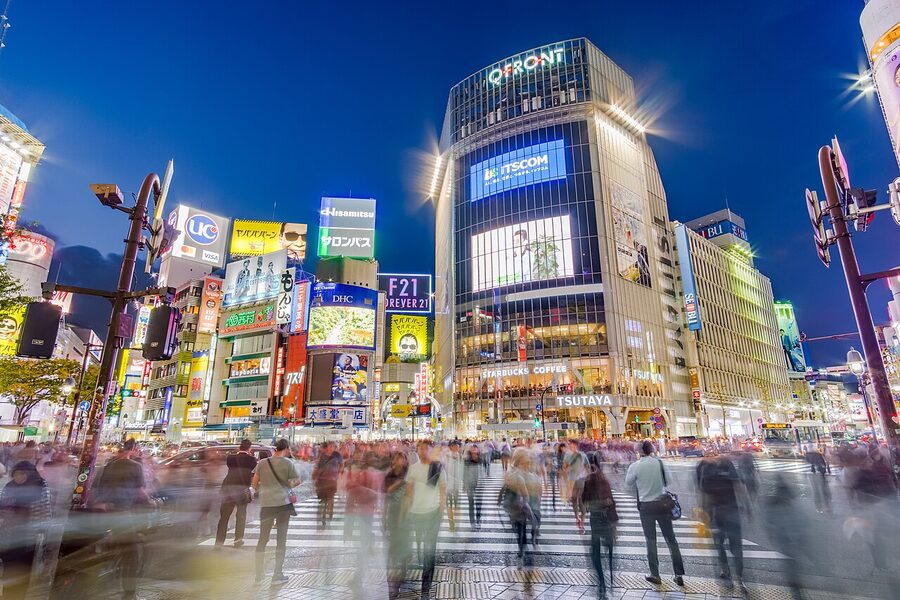
Shibuya is the part of Tokyo everyone has seen without realising it. The crossing from Lost in Translation, the Pokemon pop-up posters, the giant Akita Inu flickering across all the billboards at once — they’re all here, packed into maybe ten blocks between the JR station and Dogenzaka. What the travel videos never show is the stuff I find more charming: the elderly woman selling roasted chestnuts in front of Mega Don Quijote, the weeping willows over the tiny bars at Nonbei Yokocho, or the moment you finally figure out which of Shibuya Station’s eight exits leads to where you’re actually going.
This is a guide for your first day in Shibuya. I’ve written it in the order I’d actually walk it, with all the small details I wish someone had told me the first time I arrived jet-lagged with a suitcase bigger than my bedroom.
In This Article
- First, the confession
- The crossing, and where to actually watch it from
- Shibuya Sky — book it, book it now
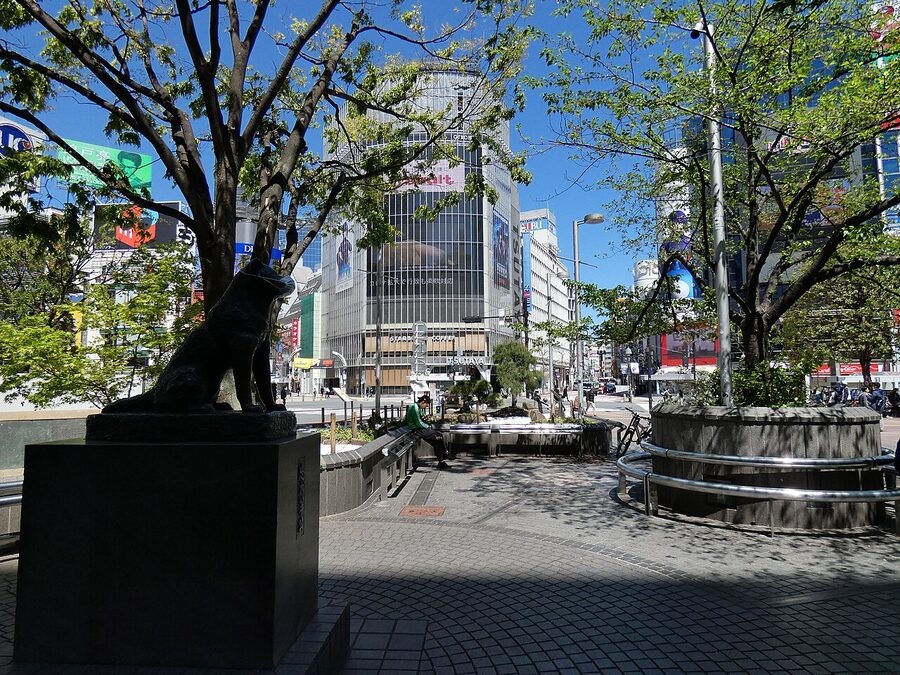
- Hachiko — the actual story behind the statue
- The shopping: the 109, Scramble Square, and the rest
- Center Gai and Dogenzaka — the loud half and the steep half
- Nonbei Yokocho — the alley that time forgot
- When to come
- Small details I wish I’d known
- Getting there and getting around
- Practical info at a glance
- How I’d spend half a day in Shibuya
First, the confession
Shibuya Station is where my Tokyo trip nearly ended before it began. I came up from the Ginza Line platform, followed a sign that said “Exit 8”, ended up in a basement department store, tried to retrace my steps, got swept into the JR Yamanote concourse, and popped out the West Exit near the buses. My Airbnb was 300 metres from the Hachiko Exit. It took me fifty-five minutes to find it.
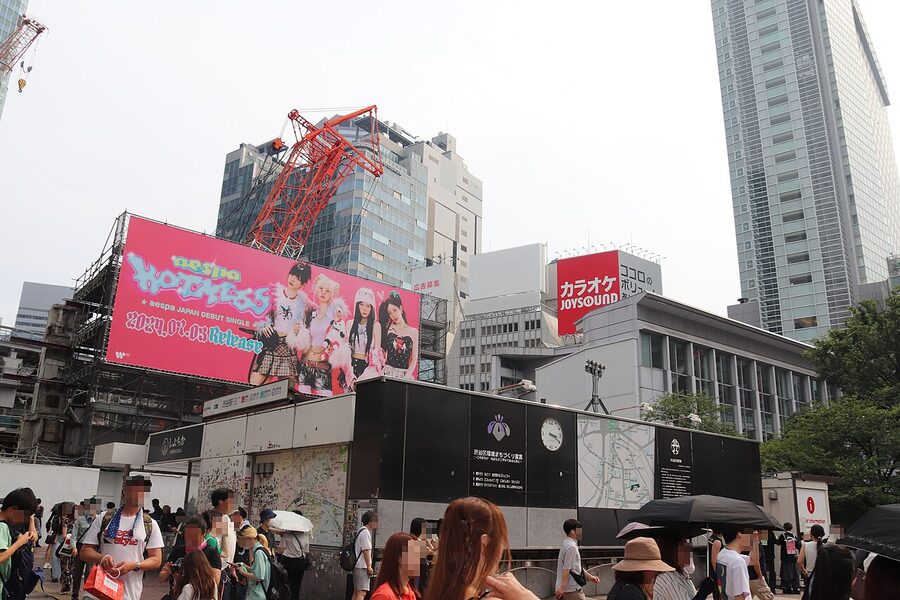
The station is a genuine nightmare your first time. It connects nine train lines and sits across two major buildings, and the signs point you at the exit by number, not by what’s there. If you remember nothing else from this article, remember this: Hachiko Exit is the one you want 80% of the time. It opens directly onto Hachiko Square, which is the tiny patch of pavement with the dog statue, facing the Scramble. If you need the shiny new things — Shibuya Sky, Scramble Square, Starbucks on the crossing — take the New South Exit or the B6 exit signed for Scramble Square. The West Exit is for the buses and Shibuya Mark City, and it’s where I always end up when I’ve lost track of my own feet.
The crossing, and where to actually watch it from
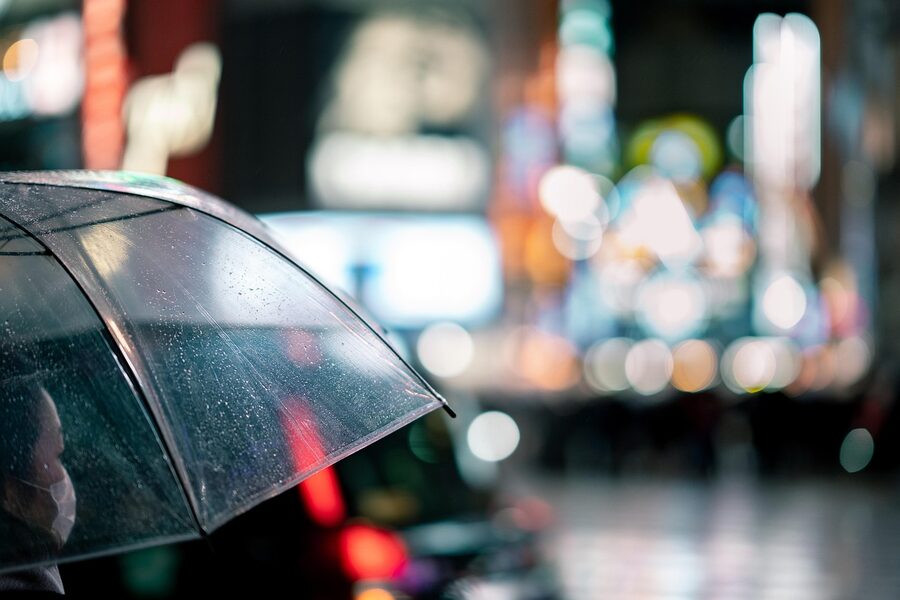
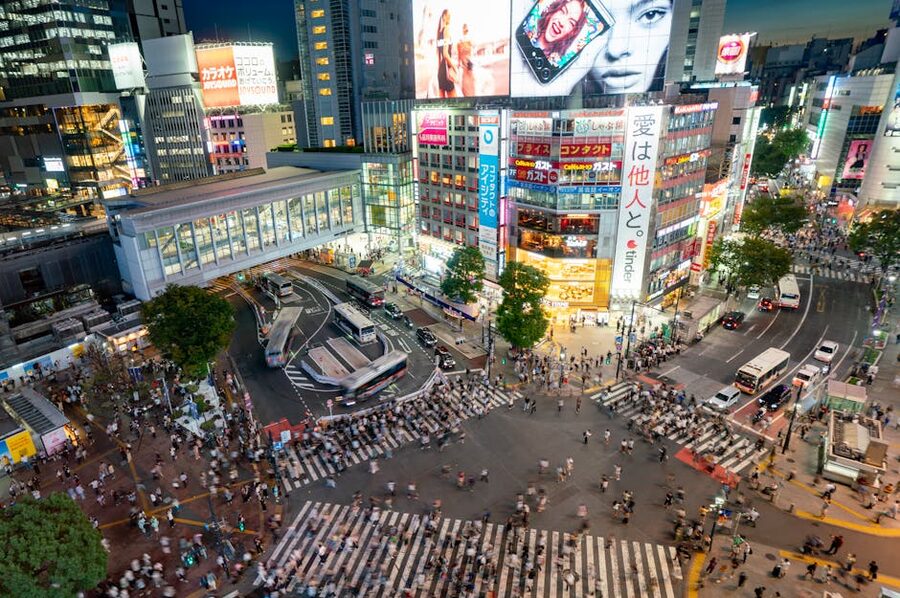
The Scramble is not just a pedestrian crossing. It is five pedestrian crossings that all turn green simultaneously, so the intersection fills from every corner at once. When I first saw it at night, in the rain, with the billboards reflecting off wet tarmac and thousands of umbrellas pointing at each other, I stood on the raised pavement outside Tsutaya and genuinely forgot to cross. It is as good as the internet says it is.
Crossing it is straightforward once. Just don’t stop. The light stays green for about thirty seconds and traffic does resume. Up to 3,000 people move through per cycle at peak, but most of the time it’s more like several hundred, and the flow is weirdly orderly — everyone threads through everyone else without colliding, like sand through a funnel.
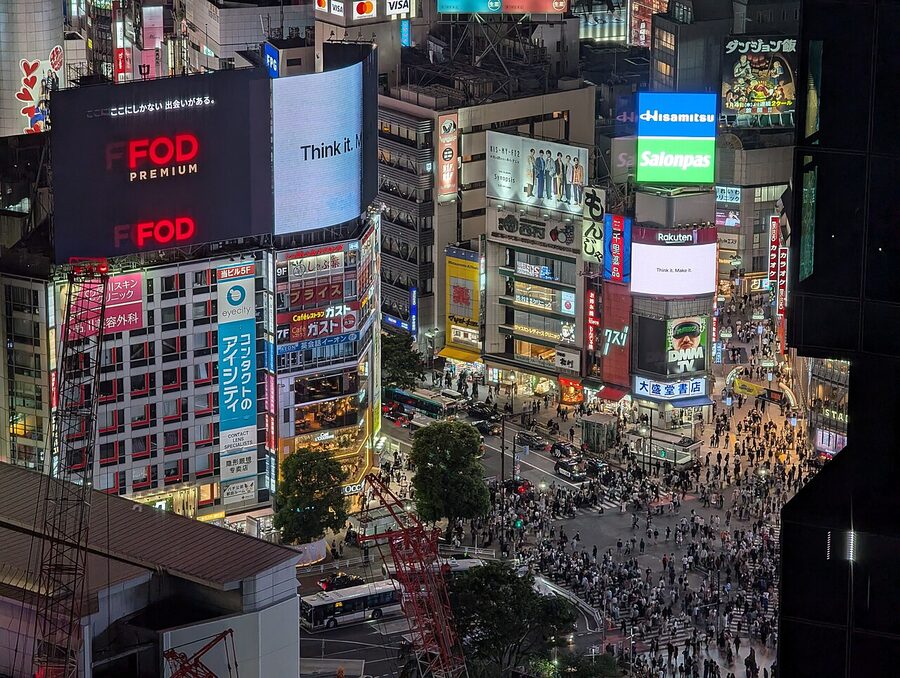
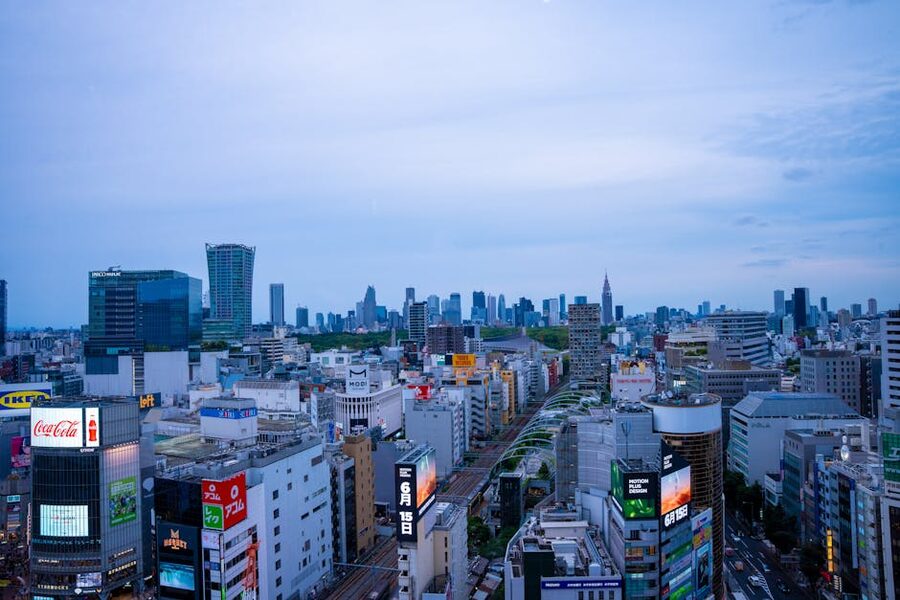
But the photo you have in your head — the one looking straight down at the flowing mass of people — is taken from above. Here’s where to get it, ranked from where I’d actually go:
- Shibuya Sky (Scramble Square, 47F) — the definitive view. Straight down onto the crossing from 230 metres up. Ticketed; see the next section.
- L’Occitane Cafe (2F, across the street from the Scramble) — window seats face straight onto the intersection. Order something, get a window seat, sit for an hour. Much less busy than the Starbucks and the coffee is better.
- Mag’s Park (MAGNET by Shibuya 109 rooftop) — ¥600 entrance (includes a drink). I like this for the low-rise angle and the fact that there are usually fewer than a dozen other people up there. Entry is from the 7F of the MAGNET building.
- Starbucks Tsutaya — yes, the famous one. Reportedly one of the busiest Starbucks in the world. The window seats are genuinely impossible to get without a 20-plus minute hover, and the glass is tinted so your photos come out greener than real life. Honestly? Skip it unless you’re already buying coffee and the queue happens to be short.
- Shibuya Mark City walkway — a free overhead pedestrian walkway that crosses right over the intersection on the way to the station. You don’t get the overhead shot, but you get a good angle for free, and you’re already there every time you walk to a train.
Shibuya Sky — book it, book it now
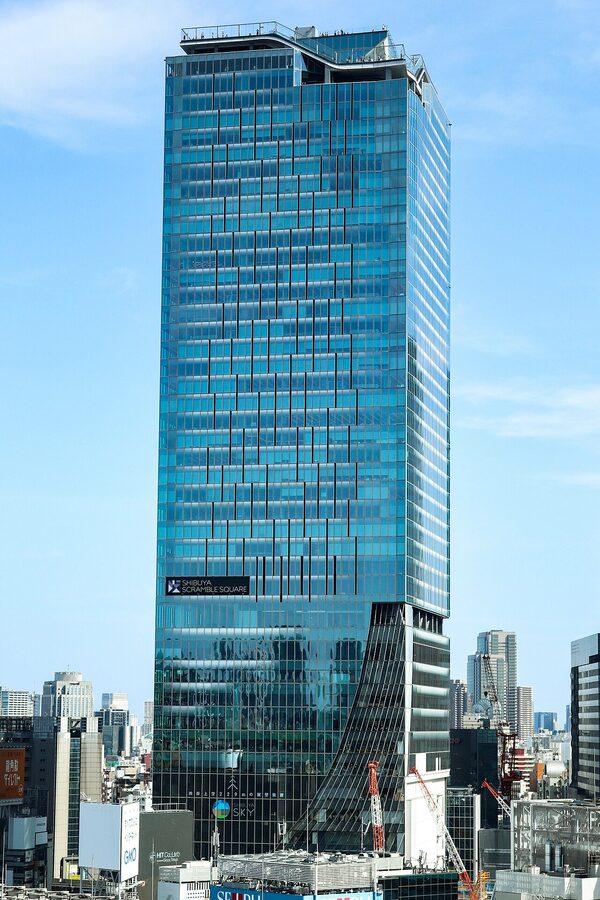
If you do one ticketed thing in Shibuya, make it this one. Shibuya Sky is the open-air observation deck on top of Scramble Square, 230 metres above the crossing. You stand in the wind, you look down, and the city just goes on forever — on a clear day you can see Mount Fuji about 90km to the southwest, and on any day you can see the crossing directly below you, reduced to ant-size dots of movement.
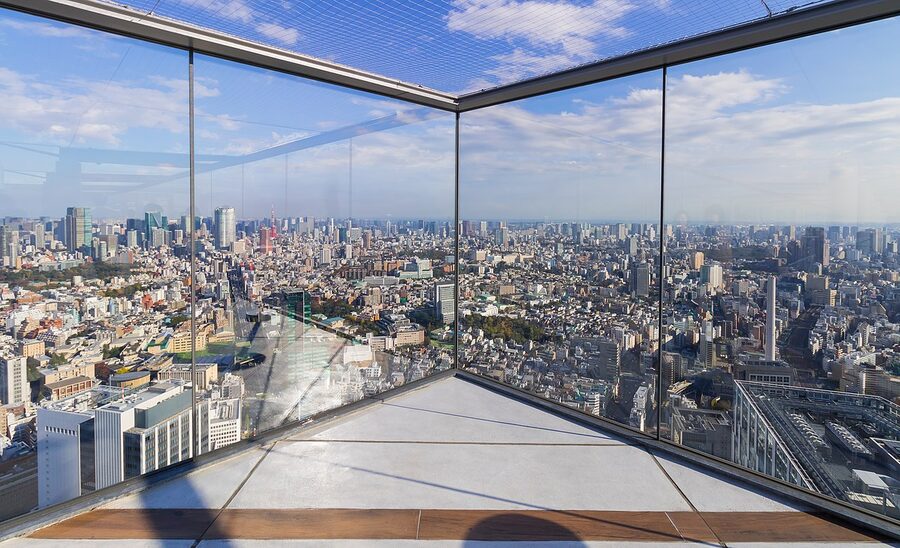
A few specifics I wish I’d had the first time:
- Tickets: ¥2,200 advance, ¥2,500 on the door. Always buy advance online. Sunset slots go first and I mean first — tickets are released two weeks ahead and the good slots vanish within an hour. Set a calendar reminder for 14 days before your visit.
- Hours: 10:00 to 22:30, last entry 21:20. The last-hour ticket is cheaper in theory but the sunset and blue-hour slots (roughly an hour around sunset) are the ones you actually want.
- The rooftop can close in bad weather. Strong wind or lightning and they shut the open-air deck. If that happens there’s an indoor floor with smaller floor-to-ceiling windows — it’s fine, but the magic of the roof is the wind and the exposure.
- No selfie sticks, no tripods, no large bags. There are lockers near the entrance. Phones and small cameras are fine. You can shoot straight down over the edge, which is how the classic “ants on the Scramble” photo happens.
- Best slot, in my opinion: 45 minutes before sunset. You get light, you get dusk, you get full nighttime lights, all for the price of one ticket. Book via the official Shibuya Sky website.
Hachiko — the actual story behind the statue
Hachiko was an Akita Inu puppy born in November 1923 in Odate, up north. He was adopted in early 1924 by Hidesaburo Ueno, a professor of agricultural engineering at Tokyo Imperial University, who lived near Shibuya Station. Every morning Hachiko walked with the professor to the station. Every afternoon Hachiko came back to meet the train home.
Then, one afternoon in May 1925, Hidesaburo died of a cerebral haemorrhage at work. He never came back to Shibuya Station. Hachiko did. For nine years, until his own death in March 1935, he came to the same spot at the same time every single day, waiting for a train that didn’t contain the man he was waiting for. People at the station noticed. A former student of Hidesaburo’s wrote a newspaper article about him. By the time he died he was one of the most famous dogs in Japan.
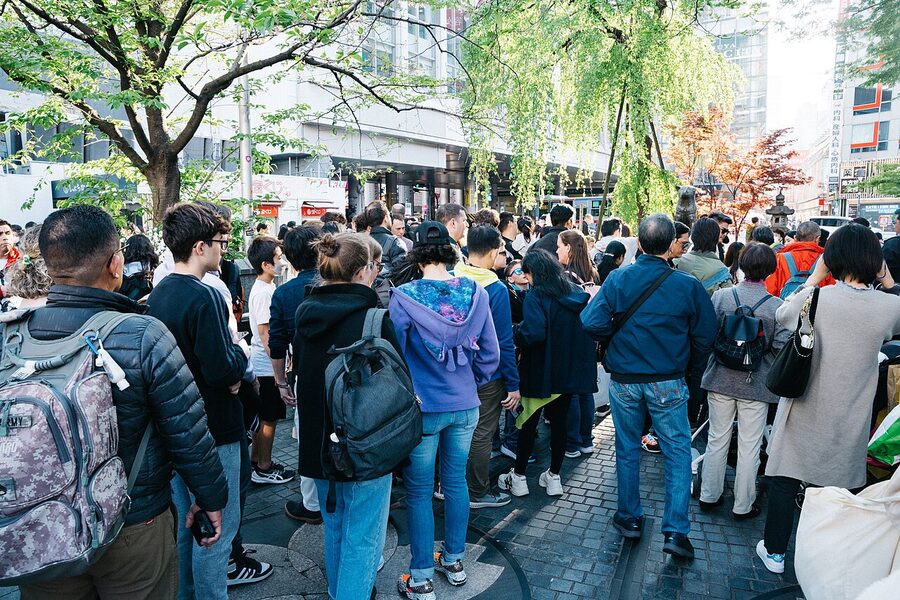
The bronze statue you’ll queue for was first cast in 1934 — while Hachiko was still alive, and he reportedly attended his own unveiling. It was melted down during World War II for its metal, which is such a Japanese twentieth century thing to happen to a thing. The statue you see today is a 1948 recast by the son of the original sculptor.
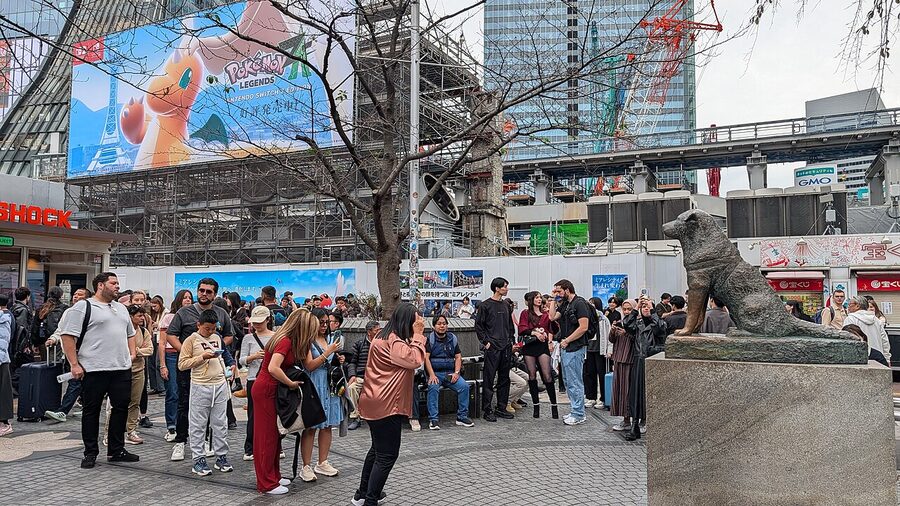
The queue for the statue looks worse than it is. On a weekday afternoon you’ll wait maybe 10 minutes to get your photo; on a Saturday evening it’s more like 25. People are generally quick — they pat the head, take the shot, move on. There’s no rope line; it’s just a sort of polite understanding that forms. If you just want to see him, walk past; if you want the photo, join the end of what looks like the queue, and someone ahead of you will wave you forward when it’s your turn.
The shopping: the 109, Scramble Square, and the rest
Shibuya is Tokyo’s vertical shopping. Everything stacks. The main players:
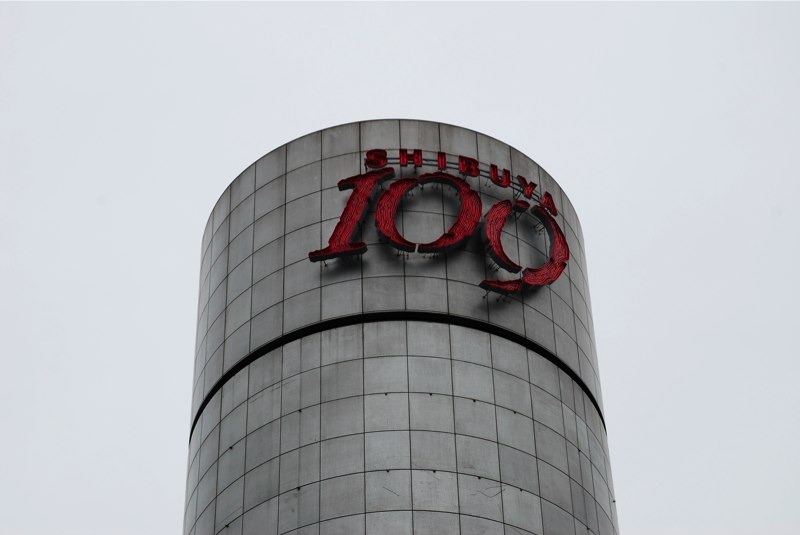
Shibuya 109 — the silver cylinder. A Japanese gyaru-fashion institution since 1979, aimed at women under thirty, now a little tamer but still full of trend-ahead-of-Instagram boutiques. The ground-floor cafe sells the kind of neon-pink parfaits you are contractually required to photograph.
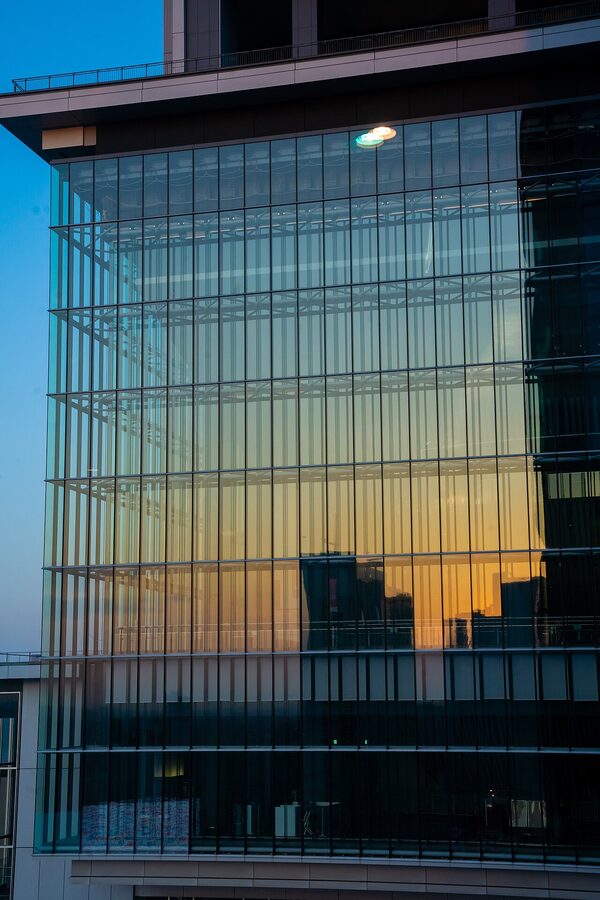
Shibuya Scramble Square — the new glass tower where Shibuya Sky lives. 47 floors, 200-plus shops and restaurants, and the best food hall in Shibuya on the basement levels. Come here if you want to eat well without queueing at a named restaurant — the depachika (basement food halls) sell bento, tempura, wagyu skewers, everything, until about 9pm.
Shibuya Parco — the artsy one. Sixth floor has the Nintendo Tokyo store (where the Mewtwo figure lives), Pokemon Center Tokyo DX, and a Capcom Store. Yes, the queue goes round the block on weekends. Get there at 10am if you want to breathe.
Mega Don Quijote — ドンキ, Donki, the seven-floor discount chaos shop. The Shibuya flagship is on Center Gai and has a live tank of tropical fish by the entrance. This is the shop for: all the flavour Kit Kats you cannot find at home (matcha, wasabi, sake, strawberry cheesecake), cheap skincare, random electronics, and omiyage gifts for people back home. It’s open until 3am. I’ve been in there at 2am buying jelly snacks and cough drops and it has always been about 40% full.
Hikarie — the polite tower. Attached to the station. Has the nicer restaurants, a calmer crowd, and the best view of the crossing from a free, non-observation-deck window (11F, near the elevators, worth a quick visit).
Off Omotesando-dori, you drift into luxury territory — Gucci, Prada, Dior, Tokyu Plaza with its mirrored-triangle entrance, all the way up to Harajuku. That’s for a different day.
Center Gai and Dogenzaka — the loud half and the steep half
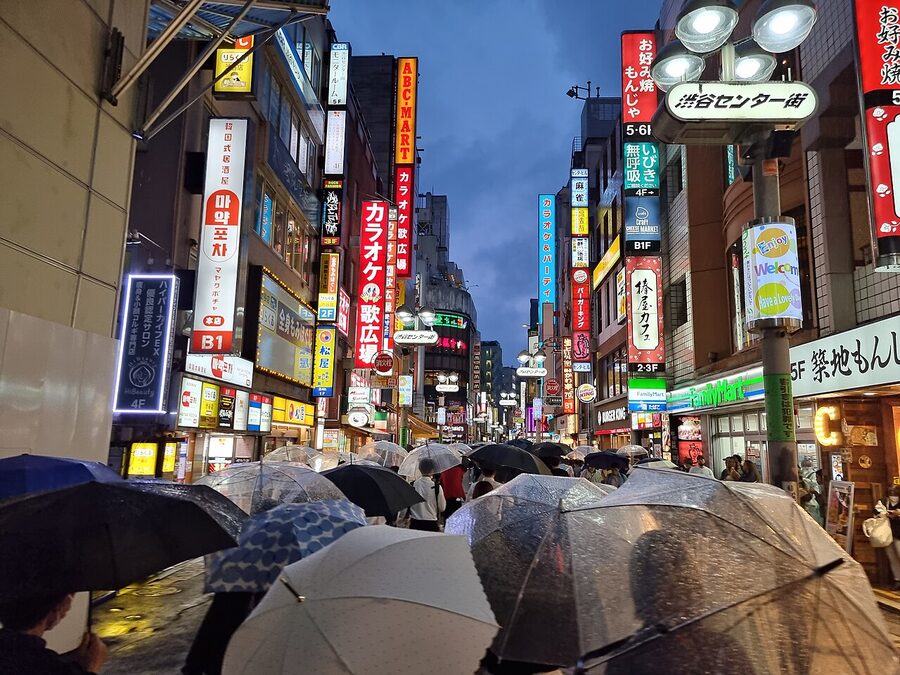
Cross the Scramble from the Hachiko Exit and you’re pointed straight at Center Gai. It’s a pedestrian lane with a carved archway at the entrance, neon signs stacked five deep, and every chain you’ve ever heard of — McDonald’s, First Kitchen, a Lawson, a Family Mart, a Gindaco takoyaki stand, pachinko halls, karaoke chains — plus a few unexpected joys. My genuine opinion: it’s an interesting half-hour during the day, and I wouldn’t linger after 23:00 on a Friday or Saturday. The crowd gets younger, drunker, and more pushy, and the police presence picks up, which should tell you something.
Branch left off Center Gai and you’re on Dogenzaka, the hill that slopes up and west away from the station. Its nickname is Love Hotel Hill. The upper half is lined with themed love hotels — a sweets-shop facade, a mock-Venetian one, a vaguely medieval one — which exist because Japanese apartments are small, walls are thin, and privacy is expensive. I’m deadly serious: these hotels aren’t seedy. Most are cleaner than Western three-star hotels, and couples book them for the themed rooms more than the privacy. Rates are per hour (a “rest”) or overnight (a “stay”), and the whole system is reception-less — you pick a room from a lit-up panel in a discreet lobby.
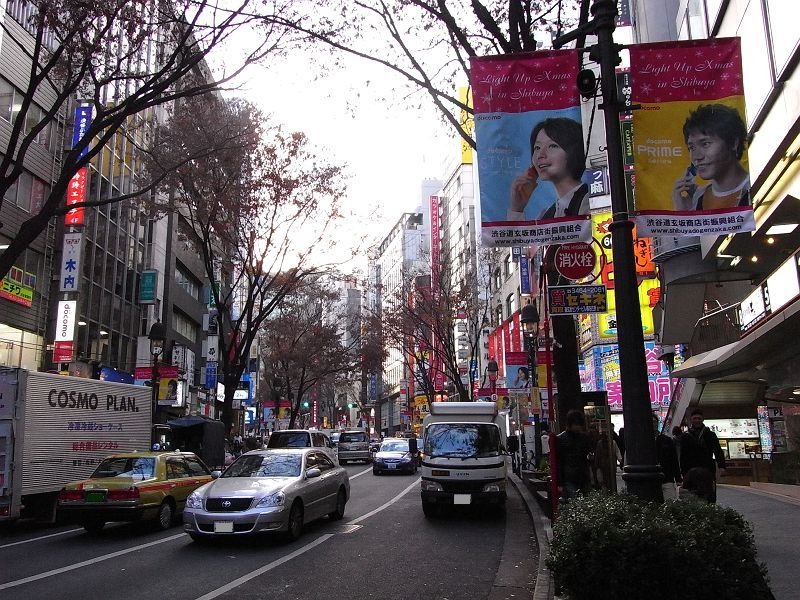
Past the love hotels, the top of Dogenzaka gets quieter and more interesting — there’s a converted church bar (actual stained glass, yes), a handful of tiny izakaya with hand-written menus you can point at, and the legendary Goodbeer Faucets a little further out, which has about forty craft beers on tap and was the first craft beer bar in Japan to take it seriously. I’ve had a peach saison up here on a Tuesday night with maybe seven other customers and the owner behind the bar talking to every single one of us.
Nonbei Yokocho — the alley that time forgot
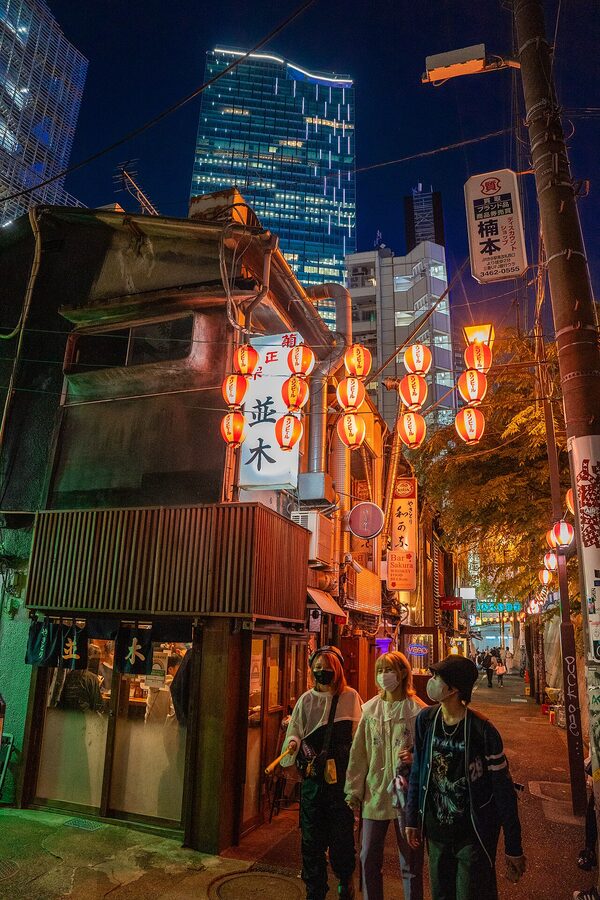
If the Scramble is Shibuya’s front, Nonbei Yokocho (のんべい横丁) is its backdoor. It’s a narrow pair of alleys tucked against the JR Yamanote railway embankment, five minutes on foot from Hachiko Exit, where about forty tiny bars — some counters seat four — have been operating since the post-war 1950s. The weeping willows over the entrance are from the same era. Every ten minutes a train passes overhead and the whole alley rattles gently.
Rules of engagement, because I didn’t know any of this my first time:
- Most bars seat 4–8 people. If every seat is taken, you come back later. Don’t stand at the door expecting people to shuffle along.
- Most places charge a small table charge (otōshi / お通し, usually ¥500-¥1,000) which includes a small snack. This is not a scam; every traditional bar in Japan does this.
- Some places are “regulars only” on Friday/Saturday. A staff member will politely wave you off. It is not personal. They have forty seats total and eighty regulars.
- Draft beer is around ¥700, a highball ¥600, food snacks around ¥400-¥800 a plate. A quiet hour at a counter for around ¥2,500 is very doable.
- Bathrooms are often shared across the alley — ask and someone will point you to the communal one.
If you don’t drink, skip Nonbei Yokocho — it’s tiny and it’s specifically about the sitting-at-a-counter-having-a-drink thing. If you do drink, this is one of the last unvarnished corners of Tokyo and worth an hour minimum.
When to come
Shibuya rewards both day and night, differently. If I had only one visit I’d come for the sunset — arrive around 4pm, walk the area in daylight, ride Shibuya Sky 45 minutes before sunset, come down and eat, finish at Nonbei Yokocho.
Some specifics:
- Weekday mornings (until about 10:30) are the calmest. You can cross the Scramble without waiting, Hachiko has no queue, and the shops have just opened but haven’t filled.
- Saturday and Sunday afternoons are peak chaos. The Scramble is genuinely at its densest between 3pm and 5pm on a Saturday. If that’s your thing, come then.
- Halloween in Shibuya was, until recently, enormous and unofficial — hundreds of thousands in costume on the street. The city has clamped down on it; if you’re visiting around 31 October, check what’s actually happening that year. Police close streets and there’s no sale of alcohol in the area during the peak hours.
- Cherry blossom week (late March/early April) is beautiful on Sakuragaoka-cho, a street just southwest of the station where the trees form a 100-metre arch of pink. Go early in the day; by 11am every tripod photographer in Tokyo is there.
- Rainy season (June) is actually my favourite time for Shibuya. The crossing photos are better, the crowds are thinner, and the temperatures aren’t yet blistering.
Small details I wish I’d known
- The Starbucks at the Crossing (in the Tsutaya building) is often cited as the busiest Starbucks in the world. I don’t know if that’s true or just marketing, but the queue for a window seat is routinely 20+ minutes, and you’ll be asked to move on after 30.
- There’s a blue Hachiko bus — Shibuya’s tiny neighbourhood shuttle, formally called the Hachiko Bus, painted a very specific turquoise blue. Flat ¥100 fare, IC card friendly, loops around Shibuya in four routes. I’ve never needed it, but it’s charming and I’ve photographed it more than I’ve used it.
- Hachiko’s actual daily route from the Ueno household to the station was about 400 metres. Someone has marked the approximate path on older Shibuya maps. Most tourists don’t notice.
- The giant 3D Akita dog that now appears on the big Hachiko billboard outside the Hikarie building is a tribute — Hachiko the 3D pup jumps between screens and barks at the hour. Best viewed from the Hachiko square side of the crossing.
- The “Myth of Tomorrow” mural by Taro Okamoto, a Picasso-scale painting of the horror of nuclear weapons, is hiding in plain sight on the Shibuya Mark City connecting walkway between the station and the Keio platforms. It’s thirty metres long, painted in 1969, lost in Mexico for decades, installed here in 2008. Thousands of commuters walk past it every day without looking up.
- There are 2,500+ coin lockers in Shibuya Station. If they’re all full (and during Golden Week they are), the Ecbo Cloak app lets you leave a bag at nearby shops for the day, usually around ¥500-¥800.
Getting there and getting around
Shibuya Station is one of the world’s busiest train stations — around 2.4 million people pass through daily — and it connects:
- JR Yamanote Line — the loop line, covered by the JR Pass. One stop to Harajuku, three stops to Shinjuku, seven stops to Tokyo Station. This is the line you’ll use most.
- JR Saikyo Line and Shonan-Shinjuku Line — longer-distance JR services, JR Pass covers them.
- Tokyo Metro Ginza Line — orange line, one stop to Omotesando, direct to Ueno and Asakusa.
- Tokyo Metro Hanzomon Line — purple line, runs underground toward Otemachi and Tokyo Skytree area.
- Tokyo Metro Fukutoshin Line — brown line, direct to Ikebukuro and on into Saitama.
- Keio Inokashira Line — the private line out to Kichijoji and the Ghibli Museum area.
- Tokyu Toyoko Line and Tokyu Den-en-toshi Line — private lines running southwest toward Yokohama and the suburbs.
Use an IC card (Suica or Pasmo) and never look at a ticket machine. Hold it to the gate on the way in, hold it again on the way out. The gates play a tiny chime when you tap; they play a different tiny chime when they don’t. You’ll learn the difference in about three train journeys.
On exits, as a cheat sheet:
- Hachiko Exit — the dog, the Scramble, Center Gai, the 109, the Tsutaya Starbucks.
- New South Exit / B6 — Scramble Square, Shibuya Sky, Hikarie.
- West Exit — buses, Mark City, taxi rank, and a quieter side of Shibuya.
- South Exit — for Shibuya Stream, Shibuya Cast, and the walk toward Ebisu.
Walking times: Meiji Shrine is 15 minutes on foot via Yoyogi Park, or one stop on the JR Yamanote. Harajuku is also one stop (3 minutes by train, 20 minutes walking up Omotesando which is the nicer option). Shinjuku is three Yamanote stops (7 minutes) or a roughly 35-minute walk which I do not recommend.
Practical info at a glance
- Shibuya Sky: ¥2,200 advance, ¥2,500 on the door. 10:00–22:30, last entry 21:20. Official site.
- Shibuya Crossing: free, always on, peak around 3pm-5pm on weekends and around 8pm weekdays.
- Hachiko statue: free, always accessible, queue 10-25 minutes for a photo depending on time of day.
- Mag’s Park rooftop (MAGNET 109): ¥600, includes a drink. 11:00–23:00.
- Nonbei Yokocho: mostly 18:00–24:00, a few open earlier. Cash generally preferred; ATMs inside 7-Eleven on Center Gai work with foreign cards.
- Mega Don Quijote Shibuya: open 24/7, though the top floors close around 3am.
- Station: step-free access at the Hachiko Exit and New South Exit. Some older platforms require staff-assisted lifts — the information desk near the Hachiko Exit can help.
- Official tourism page: Go Tokyo on Shibuya. Train info: JR East.
How I’d spend half a day in Shibuya
Assuming you arrive around 3pm with a Shibuya Sky ticket for 5:30pm sunset.
- 3:00pm — Arrive via Hachiko Exit. Go straight out, see Hachiko (the queue is shorter now than at weekend peak), cross the Scramble once, turn around, cross it back.
- 3:30pm — Walk Center Gai end to end. Stop at Mega Don Quijote for Kit Kats and whatever else catches your eye.
- 4:15pm — Loop through Shibuya Scramble Square on the way to your Shibuya Sky slot. The basement food hall is open; pick up something for after.
- 5:15pm — Shibuya Sky. Stay until fully dark, around 7pm.
- 7:15pm — Back down. Walk to Nonbei Yokocho (four minutes from Scramble Square). Find a counter seat. Eat and drink small things for an hour.
- 8:30pm — Wander back across the Scramble at full night-time lighting. The ground-level view at night is different again.
- 9:00pm — If you have energy: Dogenzaka for a craft beer at Goodbeer Faucets. If not: back on the Yamanote to your hotel.
If you’re staying the night nearby, see my guide to where to stay in Tokyo — the Dormy Inn Premium Shibuya Jingumae is five minutes north of Hachiko and genuinely excellent for the price. For the day after: Meiji Shrine is a 15-minute walk from Hachiko through Yoyogi Park and is the calmest thing you’ll do in Tokyo, which you’ll need after Shibuya. Or carry on to Harajuku for completely different shopping, or Shinjuku for Shibuya’s bigger, messier older sibling.
Shibuya is loud, overfamiliar from Instagram, and occasionally exhausting. It also has one of the best open-air observation decks in Asia, a dog statue with a better backstory than any novel, and a tiny alley of bars that feels like a time machine, all within an eight-minute walk of each other. The second time I crossed the Scramble I stopped halfway to take a proper look at the billboards. I got dirty looks from about forty commuters. Worth it, honestly.