
Reviewed · KAMAKURA & ENOSHIMA DAY TRIPS
Kamakura 8 hr Private Walking Tour with Licensed Guide from Tokyo
Kamakura’s Great Buddha is the headline, but the real strength of this tour is the freedom to build a day around your interests. You can pair major sights such as Kotoku-in and Hasedera with bamboo, Zen temples, a coastal stop, or even Enoshima Island.
I like the private format, since guides such as Taka, Shinji, Andy, and Makoto have adjusted plans for food needs, shopping preferences, photography, and specific temple requests. I also like that your guide handles the train and bus changes from Tokyo, a real help when you want to see several scattered sights.
The catch is simple: transportation, entrance fees, lunch, and personal costs are extra, and eight hours includes the journey from Tokyo. A full list of temples can look tempting, but trying to cover too much may leave you rushing through places that deserve quiet time.
In This Review
- Key points to know before booking
- Why Kamakura makes a strong day trip from Tokyo
- Starting at Tsurugaoka Hachimangu Shrine
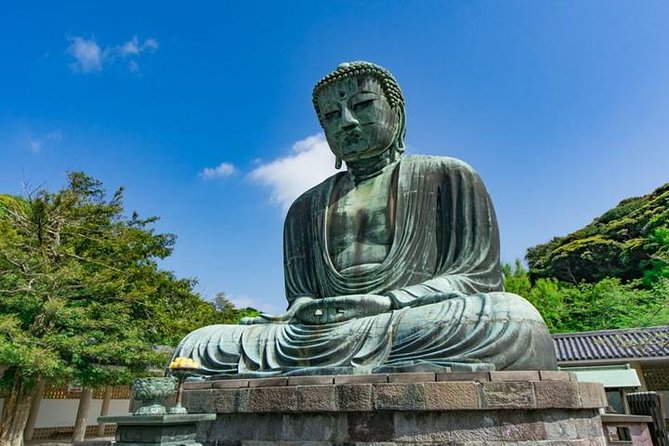
- Meeting the Great Buddha at Kotoku-in
- Hasedera, Kannon, and the ocean view
- Choosing the Hokoku-ji bamboo grove
- Adding hiking, Enoshima, or coastal views
- The Zen temples around Kita-Kamakura
- Smaller temples for a quieter route
- How the private format affects the day
- Price, extra costs, and overall value
- Who should book this Kamakura day?
- Should you book it?
- FAQ
- How long is the Kamakura private tour?
- Is hotel pickup included?
- Is transportation included in the price?
- Is a private vehicle provided?
- How many sites can I choose?
- Are entrance fees included?
- Is lunch included?
- Can I visit Enoshima Island?
- Can I request particular temples or activities?
- Is the tour suitable for solo visitors?
- What is the cancellation policy?
Key points to know before booking
- The Great Buddha is only one part of the day: Add Hasedera, Tsurugaoka Hachimangu, bamboo, or coastal views for a fuller picture of Kamakura.
- Your guide plans around you: You can request temples, shopping, food, photography stops, hiking, or Enoshima.
- Public transportation is part of the experience: Train and bus travel are included in the eight-hour schedule, but fares are not included.
- The tour works well for families and solo visitors: Guides have assisted older family members, helped with gluten-free meals, and guided solo visitors through transit.
- Kamakura rewards careful pacing: The town has more temples and shrines than you can sensibly cover in one day.
- The price offers better value for a small private group: At $201.51 per person, your group gets personal planning, but extra admissions and transport raise the final cost.
Why Kamakura makes a strong day trip from Tokyo
Kamakura gives you a very different day from central Tokyo. The town combines major Buddhist temples, Shinto shrines, wooded hills, old shopping streets, and a nearby coastline. It was once the center of Japan’s first military government, and that mix of power, religion, and nature still shapes the town.
The private guide format matters because Kamakura’s sights are spread across several areas. Tsurugaoka Hachimangu is near the center, while the Great Buddha and Hasedera are farther south in the Hase district. Kita-Kamakura has its own group of Zen temples, and Enoshima lies farther west along the coast.
You will use public transportation and walk between stops. That keeps the day close to local life, but it also means the tour is not a chauffeur-driven excursion. You should expect train stations, buses, sidewalks, temple paths, and a fair amount of walking.
The eight-hour duration includes travel time from Tokyo. That is much more useful than a short half-day visit, particularly if you want more than the Great Buddha and one temple. Still, the journey takes a meaningful part of the day, so tell your guide your top priorities before setting out.
A few more Tokyo tours and experiences worth a look
Starting at Tsurugaoka Hachimangu Shrine
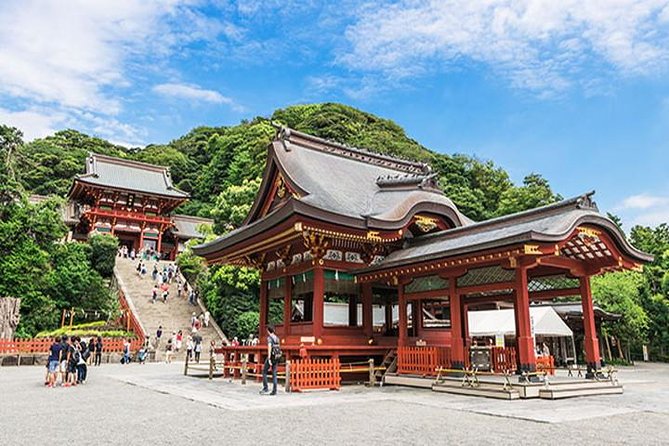
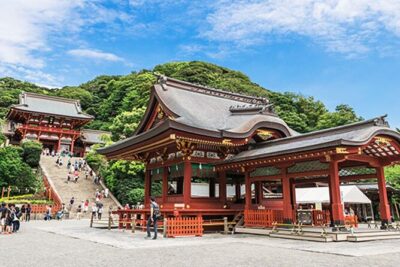
Tsurugaoka Hachimangu is a sensible first stop because it introduces Kamakura’s political and religious importance. The shrine is dedicated to Hachiman, the patron deity of the Minamoto family and of samurai in general. It is also free to enter, which helps keep the base cost down.
The approach gives you a clear sense of scale, with a broad route leading toward the shrine buildings. Your guide can explain the connection between the shrine, the Minamoto family, and the samurai culture that shaped Kamakura.
The listed visit time is only 15 minutes, so do not expect a slow, detailed exploration unless you ask for one. This is a good place to request an explanation of shrine customs, seasonal features, and the meaning of what you are seeing.
From here, Komachi Street is close by. The old shopping street is useful for snacks, small gifts, and a quick look at Kamakura’s commercial side. Try a hatosabure, the local dove-shaped biscuit, if you want a simple food souvenir. Shopping is convenient, but much of it is aimed at day visitors, so it may feel less authentic than the temples and side streets.
Meeting the Great Buddha at Kotoku-in
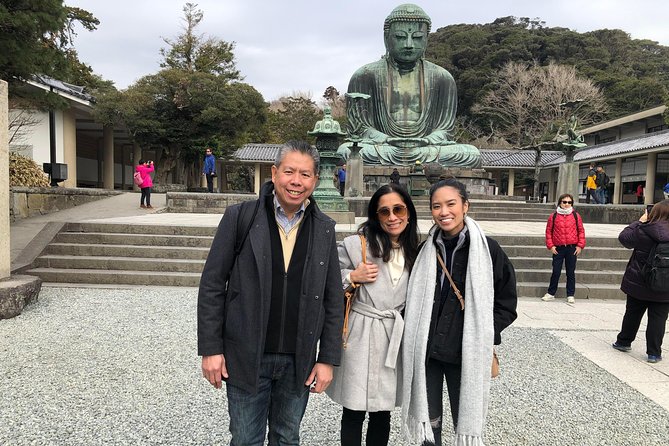
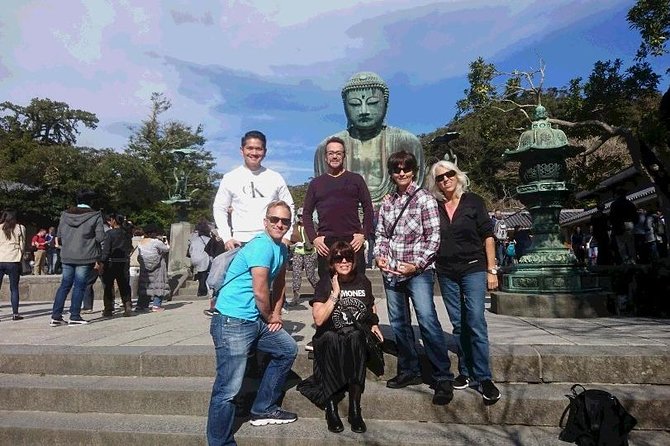
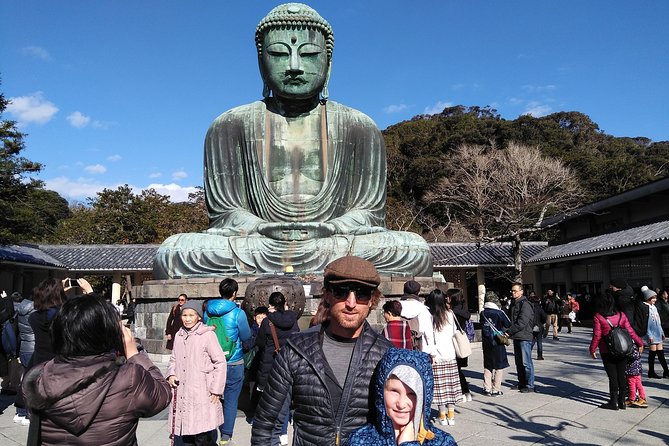
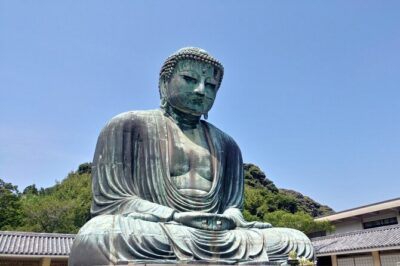
Kotoku-in contains Kamakura’s most famous sight, the bronze Amida Buddha. At 11.4 meters tall, the statue is impressive even in photographs, but its size is easier to grasp when you are standing directly in front of it.
The listed time here is 15 minutes, and that is enough for a basic visit. You can see the statue, take photographs, and hear the main points from your guide. If the Buddha is your main reason for coming, ask for more time rather than treating the stop as a quick checkbox.
Admission is not included. The same applies to several of the temple stops, so keep cash or another accepted payment method ready for entry fees. The tour price is not an all-in ticket.
Kotoku-in is often paired with Hasedera because both are in the Hase area. That pairing makes good sense and reduces unnecessary backtracking. It also gives you contrast: the open, monumental Buddha followed by a temple complex with gardens, slopes, and views.
Hasedera, Kannon, and the ocean view
Hasedera is dedicated to Kannon, the Buddhist goddess of mercy, and is famous for its 9.18-meter gilded wooden statue with eleven heads. The statue itself is an important reason to visit, but the temple grounds offer more variety than Kotoku-in.
Paths rise through the complex, and the higher area gives you a view toward the ocean. This is one of the tour’s best combinations of culture and scenery. You get a temple visit, a little uphill walking, and a coastal outlook in one stop.
The scheduled visit time is 15 minutes, which is tight if you want to see the temple, enjoy the view, and take photographs. If the ocean is important to you, mention it when your guide is building the route. You may need to trade another stop for a slower visit here.
Hasedera has admission fees, and lunch is not included. A private guide can help you choose a place to eat and handle ordering. One guide found a gluten-free dish for a visitor’s mother, while other guides helped with tempura and soba requests. That kind of practical help can be valuable when you have dietary needs or do not feel comfortable ordering in Japanese.
Choosing the Hokoku-ji bamboo grove
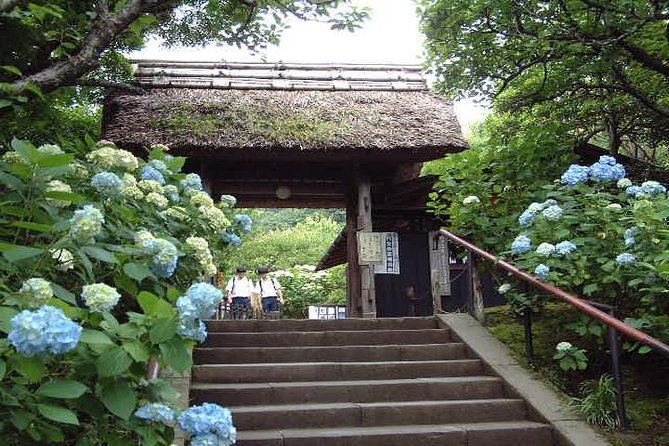
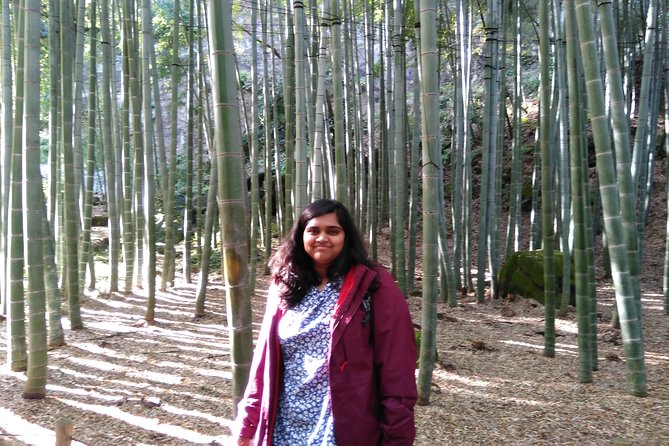
Hokoku-ji is the bamboo choice. Behind the main hall, more than 2,000 dark green bamboo stalks line narrow paths. The grove is smaller than the grand bamboo areas near Kyoto, but that is part of its appeal. It is a focused stop rather than a large park.
The suggested visit lasts 30 minutes. That gives you time to walk the paths and take in the close walls of bamboo without turning the stop into a major hike. Admission is extra.
This is one of the clearest examples of why customization helps. If you have already seen major temples elsewhere in Japan, you may prefer Hokoku-ji and the coast. If you care most about Kamakura’s religious sites, you might use the time for Kencho-ji, Engaku-ji, or Jomyo-ji instead.
Other walking tours we've reviewed in Tokyo


Adding hiking, Enoshima, or coastal views
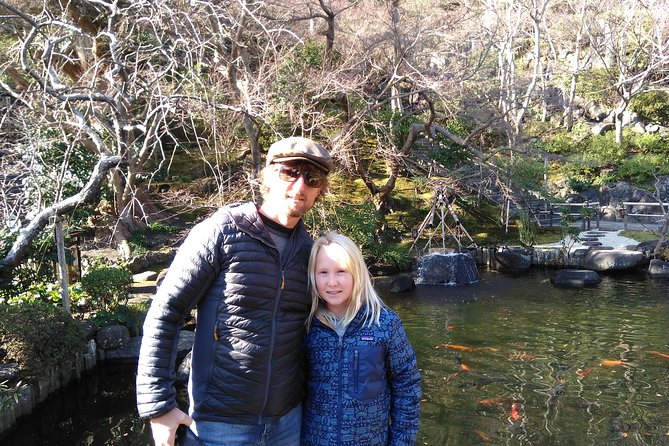
Kamakura is bordered by the sea to the south and wooded hills on its other sides. The local hiking trails connect temples through the hills, and the suggested trail time is one hour. This is a good option if you want a break from formal buildings and enjoy walking through nature.
A trail can also change the physical demand of the day. You will already be walking between stations, streets, and temple grounds, so an additional hour on wooded paths may be too much for some families or older participants. Tell your guide about your preferred pace at the start.
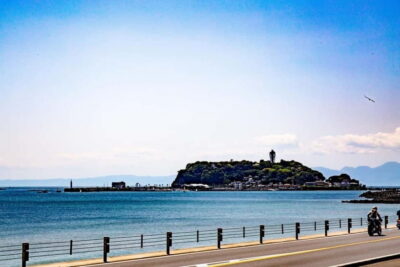
Enoshima Island is another optional addition. It is connected to the mainland by a bridge and offers a shrine, coastal scenery, and other attractions. The listed visit time is 30 minutes, so this tour can provide only a quick taste of the island unless you give it priority.
Enoshima works best for people who want sea views and a broader day trip rather than a concentrated Kamakura temple tour. It also adds travel time, which means you may need to skip several inland temples. One guide took a group from Kita-Kamakura through central Kamakura and on to Enoshima in a busy but satisfying day. That route is possible, but it depends on walking speed, train connections, crowds, and your willingness to keep moving.
Inamuragasaki has also been used as an extra viewpoint when conditions were good, including a chance to see Mount Fuji. Treat that as a possible bonus, not a guaranteed part of the plan.
The Zen temples around Kita-Kamakura
If you want a quieter, more temple-focused day, ask about the Kita-Kamakura area. Engaku-ji is one of eastern Japan’s leading Zen temples and ranks second among Kamakura’s five great Zen temples. The suggested visit is 30 minutes, with admission extra.
Kencho-ji ranks first among those five great Zen temples and is described as the oldest Zen temple in Kamakura. It also receives a 30-minute slot. These temples are more suited to visitors who want architecture, gardens, Buddhist practice, and historical context than to anyone simply collecting famous photo stops.
Jochi-ji ranks fourth among the five great Zen temples, while Jomyo-ji ranks fifth. Jomyo-ji is set in the hills of eastern Kamakura and was founded by the Ashikaga family. Each is listed for about 30 minutes.
Jochi-ji, Tokei-ji, and Engaku-ji sit near one another, making them easier to combine. Tokei-ji is a small Rinzai temple with a strong connection to Engaku-ji, and its listed visit is 15 minutes. That short slot suggests a brief look rather than a long stay.
Jufuku-ji, ranked third among the five great Zen temples, is another central option. It is listed for 15 minutes and belongs to the Rinzai tradition connected with Kencho-ji. These shorter stops can work well if you want to compare several temple settings, but they can feel rushed if you want your guide to explain each one in detail.
Smaller temples for a quieter route
The tour can move beyond Kamakura’s best-known sights. Zeniarai Benten Shrine is famous for washing money in its spring. The name means coin washing, and the custom gives this small shrine a playful, hands-on character. Admission is free, and the suggested visit is 30 minutes.
Meigetsu-in is known as the Hydrangea Temple because hydrangeas bloom across its grounds. It belongs to the Rinzai Zen sect and was founded in 1160. The listed time is only 10 minutes, so this stop makes more sense during a route built around nearby Kita-Kamakura sights or during hydrangea season.
Ankokuron-ji and Myohon-ji are Nichiren temples among the southeastern hills. Each is listed for 30 minutes. They are suitable choices if you want less emphasis on the standard first-time route.
Zuisen-ji sits at the far eastern end of Kamakura in a narrow valley surrounded by wooded hills. It is a branch temple of Engaku-ji and is listed for 30 minutes. Its location can make the day more dependent on buses and walking, so ask your guide to explain the travel time before choosing it.
Eisho-ji is the only surviving nunnery in Kamakura. It dates from the early Edo period and has connections to the Tokugawa family. With a suggested visit of 15 minutes, it can be a distinctive addition near Tsurugaoka Hachimangu.
How the private format affects the day
This is a private activity, so only your group participates. That gives you room to change the plan. If shopping does not interest you, your guide can use that time for another sight. If you have a specific temple in mind, send the name before the tour so the route can be arranged sensibly.
The guide quality is central to the experience. Several guides have received strong praise for handling Tokyo’s train system, explaining local customs, taking photographs, and adjusting the pace. Taka has been singled out for careful planning and for helping with a dinner reservation. Shinji contacted a group in advance to ask which five locations mattered most. Andy has been described as flexible when the group changed its plan during the day.
Those examples point to the best way to use the tour: arrive with a short priority list, not a rigid demand to see everything. Give your guide three or four must-see places, then let the route fill in around them.
The public transportation format also affects comfort. Your guide meets you on foot within the designated Tokyo area, and there is no private vehicle. You pay your own train and bus fares. For a solo visitor, this guidance can remove much of the stress of transfers. For a large group, you should be ready to move together through stations and keep an eye on the clock.
Price, extra costs, and overall value
The listed price is $201.51 per person. That is not cheap for a day trip, especially because transportation, admission fees, lunch, and personal spending are separate. The value comes from the planning and private attention rather than from bundled tickets or luxury transport.
For two people, the cost buys a full day with a licensed English-speaking guide who can manage the route around your interests. For a family or small group, group discounts may improve the calculation. You should compare the total against a standard group excursion, then consider how much you value flexibility.
A guide can also save time and prevent small mistakes. Knowing which train to take, where to change, how to reach a hillside temple, and where to eat can make the day easier. That benefit is strongest if you are unfamiliar with Japan’s transport system or have a specific food requirement.
The tour includes guide entry fees only for sights listed under the expected stops, while the general details say entrance fees are not included. Since the information presents this distinction in a slightly confusing way, confirm which admissions your guide’s booking covers before departure.
Who should book this Kamakura day?
I would recommend this tour to first-time Japan visitors who want Kamakura explained rather than simply photographed. It also suits families, solo visitors, older relatives who want help with transport, and anyone with a short list of temples or food requests.
It is a good fit for active groups that can walk for much of the day. The schedule may include trains, buses, temple paths, shopping streets, and perhaps a one-hour hike. You can ask for a gentler route, but say so early.
I would be more cautious if you want a slow retreat with long stretches of silence. An eight-hour Tokyo day trip has a fixed limit, and adding Enoshima, bamboo, the Great Buddha, Hasedera, and several Zen temples can turn the day into a race.
The 95 percent recommendation rate and 4.8 rating from 80 reviews suggest a consistently strong service, but one important warning remains: guide quality can vary. One disappointing experience involved limited site knowledge and an unhelpful personality. The agency addressed the problem, but you should still share your interests in advance and ask who your guide will be once assigned.
Should you book it?
Book this tour if you want a private, adjustable day and would rather have a guide manage Kamakura’s trains, buses, temples, and meal planning. It is especially worthwhile when you are traveling with family, have dietary needs, or want to combine major sights with a personal request such as bamboo, hiking, Enoshima, or a coastal view.
Skip it if you prefer to explore slowly on your own and are comfortable paying admissions, navigating transit, and choosing restaurants without help. You might also prefer an overnight stay if Kamakura’s smaller temples interest you, since one day cannot do the town justice.
For the best result, send your guide a short list before the morning meeting: your three must-see sights, your walking pace, your lunch needs, and any interest in shopping or the sea. That simple preparation gives the private format something useful to work with.
FAQ
How long is the Kamakura private tour?
The tour lasts approximately eight hours. Travel time from Tokyo is included in those eight hours.
Is hotel pickup included?
A guide meets your group on foot within the designated area of Tokyo. This is not private-vehicle pickup.
Is transportation included in the price?
No. You travel by public transportation, but train and bus fares are not included.
Is a private vehicle provided?
No. The tour uses public transportation and walking.
How many sites can I choose?
The experience is customizable. The details describe choosing a personal selection of sites, with the included plan referring to four to six sites and the overview referring to three to four. Confirm the exact number when arranging your itinerary.
Are entrance fees included?
Entrance fees are generally not included. The details also note that guide entry fees are covered only for sights listed under the expected stops, so confirm the admission arrangement for your selected route.
Is lunch included?
No. Lunch is an additional personal expense. Guides can help you choose a restaurant and assist with ordering.
Can I visit Enoshima Island?
Yes. Enoshima is one of the possible stops. The suggested visit time is 30 minutes, and adding it may mean leaving out other Kamakura sights.
Can I request particular temples or activities?
Yes. The tour is designed around your choices. You can request temples, shrines, bamboo, hiking, shopping, coastal views, or Enoshima.
Is the tour suitable for solo visitors?
Yes. It is a private activity for your group only, and most people can participate. The walking and public transportation schedule mean you should consider your own pace when selecting stops.
What is the cancellation policy?
You can cancel for a full refund up to 24 hours before the experience start time. Cancellations or changes made less than 24 hours in advance are not accepted for a refund.
More Guided Tours in Tokyo

More Walking Tours in Tokyo
More Kamakura & Enoshima Day Trips in Tokyo
More tours in Tokyo we've reviewed



Kamakura & Enoshima Day Trips, compared.
 ★ 4.5Tokyo: Kamakura & Enoshima Day Trip including Temple TicketsFrom $589 hours - 570 minutes
 ★ 4.5Tokyo: Mt. Fuji, Kamakura, Big Buddha, & Lake Ashi Day TripFrom $4910 - 11 hours
 ★ 4.5From Tokyo: Kamakura & Enoshima 1-Day Bus TourFrom $66
 ★ 5.0Kamakura Historical Walking Tour with the Great BuddhaFrom $98
 ★ 5.0Kamakura Private Tour: Temples, Nature, and the Great BuddhaFrom $98
 ★ 5.0Kamakura Walking Tour – The City of ShogunFrom $35