
Reviewed · KAMAKURA & ENOSHIMA DAY TRIPS
Private Kamakura plus Yokohama Tour – English Speaking Driver
Kamakura’s Great Buddha and Zen temples make a fine escape from Tokyo, and pairing them with Yokohama gives you two very different Japanese cities in one day. You ride in a private vehicle, so you avoid changing trains and can shape the day around your group.
I like the hotel pickup and the chance to see a lot without wrestling with Tokyo-area transport. I also like the flexible approach: drivers such as Irfan and Mac have adjusted stops, suggested lunch places, and added an extra garden visit when time allowed. The catch is important: this is a chauffeur service, not a standard guided tour. If you want detailed explanations at every temple, pay for a guide or choose another outing.
In This Review
- Key points to know before booking
- Why combine Kamakura and Yokohama?
- Hokoku-ji, Kamakura’s bamboo temple
- Hasedera and the hillside views
- The Great Buddha at Kotoku-in
- Tsurugaoka Hachimangu, Kamakura’s civic heart
- Komachidori, the snack break with a local feel
- Yokohama Chinatown for food and people-watching
- Sankeien Garden, a calmer Yokohama stop
- Minatomirai, only if the clock cooperates
- What the driver does, and what the driver does not do
- Is $650 a fair price?
- Who should book this private day?
- Final call: a practical choice with one clear condition
- FAQ
- How long does the Kamakura and Yokohama tour last?
- How many people can join the private tour?
- Is the tour guided?
- What does the $650 price include?
- Is Minatomirai guaranteed?
- Can I cancel for a full refund?
Key points to know before booking
- Private vehicle for up to five people: The $650 price covers the group, not each person, making the cost easier to justify for a full party.
- Kamakura gets the cultural focus: Hokoku-ji, Hasedera, Kotoku-in, Tsurugaoka Hachimangu, and Komachidori fill the first part of the day.
- Yokohama changes the mood: Chinatown, Sankeien Garden, and Minatomirai offer food, gardens, shopping, and waterfront views.
- English-speaking driver, not a built-in guide: Communication is generally described as good, but historical commentary is not guaranteed.
- The road trip saves effort: Pickup and drop-off at your Tokyo hotel or another agreed location are useful when you want a simple day outside the capital.
- Time can be tight: The tour lasts about 10 hours including driving, and Minatomirai is visited only if time permits.
Why combine Kamakura and Yokohama?
Kamakura and Yokohama sit southwest of Tokyo, but they offer sharply different experiences. Kamakura is a former political center filled with Buddhist temples, Shinto shrines, wooded hills, and old streets. Yokohama is a modern port city with a Chinese quarter, a broad waterfront, and polished shopping districts.
That contrast is the main reason I like this private day. You can spend the morning around incense, temple gardens, and historic statues, then finish with dumplings, neon, and skyline views. A train-based day is possible, but the private car removes transfers and gives your group a quiet place to rest between stops.
The schedule is ambitious. The listed visits add up to more than six hours before you count traffic, lunch, hotel pickup, and the drive back to Tokyo. That means the driver must keep the day moving, and you should not expect long, unhurried visits everywhere.
A few more Tokyo tours and experiences worth a look
Hokoku-ji, Kamakura’s bamboo temple
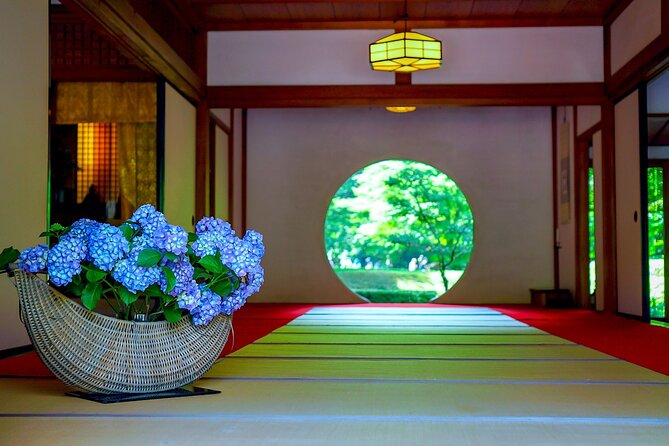
The tour begins at Hokoku-ji, a Zen temple from the Rinzai tradition. Its main draw is the bamboo garden, where tall green stalks create a cool, shaded setting that feels far removed from Tokyo’s traffic.
You have about an hour here. That is enough time to walk through the garden and see the temple grounds without turning the stop into a rushed photo visit. A tea ticket is not included, but one useful tip is to add it if available. Sitting with tea in the bamboo garden gives the stop a slower, more peaceful rhythm.
Admission is not included, so keep some budget for temple entries. Hokoku-ji is a good first stop because it sets the tone for Kamakura, but it is not the place for a long lecture or a full temple study unless you arrange a guide.
Hasedera and the hillside views
Hasedera, also called Hase-kannon, is known for its large wooden statue of Kannon. The temple gives you a second look at Kamakura’s Buddhist tradition, with a different feel from the spare bamboo garden at Hokoku-ji.
The planned visit lasts about 45 minutes. I would treat this as a focused stop: see the principal religious areas, take in the setting, and leave time for the rest of Kamakura. The temple is one of the day’s strongest cultural visits, but the short time means you will not examine every corner.
Again, admission is extra. If you have mobility concerns, ask the operator for practical details before booking, since the description does not provide a full accessibility breakdown.
The Great Buddha at Kotoku-in
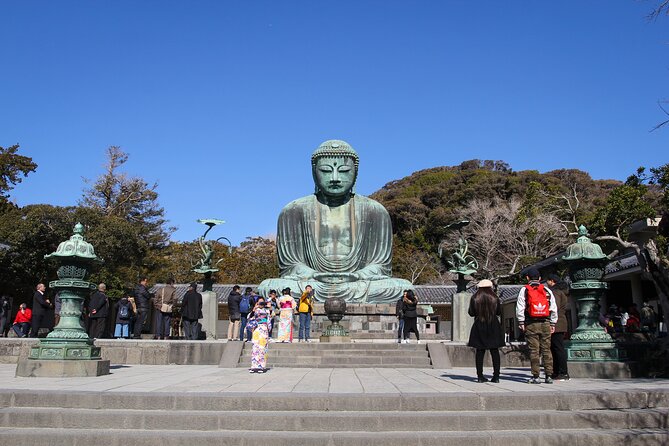
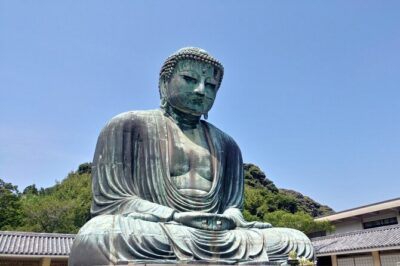
Kotoku-in holds Kamakura’s best-known sight, the Great Buddha, or Daibutsu. The monumental outdoor Buddha is the kind of stop that works even for visitors with only a passing interest in temples. Its scale gives the morning a clear centerpiece.
The schedule allows 30 minutes. That is enough to see the statue, take photographs, and look around the immediate temple grounds. It is not enough for a slow visit with extended reading or meditation, so keep your expectations realistic.
Admission is not included. The short stop also shows how this outing works: you get a strong sample of several major sights instead of spending half a day at one complex.
Tsurugaoka Hachimangu, Kamakura’s civic heart
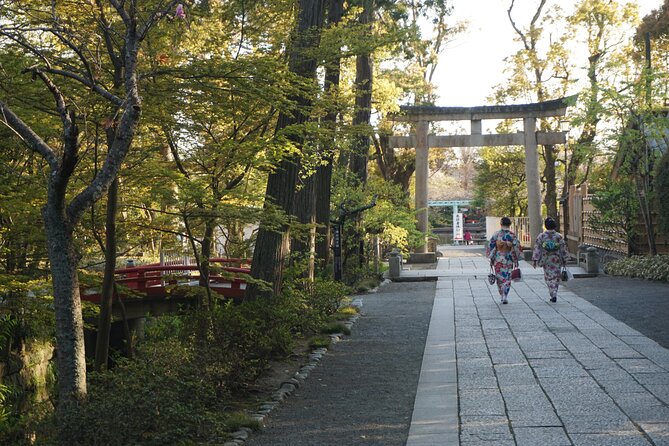
Tsurugaoka Hachimangu is Kamakura’s key Shinto shrine and a major cultural center. It hosts important festivals and includes two ponds linked symbolically with the Taira and Minamoto clans. Those details give the shrine more historical weight than a quick photo stop might suggest.
You have one hour here, which is a useful amount of time for the main approach, shrine grounds, ponds, and a few photographs. Admission is listed as not included, though the main shrine grounds are free according to the supplied details, so confirm current charges for any specific areas or museums.
This is also a good place to notice the difference between Buddhist temple spaces and Shinto shrine spaces. The day gives you both traditions without requiring you to plan the route yourself.
Other private tours in Tokyo


Komachidori, the snack break with a local feel
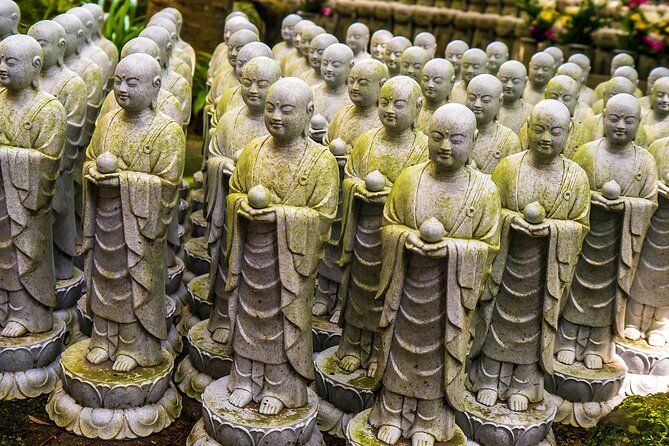
Komachidori is a busy pedestrian street lined with clothing shops, gifts, souvenirs, eateries, and sweet shops. The tour allows an hour and a half, making this the most relaxed part of the Kamakura schedule.
I would use this time for lunch and browsing rather than trying to force in another monument. The street is practical as well as fun: you can choose food at your own pace, pick up small gifts, and take a break after the temples.
The drawback is that a shopping street can feel less distinctive than Kamakura’s religious sites, especially if you dislike crowds or souvenir stores. Still, it gives the day a needed change of pace, and the free admission keeps the stop flexible.
Yokohama Chinatown for food and people-watching
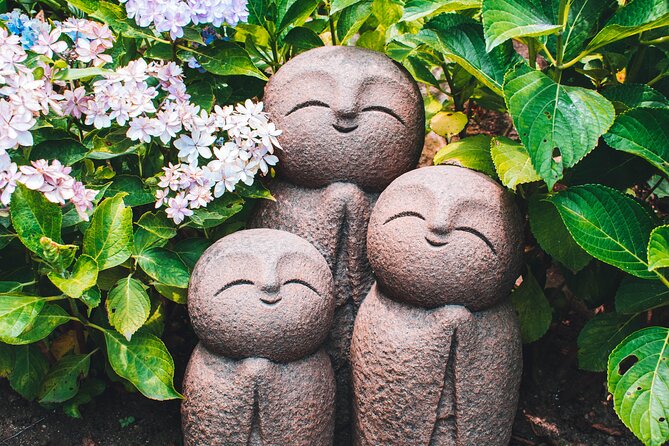
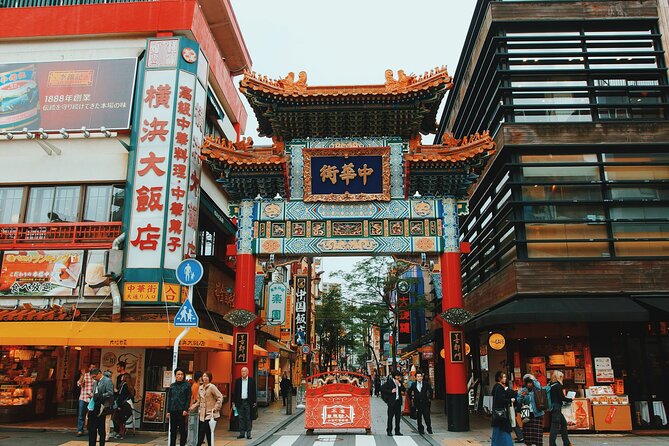
Yokohama Chinatown is about 160 years old and has a population of roughly 3,000 to 4,000, with many residents connected to Guangzhou. The planned visit lasts one hour, enough for a walk and a meal, but not a long food tour.
Your driver may suggest a restaurant, though no meal is included in the price. This is a place where you should decide whether you want a proper lunch or a quick selection of snacks. With only an hour, a long sit-down meal could put later stops at risk.
Chinatown changes the cultural subject from Kamakura’s temples and shrines to Yokohama’s port-city connections. It is not simply another historic stop. It is a chance to eat, browse, and see a more urban side of the region.
Sankeien Garden, a calmer Yokohama stop
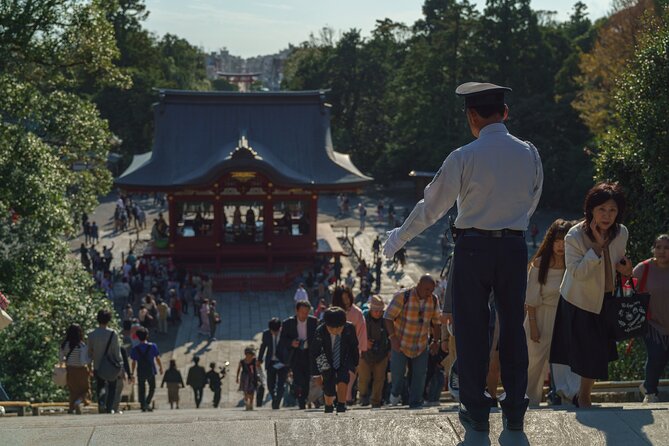
Sankeien is a traditional Japanese-style garden opened in 1906 by Tomitaro Hara, a silk trader who used the name Sankei Hara. Its origins give the garden a useful link to Yokohama’s commercial past.
The visit lasts about an hour. After the streets of Chinatown, this planned pause should feel calmer, with space for photographs and a slower walk. Admission is not included, so add it to your spending plan.
Sankeien may be the most appealing Yokohama stop for people who prefer gardens to shopping. It also balances the busy first half of the day. If traffic has eaten into the schedule, however, this is one place where your actual time may be shorter than planned.
Minatomirai, only if the clock cooperates
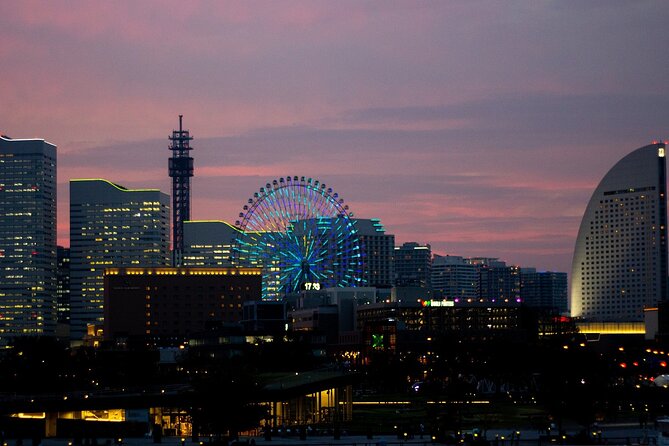
Minatomirai is the modern finish, with Yokohama Landmark Tower, Plaza, shops, and a futuristic waterfront setting. The listed visit is 30 minutes and happens only if time permits.
That wording matters. You should think of Minatomirai as a bonus, not a guaranteed centerpiece. If you care most about skyline views or shopping, tell the driver at the start and ask how the route can protect this stop.
The short visit works for seeing the district and taking in the city’s modern side. It does not allow much time for a full shopping session or an observation-deck visit, especially if traffic is heavy.
What the driver does, and what the driver does not do
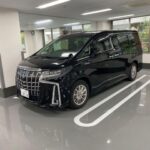
The strongest part of this experience is the private driving service. The road from Tokyo to Kamakura can be demanding, and having someone else handle it lets you rest between visits. Hotel pickup and drop-off also save you from navigating unfamiliar stations with a tired family.
Communication has generally been described as polite and effective. Irfan has been praised for arriving at the first destination as it opened, answering questions, suggesting lunch, and adding a garden stop. He also adjusted a route so one family could visit the Gundam Factory. Mac has been noted for going beyond basic chauffeur duties and explaining sights while keeping the group comfortable.
Still, you should not confuse friendly help with formal guiding. The tour information clearly says it is not guided unless you pay extra for a guide. One positive experience involved a driver sending links about each site before visiting it, which is useful, but links are not the same as on-site interpretation.
There is also one serious caution. A poor experience involved a driver allegedly offering extra services for cash without company knowledge and behaving badly later in the day. That does not erase the many positive accounts, but I would keep all extra arrangements with the company, confirm any added cost in writing, and avoid handing over unofficial cash payments.
Is $650 a fair price?
The $650 charge covers up to five people, so a full group pays $130 per person. For two people, it works out to $325 each, which is a much harder sell. The value comes from the vehicle, private pickup, route flexibility, and the ability to combine two destinations in one long day.
You are not paying for entrance tickets, meals, or a standard guide. Those costs come separately. The price makes the most sense for a family or small group that values comfort and time more than the lowest possible fare.
For a group of five, this can be a practical alternative to arranging several trains, local rides, and meals while keeping track of departure times. For one or two people who are comfortable with Japan’s public transport, a self-guided day may cost less, though it will require more planning and walking.
The experience is also popular enough that it is booked about 38 days ahead on average. I would reserve early if your dates are fixed, especially if you need a particular pickup time or want to request a guide.
Who should book this private day?
I would recommend it for families, groups of friends, and visitors who want to see Kamakura and Yokohama without learning the transport system first. It is especially useful when five people can share the vehicle cost.
You will get the most from it if you can do some reading before the day. That lets you recognize the significance of the temples and shrine even when the driver is mainly focused on transport. If history and religion are your main reason for going, request a professional guide at an added cost.
I would be cautious about booking it for a group that wants a slow, highly detailed day. Eight listed stops plus commuting is a lot. Pick your top priorities, tell the driver early, and accept that Minatomirai may disappear if the roads are slow.
Free cancellation is available up to 24 hours before the 8:00 a.m. start. Cancellations or changes inside 24 hours are not refunded, and poor weather may lead to a new date or a full refund.
Final call: a practical choice with one clear condition
Book this tour if you want a comfortable private car, hotel pickup, and a broad introduction to two very different cities south of Tokyo. Kamakura’s temples and Great Buddha give the morning real substance, while Chinatown and Yokohama’s waterfront keep the afternoon lighter.
Skip it if you expect a full-time history guide included in the price. The best version of this day comes from treating the driver as a skilled chauffeur who may offer useful local help, not as a guaranteed temple expert. For a group of four or five, that tradeoff can be excellent value. For two people, compare the cost carefully before committing.
FAQ
How long does the Kamakura and Yokohama tour last?
The experience lasts approximately 10 hours, including commuting time. It begins at 8:00 a.m.
How many people can join the private tour?
The listed price covers a group of up to five people. Larger groups can be accommodated for an additional cost.
Is the tour guided?
No. It is a private chauffeur service rather than a standard guided tour. A guide can be arranged for an additional cost.
What does the $650 price include?
The price is per group and includes the private tour vehicle, driver, and pickup service from your Tokyo hotel or another agreed location. Meals and several admission tickets are not included.
Is Minatomirai guaranteed?
No. Minatomirai is visited if time permits. The planned visit is about 30 minutes.
Can I cancel for a full refund?
Yes, if you cancel at least 24 hours before the local start time. Cancellations or changes made less than 24 hours in advance are not refunded. If poor weather cancels the experience, you can be offered another date or a full refund.
More Private Drivers in Tokyo

More Private Tours in Tokyo
More Kamakura & Enoshima Day Trips in Tokyo
More tours in Tokyo we've reviewed

Kamakura & Enoshima Day Trips, compared.
 ★ 4.5Tokyo: Kamakura & Enoshima Day Trip including Temple TicketsFrom $589 hours - 570 minutes
 ★ 4.5Tokyo: Mt. Fuji, Kamakura, Big Buddha, & Lake Ashi Day TripFrom $4910 - 11 hours
 ★ 4.5From Tokyo: Kamakura & Enoshima 1-Day Bus TourFrom $66
 ★ 5.0Kamakura Historical Walking Tour with the Great BuddhaFrom $98
 ★ 5.0Kamakura Private Tour: Temples, Nature, and the Great BuddhaFrom $98
 ★ 5.0Kamakura Walking Tour – The City of ShogunFrom $35