
Reviewed · SUSHI MAKING CLASSES
Japanese Knife Skills & Tuna Don/Sushi Workshop in Tokyo
The sharpest part of this Tokyo workshop is not the lunch. It is the moment you take a Japanese knife and slice tuna for sashimi yourself. An instructor first shows the technique, then guides you through it at your own station. You also learn why Japanese knives are made with such care and how to sharpen one on a whetstone.
I like the small group of eight and the useful mix of watching, practicing, cooking, and eating. I also like that you leave with a recipe, a participation certificate, and skills you can use at home. The main consideration is the two-hour schedule. You will get a focused introduction, not a full professional chef course, and fish choice depends on availability.
In This Review
- Key points at a glance
- Why the knife lesson is the heart of the class
- Whetstone sharpening, explained without the guesswork
- Making tuna zuke-don or a 10-piece sushi set
- Miso soup, sake, and the meal at the end
- A small class with a Japanese setting
- What you take home besides the recipe
- Is $127 a fair price?
- Who should book this Tokyo workshop?
- Booking details worth knowing
- Should you book it?
- FAQ
- How long does the Japanese knife and sushi workshop last?
- How much does the experience cost?
- What languages are spoken during the class?
- How many people are in the group?
- What food will I prepare?
- Is lunch included?
- Is knife sharpening part of the class?
- What should I wear?
- Is the activity suitable for children or people with food allergies?
- Is transportation included?
- Can I cancel for a refund?
- What extras are included after the class?
Key points at a glance
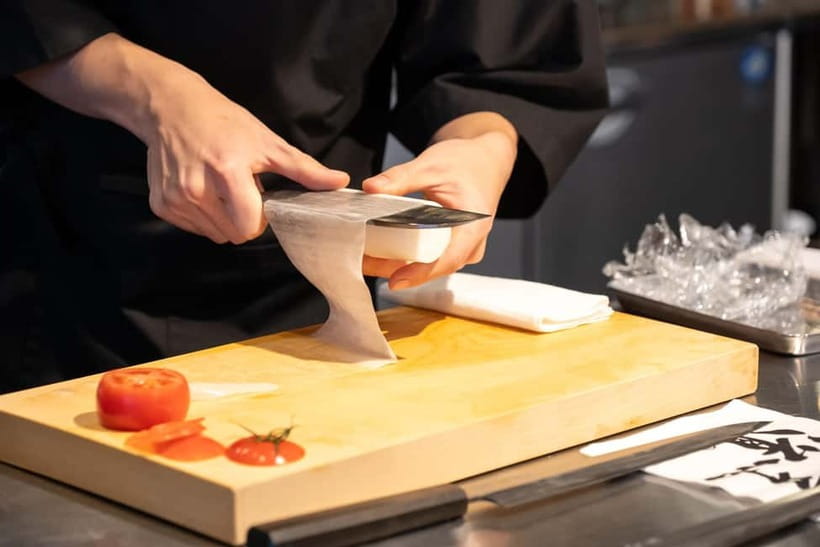
- Slice your own sashimi: Practice cutting fresh tuna after a live knife-skills demonstration.
- Learn whetstone sharpening: Get step-by-step guidance on a basic Japanese sharpening method.
- Choose a Japanese meal: Prepare a tuna zuke-don rice bowl or, depending on the class arrangement, a 10-piece sushi set.
- Eat a complete lunch: Your meal comes with miso soup, sake, and green tea.
- Keep useful extras: Take home a recipe, participation certificate, and 10 percent discount at the first-floor shop that day.
- Expect a compact class: The session lasts two hours and is limited to eight participants.
Why the knife lesson is the heart of the class
Many Tokyo food activities focus on eating. This one gives you a better feel for the work behind a neat plate of sashimi. Japanese cuisine depends on clean cuts, careful handling, and the right blade for the job. Here, you get to see those details rather than simply hearing about them.
The session begins with an introduction to Japanese knife culture and how these knives are made. That matters because the knife is not just a tool you grab from a drawer. Different blades suit different foods and tasks, and sharpness affects both control and presentation.
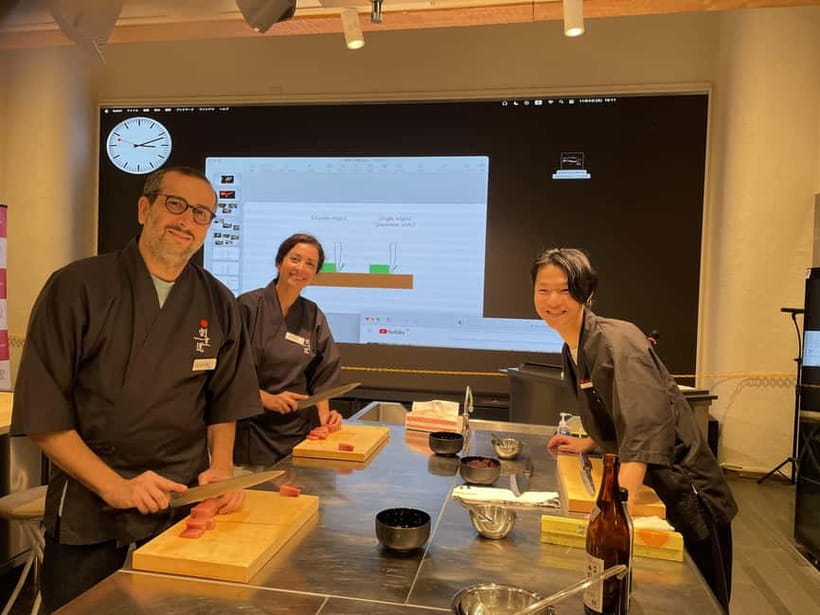
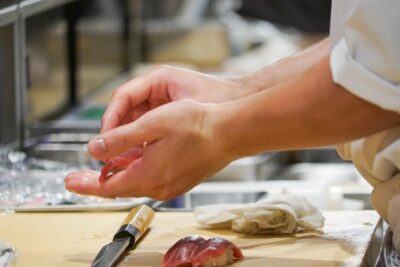
You then watch a knife-skills performance. The instructor demonstrates how to handle the blade and slice sashimi, giving you a visual guide before you try. This is a good teaching order. You see the motion first, then repeat it with help close by.
When it is your turn, you slice fresh sashimi yourself. That practical step received the strongest praise from the available feedback, and I can see why. Cutting tuna for sashimi turns an abstract lesson into something you can feel in your hand. A properly sharpened blade should pass through the fish cleanly, and the contrast is easier to understand when you have just watched an expert work.
This is not a speed contest. You do not need to arrive with cooking experience. The value comes from paying attention to the angle, pressure, and movement shown by the instructor. Comfortable clothing is the only stated clothing requirement, but choose something suitable for cooking and avoid anything you would worry about near food preparation.
A few more Tokyo tours and experiences worth a look

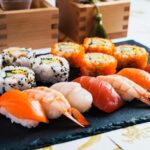
Whetstone sharpening, explained without the guesswork
Knife sharpening can seem mysterious at home. People often use the wrong angle, apply too much pressure, or move too quickly. The class includes a guided introduction to sharpening with a whetstone, so you can learn the basic method in a controlled setting.
The lesson is useful even if you never buy a Japanese knife. A sharper blade is generally easier to control than a dull one, and understanding sharpening helps you care for kitchen tools properly. The instructor can show you the hand position and movement, while you focus on building a repeatable habit.
Do not expect to become a master sharpener in a few minutes. Two hours must cover knife culture, the demonstration, sashimi cutting, cooking, and lunch. Think of this as a clear first lesson rather than a complete study of Japanese blades.
The included explanation of knife-making adds welcome context. You learn not only how to use the knife but also why Japanese blades are prized for craftsmanship and sharpness. That connection gives the workshop more substance than a simple sushi-making activity.
Making tuna zuke-don or a 10-piece sushi set
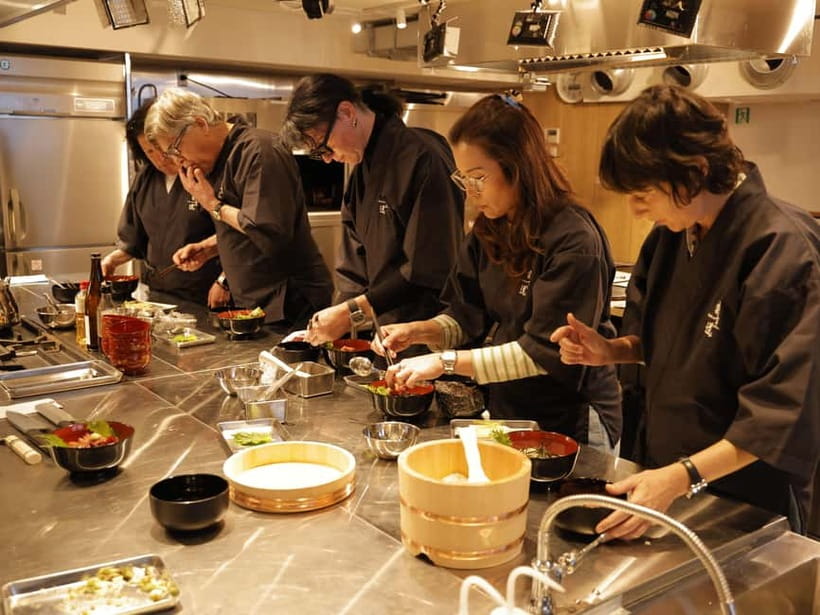
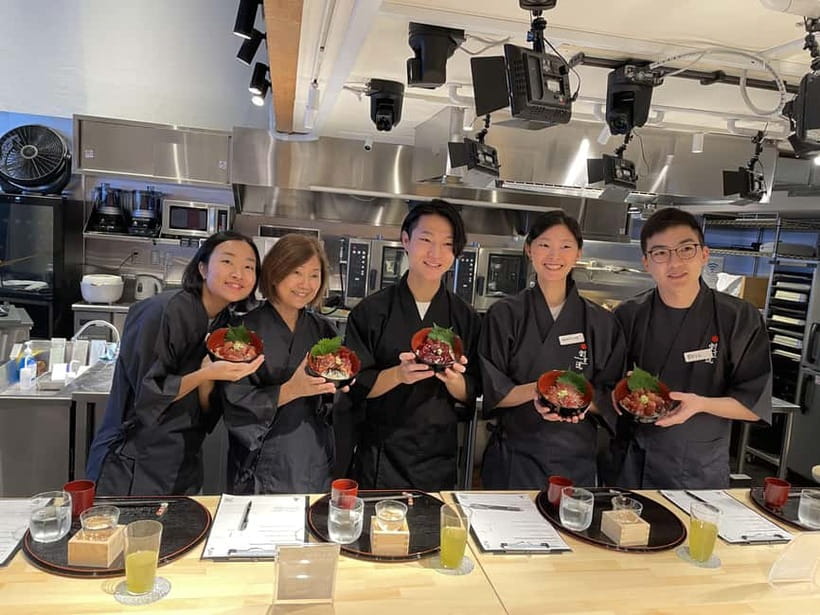
After the knife work, the class turns to the meal. The main option is tuna zuke-don, a rice bowl topped with marinated sashimi. Zuke refers to fish prepared in a marinade, so the dish offers a different taste and texture from plain sashimi.
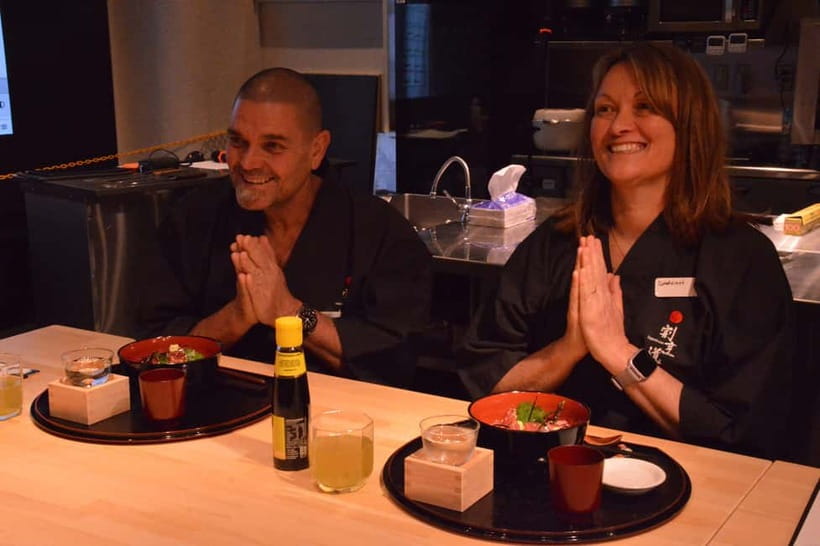
You prepare the rice bowl with the supplied ingredients and tools, then sit down to eat it with miso soup. The lunch is described as a generous serving of fish, soup, and sake, which makes the $127 price easier to assess. You are paying for instruction, food, equipment, cultural explanation, and a small class, not just for a bowl of rice.
The activity information also presents a 10-piece sushi set as an alternative cooking option. At the same time, the included meal information specifically lists a sashimi zuke-don lunch. That wording is worth checking when you book or arrive. If the exact format matters to you, ask which dish is available for your session.
Fish used in the class can vary with availability. Tuna is central to the advertised zuke-don and sashimi work, but you should not assume every fish will be identical on every date. This is normal for a food class, yet it is important if you have your heart set on one particular cut.
The cooking section is practical rather than elaborate. You learn how to assemble a traditional Japanese dish, use the ingredients provided, and sit down soon afterward to eat what you made. That keeps the class moving and gives you a satisfying finish within the two-hour window.
Miso soup, sake, and the meal at the end
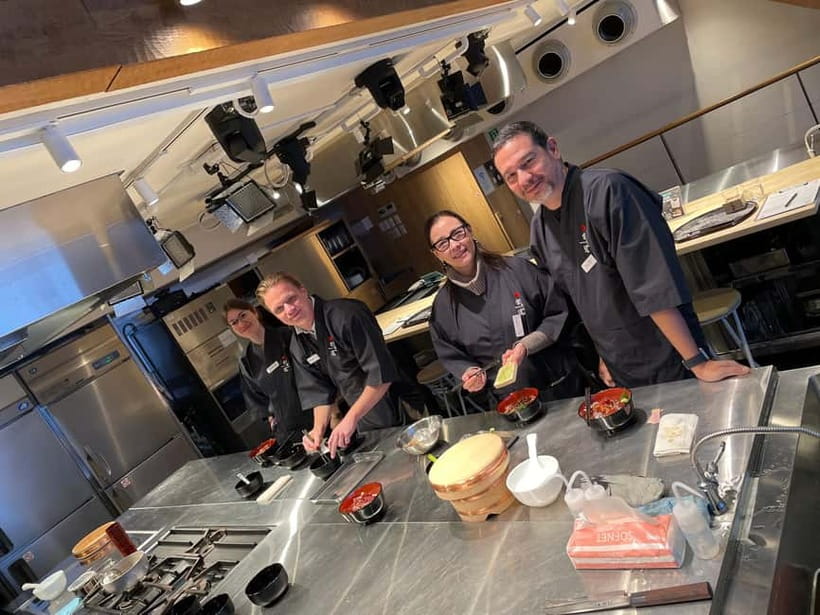
The meal gives the workshop a pleasant rhythm. First you concentrate on blades and fish, then you prepare food, and finally you eat. Miso soup rounds out the lunch, while green tea is also included.
The sake tasting adds a small cultural touch. It is not presented as a full sake seminar, but it gives you a chance to try the provider’s original sake with your meal. If you do not drink alcohol, the listed information does not specify a replacement, so ask ahead if that matters to you.
The lunch is one of the experience’s strongest practical features. You are not handed a token sample after cooking. You get a proper meal, including fish and soup, with sake included. That helps justify the price for someone who wants both a class and lunch in one booking.
Still, food preferences need attention. The activity is not suitable for people with food allergies, and the fish depends on availability. If either point affects you, this is not a good activity to book without first confirming the details.
A small class with a Japanese setting
The group is limited to eight people. That is a useful size for a lesson involving sharp knives and sashimi. You should have a better chance of seeing the demonstration and receiving direct guidance than in a large cooking studio.
The instructors speak English and Japanese. That makes the activity accessible to English-speaking visitors, although the information does not name the individual instructor. The class focuses on hands-on practice, so watching the demonstration closely and asking questions will help you get the most from the language support available.
The meeting point is identifiable by samurai-style murals painted on the building. Since transportation to and from the activity is not included, you need to arrange your own way there. The mural detail should make the final approach easier, but no exact station or transfer instructions are provided here, so check the meeting details carefully before setting out.
A kappodo costume rental is included. That adds character to the session and connects the class to traditional Japanese culinary presentation. Treat it as part of the atmosphere and cultural setting, rather than as a costume photo stop. You still need to wear comfortable clothes suitable for cooking underneath.
A few more Tokyo tours and experiences worth a look


What you take home besides the recipe
The most useful souvenir is the technique. You leave knowing more about knife choice, sashimi slicing, and whetstone sharpening than you did when you arrived. Those are practical skills, especially if you cook Japanese food at home.
A recipe is included so you can recreate the dish later. That gives the class value beyond the meal in Tokyo. Zuke-don is also a sensible recipe to take home because it combines prepared fish, rice, and marinade without requiring a long list of complicated steps.
You receive a participation certificate as well. It is a modest keepsake, but it can be a nice reminder of the class or a fun addition to a Japan trip scrapbook.
There is also a 10 percent discount on items at the first-floor shop on the same day as your workshop. The discount could be useful if you want to look at knives or related cooking items after learning about them. I would not treat the discount as a reason to buy something on the spot. First decide what kind of knife you actually need, how you will maintain it, and how you will carry it home legally and safely.
Is $127 a fair price?
At $127 per person, this is not a bargain lunch. It can be fair value if you want a small, guided culinary lesson with a meal attached. The cost covers the instructor, ingredients, tools, costume rental, knife and sharpening instruction, sashimi practice, miso soup, sake, green tea, and the certificate.
The group limit helps the price make more sense. You are not simply watching a stage demonstration. You handle the knife and prepare your own food, with a maximum of eight participants sharing the session.
The value is weaker if your main goal is a cheap sushi meal or a long cooking session. You could spend less on lunch elsewhere, and the two-hour format leaves limited time for advanced technique. This experience suits someone who wants a specific introduction to Japanese knives and sashimi, not someone looking for an all-day culinary school.
The 10 percent shop discount may add value for shoppers, but only if you planned to buy something anyway. I would compare prices and avoid feeling pressured by the same-day offer.
Who should book this Tokyo workshop?
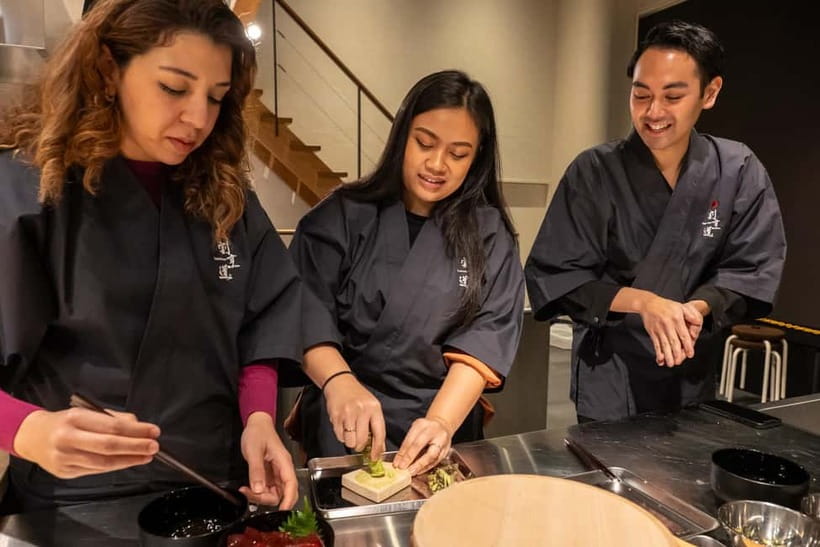
I would recommend it to food-focused visitors who want to understand Japanese cooking through their hands. It is especially suitable if you like kitchen tools, want to learn how sashimi is cut, or plan to make sushi and rice bowls at home.
It also works well for a short Tokyo schedule. Two hours is long enough to provide several different activities but short enough to fit around other plans. You get a meal at the end, so it can serve as a midday food stop rather than another activity that leaves you searching for lunch.
The class is not suitable for children under 12. It is also not suitable for people with food allergies, according to the stated restrictions. Anyone uncomfortable handling sharp knives should think carefully before booking, even though instruction is provided.
You do not need to be an aspiring chef. The class is built around guided practice, and the strongest benefit comes from learning a few techniques correctly. If you already sharpen Japanese knives and regularly prepare sashimi, you may find the material introductory.
Booking details worth knowing
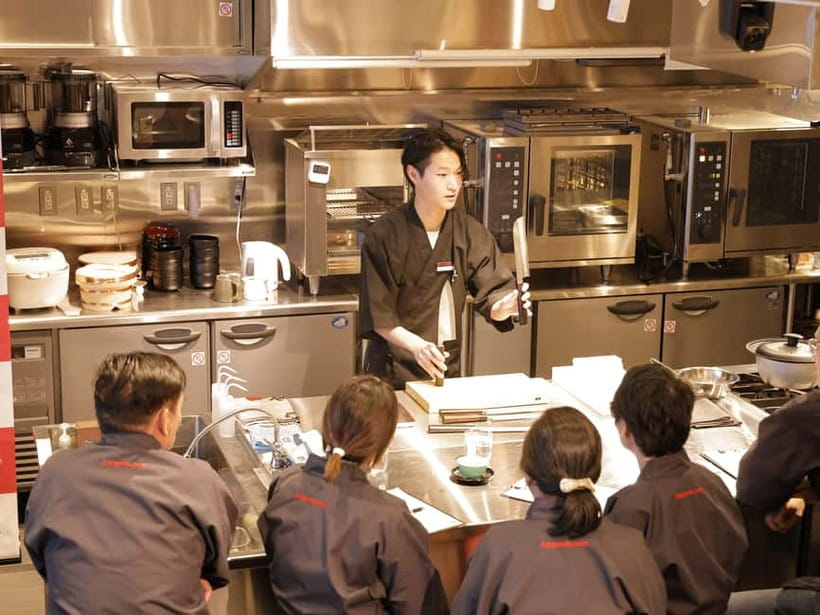
The workshop lasts two hours, with starting times based on availability. You can cancel up to 24 hours ahead for a full refund, and the reserve-now, pay-later option lets you hold a place without paying immediately.
Bring comfortable clothes suitable for cooking. Transportation is not included, so plan your route to the building with the samurai murals as your visual meeting-point clue.
The activity has a perfect rating from the three supplied evaluations, with praise focused on the professional instruction, the warm atmosphere, the quality of the fish, and the generous lunch. One participant particularly valued speaking with an expert about sashimi cutting, while another highlighted learning which Japanese knives suit different foods. Those details point to the workshop’s real strength: direct instruction, not just a themed meal.
Should you book it?
Book this workshop if you want to cut sashimi yourself, learn the basics of Japanese knife care, and eat a substantial tuna rice bowl or sushi meal afterward. The small group, included tools, sharpening lesson, and meal give the $127 cost a clear purpose.
Skip it if you have food allergies, are traveling with children under 12, or want a long and advanced chef course. Also confirm the zuke-don or sushi choice if you care strongly about the final dish.
For the right person, this is a focused Tokyo food experience with skills you can carry home. You do not just taste Japanese cuisine. You learn how careful knife work helps create it.
FAQ
How long does the Japanese knife and sushi workshop last?
The workshop lasts two hours.
How much does the experience cost?
The listed price is $127 per person.
What languages are spoken during the class?
Instruction is available in English and Japanese.
How many people are in the group?
The class is limited to eight participants.
What food will I prepare?
You may prepare a tuna zuke-don rice bowl or a 10-piece sushi set. The included meal details specifically list sashimi zuke-don, so confirm the available option for your session.
Is lunch included?
Yes. The included meal consists of sashimi zuke-don, miso soup, sake, and green tea. The activity description also mentions a 10-piece sushi set as a possible preparation option.
Is knife sharpening part of the class?
Yes. The class includes instruction in Japanese knife sharpening techniques using a whetstone.
What should I wear?
Wear comfortable clothes suitable for cooking.
Is the activity suitable for children or people with food allergies?
The activity is not suitable for children under 12 or for people with food allergies.
Is transportation included?
No. You must arrange transportation to and from the experience yourself. The meeting point is marked by samurai-style murals on the building.
Can I cancel for a refund?
Yes. You can cancel up to 24 hours in advance for a full refund.
What extras are included after the class?
You receive a recipe, a participation certificate, and 10 percent off items at the first-floor shop on the same day as your workshop visit.
More Workshops & Classes in Tokyo
More Sushi Making Classes in Tokyo
More tours in Tokyo we've reviewed








Sushi Making Classes, compared.
 ★ 5.0Sushi Making Tokyo Roll and Authentic Japanese Sushi ClassFrom $59
 ★ 4.9Tokyo: Roll and Authentic Sushi Making Class in AsakusaFrom $581h 40m
 ★ 5.0Make Sushi and Create Unforgettable Memories in TokyoFrom $79
 ★ 4.9Tokyo: Sushi Making Class in a Happi Coat near a Famous SpotFrom $421h 30m
 ★ 5.0Tokyo Sushi Making Class in Tsukiji with Professional ChefFrom $49
 ★ 5.0Tokyo Night Foodie Tour in Shinjuku – Seasonal Sushi, Wagyu BeefFrom $111