
Reviewed · TOKYO
Wheelchair Accessible Taxi from HND to Yokohama Port
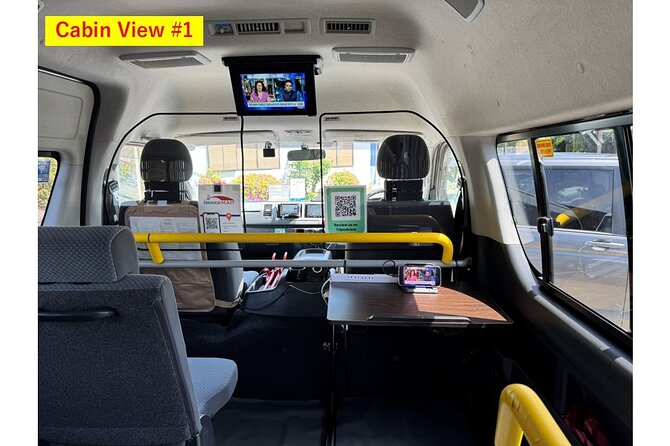
The best thing about this service is its purpose-built approach to a difficult airport transfer. BridgeMAIT uses a Toyota Hiace Commuter fitted to carry up to two wheelchairs, four adults, and five oversized suitcases, with help getting in and out.
I like the trained drivers and the practical extras: onboard WiFi, an AC100V power supply, air-conditioning, parking fees, and expressway tolls are included. I also like the clear, private setup. You ride only with your own group, rather than trying to manage a wheelchair and luggage on several trains.
The main catch is that this is a one-way transfer, not a sightseeing tour. The price is also high for a single airport ride, though it becomes easier to justify when shared by a small group with bulky mobility equipment. You will need to confirm the exact Yokohama port drop-off point when booking.
In This Review
- Key points to know before booking
- From Haneda Airport to the ship terminal
- A Toyota Hiace built around mobility equipment
- Boarding help that reduces stress
- What the airport pickup is really like
- A steady road transfer instead of a rail connection
- Reaching Yokohama Port with the right endpoint
- Is $170.19 good value?
- The human side of BridgeMAIT
- Who should book this transfer?
- Booking tips that matter
- Should you book BridgeMAIT?
- FAQ
- Where does the transfer begin?
- Where does the transfer end?
- How long does the ride take?
- Is this a private transfer?
- How many wheelchairs can the vehicle carry?
- How many adults and suitcases can fit?
- Is an English-speaking driver included?
- What is included in the price?
- Can I cancel for a full refund?
Key points to know before booking
- Toyota Hiace capacity: Two wheelchairs, four adults, and five oversized suitcases can fit within the stated vehicle limits.
- Careful boarding assistance: The service includes help with boarding and getting out, with drivers trained in support for people with disabilities.
- Haneda to Yokohama Port: The ride takes about one to one and a half hours, depending on conditions.
- English-speaking driver: Communication is available in English, and Yoshio-san has been praised for careful handling and punctual service.
- Useful onboard equipment: WiFi, air-conditioning, and an AC100V power supply are included.
- Private, one-way service: Only your group rides in the vehicle, but the reservation does not include a return journey.
From Haneda Airport to the ship terminal
This transfer begins at Haneda Airport in Ota City, Tokyo. The practical job is simple: meet the BridgeMAIT vehicle at your specified pickup time, load the wheelchairs and luggage, then ride directly to your chosen Yokohama port location.
That direct trip matters after a long flight. Haneda and Yokohama are in different cities, and a train connection can mean lifts, platform changes, narrow boarding points, and luggage management. Those steps are possible for some people, but they can be tiring or awkward when a powered wheelchair is involved.
The published journey time is about one hour to one hour and 30 minutes. That is a useful planning range, not a guaranteed arrival time. Your actual trip can vary with road conditions, airport pickup delays, and the time needed to secure wheelchairs and bags.
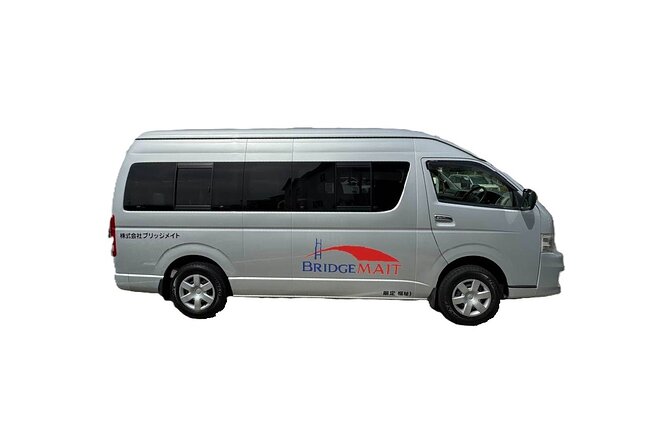
The service lists a 7:00 am start time. Your reservation should show the pickup time you select, and you should pay close attention to it. The vehicle is identified by the BridgeMAIT logo, which gives you a clear sign to look for at the airport.
The end point is listed as a different location from the starting point, with Yokohama Port details supplied through the booking process. Since a large port area can have more than one terminal or pickup lane, confirm the exact terminal and meeting point before travel. This is especially important if you are joining a cruise departure with a strict check-in deadline.
If you're still narrowing it down, here are other tours in Tokyo we've reviewed.



A Toyota Hiace built around mobility equipment
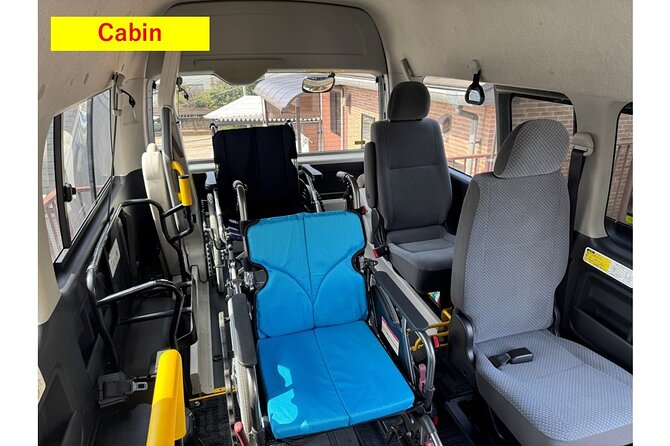
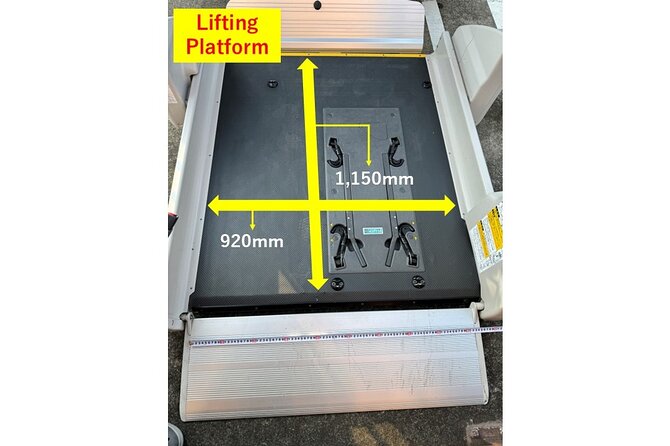
The vehicle is a Toyota Hiace Commuter. Its stated capacity is generous for a small private group:
- Two wheelchairs
- Four adults
- Five oversized suitcases
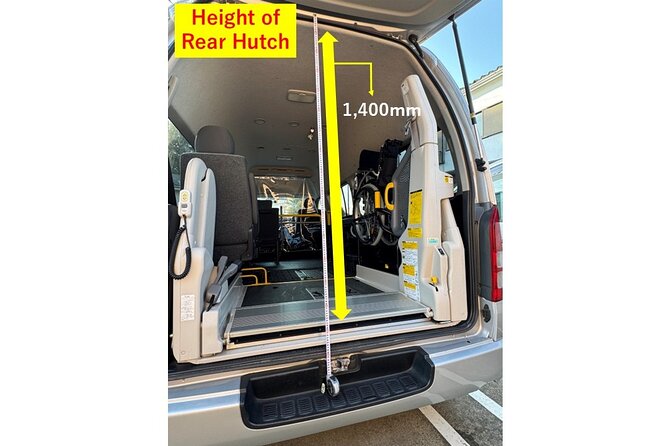
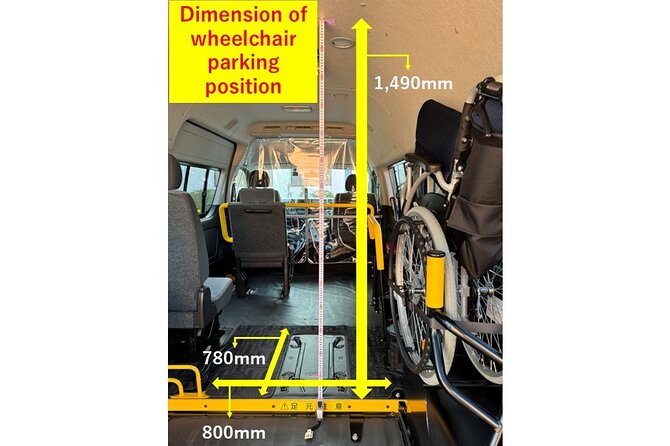
Those figures are useful because ordinary taxis often force you to guess whether a chair or suitcase will fit. Here, the service gives you a clear starting point. Still, capacity depends on the size and design of your equipment, so you should provide accurate wheelchair details during the reservation process.
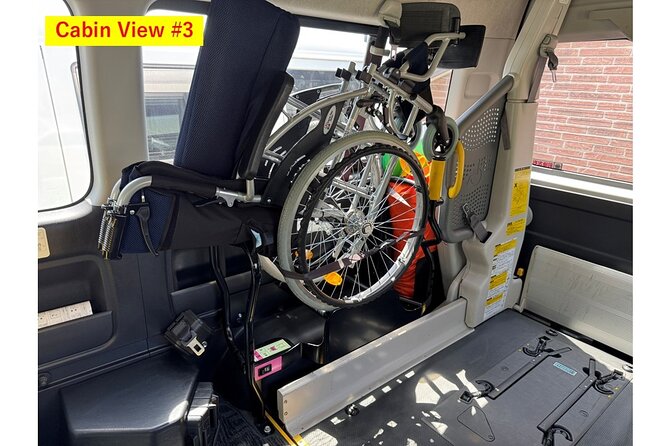
One of the strongest practical points comes from the communication before pickup. Yoshio-san has provided vehicle photographs and measurements so a customer could check that a large powered wheelchair would fit. If you use a wide, heavy, or unusual chair, ask for the same kind of confirmation rather than relying only on the general capacity figures.
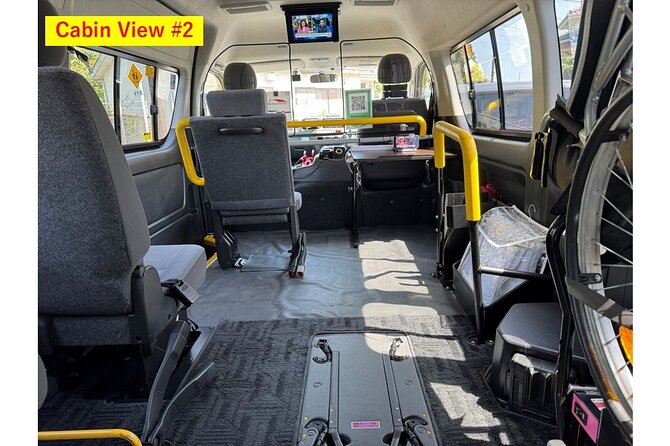
The van is designed to keep the passenger area spacious and clean. BridgeMAIT also describes a low-vibration structure and attention to temperature and humidity. These details will matter most if you are sensitive to jolts, need stable seating, or have just arrived after a long international flight.
The vehicle has air-conditioning, WiFi, and an AC100V power supply. The power outlet can be useful for charging compatible equipment, but you should confirm that your device and plug setup are suitable. The service does not include a restroom, coffee, or tea, so plan those needs before leaving the airport.
Boarding help that reduces stress
The service includes assistance for wheelchair users when boarding and getting out. This is more than a promise of a vehicle with extra room. The driver is expected to help with the transfer process and handle the passenger and chair with care.
BridgeMAIT says its drivers hold several relevant qualifications. These include Home Helper 2nd class certification, Guide Helper certification for generalized and intellectual disabilities, Yokohama City Fire Department certification as a Patient Transportation Driver, and a Japan Automobile Federation Type 2 racing driver license.
The mix of credentials is unusual. The support qualifications point to disability care and assistance, while the patient transportation certification relates directly to moving people who need extra attention. The racing license does not mean you should expect a fast ride. The important point is that the company presents driving skill and passenger safety as separate parts of the service.
You can also expect a private ride. No other group joins your vehicle, so you do not have to explain your equipment or travel needs to strangers during the transfer. For a family or conference group, that privacy can make the first hour in Japan much easier.
What the airport pickup is really like
The vehicle arrives at the time you gave when making the reservation. Look for the BridgeMAIT logo and keep your phone available in case you need to communicate with the driver or the company.
The details provided do not identify a specific terminal meeting procedure, airport curb, or staff escort. For that reason, do not assume the driver will meet you at a particular baggage carousel or gate unless it is confirmed in writing. Send your flight information, wheelchair type, number of bags, and preferred contact method when arranging the ride.
This is also where the 24-hour, seven-day customer service can help. The company says you can contact it by phone or email at any time. That does not remove the need to plan carefully, but it gives you a direct channel if your arrival details change.
A mobile ticket is included. Keep it easy to reach on your phone, and save the provider’s contact information before takeoff. If you are traveling with a powered wheelchair, have its dimensions and any transport instructions ready. The more exact your information, the less room there is for confusion at pickup.
A steady road transfer instead of a rail connection
The main benefit is not a scenic route. It is the removal of several difficult changes. You do not have to move from Haneda to a train station, manage a wheelchair through a station, transfer lines, or handle oversized luggage on a platform.
The vehicle uses the expressway when suitable, and expressway tolls are included. Parking fees are included as well, so the advertised price is not followed by the usual string of road charges.
The ride is likely to feel like a practical bridge between two parts of your trip. You can use the onboard WiFi to contact your cruise line, family, or hotel, and the AC100V supply may help keep essential electronics charged. There are no advertised sightseeing stops, food breaks, or commentary, so treat this as transportation rather than a tour.
A direct ride also gives you more control over timing. That said, the one to one and a half hour estimate should not be treated as a promise. If you have a cruise departure, allow extra time beyond the stated duration for airport delays, boarding assistance, and port check-in.





Reaching Yokohama Port with the right endpoint
Yokohama Port is not a single doorstep. Your reservation ends at the specific location given in the booking details, so check the terminal name carefully before the day of travel.
This matters because a ship terminal may have its own vehicle access rules, curbside procedures, or passenger entrance. The driver can take you to the selected destination, but you should make sure that destination matches your ship or onward plan.
The service is one way only. If you need a return ride from Yokohama to Haneda, you will need a separate arrangement. Do not assume that the airport transfer automatically covers both directions.
For a cruise departure, share the ship name and terminal information when contacting BridgeMAIT. The supplied details do not promise ship-side escort, luggage check-in, or port staff assistance, so think of the service as a private accessible taxi to the port location.
Is $170.19 good value?
The listed price is $170.19 per group of up to three people. That is expensive compared with ordinary public transport, but ordinary public transport is not the right comparison for every passenger.
The price includes private transportation, wheelchair boarding assistance, an English-speaking driver, WiFi, air-conditioning, an AC100V power supply, parking fees, and expressway tolls. It also covers a vehicle capable of carrying two wheelchairs and a large amount of luggage.
For one person with a small manual wheelchair and light luggage, the cost may feel steep. For a group sharing the fare, especially with a powered chair and several large bags, the value is easier to see. You are paying for direct service, equipment capacity, staff time, and fewer physical obstacles.
The group limit and vehicle capacity are not exactly the same thing. The price covers up to three people, while the van can physically carry four adults under the stated capacity. You should ask BridgeMAIT how your exact party size and wheelchair arrangement will be handled before booking.
The service is usually booked about nine days ahead. That is a useful sign that early planning is wise, especially for a cruise date, two-wheelchair group, or large powered chair. Confirmation is normally sent at booking. If you book within four hours of departure, confirmation comes as soon as possible and depends on availability.
The human side of BridgeMAIT
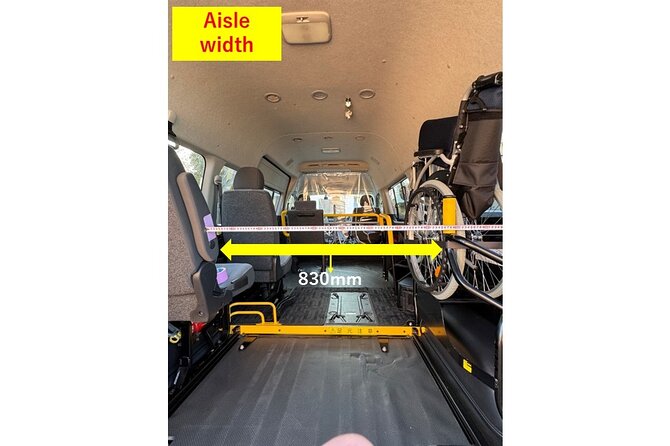
The company’s strongest personal connection is Yoshio-san. He has been described as punctual, polite, and careful when handling a passenger in a wheelchair. He has also put a passenger at ease by sharing detailed vehicle photographs and measurements before the ride.
That kind of communication is valuable. Accessibility is not just about a ramp or a large van. It is about knowing if your chair fits, understanding how boarding will work, and having a driver who treats the process with patience.
You should not assume Yoshio-san will personally drive every reservation unless the company confirms it. Still, his approach shows the level of communication you should seek from BridgeMAIT: specific answers, clear vehicle information, and careful attention to safety.
The available feedback gives the service a perfect five-star rating from three entries. That is a small sample, so I would not treat it as proof that every ride will be identical. It does support the practical strengths that matter most here: punctuality, courtesy, safe handling, and clear pre-trip communication.
Who should book this transfer?
I would look closely at this service if you:
- Use a powered wheelchair or a large mobility device
- Travel with a second wheelchair
- Carry several oversized suitcases
- Want to avoid trains and station changes
- Need boarding and disembarking assistance
- Prefer a private ride with an English-speaking driver
- Are going directly from Haneda Airport to Yokohama Port
It may be less useful if you are traveling alone with little luggage, can use public transport comfortably, and are mainly looking for the lowest possible fare. The price pays for specialized service, not simply for distance.
I would also consider it for a family member who becomes tired or anxious during transfers. The clean passenger area, controlled temperature, private setting, and direct road journey can make the first stage of a Japan trip more manageable.
Booking tips that matter
Give BridgeMAIT exact information about your mobility equipment. Include the number of wheelchairs, whether one is powered, the chair dimensions, and the number and size of suitcases.
Confirm these points before travel:
- Your Haneda pickup time
- The BridgeMAIT vehicle meeting procedure
- The exact Yokohama port terminal
- Whether Yoshio-san is driving your booking
- How your group size fits the vehicle
- Any charging needs for your equipment
- A phone or email contact for changes
Free cancellation is available if you cancel at least 24 hours before the scheduled start time. Cancellations made inside that period are not refunded, and changes made less than 24 hours before departure are not accepted. The cutoff follows local Japan time.
Should you book BridgeMAIT?
Book it if reliable wheelchair handling and a direct airport-to-port ride matter more to you than finding the cheapest transfer. The combination of a large Toyota Hiace, two-wheelchair capacity, trained drivers, boarding help, and included road fees addresses the hard parts of this journey.
Before paying, send the company your wheelchair measurements and confirm the Yokohama terminal. If the vehicle fits your equipment and your group shares the fare, this is a sensible way to begin a cruise or port stay in Japan without turning the airport connection into a separate challenge.
FAQ
Where does the transfer begin?
It begins at Haneda Airport in Hanedakuko, Ota City, Tokyo, Japan.
Where does the transfer end?
It ends at a separate Yokohama Port location specified in the booking details. Confirm the exact terminal before travel.
How long does the ride take?
The approximate duration is one hour to one hour and 30 minutes.
Is this a private transfer?
Yes. Only your group participates in the activity.
How many wheelchairs can the vehicle carry?
The Toyota Hiace Commuter has stated capacity for two wheelchairs.
How many adults and suitcases can fit?
The stated capacity is four adults and five oversized suitcases. The booking price is listed for a group of up to three people.
Is an English-speaking driver included?
Yes. An English-speaking driver is included.
What is included in the price?
Private transportation, boarding and disembarking assistance, WiFi, an AC100V power supply, air-conditioning, parking fees, and expressway tolls are included.
Can I cancel for a full refund?
Yes, if you cancel at least 24 hours before the experience start time. Cancellations made less than 24 hours before the start time are not refunded.
More tours in Tokyo we've reviewed












Tokyo, compared.
 ★ 5.0Mt Fuji and Hakone 1-Day Bus Tour Return by Bullet TrainFrom $163
 ★ 5.01-Day Tokyo Bus TourFrom $129
 ★ 4.6Tokyo: teamLab Planets TOKYO Digital Art Museum Entry TicketFrom $251 day
 ★ 4.0Mt Fuji & Hakone Cruise, Drum Show Bullet Train 1 Day from TokyoFrom $149
 ★ 5.0Tokyo: Shinjuku Food Tour (13 Dishes at 4 Local Eateries)From $86
 ★ 4.4Tokyo Mt Fuji 5th St & Hakone Cruise Bus Tour w/Bullet TrainFrom $15410 hours