
Odaiba is the Tokyo I don’t send anyone to on their first day. I send them to Meiji Shrine, Asakusa, maybe Shinjuku at night. Odaiba is day three or four — the “have I seen enough shrines for one lifetime?” day, when you’re ready for a giant transforming robot, a fake Statue of Liberty, and a train with no driver gliding over a bridge that pretends to be every colour at night. It’s the most un-Tokyo part of Tokyo, which is also, I think, the most Tokyo thing about it.
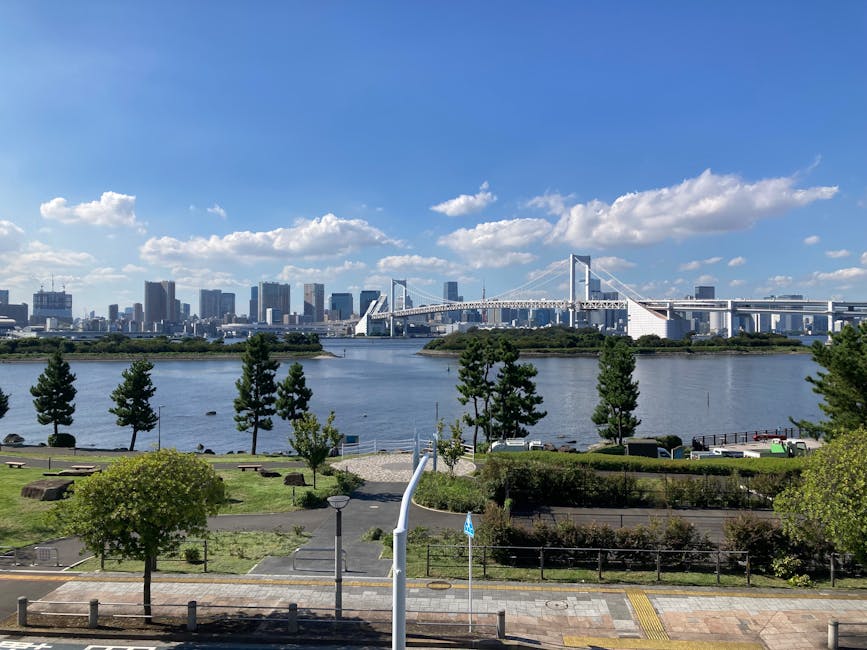
It’s an artificial island in Tokyo Bay, built in the 1850s as a chain of forts to keep foreign ships out of the harbour. The word “daiba” literally means “fort”. It then sat mostly unused for about 140 years until the 1990s, when Tokyo decided to turn it into a futuristic waterfront neighbourhood. The bubble economy burst halfway through the project, so for years Odaiba was this weird half-built place with enormous shopping malls and almost no residents. These days it’s the opposite problem — packed every weekend, dead-quiet on a wet Tuesday, and genuinely one of the best places in the city to watch the sun go down.
Here’s what I’d tell a first-timer about Odaiba before you go.
In This Article
- First, the embarrassing bit
- Getting to Odaiba (and which line to use)
- Rainbow Bridge, and why it’s called that
- The Unicorn Gundam, and what the “transformation” actually is
- The Statue of Liberty, and why she’s here
- The Fuji TV building (and the ball on top)
- teamLab Planets (bring socks you don’t mind getting wet)
- Miraikan — the science museum that’ll surprise you
- Odaiba Beach and Daiba Park
- Malls, shopping, and where to eat
- How I’d actually spend a day in Odaiba
- Practical info at a glance
- Where to stay if you’re making it a late night
- If you liked Odaiba, try these next
First, the embarrassing bit
The first time I went to Odaiba I got on the Yurikamome at Shimbashi and rode it in the wrong direction. All the way to Toyosu. It took me about twelve minutes to realise, because the Yurikamome does a U-shaped loop around Tokyo Bay and the views were so pretty I just sat there assuming I was about to arrive. I wasn’t. I was doing a scenic tour of the cargo terminals.
If you’re heading to the main attractions — Gundam, the malls, the Statue of Liberty — you want the train marked Toyosu and you get off at Daiba or Odaiba-Kaihinkoen, which are the two closest stations to the tourist stuff. If you see “Shimbashi” on the front of the train, you’re about to leave Odaiba, not go there. I know this is obvious. I’m telling you because I stood on that platform for a long time trying to work out why the little map at the station only showed half a line. It’s a loop. The map shows half the loop from whichever station you’re standing at.
Getting to Odaiba (and which line to use)
You’ve got three real options and one for show.
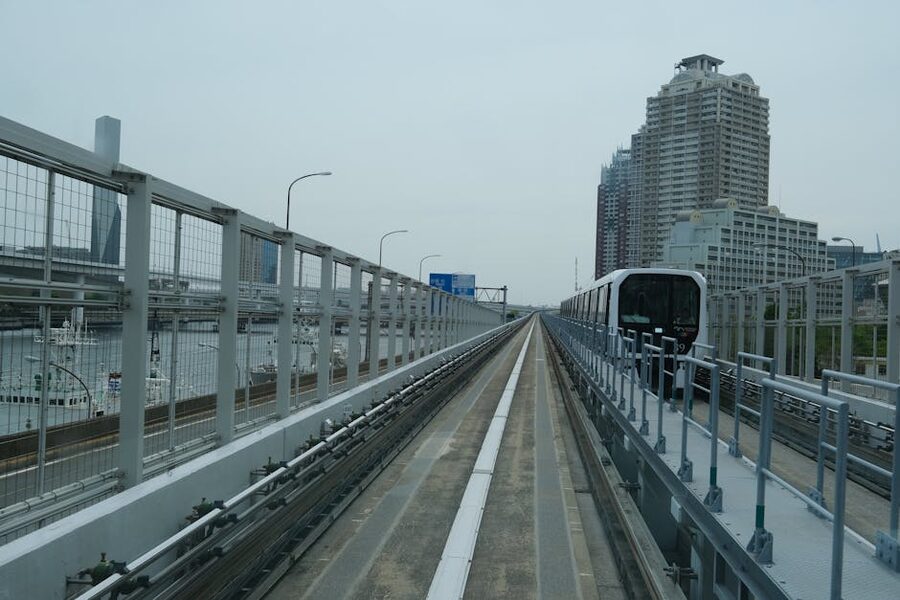
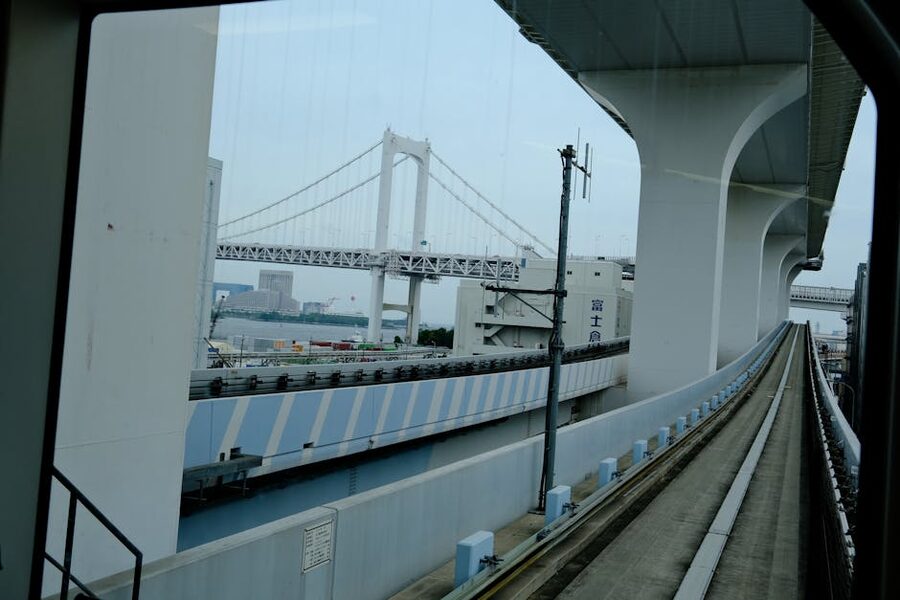
1. The Yurikamome from Shimbashi — this is the best one for first-timers. It leaves from Shimbashi Station (one stop south of Tokyo Station on the Yamanote Line), costs ¥330 one-way to Daiba, and takes about 13 minutes. It’s a rubber-tyred driverless train on elevated track, so you get the entire Tokyo Bay skyline, the Rainbow Bridge approach, and the curve out over the water. The front seats are unreserved and sit where the driver’s cab would be. Kids fight for them. Adults fight for them. I have fought for them.
2. The Rinkai Line from Shinjuku / Shibuya / Ikebukuro — this is the fastest if you’re already on the west side of the city. From Shibuya it’s about 21 minutes to Tokyo Teleport Station, which has the magnificent name but is not actually closest to the main sights — you’ll walk about 8 minutes to DiverCity and the Gundam. Shinjuku to Odaiba is 26 minutes, ¥513. The Rinkai Line is not covered by the JR Pass, so if you’re using one you’ll pay extra.
3. Water bus from Asakusa or Hinode Pier — the scenic option, not the fast one. The Tokyo Cruise service from Asakusa takes 55–60 minutes and costs ¥1,720 one way. If you’re already planning an Asakusa day, combining the two with the water bus in between is genuinely lovely, especially on the Hotaluna, which was designed by the manga artist Leiji Matsumoto and looks like a spacecraft. Book ahead — it’s small and fills up. Timetables are on the Tokyo Cruise site.
4. Walk across the Rainbow Bridge — this is the “for show” one. You actually can walk it, for free, between 9am and 9pm (9am-6pm from November to March). There are two pedestrian decks, north and south, and they take about 30 minutes to cross. The views are real and the traffic noise is real too. It’s worth doing once, ideally from the Tamachi side in the morning when the light is behind you, but don’t imagine romantic. Imagine a loud, windy, perfectly serviceable pavement above an expressway.
Bikes are banned on the bridge walkway — there’s a little trolley thing they’ll strap your wheels onto so you can push it across, which I found out by trying to ride on and being gently stopped by a guard. I apologised the rest of the afternoon.
Rainbow Bridge, and why it’s called that
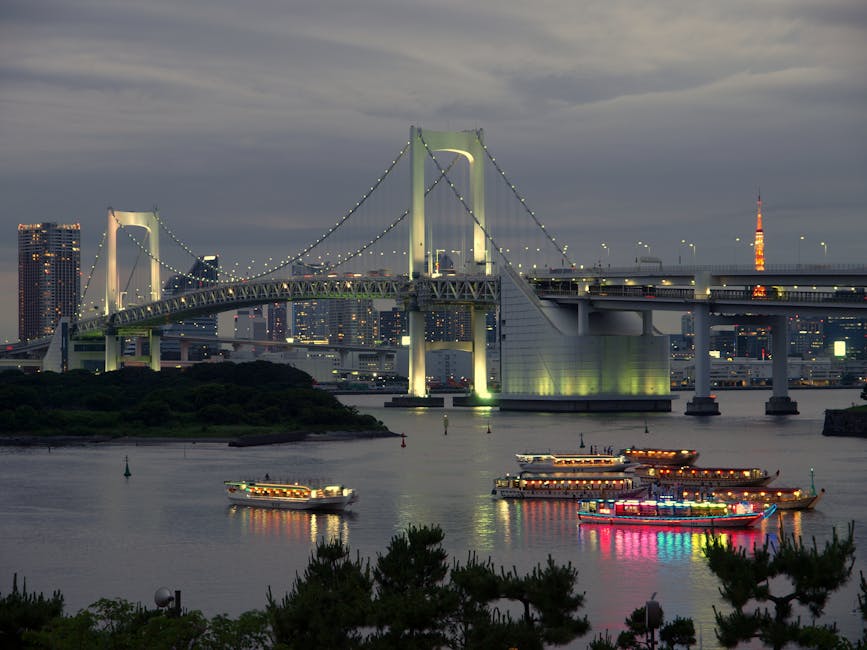
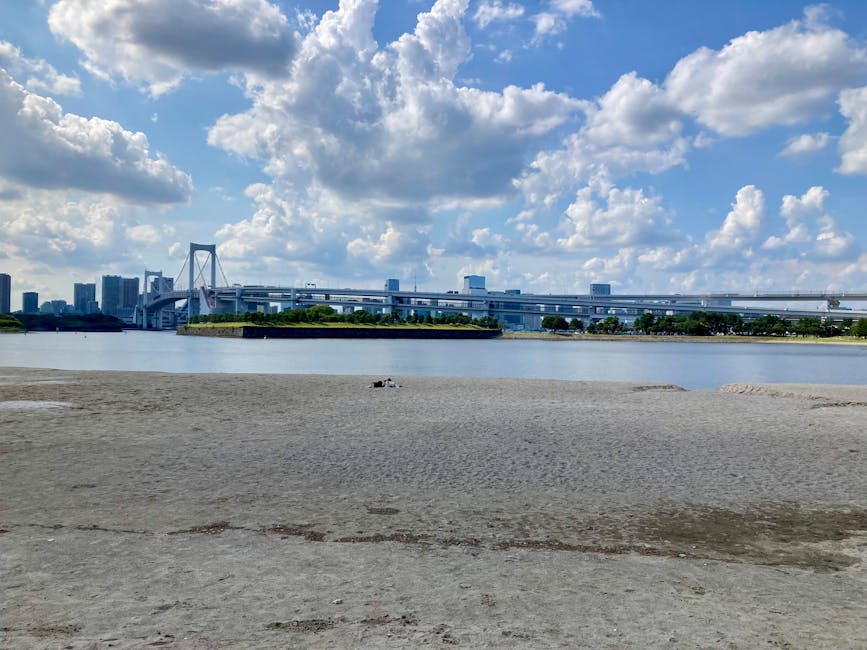
The name is slightly a trick. Officially it’s the Rainbow Bridge, but on a normal evening it sits in a single colour — soft white most of the year, changing with the seasons. The actual rainbow lighting only happens on New Year’s Eve, major anniversaries, and special promotions. If you’ve come specifically hoping for red-orange-yellow-green-blue-indigo-violet, you’ll be disappointed. If you’ve come expecting a massive suspension bridge lit silver-blue over Tokyo Bay, you’re in for exactly what everyone photographs.
Best viewing spots, ranked:
- Odaiba Marine Park at dusk — walk down from the Statue of Liberty to the sand and look left. The bridge, the skyline behind it, and Tokyo Tower peeking out on the far side. Arrive 30 minutes before sunset.
- The 7th-floor Aqua City rooftop — there’s a small shrine up there (yes, a shrine, on top of a mall) and the view back to the bridge is unobstructed. Free, rarely crowded.
- Any window-seat on the Yurikamome — specifically between Shiodome and Daiba. This is why you want the bay-side seat on the way over.
- The Bay Walkway (the Rainbow Promenade) — the bridge’s own pedestrian deck. Novel, but you’re on the thing so you don’t really see it.
The Unicorn Gundam, and what the “transformation” actually is
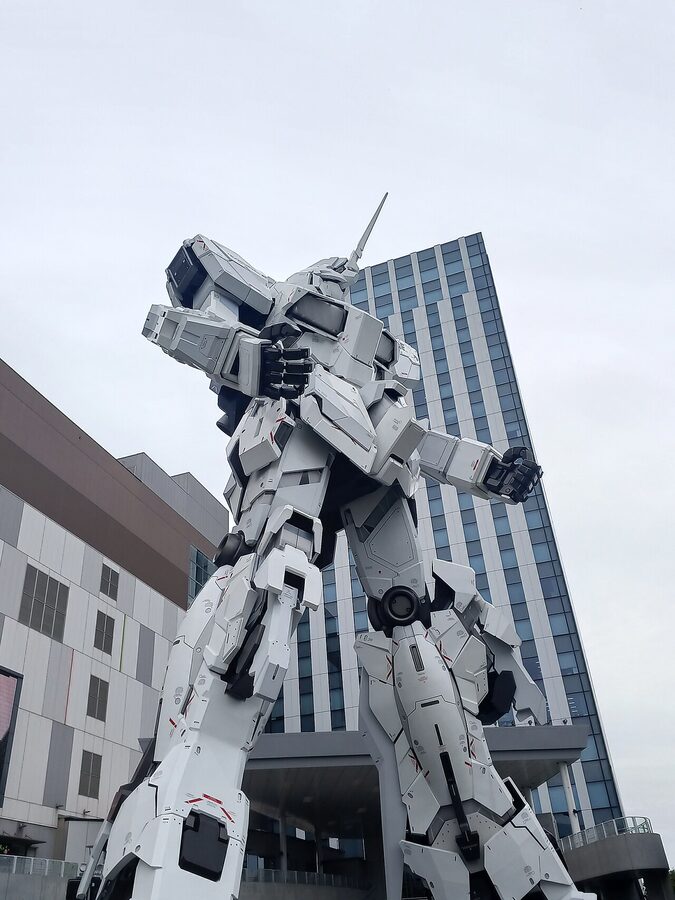
I am not an anime person. I went to see the Gundam out of sheer obligation — it’s one of those Odaiba things that if you don’t go, everyone asks why. And I thought: a giant robot statue, fine, I’ll look at it for five minutes and move on.
He is enormous. 19.7 metres from heel to horn. He stands outside DiverCity Tokyo Plaza on a little open plaza, and the scale of him next to the people taking selfies underneath genuinely surprised me. That’s the first thing. The second thing is the “transformation” — this is what every blog raves about and what the actual performance is like in daytime. Let me save you some disappointment: the daytime show, which runs at 11:00, 13:00, 15:00 and 17:00, is subtle. The head opens up. Some panels slide. A big horn comes out. If you blink you’ll miss it and think “is that it?”
The evening shows are better. From 19:00 to 21:30 he transforms every 30 minutes and the whole plaza lights up, with music and projection mapping onto the facade of DiverCity behind him. If you only have time for one, come at night. If you’ve got an anime-loving kid with you, come at both — they’ll know the music, they’ll gasp, you’ll tolerate it, and everyone wins.
The Gundam Base Tokyo shop is on the 7th floor of DiverCity right next to where the statue stands — the largest official Gundam model shop in Japan, with exclusives you won’t find at the airport. Even if you don’t build models it’s worth a wander for the displays. Free entry.
The Statue of Liberty, and why she’s here
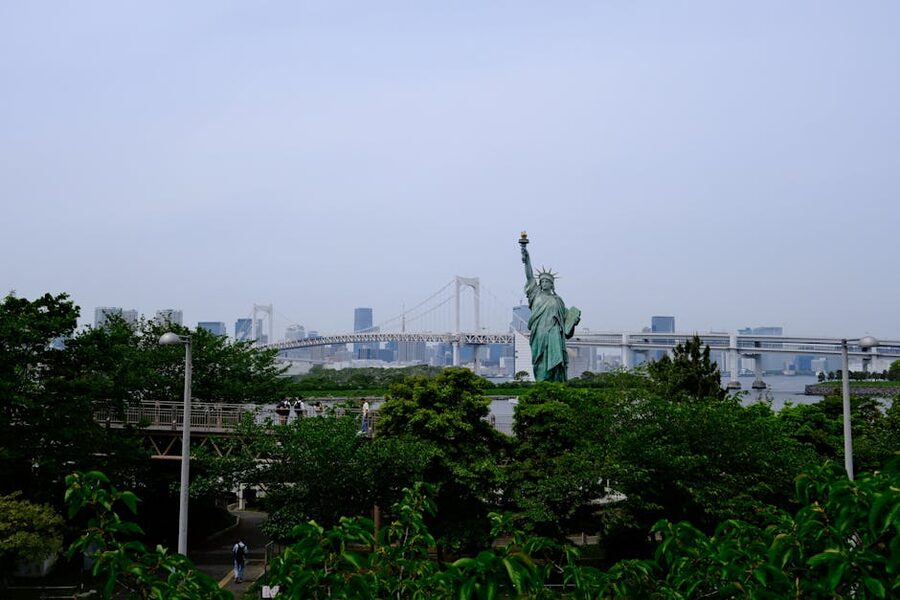
Yes, there’s a Statue of Liberty in Tokyo. No, it isn’t random. The actual Paris Statue of Liberty (the small one on Île aux Cygnes) came to Tokyo as a loan during L’année du Japon en France / Japon en France in 1998–99. She was so popular with locals that when she went home, Tokyo commissioned its own bronze cast from the same French moulds in 2000. So she’s a copy of a French copy of the American original, which is the kind of layered detail I love about this city.
She stands at the edge of Odaiba Seaside Park facing the Rainbow Bridge. The photo everyone takes — Liberty in the foreground, red-and-white Tokyo Tower in the far distance, the bridge in between — works best around 4pm in winter when the sun is at your back, or just before full dark on a summer evening. She is, honestly, a bit silly. That’s the point.
The Fuji TV building (and the ball on top)
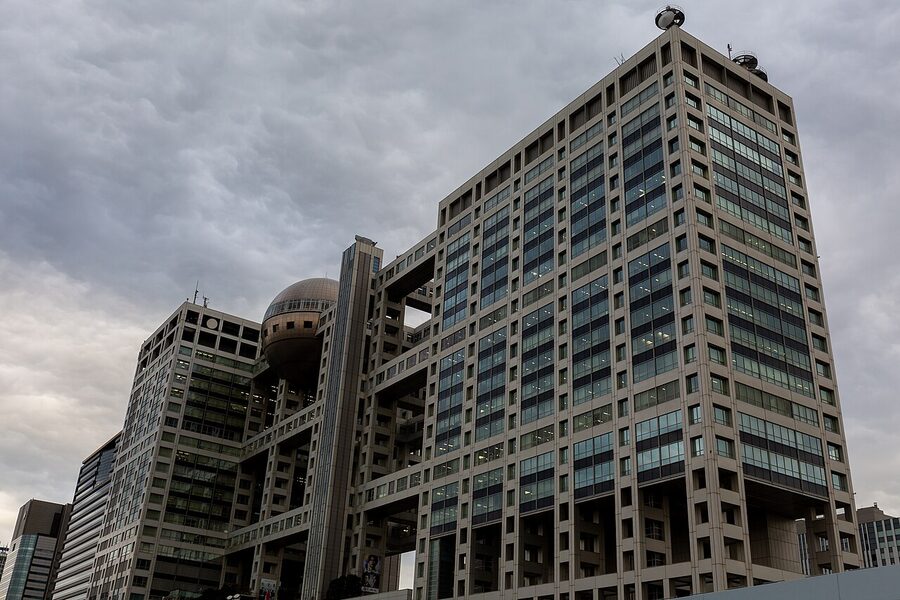
Look up. You’ll spot the Fuji TV headquarters before you’ve even decided what you want to see — it’s the building with the enormous silver sphere stuck between two tower halves, and it’s one of Kenzo Tange’s last big commissions. The same Tange who designed the original Yoyogi National Gymnasium for the 1964 Olympics. It’s unmistakable and, at 25 storeys, weirdly restrained by Tokyo skyscraper standards.
The sphere is actually a viewing platform called Hachitama. Tickets are ¥700 adult, ¥450 child, and it’s open Tuesday to Sunday, 10:00 to 18:00 (last entry 17:30). You take a glass elevator up the side of the building, walk past some studio exhibits with displays of Japanese TV shows you’ve never heard of, and end up inside the ball. The view is genuinely good — 360 degrees of Tokyo Bay, the Rainbow Bridge in the foreground, and on clear winter days you can see Mt Fuji on the southwest horizon. Not every day. Not even most days. But when it’s there, it’s there.
Honest opinion: if you’ve already been up the Tokyo Skytree or Tokyo Tower, the Fuji TV deck is nice but not revelatory. If this is your first Tokyo viewing deck, it’s a bargain and you see the Rainbow Bridge in a way the other decks can’t give you. Tourist information in English is on the Fuji TV official visitor page.
teamLab Planets (bring socks you don’t mind getting wet)
.jpg)
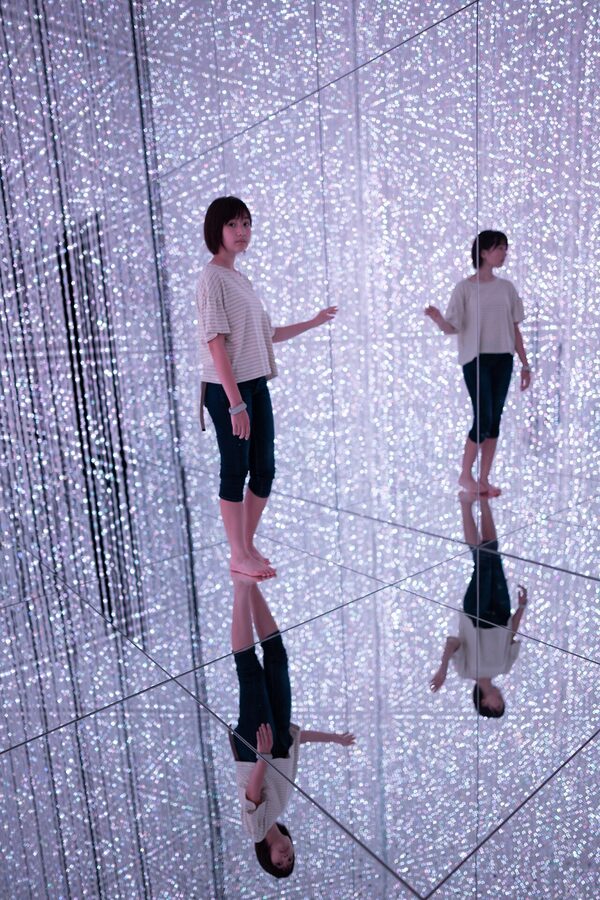
teamLab Planets is technically in Toyosu, not Odaiba proper, but it’s one Yurikamome stop away (Shin-Toyosu Station) and everyone lumps it into an Odaiba day. It’s the digital-art experience you’ve seen on Instagram — the one where you walk barefoot through a dark space and end up in a garden of orchids hanging from the ceiling, or up to your knees in water with projected carp swimming round you.
A few things nobody tells you:
- You take your shoes off. You’ll be given a locker. Wear or bring clean, dark socks — the floor gets wet in one of the rooms, and your socks will too, and wet light-coloured socks photograph badly in the light-up scenes.
- You’ll need to roll up trousers above your knees for the water room. Knee-length or loose trousers work. Tight jeans are a problem. There are complementary wrap-skirts for people in short skirts who’d rather not sit in water.
- Book online, in advance, for a specific time slot. The teamLab Planets official site is the cheapest. Walk-up tickets exist but queues can be hours long on weekends. Tickets are ¥3,800 weekdays, ¥4,200 weekends for adults as of 2026.
- Give yourself 90 minutes inside. That’s the average. Some people do it in 60; some linger for 120. Book an early or last-slot ticket if crowds bother you.
Is it overrated? No. It’s the one Tokyo attraction I’ve sent the most friends to and had zero complaints back. The Moss Garden room and the orchid room alone are worth the ticket.
Miraikan — the science museum that’ll surprise you
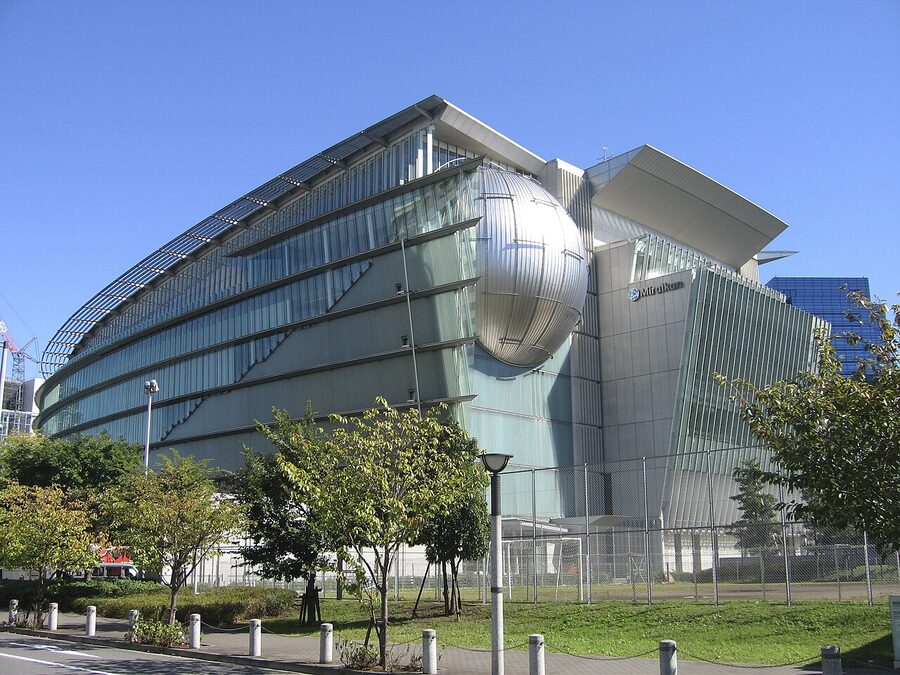
I came to Miraikan expecting a stiff national science museum with dusty dioramas. I stayed four hours. It’s the National Museum of Emerging Science and Innovation, and it’s one of the best museums in Tokyo to bring a curious kid or a curious adult who mostly works in spreadsheets.
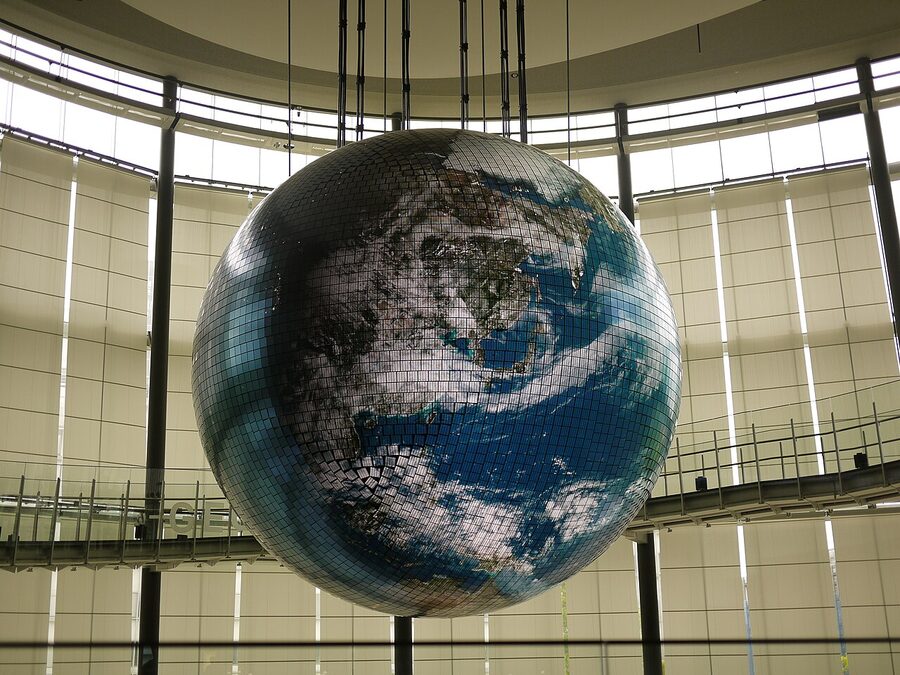
The headline exhibit is the Geo-Cosmos, a six-metre-wide sphere made of 10,000 LED panels that hangs in the central atrium and displays live data about the planet — cloud movement, sea temperature, tectonic activity. It’s hypnotic. You watch Earth’s weather move in real time, roll around slowly, and you forget you’ve been standing there for 20 minutes.

Other things I’d spend time on: the humanoid robot ASIMO demos (check the daily schedule at the entrance — usually 11:00 and 14:00), the space exhibits with a full-scale mockup of the ISS Kibo module you can walk through, and the medical/biotech floor which is genuinely thought-provoking.
Hours: 10:00–17:00, closed Tuesdays. Cost: ¥630 adult, ¥210 children 18 and under, free for under-6s. The Miraikan official website has the current exhibition schedule in English.
Odaiba Beach and Daiba Park
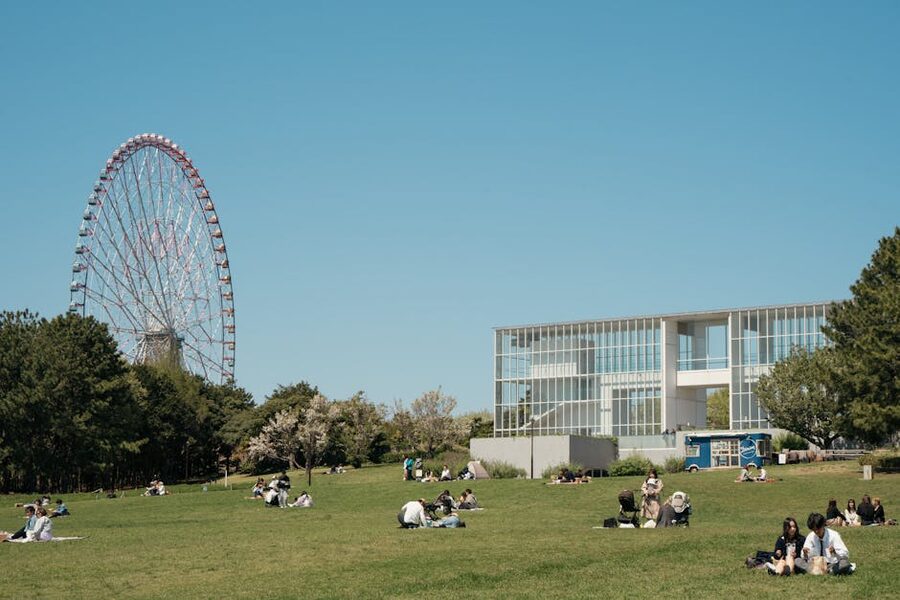
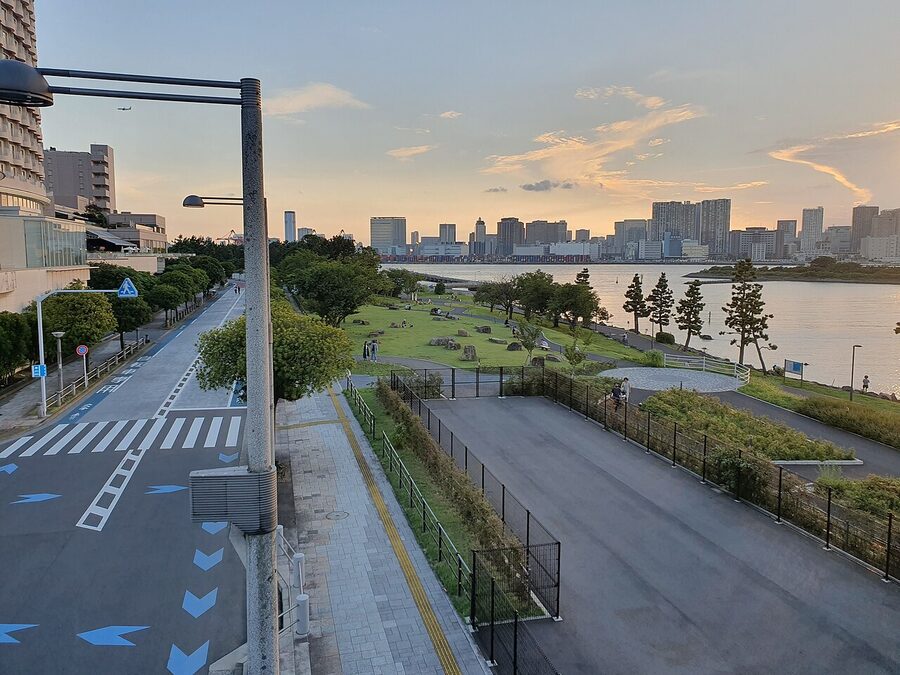
Odaiba has the only urban beach in Tokyo, which sounds great until you try to swim in it. You can’t, mostly — the bay is classified as swimmable only during a short open period in summer, and after any heavy rain the runoff levels spike and the beach closes to bathers. What it is good for: walking, picnicking, watching the sun go down behind the Rainbow Bridge, and lying on imported sand while Tokyo Tower glows in the distance.
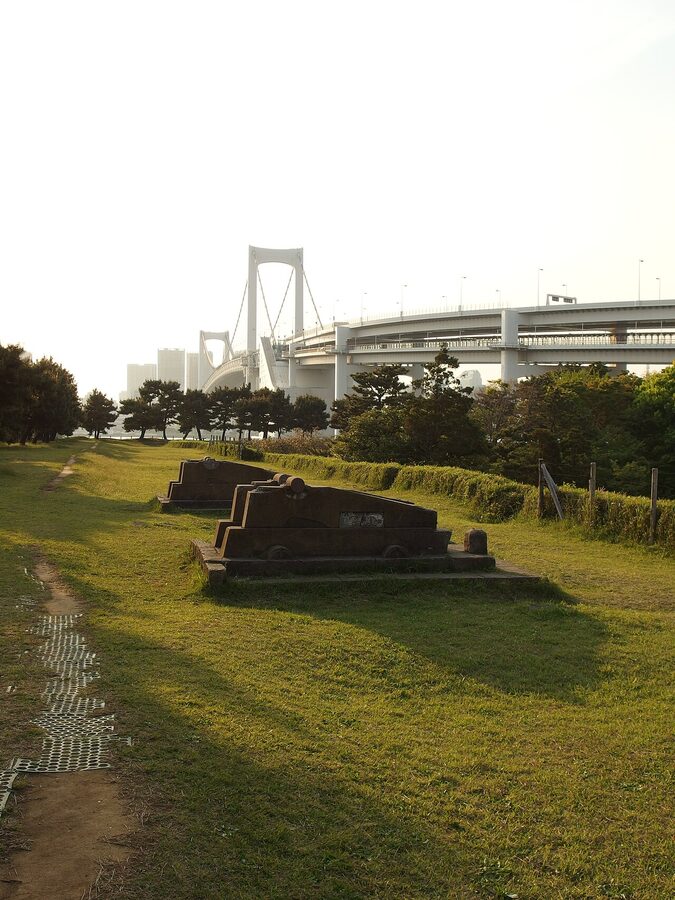
If you walk south along the beach for about ten minutes, you reach Daiba Park — one of the two surviving original 1850s forts that gave the island its name. It’s a small raised fortification on a spit of land connected to Odaiba by a causeway, with the stone emplacements where the cannon used to sit still visible. Almost no tourists come here. It’s quiet, a bit overgrown, and the view back to the city is exceptional.
.jpg)
Malls, shopping, and where to eat
Three big malls, all within a 10-minute walk of each other. Honest ranking:
- DiverCity Tokyo Plaza — the one to go to first. Gundam is outside. Gundam Base is on the 7th floor. The food court on the ground floor is one of the better cheap-eats options in Odaiba, especially the tonkatsu and curry stalls. Open 10:00–21:00.
- Decks Tokyo Beach — older, slightly shabbier, but home to Joypolis (SEGA’s indoor theme park), LEGOLAND Discovery Center, Madame Tussauds, and the Odaiba Takoyaki Museum if you want to try takoyaki from five different Osaka vendors under one roof. Decks is a rainy-day saviour. The Takoyaki Museum is the only reason I’d willingly go to a food theme park.
- Aqua City — the most westernised of the three and the least interesting if you’ve come to Tokyo for Tokyo. It does have a cinema, some decent restaurants with bay views (try Bills on the 3rd floor for ricotta pancakes — yes, the famous Sydney one), and the rooftop shrine I mentioned earlier. Skip the rest.
For something other than chain restaurants: the Odaiba takoyaki museum at Decks has small-batch regional takoyaki for ¥500–¥800 a plate, and the Aqua City ramen food court on the 5th floor is called “Ramen Kokugikan Mai” and it rotates through regional ramen shops from across Japan. Neither is cheap, but neither is a tourist trap.
Skip: the Odaiba branches of Red Lobster and Taco Bell — they exist, I don’t understand why you’d travel to Tokyo to eat them, and local reviews are consistently worse than the originals.
How I’d actually spend a day in Odaiba
This is my itinerary for a first-time traveller with one full day. Adjust based on kids, weather, and interest level.
9:45 — Take the Yurikamome from Shimbashi, front seat if you can get it, ¥330. Get off at Odaiba-Kaihinkoen.
10:00–10:45 — Walk the Rainbow Promenade along Odaiba Seaside Park. Photo of the Statue of Liberty with the Rainbow Bridge behind her. Continue south to Daiba Park — the 1850s fort. Almost no one goes. You should.
11:00–12:30 — Walk back up to DiverCity. See the Unicorn Gundam’s 11:00 show (or the 13:00 one if you’re running late). Eat at the DiverCity food court or a conbini picnic on the waterfront — both are good.
13:00–14:30 — Fuji TV Hachitama observation deck (¥700). View from the sphere, skip the celebrity merchandise shops unless there’s someone you recognise.
15:00–16:00 — Miraikan. You’ll want more time than you think. If you have kids under 10, swap Fuji TV for Miraikan and give this two hours at minimum.
16:30–18:00 — One Yurikamome stop to Shin-Toyosu for teamLab Planets (timed ticket booked in advance). Dark socks on. Trousers rolled up.
18:30 — Back to Odaiba Seaside Park for sunset on the bay. Convenience store dinner on the beach works fine — Tokyo is one of the few cities where this is a completely normal thing to do and nobody thinks you’re weird.
19:30 — Gundam evening light show at DiverCity if you haven’t seen it. It runs every 30 minutes until 21:30.
20:30+ — Yurikamome back to Shimbashi. Take the bay side of the train this time — the bridge view going back is the prettier direction.

Practical info at a glance
- Getting there: Yurikamome from Shimbashi (13 min, ¥330, JR Pass not accepted). Rinkai Line from Shinjuku/Shibuya to Tokyo Teleport (22–26 min, ~¥500, JR Pass not accepted — it’s a separate line).
- Best for: day 3 or 4 of a Tokyo trip. Families with kids. Anyone who’s seen enough shrines and wants something different.
- Worst for: travellers chasing “real Japan” experiences, first-day jetlag (the sensory overload isn’t kind), or anyone who dislikes malls.
- Budget a full day if you want to do Gundam + a museum + teamLab + sunset. Half a day if you’re just coming for Gundam and the Rainbow Bridge.
- Cost ballpark: ¥5,000–8,000 per adult for transport + one museum + teamLab Planets + lunch. Kids half that.
- Accessibility: Odaiba is one of the most wheelchair-friendly parts of Tokyo. Every Yurikamome station is step-free, the malls are fully accessible, the Rainbow Bridge walkway has lifts to get up to it, and the waterfront paths are flat and paved.
- When to avoid: weekends of the big summer festivals (Oktoberfest in spring and autumn, Niku Fes, the fireworks in July). Crowds get serious and the heat island effect on the island itself is brutal — no trees, lots of concrete, dead air.
- Best time to come: late afternoon into evening, any day of the week. The malls open at 10:00 but Odaiba is at its best when the sun starts going down and the Rainbow Bridge lights come on around 18:00.
Where to stay if you’re making it a late night
Odaiba has a handful of big bay-front hotels — Hilton Tokyo Odaiba, Grand Nikko Tokyo Daiba, and the Hotel Trusty Tokyo Bayside — which are all fine, all pretty good value compared to central Tokyo prices, and all a bit far from the rest of what you came to Japan to see. I think of Odaiba as a place to visit, not stay. You lose 45 minutes each way to almost everywhere else.
If you want something central instead, I’ve put together a proper list at where to stay in Tokyo on a budget. For first-timers I’d usually recommend staying in Asakusa or around Tokyo Station and doing Odaiba as a day trip.
If you liked Odaiba, try these next
Odaiba is the most modern district. Once you’ve done the futuristic stuff, I’d point you in exactly the opposite direction — Asakusa for the old-Tokyo feel and Senso-ji, or Meiji Shrine for the quiet forest in the middle of the city. If you liked the malls and the crowds and you’re ready for more of the same energy, Shibuya at night and Shinjuku are where you go next.
One last thing. The Yurikamome stops running around midnight, and the last train from Daiba back to Shimbashi is at 00:13. Don’t be the person who loses track of time on the beach. You’ll be walking across that 800-metre Rainbow Bridge at 2am, and the bridge walkway closes at 9pm. I won’t say how I know.