
Reviewed · SUMO EXPERIENCES
Watch Sumo Morning Practice at Stable in Tokyo
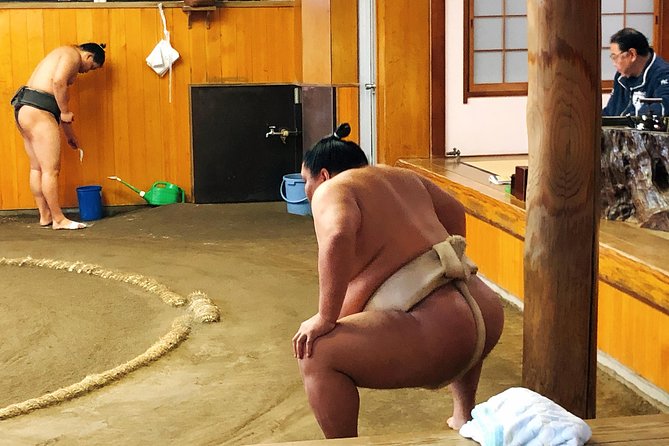
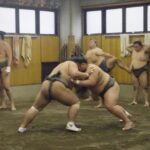
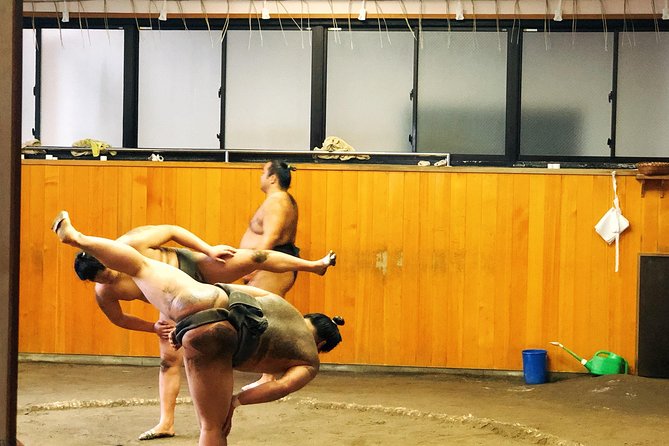
At a sumo stable, you are not watching a polished show. You are sitting quietly beside a working gym while rikishi, the Japanese word for sumo wrestlers, stretch, drill, grapple, and absorb coaching. That is the appeal. The practice feels genuine, and the heavy collisions are startling when you are only a few steps away.
I like two things here: the close view of the wrestlers and the slow build from ritual and warmups to hard sparring. You also get a rare look at a private part of Japanese life that most visitors see only during a tournament. The catch is plain: you may sit on the floor for up to two hours, often in silence, with limited explanation and no food or drink included.
The advertised price is $95.77 per person, and the experience is listed for a maximum of 10 people. That can be good value if you care about sumo and want access arranged for you. But practice times change, the stable location is confirmed only about a week ahead, and the photo session can be missed if training runs long.
In This Review
- Key points to know before booking
- Why a sumo stable feels different from a tournament
- Meeting up and reaching the stable
- Inside the stable: quiet observation from the floor
- The practice builds from ritual to impact
- What the guide adds, and what may be missing
- Seating, views, and the best place to be
- The photo session at the end
- Is $95.77 a fair price?
- Who will enjoy this morning most?
- Booking dates, timing, and cancellation rules
- Should you book the sumo morning practice?
- FAQ
- How long does the sumo practice last?
- Where does the activity start?
- Is the activity suitable for children?
- Do I need to sit on the floor?
- Can I take photographs during practice?
- Is food included?
- What is the cancellation policy?
Key points to know before booking
- Watch real morning practice: This is a working training session, not a staged performance.
- Expect 60 to 90 minutes: Practice may be shorter during Tokyo tournament periods, sometimes only 30 to 40 minutes.
- Floor sitting is part of the deal: You may need to sit cross-legged or with your legs tucked for a long stretch.
- Silence matters: No eating, loud talking, bright flash, or intrusive camera sounds inside the stable.
- Arrive early for the best view: Front seating matters, since people behind you may struggle to see the dohyo.
- Photo opportunities depend on timing: Photos with wrestlers are included, but a long practice can push or cancel that part.
Why a sumo stable feels different from a tournament
A professional sumo tournament is built for spectators. You buy a ticket, enter a large arena, find your seat, and watch one bout after another. A stable is different. It is the wrestlers’ daily training space, and you are entering as a quiet observer.
That distinction shapes the whole morning. The wrestlers are not performing for the group. They follow their routine, often beginning with stretching and basic movements before moving into more demanding drills. The work can look repetitive at first, but repetition is the point. Sumo depends on balance, timing, leg strength, posture, and the ability to absorb a violent first impact.
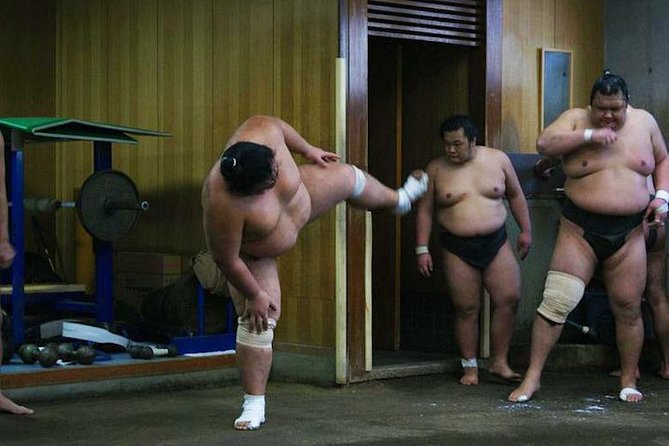
You might see wrestlers practice shiko, the slow leg-lifting exercise associated with sumo, along with pushing drills and repeated movement around the dohyo. The exact order and intensity depend on the stable’s schedule. Later practice may include bouts or sparring, when the mood shifts from controlled preparation to sudden bursts of force.
I find this more revealing than a short demonstration. You see how much effort comes before competition. You also notice the hierarchy and discipline of the stable, something worth reading about before you go. One person who attended suggested learning how rikishi ranks work in advance, and that is good advice. Without some background, the gestures and order of practice can be hard to interpret.
A few more Tokyo tours and experiences worth a look
Meeting up and reaching the stable
You make your own way to the Tokyo meeting point. The listed itinerary names Ryogoku Kokugikan, Tokyo’s famous sumo arena, as the stop, but the actual training stable address may be sent only a few days before the visit. Stable schedules and locations can change, so do not assume that the meeting point will be the final practice address.
This is one of the practical weak spots. The stable may be easy to reach by public transport and a walk, but some people have found the final address difficult to locate. A taxi can save time, especially early in the morning, and carrying the address in Japanese is sensible. Some taxi drivers may not be able to work from an English-only address.
Plan extra time. You do not want to arrive late and enter while practice is underway. Late arrival can also cost you a front spot, and seating position matters in a low room where heads and shoulders can block your view.
The meeting system is designed to prevent you from having to find the stable alone. After meeting the guide and small group, you go inside together. Still, the final address is not always available far ahead, so keep your morning flexible.
Inside the stable: quiet observation from the floor
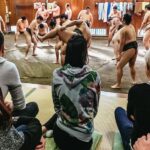
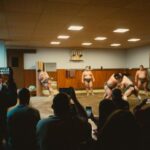
Once inside, you take a place to the side of the dohyo. The floor may be covered with a thin mat, and seating is generally on the floor. A few chairs or stools may be available by request, but they can have a worse view and may be limited.
This is not the time to stretch your legs toward the ring, chat with the person beside you, or stand up for a better photograph. You are expected to remain quiet and avoid distracting the wrestlers. Do not eat or drink during practice. Bright flashes and intrusive camera sounds are also discouraged.
That quiet is not a minor detail. It lets you hear the rhythm of the training room and watch the stable operate without a tour-style performance layered over it. It also means this activity may feel slow if you expected a guide to explain every movement.
The supplied information says the session lasts about 60 to 90 minutes, though the broader tour description refers to about two hours. The difference comes from the changing end time, the arrival process, and the photo opportunity. In Tokyo tournament periods, especially January, May, and September around the middle of the month, practice may last only 30 to 40 minutes. The price remains the same even when the practice is shorter.
If you have back, hip, knee, or circulation problems, take the floor seating seriously. Some people have left early because the hard floor became painful. Requesting a stool in advance may help, but it is not a guarantee of a prime view.
The practice builds from ritual to impact
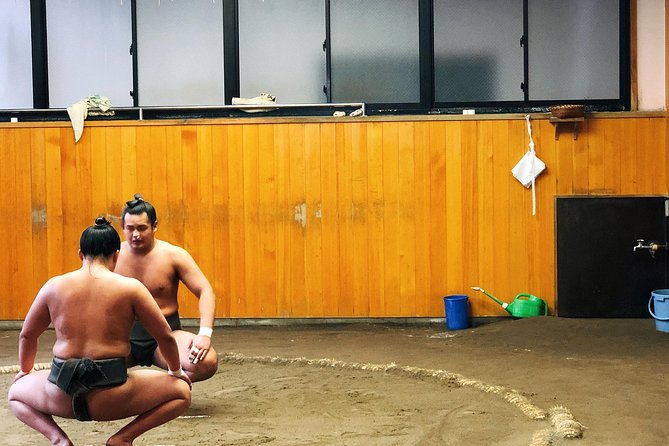
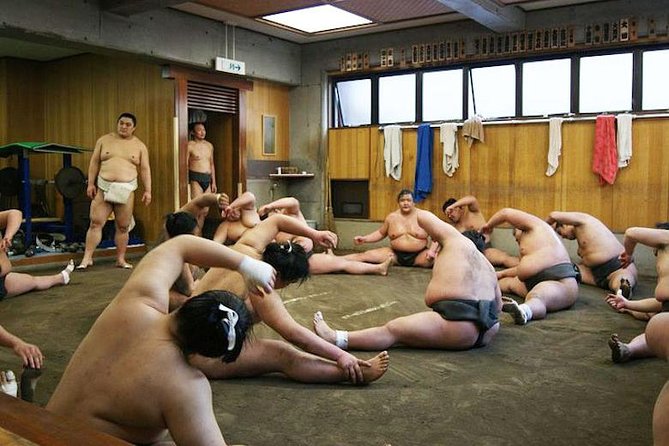
The morning usually begins quietly. Wrestlers stretch, warm up, and work through movements that may seem simple until you notice their control and repetition. This stage can last a while, so anyone hoping for nonstop bouts may become impatient.
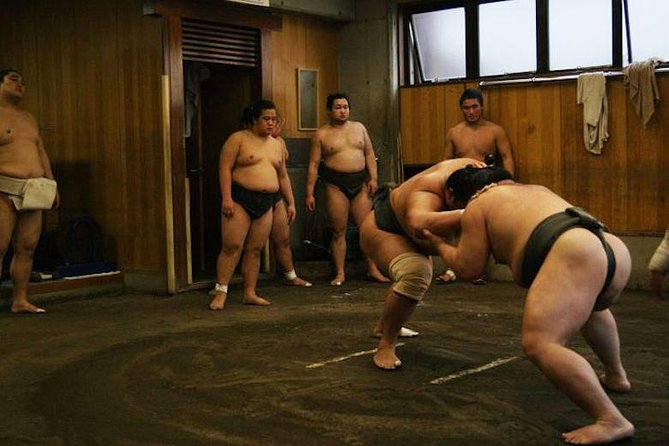
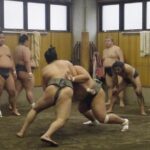
Then the physical work grows more intense. You can see wrestlers push into one another, test balance, repeat footwork, and practice the first clash. When sparring begins, the sound and force change the room. The athletes are large, but the impressive part is not just size. It is the speed of the impact, the low stance, and the effort needed to stay upright when another wrestler is trying to drive you out.
The gradual build is one of the best parts of the visit. You first see preparation, then technique, then strength under pressure. It gives you a better sense of sumo as a demanding sport rather than a costume-filled cultural display.
You should also remember that practice does not follow a tourist timetable. The wrestlers may continue longer than expected, or finish earlier. The end time varies from day to day. If you have a train, museum booking, or flight soon afterward, leave a generous buffer.
What the guide adds, and what may be missing
The experience includes a guide who brings the group to the stable, but the level of explanation can vary. Some bookings have included a guide who discusses sumo history and customs. Hiroko helped arrange spaces for one group, while a guide named Ricko was praised for helping with transportation and explaining the visit.
Those names do not mean Hiroko or Ricko will lead your particular date. The supplied information does not promise a specific guide, and some sessions may have little or no spoken explanation once you enter. In the most basic version, you may be met by someone with a list who opens the door and directs you to a seat.
That matters if you are new to sumo. You may want an introduction to the dohyo, ranking system, training exercises, and stable rules. If a guide is not actively explaining, read about those subjects before arrival. The experience itself is strongest as close observation, not as a lecture.
I would ask before booking how much guiding is included in your specific departure. This is especially important if you are choosing between several sumo activities in Tokyo. A stable visit with a good briefing gives the practice more meaning. A door-opening service still gets you inside, but you must bring your own context.
A few more Tokyo tours and experiences worth a look
Seating, views, and the best place to be
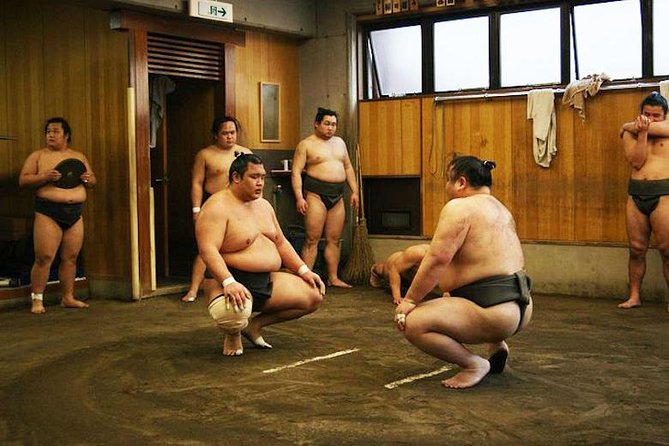
Arrive early if the meeting instructions allow it. The first people seated usually have the best chance of seeing the dohyo clearly. From the back, the low seating arrangement can make the wrestlers difficult to watch, especially if the room is full.
The listed maximum is 10 people, which should help keep the group manageable. Yet seating arrangements can vary by stable and by date, and accounts of larger groups and crowded views exist. I would not book this expecting a guaranteed front-row position unless the operator confirms it.
The most awkward seat may be directly behind the coach’s cushion or sitting pillow. One person had a view blocked for most of the practice and could not move because no other place was available. That is a reminder that the room is organized for the stable first, not for sightseeing comfort.
A chair or stool may be possible by request, but sitting higher can reduce your view rather than improve it. If your body cannot manage floor seating, contact the provider before paying and get a clear answer. Do not count on solving the problem at the door.
The photo session at the end
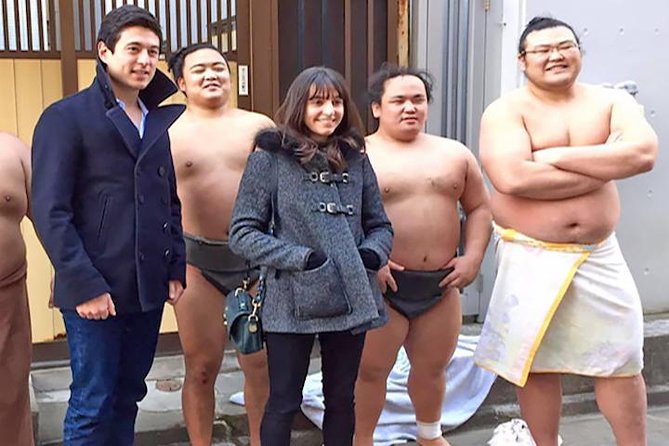
Photos with sumo wrestlers are included, which gives the morning a personal finish. After practice, there may be time to pose with some of the athletes before the group leaves.
The word may is important. If practice runs long, the photo session can be shortened or missed. One group expected to finish around 9:30 and lost the photo opportunity because the wrestlers continued training. Since the wrestlers control the practice schedule, the operator cannot fully guarantee the timing.
If photos are your main reason for booking, this is a risk. If your main goal is to observe training, the uncertainty is easier to accept. Bring a camera or phone, but follow the stable’s rules and avoid using flash or intrusive sounds.
Is $95.77 a fair price?
At $95.77, this is not a cheap way to fill an hour in Tokyo. You are paying for access to a restricted setting, advance coordination, a meeting system, and the chance to watch professional athletes at close range. For someone who already follows sumo, that can be a fair exchange.
The value is weaker if you want entertainment, comfort, or a detailed guided lesson. Much of the time may involve watching warmups and repeated drills in silence. There is no food or beverage included, and the practice can be shorter during tournament season without a lower price.
Group discounts may improve the cost for families or friends, and the mobile ticket is convenient. The advertised group limit of 10 also suggests a more personal setting than a large sightseeing bus. Still, confirm the group size and seating plan if those details matter to you.
I would compare the cost with a tournament ticket, but they are not the same product. A tournament gives you a full day of public competition in an arena. This gives you access to daily preparation, closer views, and a look at the life behind the bouts. Choose based on what you want to see, not only on the price.
Who will enjoy this morning most?
You should book this if you are curious about sumo as a sport and can appreciate training rather than spectacle. It suits people who like watching technique develop, families with teenagers, and visitors who want a cultural experience outside the usual temples and shopping streets.
It also works well for fans who have already watched sumo on television. You will recognize the wrestlers’ movements and understand why the warmup matters. Watching the full sequence from stretching to sparring can make familiar bouts easier to appreciate.
You may not enjoy it if you need constant commentary, dislike sitting on the floor, or have a tightly packed Tokyo schedule. It is also a poor choice if you expect to take many photos during practice or want guaranteed interaction with the wrestlers.
The minimum age is 13. Most people can participate, but everyone must be able to sit on the floor for an extended time unless another arrangement is confirmed.
Booking dates, timing, and cancellation rules
This activity runs Monday through Saturday during the listed periods, generally from 8:00 to 10:00 in the morning. The published dates include February 2 to 14, March 31 to April 30, and May 1 to 9, 2026. Sumo stables close or change their routine during tournament periods, and exact operating dates vary each year.
Confirmation is sent within 48 hours of booking, subject to availability. The stable’s schedule can be confirmed only about one week before the visit, so do not expect every detail immediately.
You can receive a full refund if you cancel at least six full days before the start time. Cancelling two to six full days ahead brings a 50 percent refund, while cancelling less than two full days ahead brings no refund. Date changes are not accepted within three days, including for flight delays or illness, so book only when your plans are firm. If poor weather causes cancellation, you should be offered another date or a full refund.
Should you book the sumo morning practice?
Book it if you want an authentic look at how rikishi train and you are willing to trade comfort for access. The strongest parts are the closeness, the serious atmosphere, and the gradual move from careful warmups to powerful sparring. For a sumo fan, this can be one of the most memorable mornings in Tokyo.
Skip it if your ideal tour includes a talkative guide, comfortable seating, fixed timing, or guaranteed photos. Before paying, confirm the stable address, ask about floor seating or a stool, check how much explanation is provided, and leave your schedule open after the practice.
My practical verdict: a strong choice for sumo fans and culturally curious visitors, but not a casual show. Come prepared, stay quiet, arrive early, and accept that the wrestlers’ routine comes first.
FAQ
How long does the sumo practice last?
The practice generally lasts 60 to 90 minutes. During Tokyo tournament periods in January, May, and September, it may last only 30 to 40 minutes.
Where does the activity start?
You make your own way to a Tokyo meeting point. Ryogoku Kokugikan is listed as the itinerary stop, while the exact stable address may be confirmed about one week before the visit.
Is the activity suitable for children?
The minimum age is 13. Participants must be able to sit on the floor for an extended period.
Do I need to sit on the floor?
Yes. Floor seating is part of the experience, and you may need to sit with your legs tucked or cross-legged for a long time. A chair or stool may be available by request, but it can offer a less favorable view.
Can I take photographs during practice?
You must avoid bright flashes and intrusive camera sounds. Photos with sumo wrestlers are included at the end when the practice schedule allows.
Is food included?
No. The activity does not include food or beverages.
What is the cancellation policy?
Cancel at least six full days before the start time for a full refund. Cancelling two to six full days ahead provides a 50 percent refund, while cancelling less than two full days ahead is nonrefundable. If poor weather cancels the activity, you should be offered another date or a full refund.
More Morning in Tokyo
More Sumo Experiences in Tokyo

More tours in Tokyo we've reviewed



Sumo Experiences, compared.
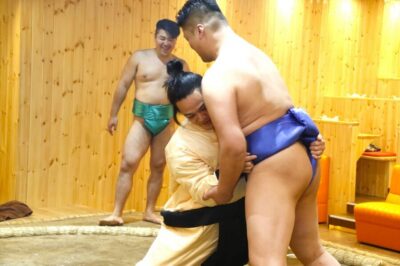 ★ 4.8Tokyo: Sumo Show Experience with Chicken Hot Pot and a PhotoFrom $1032 hours
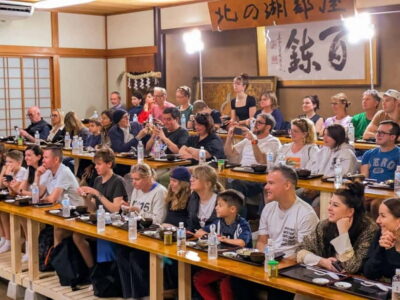 ★ 4.8Tokyo: Sumo Show and Dining ExperienceFrom $7990 minutes - 2 hours
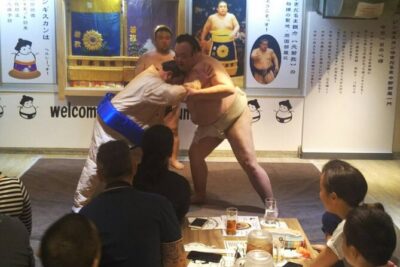 ★ 5.0the SUMO showFrom $89
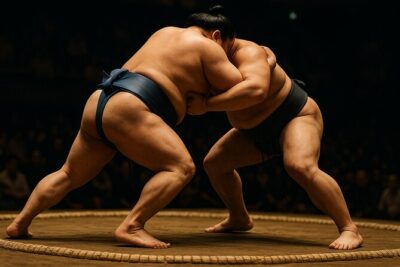 ★ 5.0Tokyo Shinjuku Sumo Show & Experience with PhotoFrom $79
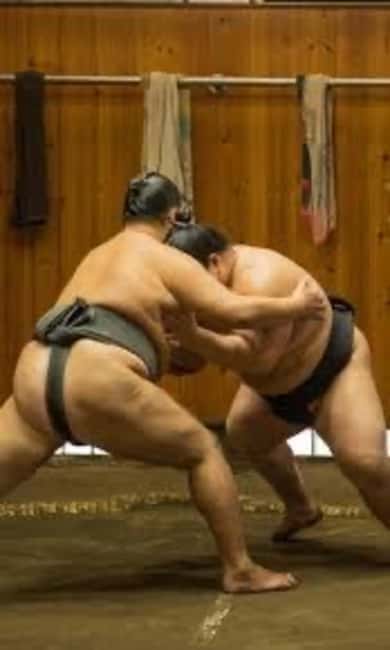 ★ 4.8Tokyo: Sumo Show and Experience in ShinjukuFrom $691h 30m
 ★ 4.6Tokyo: Sumo Tournament Tour with Chair Seat TicketsFrom $141