
Reviewed · KAMAKURA & ENOSHIMA DAY TRIPS
Tokyo: Kamakura & Enoshima Day Tour with Pickup & Train Ride
Kamakura’s best moments arrive in quick succession here: a seaside island, an anime-famous crossing, a little electric train, samurai-era shrines, and a huge bronze Buddha. I love the way this tour links the coast and the old temple town without making you solve Japan’s train system on your own. I also like the small maximum of nine people, which feels far easier than joining a full coach.
The main catch is that this is transport with sightseeing stops, not a traditional guided tour. Your driver may explain the plan and point out useful details, as Allan Tan, Sun, Harry, and Wan have done for past groups, but the driver mainly drives and usually does not walk around each site with you. You need to be comfortable exploring independently.
In This Review
- Key things to know before booking
- Why this route works from Tokyo
- Starting at Tokyo Station
- Enoshima Island and the dragon legend
- The Kamakura High School crossing
- Riding the Enoden along the Shonan coast
- Tsurugaoka Hachimangu and Kamakura’s samurai past
- Komachi Street for snacks and shopping
- The Great Buddha of Kamakura
- Returning to Tokyo by 6 PM
- What the $13 price really buys
- How much help should you expect?
- Who will enjoy this day most?
- Final decision: book it for transport, not lectures
- FAQ
- Is hotel pickup and drop-off available in Tokyo?
- Where is the central meeting point?
- Is the tour fully guided?
- Is the Enoden train fare included?
- Are attraction admission fees included?
- What languages are available?
- Can children or wheelchair users join?
Key things to know before booking
- Enoden is included: Your fare covers the charming 20-minute electric train ride along the Shonan coast.
- The tour is mostly self-guided: Expect basic English from the driver-guide, not detailed commentary at every attraction.
- You get the major Kamakura sights: Enoshima, Kamakura High School, Tsurugaoka Hachimangu, Komachi Street, and the Great Buddha.
- The group is capped at nine: That is a useful middle ground between a private car and a large bus.
- The $13 price is unusually low: Admission fees, meals, and snacks are extra, but transport and the train fare are covered.
- Timing matters: Meet at Tokyo Station 15 minutes early. The vehicle leaves on time and cannot wait for late arrivals.
Why this route works from Tokyo
Kamakura is close enough to visit in a day, but the sights are spread out. Enoshima sits on the coast, Kamakura’s major shrine is inland, the Great Buddha is in Hase, and the Enoden railway links several of these places. You can cover it independently, but you will spend more time checking routes, finding platforms, and deciding how to fit the stops together.
This day trip handles the basic transport. The vehicle leaves from Tokyo, takes you toward the Shonan coast, and then connects the main stops in a practical order. The exact order can change with traffic, weather, or operating needs, so do not treat the schedule as a minute-by-minute promise.
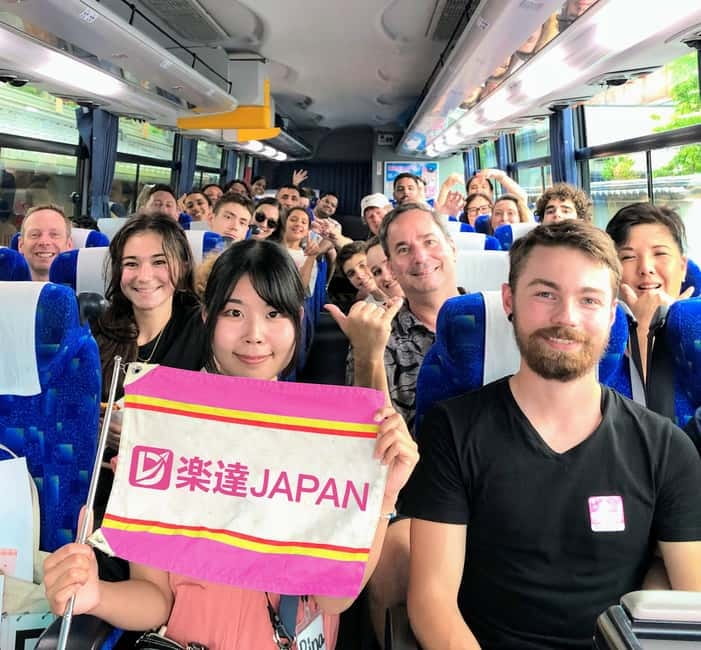
The small-group format matters here. With no more than nine passengers, loading and unloading should be quicker than with a large bus. It also gives the driver a better chance to answer basic questions. Still, this is not a private tour unless you select a private option, and the experience can vary depending on how much English your assigned driver uses.
Hotel pickup and drop-off may be available, but only in the stated pickup zone near JR Tokyo Station. You must provide your exact hotel address and WhatsApp number when booking. If the hotel falls outside the area, you receive a 2,800-yen refund and meet the group at the central location instead.
A few more Tokyo tours and experiences worth a look
Starting at Tokyo Station
The central meeting point is the Marunouchi North Gate of JR Tokyo Station. You should arrive at least 15 minutes early. This is not the place to cut things close: late arrivals are not accommodated, and a missed departure means losing the booking without a refund.
The operator sends the meeting time, a GPS-pinned map, vehicle plate number, and final instructions through WhatsApp by 8 PM the night before. Keep WhatsApp active and check your spam folder for the email. This system is useful, but it also means you should not book and then ignore your phone.
The vehicle has dedicated seats for all passengers and limited luggage room. Bring only what you need for the day. Comfortable shoes, water, sunscreen, a hat, and weather-appropriate clothing are sensible choices. Food and alcoholic drinks are not allowed inside the vehicle, and smoking is prohibited.
Enoshima Island and the dragon legend
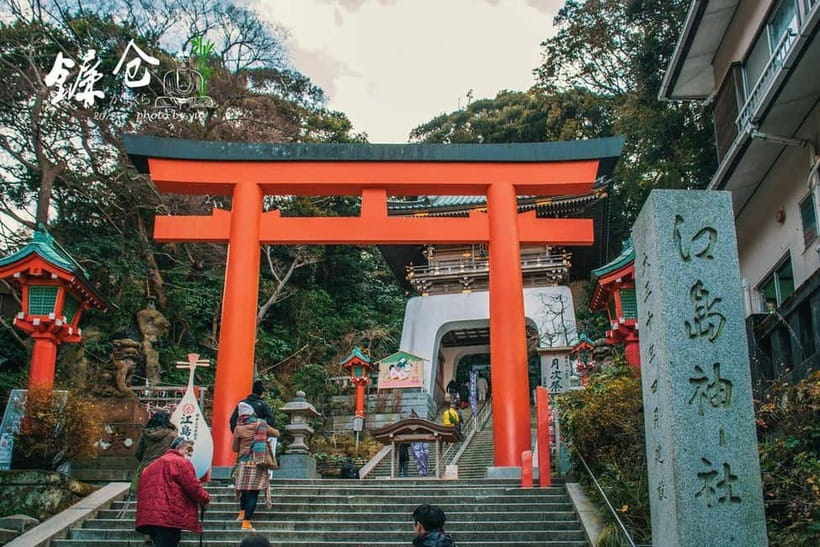
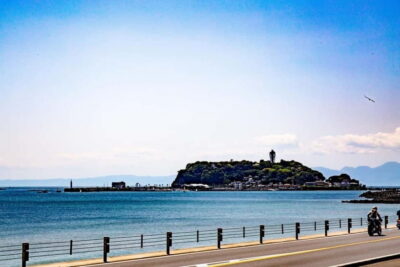
Enoshima is the first major stop, with about two hours for sightseeing. The island is known for ocean views, gardens, shrines, and the local story of a five-headed dragon. You will have time to walk around and take photographs rather than simply viewing the island through a vehicle window.
Enoshima Shrine is divided across the island and is surrounded by pleasant gardens and quiet religious spaces. The itinerary gives about 30 minutes specifically for the shrine, though the total Enoshima stop is longer. That combination lets you see the main shrine area and still have time for the island itself.
I would use this stop for scenery and atmosphere, not for a long historical lecture. Since the driver generally does not accompany you inside the attractions, you will need to read signs, use your own guidebook, or simply enjoy the setting at your own pace. The lack of a fixed walking commentary is a drawback for anyone who wants every legend explained.
The coast is one of the day’s strongest changes of pace. Kamakura’s temples and samurai associations can feel formal, while Enoshima gives you open sea views and a more relaxed seaside outing. Bring a camera, but remember that the schedule is shared. You may not have time to explore every corner.
The Kamakura High School crossing
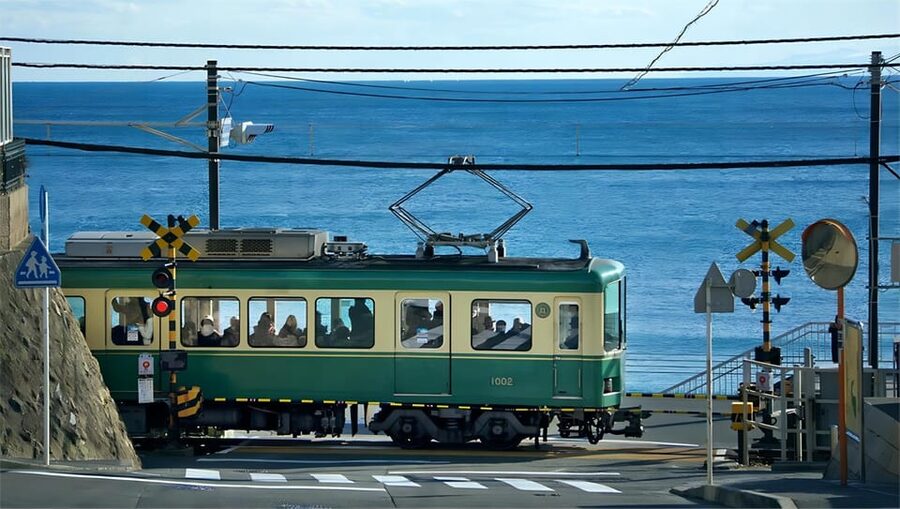
The stop at Kamakura High School lasts about 30 minutes and is aimed at fans of Slam Dunk. The nearby crossing became famous as an anime setting, and you will have time for photographs and a short walk around the area.
This is a very specific stop. If you know the series, it can be a highlight. If you do not, it is mainly a quick photo opportunity near a railway and coastal neighborhood. The tour does not suggest entering the school, so treat this as an exterior visit only.
Be mindful of local residents and traffic. The appeal is the recognizable view, not a long attraction with displays or activities. Thirty minutes is enough for photographs, but not for lingering.
Riding the Enoden along the Shonan coast
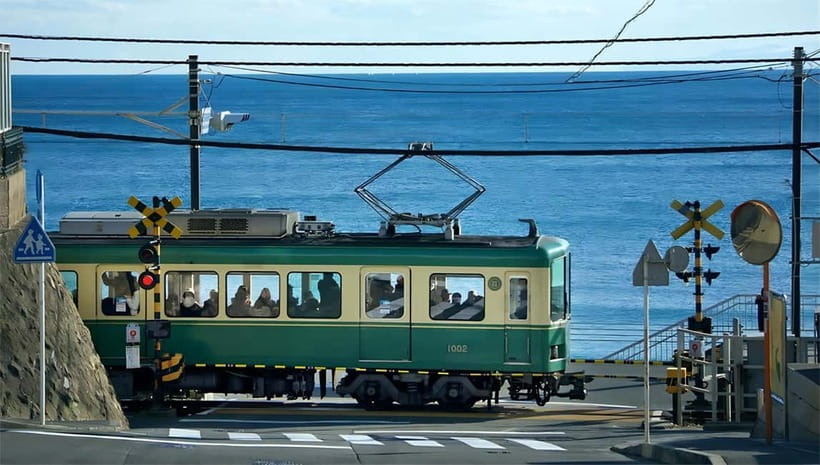
The Enoden train is the most distinctive part of the transport plan. This small electric railway runs through Kamakura and along the Shonan coast, passing local streets and seaside views. The included ride lasts about 20 minutes.
I like that the train fare is included rather than leaving you to work out another ticket during a tightly scheduled day. The ride also gives you a more local sense of the area than traveling entirely by tour vehicle. It is not a long railway journey, but it adds character to the day.
The train is shared public transport, so do not expect a reserved private carriage. Your exact boarding experience can depend on crowding and operations. The route may be scenic, but your view depends on where you are standing or seated and on the weather.
The stop is listed near the Enoden Kamakura office, with the train connecting the coastal portion of the itinerary. Listen carefully for meeting instructions. A beautiful train ride is less enjoyable if you are unsure where to regroup afterward.
Tsurugaoka Hachimangu and Kamakura’s samurai past
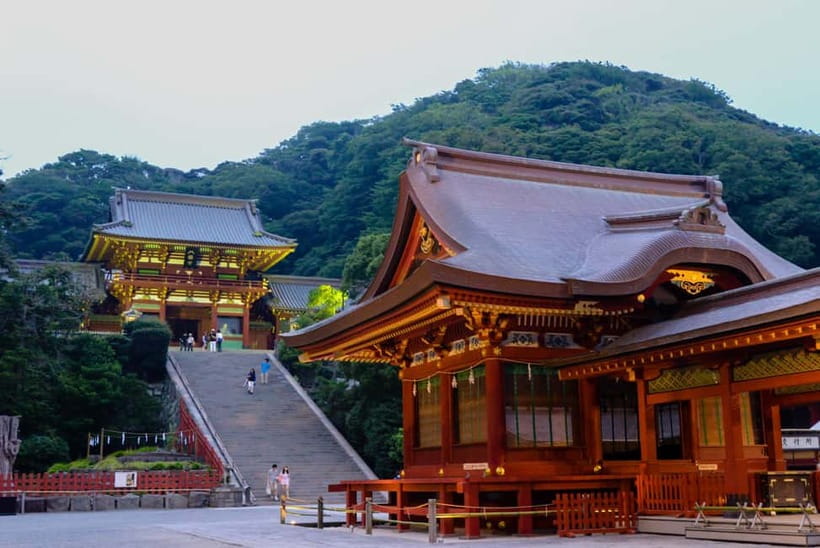
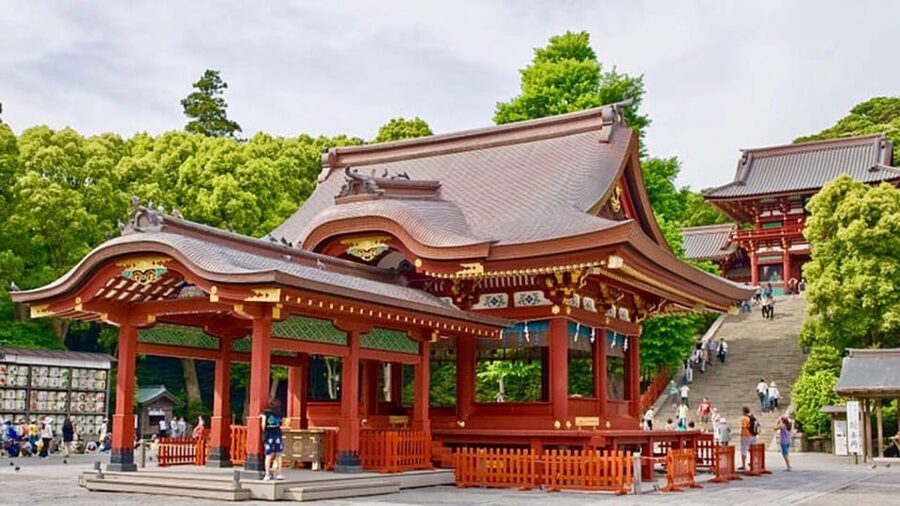
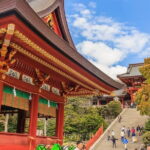
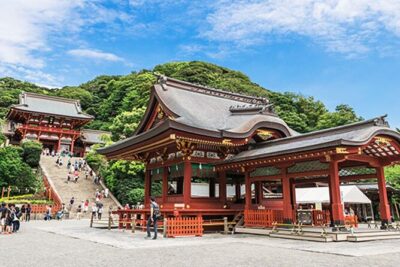
Tsurugaoka Hachimangu is Kamakura’s most important Shinto shrine and receives about an hour and a half. Its broad grounds, steps, gates, and carefully maintained religious spaces give you a strong sense of Kamakura’s historical importance.
The shrine is tied to the city’s samurai past, which makes it more than a quick photograph. Take time to notice the approach and the layout of the grounds. Even without a full guide beside you, this is a place where a little advance reading pays off.
The long visit is welcome because the shrine complex needs more than a rushed stop. You may have time for photographs, quiet observation, and a walk through the grounds. Some visitors will wish the tour gave even more time to savor Kamakura, especially because several major stops are packed into one day.
The driver may explain what to look for before you leave the vehicle, but you should not expect a guided temple walk. If you want detailed religious or architectural context, bring a translation app or a compact guidebook.
Komachi Street for snacks and shopping
Komachi Street is the practical food and shopping stop. You get about 30 minutes to browse souvenirs, try traditional snacks, and enjoy the busy shopping avenue before moving on.
Half an hour is enough for a quick bite or a few purchases, but it is not enough for a relaxed meal. Food is not included, so carry some yen and make your choice quickly. You may find packaged sweets, small gifts, and local snacks, but the tour does not promise a particular shop or dish.
This is also where the schedule can feel tight. The street is popular, and browsing takes time. I would decide in advance whether your priority is food, shopping, or simply seeing the street, then do one thing well.
One published experience rated the food less favorably than the rest of the day, so I would keep expectations sensible. This is a convenient chance to eat, not a dedicated food tour. If you have dietary needs, the tour information does not promise special arrangements, so plan accordingly.
The Great Buddha of Kamakura
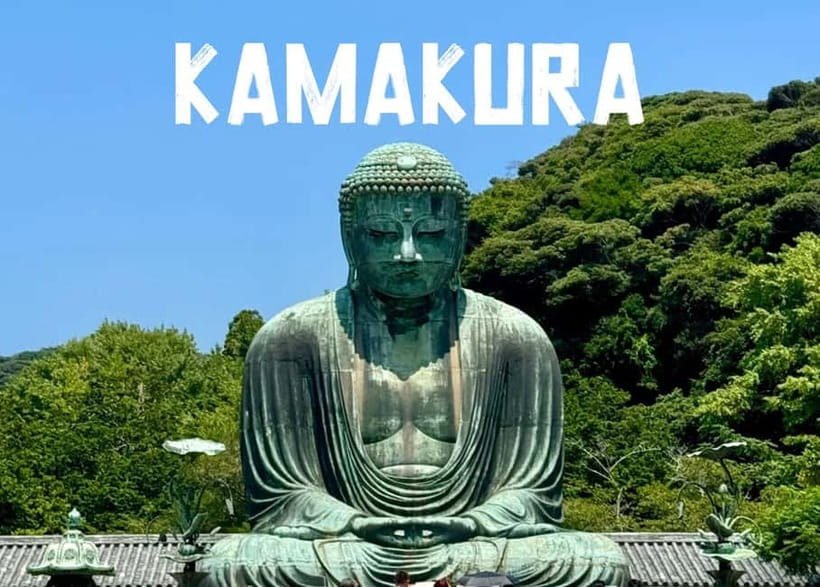
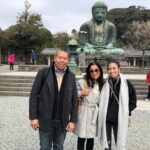
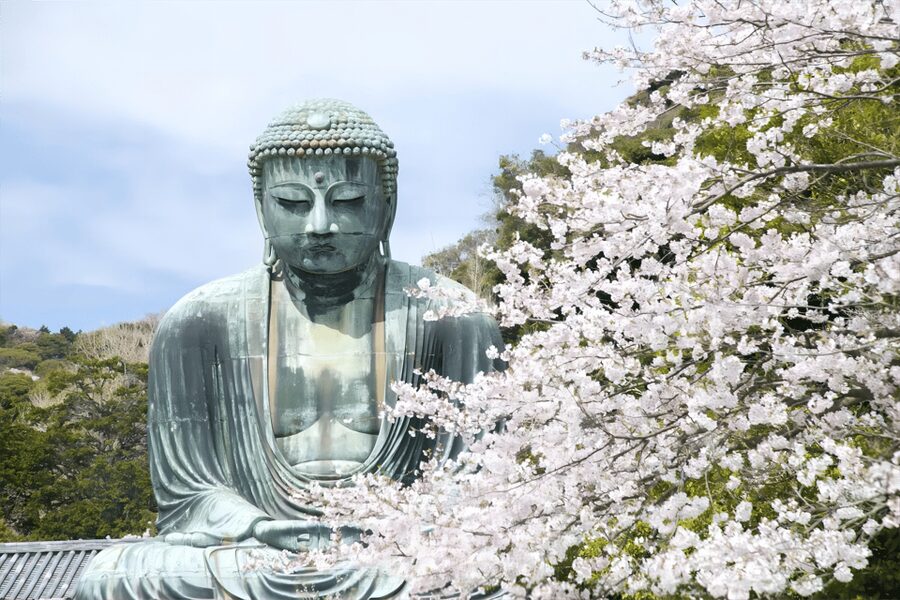
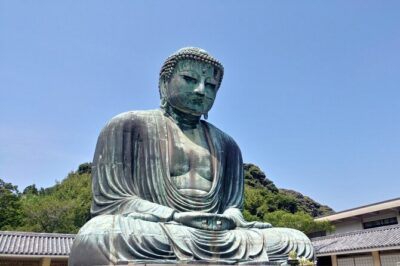
The day finishes with the Great Buddha, a bronze statue that rises 11.3 meters in the grounds of Kotoku-in. The statue is one of Kamakura’s defining sights and gives the day a strong final stop.
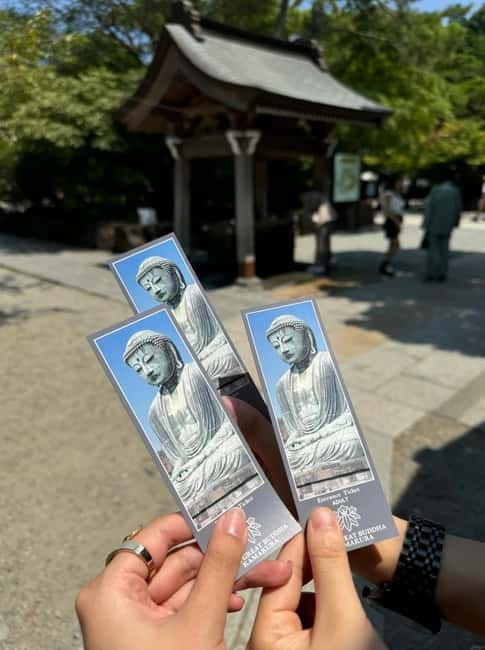
Admission is not included. The listed fee is 300 yen, with another 50 yen to enter the interior of the statue. Those small charges are easy to overlook when comparing tour prices, so budget for them in cash.
The peaceful temple grounds provide a welcome contrast to Komachi Street. Take a few minutes to look at the scale of the statue and the open setting around it. The interior visit is optional and costs extra, so you can decide based on your interest and the remaining time.
Because this is the final main attraction, keep an eye on the meeting instructions. The vehicle must return to Tokyo, and the day does not end when you finish your photograph.
Returning to Tokyo by 6 PM
The scheduled return is to JR Tokyo Station by 6 PM, with several listed drop-off areas that include Shinjuku, Akihabara, Taito, Chuo, and central Tokyo locations. Hotel drop-off applies only if you selected the pickup and drop-off option and your hotel qualifies.
Traffic can affect the actual arrival time. If you have a dinner reservation, theater booking, or airport connection, leave a generous buffer. A day trip covering coast, shrine, train, shopping street, and Buddha statue has many moving parts.
What the $13 price really buys
At $13 per person, this is priced more like a transport deal than a full sightseeing tour. The value comes from round-trip transportation, a small group, and the included Enoden fare. If you planned to visit all these places independently, you would still need to organize several train connections and coordinate the order of the stops.
The price does not include a professional guide, meals, snacks, or attraction admissions. Add 300 yen for the Great Buddha, plus 50 yen if you want to enter its interior. You should also budget for anything you buy on Komachi Street and any other optional activity.
The low price makes sense if you want a framework and independence. It is less attractive if you expect constant commentary, historical explanations, or a guide walking beside you at every site. The paid price is excellent for transport and access, but not a promise of a traditional guided experience.
How much help should you expect?
The tour is described as bilingual, with English, Chinese, Japanese, and Traditional Chinese available. In practice, the driver-guide is mainly responsible for driving and basic assistance. Some drivers have offered useful explanations before stops and pointed out places of interest, while others may provide less detail.
That variation is important. Past groups have praised Allan Tan for helpful information, Sun for being punctual and explaining the route, Harry for staying with a group and pointing things out, and Wan for guiding in English with enthusiasm. Those examples show what the service can be like, but you should still book this expecting a light guiding service rather than a dedicated expert.
The best approach is to prepare a little. Know the names of the places, save the meeting points, and download any translation tools you need. Then the driver’s role becomes valuable even when the commentary is brief.
Who will enjoy this day most?
I would choose this tour if you want to see Kamakura and Enoshima in one day without renting a car or managing every connection yourself. It suits first-time visitors who like a clear route but want free time at each stop.
It also works well for small groups, especially families or friends who prefer a vehicle and a set plan. Children under three travel free but must sit on a guardian’s lap. The day involves walking, stairs, train boarding, and uneven outdoor areas, so it is not suitable for wheelchair users or people with mobility impairments.
Anime fans will value the Kamakura High School crossing. Shrine lovers will appreciate the long stop at Tsurugaoka Hachimangu. Anyone interested in photography gets several different subjects in one day, from coast and railway to shrine grounds and bronze statue.
I would think twice if you need a fully narrated experience or dislike fixed schedules. I would also avoid booking it before an important evening appointment in Tokyo. The route is full, and traffic or a crowded stop can reduce your free time.
Final decision: book it for transport, not lectures
Book this tour if your priority is seeing the main Kamakura and Enoshima sights efficiently, with a small group and the Enoden ride already arranged. The $13 base price offers striking value, especially for visitors who do not want to drive or navigate several connections.
Skip it if you want a specialist guide, a slow temple day, or a food-focused outing. For the right person, the formula is simple and useful: comfortable transport, a smart route, several independent visits, and enough structure to keep the day moving. Just arrive early, pack light, prepare for limited commentary, and keep your evening flexible.
FAQ
Is hotel pickup and drop-off available in Tokyo?
It is available only for qualifying locations within the stated pickup area near JR Tokyo Station, approximately a 3-kilometer zone. You must provide your exact hotel address at checkout. If the location is outside the area, you receive a 2,800-yen refund and meet the group centrally.
Where is the central meeting point?
The meeting point is at the Marunouchi North Gate of JR Tokyo Station, at Tokyo Station, Marunouchi 1 Chome-6. Arrive 15 minutes early because the shared vehicle leaves on time.
Is the tour fully guided?
No. It is a bilingual small-group tour with a driver-guide who mainly drives and may provide basic explanations. The driver generally does not leave the vehicle to guide you through each attraction, so much of the sightseeing is self-guided.
Is the Enoden train fare included?
Yes. The Enoden train fare is included in the tour price. The listed train ride lasts about 20 minutes and includes coastal views along the Shonan area.
Are attraction admission fees included?
No. The Great Buddha admission costs 300 yen, and entering the statue costs an additional 50 yen. Meals, snacks, souvenirs, and optional activities are also not included.
What languages are available?
The activity lists Chinese, English, Japanese, and Traditional Chinese. The driver-guide’s English may be basic, and the amount of explanation can vary.
Can children or wheelchair users join?
Children under three travel free but must sit on a guardian’s lap. The activity is not suitable for wheelchair users or people with mobility impairments.
More Kamakura & Enoshima Day Trips in Tokyo
More tours in Tokyo we've reviewed



Kamakura & Enoshima Day Trips, compared.
 ★ 4.5Tokyo: Kamakura & Enoshima Day Trip including Temple TicketsFrom $589 hours - 570 minutes
 ★ 4.5Tokyo: Mt. Fuji, Kamakura, Big Buddha, & Lake Ashi Day TripFrom $4910 - 11 hours
 ★ 4.5From Tokyo: Kamakura & Enoshima 1-Day Bus TourFrom $66
 ★ 5.0Kamakura Historical Walking Tour with the Great BuddhaFrom $98
 ★ 5.0Kamakura Private Tour: Temples, Nature, and the Great BuddhaFrom $98
 ★ 5.0Kamakura Walking Tour – The City of ShogunFrom $35