
Reviewed · KAMAKURA & ENOSHIMA DAY TRIPS
Kamakura Historical Walking Tour with the Great Buddha
Kamakura’s Great Buddha is the headline, but the best part of this five-hour walk is the way it links everyday street food, Shinto worship, Buddhist temples, a forest trail, and the sea. You get a much fuller picture of the old capital than you would from a quick statue stop.
I like the included street snacks and temple lunch, which make the day feel more connected to local life. I also like the small group, limited to seven people, and the guides who have earned praise for being friendly, patient, and helpful with train directions. The main drawback is clear: this is a serious walking day, with about 5 km on foot and a slippery 2.5 km hiking trail.
In This Review
- Key points to know before booking
- Why this Kamakura walk works well as a day trip
- Komachi Street starts the day with local flavor
- Tsurugaoka Hachimangu explains Kamakura’s power
- The forest trail is the tour’s most active section
- Hasedera combines views, gardens, and a small cave
- Meeting the Great Buddha at Kotoku-in
- Yuigahama Beach brings the day to the sea
- What the $98.44 price includes
- Who will enjoy this tour most
- Should you book the Kamakura Historical Walking Tour?
- FAQ
- How long does the Kamakura walking tour last?
- Where does the tour meet?
- Where does the tour end?
- How much walking is involved?
- Is the hiking trail difficult?
- What happens if it rains?
- Is lunch included?
- Are entrance fees included?
Key points to know before booking
- The Great Buddha is only one part of the day: You also visit Tsurugaoka Hachimangu, Hasedera, Komachi Street, and Yuigahama Beach.
- A 2.5 km forest trail adds real exercise: Some sections can be steep or slippery, so bring proper walking shoes.
- Food is built into the experience: You sample Japanese snacks on Komachi Street and eat a vegetarian temple lunch, with vegan choices available.
- The group stays small: A maximum of seven people gives you a better chance to ask questions and keep a steady pace.
- The tour costs $98.44 per person: Entrance fees, snacks, lunch, photos, and a certified guide are included, but local transport costs an extra 440 yen.
- Rain can change the route: The hiking trail may be replaced by a train ride to the Great Buddha when weather makes the path unsafe.
Why this Kamakura walk works well as a day trip
Kamakura is easy to visit from the greater Tokyo area, but its sights are spread across town. You can certainly plan the route yourself, yet a first visit involves more than finding the Great Buddha. You need to understand the difference between a Shinto shrine and a Buddhist temple, know which entrance fees apply, and manage the walk between central Kamakura, Hase, and the beach.
This tour gives you a clear five-hour framework. You meet at 10:00 am at the clock tower plaza outside the west exit of JR Kamakura Station, then move through the town on foot. The day ends back at the meeting point, which makes it easier to continue your own plans afterward.
The group size matters here. With no more than seven people, the guide can answer questions about Japanese customs and etiquette without turning the outing into a lecture. Past guides have included Isao, also called Isaac, Mark, Ken, Fujii, Yoko, and Rookie. The strongest praise has focused on guides who explain clearly, adjust to questions, and help with practical matters such as finding the correct train back to Yokohama.
You should not mistake the small group for a private tour, though. The pace still needs to suit everyone, and the route can change because of weather or trail conditions.
A few more Kamakura tours and experiences worth a look
Komachi Street starts the day with local flavor
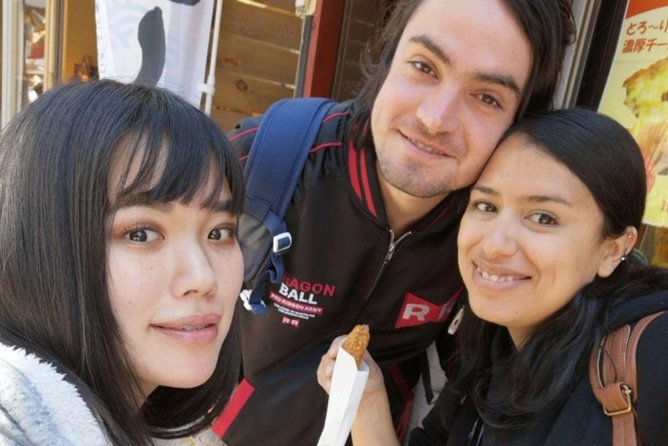
The first stop is Komachidori, the shopping street that runs from the east side of Kamakura Station toward Tsurugaoka Hachimangu. You sample Japanese snacks and street foods here, with the food included in the tour price.
This is a smart way to begin. Street food gives you a quick introduction to Japanese flavors without asking you to commit to a full meal before the walk begins. Your guide can also explain what you are eating and help you notice the difference between a snack bought from a shop and a formal restaurant meal.
The stop lasts about 20 minutes, so expect a tasting rather than a long shopping session. If you see something else you want, extra food is available for purchase, but it is not included. Keep some yen or a payment method ready if you want to browse beyond the planned samples.
Komachi Street can be busy, especially during popular visiting periods. Stay close to the group and watch your footing around shop entrances. This is a lively commercial road, not a quiet old lane, so its value comes from the food and local atmosphere rather than silence or old buildings.
Tsurugaoka Hachimangu explains Kamakura’s power
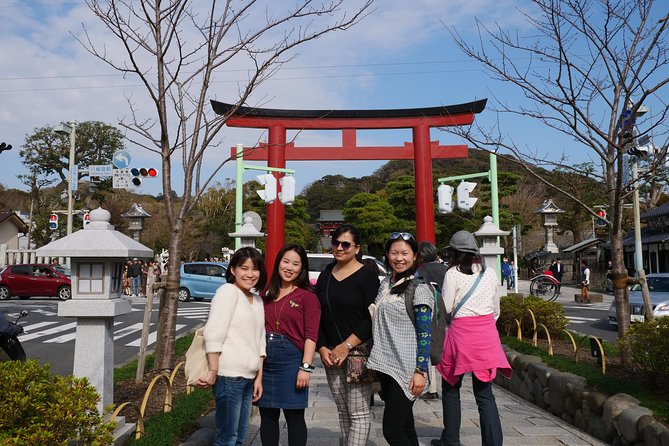
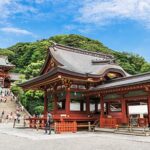
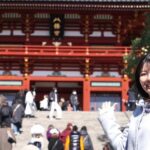
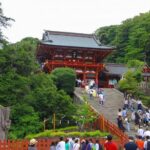
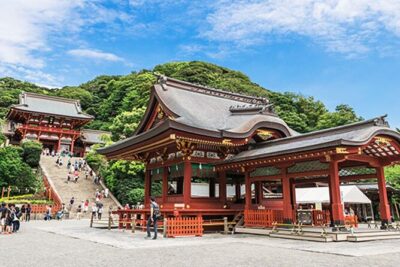
From Komachi Street, the tour continues to Tsurugaoka Hachimangu, Kamakura’s major Shinto shrine. You spend about 30 minutes learning about Japanese culture, worship, and the role the shrine played in the city’s past.
This stop gives needed context before the temples later in the day. A guide can explain what makes a Shinto shrine different from a Buddhist temple, how visitors behave at a shrine, and why Tsurugaoka Hachimangu is so important to Kamakura.
The visit includes admission, so you do not need to handle another payment. Thirty minutes is enough to see the main areas and hear the key background, but it is not enough for a slow, detailed look at every feature. If you want to study the shrine at length or take many photographs, you may wish for more free time.
Still, the short visit fits the overall plan. This tour is designed to show you several kinds of Kamakura experience in one day, not to keep you at one shrine for hours.
The forest trail is the tour’s most active section
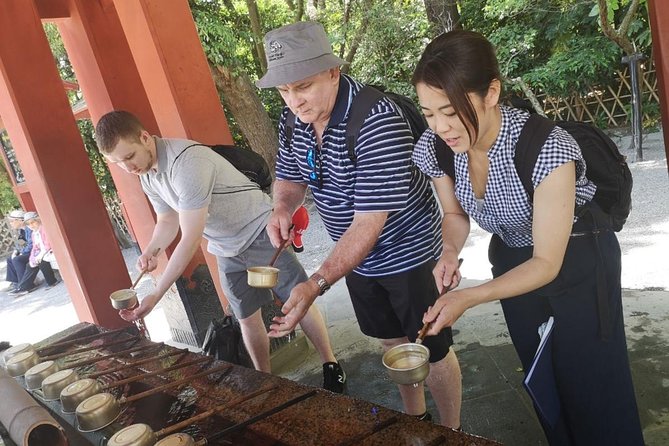
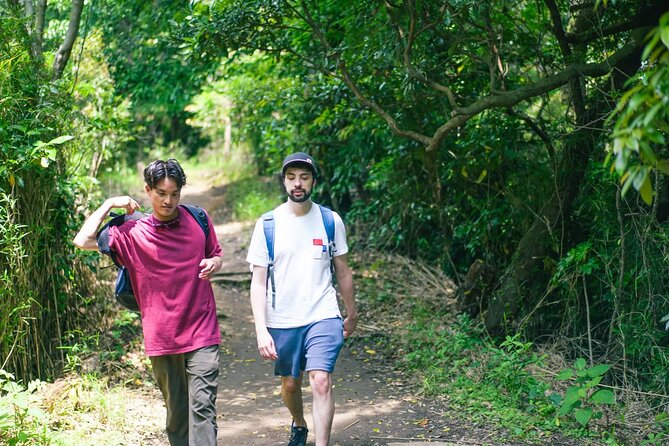
The route includes a hiking trail of about 2.5 km, forming part of the roughly 5 km total walk. This is where the outing becomes more than a standard temple circuit.
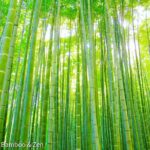
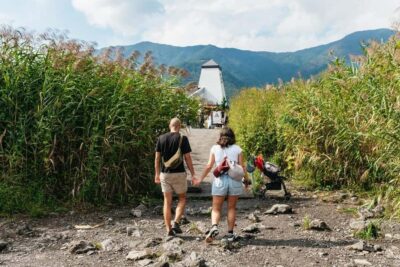
The trail gives you a change of pace from paved streets and crowded shopping areas. You may see wooded sections and views toward Yuigahama Beach, the Great Buddha, and Hasedera. One person described the route as feeling like a hike with friends, while also pointing out that some parts are steep and best suited to people with basic hiking experience.
Take that warning seriously. The operator asks you to wear suitable hiking clothes and shoes because parts of the path can be slippery. Bring water and a towel, especially in warm weather. Japanese summers can reach 40°C, while winter conditions can fall as low as -5°C, so clothing and hydration need more thought than they would for a short city walk.
If rain makes the trail unusable, the route changes. The tour uses a train to reach the Great Buddha instead of taking the hiking path. That keeps the main sight on the schedule, but you lose the wooded walking section.
Hasedera combines views, gardens, and a small cave
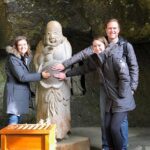
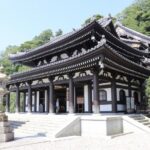
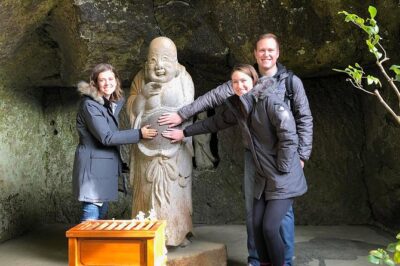
Hasedera is one of the day’s strongest stops. The temple is known for its carefully kept grounds, scenic views toward the coast, and a small cave area. You spend about 50 minutes here, and admission is included.
This is a good place to slow down. After Komachi Street and the trail, Hasedera offers a more reflective setting. The temple’s long history reaches back to the Nara period, and your guide can help connect its buildings and customs to the wider story of Japanese Buddhism.
The coastal views are a major reason to include Hasedera. On a clear day, you can look toward the sea and Yuigahama Beach. Visibility changes with weather, so do not treat a view of Mount Fuji as guaranteed. The beach stop later in the day also offers a chance to photograph the coast and, when conditions allow, Mount Fuji across the water.
The cave is compact, and the temple grounds include steps and slopes. You will want shoes with a firm grip. The 50-minute visit gives you a useful introduction, but people who enjoy gardens, religious art, or quiet temple spaces may wish they had extra time.
A vegetarian temple lunch is included. Vegan food is available, but the choices are limited because many Japanese restaurants are not fully set up for vegetarian menus. The operator also cannot guarantee an allergy-free meal or meet every dietary restriction, since food is prepared in kitchens it does not control. If your diet is strict, contact the provider before booking and bring backup food if needed.
Other walking tours we've reviewed in Kamakura
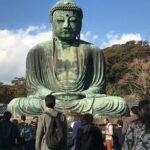
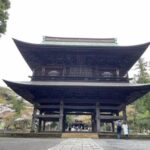
Meeting the Great Buddha at Kotoku-in
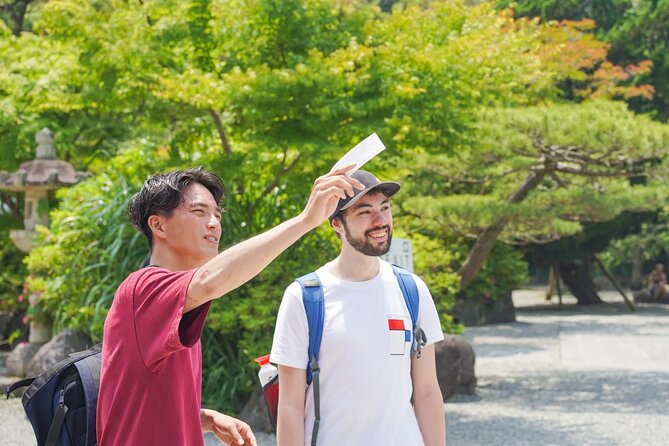
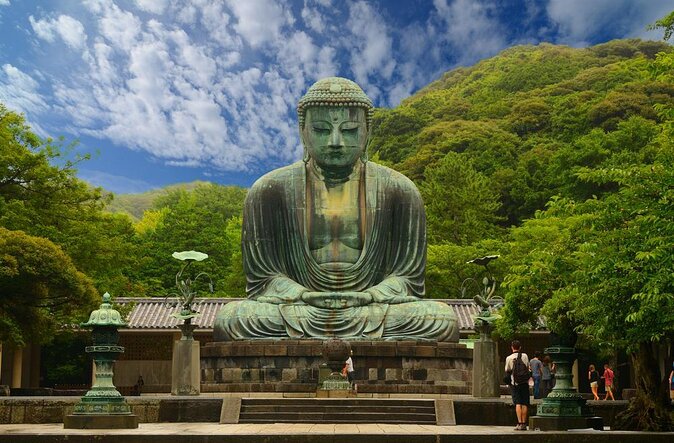
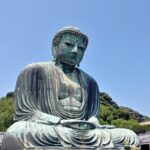
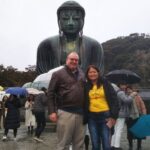
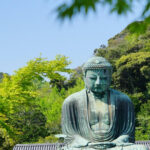
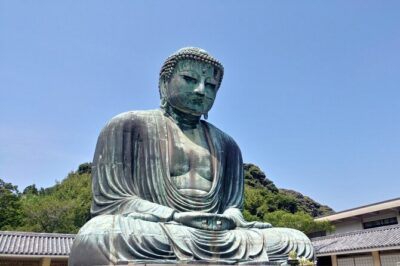
The Great Buddha of Kamakura, at Kotoku-in Temple, is the tour’s central sight. You spend about 40 minutes here, with the entrance fee included.
The bronze statue has been at Kamakura for more than 750 years and is one of Japan’s most recognizable religious monuments. Seeing it after the trail makes the arrival feel earned. You have already learned about Kamakura’s shrines and temples, and the guide can place the statue within that larger setting rather than presenting it as an isolated photo stop.
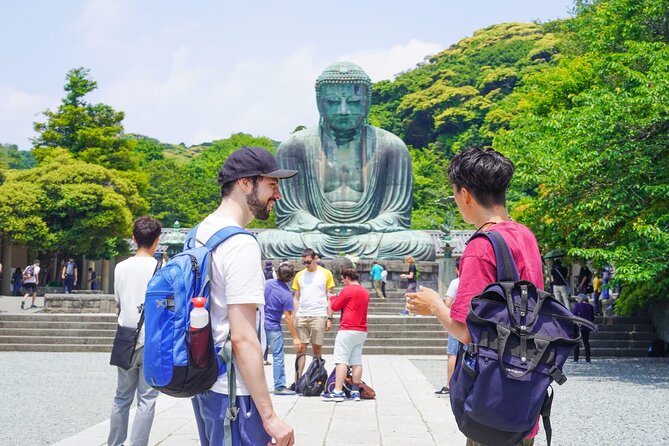
Forty minutes should allow time to approach the statue, take photographs, and listen to the guide. The area can be busy, and the visit is outdoors, so the experience depends on the weather and crowd levels. The tour does not promise a long period of quiet contemplation.
The Great Buddha entrance is included, along with Hasedera. That helps the $98.44 price make more sense, since you are not paying admission at every stop from your own pocket. The value improves if you would otherwise pay for a guide, arrange the route yourself, buy snacks, and purchase lunch separately.
Yuigahama Beach brings the day to the sea

The final part of the route reaches Yuigahama Beach and Kamakura Seaside Park’s Yuigahama area. Each stop is listed at about 20 minutes, and both focus on photographs and coastal views.
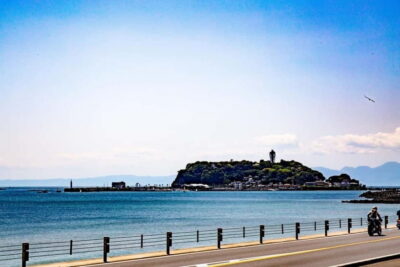
Yuigahama is known for sandy shore and shallow water. It gives you a distinctly different side of Kamakura after the religious sites and shopping streets. You can photograph the beach, sailboats, Enoshima Island in the distance, and possibly Mount Fuji across the ocean when visibility is good.
These stops are simple rather than heavily guided. Their value depends on the weather and your interest in seaside scenery. If clouds cover the horizon, the beach is still a pleasant change of scene, but you should not book this tour solely for a Mount Fuji photograph.
The route passes by Enoshima Island, adding another familiar coastal landmark without making a separate visit. Since the day already involves plenty of walking, the short beach stops are a sensible way to enjoy the shore without adding another long detour.
What the $98.44 price includes
At $98.44 per person, this is not the cheapest way to see Kamakura. The price becomes easier to justify because it covers several pieces:
- Entrance to the Great Buddha
- Entrance to Hasedera Temple
- Food samples on Komachi Street
- A temple lunch
- A certified MagicalTrip guide
- Photos
Local transportation is extra at 440 yen. Additional food and shopping on Komachi Street also cost extra.
I would compare this with the cost of building the same day yourself. You would need to plan the route, pay admission, choose places to eat, and figure out the trail and train alternatives. If you are comfortable doing that, an independent visit may cost less and give you more time at each place.
For a first visit, the price buys structure and explanation. It also reduces the risk of spending too much time at one stop and missing another. The meal and snack samples are useful bonuses, especially if you want an introduction to Japanese food without researching restaurants in advance.
Who will enjoy this tour most
I would recommend this outing to a first-time visitor to Japan or the Tokyo area who wants Kamakura in one concentrated day. It suits you if you like temples and shrines but also want food, a moderate hike, and the coast.
It is also a good fit if you prefer a guide who can explain customs as you go. Guides such as Ken, Mark, Fujii, and Yoko have been praised for clear explanations, friendly conversation, patience, and help with local trains. That personal guidance is likely to be more useful than a silent route between famous sights.
You should think twice if you dislike walking, have trouble on uneven ground, or want a slow temple photography day. The tour covers a lot of ground in five hours. People with food allergies or strict dietary needs also need to ask careful questions before booking.
The group is capped at seven, but this is still a shared experience. Be ready to start exactly at 10:00 am. The meeting point is the clock tower plaza at the west exit of Kamakura Station, at 12-3 Onarimachi. Missing the start can be costly, and one unhappy booking resulted from confusion about the meeting location and failed contact.
Free cancellation is available up to 24 hours before the start time. A cancellation made later is not refunded, and changes are not accepted inside that window. If poor weather forces the operator to cancel, you can choose another date or receive a full refund.
Should you book the Kamakura Historical Walking Tour?
Book it if you want a guided overview with real variety: street food, a major shrine, a Buddhist temple, a forest trail, the Great Buddha, and the beach. The included admissions, snacks, lunch, and small group make the $98.44 cost reasonable for a structured first visit.
Skip it if you want to set your own pace or avoid hills and long walks. The best reason to choose this tour is not the Great Buddha alone. It is the connection between Kamakura’s food streets, religious sites, wooded paths, and coast, explained by a guide who can help you understand what you are seeing.
FAQ
How long does the Kamakura walking tour last?
The tour lasts approximately five hours and begins at 10:00 am.
Where does the tour meet?
You meet at the clock tower plaza outside the west exit of JR Kamakura Station, at 12-3 Onarimachi, Kamakura, Kanagawa 248-0012, Japan.
Where does the tour end?
The activity ends back at the meeting point.
How much walking is involved?
You should expect about 5 km of walking in total. The hiking trail is about 2.5 km.
Is the hiking trail difficult?
Some parts can be steep and slippery. Suitable hiking clothes and shoes are requested, and you should bring water and a towel.
What happens if it rains?
If the hiking trail cannot be used because of rain or poor weather, the tour uses a train to visit the Great Buddha instead.
Is lunch included?
Yes. A temple lunch is included, with vegetarian and vegan options available. Vegetarian choices are limited, and allergy-free meals or all dietary restrictions cannot be guaranteed.
Are entrance fees included?
Yes. Admission to the Great Buddha and Hasedera Temple is included. Local transportation costs an additional 440 yen.
More Historical Tours in Kamakura
More Walking Tours in Kamakura
More Kamakura & Enoshima Day Trips in Kamakura
More tours in Kamakura we've reviewed

Kamakura & Enoshima Day Trips, compared.
 ★ 4.5Tokyo: Kamakura & Enoshima Day Trip including Temple TicketsFrom $589 hours - 570 minutes
 ★ 4.5Tokyo: Mt. Fuji, Kamakura, Big Buddha, & Lake Ashi Day TripFrom $4910 - 11 hours
 ★ 4.5From Tokyo: Kamakura & Enoshima 1-Day Bus TourFrom $66
 ★ 5.0Kamakura Private Tour: Temples, Nature, and the Great BuddhaFrom $98
 ★ 5.0Kamakura Walking Tour – The City of ShogunFrom $35
 ★ 4.9Tokyo:Sea of Mount Fuji, Hakone Ropeway, Ōwakudani, EnoshimaFrom $5010 hours