
Shinjuku Station is, by most counts, the busiest train station in the world — around 3.5 million people pass through it on a normal weekday, across thirty-something platforms and more than a dozen rail lines that converge under one roof. I remember standing at what I thought was the exit, paper map in hand, watching three rivers of commuters flow around me at 7 in the evening, and thinking: this is fine, I will simply follow someone. Forty minutes later I surfaced into what was definitely not the right side of the building. If you are coming to Tokyo and it is your first time in Shinjuku, this is your rite of passage. Consider it free.
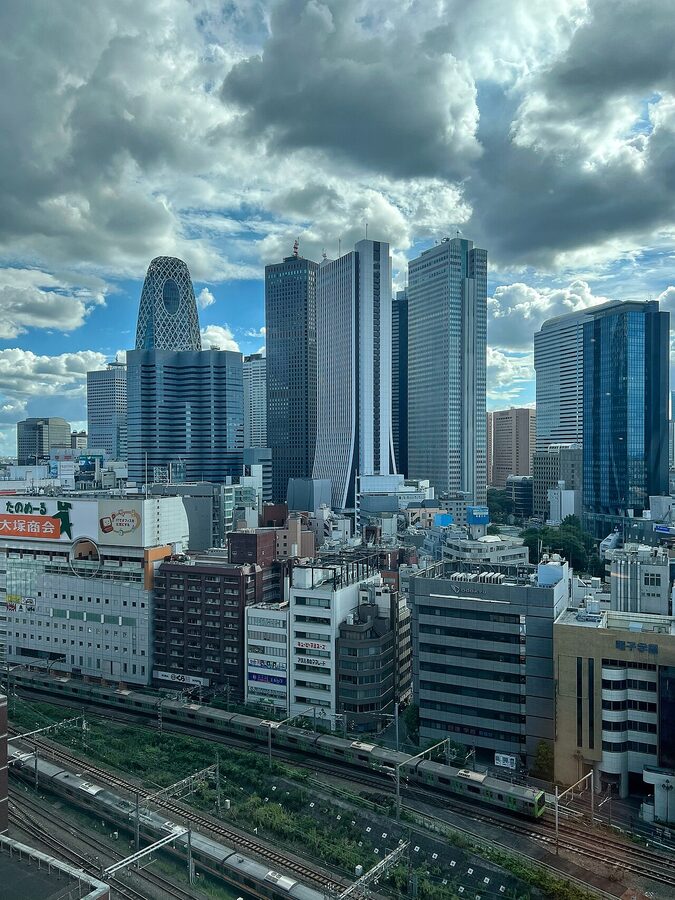

Here is the thing people don’t tell you about Shinjuku: it isn’t really one place. The station splits the district down the middle, and the two sides feel like different cities. West of the station is Nishi-Shinjuku — a grid of skyscrapers, corporate headquarters, hotels and the free observation deck at the Tokyo Metropolitan Government Building. East is where everyone takes their photos — Kabukichō, the Godzilla head, the department stores, the tiny yakitori alley that still gets called “Piss Alley” by travel blogs. North, south, and underground, it sprawls further still. Most first-timers come for the neon, realise the neon is only one slice of it, then stay anyway because Shinjuku is the kind of place where something mildly surreal is always happening at the edge of your peripheral vision.
In This Article
- First, the confession
- Getting there and the 200-exit problem
- The free view at the Tokyo Metropolitan Government Building
- Kabukichō at night (and what it actually is)
- The Godzilla head (it roars, it is a bit lame, it is great)
- Omoide Yokocho: the tiny yakitori alley
- Golden Gai: 200-ish bars on six narrow lanes
- Isetan, Takashimaya and the great food basement
- The ramen question
- A greener note — Shinjuku Gyoen
- The 3D cat nobody mentions until they see it
- An honest take on what to skip
- Practical info at a glance
- How I’d actually spend a day and night here
First, the confession
On my second trip to Tokyo I was meeting a friend at a bar in Shinjuku Sanchōme, and I came out of Shinjuku Station at — I kid you not — the West exit. Shinjuku Station has roughly two hundred exits. The East and West exits are not close to each other. I realised my mistake about six minutes into a confident power-walk, checked Google Maps, did the head-tilt of someone about to cry in public, and then walked the long way around to the other side of the building rather than going back through the station, because I was too embarrassed to scan my IC card twice in ten minutes. I was forty minutes late. My friend had eaten all of the edamame.
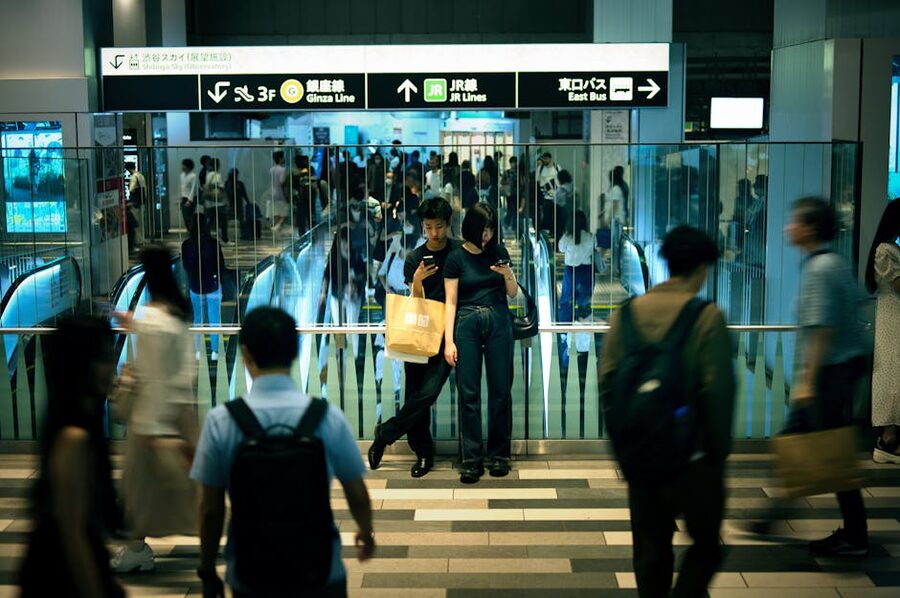
The universal Shinjuku rookie error is assuming you can just “walk through the station” to the other side. You can, technically. But the signage is bilingual, dense, and written for people with somewhere specific to be. My rule now, two years later: check which exit I actually want BEFORE going underground. If I’m heading to Kabukichō or the department stores, I aim for the East exit. If I want the Government Building or my hotel in Nishi-Shinjuku, I head for the West exit. If I want Shinjuku Gyoen park, I pop out at the South exit. And for anything on Busta Shinjuku’s side (long-distance buses), it’s the Shinjuku New South exit.
Getting there and the 200-exit problem
Shinjuku Station sits on the JR Yamanote line — the loop that also stops at Harajuku, Shibuya, Tokyo and Ueno — plus the Chūō, Sōbu, Saikyō, Shōnan-Shinjuku lines, two Tokyo Metro lines (Marunouchi and Ōedo), plus the Keio, Odakyu, and Toei Shinjuku suburban lines. That’s why it’s on JR East‘s busiest list and why Guinness has recognised it as the most used in the world.
Coming from the airport? The Narita Express (NEX) runs directly into Shinjuku Station in about 80 minutes from Narita Airport, and the Airport Limousine bus pulls into the Busta terminal at the New South exit in roughly 85-120 minutes depending on traffic. From Haneda it’s cheaper and faster to take the Tokyo Monorail or Keikyū line into the system and change, about 35-50 minutes. Use an IC card (Suica or Pasmo) for everything that isn’t the NEX — tapping in and out saves you the agony of the ticket machines.
One more thing about the station. If you are a first-time visitor, the “Shinjuku area” also includes the smaller stations — Shinjuku-sanchōme (Tokyo Metro), Shinjuku-nishiguchi (Ōedo line), and Seibu-Shinjuku — any of which might put you closer to where you’re actually going than the main station. Check your map. I have walked 15 minutes across the district when I could have popped up three metres from the door.
The free view at the Tokyo Metropolitan Government Building
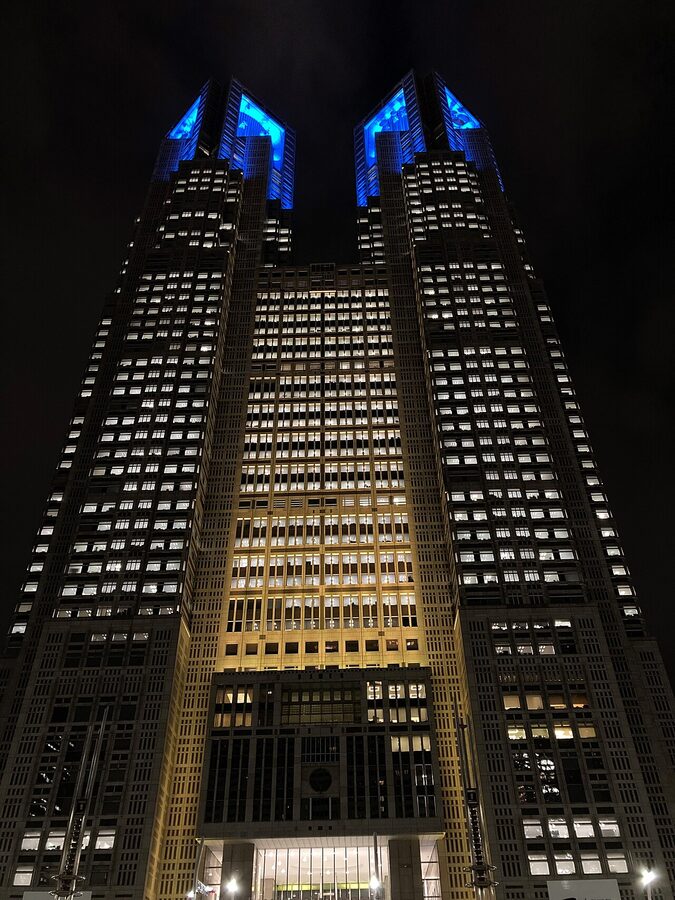
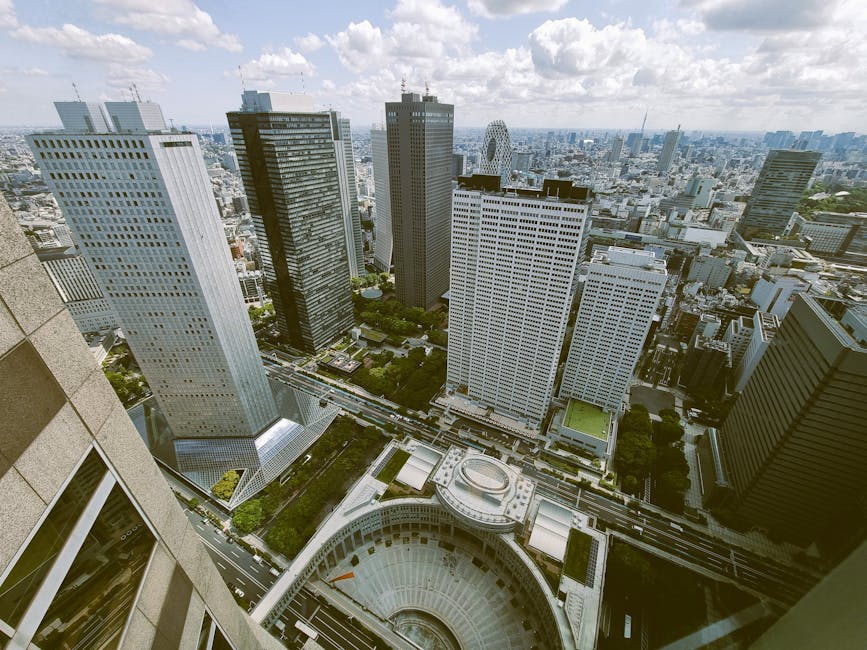
This is the best free thing in Shinjuku and probably one of the best free things in Tokyo. The Tokyo Metropolitan Government Building — known to locals as Tochō — has twin observation decks on its 45th floor, one in each tower. It’s 202 metres up, the lifts take 55 seconds, and you pay zero yen. For comparison, Tokyo Skytree charges ¥2100-3100 and has a worse skyline view (from Skytree, you’re looking back at Tokyo from the outside; from here, you’re looking straight down the spine of it).
The two decks are slightly different. The North Tower deck is open 9:30 to 22:00 and closes on the second and fourth Monday of the month. The South Tower deck is open 9:30 to 17:30 and closes on the first and third Tuesday. If one is closed, the other is almost always open — they stagger their rest days on purpose. On a clear morning (late autumn and winter are best), you can see Mount Fuji from the South deck. At night both decks are magic — Tokyo turns into a circuit board of lights stretching to the horizon in every direction.
Practical bits: photography is allowed but not tripods. There’s a small souvenir shop and a café on each deck. Entry is via the main lobby of the building, where you’ll go through a very polite bag check. Dress for the queue — indoor queue, fine; outdoor queue in winter, bring a coat. See the Metropolitan Government’s own page for up-to-date maintenance closures.
Kabukichō at night (and what it actually is)
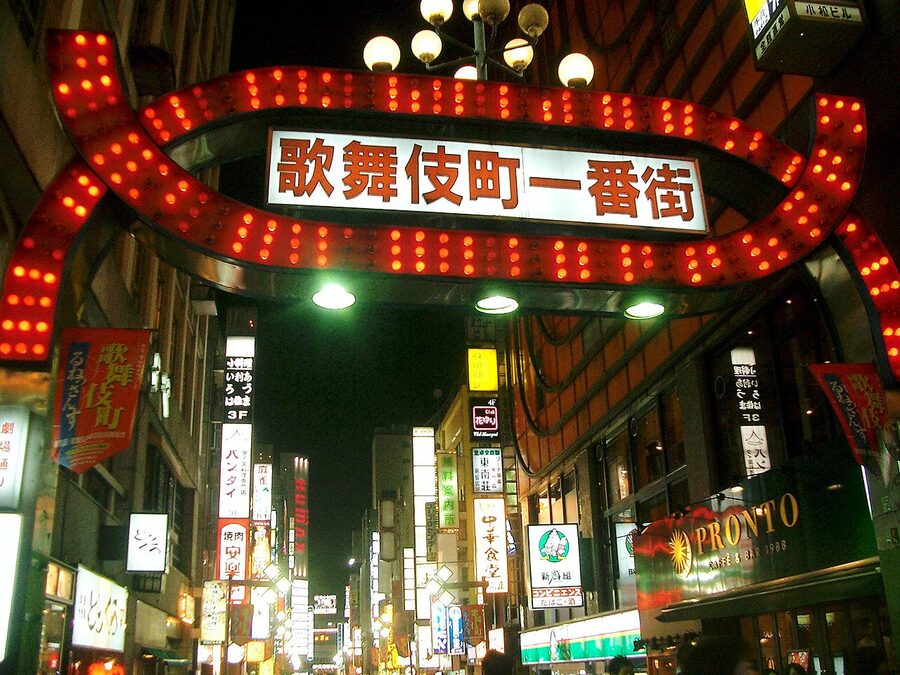

Kabukichō is the bit everyone means when they say “neon Shinjuku.” It’s a few blocks immediately northeast of the station, and by night it’s lit like Times Square got a Japanese remix — signs stacked twelve storeys high, LED walls, pachinko parlours blasting music onto the pavement, teenagers taking photos under the Godzilla head. The name comes from a kabuki theatre the local authorities planned to build here in the 1940s to revitalise the bombed-out neighbourhood. They never built the theatre. The name stuck anyway. Classic Tokyo.
Here’s the honest bit: Kabukichō is not as edgy as the old travel guides make out. It was genuinely seedy in the 1990s, when it had Japan’s highest concentration of yakuza bars and hostess clubs. Since the mid-2010s it has been aggressively cleaned up — police sweeps, new hotels, family-friendly attractions like namco Tokyo and a cinema complex. What’s left is mostly tourists taking selfies, a handful of entertainment venues that ARE perfectly safe, and a street-tout problem. The touts are the real nuisance. They will stand outside bars and clubs and try to wave you in. Do not follow them. This is the one genuine piece of advice in every tokyocheapo comment thread: extortion and drink spiking both happen, mostly in the off-main-street bars, and it’s almost always via touts. If you want a drink in Kabukichō, pick a place yourself, from street level, that has visible pricing. If a man with a board is trying to lead you down an alley — no.
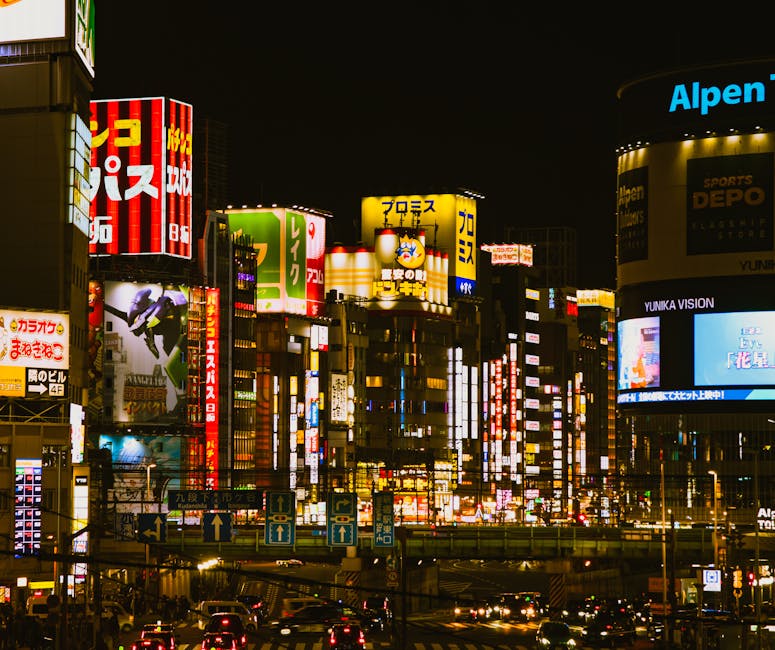
For a genuinely lively night out with friends, the cleaner option is Shinjuku Sanchōme — a few blocks east, tons of izakaya, walk-in-friendly, less neon but better actual food. I’ve had my best Shinjuku nights there, not in Kabukichō.
The Godzilla head (it roars, it is a bit lame, it is great)
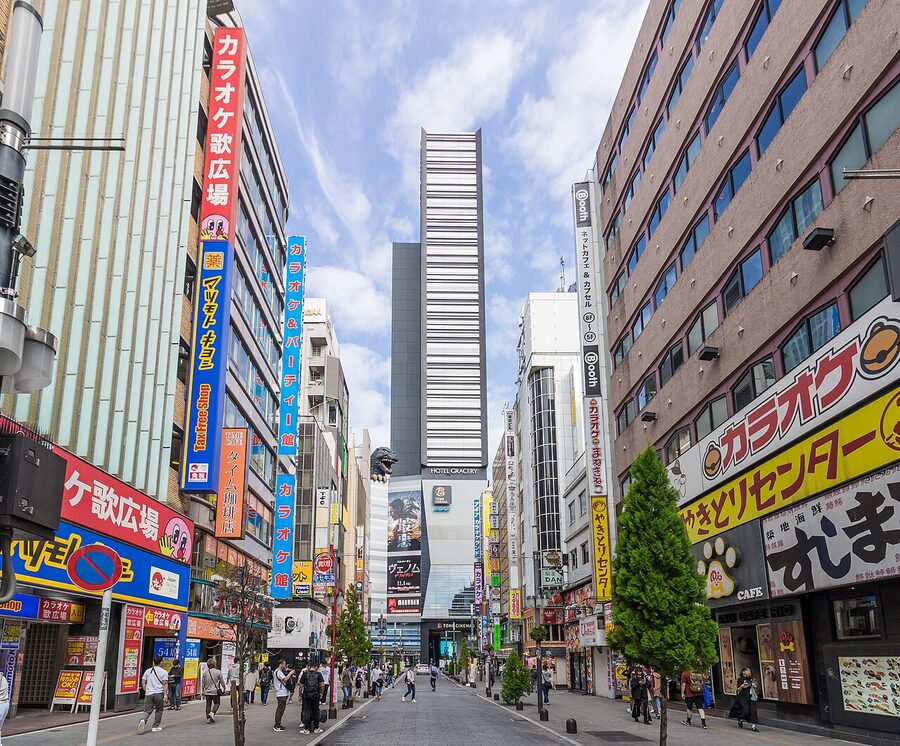

On top of the Toho Building in Kabukichō there’s a 52-metre-tall Godzilla head looming over the Toho Cinema. It was installed in 2015 to replace the old Koma Theatre, and it has become the district’s most photographed landmark by some distance. Every hour between midday and 8pm it does a little roaring-and-steaming show, complete with coloured lights. It is, objectively, a bit silly. I love it.
You can get close to the head if you’re a guest at the Hotel Gracery Shinjuku (it’s the hotel directly below it — some rooms face Godzilla’s actual face, which is both creepy and excellent). If you’re not staying there, the rooftop terrace is technically hotel-guest only and there are staff stationed to turn away non-guests. The view from Godzilla Road, the pedestrian street that leads to the Toho entrance, is honestly the better photograph anyway — you get the head plus the full neon canyon.
Omoide Yokocho: the tiny yakitori alley
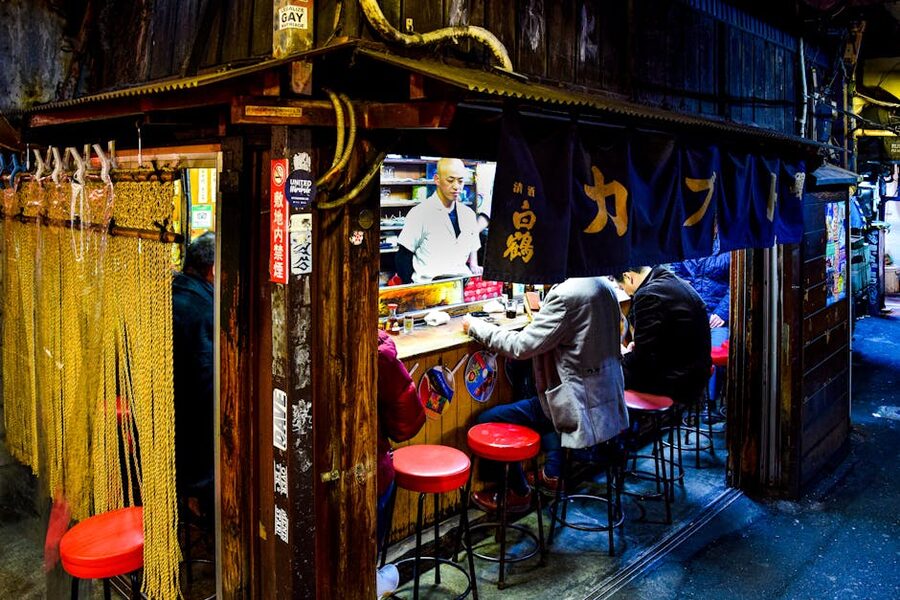
Omoide Yokocho translates to “Memory Lane.” Its unkind nickname is “Piss Alley” — not because anyone is currently peeing there, but because in the post-WWII years there were no public toilets and drunk salarymen were creative. It’s a narrow alley about three minutes’ walk from the West exit of Shinjuku Station, with roughly twenty tiny yakitori bars and noodle shops lined up along two branches that meet at a T. Each shop holds six to twelve people at a wraparound counter. The grill is a metre from your face. The owner is usually also the cook. If you sit at a counter for half an hour, you will leave smelling of yakitori smoke. Wear clothes you can wash.
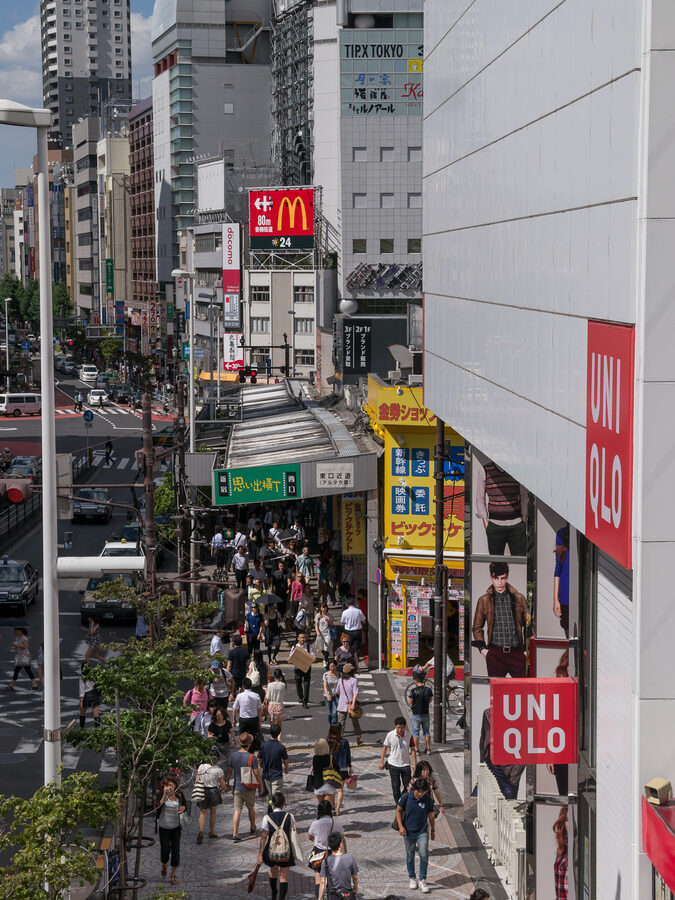

Typical order: three or four yakitori skewers (chicken thigh, tsukune meatball, chicken skin if you’re brave, quail egg wrapped in bacon), a bowl of motsu-nikomi (offal stew), and a beer or highball. Most skewers are ¥300-500. A highball is usually ¥500. The bill rarely goes past ¥3500 per person unless you’re committed. Some shops have a small table charge of ¥300-500 — the polite translation is “cover for the small dish of pickled stuff they put in front of you whether you ordered it or not.” This is normal, don’t argue, enjoy the pickles.
Two small warnings. First, most places are cash only — there’s a 7-Eleven at the West exit if you need to top up. Second, don’t photograph other diners. Some shops have explicit no-camera rules; even the ones that don’t, it’s considered rude to point a phone at someone eating. The alley itself — signs, lanterns, grills, wide shots of the whole scene — is all fine.
Golden Gai: 200-ish bars on six narrow lanes
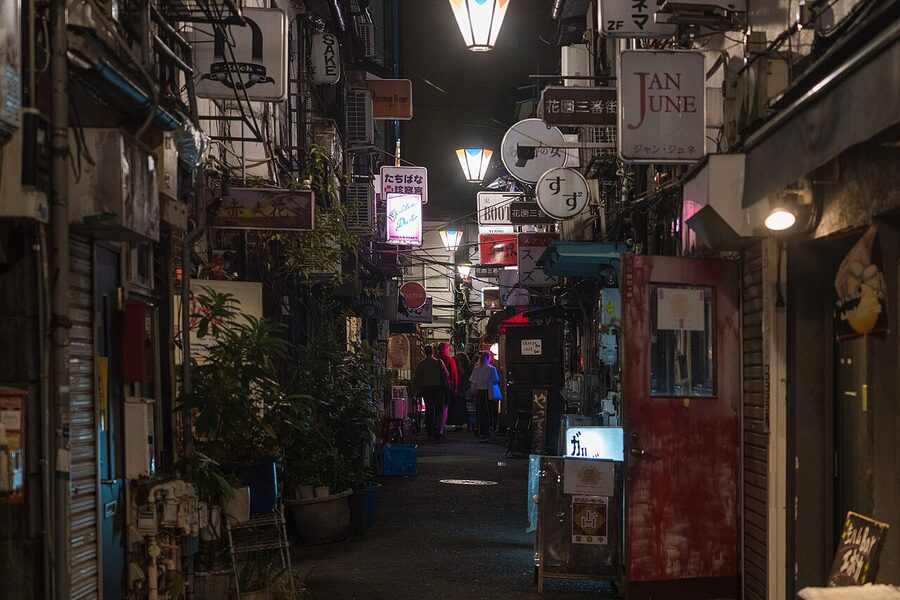

Golden Gai is a five-minute walk east of Omoide Yokocho and it’s the best thing in Shinjuku that is still, just about, what it says it is. About 200 bars are packed onto six tiny alleys. Each bar seats roughly five to ten people. Most are themed — a jazz bar with 4,000 LPs, a bar where the owner collects model planes, a horror-film-themed bar, a heavy-metal bar with a bathtub in the middle. Some are for regulars only. Some charge a cover of ¥500-1500 (usually displayed on the door). Some pointedly don’t allow foreigners — usually for language reasons rather than hostility, and usually marked clearly in English.
How to navigate it the first time:
- Walk the alleys once without entering a bar. Look for signs in English. English signage means they’re used to foreigners and comfortable serving in English.
- Check for a posted cover charge before sitting down. No cover = go in. ¥500-1000 cover = reasonable. If it’s unclear or hidden, find another bar.
- A bar with an open door and staff visible on a weeknight is a safer first stop than one that looks shut. If you can see who’s inside and what it looks like, no surprises.
Cover charges aren’t a scam — they’re how the bar pays rent on a 5-seat business. Most drinks are ¥700-1200 on top of the cover. Two drinks in a Golden Gai bar costs roughly what a single beer at the New York Bar in the Park Hyatt costs, and you get to hear a Japanese retiree’s record collection at volume.
Most bars don’t open until 20:00 and some not until 22:00. Early evening, Golden Gai is almost entirely a photography location — which is fine, it’s extremely photogenic. If you want the actual Golden Gai experience, come back after 22:00.
Isetan, Takashimaya and the great food basement
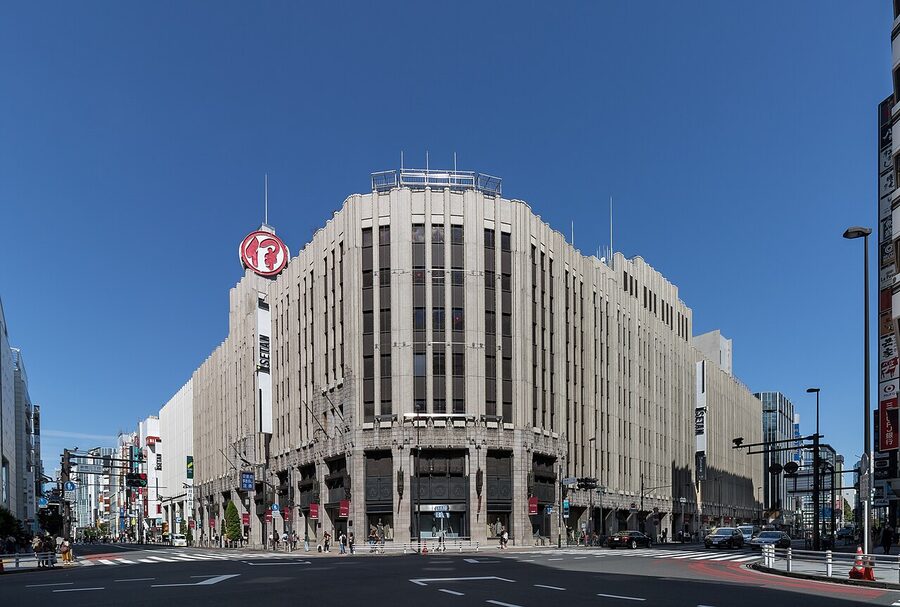

Isetan Shinjuku is the flagship of Isetan’s department-store chain, east of the station on Shinjuku-dōri. The main attraction isn’t the fashion floors — it’s the two-level basement food hall, or depachika. Walk down the escalator and you are surrounded by probably 80 small counters selling individual Japanese and Western delicacies: wagashi (traditional sweets), bento boxes, French pastries, tempura, sushi, roast chicken with tanuki-themed packaging. Half of them hand out free tasting spoons. The packaging is art. The shop staff will bow as you pass. It is genuinely one of the top five things I do in Shinjuku, and it costs as much as you want to spend.
Takashimaya Times Square is the other big department store — south of the station, above the Shinjuku New South exit. It has a slightly more practical depachika and a Kinokuniya bookstore next door (the main branch — seven storeys, the English-language floor is small but the Japanese craft and design sections are extraordinary to browse even if you can’t read). There’s also a Tokyu Hands and a Uniqlo in the same cluster. If rain hits Shinjuku on a January afternoon, this block is where to disappear.
Smaller but worth a look: Don Quijote in Kabukichō — the Mega Donki, seven floors high — is the chaotic discount store where every Tokyo tourist somehow ends up. Kitkats, cup noodles, plastic sushi models, cosmetics, cheap electronics, a stuffed-toy claw game on the top floor. Open until late. Not for the sensory-sensitive.
The ramen question
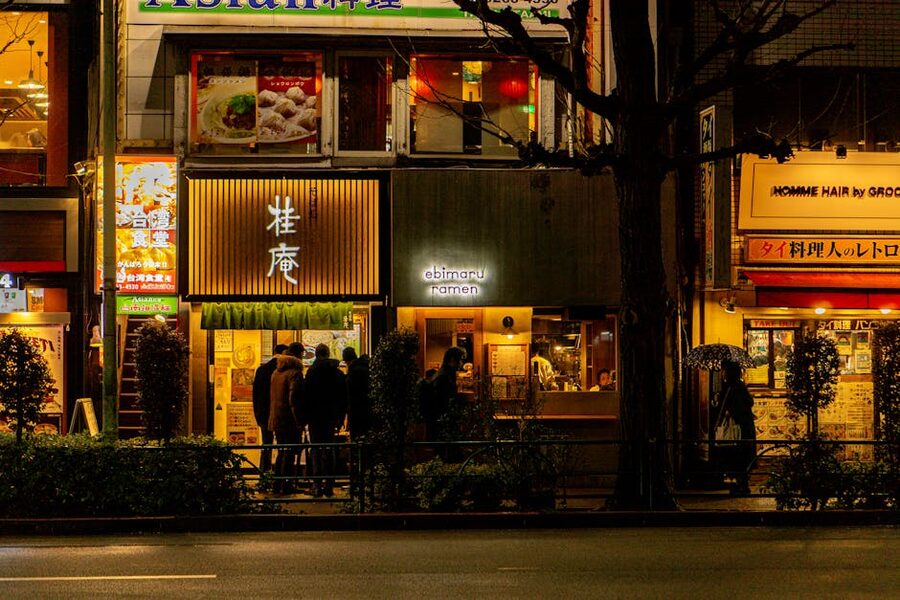
Shinjuku doesn’t have a single “ramen street” like Ikebukuro or Tokyo Station does. It has scattered heavyweights. The main clutch of ramen shops is on the west side — Nishi-Shinjuku — around the Omoide Yokocho area and Shinjuku Nishiguchi. A few spots that come up over and over in local guides: Fuunji (tsukemen dipping noodles, queue is real but moves), Menya Musashi (a miso-tonkotsu place near the station), and Nagi in Golden Gai (niboshi/sardine ramen, open late, a proper weird-hours option after Golden Gai bars close). I’ve been to Fuunji three times; queue at 18:00 on a weeknight and you’ll wait about 25 minutes. The tsukemen is worth it. Cash or IC card at the vending machine by the door — you buy your ticket first, then queue.
If you just want ramen without the pilgrimage, the Shinjuku Southern Terrace area (outside the New South exit) has half a dozen decent chain spots — Ichiran, Ippudo and similar. Not transcendent. Fine at 23:00 when your other plans have fallen through.
A greener note — Shinjuku Gyoen
Ten minutes south of the main station is Shinjuku Gyoen, the 58-hectare former imperial garden that is, arguably, the nicest park in central Tokyo. It has English-style lawns, a French formal garden, and a traditional Japanese landscape with ponds, bridges, and a teahouse. Entry is ¥500 (children free), and cherry blossom season here is genuinely something — around 1,100 trees across something like 65 varieties, so the bloom window is much wider than the single-week burst you get elsewhere. I’ve written the park up in full on a separate page at Shinjuku Gyoen National Park once it publishes. Worth half a day on its own — especially if Kabukichō-at-night has left your brain buzzing.
The 3D cat nobody mentions until they see it
On a digital billboard on the Cross Shinjuku Vision screen, above the Shinjuku-higashiguchi junction right outside the East exit of the station, there is a giant 3D calico cat. It yawns, it stretches, it sometimes floats in what looks like zero gravity before being sucked through a hole. It has become a minor landmark. It works best after dark (the 3D effect is stronger on camera at night — daytime looks a bit washed out on phones). Look up from the main crossing. No entry fee, obviously.
An honest take on what to skip
A few things in Shinjuku that come up on most lists but are not, in my opinion, worth organising your day around:
- Robot Restaurant — permanently closed in 2020. The “Samurai Restaurant” that replaced it in a nearby venue does a similar variety show. It’s fine. It’s not special.
- Ninja Trick House — a children’s activity. If you’re not travelling with kids, skip.
- Bars with free-cover signs on the main Kabukichō drag — reread the Kabukichō section above.
- The Hotel Gracery rooftop (for the Godzilla head) — hotel guests only and enforced. The view from Godzilla Road is better for photos anyway.
- Late-night in Don Quijote if you’re tired — the store plays its own jingle at 80dB on loop. Charming for 5 minutes, punishing after 15.
Practical info at a glance
- Main station: Shinjuku Station (JR Yamanote, Chūō, Sōbu, Saikyō, Shōnan-Shinjuku; Tokyo Metro Marunouchi, Toei Ōedo, Toei Shinjuku, Keio, Odakyu, Seibu lines)
- Tokyo Metropolitan Government Building observation decks: 9:30-22:00 (North) / 9:30-17:30 (South). Free. Closed on 2nd and 4th Monday (North), 1st and 3rd Tuesday (South). Official info: Go Tokyo
- Omoide Yokocho: most shops 17:00-00:00. Cash only at most spots. Tuesdays quieter than weekends.
- Golden Gai: most bars 20:00-05:00. Come after 22:00 for the real experience. Covers ¥500-1500 typical.
- Isetan Shinjuku: 10:00-20:00 daily. Depachika on B1 and B2.
- Shinjuku Gyoen: ¥500 entry, 9:00-16:00 or 18:00 depending on season. Closed Mondays.
- Godzilla show: hourly, 12:00-20:00, in front of the Toho Building in Kabukichō. Free.
How I’d actually spend a day and night here
One full day in Shinjuku, if I had to pick:
- 09:30 — Tochō north deck for the Mount Fuji view (if clear). 45 minutes.
- 10:30 — Walk east into Nishi-Shinjuku, coffee at one of the station-end cafés, cross to the East side.
- 12:00 — Isetan depachika for lunch. Pick up a bento or three, eat in Shinjuku Gyoen.
- 13:30 — An hour in Shinjuku Gyoen.
- 15:30 — Back east. Browse Kinokuniya or Don Quijote. Get lost. That’s the point.
- 17:30 — Early yakitori at Omoide Yokocho while it’s just getting going. ¥3000.
- 19:00 — Kabukichō walk for the neon photos. The Godzilla head does its 19:00 show. 45 minutes is plenty.
- 20:30 — Dinner (ramen at Fuunji or an izakaya in Sanchōme).
- 22:30 — Golden Gai for two bars, one cover each. About ¥4000.
- Midnight — Last train back. Or onward — Shinjuku has a long tradition of losing its tourists until 5am.
Staying overnight nearby? Shinjuku is one of the more expensive Tokyo districts for hotels, but the convenience factor is enormous. I’ve put what I’ve actually stayed at (plus the cheap-and-cheerful options I still recommend) in Where to Stay in Tokyo on a Budget. If you want something calmer on your morning, Meiji Shrine is a 15-minute walk from Shinjuku through Yoyogi Park — I genuinely recommend pairing them on day one. And one Yamanote stop south is Shibuya, which is the Scramble Crossing district — different energy, less seedy than Kabukichō, but just as busy.
Shinjuku is a lot. It’s the district I’d put first on a first-time Tokyo trip, because everything people imagine about Tokyo is within a twenty-minute walk of its station. And then, about day three, you’ll be ready for somewhere quieter. That’s normal. Everyone is.