
Reviewed · IMPERIAL PALACE & SHOGUN TOURS
Tokyo: Imperial Palace and Shogun Historical Walking Tour
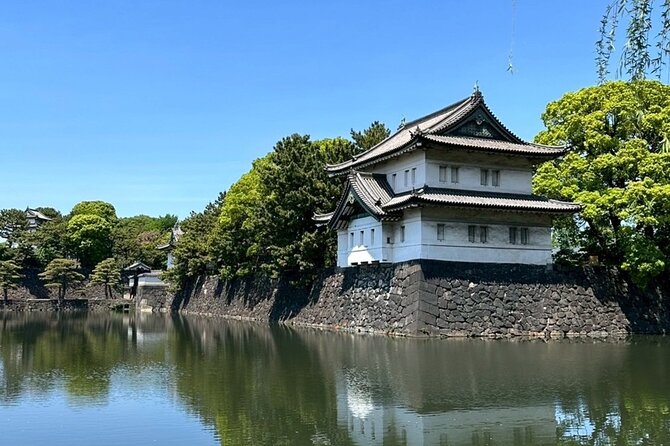
Tokyo’s Imperial Palace East Gardens give you something a bus cannot: time to walk through old gates, touch the story of Edo Castle through its surviving stonework, and pause in Ninomaru Garden. The most rewarding part is how the setting links shogun power with the modern Imperial family.
I like the small maximum group of 15, which makes questions practical, and I like the strong guide-led storytelling from people such as Jim, Tony, Miguel, and Izzy. The main caution is simple: this is a history-heavy walking tour, with slopes and long stops, and the quality depends partly on the guide assigned that day.
In This Review
- Key points to know before booking
- Why the East Gardens are worth your time
- Meeting at Wadakura Fountain Park
- Gates, walls, and the power of Edo Castle
- Ninomaru Garden and the quieter side of power
- What the guides add to the walk
- A small group, but still a group walk
- Is $22 a fair price?
- Walking conditions and the best pace
- Who will get the most from this tour?
- Booking, cancellation, and practical details
- Should you book the Imperial Palace walking tour?
- FAQ
- How much does the tour cost?
- How long does the tour last?
- Where does the tour begin?
- Where does the tour end?
- What will I see during the walk?
- Is admission to the gardens included?
- How large is the group?
- Is the tour suitable for most people?
- Is the ticket mobile?
- Can I cancel for a full refund?
Key points to know before booking
- Walk the former Edo Castle grounds: See massive stone walls, gates, and the foundation of the old castle keep.
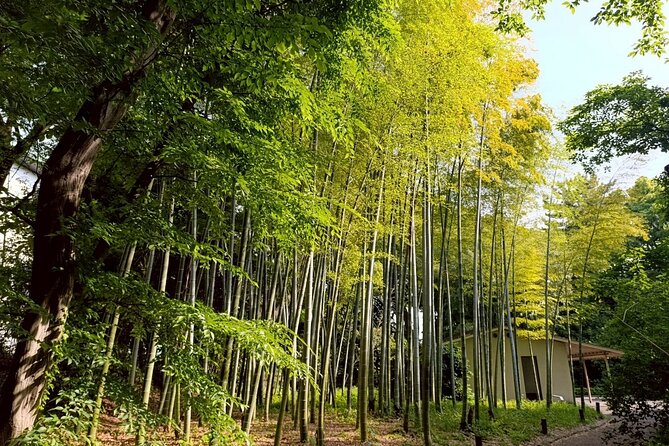
- Ninomaru Garden adds a quiet change of pace: Ponds and seasonal flowers show the refined side of Edo-period design.
- Small groups keep the tour personal: The maximum is 15 people, so questions are easier than on a large city tour.
- Guides provide the missing context: Expect explanations of shoguns, emperors, the Edo period, Japanese culture, and modern Tokyo.
- The gardens are free without a guide: You are paying $22 for interpretation, navigation, and a clearer sense of what you are seeing.
- Plan for real walking: The tour lasts about two hours, with the main garden visit listed at roughly 90 minutes, and includes slopes.
Why the East Gardens are worth your time

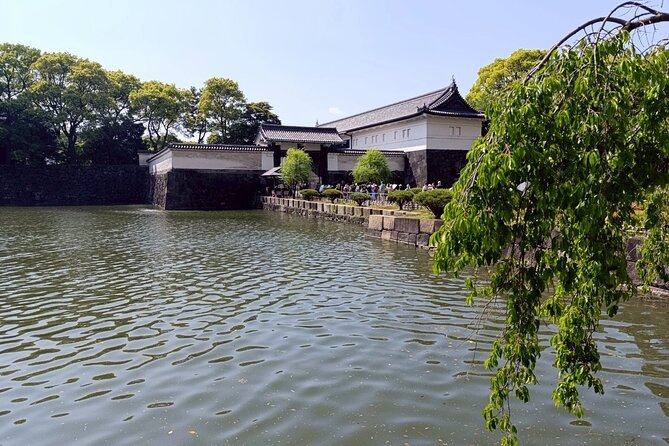
Tokyo can feel like a city built in the present tense. Glass towers, trains, neon signs, and crowded crossings often get the attention. The East Gardens offer a useful correction. Here, the old center of political power is marked by stone foundations, broad gates, carefully shaped gardens, and open green space.
You are not touring the private palace rooms. The experience focuses on the public East Gardens of the Imperial Palace and the former grounds of Edo Castle. That distinction matters. You see the remains and setting of the castle rather than a grand interior filled with furniture and royal objects.
I find the site most interesting when the guide explains how the same ground connects different eras. Edo Castle was tied to the shogunate and feudal government. Later, the imperial family became the focus of Japan’s national life. The garden paths let you move through those changes in a physical way, not just read about them on a plaque.
The site is also a pleasant place to slow down. Ninomaru Garden, with its ponds and seasonal flowers, is not merely a pretty pause between history lessons. It shows how garden design could express order, restraint, and status during the Edo period. The quiet setting helps balance the stories of warfare, rank, and political control.
A few more Tokyo tours and experiences worth a look

Meeting at Wadakura Fountain Park
The tour begins at Starbucks Coffee in Kokyo Gaien Wadakura Fountain Park, at 3-1 Kōkyogaien, Chiyoda City. This is a useful meeting point near public transportation, but you should still allow time to find the exact café and gather before the start.
A small but important warning comes from the tour’s logistics: at least one booking party arrived early but missed the group after poor communication about a changed meeting location. The guide was later described as friendly and informative, but the delayed start meant the palace grounds closed before the full visit was possible.
I would arrive early, keep your phone available, and check the meeting instructions closely. Do not assume that being somewhere in the general park area is enough. A mobile ticket is convenient, but it does not replace careful attention to the starting point.
The activity ends back at the meeting point. That makes planning easier if you want to continue around central Tokyo afterward, though the tour does not include transport to your hotel.
Gates, walls, and the power of Edo Castle
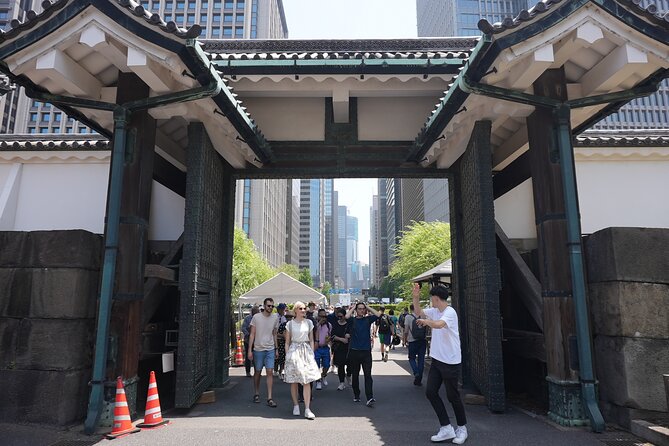
The first part of the walk brings you through the old castle setting. Expect majestic stone gates, large defensive walls, and remnants of a complex that once represented the authority of the shoguns. These are not isolated ruins in a museum. They sit within the gardens, so the scale of the old site becomes easier to picture.
The guide’s role is especially useful here. Without context, a stone wall can look like just another photogenic feature. With an explanation of its purpose and place in the castle grounds, you begin to understand how movement, access, and status were controlled.
The tour takes you to the foundation of the former castle keep. This is one of the strongest moments of the visit because the open space allows you to imagine the height and authority of the building that once occupied it. The foundation itself is a reminder that the power of the shogunate was once concentrated in this exact area.
Guides Jim and Tony have been singled out for explaining the Edo period, the shogunate, the castle grounds, and the Imperial family in a way that connects separate events. Jim has also been described as offering a distinctive outside perspective after many years living in Japan. That kind of comparison can help you sort out an unfamiliar political system without getting lost in names and dates.
Still, the tour may feel like a brief history class. One guide was praised for covering Japanese history and culture but was also said to repeat points and spend too long at certain stops. If you prefer a quick photo walk, this could feel slow. If you want background, the pauses are part of the value.
Ninomaru Garden and the quieter side of power
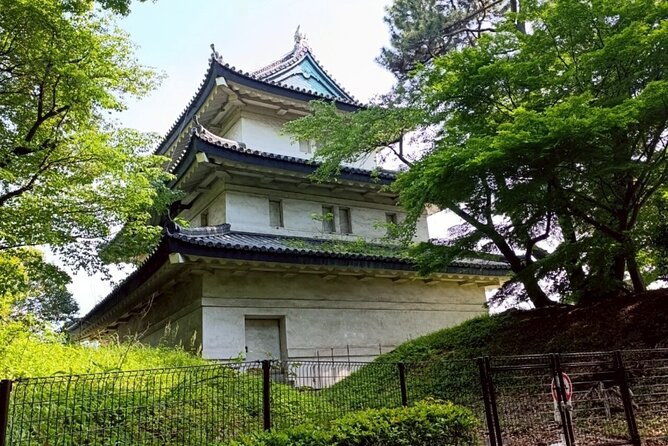
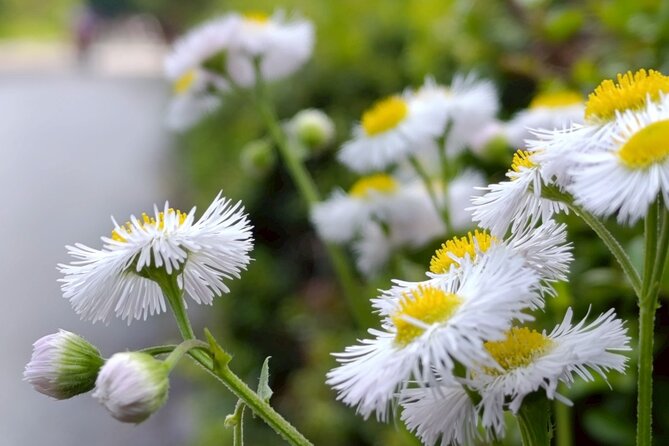
Ninomaru Garden changes the mood. After the gates and castle walls, you enter a more composed setting of ponds, seasonal flowers, and carefully arranged greenery. The garden reflects the taste and control associated with the Edo period, where beauty was shaped with the same care as political space.
I like this portion because it gives the tour breathing room. You are not simply moving from one historical marker to the next. You can notice water, plantings, paths, and views while the guide explains how the garden fits into the former castle grounds.
The garden is free to visit on your own, so this is where the value question becomes important. You are not paying for admission to a rare collection or a private palace room. You are paying $22 for someone to help you read the place. If you want facts about the gates, castle foundation, Imperial family, and garden traditions, that fee is reasonable.
If you already have a firm grasp of Japanese history and enjoy exploring quietly, you may prefer to visit independently. If you are looking at the stones and gardens and thinking, What am I supposed to notice here?, the guide is likely worth the cost.
What the guides add to the walk
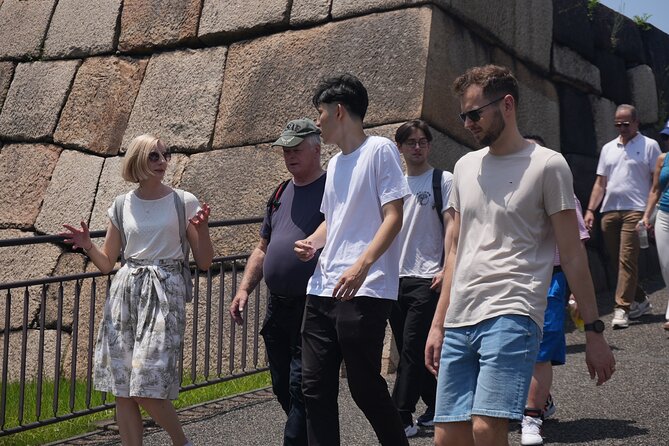
The strongest praise centers on the guides’ storytelling and personal approach. Jim is repeatedly described as patient, clear, and ready to answer questions. Tony is praised for linking the Edo period, the shogunate, the Emperor, and the Imperial family. Miguel is noted for history, modern Tokyo, and fun facts, while Izzy is described as informative and enjoyable.
Other named guides include Blake, Lasse, Michi, Dylan, John, and Aya. Blake is described as engaging and easy to enjoy. Lasse brings strong enthusiasm for Japanese history. Michi is praised for storytelling, and Dylan for explaining the palace grounds. John even helped with directions back to a hotel after the tour, although that extra assistance should not be treated as a guaranteed part of the activity.
Aya’s name appears alongside a review that also refers to Senso-ji Temple, so you should not assume that every detail in that particular account belongs to this Imperial Palace walk. The useful takeaway is that the provider may offer guides with different areas of strength, from historical explanation to cultural instruction.
That variation is worth keeping in mind. One guide may give you a polished overview, while another may spend more time on dates, legends, or modern customs. One lower-rated experience described a guide as new and reliant on a supervising guide for some answers. The overall response is very strong, but the assigned guide can shape the pace and depth.
Other walking tours we've reviewed in Tokyo




A small group, but still a group walk
The maximum group size is 15 people. That is small enough for the guide to keep an eye on the group and respond to questions, yet large enough that you are not getting a private tour.
Several useful details follow from that size. The guide can wait for everyone before moving on, and you are less likely to miss a comment at a gate or garden stop. You may also meet people from different countries, which can make the walk feel social rather than formal.
At the same time, 15 people can spread out on garden paths. Stay near the guide, especially when moving between the major points. The walk is described as relaxed, but you should not mistake relaxed for effortless. You will be on your feet, and the route includes slopes.
The main guided visit is listed at about one hour and 30 minutes, while the overall experience is approximately two hours. That extra margin likely covers gathering and movement, but the exact pace can change with group size, questions, and the guide’s style.
Is $22 a fair price?
The East Gardens can be visited free of charge, which makes the $22 price easy to question. I would look at it this way: the admission cost is not the product. The product is orientation.
Tokyo’s royal and shogun history can be difficult to organize during a first visit. The terms overlap, the political systems changed over time, and the castle remains are subtle rather than dramatic. A guide gives you a sequence: enter through the gates, understand the defenses, picture the keep, then see how the gardens express a different side of the former estate.
That is good value for someone making a first visit to Tokyo or anyone who wants an introduction before visiting other historical sites. It is less compelling for someone who has already studied the period and would rather spend two hours wandering alone.
At $22, the modest price also makes the tour a low-risk way to add structure to a Tokyo day. You are not committing to a full-day excursion or paying for transport. If the guide is a good fit, the stories can make the free gardens feel far more meaningful.
Walking conditions and the best pace
Wear comfortable shoes. This is obvious advice, but the route includes castle grounds, garden paths, and slopes, and one guide specifically reminded the group to be ready for walking. The pace is intended to be relaxed, yet the duration and terrain still require steady movement.
You should also allow for standing while the guide explains a location. One account found the stops too long and the explanations repetitive. If you have limited stamina, ask questions early about the route and pace. The information supplied says most people can participate, but it does not promise a specific accommodation plan.
Weather will affect the experience. On a clear day, the open garden spaces and stone walls are likely to be especially enjoyable. In poor weather, you may care more about the guide’s commentary than the scenery. The tour does not list a weather-specific alternative, so check the conditions before setting out.
Who will get the most from this tour?
I would recommend this walk to first-time visitors who want a calm introduction to Tokyo’s political and cultural past. It also suits anyone who likes gardens but wants more than photographs, since the guide explains why the castle remains and Ninomaru Garden matter.
Families with older children may find the castle foundation and legends easier to remember than a lecture in a museum. History fans will appreciate the focus on the shogunate, Edo Castle, the Emperor, and the Imperial family. The small group format is also useful for solo visitors who want company without joining a large coach tour.
You may want to skip it if your schedule is tight and you only want to see the palace from outside. You may also prefer a self-guided visit if repeated explanations frustrate you or if you already know the main story of Japanese political history.
Booking, cancellation, and practical details
Confirmation is provided at booking, and the ticket is mobile, so you do not need a printed voucher. The experience is near public transportation and is capped at 15 people.
Free cancellation is available up to 24 hours before the start time for a full refund. Cancellations or changes made less than 24 hours before the start are not accepted for a refund, and the cut-off follows Tokyo local time.
Because the tour ends where it begins, it is easy to combine with other central Tokyo plans. I would avoid scheduling something immediately afterward, though. A walking tour can run at a slower pace if the group has many questions or if the guide spends extra time on the history.
Should you book the Imperial Palace walking tour?
Book it if you want the Imperial Palace East Gardens to make sense, not just look attractive. The free grounds provide the setting, while the $22 guide supplies the links between Edo Castle, the shogunate, the Emperor, the Imperial family, and modern Tokyo.
My advice is to book with realistic expectations. You are getting a guided history walk, not access to palace interiors, and the experience depends on the guide’s pace and command of the subject. Arrive early at the Starbucks meeting point, wear good shoes, stay close to the group, and expect plenty of explanation.
For a modest price and a maximum of 15 people, this is a useful choice for curious first-time visitors. If you prefer complete freedom or already know the history, save the money and explore the gardens on your own.
FAQ
How much does the tour cost?
The price is $22 per person.
How long does the tour last?
The experience lasts approximately two hours. The main visit to the East Gardens and Edo Castle ruins is listed as about one hour and 30 minutes.
Where does the tour begin?
It begins at Starbucks Coffee in Kokyo Gaien Wadakura Fountain Park, 3-1 Kōkyogaien, Chiyoda City, Tokyo 100-0002, Japan.
Where does the tour end?
The activity ends back at the meeting point.
What will I see during the walk?
You will visit the Imperial Palace East Gardens, former Edo Castle grounds, stone gates, castle walls, the former castle keep foundation, and Ninomaru Garden.
Is admission to the gardens included?
The tour information lists an admission ticket as included. It also states that the Imperial Palace gardens can be visited free of charge independently, so the fee mainly pays for the guided experience.
How large is the group?
The maximum group size is 15 people.
Is the tour suitable for most people?
The activity information says most people can participate. It is a walking tour with slopes, so you should be prepared to walk and remain on your feet for much of the experience.
Is the ticket mobile?
Yes. The tour includes a mobile ticket.
Can I cancel for a full refund?
Yes, if you cancel at least 24 hours before the experience start time. Cancellations and changes made less than 24 hours before the start are not accepted for a refund.
More Historical Tours in Tokyo



More Walking Tours in Tokyo
More Imperial Palace & Shogun Tours in Tokyo


More tours in Tokyo we've reviewed











Imperial Palace & Shogun Tours, compared.
 ★ 4.9Tokyo: Imperial Palace Japanese History Walking TourFrom $32
 ★ 4.9Tokyo: Imperial Palace and Shogun Walking TourFrom $162 hours
 ★ 5.0Imperial Palace East Garden and Edo Castle Walking Tour in TokyoFrom $25
 ★ 4.8Tokyo: Imperial Palace East Gardens Walking TourFrom $192h 30m
 ★ 4.5Tokyo: Imperial Palace, Sensō-ji Temple, & Tokyo Tower TourFrom $404 hours
 ★ 5.0Tokyo Castle, Imperial Palace, Shogun & Garden Walking TourFrom $31