
Reviewed · SUMO EXPERIENCES
Grand Sumo Tournament Tour w/an English Guide ,Tokyo January 2026
The most worthwhile part of this Tokyo outing is not simply seeing large men collide. It is learning what you are watching as the Grand Sumo Tournament moves from ritual and waiting to sudden, explosive action. Your guide takes you to your reserved seat and explains the sport as it unfolds, so the early bouts do not feel like a long warm-up.
I like the reserved S Seat, described as the best chair seating available, and I like the small group of no more than 10 people. The Kokugikan and Sumo Museum add useful cultural context, while guides such as Jeff and Yuki have explained the rules, history, wrestlers, and even prepared extra notes for their groups.
The main drawback is price. At $124.26 per person, this costs more than a regular tournament ticket might cost if you can obtain one yourself. You are paying for guidance, a reserved seat, and a smoother introduction to a sport that can be confusing at first.
In This Review
- Key points before you book
- Why a guided sumo afternoon helps
- Meeting at Ryogoku Station at 2:15 pm
- Inside the Kokugikan: more than a sports venue
- Reading the tournament from early bouts to top ranks
- The gyoji, yobidashi, and meaning in the clothing
- What your reserved S Seat adds
- January 2026 seat dates and schedule cautions
- Is the $124.26 price fair?
- Who will enjoy this tour most
- Cancellation and practical booking notes
- Should you book the January 2026 sumo tour?
- FAQ
- Where does the tour meet?
- What time does the tour start?
- How long does the activity last?
- Where does the tour end?
- What seat is included?
- Is the ticket mobile?
- How many people can join the tour?
- Is the tour near public transportation?
- What age requires an admission fee?
- Can I cancel for a full refund?
Key points before you book
- S Seat chair seating: The tour uses the best available chair seating, though the exact location is not provided.
- English guidance throughout: You learn about rankings, rituals, clothing, match calls, referees, announcers, and winning techniques.
- Kokugikan and Sumo Museum access: The visit gives you more than match time, with architecture and cultural details included.
- Small-group format: The maximum group size is 10, a useful scale for questions and personal help.
- Afternoon timing: Meet at Ryogoku Station at 2:15 pm for an activity lasting about 3 hours and 45 minutes.
- January 2026 dates vary by seat: S Seat and A Seat dates were still to be released, while B Seat dates listed are January 11, 13, 15, 21, 22, and 23.
Why a guided sumo afternoon helps
Sumo looks simple until you try to follow it. Two wrestlers face each other, perform a series of rituals, and then the action may be over in seconds. The rules are not hard to learn, but the rankings, match order, formal clothing, calls, and gestures can leave first-time spectators guessing.
That is where this tour earns its keep. Your guide explains the different divisions, including the early matches and the top-level competitors. You also learn how the hierarchy works, from yokozuna and ozeki to sanyaku and makuuchi wrestlers.
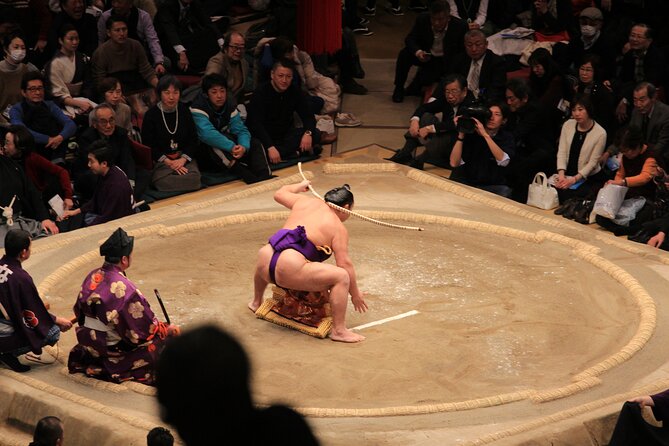
I especially like this approach for anyone who wants more than a photograph inside the arena. The guide can point out the role of the gyoji, the referee in traditional dress, and the yobidashi, the announcer whose work helps shape the match atmosphere. You are not left to work out the meaning of every robe, call, or ceremony by yourself.
The group size matters, too. With up to 10 people, the outing should feel more manageable than a large coach tour. You can ask why a match was awarded, what a particular rank means, or how a winning technique differs from another. The supplied information does not promise one specific guide for January, but Jeff and Yuki have both led earlier outings. Jeff was praised for explaining the rules and history clearly, while Yuki prepared an extra information sheet about the wrestlers.
A few more Tokyo tours and experiences worth a look

Meeting at Ryogoku Station at 2:15 pm
Your meeting point is Ryogoku Station, at 1-chōme-3-20 Yokoami, Sumida City, Tokyo 130-0015. The location is near public transportation, so you can reach it without arranging a private transfer.
You should allow enough time to find the correct station exit and meeting spot. The published start time is 2:15 pm, and the tour ends back at the meeting point. No hotel pickup is included in the information provided, so plan to make your own way to Ryogoku.
This timing suits a day when you want a focused afternoon rather than a full-day excursion. It also leaves room to visit another part of Tokyo before meeting the guide, though you should not cut it close. A late arrival could mean missing the escort to the reserved seats.
Inside the Kokugikan: more than a sports venue
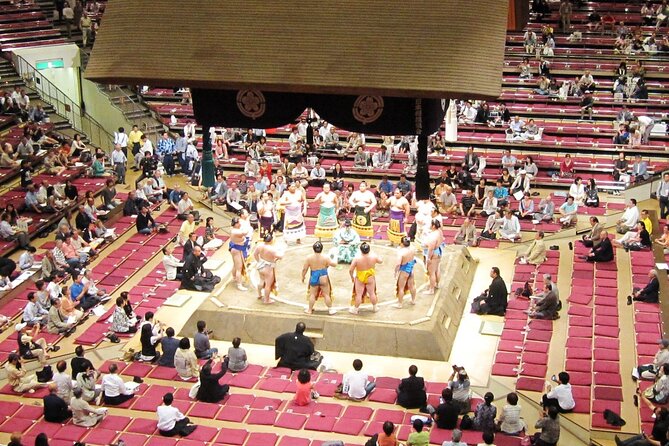
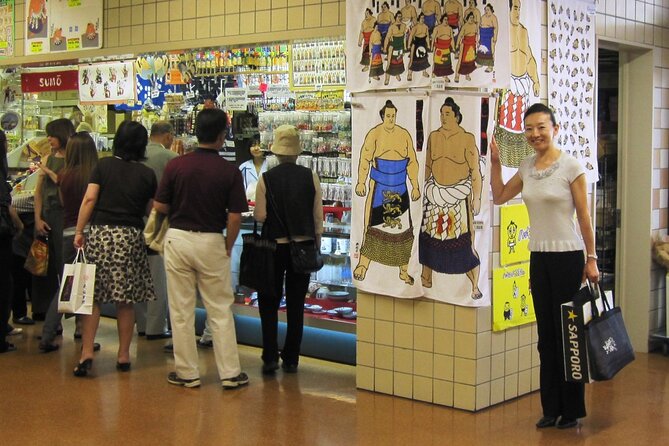
The Kokugikan is part of the experience. You will be introduced to its distinctive Japanese architecture, ceremonial clothing, symbolic decorations, and formal customs. These details help explain why sumo feels closer to a national ceremony than to an ordinary sporting event.
The tour also includes the Sumo Museum. The supplied details do not give a room-by-room route or specify a separate museum duration, so you should not expect a fixed exhibition schedule. Still, its inclusion gives you a chance to place the tournament within the wider world of sumo rather than treating the match as a stand-alone show.
I like this combination because the arena can be overwhelming on tournament day. People are arriving, matches are being called, and the crowd’s attention shifts quickly. A guided visit gives you a framework before or during the competition, making the clothing, architecture, and customs easier to notice.
There is also a practical benefit. If you know the basic structure of professional sumo before the top bouts, you can spend less time wondering what is happening and more time watching the wrestlers’ preparation. The guide’s explanations are meant to continue throughout the visit, not just at the entrance.
Reading the tournament from early bouts to top ranks
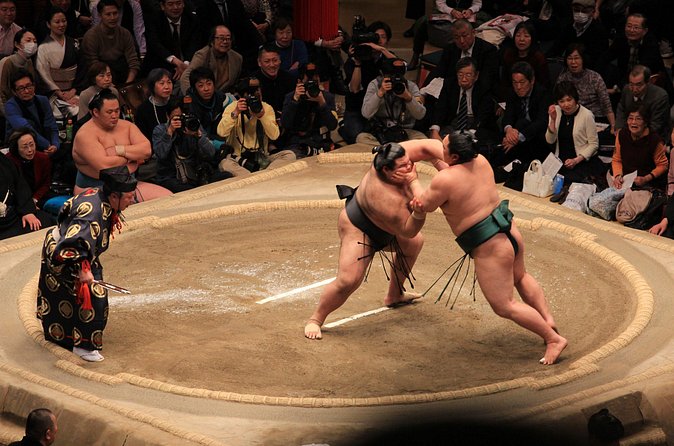
A January Grand Sumo Tournament is not just one main event. The day includes different divisions, and the guide explains how the bouts build toward the higher-ranked competitors. This matters because the earlier matches are part of the professional system, not disposable filler.
You will hear about the ranking ladder, including yokozuna, ozeki, sanyaku, and makuuchi. These terms can sound like a wall of Japanese vocabulary when you first encounter them. Once the guide connects rank with the order and importance of bouts, the program becomes easier to follow.
The tour information does not promise that a particular famous wrestler will compete on your date. That is an important limitation. Sumo lineups and individual participation can change, so book this for the structure, culture, and live spectacle rather than for one named athlete.
The guide also explains kimarite, the official winning techniques. A bout may end with a push, throw, belt move, or another legal action, and the name of the technique gives you a sharper way to understand what just happened. Even when the clash lasts only a few seconds, you can begin to see why one wrestler won.
The gyoji, yobidashi, and meaning in the clothing
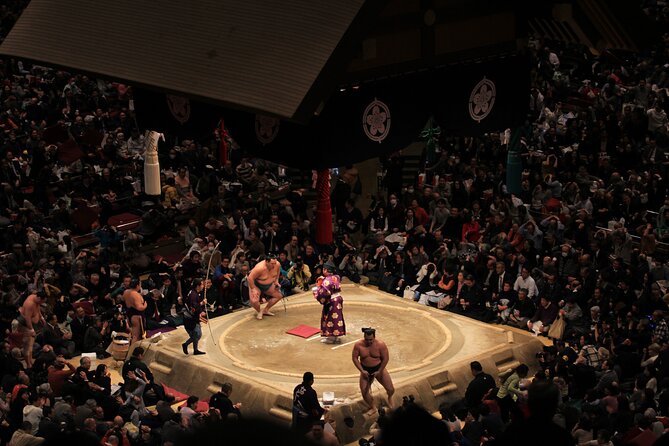
One of the strongest parts of this outing is the attention given to people who are easy to overlook. The gyoji does more than declare a winner. The referee’s role, posture, traditional dress, and signals all belong to the ceremony of sumo.
The yobidashi also has a distinct place. The announcer helps call wrestlers and maintain the formal flow of the program. When you know who is doing what, the arena becomes easier to read.
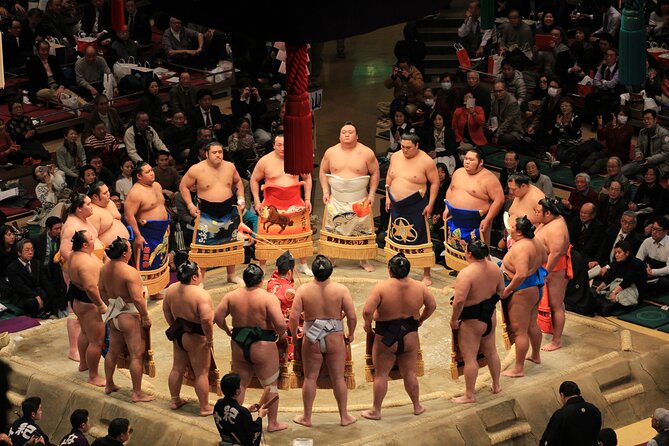
Traditional clothing carries meaning, too. The tour explains the attire of the wrestlers, referee, and announcer, helping you connect what you see with their roles. The Kokugikan’s decorations and customs fit into the same picture.
This is the kind of detail that can turn a short match into a complete scene. You notice the people around the ring, the formal movements before the clash, and the way the arena changes when attention shifts to the next bout. If you have never watched sumo live, this background is likely more useful than a long lecture on dates and names.
Other guided tours in Tokyo





What your reserved S Seat adds
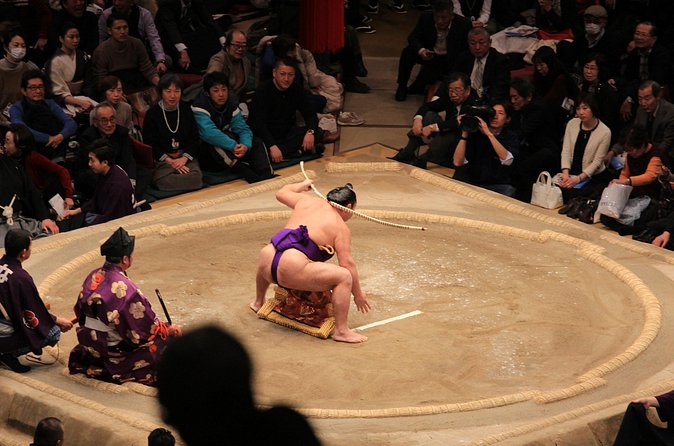
The advertised S Seat is the best chair seating available for this tour. The listing does not provide a seat number, row, or precise distance from the ring, so you should not book expecting a guaranteed front-row position.
Still, a reserved chair removes one major worry: securing your place for the tournament. Sumo tickets can be difficult to obtain independently, especially for visitors who do not know the Japanese ticketing system or the release schedule. This tour combines admission with a guide who escorts you to the seat.
The value depends on your priorities. If you are comfortable buying a ticket alone and already understand sumo, $124.26 may feel high. One of the earlier participants made that exact point while still rating the overall outing highly because the guidance and group experience added real value.
For a first visit, I think the price is easier to justify. You are not only buying entry. You are buying help with the setting, the rules, the rankings, and the match details. You also avoid spending the entire afternoon trying to interpret an unfamiliar sport from a chair.
January 2026 seat dates and schedule cautions
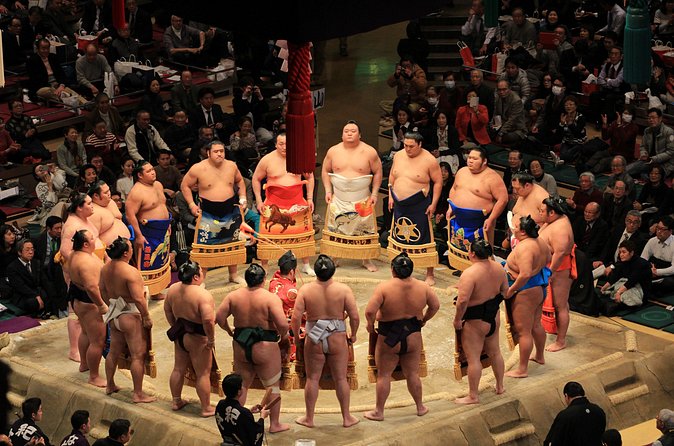
The January 2026 Grand Sumo Tournament is the focus of this experience, but the schedule varies by seat type. S Seat and A Seat dates were listed as not yet released. B Seat dates were given as January 11, 13, 15, 21, 22, and 23.
That means you should confirm the exact date and seat category before making firm plans around this activity. The published information does not give a confirmed schedule for every category. Confirmation is sent within 48 hours of booking, subject to availability.
The start time is 2:15 pm, and the stated duration is approximately 3 hours and 45 minutes. In practical terms, plan for a substantial afternoon and allow extra time afterward to leave Ryogoku. Since the tour returns to the meeting point, you can arrange your next activity from there, but avoid booking something with a tight fixed start.
The mobile ticket is convenient. Keep your phone charged and make sure you can access the ticket and booking details before reaching the station. The tour information identifies the ticket as mobile, but it does not state whether printed tickets are accepted or explain the exact admission procedure.
Is the $124.26 price fair?
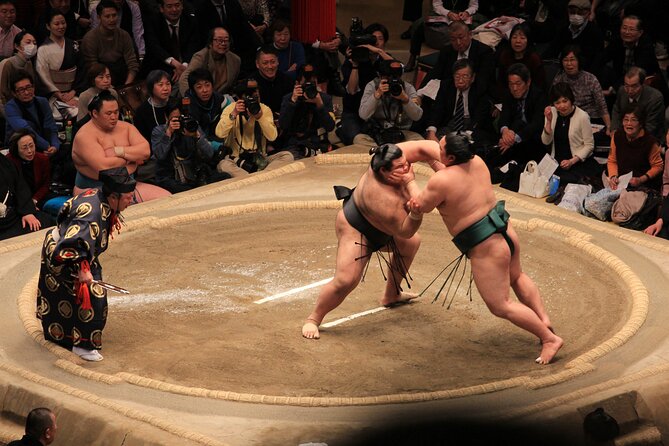
The cleanest way to judge the price is to separate ticket cost from service. A regular tournament ticket may cost less if you can get one, but finding and using that ticket on your own may require more effort. This tour gives you a reserved S Seat, a guide, a small group, and explanations tied to what is happening in front of you.
The value is strongest if sumo is new to you. You might otherwise spend the first hour wondering about the divisions, why wrestlers stamp or throw salt, or what the referee and announcer are doing. The guide turns those questions into part of the afternoon.
The value is weaker if you already follow professional sumo closely. You may know the rankings and techniques, and you may prefer to attend independently. Even then, the reserved seating and access to a multilingual guide could be useful if obtaining a ticket is your main problem.
Food may also enter your calculation. One earlier outing included a tasty chanko meal, but the January 2026 information does not state that food is included. Do not assume chanko, lunch, or any other meal forms part of this package unless your booking confirmation says so.
Who will enjoy this tour most
I would choose this for a first-time sumo viewer who wants context without spending weeks learning the sport in advance. Families with children old enough to attend can also consider it, though admission applies from age 4 and above.
It suits solo visitors and couples who want a small group rather than a large sightseeing crowd. The activity is near public transportation, most people can participate, and the group limit is 10. The information does not give detailed mobility guidance, so contact the provider if you need specific seating or access arrangements.
You will get the most from it if you enjoy ceremony, clothing, architecture, and human drama as much as the physical clash. If you only want the biggest bouts and do not care about the meaning behind them, the extra cost may be harder to defend.
The tour is also a good fit for visitors who want an English explanation at the moment it matters. A printed guidebook can explain sumo in general, but it cannot point to the current division, match result, or technique as events happen.
Cancellation and practical booking notes
You can cancel at least 24 hours before the start time for a full refund. Changes made less than 24 hours before the start are not accepted, and cancellations inside that window are not refunded.
The experience may be canceled if the minimum number is not reached. It may also be canceled because of poor weather, in which case you are offered another date or a full refund. The weather condition is unusual for an indoor arena, but it is part of the stated policy, so check the notice you receive.
Confirmation arrives within 48 hours and depends on availability. Because the January S Seat and A Seat dates were not yet released, confirm your chosen date, seat type, and meeting instructions before you lock in other plans.
Should you book the January 2026 sumo tour?
Book it if you want a guided introduction to live sumo and value a reserved S Seat more than the lowest possible ticket price. The strongest reasons are the small group, escort to your chair, Kokugikan and Sumo Museum context, and clear explanations of rankings, rituals, roles, and kimarite.
Skip it if you already know professional sumo well or are determined to pay only the face value of a regular ticket. Also wait until your preferred January seat date is confirmed, since the S Seat and A Seat schedules were still pending.
For most first-time visitors, this is a sensible way to make sense of a sport that can seem mysterious at first. You still get the raw sound and force of the tournament, but you also learn what the ceremony means and why each bout matters.
FAQ
Where does the tour meet?
The meeting point is Ryogoku Station, at 1-chōme-3-20 Yokoami, Sumida City, Tokyo 130-0015, Japan.
What time does the tour start?
The tour starts at 2:15 pm.
How long does the activity last?
The approximate duration is 3 hours and 45 minutes.
Where does the tour end?
The activity ends back at the meeting point.
What seat is included?
The tour offers S Seat chair seating, described as the best chair seating available. The exact row or seat location is not provided.
Is the ticket mobile?
Yes. The experience includes a mobile ticket.
How many people can join the tour?
The maximum group size is 10 people.
Is the tour near public transportation?
Yes. The meeting point is near public transportation at Ryogoku Station.
What age requires an admission fee?
An admission fee applies to anyone aged 4 and above.
Can I cancel for a full refund?
Yes. You can cancel at least 24 hours before the experience start time for a full refund. Cancellations made less than 24 hours before the start time are not refunded.
More Guided Tours in Tokyo
More Sumo Experiences in Tokyo

More tours in Tokyo we've reviewed




Sumo Experiences, compared.
 ★ 4.8Tokyo: Sumo Show Experience with Chicken Hot Pot and a PhotoFrom $1032 hours
 ★ 4.8Tokyo: Sumo Show and Dining ExperienceFrom $7990 minutes - 2 hours
 ★ 5.0the SUMO showFrom $89
 ★ 5.0Tokyo Shinjuku Sumo Show & Experience with PhotoFrom $79
 ★ 4.8Tokyo: Sumo Show and Experience in ShinjukuFrom $691h 30m
 ★ 4.6Tokyo: Sumo Tournament Tour with Chair Seat TicketsFrom $141