
Reviewed · ASAKUSA TOURS
Tokyo: Asakusa Walking Tour with Sensoji Temple Visit
Asakusa gives you Tokyo at its most traditional, and this two-hour walk puts its finest sights in a sensible order. You begin beneath the huge lantern of Kaminarimon, pass along Nakamise Street, then reach Sensōji, Tokyo’s oldest-established Buddhist temple, before finishing near the Sumida River.
I like the mix of famous sights and useful local detail. Your guide can explain temple customs, show you how incense is used, and point out places to eat after the walk. I also like that the route includes both the Buddhist Sensōji and nearby Asakusa Shrine, giving you a clear look at two important parts of Japanese religious culture.
The main trade-off is time. Two hours is enough for an excellent introduction, but not enough for a slow browse through every shop or a long temple visit. Asakusa gets very busy, too, so you need to stay close to the guide and arrive on time.
In This Review
- Key points to know
- Why Asakusa is a smart first Tokyo walk
- Meeting beneath the Thunder Gate
- Nakamise Street, Tokyo shopping with a long memory
- Sensōji, the heart of the two-hour tour
- Asakusa Shrine and the Buddhist-Shinto contrast
- Hoppy Street and the everyday side of Asakusa
- Shin-Nakamise and the final walk to Azuma Bridge
- What the guides do best
- Is $22 good value for two hours?
- Who should book this Asakusa walk?
- FAQ
- How much does the Asakusa walking tour cost?
- How long does the walking tour last?
- Where does the tour start?
- Where does the tour finish?
- What language is the tour offered in?
- Is Sensōji Temple included?
- Is the tour wheelchair accessible?
- Should you book it?
Key points to know
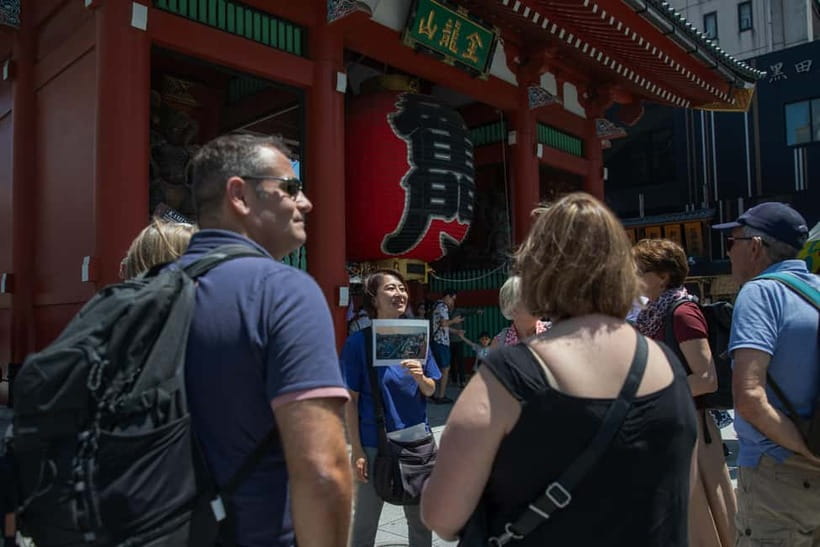
- Kaminarimon is the easy-to-spot meeting point: Look for the guide on the left side of the gate, near Tokiwado Kaminari-okoshi Honpo, holding a tour sign.
- Sensōji gets the most attention: Expect a guided visit, photo time, and an explanation of the temple’s rituals, architecture, and stories.
- You see both Buddhist and Shinto sites: Sensōji and Asakusa Shrine sit close together, making the contrast easy to understand.
- The route includes food streets: Hoppy Street and Shin-Nakamise are useful stops for restaurant ideas and local shopping.
- Guides add practical Tokyo advice: Aya, Keiko, Hiroko, Glenda, Polina, Loc, Miyu, and others have been praised for clear English, humor, patience, and restaurant tips.
- The price is modest: At $22 per person, the tour offers a good way to get cultural context before exploring Asakusa on your own.
Why Asakusa is a smart first Tokyo walk
Tokyo can feel like a wall of bright signs, train lines, department stores, and crowds. Asakusa gives you a different opening chapter. Its lanes center on Sensōji, small shrines, old-style shops, food stalls, and streets where the city’s past is still visible.
You can walk this district without a guide, of course. The buildings and temple gates are easy to photograph, but the meaning behind them is less obvious. A guide helps you understand what you are looking at, when to bow, how incense is used, and why the temple precinct has such importance.
That context matters most if this is your first visit to Japan. Rather than treating Sensōji as a backdrop for photos, you begin to see it as a working religious site with customs that people still follow.
The route also keeps the pace moving. You are not asked to sit through a long lecture. Instead, you stop for short explanations, walk through the shopping streets, and have time to look around and ask questions.
A few more Tokyo tours and experiences worth a look

Meeting beneath the Thunder Gate
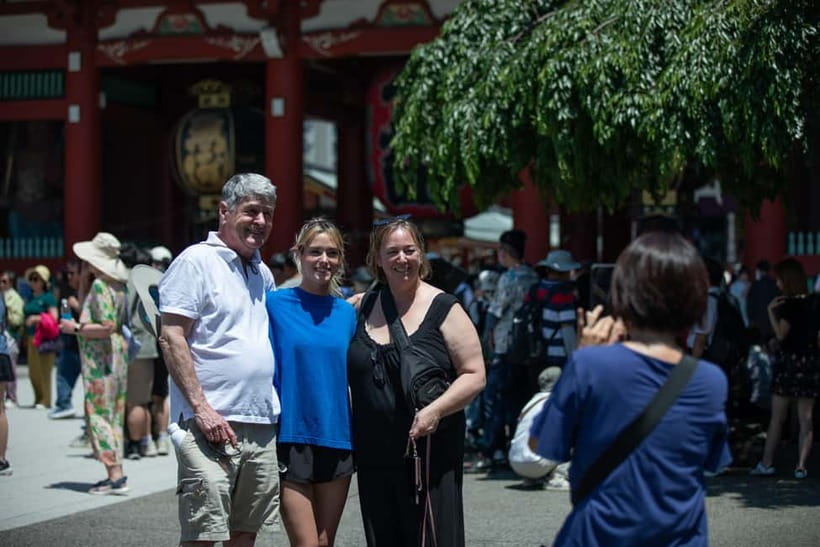
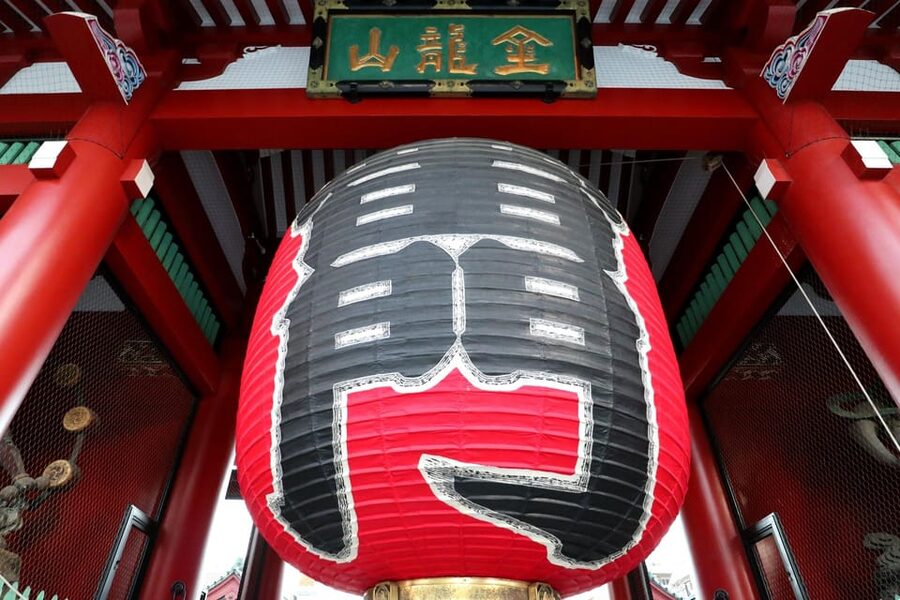
The tour starts at Kaminarimon, or the Thunder Gate, the grand entrance to Sensōji. The red gate and enormous hanging lantern make this one of the simplest meeting points in Tokyo to recognize, though the area around it can be crowded.
Your guide waits on the left side of the gate, near Tokiwado Kaminari-okoshi Honpo, holding a sign. I would arrive early enough to locate that side of the gate without rushing. The instructions are specific, and the guide cannot wait long for late arrivals.
The opening guided visit lasts about 10 minutes. This is a good place to hear the basic story of Asakusa and understand why the gate matters before the route carries you into the temple grounds.
Kaminarimon is also the first place where you notice the tour’s practical advantage. You could photograph the gate in a few minutes, but a guide can direct your attention to its details and explain its role as the formal entrance to the temple area.
Nakamise Street, Tokyo shopping with a long memory
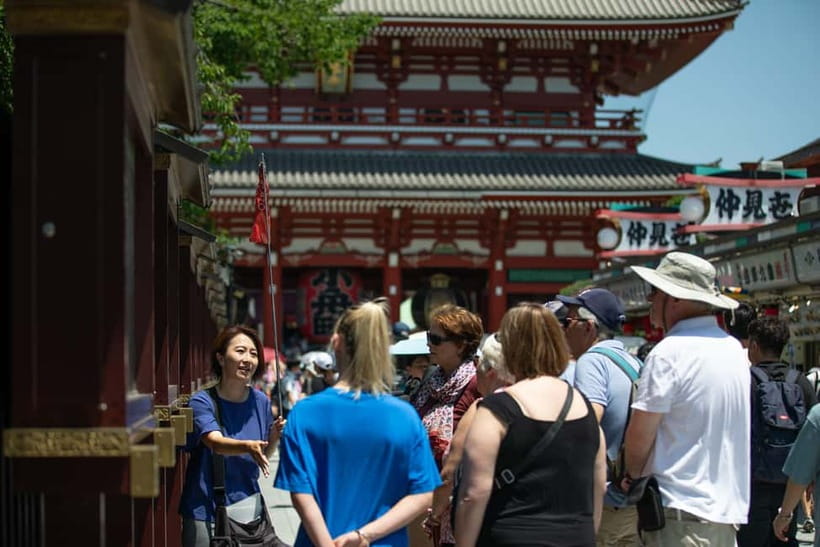
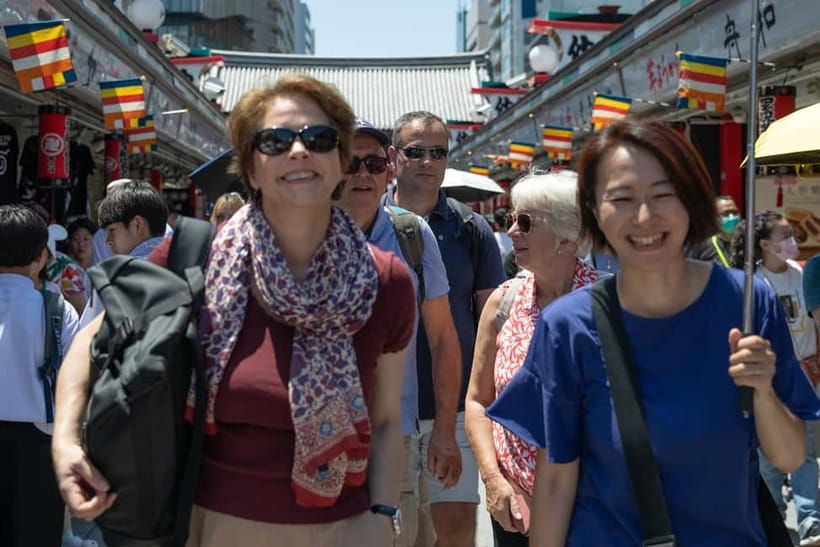
From Kaminarimon, you walk down Nakamise Shopping Street, one of Japan’s oldest shopping centers. The street leads toward Sensōji and is lined with shops selling traditional crafts, souvenirs, snacks, and other local goods.
The scheduled visit lasts about 15 minutes, so think of this as an introduction rather than a full shopping session. You will have time to see the street’s character and hear what kinds of items and foods are associated with the area. Save serious browsing for after the tour if something catches your eye.
This stop is valuable because it shows how a religious site and a commercial street work side by side. Nakamise is not simply a modern retail strip placed beside a temple. It forms part of the approach to Sensōji and helps explain the district’s long-standing role as a place where worship, entertainment, food, and shopping meet.
The route can be crowded, especially at popular times. That is one reason a guide helps. You do not need to spend your attention checking a map, and the group can keep a steady pace through the narrowest sections.
Sensōji, the heart of the two-hour tour
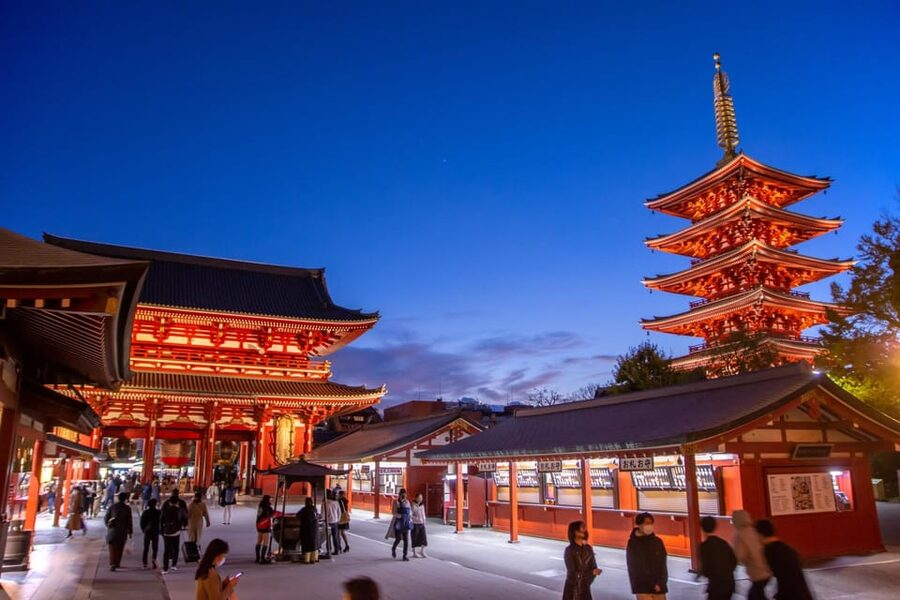
Sensōji, also called Asakusa Kannon, is the centerpiece. It is described as Tokyo’s oldest-established Buddhist temple, and the visit includes a photo stop, guided time, and free time for your own look around.
The planned temple stop lasts about 30 minutes, making it the longest single visit. That is enough to take in the major details without turning the tour into a formal religious class. Your guide explains the temple’s history, architecture, and cultural meaning while showing you how people take part in the incense ritual.
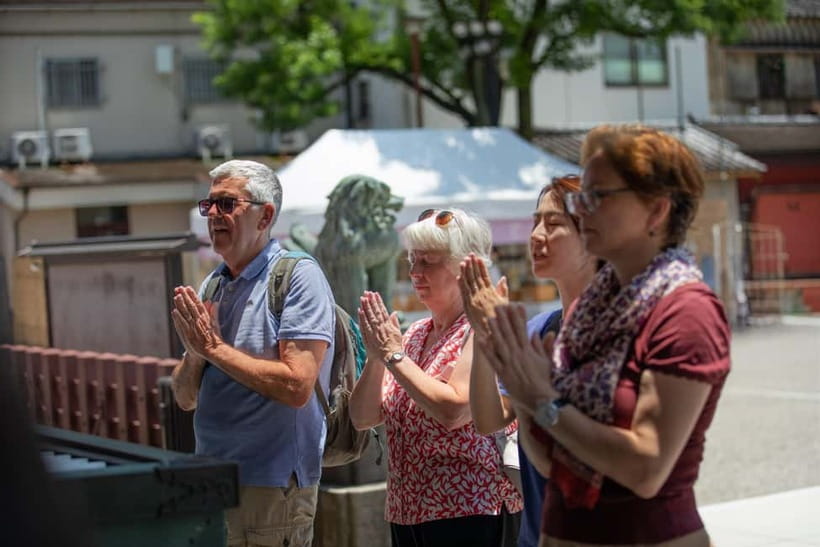
Incense burning is one of the most useful details to learn in person. Your guide can explain the custom and help you observe it respectfully, rather than guessing what to do. You can also ask questions about the stories and miracles connected with the temple.
Several guides have been praised for making this section clear and engaging. Aya, for example, has been singled out for explaining the temple’s architecture, traditions, history, and miracle stories. Other guides, including Keiko, Hiroko, Glenda, and Polina, have been appreciated for combining historical facts with humor and easy answers to questions.
The temple precinct is a place for looking and listening, not just collecting photos. I would keep your camera ready, but give yourself a few quiet minutes without it. The value of this stop comes from understanding the customs as well as seeing the large gate, lanterns, and temple buildings.
One limitation is that 30 minutes passes quickly. If you want detailed architectural study or extended personal prayer, you will need to return later. The tour gives you the framework, then leaves you free to explore more on your own.
Asakusa Shrine and the Buddhist-Shinto contrast
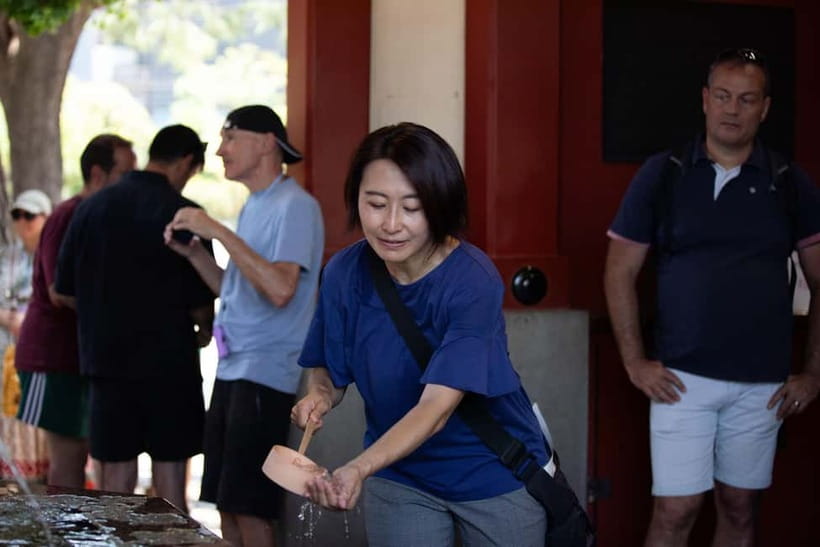
The next stop is Asakusa Shrine, with about 20 minutes for a visit, guided explanation, and photos. This is a particularly useful addition because it places a Shinto shrine beside the Buddhist temple.
You do not need a background in Japanese religion to follow the distinction. Your guide can explain the different traditions and point out how the spaces function. One of the strongest features of this tour is that you see both Buddhist and Shinto landmarks in the same neighborhood, rather than treating Asakusa as only a temple district.
Guides such as Augustina have been praised for making this contrast understandable and for explaining the religious and cultural details without losing the group’s attention. Hiroko and Miyu have also been noted for answering questions clearly and including everyone in the conversation.
The stop is not a separate excursion far from Sensōji. That keeps the route efficient, but it also means you should not expect a long, private shrine experience. You get a focused explanation and time for photographs before continuing through the surrounding streets.
A few more Tokyo tours and experiences worth a look
Hoppy Street and the everyday side of Asakusa
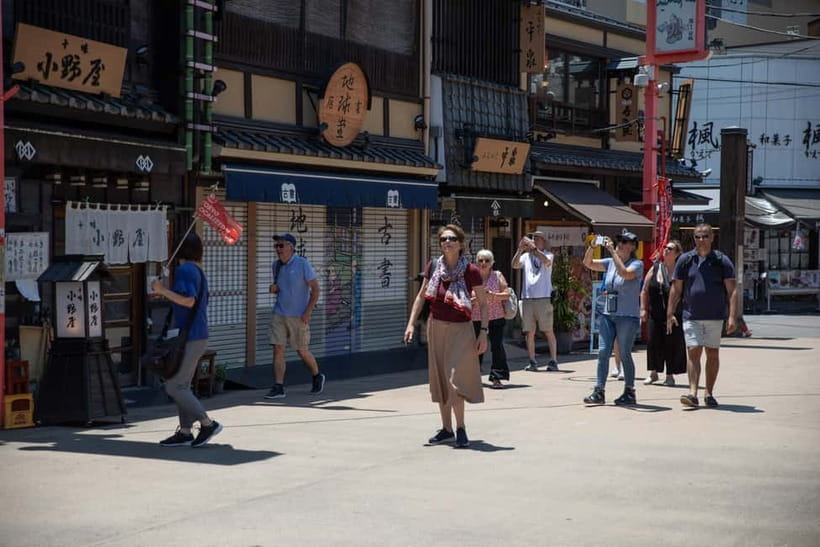
Hoppy Street is a 10-minute stop that shifts the mood from temple grounds to food and nightlife. The street is known for eateries and local atmosphere, and it gives your guide a chance to discuss what you might eat or do after the tour.
This is where the walk becomes especially useful for the rest of your day. Several guides have offered restaurant suggestions at the end of the route, and Hoppy Street is part of that practical food orientation. If you finish around lunchtime, you are well placed to continue eating in Asakusa.
Do not expect a meal to be included. The activity covers the guided walk only. You are looking at the area and receiving suggestions, not joining a food tasting.
The brief stop also means you will not sample every dish or sit down for a long meal. That is a drawback for anyone hoping for a food tour. For a visitor who wants to know where to return later, though, it is a useful preview.
Shin-Nakamise and the final walk to Azuma Bridge
The route continues to Shin-Nakamise Shopping Street, with another 10-minute guided visit. This gives you a second shopping area with a different feel from the main Nakamise approach to Sensōji.
The distinction is helpful. Nakamise is directly tied to the temple entrance and is part of the classic sightseeing route. Shin-Nakamise broadens your view of Asakusa’s shopping streets and gives you more ideas for browsing, snacks, and small purchases.
The tour ends at Azuma Bridge. That finish is practical because it leaves you near the Sumida River and gives you a clear point from which to continue exploring. The walk does not return you to Kaminarimon, so plan your next move before the tour ends.
Your guide may also suggest restaurants and other places to visit around Tokyo. Andrew specifically valued receiving advice for the rest of a Japan trip, while other participants appreciated food recommendations for lunch. This is an extra benefit when you take the tour near the start of your stay.
What the guides do best
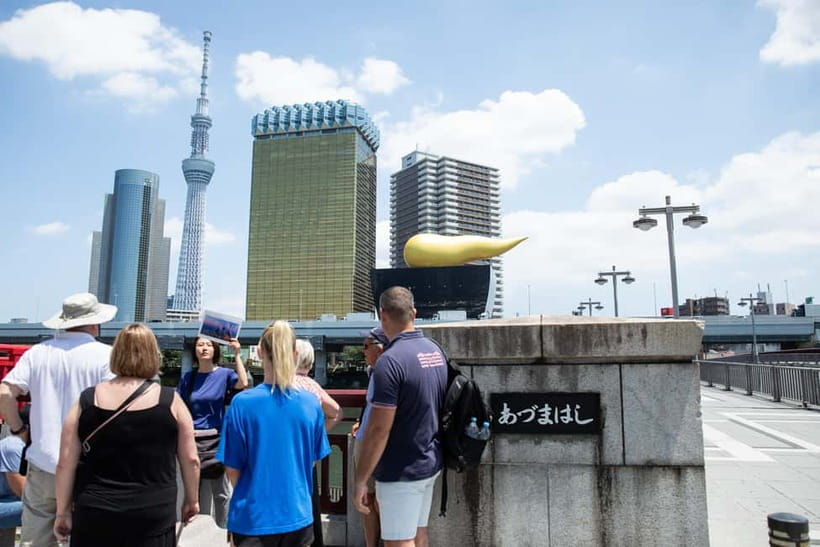
The guide is the real variable in any walking tour, but the pattern here is encouraging. Guides named Aya, Keiko, Hiroko, Glenda, Polina, Loc, Miyu, Rio, Mei, and Augustina have been praised for clear English, strong local knowledge, patience, humor, and attention to the group.
That range of names also tells you that the guide may vary by departure. You should book the route for its structure and subject, not on the assumption that one particular guide will lead every date.
The best guides appear to adjust their style to the group. Keiko has been praised for making sure everyone could hear, keeping an eye on the pace, answering many questions, and engaging children and teenagers. Rio used extra charts and information to make explanations easier to follow. Aya has been praised for being attentive, warm, and generous with suggestions beyond the formal route.
English is the only stated tour language. The guide is live, so you can ask about customs and local details as you go. That is much more useful than trying to decode a sign or read a short description after you have already passed the building.
Is $22 good value for two hours?
At $22 per person, this is a low-cost way to get your bearings in one of Tokyo’s most important historic districts. You are paying for a live English-speaking guide, not entry to a private attraction or a meal.
The value comes from the order and explanation. Kaminarimon, Nakamise, Sensōji, Asakusa Shrine, Hoppy Street, Shin-Nakamise, and Azuma Bridge form a compact route, but the area can feel confusing when you first arrive. A guide connects the stops and saves you from spending your first hour figuring out what deserves attention.
I would especially consider the price worthwhile for a first day in Tokyo, a short visit, or a family group that wants cultural context without a long formal tour. It can also help you decide where to return for lunch or a slower afternoon.
The value is weaker if you already know Asakusa well or prefer to wander alone. You will have only limited time at each stop, and shopping or eating at length comes later. Independent visitors can cover the same ground for free, but they will miss the explanations and local tips included here.
Free cancellation up to 24 hours before the start and the option to reserve now and pay later make the booking less rigid. The tour is also listed as wheelchair accessible, which is useful for visitors who need that option, though the route still takes place through busy public streets.
Who should book this Asakusa walk?
I would recommend it to first-time visitors who want an easy introduction to Tokyo’s Buddhist and Shinto traditions. It also suits families, since guides have made a point of including children and teenagers rather than speaking only to adults.
It works well for anyone who likes short explanations, photo stops, and a little free time instead of a nonstop lecture. The two-hour length is manageable before lunch, and the final area gives you plenty of direction for the rest of the day.
You may want something else if your priority is food sampling, extensive shopping, or a long meditation experience. This is a sightseeing and cultural orientation walk. The food streets are included for context and recommendations, but no food is included.
Wear comfortable shoes and arrive early at Kaminarimon. Keep your group together in the crowded streets, and save extra shopping or temple time for after the guided route.
FAQ
How much does the Asakusa walking tour cost?
The tour costs $22 per person.
How long does the walking tour last?
The tour lasts two hours.
Where does the tour start?
It starts at Kaminarimon, the Thunder Gate. The guide waits on the left side of the gate near Tokiwado Kaminari-okoshi Honpo and holds a sign.
Where does the tour finish?
The tour finishes at Azuma Bridge.
What language is the tour offered in?
The live guided tour is offered in English.
Is Sensōji Temple included?
Yes. The route includes a visit, guided explanation, photo time, and free time at Sensōji Temple.
Is the tour wheelchair accessible?
Yes, the activity is listed as wheelchair accessible.
Should you book it?
Book this tour if you want Asakusa explained rather than simply photographed. For $22, you get a focused route through Kaminarimon, Nakamise, Sensōji, Asakusa Shrine, Hoppy Street, and Shin-Nakamise, plus practical food and sightseeing advice.
The strongest reason to go is the cultural context, especially the explanations of incense, temple traditions, and the difference between Buddhist and Shinto sites. The main caution is the short schedule. You will see the highlights, then need to return on your own for deeper exploring.
For a first visit to Tokyo, this is a sensible, fairly priced introduction to Asakusa.
More Walking Tours in Tokyo



More Temples & Meditation in Tokyo
More Asakusa Tours in Tokyo

More tours in Tokyo we've reviewed










Asakusa Tours, compared.
 ★ 4.8Tokyo: Japanese Dance Cabaret Theater Asakusa-Kaguwa TicketFrom $492 hours
 ★ 4.7Tokyo: Meiji Shrine, Asakusa, Skytree Bus Tour and CruiseFrom $12210 hours
 ★ 4.9Tokyo: Roll and Authentic Sushi Making Class in AsakusaFrom $581h 40m
 ★ 5.0Tokyo Asakusa Rickshaw TourFrom $42
 ★ 4.5Tokyo Panoramic 1 Day: Meiji Shrine, Asakusa, Odaiba and SKYTREE®From $85
 ★ 5.0Tokyo Go Kart: Asakusa, Skytree, and Akihabara **IDP MUST**From $99