
Reviewed · ASAKUSA TOURS
Tokyo: Old Town Asakusa Guided Tour -Senso-ji Temple Visit
Senso-ji is one of Tokyo’s best places to see the city’s spiritual side without giving up half a day. This 90-minute small-group tour takes you from Kaminarimon Gate along Nakamise-dori and into the temple’s main hall, with a guide explaining the customs that can otherwise be easy to miss.
I like the small maximum of 10 people, which should make it easier to hear your guide and ask questions. I also like the practical local help: Yoshiko has been praised for her English and local knowledge, while Yoshi has helped with food, treats, a kimono purchase, and temple traditions. The main drawback is the short running time. You will get a focused introduction, not a slow, detailed study of every corner of Asakusa.
In This Review
- Key points to know before booking
- Why Senso-ji works well for a short guided visit
- Meeting Kaminarimon Gate and finding your bearings
- Walking Nakamise-dori for treats and souvenirs
- Entering the main temple area and learning the customs
- What $43 buys you
- Why the 90-minute format is both useful and limiting
- Group size, guide quality, and the human side of the tour
- Who should book this Asakusa experience
- Practical details before you reserve
- Should you book the Senso-ji guided tour?
- FAQ
- How long does the Senso-ji Temple tour last?
- How much does the experience cost?
- What places are included?
- Where does the tour meet and finish?
- How many people can join the tour?
- Can I cancel for a full refund?
Key points to know before booking
- Kaminarimon Gate begins the story: The tour starts with Asakusa’s famous entrance and uses it to explain the area’s importance.
- Nakamise-dori adds a shopping stop: You have time to browse local treats and souvenirs along the approach to Senso-ji.
- The tour explains proper conduct: Your guide covers rituals and respectful behavior, useful if temple customs are new to you.
- The group is capped at 10 people: This is a more personal format than a large coach tour.
- The price is $43 per person: Admission to the temple is free, so the fee mainly pays for the guide’s time and local interpretation.
- It returns to the starting point: Meet at Burger King Asakusa Azumabashi and finish back there.
Why Senso-ji works well for a short guided visit
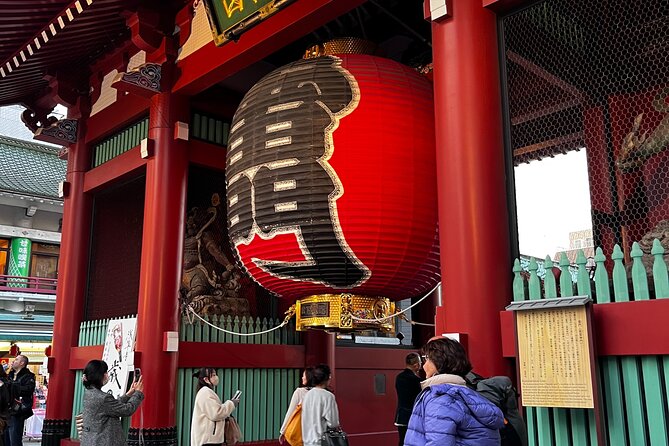
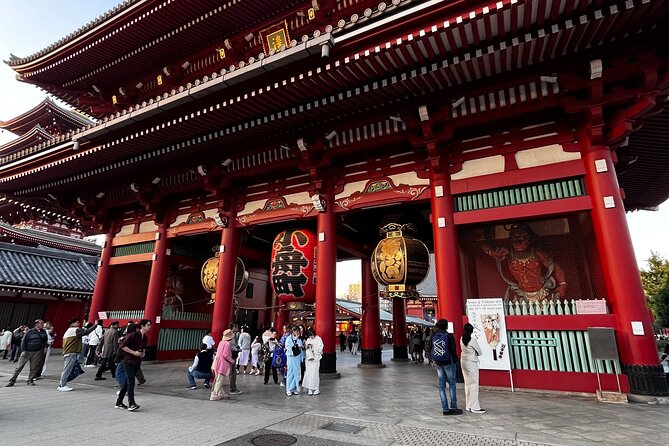
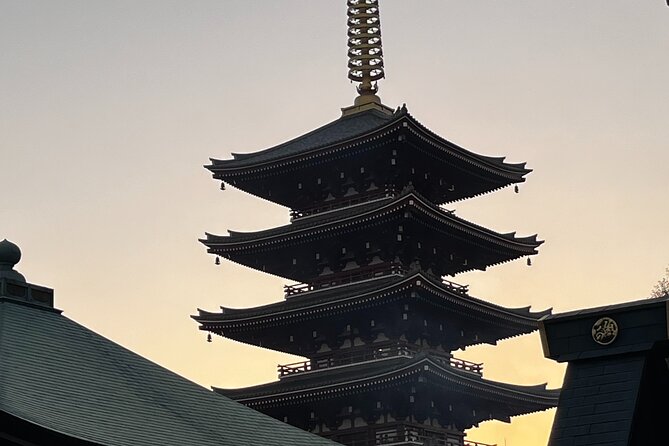
Asakusa gives you a quick change of pace from Tokyo’s modern shopping districts. The route around Senso-ji brings together a grand gate, a traditional shopping street, a major temple hall, and everyday religious customs in a compact area.
That compact layout matters. You do not spend the tour moving between distant sights. Instead, your guide can keep the focus on what is in front of you, explaining how the gate, street, and temple fit together.
Senso-ji is also the kind of place where a guide adds real value. You can walk through the grounds on your own, but it is easy to treat the visit as a photo stop. A guide can point out the meaning of the rituals, explain how to behave respectfully, and give you a better sense of why the site matters.
The tour is designed for people who want an introduction rather than a full morning of religious or architectural study. That makes it a good choice if you have limited time in Tokyo, are visiting Asakusa for the first time, or want a clear starting point before exploring on your own.
A few more Tokyo tours and experiences worth a look



Meeting Kaminarimon Gate and finding your bearings
The experience begins at Burger King Asakusa Azumabashi, at the listed address in Kaminarimon, Taito City. This is a useful detail to check carefully before leaving your hotel, since the meeting point is a business rather than the temple gate itself.
From there, the tour heads toward Senso-ji’s famous Kaminarimon Gate. The gate is one of the visual markers of Asakusa, and it gives the guide a natural place to begin explaining the area’s heritage.
You should expect this opening section to set the scene rather than offer a long lecture. The goal is to connect the first landmark with the customs and history you will see farther along the route.
This is where a local guide can make the visit feel less like a checklist. Yoshiko has received especially warm praise for her English and her ability to explain the area as someone from Tokyo. Yoshi has also been described as kind, attentive, and helpful with local traditions.
Because the group can include no more than 10 people, you should have a better chance of staying close to the guide. That is useful in a popular part of Tokyo, where a large group can easily become scattered.
Walking Nakamise-dori for treats and souvenirs
Nakamise-dori is the shopping street leading toward the temple. It gives the tour a welcome change of rhythm: after the large gate and its formal setting, you get a chance to look at local food, sweets, and souvenirs.
The shopping stop is not presented as a separate shopping tour, so keep your expectations sensible. You will have an opportunity to browse and pick up something distinctive, but the main purpose is to connect the street with the temple visit.
This is also the point where the tour can become useful in a very practical way. Yoshi has helped a visitor purchase a beautiful kimono, and has shown local food and treats. That does not mean every booking includes a personal shopping service, but it does suggest that the guide may be able to help you understand what you are seeing and make a more informed purchase.
I would not plan your entire souvenir shopping around this 90-minute experience. Instead, use Nakamise-dori as a guided introduction. If something catches your eye, you can return later with more time.
The short duration means the guide will need to balance browsing with the temple explanation. If you enjoy taking your time in shops, tasting several items, or comparing gifts, you may want to return to the street after the tour ends.
Entering the main temple area and learning the customs
The central part of the experience is the visit to Senso-ji’s majestic main hall. Here, the guide explains the temple’s history, rituals, and traditions, helping you understand what you are seeing rather than simply passing through.
Temple customs can be confusing when you first arrive in Japan. The tour is designed to show you how to behave respectfully, which is one of its most useful features. A previous guest specifically valued learning the significance of the temple and shrines, along with the proper way to respect local traditions.
You will also have a chance to draw a fortune. This adds a simple, hands-on part to the visit and gives the tour more texture than a walk focused only on buildings and dates.
The guide’s role here is not just to point out landmarks. It is to explain the connection between the place and the actions people carry out there. That makes the experience more meaningful, especially if Japanese religious customs are unfamiliar to you.
Since admission is listed as free, you are not paying for a special entrance ticket. The $43 fee is mainly for the guide, the organized route, and the explanations that help you read the site.
What $43 buys you
At $43 per person, this is not the cheapest way to see Senso-ji. You can enter the temple without paying admission and walk through Asakusa independently.
The value depends on how much help you want. If you are comfortable researching the temple beforehand, reading signs, and learning customs as you go, the self-guided option may be enough.
If you prefer someone to organize the route and explain the cultural details in clear English, the price is more reasonable. You are paying for 90 minutes of local guidance, not for access to a paid attraction.
The small group makes the fee easier to justify. A maximum of 10 people is modest for a Tokyo walking tour, and it should allow for questions and a more direct exchange with the guide.
The current rating is 5 out of 5 from 8 ratings, which is a very small sample. It is encouraging, but I would not treat it as proof that every departure will be identical. Much of the experience depends on the individual guide and the group’s pace.
The strongest praise centers on the guides rather than on an unusual attraction or special access. Yoshiko’s English and local background are frequently highlighted in the supplied feedback, while Yoshi is praised for patience, attention, and practical help. That tells you where the tour’s value lies.
A few more Tokyo tours and experiences worth a look

Why the 90-minute format is both useful and limiting
Ninety minutes is enough to see the main sights and learn the basic customs. It is short enough to fit before lunch, after a morning arrival, or between other Tokyo plans.
I like this format for a first look at Asakusa. You can understand the area without committing an entire day, then decide if you want to stay longer for shopping or more independent exploring.
The tradeoff is pace. You should not expect a leisurely examination of every part of the temple grounds, long shopping breaks, or an extended discussion of Japanese religious history.
The tour description calls it a quick but thorough visit to the main highlights. In practical terms, that means Kaminarimon Gate, Nakamise-dori, the main hall, customs, and fortune drawing are the priorities.
If you are traveling with children, older family members, or anyone who prefers a short outing, the length may be a strength. Most people can take part, and service animals are allowed. The activity is also near public transportation, though the supplied details do not name a specific station or give step-free route information.
Group size, guide quality, and the human side of the tour
The maximum group size of 10 is one of the clearest advantages here. A smaller group usually makes it easier to hear explanations, stay together, and ask about something that catches your attention.
The guide’s personality appears to matter just as much as the route. Yoshiko is specifically praised for excellent English and local knowledge. Yoshi is praised for being kind, attentive, and helpful with local food, treats, shopping, and traditions.
Those details make the experience feel more personal than a standard landmark walk. You are not simply being moved from one photo point to another. You have the chance to ask how to act at the temple or what a certain local item is.
Still, the tour provider is gotcha, and guide assignments can vary. You should not assume that Yoshiko or Yoshi will lead every departure. Their strengths show what a good guide can add, but your exact experience may depend on who is scheduled.
The tour also requires a minimum number of participants. If that minimum is not reached, the provider may offer another date or experience, or give you a full refund.
Who should book this Asakusa experience
I would recommend this tour if you want a clear, guided introduction to Senso-ji and do not want to spend hours preparing beforehand. It suits first-time visitors who want cultural context along with the main sights.
It is also a good fit if you are uneasy about temple etiquette. The chance to learn respectful behavior directly from a guide can prevent the visit from feeling awkward or purely visual.
You may like it if you want a little shopping built into your sightseeing. Nakamise-dori gives you access to souvenirs and treats, while the local guidance may help you understand what you are buying.
Families and small groups can also benefit from the compact schedule and 10-person limit. The tour does not require a full day, and most participants can take part.
I would think twice if you want extensive free time or a specialist lecture. Independent explorers who already know Senso-ji may find the fee hard to defend, especially since temple admission is free.
Book with the weather in mind as well. The activity requires good weather, and a cancellation for poor conditions brings either a different date or a full refund.
Practical details before you reserve
The tour costs $43 per person and is booked, on average, 54 days ahead. That advance booking pattern suggests you should not leave it until the last moment if your Tokyo dates are fixed.
You receive confirmation at booking, and the ticket is mobile, so you can keep the booking on your phone. The tour begins at Burger King Asakusa Azumabashi and ends back at the same meeting point.
Free cancellation is available up to 24 hours before the start time for a full refund. Cancellations or changes made less than 24 hours before the start time are not accepted for a refund, and the cut-off uses Tokyo local time.
Since the tour returns to its starting point, it is easy to plan another activity afterward. I would still leave a little breathing room rather than scheduling something across town immediately after the finish.
Should you book the Senso-ji guided tour?
Book it if you want a short, well-organized introduction to Asakusa, especially if temple customs and local context matter to you. The small group, central route, and strong praise for guides such as Yoshiko and Yoshi give this experience more substance than a simple walk past the main gate.
Skip it if you are happy exploring independently and would rather spend the $43 on food or souvenirs. Senso-ji itself is free to enter, and 90 minutes will not satisfy anyone seeking a long, detailed study.
For most first-time visitors with limited time, I think the tour is a sensible buy. You see the essential sights, learn how to behave respectfully, get a taste of Nakamise-dori, and finish with enough of the day left to explore Asakusa at your own pace.
FAQ
How long does the Senso-ji Temple tour last?
The tour lasts approximately 1 hour and 30 minutes.
How much does the experience cost?
The listed price is $43 per person.
What places are included?
The route includes Kaminarimon Gate, Nakamise-dori shopping street, and Senso-ji Temple’s main hall. The experience also includes explanations of local rituals and traditions and an opportunity to draw a fortune.
Where does the tour meet and finish?
The meeting point is Burger King Asakusa Azumabashi in Kaminarimon, Taito City, Tokyo. The activity ends back at the meeting point.
How many people can join the tour?
The group has a maximum of 10 participants.
Can I cancel for a full refund?
Yes. You can cancel at least 24 hours before the experience start time for a full refund. Poor weather or failure to reach the minimum number of participants may also result in a different date or experience, or a full refund.
More Guided Tours in Tokyo




More Temples & Meditation in Tokyo
More Asakusa Tours in Tokyo

More tours in Tokyo we've reviewed











Asakusa Tours, compared.
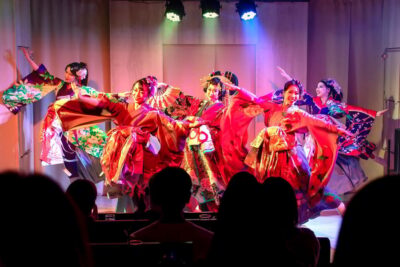 ★ 4.8Tokyo: Japanese Dance Cabaret Theater Asakusa-Kaguwa TicketFrom $492 hours
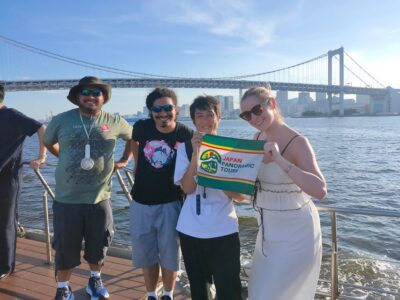 ★ 4.7Tokyo: Meiji Shrine, Asakusa, Skytree Bus Tour and CruiseFrom $12210 hours
 ★ 4.9Tokyo: Roll and Authentic Sushi Making Class in AsakusaFrom $581h 40m
 ★ 4.8Tokyo: Asakusa Walking Tour with Sensoji Temple VisitFrom $222 hours
 ★ 5.0Tokyo Asakusa Rickshaw TourFrom $42
 ★ 4.5Tokyo Panoramic 1 Day: Meiji Shrine, Asakusa, Odaiba and SKYTREE®From $85