
Reviewed · TSUKIJI MARKET TOURS
Tsukiji: Outer Market Walking Tour & Sake Tasting Experience
Tsukiji is at its best when you know where to look. This three-hour tour starts at Tsukiji Hongwanji Temple, moves through the narrow lanes of the Outer Market, and ends with an unusually generous sake tasting. You can try market foods along the way, but you pay for those separately.
I like the mix of local food and temple etiquette, which gives the afternoon more shape than a simple snack crawl. I also like the sake session: you can compare bottles from around Japan, taste them at different temperatures, and ask a sommelier what makes each one different. The main thing to keep in mind is that the market can be crowded, and the tour runs rain or shine.
In This Review
- Key points at a glance
- Why this Tsukiji tour works so well
- Beginning at Tsukiji Hongwanji Temple
- Reading the Outer Market with a guide
- Choosing food without rushing the sake
- The sake salon and its 50 to 60 bottles
- What makes the tasting good value
- Guides, language, and the human side
- Practical details before you book
- Who will enjoy this experience most
- Should you book the Tsukiji sake tour?
- FAQ
- How long does the Tsukiji Outer Market and sake tour last?
- Where does the tour begin?
- Where does the tour finish?
- Is food included in the tour price?
- How many kinds of sake can I try?
- Can children join the tour?
Key points at a glance
- Start with temple customs: Learn how to prepare and pray at Tsukiji Hongwanji Temple before entering the market.
- Shop with a local food guide: Find interesting stores and stalls that are easy to miss when you explore Tsukiji alone.
- Food costs extra: You can choose and buy market foods during the walk, but food is not included in the $70 price.
- Taste sake from across Japan: The salon offers roughly 50 to 60 kinds, with unlimited samples included.
- Learn how temperature changes flavor: Your sake expert serves samples at different temperatures so you can compare them.
- Families can join: Children receive soft drinks or tea and snacks, though the alcohol-centered format suits adults best.
Why this Tsukiji tour works so well
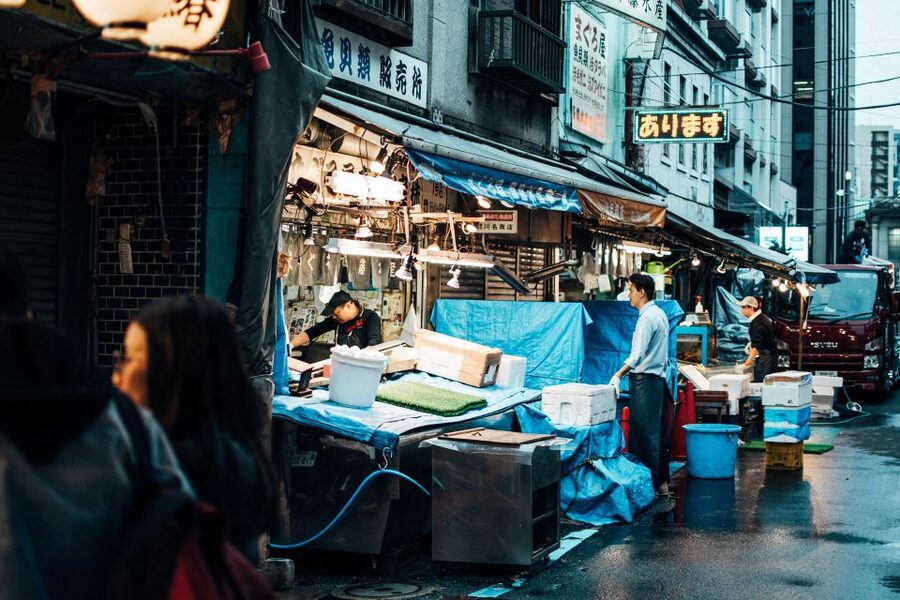
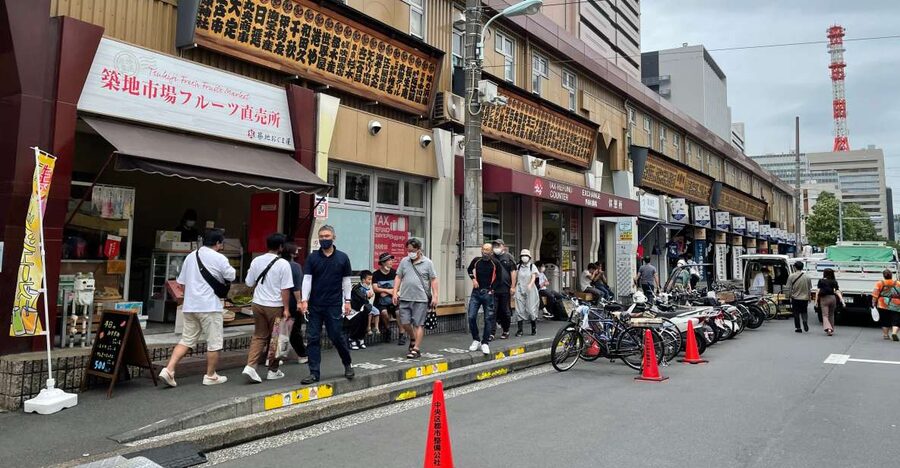
Many Tokyo visitors arrive at Tsukiji expecting one big fish market. The reality is more layered. The wholesale market moved to Toyosu, while Tsukiji Outer Market remains a lively district of small food shops, produce sellers, seafood counters, kitchenware stores, and casual places to eat.
That makes a guide useful. The lanes can feel confusing, especially when people are shopping, carrying boxes, or waiting for food. Guides such as Kumi, Kyoko, Sarah, Yuki, Sally, and Hatsumi have helped guests choose what to try and pointed out places they would likely have missed alone.
You are not handed a fixed food plate and told to eat it. Instead, you can decide how much you want to buy and what suits your appetite. That is a real advantage if one person wants seafood, another prefers sweets, or you want to save room for the sake tasting.
At $70 per person, the price is fair if you value the guide and the sake portion. The market food is extra, so budget for snacks or small dishes on top. The sake tasting, however, is not a token flight of three or four pours. The salon offers around 50 to 60 different kinds, and the tasting itself is unlimited. You will not try every bottle in three hours, but you can sample a wide range and return to the styles you prefer.
A few more Tokyo tours and experiences worth a look

Beginning at Tsukiji Hongwanji Temple
Meet your guide in front of the main entrance gate of Tsukiji Hongwanji Temple. This is a practical meeting point, close to Tsukiji Station, and it gives the tour a calm first stop before the market noise begins.
The temple visit focuses on how to pray like a local. You learn the basic etiquette and take part in the preparation before praying. It is a short introduction, not a long religious lecture, but it helps you approach the site with respect.
The temple also gives the afternoon a useful cultural frame. You begin by seeing how people use a place of worship, then move into the food district that has served local shoppers and merchants for generations. I like that progression because it avoids treating Tsukiji as only a place to eat.
Keep your shoes comfortable from the start. The walk is easy enough for most people, but you will spend the afternoon on your feet and moving through crowded market lanes. The tour is not suitable for wheelchair users, and pregnant women should not book it because of the alcohol tasting.
Reading the Outer Market with a guide
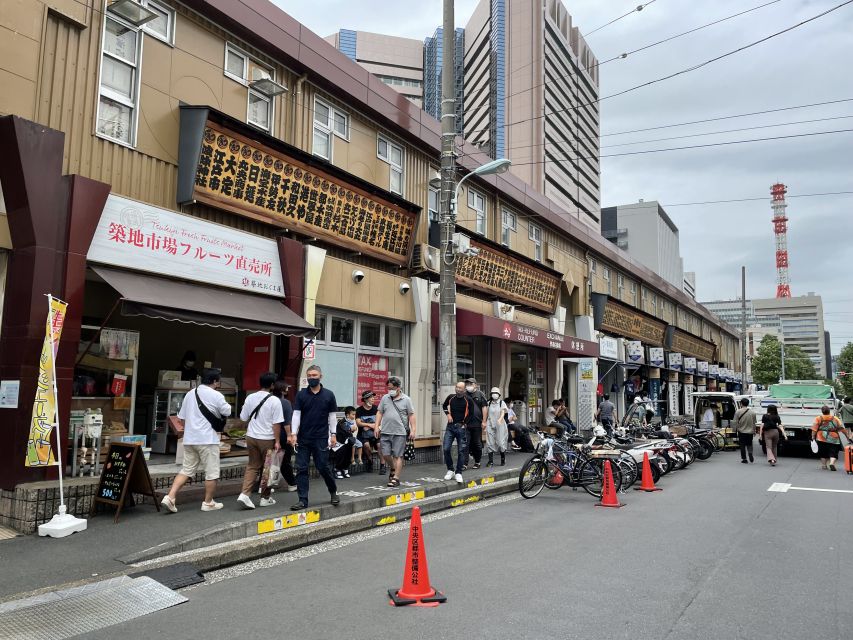
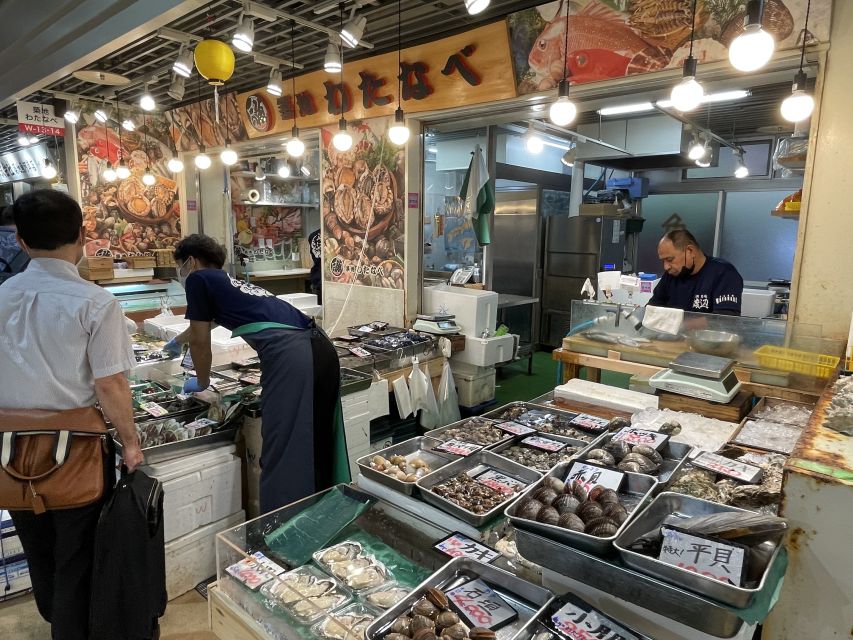
From the temple, your guide leads you into Tsukiji Outer Market. The point is not simply to walk past stalls while someone names the ingredients. Your guide helps explain how the market works and how locals shop there.
You might see stores selling seafood, produce, meat, sweets, and other Japanese food specialties. The exact stops can vary, and the guide can often adjust the walk around your interests. If you want to focus on seafood, local snacks, or unusual ingredients, say so early.
The best part is the freedom to buy food as you go. Several people have particularly enjoyed trying items such as wagyu beef, whale meat, seafood, and Japanese sweets, but you should treat these as examples rather than a fixed menu. The tour includes snacks during the sake tasting, but market food is not included.
This setup is helpful for three reasons. First, you choose what you actually want to eat. Second, you can control your spending. Third, you can ask the guide how a food is normally enjoyed instead of guessing from a sign or display.
Do not expect a quiet market stroll. Tsukiji gets crowded, and the lanes can be tight. Stay close to your guide and be patient when stopping at a shop. The crowd is part of the working market, but it can make photography and browsing slower.
The guide can also give you ideas for a return visit. One useful pattern from the afternoon is to take notes on shops or stalls that interest you, then come back another day when you are not trying to keep up with the group. The market is large enough that a single guided walk only gives you an introduction.
Choosing food without rushing the sake
Food is one of the flexible parts of this experience. Your guide may recommend good options and help with ordering, but you pay directly for anything you buy. That makes the tour work for different appetites, though it means the final cost depends on your choices.
I would not arrive expecting a full lunch included in the ticket. Have a light meal beforehand or bring a sensible appetite for small portions. You can snack at the market, then continue to the sake salon, where snacks are available to help with the tasting.
If you have dietary preferences, explain them to your guide at the beginning. The flexible approach makes it easier to choose suitable foods, but the supplied information does not promise a special dietary menu. The same applies to allergies: ask before buying anything.
The timing matters. One guest had to leave early for another booking and wished for more time. Do not schedule an important appointment immediately after the tour. The sake session is generous, and you will get more from it if you can stay through the explanations and taste at an unhurried pace.
The sake salon and its 50 to 60 bottles
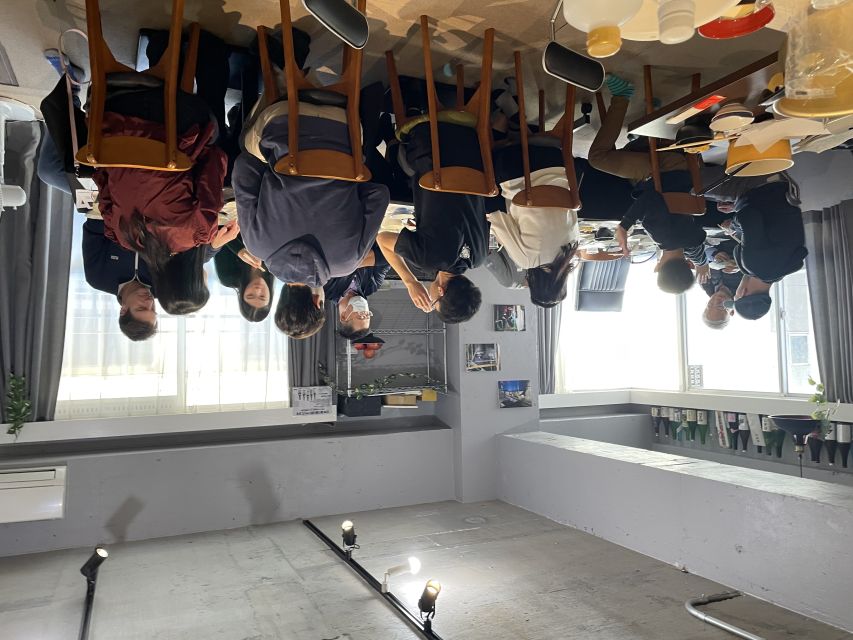
After the market walk, you go to a private sake salon in Tsukiji. The tour ends there, only a few minutes from Tsukiji Station or Shintomicho Station, so you can continue sightseeing or return to your hotel easily.
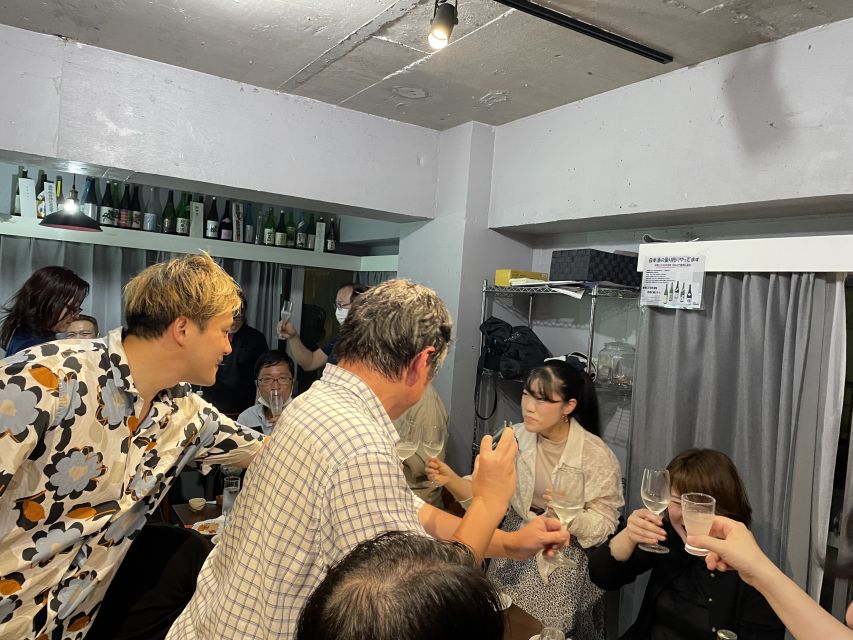
The salon is where this tour earns much of its price. A sake expert or sommelier explains the brewery, the bottle’s background, and the story behind each selection before you taste it. You learn about production, brewing methods, and the range of styles made in Japan.
If you think sake is always sweet, hot, and vaguely similar, this is a useful reset. Like beer or wine, sake can vary widely. Some samples may seem light, some fuller, some dry, and some more fragrant. The point is not to memorize technical terms. It is to notice what you like.
You can try sake at different temperatures, which is one of the most practical parts of the session. Heating does not simply make sake better or worse. It can change the way the aroma and flavor reach you. Comparing the same or similar styles at different temperatures helps explain why serving temperature matters.
The number of pours you manage depends on your pace. Past sessions have included about 15 to 28 different sakes, while the salon has around 50 to 60 available. Unlimited tasting means you can revisit a favorite after trying other styles, rather than stopping after a single sample.
The strongest reason to take notes is that you may find bottles you want to buy later. The selection can include rare or less familiar sakes, and some bottles may be available to purchase after the tasting. Ask the sommelier to identify the name and style of anything you like.
Other walking tours we've reviewed in Tokyo
What makes the tasting good value
A standard tasting often gives you a set number of pours. Here, the unlimited format gives you room to experiment. You can begin with the recommendations, then move toward your own taste instead of treating the sommelier’s choices as the final word.
That freedom matters for beginners. You do not need to know the difference between sake categories before arriving. Start with a question such as, I prefer dry drinks or I usually like light beer, and let the expert suggest a direction.
It also works for people who already drink sake. The wide range of bottles gives you a chance to compare breweries and styles from different parts of Japan. The session is not only about drinking more. It is about learning how to tell one bottle from another.
Snacks are served during the tasting and help clear the palate. Children receive tea, soft drinks, and snacks instead of sake. Families can therefore take part in the market and educational side of the salon, but adults should remember that the center of the final hour is alcohol.
Drink at your own pace. Unlimited does not mean you need to prove anything. I would rather taste fewer samples carefully than rush through the table and lose the differences the sommelier is explaining.
Guides, language, and the human side
The tour is offered in English and Japanese. English-speaking guides named in past sessions include Kumi, Kyoko, Sarah, Yuki, Sally, and Hatsumi. Guide assignment can vary, so do not book around a specific person unless the operator confirms it.
The strongest guide role is not simply translating signs. It is helping you decide where to stop, answering questions, and adjusting the walk to suit the group. Several guides have been praised for explaining the market clearly, recommending food at sensible prices, and writing down places to visit later.
A good guide also keeps the group moving without turning the market into a lecture. Tsukiji rewards curiosity, so ask questions. What looks like a small specialty shop may have a very different purpose from a snack counter, and your guide can explain how locals use it.
English ability can vary by guide, as with any multilingual tour. The tour is best when your guide can discuss both food and sake in detail, so confirm the language option when booking if that matters to you.
Practical details before you book
The tour lasts three hours and takes place in the afternoon, with starting times depending on availability. It runs rain or shine, so carry suitable rain gear and wear shoes that can handle a long walk.
The Outer Market is closed on Sundays and national holidays. Some stores also close on Wednesdays. This is the most important scheduling point, since the market walk loses much of its purpose when many shops are shut.
Bring a passport or identity card. A copy is accepted. The meeting point is the main entrance gate of Tsukiji Hongwanji Temple, not the sake salon. The tour finishes at the salon, a short walk from Tsukiji or Shintomicho stations.
Cancellation is free up to 24 hours before the start time, and you can reserve now and pay later. Those terms help if your Tokyo schedule is still changing, but the market closure days should be checked before you choose your date.
Who will enjoy this experience most
I would recommend this tour to a first-time Tokyo visitor who wants a guided introduction to Tsukiji without spending a full day there. It is also a good fit for anyone curious about sake but unsure how to begin.
Food-focused visitors get recommendations and the chance to choose their own bites. Drinkers get one of the more generous sake tastings available in a short Tokyo activity. Families can bring children, since nonalcoholic drinks and snacks are supplied, though adults should decide if the sake-centered ending will hold their children’s interest.
You may want a different activity if you dislike crowds, cannot walk comfortably for several hours, or want a formal sit-down meal. This is not a complete lunch, and it is not a quiet temple tour. It is a social market walk followed by a substantial tasting.
Should you book the Tsukiji sake tour?
Book it if you want local guidance, flexible food stops, and serious sake tasting in one compact afternoon. The $70 price makes sense because the tasting is unlimited and covers a large selection, while the market guide saves you from wandering without knowing which stalls are worth your time.
Plan extra money for food, leave space in your schedule afterward, and avoid Sundays, national holidays, and possible Wednesday closures. If you follow those conditions, this is a strong choice for learning how Tsukiji works and discovering that sake has far more range than the usual warm cup served at a casual restaurant.
FAQ
How long does the Tsukiji Outer Market and sake tour last?
The tour lasts three hours. Starting times vary, so check availability for the date you want.
Where does the tour begin?
Meet your guide in front of the main entrance gate of Tsukiji Hongwanji Temple.
Where does the tour finish?
The tour ends at the Tsukiji sake salon, a few minutes from Tsukiji Station or Shintomicho Station.
Is food included in the tour price?
Food purchased at Tsukiji Outer Market is not included. You can choose and buy local produce or prepared foods during the walk. Snacks are included during the sake tasting.
How many kinds of sake can I try?
The salon offers about 50 to 60 kinds of sake, and tastings are unlimited. The number you try depends on your pace and the time available.
Can children join the tour?
Yes. Children can join and receive soft drinks or tea and snacks. The tour is not suitable for pregnant women or wheelchair users.
More Shopping Tours in Tokyo
More Walking Tours in Tokyo
More Tsukiji Market Tours in Tokyo
More tours in Tokyo we've reviewed











Tsukiji Market Tours, compared.
 ★ 5.0Tokyo Tsukiji Fish Market Food and Culture Walking TourFrom $99
 ★ 5.0Tokyo: Tsukiji Fish Market Food and Walking tourFrom $30
 ★ 4.9Tokyo: Tsukiji Fish Market Guided Walking TourFrom $222 hours
 ★ 5.0Tokyo Sushi Making Class in Tsukiji with Professional ChefFrom $49
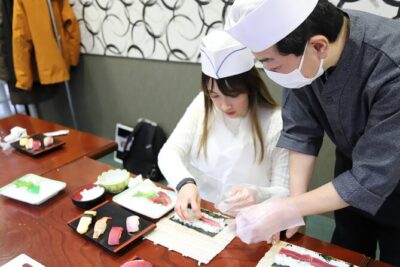 ★ 5.0Tsukiji Fish Market Guided Tour and Sushi Making with Pro ChefFrom $104
★ 4.7Tokyo: Tsukiji Fish Market Food and Culture Walking TourFrom $963 hours
★ 5.0Tsukiji Fish Market Guided Tour and Sushi Making with Pro ChefFrom $104
★ 4.7Tokyo: Tsukiji Fish Market Food and Culture Walking TourFrom $963 hours