
Reviewed · TSUKIJI MARKET TOURS
Tokyo Tsukiji Fish Market Food and Culture Walking Tour
Tsukiji is best understood with your appetite switched on. This three-hour walk leads you through the outer market’s narrow lanes, where vendors sell tuna, sea urchin, fish cakes, spices, kitchen tools, and snacks that are easy to miss on your own. The final meal is either sushi or a seafood bowl, depending on the day.
I like the way the tour pairs food with local customs and market history, rather than treating Tsukiji as one large tasting counter. I also like the small-group format, which helps you hear guides such as Shoko, Masa, Kiyo, and Naz while moving through crowded lanes. The catch is that the tour is not a visit to the famous inner wholesale market, and the amount of food may feel light for a very hungry eater.
In This Review
- Key points to know before you book
- Why Tsukiji works best with a guide
- Tsukiji Jogai Market: the first 90 minutes
- The old market area and a stop for food
- Kitchen tools and practical shopping
- Tsukiji Uogashi: the wholesale market view
- The final 30 minutes: sushi or a seafood bowl
- The guides make the biggest difference
- What you will eat, and how much
- Is $99.49 a fair price?
- Timing, meeting point, and walking comfort
- Who should book this Tsukiji walk?
- Should you book it?
- FAQ
- Where does the tour meet?
- How long does the tour last?
- What food is included?
- Is lunch included?
- Can I join if I do not eat fish?
- Are dietary requests accepted?
- What should I wear?
Key points to know before you book
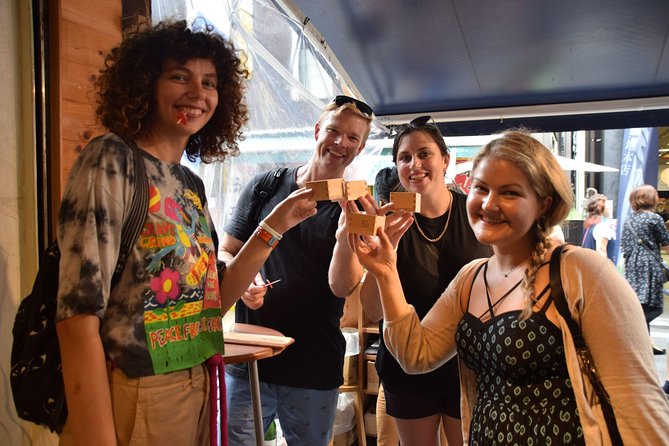
- Taste more than sushi: Samples can include Wagyu beef, tuna, fish cakes, Japanese omelette, seasonal fruit, dashi soup, green tea, and seafood.
- Start at a memorable landmark: The meeting point is the main gate of Tsukiji Honganji Temple, not the back entrance.
- Expect a market walk, not a sit-down feast: Lunch and snacks are included, but this is mainly a three-hour walking experience.
- The final dish changes: You may receive sushi or a seafood bowl, depending on the day and available food.
- The wholesale section has limits: Tsukiji Uogashi is closed on Wednesdays, Sundays, holidays, and other market closure days.
- Fish is essential: Vegetarian, halal, gluten-free, allergy-related, and fish-free diets cannot be accommodated.
Why Tsukiji works best with a guide
Tokyo’s outer Tsukiji Market is not a single hall with a neat entrance, map, and checkout counter. It is a collection of food stalls, small shops, restaurants, wholesale counters, and specialty stores spread through busy streets.
You can certainly walk around alone. But a guide gives the area some shape. You learn why chefs come here for seafood, how the market developed, and what you are actually looking at when a stall displays unfamiliar fish, shellfish, seaweed, or preserved foods.
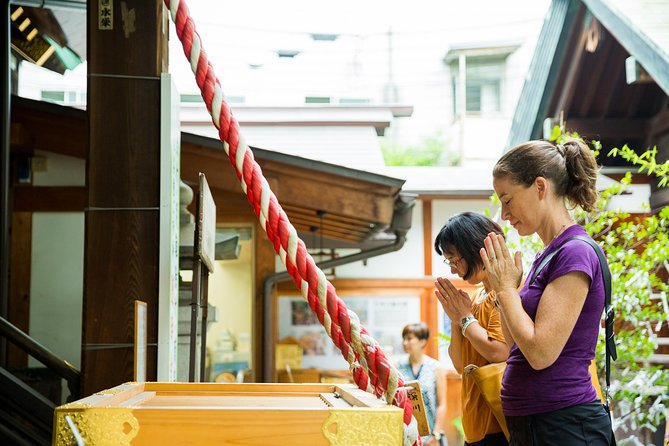
The tour begins outside Tsukiji Honganji Temple, an unusual and memorable building near the market. Starting there is useful because it gives you a clear meeting place and a bit of cultural context before the food begins. Be careful with directions: the meetup is at the front side and main gate of the temple. Some map directions lead to the back.
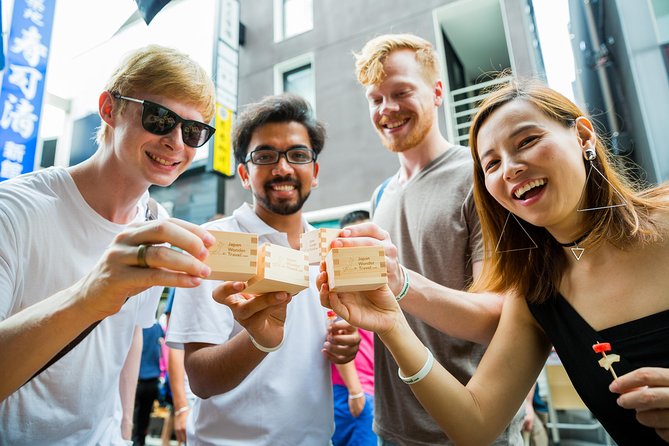
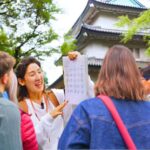
The group can include up to 20 people, though several experiences described groups of four or fewer. A smaller group makes a real difference here. You can hear the guide, pause at a stall, and ask about ingredients without being swallowed by the crowd.
A few more Tokyo tours and experiences worth a look

Tsukiji Jogai Market: the first 90 minutes
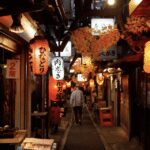
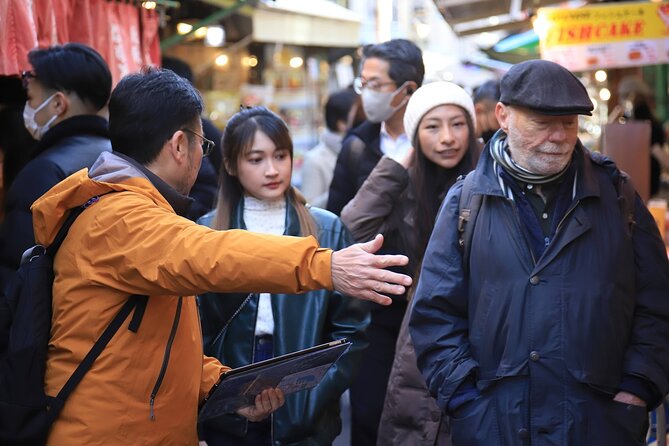
The first major portion takes place in Tsukiji Jogai Market, the outer market. This is where you get the strongest sense of everyday food shopping in Tokyo.
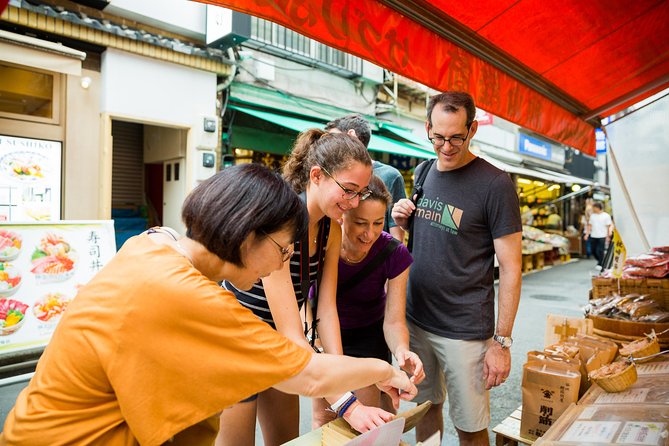
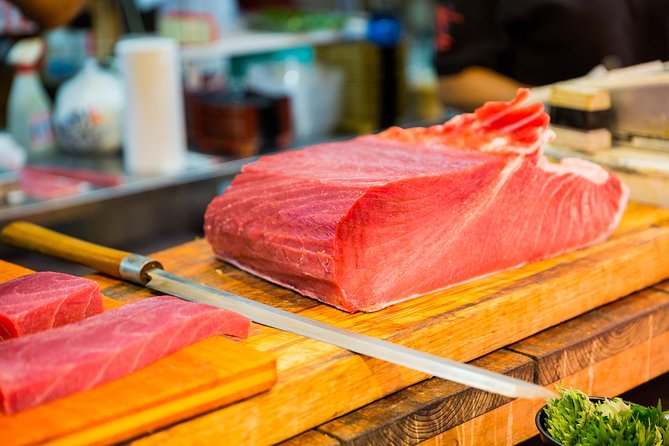
The market’s appeal is not only the fish. You might pass boxes of neatly arranged uni, tanks holding live fish, counters with seaweed and fish cakes, and vendors working with large tuna. The sights are active and practical. This is a place where ingredients are bought, prepared, and taken home, not simply displayed for tourists.
Your guide explains the market’s roughly 80-year story and its role as a source of high-quality seafood. The best guides also help you notice details that are easy to pass without understanding. For example, a Japanese food stall can look simple until someone explains how an ingredient is used, when it is eaten, or why it matters in Japanese cooking.
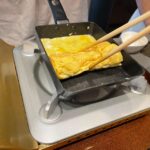
This is also the part of the morning with the broadest range of samples. Dashi soup and green tea may appear early, followed by small portions of fish cakes, Japanese omelette, seaweed, fruit, and seafood. Wagyu beef skewers add a welcome change from fish.
The food is not served as one organized tasting flight. You move from stall to stall, stopping as the market allows. That makes the experience feel connected to the place, but it also means the pace can vary. Waiting at a popular shop or navigating a tight lane may slow the group.
A guide can also help with shopping. Shoko, for example, has helped people choose ingredients and explained how she uses foods and spices in her own kitchen. That kind of advice is more useful than simply being told that an item is traditional. If you want to bring something home, ask your guide what is practical and how it is normally used.
The old market area and a stop for food
After the first market walk, the tour continues through the older Tsukiji market area for about 30 minutes. This is still food-focused, but the emphasis shifts toward tasting and looking at the shops around you.
You may see familiar Japanese foods beside items that are less obvious to first-time visitors. Fish cakes, omelette, seasonal fruit, and small seafood preparations help you try several flavors without ordering full portions at every stall.
The tour is a good fit if you like small bites and explanations. It is less suitable if you expect a large breakfast followed by a full restaurant lunch. One critical piece of advice is to avoid arriving extremely hungry. The included food can leave you satisfied, but the tour is not designed as an all-you-can-eat meal.
The exact food selection depends on opening hours and the day. On Wednesdays, Sundays, and other market closure days, some shops are closed, so Japanese omelette, fish cake, and fruit may not be available. That is not a minor detail if those tastings are part of your reason for booking.
Kitchen tools and practical shopping
If you are interested in Japanese cooking, the tour may include a stop at a kitchen-tool shop. This is a useful addition because Tsukiji is more than a seafood destination.
You might find knives, cooking tools, serving items, or other kitchen goods, though the tour does not promise a particular purchase or shop. The guide can explain what an item is for and help you decide if it makes sense to carry home.
This stop also gives the walk some breathing room. After several seafood stalls, a change of subject helps. It reminds you that Tsukiji serves home cooks and restaurants, not just sushi specialists.
Keep in mind that shopping is not the main purpose of the experience. You should have enough time for a look, especially in a small group, but you should not plan on a long, leisurely buying session at every store.
Tsukiji Uogashi: the wholesale market view
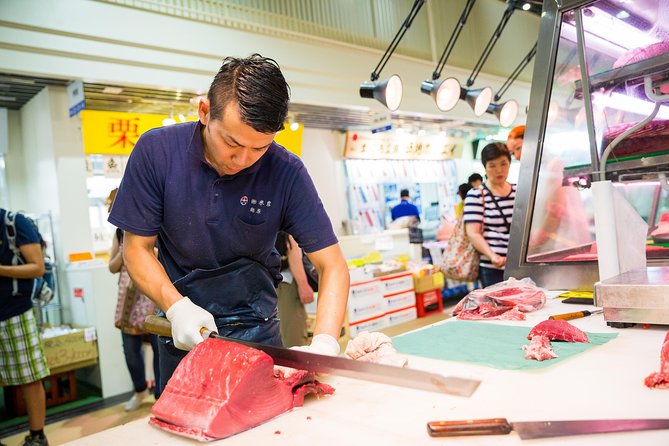
The itinerary includes Tsukiji Uogashi, a smaller wholesale market area where you can see many types of fresh fish. This can be one of the more interesting stops for anyone who wants to understand how seafood reaches Tokyo’s restaurants.
There is an important schedule warning. Tsukiji Uogashi is closed on Wednesdays, Sundays, holidays, and other official market closure days. On those dates, the route changes and certain tastings are unavailable.
You should also set your expectations carefully. This is not the old inner Tsukiji wholesale market, which no longer operates in its former location. The tour visits the outer market and a mini wholesale area. If you are expecting access to the giant fish auction or the original wholesale floor, this experience will disappoint you.
That distinction matters because the tour description can sound broader than the current visit. You are getting a guided look at Tsukiji’s outer shops and Uogashi area, not a tour of the former inner market.
Other walking tours we've reviewed in Tokyo
The final 30 minutes: sushi or a seafood bowl
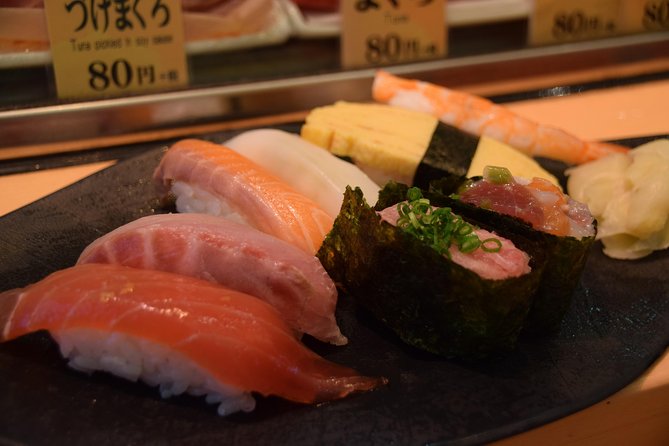
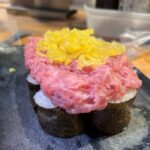
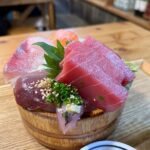
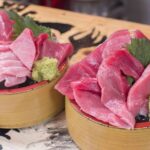
The tour ends with a sit-down serving of sushi or a seafood bowl. The choice depends on the day and the restaurant’s available meal.
This closing meal gives the morning a clear finish. After sampling ingredients and snacks at separate stalls, you get a more complete seafood dish. For many people, this is the most satisfying part of the tour, especially if the guide arranges a preparation demonstration.
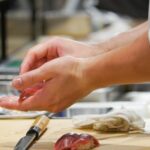
One experience included watching fish being prepared and making sushi. Another ended with sashimi served at a local restaurant. These details are not guaranteed for every departure, but they show how the final stop can connect market ingredients with the food on your plate.
The final restaurant is also the part that needs the most careful expectation setting. Some people find it a fitting close to the tour, while others may feel it is more tourist-oriented than the market stalls. You do not generally choose every detail of the final meal, so book this as a guided introduction rather than a fully customizable restaurant crawl.
The guides make the biggest difference
The route is valuable, but the guide shapes the experience. A strong guide turns a series of food stops into a story about Japanese eating habits, shopping, history, and etiquette.
Guides named in personal feedback include Kiyo, Naz, Miky, Kayoko, Joy, Mieko, Shibuya, Yuki, KK, Shoko, Sean, Take, Nick, Yuko, Mike, Masa, and Hedeki. Several were praised for clear English, humor, patience, and practical food advice.
Masa, for example, was described as calm, patient, funny, and generous with cultural background. Shoko helped explain how ingredients fit into home cooking. Nick connected tastings with nearby urban landmarks and finished at a sashimi restaurant called Moritaya. These are the kinds of details that make a guide-led market visit worthwhile.
The experience is not perfectly consistent. Some guides may be less lively or less experienced, and a few people found the pace slow, with long waits and limited explanation. Communication can also vary. If you have trouble understanding your guide, ask short questions and stay close during explanations.
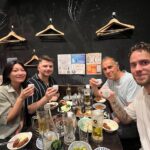
The good news is that the group often helps set the tone. A friendly group and a guide who welcomes questions can make the walk feel relaxed rather than rushed.
What you will eat, and how much
The advertised food range is broad:
- Wagyu beef skewer
- Fresh tuna or other seafood
- Sushi or a seafood bowl
- Fish cakes
- Japanese omelette
- Seasonal fruit
- Dashi soup
- Green tea
- Other market samples
The exact combination changes by day, shop opening, season, and market conditions. Sushi and seafood bowl are alternatives, not necessarily both. Some stalls may be closed, especially on Wednesday, Sunday, or holiday departures.
For a first visit to Japan, the range is useful because it lets you try foods in small portions. You can sample squid, eel sushi, tempura, seaweed, fish cakes, and other items without having to decipher every menu or guess which stall is worth your time.
I would still eat a small breakfast before meeting the group. The tour includes lunch and snacks, but one of the strongest practical criticisms is that the food may feel more like a series of samples than a full food crawl.
You also need to eat fish. The operator does not accommodate vegetarian, halal, gluten-free, allergy-related, or fish-free diets. Minimum drinking age is 20, and anyone younger receives another drink instead.
Is $99.49 a fair price?
At $99.49 per person, this is not the cheapest way to walk through Tsukiji. You can enter the market area without paying an admission fee, browse stalls independently, and buy food as you go.
The price pays for more than entry. It covers a three-hour guided route, included snacks, lunch, cultural explanations, help with ordering and navigation, and access to a planned set of tastings. For first-time visitors who feel unsure about raw seafood or Japanese market etiquette, that guidance has real value.
The strongest case for booking is convenience. You do not have to research which shops are open, work out what each food is, or search for the best route through the lanes. You also have someone who can point out foods you might otherwise walk past.
The weaker case is for independent eaters who enjoy wandering and already know Tokyo’s food culture. If you are comfortable choosing restaurants, reading menus, and exploring Tsukiji alone, you may prefer to spend $99.49 directly on meals and purchases.
The rating is currently 4.9 from 3,184 reviews, with 97 percent recommending the experience. That is a strong signal, but it does not erase the key limits: food quantity varies, the inner wholesale market is not part of the visit, and the quality of the morning depends partly on the individual guide.
Timing, meeting point, and walking comfort
The tour lasts about three hours and begins at the main gate of Tsukiji Honganji Temple. It ends back at the meeting point.
Arrive early. The group leaves sharply at the stated start time, and a late arrival cannot be added to the end of the tour. Same-day cancellations and late arrivals do not receive refunds.
Wear comfortable walking shoes. You will spend most of the experience on foot, often moving through crowded market lanes and standing at food stalls. A moderate level of physical fitness is recommended.
The temple is close to public transportation, but transport to the meeting point is not included. Hotel pickup and drop-off, extra food and drinks, and personal purchases are also your responsibility.
Free cancellation is available if you cancel at least 24 hours before the start time. Changes made inside that 24-hour window are not accepted.
Who should book this Tsukiji walk?
I would recommend this tour to a first-time Tokyo visitor who wants an easy introduction to Japanese food and prefers having a local guide handle the details.
It also suits curious eaters who want to try squid, eel, tuna, Wagyu, fish cakes, omelette, and other foods in one morning. Families with older adults may appreciate the ability to move at a manageable pace, though everyone should be comfortable walking and standing.
This is less suitable for:
- Vegetarians, vegans, halal diners, and people with food allergies
- Anyone who cannot eat fish
- Visitors expecting the former inner wholesale market
- People seeking a large, all-day food tour
- Independent food shoppers who prefer to choose every dish and restaurant
- Anyone arriving late or unwilling to walk for three hours
Should you book it?
Book this experience if you want Tsukiji explained as a working food district, not just photographed as a famous Tokyo stop. The best part is the combination of small tastings, market access, local food knowledge, and a final sushi or seafood bowl.
Before paying, accept three facts: the former inner market is not included, food portions are not enormous, and the day’s route changes when shops are closed. If those points suit you, $99.49 is a reasonable price for a well-planned introduction, especially on your first morning in Tokyo.
FAQ
Where does the tour meet?
Meet your guide at the main gate of Tsukiji Honganji Temple, at 3-chōme-15-1 Tsukiji, Chuo City, Tokyo. Use the front side of the temple because some map directions lead to the back.
How long does the tour last?
The tour lasts approximately three hours and ends back at the original meeting point.
What food is included?
Included food can include Wagyu beef, fresh seafood, fish cakes, Japanese omelette, seasonal fruit, dashi soup, green tea, and other samples. The final meal is either sushi or a seafood bowl, depending on the day.
Is lunch included?
Yes. Lunch and snacks are included in the tour.
Can I join if I do not eat fish?
No. The experience cannot accommodate people who cannot eat fish.
Are dietary requests accepted?
Vegetarian, halal, gluten-free, and allergy-related requests cannot be accommodated.
What should I wear?
Wear comfortable walking shoes because the experience is mainly a walking tour.
More Food Experiences in Tokyo
More Walking Tours in Tokyo
More Tsukiji Market Tours in Tokyo

More tours in Tokyo we've reviewed





Tsukiji Market Tours, compared.
 ★ 5.0Tokyo: Tsukiji Fish Market Food and Walking tourFrom $30
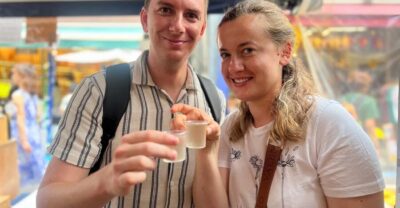 ★ 4.9Tokyo: Tsukiji Fish Market Guided Walking TourFrom $222 hours
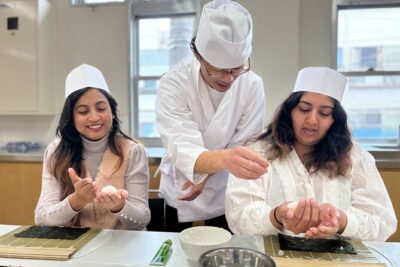 ★ 5.0Tokyo Sushi Making Class in Tsukiji with Professional ChefFrom $49
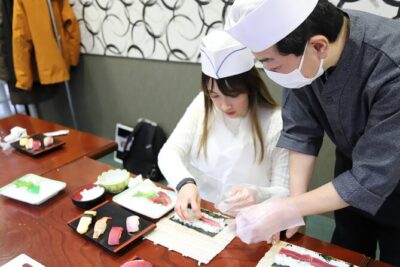 ★ 5.0Tsukiji Fish Market Guided Tour and Sushi Making with Pro ChefFrom $104
 ★ 4.7Tokyo: Tsukiji Fish Market Food and Culture Walking TourFrom $963 hours
 ★ 5.0Tsukiji Fish Market: Street Food & Culture Walking TourFrom $33