
Reviewed · SUSHI MAKING CLASSES
Tokyo Walking Tour : Sumo, Sushi, Tea, Temples and Tokyo Tower
The morning begins with a rare look at sumo training, then moves through Tsukiji’s food stalls, a traditional garden, a Buddhist temple, and Tokyo Tower. It is a smart route for first-time visitors who want several sides of Tokyo in one day.
I like the mix of hands-on moments: tasting food at the market, drinking tea in Hamarikyu Garden, and copying a Buddhist sutra at Zojoji Temple. I also like that the group uses trains and walks, giving you a better feel for how Tokyo works. The main drawback is stamina. You will spend much of the eight-hour tour outdoors, and the sumo visit can change or be canceled when training is not taking place.
In This Review
- Key points to know before booking
- A full Tokyo day built around contrasts
- Arashio Beya and the quiet power of sumo
- Tsukiji Outer Market: Tokyo’s best food stop
- Hamarikyu Gardens and a proper tea break
- Zojoji Temple and the sutra-copying experience
- Tokyo Tower closes the day above the city
- What the $166.85 price really covers
- Who will enjoy this walking tour most
- Practical details that affect your day
- Should you book this Tokyo tour?
- FAQ
- How long does the Tokyo walking tour last?
- Where does the tour begin?
- Where does the tour end?
- Is transportation included?
- Is food included at Tsukiji Market?
- Is the sumo training visit guaranteed?
- What is the maximum group size?
Key points to know before booking
- Watch real sumo practice: Arashio Beya is a working training room, not a staged show, so silence and careful observation matter.
- Eat at Tsukiji Outer Market: Your guide leads you through the market, with time to sample food, take photos, and shop.
- Tea in a historic garden: Hamarikyu includes garden admission and a traditional tea and sweet experience.
- Try sutra copying: Zojoji Temple adds a quiet, reflective activity that gives the day more depth than sightseeing alone.
- Finish at Tokyo Tower: The final stop gives you an observation-deck view and a look at one of Tokyo’s most recognizable buildings.
- Plan for a full walking day: The group is limited to 15, but the tour uses public transportation and does not include transport before or after the tour.
A full Tokyo day built around contrasts
This tour works because its route keeps changing character. You begin with the disciplined world of sumo, move into the food culture of Tsukiji, slow down for tea, step into Buddhist temple grounds, and finish high above the city.
That variety is the real selling point. Many Tokyo tours focus only on temples and shopping districts. This one gives you food, sport, religion, gardens, and modern architecture in one carefully packed day.
The tour starts at 8:15 a.m. near Hamacho Station and ends near Akabanebashi Station. You are not riding in a private vehicle, so the day includes public transport and several hours on foot. That makes the experience more local, but it also means you should wear comfortable shoes and arrive ready for a long morning and afternoon.
The group can include up to 15 people. That is small enough for a guide to manage at market stalls and temple grounds, though it is not a private tour. An English-speaking local guide leads the day. Jade, one named guide associated with the experience, has been praised for combining Japanese history with personal stories, a useful quality on a route with several very different stops.
A few more Tokyo tours and experiences worth a look



Arashio Beya and the quiet power of sumo
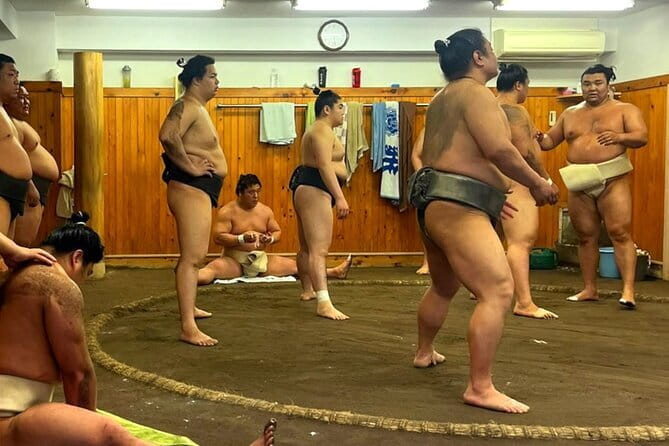
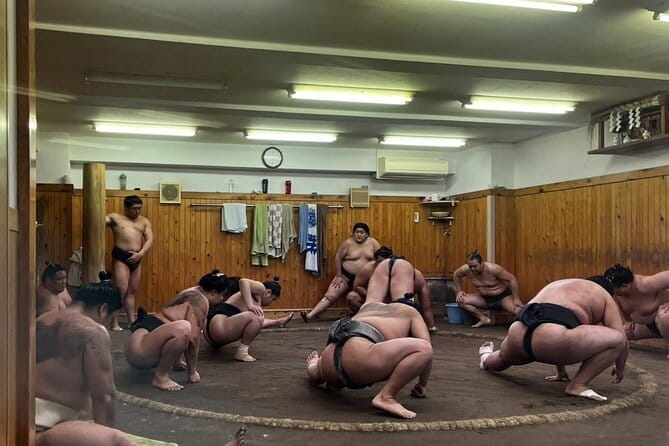
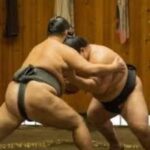
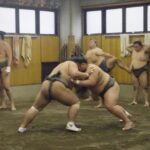
Your first stop is Arashio Beya, a traditional sumo beya, or training room. The appeal here is simple: you may watch wrestlers train in a real working setting rather than attend a formal tournament.
This is also the part of the tour that requires the most flexibility. Training is not performed for an audience. The wrestlers cannot be disturbed, so you will need to watch quietly and follow your guide’s instructions. You may see practice up close, but the schedule can change, and there are times when no training is available.
The sumo visit is not guaranteed during certain weeks of the year. Training closes during the Grand Sumo Tournament periods in January, May, and September. The tour schedule can also change on other days. If seeing sumo is your main reason for booking, treat it as a valuable possibility rather than a promise.
The visit lasts about 1 hour and 10 minutes. That is enough time to make the stop meaningful without letting it take over the whole day. I like starting here because it gives you a look at a part of Japanese culture that most short city tours cannot easily include.
You should not expect explanations from the wrestlers or an interactive demonstration. This is observation, not participation. Still, that restraint is part of the experience. You are seeing a serious practice environment, and the quiet rules help preserve it.
Tsukiji Outer Market: Tokyo’s best food stop
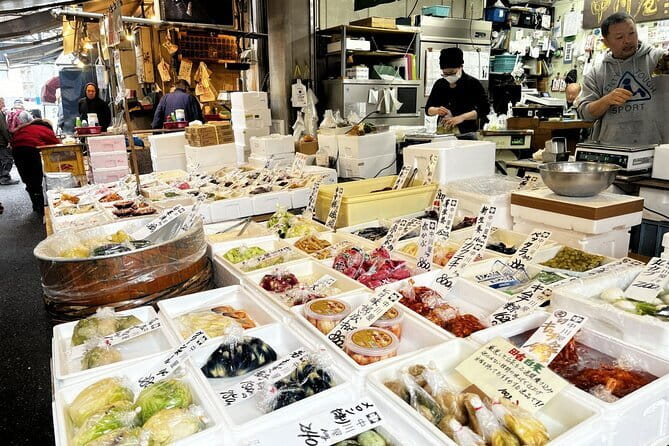
From sumo, the tour moves to Tsukiji Outer Market for about 90 minutes. The old inner wholesale market moved to Toyosu, but Tsukiji’s outer streets remain a major place for seafood, snacks, kitchen goods, and small food shops.
Your guide gives you an introduction to the market and leads you through the food on offer. The included tour does not cover your food and drinks, so bring extra yen or a payment method accepted by the vendors. This is one of the few parts of the day where the cost can rise or fall according to your appetite.
The market is best approached with curiosity rather than a fixed meal plan. You can sample sushi and street food, take photos, shop, and spend some time exploring at your own pace. The guided introduction helps you make sense of the area, while the free time lets you choose what interests you.
The tour description highlights fresh sushi and street food, but it does not promise a fixed tasting menu. Keep that distinction in mind. You are paying for the guided market visit, not for unlimited food.
I like the pacing here. After the quiet focus of sumo, Tsukiji gives you a livelier food-centered stop. You can ask your guide about unfamiliar dishes and then decide what you want to try. If you are hungry, this is the place to budget for several small purchases rather than one large meal.
The 90-minute visit may feel short if you want to shop carefully or eat a full lunch. It is enough for an introduction and a few tastings, but you will not cover every lane. Stay aware of the meeting time so your market browsing does not delay the rest of the group.
Hamarikyu Gardens and a proper tea break
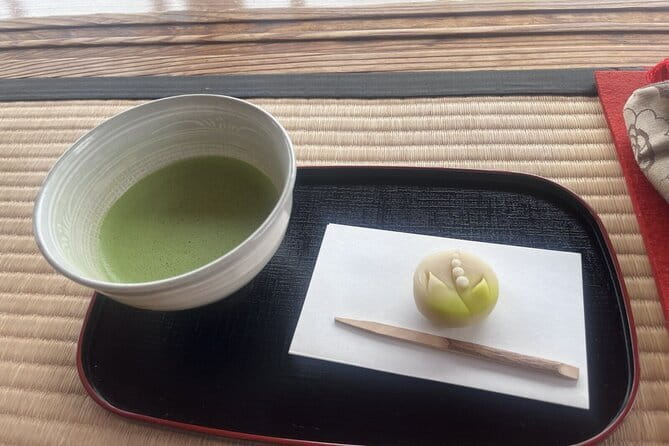
Hamarikyu Gardens brings a welcome change of pace. The tour includes admission, a guided introduction to the garden and its history, free time to walk, and a traditional tea and sweet experience in a tea house.
This is one of the strongest value points in the package. Garden admission and the tea experience are included, and the setting gives you a calm break after the market. You can look around on your own before meeting the group again for tea.
The garden is important not only because it is pretty, but because it shows how Tokyo preserves pockets of older design within a modern city. The tour gives you enough time to notice the layout and atmosphere without turning the visit into a rushed photo stop.
The tea house experience is a chance to slow down and pay attention to small details. You will have tea and a sweet in a traditional setting. The supplied information does not specify the type of tea, the sweet, or the exact tea procedure, so do not book this expecting a lengthy formal ceremony.
Instead, think of it as a cultural pause. Your guide can help explain what you are seeing, and you get a seated moment in the middle of a walking-heavy day. That makes the tea stop useful even if you are not especially interested in tea customs.
Hamarikyu lasts about 1 hour and 20 minutes. You will have guided time, free time, and the tea house visit within that window. The schedule is sensible, but it leaves limited room for a long independent garden walk.
Zojoji Temple and the sutra-copying experience
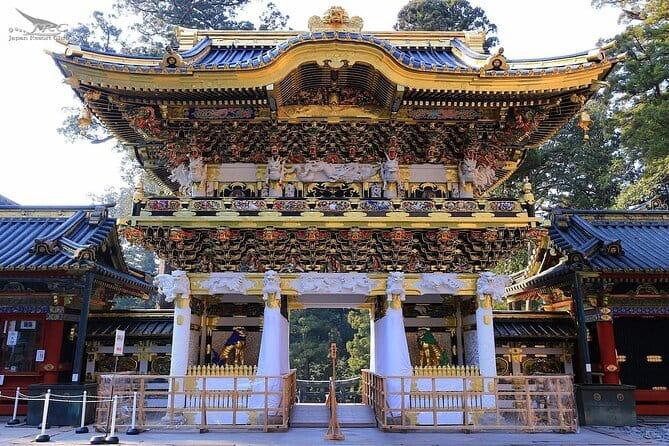
The next stop is Zojoji Temple, where your guide introduces the temple and its history. The visit lasts about one hour and includes a sutra-copying experience.
This activity gives the itinerary a quiet center. Copying a sutra asks you to slow your hand and focus on the page, even if you are not religious. It is less about producing perfect calligraphy and more about taking a calm break from Tokyo’s noise and movement.
You do not need to be spiritual to find value in the activity. The tour presents it as an experience open to all, and the included fee means you do not need to pay extra for the session.
Zojoji also helps connect the day’s cultural stops. Sumo shows discipline through physical training. Tea shows attention through ritual. Sutra copying offers another form of concentration, this time in a Buddhist temple setting.
The one-hour visit will not allow a long study of every part of the temple grounds. Your guide’s introduction is meant to give you context, then the sutra activity adds a personal moment. If you prefer fast sightseeing and constant movement, this may feel slower than the market or Tokyo Tower. I see that as a benefit, especially on a full day.
A few more Tokyo tours and experiences worth a look


Tokyo Tower closes the day above the city

The final stop is Tokyo Tower, with about 1 hour and 15 minutes to enjoy the views and the tower’s retro architecture. Your admission ticket is included.
Ending here is a good choice. After visiting older cultural sites, you finish with an unmistakable symbol of modern Tokyo. From the observation deck, you can take in the city from above and get a sense of its enormous scale.
The tour highlights both the view and the tower’s nostalgic design. Do not expect the sleek, ultra-modern feel of every Tokyo high-rise. Tokyo Tower has an older character, and the retro look is part of its appeal.
An hour and 15 minutes should give you time to reach the viewing area, look out across the city, and take photos without having to rush through the stop. Visibility will affect the quality of the view, and the tour does not promise special weather conditions or a particular skyline sight.
The day ends near Akabanebashi Station. Your guide can help with questions about returning to your hotel or continuing to another part of Tokyo. Transport after the tour is not included, so you will need to pay for your onward train or other ride.
What the $166.85 price really covers
At $166.85 per person, this is not a cheap walking tour. The value comes from the number of included elements and the structure of the day.
Your price includes the train fee from Ningyocho Station to Tsukiji Station, Hamarikyu Gardens admission, the tea house experience, the sutra-copying fee, the Tokyo Tower ticket, and an English-speaking local guide. Food and drinks at Tsukiji are extra, as are trains and transport before and after the tour.
If you visited each place independently, you could perhaps spend less. You would also need to work out the route, manage train connections, understand the sumo etiquette, choose market stalls, arrange the garden and tea visit, and coordinate Tokyo Tower. The tour fee pays for that organization as well as the admissions.
The price makes the most sense for a first visit, a short stay, or anyone who wants a day with several cultural stops but does not want to plan every detail. It makes less sense if you already know Tokyo well, prefer long independent visits, or want to control every meal and train ride.
Keep a separate food budget for Tsukiji. Since the market tasting is not included, your total spending depends on what you choose to eat. You should also budget for the transportation needed to reach Hamacho Station and leave Akabanebashi Station.
Who will enjoy this walking tour most

This experience suits you if you want an active introduction to Tokyo and enjoy variety. You get a little of nearly everything: traditional sport, market food, a garden, tea, a Buddhist temple, and a city view.
It is especially useful for first-time visitors who want cultural context along the way. A guide can explain the customs at the sumo beya, help you understand the market, introduce the garden and temple, and connect the separate stops into one story.
The tour also works well for couples and small groups who want shared activities rather than a day of passive sightseeing. Tea and sutra copying create memorable pauses, while the market and Tokyo Tower provide more familiar sightseeing energy.
You should think twice if you dislike walking, outdoor time, public transport, or fixed schedules. Most travelers can participate, but the tour description clearly warns that it involves several hours of walking outdoors. Tokyo’s weather can make that more tiring, even when the route itself is manageable.
Families may enjoy the variety, but adults should consider how children handle an eight-hour day, quiet temple customs, and a non-interactive sumo viewing. The maximum group size of 15 keeps the experience fairly contained, but children will still need to keep pace with the group.
Practical details that affect your day
Start at 8:15 a.m. at Hamacho Station, at 2-chōme-59-3 Nihonbashihamachō in Chuo City. Check the exact meeting instructions before leaving your hotel and allow time to reach the station.
Wear shoes suited to several hours of walking. Bring water, sun protection, and weather-appropriate clothing because much of the day takes place outdoors. A small bag is useful for market purchases, though the supplied information does not state whether storage is available.
The tour uses public transportation rather than a private vehicle. That is a plus if you want to see how Tokyo functions, but it means you should expect station access, train movement, and walking between parts of the route.
The mobile ticket is convenient. Confirmation is provided at booking, and the tour operates near public transportation. Free cancellation is available if you cancel at least 24 hours before the start time. Changes or cancellations inside that period are not accepted for a refund.
The sumo schedule deserves one final reminder. Training may not take place, and it is closed during the Grand Sumo Tournament periods in January, May, and September. If sumo is your top priority, confirm the current schedule before committing.
Should you book this Tokyo tour?
Book it if you want one well-planned day that combines Tokyo’s old customs, food culture, public parks, religious sites, and modern views. The included tea house visit, sutra-copying fee, garden admission, and Tokyo Tower ticket help explain the price, while a guide adds the most value at the sumo beya and Tsukiji Market.
Skip it if you want a relaxed day, a private vehicle, a guaranteed sumo session, or a tour built around a full meal. The schedule is long, the walking is real, and market food costs extra.
For the right person, this is an efficient and unusually varied introduction to Tokyo. Just book it with comfortable shoes, an open schedule, and the understanding that the sumo stop depends on actual training conditions.
FAQ
How long does the Tokyo walking tour last?
The tour lasts approximately 8 hours and 15 minutes. It starts at 8:15 a.m.
Where does the tour begin?
The meeting point is Hamacho Station, at 2-chōme-59-3 Nihonbashihamachō, Chuo City, Tokyo 103-0007, Japan.
Where does the tour end?
The tour ends near Akabanebashi Station in Higashiazabu, Minato City. The guide can assist with questions about transportation afterward.
Is transportation included?
The train fee from Ningyocho Station to Tsukiji Station is included. Transportation before and after the tour is not included, and the tour does not use a private vehicle.
Is food included at Tsukiji Market?
No. Food and drinks are not included. You have time to sample food, shop, take photos, and explore the market at your own pace.
Is the sumo training visit guaranteed?
No. The sumo schedule can change, and training is closed during certain weeks when Grand Sumo Tournaments are held in January, May, and September. You may not be able to see sumo training.
What is the maximum group size?
The tour can have a maximum of 15 participants.
More Walking Tours in Tokyo

More Sumo Experiences in Tokyo
More Sushi Making Classes in Tokyo

More tours in Tokyo we've reviewed




Sushi Making Classes, compared.
 ★ 5.0Sushi Making Tokyo Roll and Authentic Japanese Sushi ClassFrom $59
 ★ 4.9Tokyo: Roll and Authentic Sushi Making Class in AsakusaFrom $581h 40m
 ★ 5.0Make Sushi and Create Unforgettable Memories in TokyoFrom $79
 ★ 4.9Tokyo: Sushi Making Class in a Happi Coat near a Famous SpotFrom $421h 30m
 ★ 5.0Tokyo Sushi Making Class in Tsukiji with Professional ChefFrom $49
 ★ 5.0Tokyo Night Foodie Tour in Shinjuku – Seasonal Sushi, Wagyu BeefFrom $111