
Reviewed · TSUKIJI MARKET TOURS
Tokyo Sushi Making Class in Tsukiji with Professional Chef
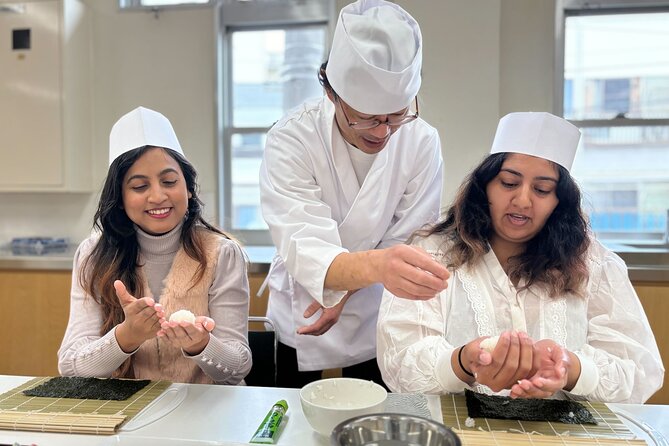
The best part of this short class is that you do not simply watch a chef make sushi. You see fish prepared, learn how Japanese knives are used, shape five pieces of nigiri, roll maki sushi, and eat your own lunch. It is a tidy introduction to sushi in the neighborhood that has long been associated with Tokyo’s seafood trade.
I like the hands-on format and the setting in a traditional Japanese building near Tsukiji’s market streets. I also like the English support, since hosts such as Yuko, Yugo, Kanon, and Emma have helped explain the chef’s demonstrations clearly. The main consideration is practical: the classroom is on the third floor with stairs only, and the class may run past its scheduled 90 minutes.
In This Review
- Key points at a glance
- A sushi lesson in the heart of Tsukiji
- What happens during the 90-minute class
- The Tsukiji setting and nearby market stops
- The people who make the lesson work
- How much food do you actually get?
- Is $49.74 a fair price?
- Families, beginners, and people new to sushi
- Timing, meeting point, and group size
- What I would do before and after class
- Should you book the Tsukiji sushi class?
- FAQ
- How long does the sushi-making class last?
- Where does the activity begin?
- Where does the activity end?
- What sushi will I make?
- Is lunch included?
- Is the class taught in English?
- Are ingredients and utensils provided?
- Is hotel transportation included?
- Can I cancel for a refund?
Key points at a glance
- Watch a fish-cutting demonstration: A professional sushi chef shows the steps used to prepare fish and explains Japanese knives.
- Make six pieces of sushi: You prepare five different nigiri and one rolled sushi under step-by-step guidance.
- Eat your own lunch: The sushi you make is included, along with another piece prepared by the chef with fresh wasabi.
- Learn in Tsukiji: The class takes place in a local-style building near Tsukiji Fish Market, Tsukiji Jogai Market, and Tsukiji Nippon Fish Port Market.
- Suitable for beginners and families: Children and first-time sushi makers are welcome, though the activity requires using stairs.
- Short and easy to schedule: The class lasts about 1 hour and 30 minutes, making it simple to fit into a Tokyo day.
A sushi lesson in the heart of Tsukiji
Tsukiji is a natural place for a sushi class. The famous inner wholesale market moved to Toyosu, but Tsukiji’s Outer Market remains a useful stop for seafood, kitchen tools, prepared food, and small shops. This class puts you close to that food culture without asking you to spend half a day in a formal cooking school.
You make your own way to the meeting point at 4-chōme-16-2 Tsukiji. The classroom is in a traditional Japanese building and is described as a local space rather than a large tourist facility. That gives the class a more personal feel, though it also means you should expect stairs and a relatively intimate room.
The group can include up to 20 people. That is not a private lesson, but the format is still active. You have your own work in front of you, and the sushi master and support staff help as you go. The English-speaking host handles explanations and translation while the chef focuses on technique.
That combination matters. Sushi preparation involves small movements that are easy to miss when a chef speaks and works at the same time. Having an English-speaking assistant explain each step helps you keep up, especially during the rice shaping and rolling.
A few more Tokyo tours and experiences worth a look



What happens during the 90-minute class
The class begins with an introduction to sushi and its place in Japanese food culture. You learn that sushi is more than raw fish placed on rice. The balance of rice, fish, seasoning, knife work, and presentation all matter.
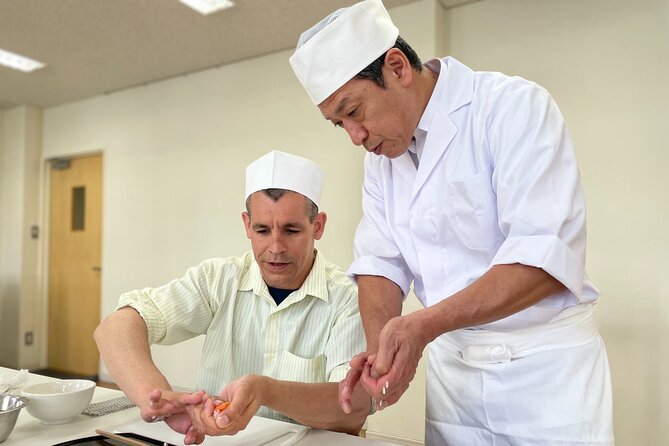
Next comes the fish disassembly demonstration. The chef shows how fish is prepared for sushi and explains the knives used in the process. This is a useful part of the class because it reveals work you rarely see at a restaurant table. A sushi chef’s knife is not just a kitchen tool. The blade, angle, and cutting motion affect the texture and appearance of the fish.
You then learn the difference between the two forms you will prepare: nigiri sushi and rolled sushi. Nigiri is the familiar hand-formed piece of rice topped with fish. Rolled sushi uses a sheet of nori and a filling arranged before the roll is shaped and cut.
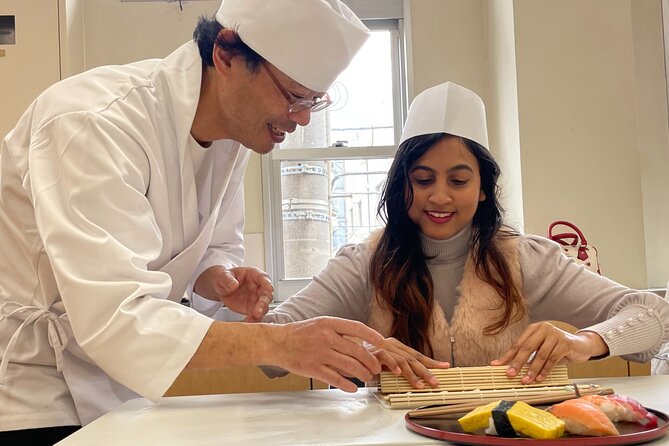
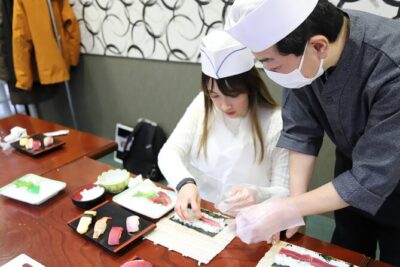
The chef demonstrates the movements first. Then you copy them at your own station. Expect to receive help with the parts that feel awkward at first, especially forming a neat rice shape and keeping a roll firm without squeezing it too hard.
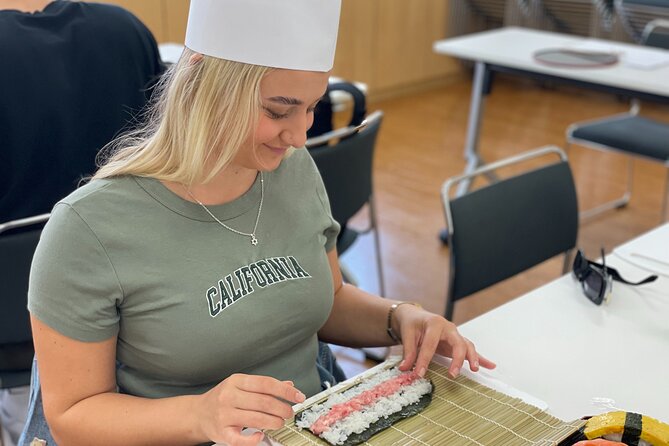
You make five different nigiri sushi and one rolled sushi. The number is just right for a first lesson. You get enough repetition to understand the method, but the class does not turn into a long technical course.
At the end, you eat the sushi you prepared. This is your lunch, so arrive with some appetite. The chef also prepares another piece for you, served with freshly prepared wasabi. That comparison is valuable: you can see the difference between your beginner’s work and the chef’s precise version while enjoying the same basic ingredients.
The Tsukiji setting and nearby market stops
The listed route includes Tsukiji Fish Market, Tsukiji Jogai Market, and Tsukiji Nippon Fish Port Market. The class itself takes place near the market area, so its location is one of the main reasons to choose it.
Tsukiji Jogai Market is the most useful reference point for planning your time. Its lanes are filled with food shops and market businesses, and the area is well suited to a before-or-after visit. You can browse seafood, Japanese cooking tools, and other food items, then head to the class for a more focused lesson.
The wider Tsukiji area also gives context to the ingredients on your table. You are not making sushi in a detached classroom far from the source of the food. You are learning near one of Tokyo’s best-known food districts, with market activity close by.
Still, keep your expectations realistic. The supplied details do not promise a guided market walk, tastings through several stalls, or a full tour of the market buildings. The food-market setting is part of the location and atmosphere, while the main activity is the 90-minute class.
I would schedule the class alongside market time rather than treat it as a replacement for exploring Tsukiji. Arrive with enough time to find the meeting point, then return to the market afterward if you want more browsing and snacks.
The people who make the lesson work
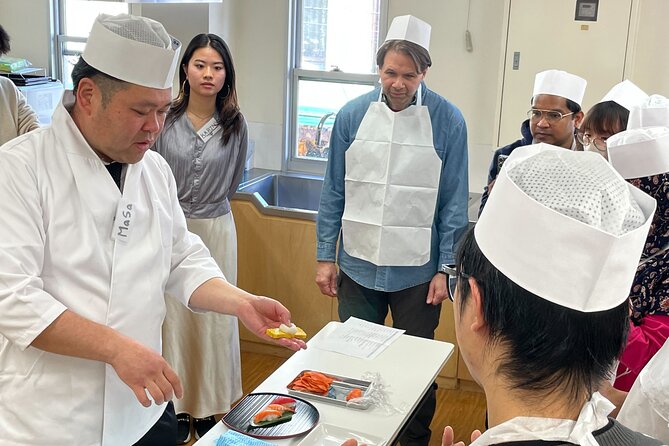
The experience uses two teaching roles: an English-speaking host and a professional sushi master. The chef demonstrates the practical skills, while the host explains the content in English and helps the group follow along.
Several host and chef names appear in participant feedback, including Yuko, Yugo, Kanon, Emma, Miky, Nao, AJ, Tanaka, Ishi, Kate, and Eri. The exact staff member depends on the session, so you should not book expecting one particular person unless the operator confirms it.
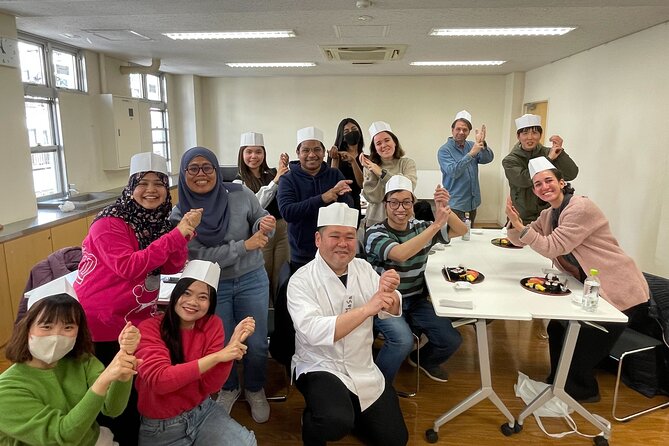
The praise for the staff is consistent in one useful way: the class is designed for beginners. People who had never made sushi before were able to follow the lesson, and families with children from about 7 to 12 years old found enough support to take part.
That does not mean every piece will look perfect. It should not. The fun is in trying to match the chef’s hand movements, then seeing your own finished plate. Staff assistance helps keep the class enjoyable rather than letting a wobbly roll become a small kitchen crisis.
The English translation is another strong point. Sushi terms and knife instructions can be difficult to follow through gestures alone. Clear interpretation lets you understand not only what to do, but why the step matters.
How much food do you actually get?
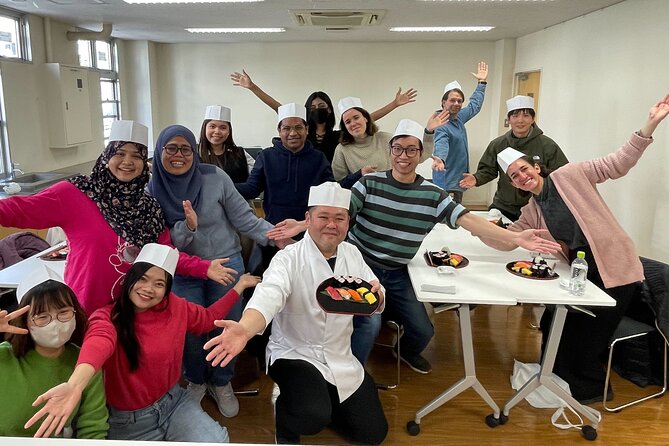
The included meal is five different nigiri sushi and one rolled sushi. The ingredients are fresh and sourced from the market, and the utensils and tableware come from local shops.
This is enough for a light lunch, especially when paired with the experience itself. It is not an all-day food tour or a large restaurant meal with several courses. If you have a big appetite, plan to eat more before or after the class in Tsukiji.
The food is also part of the lesson. You are not simply handed a plate at the end. You shape the rice, handle the ingredients, and prepare the pieces yourself. That makes the meal more memorable, even if your sushi has the charming irregularity of a first attempt.
The chef’s extra piece is a nice touch. Freshly prepared wasabi gives you a chance to taste the condiment as part of the chef’s presentation, rather than treating it as an afterthought. The included ingredients and market setting make the price easier to understand: you are paying for instruction, food, staff support, and a location near Tsukiji.
A few more Tokyo tours and experiences worth a look


Is $49.74 a fair price?
At $49.74 per person, this is not the cheapest way to eat sushi in Tokyo. You can find a simple meal for less. But the comparison is not really between this class and a basic restaurant lunch.
The fee includes a professional demonstration, English-language assistance, fresh ingredients, proper utensils, hands-on instruction, five nigiri, one roll, and the time spent eating what you make. For someone who already wants to learn how sushi is prepared, that is reasonable value.
I would call it especially good value for first-time visitors who want one food activity that fits into a tight itinerary. Ninety minutes is short enough to combine with Tsukiji market exploration, Ginza, or another central Tokyo plan.
The value is weaker if you only want a substantial meal or already have extensive sushi-making experience. You will not leave as a sushi chef. You will leave with basic techniques, a better sense of the work involved, and enough confidence to try making simple sushi at home.
Families, beginners, and people new to sushi
This class has a broad appeal. Families can work on sushi together, and making their own rolls may encourage children to try fish or sashimi they might otherwise avoid. The activity gives children a clear job, which is often more effective than simply asking them to sit through a food lecture.
First-time sushi eaters can also take part. One participant had tried very little sushi before the class and found the introduction to different types, sushi culture, and preparation useful. You do not need advanced food knowledge to follow the lesson.
The class suits adults traveling with teens, couples, and small groups of friends. It also works on a rainy day because the main activity takes place indoors. The market setting still gives you something to do before or after, but the class itself does not depend on good weather.
There are limits for some families. The classroom is on the third floor, and there is no elevator mentioned. The activity is specifically described as best for people who have no problem with stairs.
You should also report allergies when booking. The operator will try to accommodate allergy-related requests, but this may not be possible. Halal and kosher requests are not accommodated, so check carefully before reserving if those requirements apply to you.
Timing, meeting point, and group size
The class lasts approximately 1 hour and 30 minutes and ends back at the meeting point. Hotel pickup and drop-off are not included, so you need to reach Tsukiji independently.
The meeting point is near public transportation, but the information provided does not specify a particular station or walking time. Allow extra time to locate the traditional building and classroom. Tsukiji’s market streets can be confusing, especially when shops are opening and pedestrian traffic is heavy.
The group limit is 20 people. A group of that size can feel active rather than quiet, but the teaching setup includes a chef and an English-speaking host, with staff assistance during the practical section.
Do not schedule a train, restaurant reservation, or airport transfer immediately after class. The activity may run beyond its planned end time, and the operator asks participants to mention any appointment that follows.
A mobile ticket is provided, which keeps check-in simple. Cancellation is free if you cancel at least 24 hours before the local start time. Within 24 hours, refunds and changes are not accepted.
What I would do before and after class
I would avoid eating a full lunch beforehand. The six pieces of sushi are the meal included in the class, and you will enjoy them more if you arrive hungry but not famished.
Give yourself time in Tsukiji before the start. The market area is part of the appeal, and a rushed arrival would undercut one of the experience’s best features. After class, you can continue browsing the Outer Market or choose another meal nearby.
Bring an open attitude toward imperfect sushi. Your first nigiri may not have the chef’s clean shape, and your roll may be a little uneven. That is normal. The point is to learn the hand movements and understand the process, not produce a restaurant display on attempt one.
If you want photographs, staff may help capture pictures of your finished sushi, according to the experience details shared by participants. Treat that as a pleasant possibility, not a guaranteed photography service.
Should you book the Tsukiji sushi class?
I would book this class if you love Japanese food, want a practical activity rather than another sightseeing stop, and have about 90 minutes to spare in Tsukiji. It is particularly well suited to families, beginners, and anyone curious about how sushi moves from market ingredient to finished piece.
The strongest reasons to choose it are the fish-preparation demonstration, the clear English support, the fresh market-sourced ingredients, and the chance to eat five nigiri and one roll that you made yourself. The staff’s patient, friendly approach also makes it less intimidating than trying to learn sushi technique from a book.
Think twice if stairs are a problem, if you need halal or kosher arrangements, or if you want a full market tour and a large meal. This is a focused workshop, not an open-ended food crawl.
For most sushi fans, the price is fair because you leave with more than lunch. You get a small new skill, a better understanding of the chef’s work, and a memorable reason to spend time in Tsukiji.
FAQ
How long does the sushi-making class last?
The class lasts approximately 1 hour and 30 minutes.
Where does the activity begin?
It begins at 千社額棟, 4-chōme-16-2 Tsukiji, Chuo City, Tokyo 104-0045, Japan.
Where does the activity end?
The class ends back at the meeting point.
What sushi will I make?
You will make five different pieces of nigiri sushi and one rolled sushi.
Is lunch included?
Yes. The sushi you make is included as lunch. The chef also prepares another piece with fresh wasabi.
Is the class taught in English?
An English-speaking host accompanies the professional sushi master and explains the lesson in English.
Are ingredients and utensils provided?
Yes. Fresh ingredients, proper sushi-making utensils, and tableware are provided.
Is hotel transportation included?
No. Hotel pickup and drop-off are not included, and you make your own way to the meeting point.
Can I cancel for a refund?
Yes. You can cancel for a full refund up to 24 hours before the experience’s local start time. Cancellations or changes made less than 24 hours before the start are not accepted.
More Workshops & Classes in Tokyo


More Sushi Making Classes in Tokyo
More Tsukiji Market Tours in Tokyo
More tours in Tokyo we've reviewed











Tsukiji Market Tours, compared.
 ★ 5.0Tokyo Tsukiji Fish Market Food and Culture Walking TourFrom $99
 ★ 5.0Tokyo: Tsukiji Fish Market Food and Walking tourFrom $30
 ★ 4.9Tokyo: Tsukiji Fish Market Guided Walking TourFrom $222 hours
 ★ 5.0Tsukiji Fish Market Guided Tour and Sushi Making with Pro ChefFrom $104
★ 4.7Tokyo: Tsukiji Fish Market Food and Culture Walking TourFrom $963 hours
★ 5.0Tsukiji Fish Market Guided Tour and Sushi Making with Pro ChefFrom $104
★ 4.7Tokyo: Tsukiji Fish Market Food and Culture Walking TourFrom $963 hours
 ★ 5.0Tsukiji Fish Market: Street Food & Culture Walking TourFrom $33