
Reviewed · GUIDED
Private Tokyo Tour with Local Guide
Tokyo can feel like several cities stitched together by train lines. This private tour gives you a human map: a guide meets you, helps you use public transportation, and links major districts such as Tsukiji, Asakusa, Ueno, and Akihabara in one half-day. Guides including Maruf, Amir, Abu, Erica, and Nami have led guests through different versions of the route.
I like the flexible start time and the chance to shape the day around your own list. I also like that the tour teaches you how to get around after it ends, rather than simply dropping you at photo stops. The main consideration is that this is a walking and subway tour, not a chauffeured sightseeing ride, and one reported outing covered about five miles.
In This Review
- Key points at a glance
- Why this private Tokyo tour works best at the start
- Tsukiji sets the tone with food and local life
- Asakusa turns a short stop into a cultural lesson
- Sumida River offers a breathing space
- Ueno combines museums, park paths, and market streets
- Akihabara brings Tokyo’s modern side into focus
- The real product is personal guidance
- Walking and subway travel are part of the lesson
- Is $130 per person a fair price?
- Who should book this experience?
- Should you book the Private Tokyo Tour with Local Guide?
- FAQ
- How long does the private Tokyo tour last?
- How much does the tour cost?
- Is this a private tour?
- Can I choose the start time?
- Does the tour include hotel pickup?
- Which places can the tour visit?
- Are attraction tickets included?
- Is lunch included?
- Can most people participate?
Key points at a glance
- A practical first-day orientation: Learn to use Tokyo’s public transportation with a guide beside you.
- A private route: Only your group participates, so the pace and interests can be adjusted.
- Four major Tokyo moods: Move from the food stalls of Tsukiji to old Asakusa, market-driven Ueno, and anime-centered Akihabara.
- Guides with different strengths: Maruf is praised for cultural context, while Amir and Abu are often noted for listening closely and adapting the route.
- Plan for walking: Some outings involve many miles and up to 20,000 steps.
- Good value for a small group: At $130 per person, the cost buys orientation, transport help, and personal planning, but lunch and attraction tickets are extra.
Why this private Tokyo tour works best at the start
The clever part of this experience is not simply seeing famous places. It is learning how Tokyo fits together. In four to five hours, you can get a working sense of the subway, the location of major districts, and the difference between old temple neighborhoods and modern shopping centers.
That matters on a first visit. Tokyo’s stations can be large, and a private guide can explain the route while you are actually using it. You are not studying a transit map alone in a hotel room. You are going from one district to the next with help at the point when the system feels least familiar.
The outing is also flexible. You choose the start time, and the guide can focus on food, culture, shopping, photographs, anime, or a mix of these. Maruf has been praised for explaining the meaning behind places, while Amir and Abu are particularly associated with listening to what a group wants and changing the plan to fit.
That flexibility is the tour’s greatest strength, but it also creates a small risk. The exact quality can depend on the guide assigned and on how clearly you explain your interests before meeting. One disappointing outing involved a guide who mainly moved from one place to another without enough explanation. Ask for cultural context, not just transportation and directions.
Other guided tours in Tokyo

Tsukiji sets the tone with food and local life
Tsukiji is a natural opening because it throws you straight into Tokyo’s food culture. The experience is designed to begin early enough to catch the morning energy around the market, with an emphasis on seafood, local eating, and the area’s cultural importance.
The old wholesale market function is no longer the whole story, but Tsukiji remains a useful place to see how food shapes daily life in Tokyo. You might find small shops, prepared foods, seafood, and a steady flow of people choosing breakfast or ingredients. Your guide can help you make sense of what you are seeing instead of leaving you to guess at every menu and custom.
The description also mentions the historic Tsukiji Temple and links the district with Ginza on some routes. That gives the morning a useful contrast: market streets on one side, polished department stores and central-city streets nearby.
Keep your expectations in check. This is not a private food tasting, and lunch is not included. The market portion can also be busy and time-sensitive, especially if you want to see the early activity. If food is your priority, say so when you book and confirm how much time you want here.
Asakusa turns a short stop into a cultural lesson
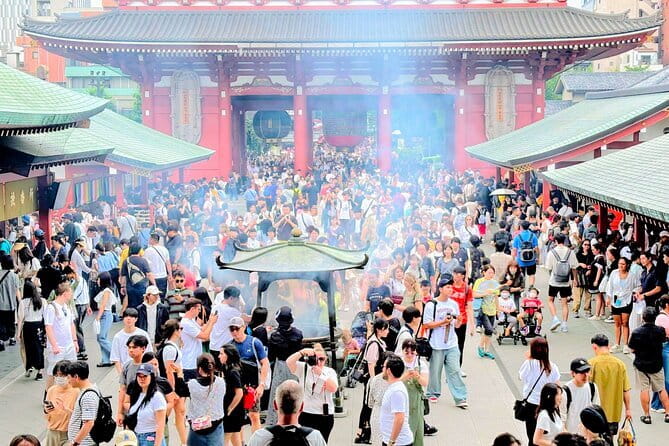
From Tsukiji, the tour can continue to Asakusa, where Tokyo’s older religious and commercial character comes into view. The first stop is Nakamise Shopping Street, the approach to Senso-ji that runs from Kaminarimon Gate toward the temple.
The assigned time here is about 20 minutes, enough to look at the shops, notice the souvenirs and snacks, and understand the layout. The street is more than a shopping lane. It is part of the ritual approach to the temple, with the gate and temple axis giving the area its visual order.
Kaminarimon Gate gets another 10 minutes. Its large red lantern is one of Tokyo’s most recognizable sights, but a guide can add useful details about the gate’s role as the entrance to Senso-ji. This is a quick photo stop, so you will want to listen while also keeping an eye on the crowd.
Senso-ji is the anchor of Asakusa. You have about 20 minutes to see the temple grounds and take in the religious setting. Admission is free, which keeps this part of the tour focused on place and custom rather than ticket logistics.
I like this section because it gives you a simple way to read Tokyo. The temple, gate, shopping street, and surrounding neighborhood show how faith, commerce, and tourism overlap. The drawback is time. Twenty minutes at the temple is enough for an introduction, not a slow visit to every corner of the grounds.
Sumida River offers a breathing space
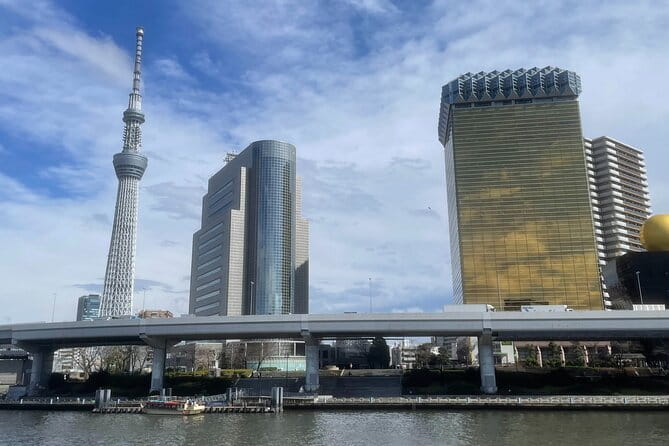
A stop at Sumida River Side Park changes the pace. After the tight lanes of Asakusa, the river gives you open views and a chance to pause. Tokyo Skytree is visible from the waterfront, creating a strong cityscape photograph.
The park is also useful for orientation. You can see how Asakusa sits beside the river and how modern Tokyo rises around its older districts. The tour does not include a ticket to Tokyo Skytree, so this stop is about the view from outside rather than going up the tower.
If you are hoping to visit the observation decks, treat that as a separate plan and budget for the ticket. The tour specifically excludes it, along with TeamLab Planets and TeamLab Borderless. That is not a flaw, but it is important to know before you assume major attractions are covered.
Ueno combines museums, park paths, and market streets
Ueno gives the tour another useful contrast. Ueno Park is a large city park with museums, temples, gardens, and shaded paths. You may not have enough time to enter its museums during a four to five-hour route, but the park helps explain why Tokyo is not just towers, stores, and train stations.
The nearby Ameyoko Shopping Street has a rougher, more commercial feel. Its roots as a postwar black market are part of the area’s story, and its shops and food stalls offer a different look at city life than the formal approach to Senso-ji.
The pairing of Ueno Park and Ameyoko is smart. You get quiet space and a market atmosphere within the same district. Your guide can also help you decide if the area deserves more of your own time later in the trip.
Do not expect an extensive museum visit unless you arrange that in advance. The tour covers many districts, and the value comes from seeing how they connect. If you prefer one museum in depth, tell the guide that you want to reduce the number of stops.
Other private tours in Tokyo


Akihabara brings Tokyo’s modern side into focus
Akihabara is the loudest change of mood. The district is known for electronics, anime, gaming, and otaku culture, with shops aimed at both everyday technology buyers and collectors.
A guide is useful here because the area can feel like a wall of signs and specialized stores. If you have a shopping list, tell your guide. One particularly positive account describes help finding stores for specific purchases, while other outings included anime and gaming districts as part of a broader day.
Akihabara can also be less rewarding if you are not interested in electronics or pop culture. That is where the private format helps. You can spend more time here if it matches your interests, or ask to give the district only a short look and use the time elsewhere.
The route may also include Ginza, based on the experiences described. Ginza adds department stores, high-end shopping, and broad central avenues, making it a useful counterpoint to Akihabara’s specialized streets. Since the published route covers several districts, confirm your preferred priorities before the day begins.
The real product is personal guidance
A private tour is only as good as the person leading it. This experience uses several guides, so you should not assume every outing will feel identical. Maruf is repeatedly praised for making Tokyo’s customs and places easier to understand, and for showing areas beyond the most obvious sightseeing path.
Amir is described as attentive and flexible, with an ability to adjust the program to a family’s interests. Abu has also received strong praise for creating a comfortable walking route, helping with photographs, food, shopping, and less widely known places. Erica guided a group of four adults and two children and helped them make a strong start in Tokyo despite rainy weather.
Nami led an outing that covered roughly five miles. Another group reached about 20,000 steps while combining walking and subway travel. These details tell you what the tour can be at its best: active, personal, and full of ground covered.
They also tell you what to ask for. If you need a slower pace, say so. If you want history at every stop, say so. If you want shopping help or family-friendly choices, include that in your request. A private format gives you room to shape the day, but it does not automatically guarantee a particular style of guiding.
Walking and subway travel are part of the lesson
There is no private vehicle included. The tour uses public transportation, and pickup is provided through public transportation. That means you meet the guide and move through the city as residents do, rather than watching Tokyo through a car window.
I see this as a major advantage for a first visit. You learn the practical steps of entering a station, following the route, and moving between districts. The knowledge stays useful after the guide leaves.
The tradeoff is effort. One outing was a walking tour of about five miles, and another reached roughly 20,000 steps. Comfortable shoes are essential, and you should be ready for time on your feet. The tour is listed as suitable for most people, but the published information does not promise a specific accessibility arrangement, so ask before booking if mobility is a concern.
Rain can also change the feel of the day. The experience has continued successfully in wet weather, but you will want suitable clothing and a realistic pace.
Is $130 per person a fair price?
At $130 per person, this is not the cheapest way to see Tokyo. You are paying for a private guide, a flexible start, help with public transportation, and the ability to adapt the route to your group.
The value improves with more people in your party because the guide’s attention is shared only among your group. It is also strongest at the beginning of a trip, when a few hours of subway coaching can prevent wasted time and costly wrong turns later.
The price does not include lunch, private transportation, Tokyo Skytree tickets, or tickets for TeamLab Planets and TeamLab Borderless. You should treat this as a guided city orientation with sightseeing, not as an all-inclusive attraction pass.
The 4.7 rating from 21 ratings and 90 percent recommendation figure suggest a strong overall experience, but the range of feedback matters. Many outings praise the guides’ flexibility, cultural explanations, and personal care. One account reports poor communication and a late arrival, while another found the guide offered too little context. Booking with clear expectations is the best way to protect the value.
Who should book this experience?
I would recommend it most strongly to first-time Tokyo visitors, families who want help managing different interests, and small groups that do not want to spend their first day figuring out the subway alone.
It also suits you if your list includes several districts but you do not know how to connect them. A guide can help you see Tsukiji, Asakusa, Ueno, and Akihabara in one outing, then suggest what deserves a longer return visit.
It is less suitable if you want a luxury vehicle, a fixed attraction-by-attraction schedule, or long indoor visits at major paid attractions. It is also not the right pick if you dislike walking or prefer to explore entirely on your own.
Should you book the Private Tokyo Tour with Local Guide?
Book it if you want a fast introduction to Tokyo that teaches you how the city works, not just a sequence of photographs. The private format, flexible start time, and public transportation practice give it real value, especially on your first day.
Before booking, state your walking limit and your top three interests. Ask for cultural explanation, not only transfers between stops. If you are matched with a guide such as Maruf, Amir, Abu, Erica, or Nami, the experience may feel especially personal, but the guide assignment can shape the day.
At $130 per person, I would choose this for a small group that values time, local advice, and confidence on the subway. I would skip it if your main goal is a private car or admission to Tokyo’s headline attractions.
Cancellation is free with at least 24 hours’ notice. A cancellation within 24 hours is not refundable, and changes made inside that window are not accepted.
FAQ
How long does the private Tokyo tour last?
The tour lasts approximately four to five hours.
How much does the tour cost?
The listed price is $130 per person.
Is this a private tour?
Yes. Only your group participates in the private activity.
Can I choose the start time?
Yes. Unlike a standard group outing, you decide the tour start time.
Does the tour include hotel pickup?
Pickup is offered using public transportation. Private transportation is not included.
Which places can the tour visit?
The route can include Tsukiji Fish Market, Nakamise Shopping Street, Kaminarimon Gate, Senso-ji Temple, Sumida River Side Park, Ameyoko Shopping Street, Ueno Park, and Akihabara. Some outings also include Ginza.
Are attraction tickets included?
Admission to Nakamise Shopping Street and Kaminarimon Gate is included, and Senso-ji Temple is free. Tickets for Tokyo Skytree, TeamLab Planets, and TeamLab Borderless are not included.
Is lunch included?
No. Lunch is not included in the tour price.
Can most people participate?
The activity states that most people can participate and that it is near public transportation. Since the tour may involve substantial walking, ask about your needs before booking if mobility is a concern.
More Private Tours in Tokyo
More Guided Tours in Tokyo

More tours in Tokyo we've reviewed




Guided, compared.
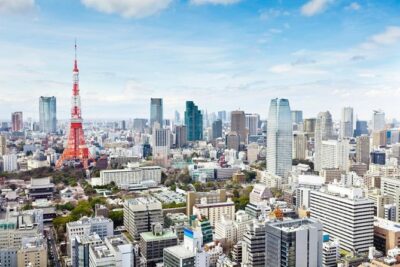 ★ 5.0Tokyo 6hr Private Tour with Government-Licensed GuideFrom $155
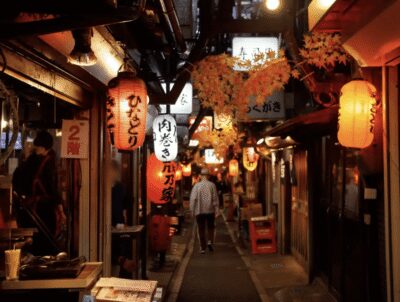 ★ 4.9Tokyo: Shinjuku Local Bar and Izakaya Guided Walking TourFrom $343 hours
 ★ 4.8Tokyo: Private City Highlights Tour with Local GuideFrom $1064 - 8 hours
 ★ 4.9Tokyo: Tsukiji Fish Market Guided Walking TourFrom $222 hours
 ★ 5.0Tokyo 4hr Private Tour with Government-Licensed GuideFrom $109
 ★ 5.0Tokyo Guided Small-Group Biking TourFrom $106