
Reviewed · SUMO EXPERIENCES
Tokyo:Luxury Sumo Show Experience & Japanese cuisine & Drink
A geisha dance, a real sumo ring, a large Japanese meal, and retired wrestlers who happily pull the audience into the action: this is far more than a match viewed from a distance. The show explains sumo in clear English and Japanese, then turns the rules into a funny, hands-on performance.
I especially like the easy crowd interaction and the meal of A5 wagyu sukiyaki, chanko hot pot, and matcha dessert. Families get plenty to do, solo visitors are not left sitting quietly, and the front-row seats put you close to the wrestlers. The main consideration is that this is polished entertainment, not a serious morning visit to an active sumo stable.
In This Review
- Key points to know before booking
- A two-hour introduction to sumo in Asakusa
- The geisha dance opens the evening
- English explanations make the rituals easier to follow
- The wrestling is funny, physical, and close up
- The sumo challenge is the evening’s big gamble
- A substantial Japanese meal comes during the show
- Choosing between Standard, Business, and First Class
- Photos and souvenirs make the evening easy to remember
- Who will enjoy this most
- Practical timing in Asakusa
- How this compares with serious sumo experiences
- Should you book the Asakusa Sumo Club Annex?
- FAQ
- How long does the Tokyo Luxury Sumo Show Experience last?
- Where is the Asakusa Sumo Club Annex?
- Is the sumo show performed by active professional wrestlers?
- Is the commentary available in English?
- What food is included?
- Are drinks included?
- Can I participate in a sumo match?
- Are vegetarian or vegan meals available?
- Is the venue wheelchair accessible?
- Can I cancel my booking?
Key points to know before booking
- Real ring, theatrical setting: Watch retired sumo wrestlers demonstrate techniques and perform lively bouts in the center of the restaurant.
- Geisha dance included: Begin with a graceful performance and a chance to take photos afterward.
- Food changes by seat: Standard includes sukiyaki, chanko hot pot, dessert, and one drink. Business and First Class add tempura and broader drink service.
- The ring challenge is limited: You may test your strength against a wrestler, but participants can be selected by lottery if many people volunteer.
- Family-friendly and bilingual: The hosts explain the customs, rules, and moves in English and Japanese, with plenty of humor.
- Small practical limits: The venue has stairs, may seat you with other people, and needs vegetarian or vegan requests at least two days ahead.
A two-hour introduction to sumo in Asakusa
The Asakusa Sumo Club Annex is designed as a smaller, more private branch of the better-known Asakusa Sumo Club. It sits along Asakusa Kokusai Street, next to Matsuya Restaurant, placing it in a useful part of Tokyo for an evening of food and traditional entertainment.
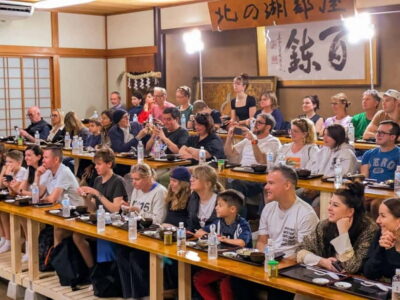
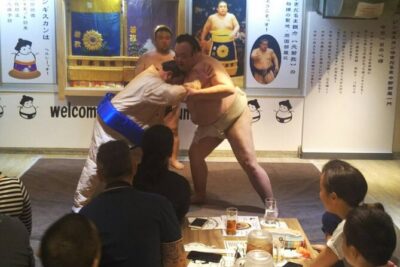
You enter a restaurant rather than a sports arena. The room is warm and arranged around a real sumo ring, known as a dohyo. That setup matters. You are close enough to see the footwork, body positioning, and expressions of the wrestlers, rather than watching tiny figures across a large stadium.
The setting has three seating levels. Standard uses regular tables and provides a clear view. Business uses wider sofa seats, while First Class places you on front-row sofas nearest the ring. The room may include other diners, so do not expect a completely private party, but the Annex aims for a more relaxed feel than bleacher-style seating.
The two-hour format works well for a Tokyo evening. You get a full meal, a cultural introduction, a performance, audience participation, and time for photos without committing half a day to the activity.
A few more Tokyo tours and experiences worth a look
The geisha dance opens the evening
The first performance is a geisha dance. It is a calm, graceful start before the louder and more comic sumo portion begins.
This short presentation gives you a chance to see a traditional Japanese art form in a setting designed for visitors who may have little background in it. The movements are controlled and subtle, so pay attention to the small gestures rather than expecting a fast stage show.
After the dance, you can take a photo with the geisha. This is especially useful for families, since children can have a simple, friendly introduction to the performer before the room shifts its attention to sumo.
The dance is also a good reminder that Japanese culture is not one single style. The evening places a refined stage performance beside a physical sport built around ritual, discipline, and force. The contrast gives the program more variety than a sumo demonstration alone.
English explanations make the rituals easier to follow
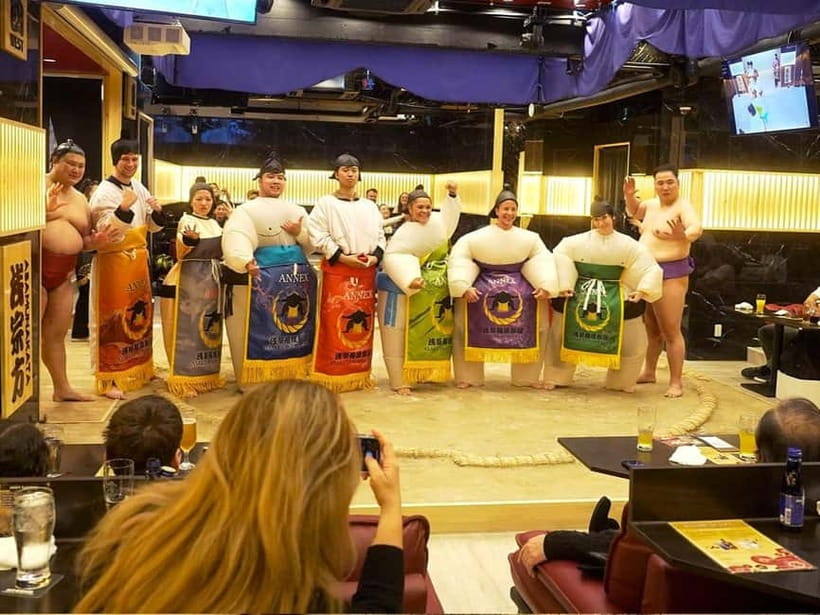
Sumo can look simple at first: two wrestlers face each other and try to force one another out of the ring. The details are more interesting than that.
The host explains the history, rules, training methods, and rituals in English and Japanese. Hosts named in the experience feedback include Luke and Go, both praised for keeping the tone light and helping people follow the action. The explanations are presented for an international audience, so you do not need prior knowledge of sumo.
You will see training techniques before the bouts begin. Watch how the wrestlers use balance and leverage, not just size. The demonstrations help you understand why a quick shift of weight or a well-placed push can decide a match.
The bilingual commentary is one of the strongest reasons to book this show instead of simply watching a random sumo clip online. You get the context at the moment you need it. The host can also take questions, and the question-and-answer portion is particularly useful if you arrive with a few things you genuinely want to know.
Come prepared to ask about the ring, the rituals, the wrestlers, or the rules. The format encourages interaction, and the hosts make it clear that questions are welcome.
The wrestling is funny, physical, and close up
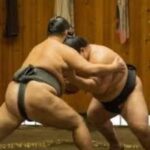
After the explanation, retired sumo wrestlers perform training demonstrations and several bouts. These men are no longer competing in the professional sumo circuit, and that distinction is important. The show offers a safe, entertaining presentation of sumo culture, not a look inside the daily routine of an active stable.
The bouts are dynamic and easy to follow. You will see the wrestlers prepare, push, shift, and try to drive one another beyond the ring. The hosts add humor, and the performers play to the room. The tone is warm rather than solemn.
That theatrical quality will suit you if you want an accessible cultural night out. It may disappoint you if you are hoping for the quiet seriousness of a professional tournament or an early morning training session. The activity is built to explain and entertain, with jokes, photos, and audience involvement woven into the program.
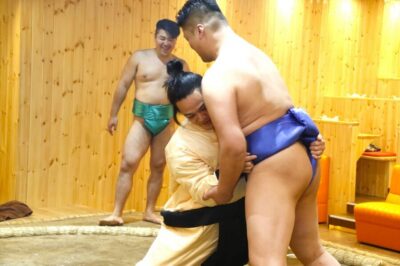
The wrestlers are a major part of the appeal. They do not simply perform and disappear backstage. They interact with the audience, help with photos, and invite people into the action. Children and teenagers can take part, which turns a display into a shared family memory.
The sumo challenge is the evening’s big gamble
The most memorable moment for many people is the chance to step into the ring. You may challenge a sumo wrestler in a friendly contest and discover exactly how difficult it is to move someone who knows how to use their weight.
The challenge is meant to be fun, not competitive. You do not need to be athletic, and the light-hearted format makes it suitable for brave children, teenagers, and adults. The show staff help create a comfortable atmosphere, so even a solo participant can take part without feeling abandoned in front of the room.
There is one catch: the number of challengers is limited. If many people volunteer, names are chosen by lottery. Do not book the show solely on the assumption that you will wrestle. Treat the chance as a bonus, then enjoy the demonstrations if your name is not selected.
If you do participate, ask someone on staff to take photos. The team makes a real effort to capture the moment, including helping solo visitors who need a photographer.
A few more Tokyo tours and experiences worth a look
A substantial Japanese meal comes during the show
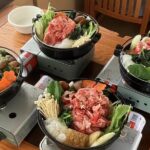
The food is served as part of the performance, so you can eat while watching the action. The main meal combines a sukiyaki bento with Japanese A5 rank wagyu beef, chanko-nabe hot pot, and a matcha dessert.
Sukiyaki gives you the richer, more luxurious part of the meal. Chanko is closely associated with sumo wrestlers and is traditionally understood as hearty training food. Here, it gives the evening a more direct connection to sumo life, even though the venue itself is an entertainment restaurant rather than a working stable.
Standard seating includes the sukiyaki meal, chanko hot pot, matcha dessert, and one complimentary drink. Business and First Class add tempura. The meal is generally described as generous and well presented, though one useful caution came up: the food may not always arrive as hot as you expect.
Business and First Class also include unlimited drinks. First Class adds premium Japanese whisky, including Yamazaki, plus an exclusive souvenir set with a happi coat. Standard allows you to purchase more drinks after the included one.
The food is not the only measure of value here. You are paying for dinner plus a staged cultural program, live explanation, audience participation, photography, and a souvenir. Still, if you do not drink much and choose a higher-priced seat mainly for the bar, the value becomes less convincing. Business seating makes more sense for people who want sofa comfort and unlimited drinks. First Class suits whisky fans and anyone who wants the closest view.
Choosing between Standard, Business, and First Class
Your seat affects both comfort and what is included. Consider the following before choosing:
- Standard: Table seating, clear views, sukiyaki, chanko hot pot, matcha dessert, and one free drink. This is the sensible choice if you mainly want the show and meal.
- Business: Sofa seating, sukiyaki, tempura, chanko hot pot, and unlimited drinks. Choose this if you value a more relaxed seat and expect to make good use of the drinks service.
- First Class: Front-row sofa seating, sukiyaki, tempura, unlimited drinks, premium whisky such as Yamazaki, and a special souvenir set with happi coat. This is the most immersive option for close viewing and generous drink service.
The regular advertised price is $103 per person, but the final value depends on the seat category you book. At that level, I would choose this for the complete evening rather than for the meal alone.
The front row can make the wrestlers feel impressively close, while the standard tables still provide clear visibility. If your group includes children, the ability to see the ring well may matter more than the extra food or alcohol.
Photos and souvenirs make the evening easy to remember
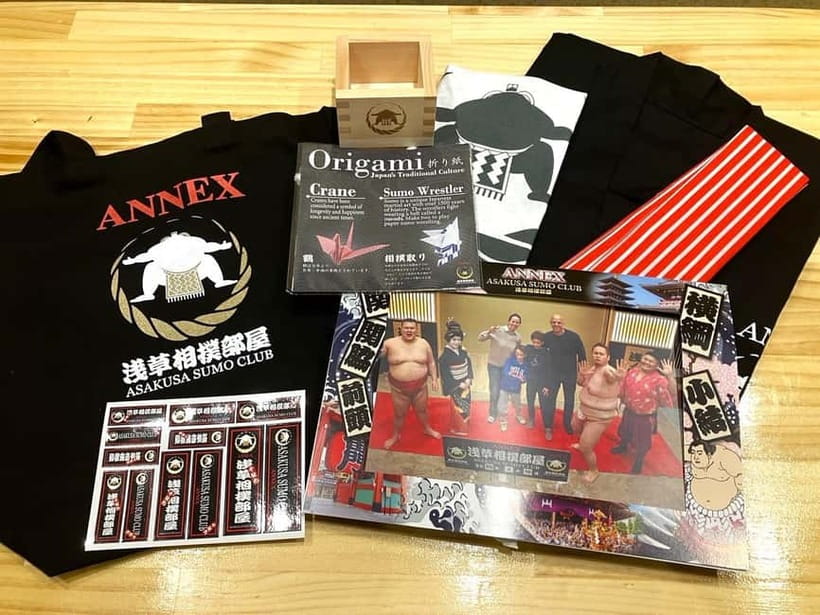
After the performance, you receive a printed commemorative photo with the wrestlers. You can also take additional pictures with them, and the staff help with photography during the ring challenge.
This is a thoughtful feature for solo visitors. You do not have to rely on a stranger to capture the key moment, and the staff are used to helping people pose, film, and take group shots.
Souvenirs vary by seating category and season. First Class includes the most substantial package, including a happi coat, while other categories receive gifts suited to that booking level. Items may change, so do not reserve the activity based on one exact souvenir pictured elsewhere.
The photo and gifts give the evening a clear ending. You leave with something more useful than a memory card full of dark restaurant photographs.
Who will enjoy this most
I would recommend the Annex to several kinds of visitors:
Families with school-age children get an easy introduction to sumo, a colorful meal, a geisha dance, and the possibility of joining the challenge. Children as young as seven have enjoyed participating, and the program is designed to welcome them.
Couples can treat it as a dinner with a cultural show, particularly if they choose sofa seating and enjoy drinks together. The geisha dance and commemorative photos add a more polished touch.
Solo visitors are also well served. The MC and staff actively involve people, and the team can help take pictures if you enter the ring. You may be seated with other people, but the interactive format makes that less awkward than a silent group meal.
First-time visitors to Japan will get the most from the explanations. You do not need to know the difference between a kimarite, a dohyo, and a chanko meal before arriving. The show gives you enough context to watch sumo more intelligently later.
This is not the right pick for wheelchair users because the restaurant has stairs. Babies under one year are not considered suitable for the activity, and infants do not receive meals, seating, or souvenirs.
Vegetarian and vegan meals are available only when requested at least two days before the reservation date. The kitchen cannot handle same-day requests. Gluten-free and halal meals are not available, although you may bring your own food if needed.
Practical timing in Asakusa
The meeting point is along Asakusa Kokusai Street, next to Matsuya Restaurant. Check the exact start time when booking, since several time slots may be offered.
A late evening performance can work well with a little planning. One attendee found that the area was quieter at the 8:30 p.m. weekday slot, making it pleasant to see Asakusa’s temple and smaller streets before the show. Do not assume every nearby business will still be open at that hour, but the quieter streets can be part of the experience.
The show lasts two hours, so allow enough time to find the Annex rather than arriving at the main Asakusa Sumo Club by mistake. The Annex is a separate branch, and the two names can cause confusion.
Cancellation is flexible up to 24 hours before the start time for a full refund, and you can reserve now and pay later. Those policies help if your Tokyo schedule is still moving around, but they do not replace checking the meeting point carefully.
How this compares with serious sumo experiences
This program is deliberately made for visitors. The host explains the rules in plain English, the wrestlers joke with the audience, and the ring challenge invites you to become part of the show.
An active stable visit is a different experience. You would see a training environment rather than a staged dinner program, and the atmosphere would likely be quieter and less adapted to first-time viewers. The Annex is the better choice if you want clarity, comfort, food, and a good laugh in one evening.
I would not call it a substitute for attending a major tournament. At a tournament, you see active wrestlers competing under formal conditions, with a very different scale and sense of occasion. Here, you get proximity and explanation. Both experiences have value, but they answer different questions.
Should you book the Asakusa Sumo Club Annex?
Book it if you want an entertaining cultural evening that explains itself as it goes. The strongest parts are the bilingual MC, friendly retired wrestlers, close view of the ring, geisha dance, substantial meal, and chance to participate.
I would choose Standard if you want the core experience without paying for extras. Choose Business if sofa seating and unlimited drinks matter to you. Choose First Class only if the front row, premium whisky, and larger souvenir package justify the higher cost.
Skip it if you want an authentic active-stable training visit, a formal professional match, or a fully accessible venue. For everyone else, especially families and first-time visitors to Japan, this is a lively and practical way to learn why sumo has such a strong place in Japanese culture.
FAQ
How long does the Tokyo Luxury Sumo Show Experience last?
The experience lasts two hours.
Where is the Asakusa Sumo Club Annex?
The meeting point is along Asakusa Kokusai Street, next to Matsuya Restaurant.
Is the sumo show performed by active professional wrestlers?
No. The show is performed by retired sumo wrestlers for entertainment.
Is the commentary available in English?
Yes. Live commentary is provided in both English and Japanese throughout the show.
What food is included?
The meal includes Japanese A5 wagyu beef sukiyaki bento, chanko-nabe hot pot, and matcha dessert. Tempura is included for Business and First Class seating.
Are drinks included?
Standard seating includes one complimentary drink, with additional drinks available for purchase. Business and First Class include unlimited drinks, while First Class also includes premium Japanese whisky such as Yamazaki.
Can I participate in a sumo match?
You may enter the ring for a friendly sumo challenge. The number of participants is limited, and a lottery is used if many people want to take part.
Are vegetarian or vegan meals available?
Yes, but you must request a vegetarian or vegan meal at least two days before the reservation date. Same-day requests cannot be accommodated.
Is the venue wheelchair accessible?
No. The restaurant has stairs and is not wheelchair accessible.
Can I cancel my booking?
You can cancel up to 24 hours in advance for a full refund. The experience also offers a reserve-now, pay-later option.
More VIP Experiences in Tokyo




More Shows & Performances in Tokyo
More Sumo Experiences in Tokyo
More tours in Tokyo we've reviewed











Sumo Experiences, compared.
 ★ 4.8Tokyo: Sumo Show Experience with Chicken Hot Pot and a PhotoFrom $1032 hours
 ★ 4.8Tokyo: Sumo Show and Dining ExperienceFrom $7990 minutes - 2 hours
 ★ 5.0the SUMO showFrom $89
 ★ 5.0Tokyo Shinjuku Sumo Show & Experience with PhotoFrom $79
 ★ 4.8Tokyo: Sumo Show and Experience in ShinjukuFrom $691h 30m
 ★ 4.6Tokyo: Sumo Tournament Tour with Chair Seat TicketsFrom $141