
Reviewed · SUMO EXPERIENCES
Tokyo Shinjuku Sumo Show & Experience with Photo
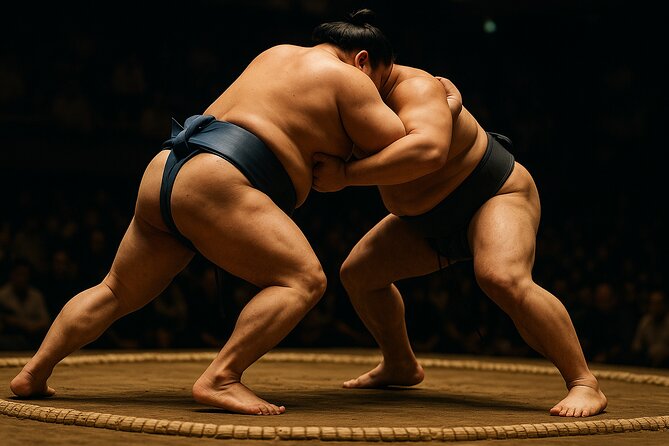
Two professional sumo wrestlers, a close-up ring, and a bilingual host make this a lively introduction to Japan’s national sport. You’ll see salt throwing, ring stomping, match rituals, and powerful demonstrations, then get a chance to step onto the dohyō yourself.
I especially like the clear explanations and the audience participation. The show makes rules, tactics, and customs easy to grasp, while the photo session and friendly challenges give families and couples a personal memory to take home. The main consideration is that this is a staged cultural show, not a formal tournament, so serious sumo fans may want more competition.
In This Review
- Key points to know before you book
- What the Shinjuku Sumo Club experience is really like
- Entering the ring and learning the rituals
- Watching two wrestlers show speed and strength
- The dohyō challenge puts you in the story
- Photos, questions, and the human side of sumo
- Why the bilingual MC matters
- A good fit for families, first-time visitors, and curious adults
- Is $79.59 a fair price?
- Timing, transport, and small practical matters
- Who should book the Shinjuku Sumo Club?
- FAQ
- How long does the Tokyo Shinjuku Sumo Show last?
- Where does the sumo experience take place?
- Is the venue near public transportation?
- Is the show suitable for children?
- Can I participate in a sumo challenge?
- Can I take photos with the wrestlers?
- Is the presentation available in English?
- Can I cancel for a full refund?
Key points to know before you book
- A 90-minute introduction: Learn the history, customs, rules, and tactics of sumo without committing to a full tournament day.
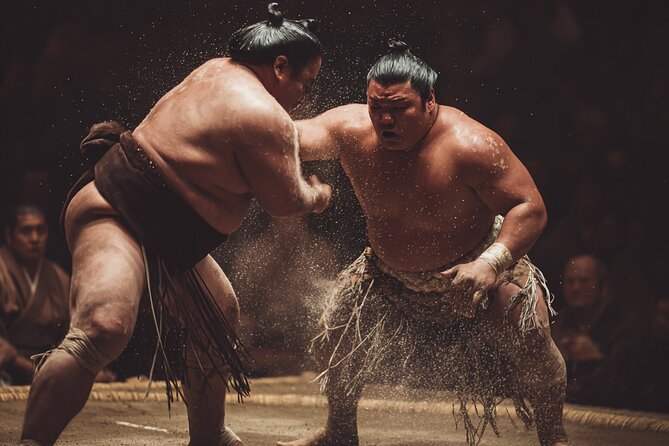
- Two professional wrestlers: Watch close-range demonstrations and see how much speed and control these large athletes can produce.
- Bilingual hosting: The MC explains the movements and ceremonies in an easy, humorous way for international visitors.
- Audience participation: You may challenge a wrestler, ask questions, and see children take part in playful sumo contests.
- Photos with the wrestlers: The experience includes a chance to capture a personal photo after the demonstrations.
- Easy Shinjuku setting: The venue is near public transportation, but allow extra time because Tokyo traffic can slow you down.
What the Shinjuku Sumo Club experience is really like
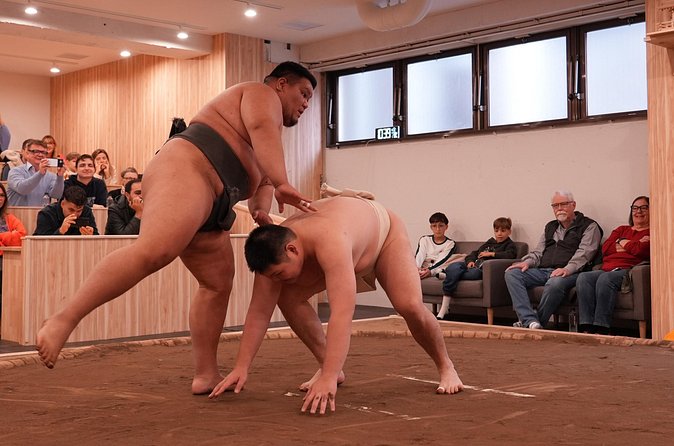
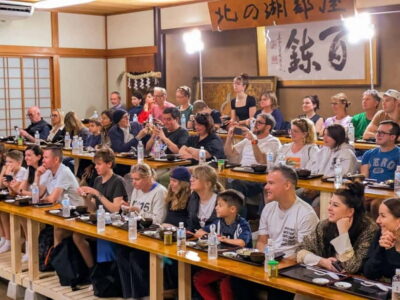
The Shinjuku Sumo Club offers a compact, theatrical look at sumo. You enter a traditional-style venue in central Tokyo and take your seat near the ring. The setting brings you close to the action, much closer than you would be during a large professional tournament.
The format is built for people who may know little about sumo. A bilingual MC introduces the sport, explains the basic rules, and guides you through the movements. Hosts have included presenters such as Shane, Manny, and Mr. So, with individual sessions varying by date. Their role matters because sumo has many gestures and rituals that can seem mysterious if you have never seen them explained.
This is not a silent display of technique. The tone is light, playful, and interactive. The wrestlers perform for the room, answer questions, and use humor to keep the pace moving. I like that the laughter does not replace the cultural content. You still learn why the wrestlers throw salt, why they stomp their feet, and how the pre-match ceremony prepares the ring.
The 90-minute length works well in a Tokyo itinerary. It is long enough to give you context and several demonstrations, but short enough to fit around sightseeing in Shinjuku. If you are deciding between this and a full day at a tournament, think of this as a friendly first lesson rather than a major sporting event.
A few more Tokyo tours and experiences worth a look


Entering the ring and learning the rituals
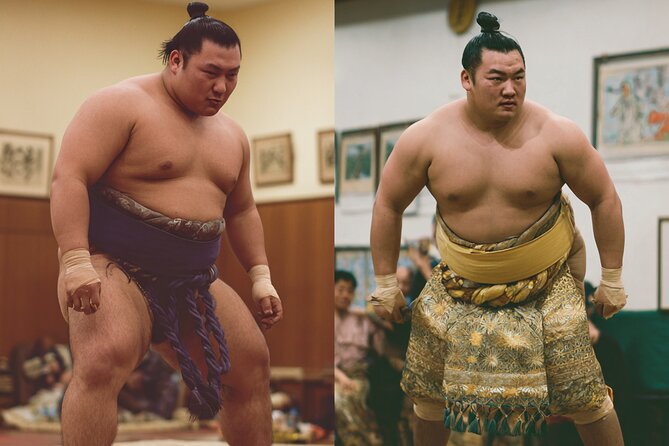
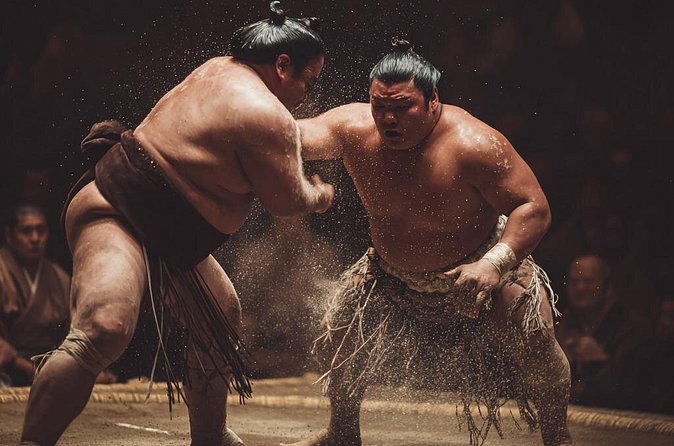
The first part of the experience focuses on the world around a sumo match. The MC explains customs that are central to the sport, including salt throwing, ring stomping, and the formal movements before a bout begins.
These details are more than decoration. Sumo grew from religious and ceremonial traditions, and the rituals help you understand why a match begins slowly before the action becomes sudden and forceful. The salt is connected with purification, while the stomping and gestures have their own meaning within the pre-match routine.
For a first-time viewer, this explanation changes what you see. Without it, the ceremony may look like repeated poses. With it, the movements become part of the story. You begin to notice timing, balance, posture, and the way each wrestler claims space before the clash.
The MC also covers basic rules and tactics. You learn that sumo is not simply about pushing the other wrestler backward. Balance, footwork, timing, and the direction of force all matter. The wrestler who appears heavier is not automatically in control.
This teaching is one of the strongest parts of the experience. It gives you enough information to follow the demonstrations without turning the session into a lecture. The humor helps, too, especially for children who may lose interest during a long historical explanation.
Watching two wrestlers show speed and strength
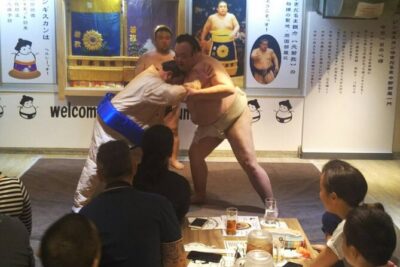
Once the customs are clear, the wrestlers bring the sport to life. Two professional wrestlers demonstrate the physical side of sumo, including the sudden power that comes after the slow ceremony.
From close range, the size of the athletes is striking. So is their speed. A useful part of the presentation is seeing how quickly a large body can shift, brace, turn, and drive forward. The demonstrations give you a better feel for the strength and personal control required than a short video clip would.
The wrestlers are also performers. They play to the audience, respond to the MC, and keep the mood welcoming. This matters because the experience is designed as entertainment as well as instruction. You are not watching a private training session. You are watching a presentation made for an international audience.
The level of competition can vary. The show may feature retired wrestlers, and the bouts are presented for demonstration and enjoyment. If you expect the tension of an official tournament, you may find the format too light. If you want a clear and entertaining look at sumo, the relaxed style is a benefit.
I would describe the wrestling as authentic in the sense that real wrestlers explain and perform the sport, but not as a formal contest. That distinction helps set the right expectations before you arrive.
The dohyō challenge puts you in the story
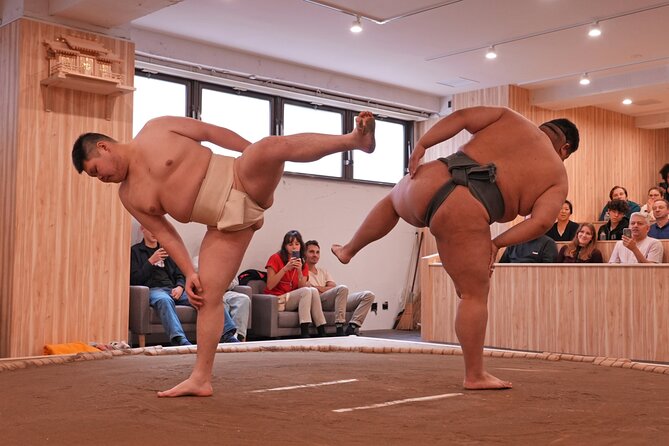
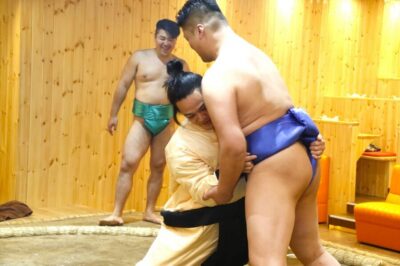
The audience participation is the part many families remember most. After watching the wrestlers, you may be invited onto the dohyō for a friendly challenge.
You do not need to be a sumo expert. The point is to feel the stance, the scale of the ring, and the difficulty of moving someone who knows how to use balance and leverage. A short contest with a trained wrestler quickly shows why technique matters.
Children can also take part in playful contests, including inflatable sumo costumes. That turns the activity into comic theater, and it gives younger children a way to join in without needing to understand every rule first.
Participation is voluntary, so you can enjoy the show from your seat if you prefer. If you do want to join, listen carefully to the MC and staff. The ring is part of the performance space, and the activity is guided for safety and fun.
For couples and groups of friends, this section can be a good icebreaker. For families, it gives children something active to look forward to. For solo visitors, the question-and-answer portion may be the better personal connection, since it lets you ask about the wrestlers’ lives and the sport.
Photos, questions, and the human side of sumo
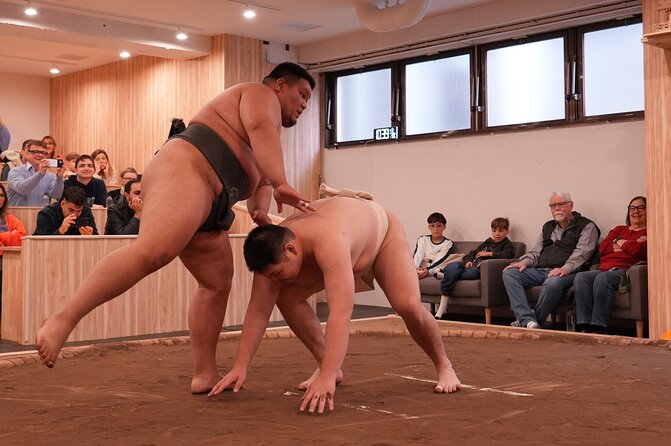
The photo opportunity comes after you have seen the wrestlers perform and taken part in the presentation. You can pose with them and capture the size difference, the costumes, and the setting in one frame.
That photo is more useful than a quick picture from a distant tournament seat. Here, you are close enough to show the personality of the wrestlers and the traditional-style venue. It also gives the experience a clear souvenir beyond the information you take away.
The question period adds another layer. You can ask about the sport, the rituals, the wrestlers, and the life connected with sumo. The answers help turn the athletes from imposing figures in the ring into people with their own stories and humor.
Different hosts and wrestlers may appear on different sessions, so do not book around one particular name unless the provider confirms it for your date. Presenters named in experiences include Shane, Manny, and Mr. So, while wrestlers have included Ogawa, Tani, Gucci, George, and others. The changing cast is worth keeping in mind when you read specific names connected with a particular performance.
A few more Tokyo tours and experiences worth a look

Why the bilingual MC matters
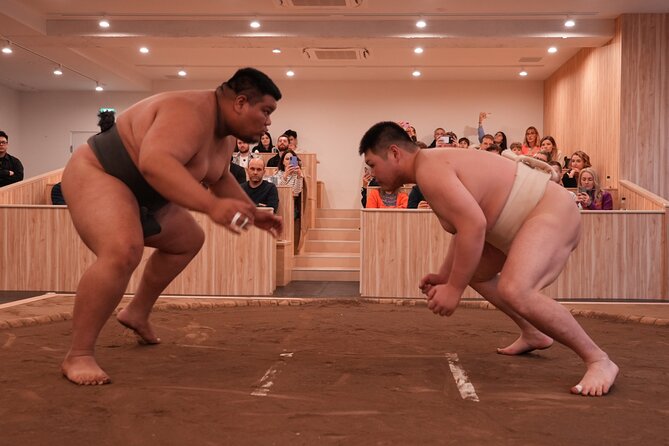
The bilingual host is not just a translator. The MC keeps the timing tight, explains movement as it happens, and gives you the cultural context needed to appreciate the show.
Sumo uses many Japanese terms, and the difference between a ritual, a stance, and a tactic can be hard to catch through gestures alone. Clear bilingual commentary bridges that gap. It also helps children and mixed-language groups stay involved.
A good host needs to balance respect with comedy. The sport is serious and ceremonial, but the experience invites audience participation and playful challenges. Hosts such as Shane and Manny have been praised for making the material easy to follow while keeping the mood upbeat.
I would pay close attention during the explanations, even if you mainly came for the wrestling. The background makes the demonstrations more rewarding, and it helps you understand what you later see at a tournament or on television.
A good fit for families, first-time visitors, and curious adults
This experience suits families especially well. Children can watch the wrestlers, join a challenge, see inflatable costume contests, and ask questions. The 90-minute format also avoids the fatigue that can come with a long formal sporting event.
It works well for couples and mixed-age groups, too. One person may come for Japanese culture, another for the comedy, and another for the physical spectacle. The show gives each of you something to follow.
I also recommend it to first-time visitors who want a window into sumo but do not know how to attend a tournament. You do not need to study the rules beforehand. The host builds the lesson from the ground up.
Serious sumo followers should set a different goal. This is not a substitute for official competition, with its formal atmosphere, rankings, and unpredictable results. It is a hands-on cultural presentation that uses real wrestlers to explain the sport.
The activity is also a practical choice if your Tokyo schedule is tight. You get history, rituals, live demonstrations, participation, questions, and photos in one short visit.
Is $79.59 a fair price?
At $79.59 per person, this is not a bargain attraction, but the price can make sense if you value personal interaction. You are paying for a live presentation with two wrestlers, bilingual instruction, audience participation, and a photo opportunity, rather than simply watching a short performance.
The value is strongest for families and groups. A child who joins a challenge will likely remember the experience more clearly than a museum display, and adults get enough explanation to understand what they are seeing.
The value is less certain if you only want serious athletic competition. A formal tournament may be the better use of your money and time if your priority is seeing ranked wrestlers compete under official conditions. This show gives you access and explanation, not tournament suspense.
Food and drink should not be the main reason you book. You can buy drinks and snacks while watching, but one experience included only a bottled water per person, which felt limited to some people. Treat refreshments as a small extra rather than part of the core value.
The experience has a 5-star rating with 99 percent recommending it, based on more than 1,700 ratings. That strong response fits the show’s main strengths: clear teaching, funny hosts, friendly wrestlers, and plenty of chances to take part.
Timing, transport, and small practical matters
The venue is in Shinjuku and near public transportation, making it easy to combine with other plans in the area. The location is generally straightforward to find from the train station, but Shinjuku is large and busy, so do not leave your arrival until the last minute.
Allow at least 30 minutes of extra time if you are coming through heavy traffic. One family arrived just in time after delays, and Tokyo traffic can turn a simple cross-city trip into a stressful one.
Your ticket is mobile, and confirmation is provided when you book. Most people can participate, and the experience is described as suitable for most visitors. Since the audience may be invited into the ring, wear something comfortable enough for light movement if you hope to join.
Free cancellation is available up to 24 hours before the start time. Changes or cancellations inside that window are not accepted for a refund, so check your schedule carefully before the deadline.
Who should book the Shinjuku Sumo Club?
Book this if you want an accessible, entertaining introduction to sumo and prefer close interaction over a formal sporting event. It is particularly well suited to families, first-time visitors, couples, and anyone who wants a cultural activity that does not require a full day.
I would also choose it for a rainy-day plan or for an evening when you want something more distinctive than another observation deck or shopping street. The show gives you a story to share, a photo with the wrestlers, and enough basic knowledge to recognize the rituals later.
Skip it if you are expecting a championship bout, a quiet historical talk, or a long, serious training session. The humor, audience challenges, and staged demonstrations are central to the format.
For most visitors, the best reason to book is the combination of access and explanation. You see the wrestlers up close, learn why the ceremonies matter, and get a chance to test the ring yourself. That makes the $79.59 worthwhile for an active cultural experience, as long as you arrive expecting a friendly show rather than official competition.
FAQ
How long does the Tokyo Shinjuku Sumo Show last?
The experience lasts approximately 1 hour and 30 minutes.
Where does the sumo experience take place?
It takes place at Shinjuku Sumo Club in Shinjuku, Tokyo.
Is the venue near public transportation?
Yes. The venue is near public transportation and is described as easy to find when arriving by train.
Is the show suitable for children?
Yes. The experience is family-friendly, includes audience participation, and may include children wearing inflatable sumo costumes for playful contests.
Can I participate in a sumo challenge?
Yes. Audience members have the opportunity to step onto the dohyō and try a friendly sumo challenge with a wrestler.
Can I take photos with the wrestlers?
Yes. The experience includes a photo opportunity with the sumo wrestlers.
Is the presentation available in English?
A bilingual MC explains the rituals, rules, history, movements, and tactics during the experience.
Can I cancel for a full refund?
Yes, if you cancel at least 24 hours before the experience start time. Cancellations or changes made less than 24 hours before the start time are not accepted for a refund.
More Shows & Performances in Tokyo


More Sumo Experiences in Tokyo
More Shinjuku Tours in Tokyo


More tours in Tokyo we've reviewed











Sumo Experiences, compared.
 ★ 4.8Tokyo: Sumo Show Experience with Chicken Hot Pot and a PhotoFrom $1032 hours
 ★ 4.8Tokyo: Sumo Show and Dining ExperienceFrom $7990 minutes - 2 hours
 ★ 5.0the SUMO showFrom $89
 ★ 4.8Tokyo: Sumo Show and Experience in ShinjukuFrom $691h 30m
 ★ 4.6Tokyo: Sumo Tournament Tour with Chair Seat TicketsFrom $141
 ★ 5.0Authentic Sumo Experience in Tokyo: Enter the SanctuaryFrom $171