
Reviewed · SUSHI MAKING CLASSES
Make Sushi and Create Unforgettable Memories in Tokyo
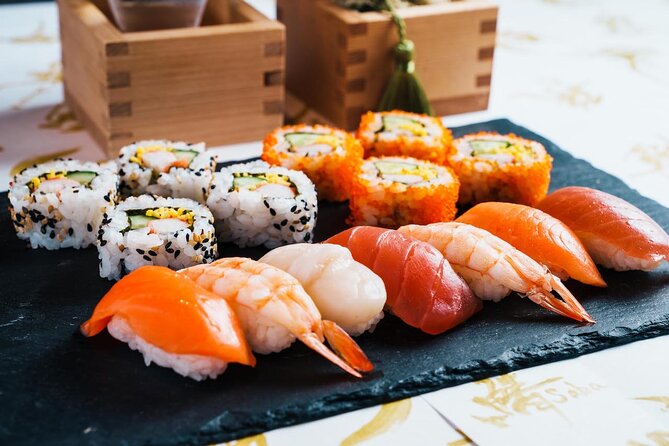
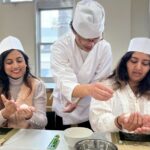
The best part of this Asakusa cooking class is simple: you do not just sit down to eat sushi, you make it. In about 1 hour 40 minutes, an English-speaking instructor guides you through sushi history, maki rolls, nigiri, and sometimes cute temari-style sushi, then you eat the results.
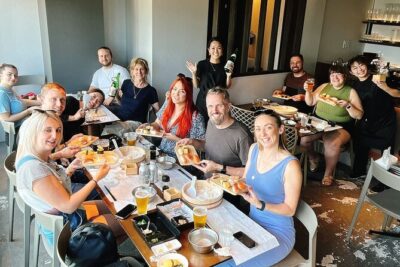
I like two things right away. You get a proper hands-on meal, not a token sample, with many sessions producing about eight maki pieces and eight pieces of nigiri per person. I also like the setting: the class is just steps from Sensoji Temple, so it fits neatly into an Asakusa sightseeing day. The main consideration is that the class can feel more like a lively group activity than a serious chef-training course, especially when attendance reaches around 30 people.
In This Review
- Key points at a glance
- Why making sushi beats simply ordering it
- Meeting in Asakusa, beside Sensoji
- The opening lesson: sushi with useful context
- Maki rolls, nigiri, and the tricky part
- Eating what you made
- A social class that welcomes solo visitors
- Food restrictions and family considerations
- Is $79.59 a fair Tokyo price?
- Timing, cancellation, and practical planning
- Who should book this sushi class?
- Should you book Sushi Making Tokyo?
- FAQ
- Where does the sushi-making class meet?
- How long does the experience last?
- Is the class taught in English?
- Do I need previous cooking experience?
- What types of sushi will I make?
- Do I eat the sushi I make?
- Is the class suitable for children and teenagers?
- Can I cancel for a full refund?
Key points at a glance
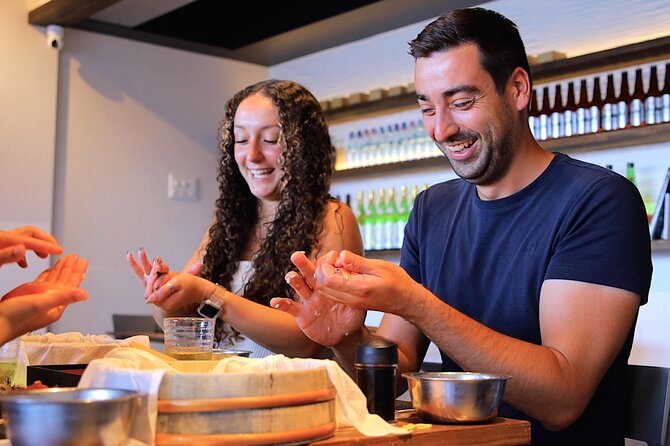
- Make and eat your own sushi: Learn maki, nigiri, and other styles, then enjoy the food you prepared.
- A short walk from Sensoji Temple: Pair the class with Asakusa’s temple, shopping streets, and traditional atmosphere.
- English guidance for beginners: Instructors break the techniques into clear steps, with help available as you work.
- Generous portions: The meal can be filling, especially with around eight maki pieces and eight nigiri pieces per person in some sessions.
- Good for families and solo visitors: Children, teenagers, couples, groups, and solo participants can all take part.
- Food needs can be discussed: Shellfish-free and gluten-free accommodations have been made, though you should raise your needs in advance.
Why making sushi beats simply ordering it
Tokyo has no shortage of sushi counters. You can find excellent nigiri in many parts of the city, often with little effort. What you cannot get from a restaurant meal is the small victory of shaping your own rice, placing the topping, and watching a plate come together under friendly instruction.
This class gives you that experience without requiring cooking skills. The instructors do the complicated preparation, setting out the ingredients and tools so your time is spent learning and assembling rather than chopping fish or washing dishes.
I like this balance. You get a taste of the craft without signing up for a long professional course. The activity is social, practical, and easy to fit between temple visits and a walk through Asakusa.
There is also a useful cultural layer. The session includes an explanation of sushi’s background and the origins of different styles. That context helps you understand why nigiri, maki, hand rolls, and temari sushi look and feel so different.
A few more Tokyo tours and experiences worth a look

Meeting in Asakusa, beside Sensoji
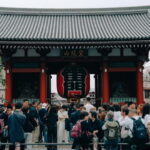
The class begins at 2-chōme-17-9 Kaminarimon, Taito City, Tokyo 111-0034. This is in the Kaminarimon area of Asakusa, close to Sensoji Temple and public transportation.
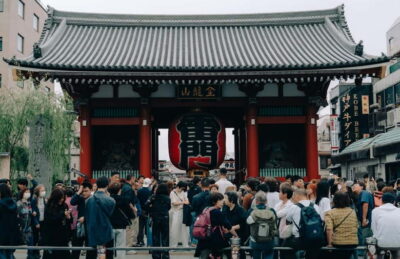
The location matters. Asakusa is one of the best parts of Tokyo for seeing an older side of the city. You can visit Sensoji, pass through Kaminarimon Gate, browse Nakamise shopping street, and then sit down for a food activity nearby. Plan the class as part of a half-day in Asakusa rather than treating it as an isolated appointment.
You should allow time to find the meeting point. Tokyo addresses can be difficult to read at street level, and the area has plenty of pedestrians and small streets. The experience ends back at the same location, which makes planning the rest of your day easier.
A mobile ticket is provided. Hotel pickup and drop-off are not included, so you make your own way to the class.
The opening lesson: sushi with useful context
The class starts with an introduction to sushi and its place in Japanese food culture. This is not a long academic lecture. It is a short explanation designed to help you understand what you are about to prepare.
That opening makes the practical work more interesting. You are not simply copying hand movements. You learn the difference between several sushi styles and gain some background on how the food developed.
The instructors are English-speaking, and the style is aimed at international participants. Rino, Ken, Yuto, Momo, Yui, Ayu, and other members of the teaching team have been named by participants in different sessions. The exact instructor lineup can vary, but the consistent theme is a friendly, energetic teaching style.
One small caution: speaking speed may differ from one instructor to another. Most of the instruction is described as clear, but one participant found that a particular instructor spoke a little fast. If you miss a step, ask for a repeat. The class is designed for beginners, and asking questions is part of the process.
Maki rolls, nigiri, and the tricky part
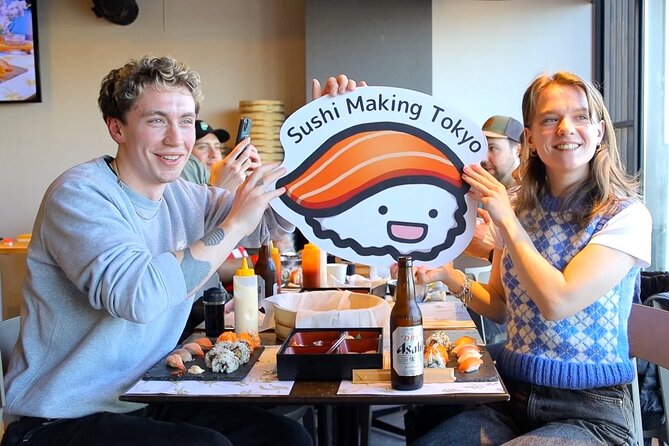
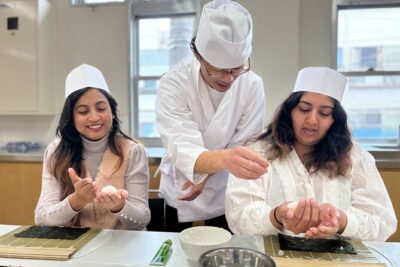
The main activity moves from demonstration to practice. You follow the instructor’s steps as you prepare rolled sushi and nigiri. The ingredients and utensils are already organized, which keeps the class moving and leaves you more time to make food.
Maki rolls are usually the easier place to start. You spread or arrange the ingredients, roll the sushi with the provided tools, and cut it into pieces. It is satisfying because the finished shape appears quickly, even if your first roll is not perfectly tight.
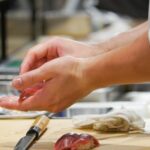
Nigiri is more difficult than it looks. The rice must be shaped without crushing it, and the topping needs to sit neatly on top. The instructors break the process into small movements, but you should expect a little trial and error. That is part of the fun, and it gives you a better respect for the skill of a professional sushi chef.
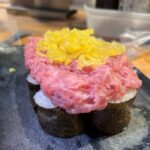
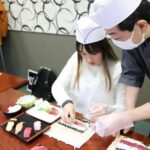
Some sessions also include hand rolls, inside-out maki, or temari sushi. Temari sushi is especially appealing to families and children because it has a small, rounded shape and can be presented in a cute way. The exact mix of sushi styles may vary, but the class focuses on more traditional Japanese forms rather than only making novelty rolls.
In several sessions, each person made about eight pieces of maki and eight pieces of nigiri. That is a substantial meal for a short activity. Portions are not limited to a single demonstration piece, so you should arrive ready to eat.
Eating what you made
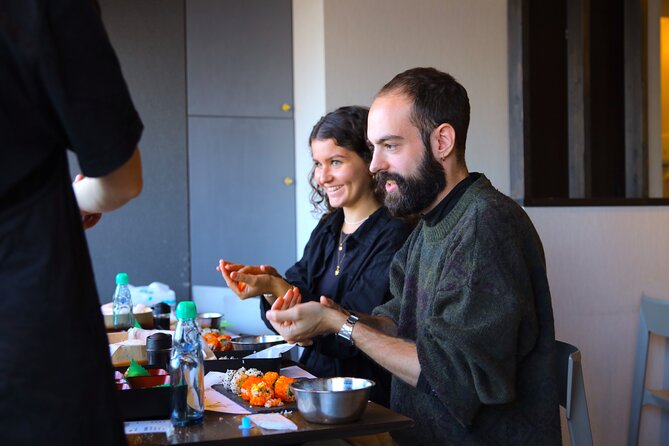
After the instruction and preparation, you sit down with the sushi you made. This is the payoff, but it is also part of the learning. You see how technique affects the final result, and you can compare your first attempts with the instructor’s examples.
The ingredients are described as fresh and good quality, with a range of traditional sushi fillings. The class also offers options that do not use raw fish, so people with different tastes can take part. A family can enjoy the activity even if not everyone wants the same type of sushi.
Beverages may be available for an additional charge. Sake is not included in the listed price, so budget separately if you want a drink with the meal. One useful language note from the class experience: in Japan, set often means a combo meal or package, not a single drink. Check what is included before ordering a sake set.
The meal can be surprisingly filling. If you schedule this close to lunch, you may not need another full meal immediately afterward. That helps the $79.59 price feel more reasonable, especially when you count the food, instruction, entertainment, and cultural context together.




A social class that welcomes solo visitors
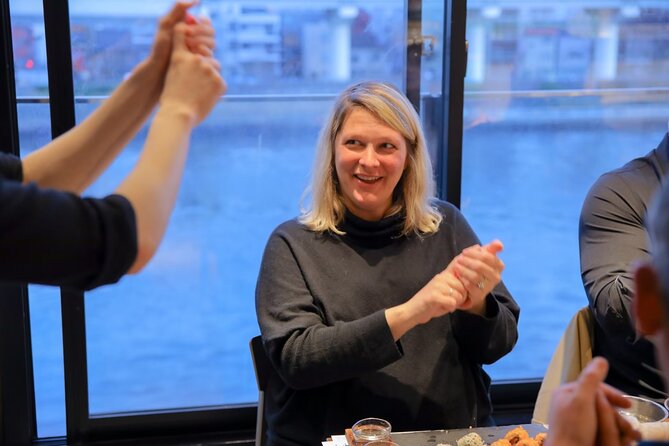
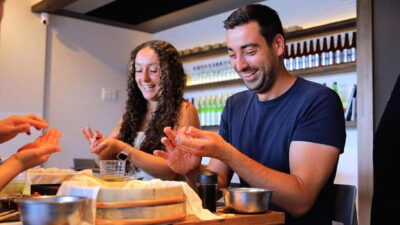
You can book this experience alone, with a partner, or as part of a family or friend group. Solo visitors are not left on the sidelines. The structure naturally creates chances to work alongside other people, and the instructors keep the atmosphere open and relaxed.
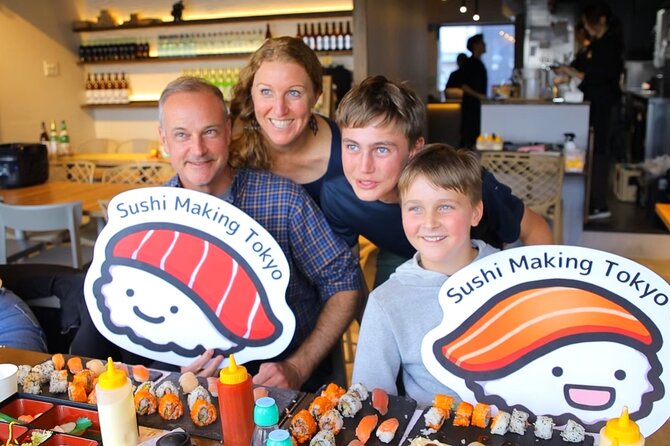
Families are a particularly good match. Children around ten or eleven have been able to follow the directions, and teenagers have enjoyed the mix of food, movement, and humor. The work is hands-on without being physically demanding, and the finished sushi gives younger participants a clear goal.
The listed maximum is 30 people. That is not a tiny private lesson. A group of this size can create noise and waiting during demonstrations, although the class may be split into smaller working groups. One participant found the group larger than expected and wanted clearer instructions.
I would book this for the shared experience, not for individual coaching at every second. If you want a quiet, advanced sushi seminar, this is probably too casual. If you want an upbeat activity where an instructor can rescue a loose roll or crooked piece of nigiri, the format works well.
Food restrictions and family considerations
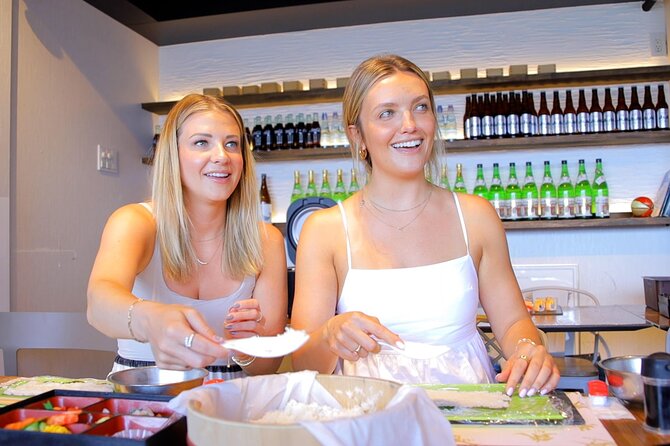
The class has accommodated shellfish allergies and gluten-free requirements, including a gluten-free option for a child. Substitutions have been made while keeping portions similar.
Still, you should communicate any allergy or dietary restriction before the class. Do not assume every need can be handled on the spot. The provided information confirms that accommodations have been possible, but it does not promise every type of substitute.
Raw fish preferences also deserve attention. The class includes traditional sushi, but non-raw options are available according to the experience details. This makes it easier for a mixed group to participate together.
Service animals are allowed. The activity is near public transportation, and it takes place indoors at the listed meeting point, though the information provided does not specify detailed accessibility features such as step-free access or restroom arrangements.
Is $79.59 a fair Tokyo price?
At $79.59 per person, this is not the cheapest way to eat sushi in Tokyo. You can order a satisfying plate of sushi for much less, especially at a casual restaurant.
The comparison is not quite fair, though. The price includes an English-speaking instructor, the ingredients, the cooking class, and the meal you prepare. You are also paying for about 1 hour 40 minutes of structured activity and for a location close to one of Tokyo’s major sights.
I see the value in three situations. First, it is a good choice if you want an activity rather than another restaurant meal. Second, it works well for families because everyone has a job to do. Third, it is useful for solo visitors who want a social experience built into the day.
The value is weaker if your only goal is to eat the finest sushi possible. A class cannot match a skilled sushi counter for precision, and one participant felt the instruction was not professional enough to call it a master class. That is a fair criticism if you arrive expecting chef-level training.
Book it as a cultural food activity. You will learn basic techniques, hear some sushi background, and eat a generous plate of your own work. You will not leave ready to work behind a Tokyo sushi counter.
Timing, cancellation, and practical planning
The activity lasts approximately 1 hour 40 minutes. Add time before the start to reach the Kaminarimon address, especially if you are coming from another part of Tokyo.
Because the class is near Sensoji, I would place it beside temple sightseeing rather than crossing the city solely for the session. A morning visit to the temple followed by the class makes sense, or you can take the class first and explore Asakusa afterward.
Free cancellation is available up to 24 hours before the start time for a full refund. Changes or cancellations made less than 24 hours before the start time are not accepted for a refund. The class also requires a minimum number of participants, so a cancellation by the operator may lead to another date or a full refund.
Who should book this sushi class?
I would recommend it to families, couples, solo visitors, and first-time sushi makers. It is especially useful for anyone who wants an easy English-language activity with a real meal at the end.
It also suits people who want a break from sightseeing. Tokyo can become a long sequence of shrines, shops, stations, and restaurant reservations. Sitting down to make something with your hands gives the day a different rhythm.
You may want to skip it if you are already an experienced sushi maker or if you want a highly technical culinary course. The teaching is friendly and practical, but the class is built for broad appeal. The larger sessions may also feel less personal than a small private lesson.
Should you book Sushi Making Tokyo?
Book this class if you want to turn lunch into an activity. The location near Sensoji is excellent, the English instruction removes a major barrier, and the portion size makes the price easier to justify. I particularly like the mix of sushi history, guided practice, and eating the finished food.
Go in with the right expectations. This is a cheerful, beginner-friendly group class, not an elite chef apprenticeship. You may share the room with around 30 people, and the instruction can feel a little fast or general at busy sessions.
For a family, a solo visitor, or anyone who wants one memorable food experience in Asakusa, it is a strong choice. Bring your appetite, arrive ready to ask questions, and leave time to enjoy Sensoji before or after.
FAQ
Where does the sushi-making class meet?
The class begins at 2-chōme-17-9 Kaminarimon, Taito City, Tokyo 111-0034, Japan, near Sensoji Temple in Asakusa.
How long does the experience last?
The activity lasts approximately 1 hour 40 minutes.
Is the class taught in English?
Yes. An English-speaking instructor guides you through the sushi-making steps and explains sushi history and techniques.
Do I need previous cooking experience?
No. The class is designed for beginners, and no sushi-making or cooking experience is required.
What types of sushi will I make?
The class includes sushi rolls and authentic nigiri. Sessions may also include hand rolls, inside-out maki, or temari-style sushi.
Do I eat the sushi I make?
Yes. The ingredients and cooking-class meal are included, and you eat the sushi you prepare.
Is the class suitable for children and teenagers?
Yes. The activity is described as suitable for families, and children and teenagers have been able to follow the instructions and take part.
Can I cancel for a full refund?
You can cancel at least 24 hours before the experience start time for a full refund. Cancellations or changes made less than 24 hours before the start time are not accepted for a refund.
More Sushi Making Classes in Tokyo
More tours in Tokyo we've reviewed






Sushi Making Classes, compared.
 ★ 5.0Sushi Making Tokyo Roll and Authentic Japanese Sushi ClassFrom $59
 ★ 4.9Tokyo: Roll and Authentic Sushi Making Class in AsakusaFrom $581h 40m
 ★ 4.9Tokyo: Sushi Making Class in a Happi Coat near a Famous SpotFrom $421h 30m
 ★ 5.0Tokyo Sushi Making Class in Tsukiji with Professional ChefFrom $49
 ★ 5.0Tokyo Night Foodie Tour in Shinjuku – Seasonal Sushi, Wagyu BeefFrom $111
 ★ 5.0Tsukiji Fish Market Guided Tour and Sushi Making with Pro ChefFrom $104