
Reviewed · SUSHI MAKING CLASSES
Sushi Making Tokyo Roll and Authentic Japanese Sushi Class
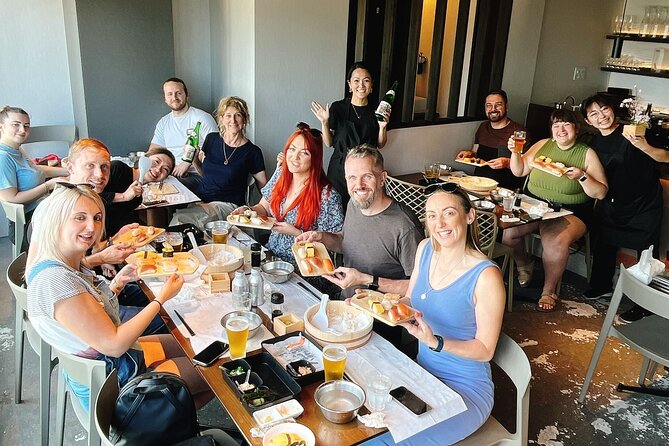
Tokyo offers endless places to eat sushi, but this class lets you make your own lunch just steps from Senso-ji Temple. You’ll learn basic sushi history, prepare rolls and nigiri, then sit down with the food you made. I like the clear, hands-on teaching, and I like how easily the class fits into a morning or afternoon in Asakusa.
I also like that no cooking background is needed, and that instructors such as Moe, Kazu, Ken, Jun, Arisa, and Ellie are praised for making the class lively and easy to follow. The main consideration is size: the class can hold up to 30 people, so personal help may vary depending on the session.
In This Review
- Key points at a glance
- Making sushi beside Senso-ji in Asakusa
- What happens when class begins
- Rolling maki without making a mess
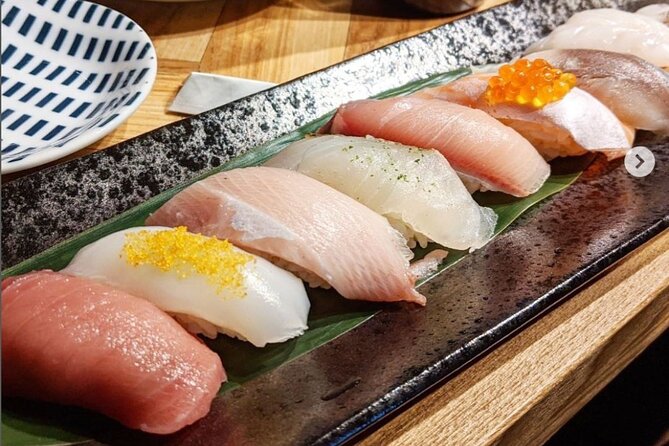
- Shaping authentic nigiri
- Why the food lesson has real value
- A class built for conversation
- A good choice for children and teens
- Fitting the class into a Tokyo day
- What this class does not teach
- Who will get the most from it
- The final meal and the lasting memory
- Should you book Sushi Making Tokyo?
- FAQ
- Where does the sushi class meet?
- How long does the experience last?
- Is the class held in English?
- What will I learn to make?
- Is the sushi meal included?
- Do I need cooking experience?
- How many people can join the class?
- Is hotel pickup included?
- Can I cancel for a refund?
Key points at a glance
- A meal you prepare yourself: Make sushi rolls and authentic nigiri, then eat your finished work.
- A convenient Asakusa setting: The meeting point is near Senso-ji Temple and public transportation.
- Clear English instruction: Guides explain techniques, sushi history, and Japanese food culture in English.
- Good for first-timers and families: Children, teens, couples, and adults with no cooking experience can take part.
- A full 1-hour-40-minute activity: The class includes instruction, preparation, photos, and time to eat.
- Strong value at $59.69: Ingredients, instruction, and the meal are included, with no separate hotel transfer charge.
Making sushi beside Senso-ji in Asakusa
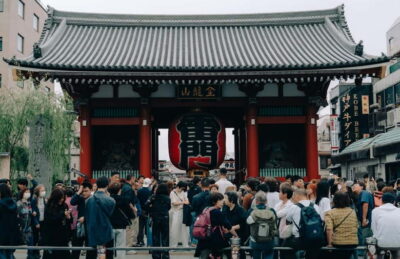
The setting does much of the practical work for you. The class begins at 2-chōme-17-9 Kaminarimon, in Taito City, close to Senso-ji Temple and the traditional streets of Asakusa.
This is a useful location for your itinerary. You can schedule the class before or after a visit to the temple, and you will not lose half a day crossing Tokyo to reach it. The area is near public transportation, though the exact venue can be a little tricky to find. I would arrive about 15 minutes early, especially if you are traveling with children or trying to meet a tight sightseeing schedule.
The activity lasts about one hour and 40 minutes. It is long enough to teach real techniques, but short enough to add to a day that already includes Senso-ji, Nakamise-dori, or the Sumida River area.
A few more Tokyo tours and experiences worth a look
What happens when class begins
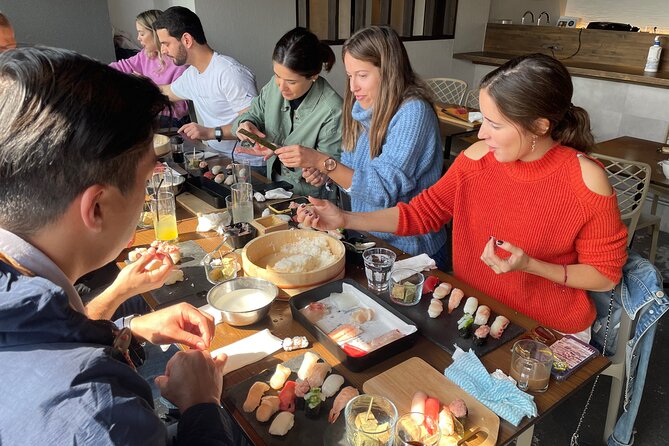
The class starts with an introduction to sushi and its place in Japanese food culture. The teaching may include a presentation or video, followed by demonstrations at the table.
This opening matters. Sushi can look simple, but the finished piece depends on small details: how the rice is handled, how ingredients are placed, and how pressure is used when shaping nigiri. The class gives you a little context before asking you to copy the technique, which makes the process less intimidating.
The cultural portion is not presented as a long formal lecture. The overall tone is relaxed and social, with English-speaking instructors explaining the process in clear steps. Instructors named in class feedback include Moe, Kazu, Ken, Jun, Arisa, Ellie, and others. Your guide will depend on the date, but the teaching style is designed for international visitors.
You may also pick up a few Japanese words along the way. That is a small bonus, but it can make ordering food and talking about sushi during the rest of your trip more fun.
Rolling maki without making a mess
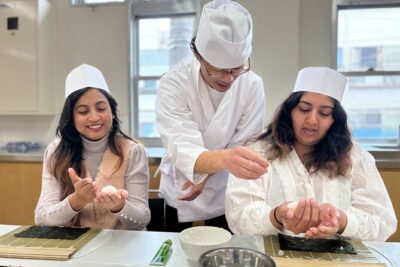
One of the main hands-on sections covers sushi rolls, often called maki. You will see how to place ingredients, manage the rice, and roll the sushi into a usable shape.
This is the part many first-timers find most approachable. You do not need knife skills or years of kitchen practice to take part. The instructor demonstrates the steps, then gives you a chance to repeat them yourself.
The value here is practical rather than fancy. You will not simply watch a chef make perfect sushi while you sit back with a camera. You handle the ingredients and learn a method you can try at home. Your first roll may not look restaurant-perfect, but that is part of the fun, and the food is still yours to eat.
The class is set up for people with different levels of confidence. Adults can follow the technique while younger children help with simpler steps. Families with children around elementary-school age and teenagers have found the activity accessible, and couples can work through the process together.
Do not expect a quiet, highly formal lesson. This is a social class, and instructors use energy and humor to keep the pace moving. That makes it easier for families and mixed-age groups, though anyone hoping for advanced professional training may find the instruction basic.
Shaping authentic nigiri
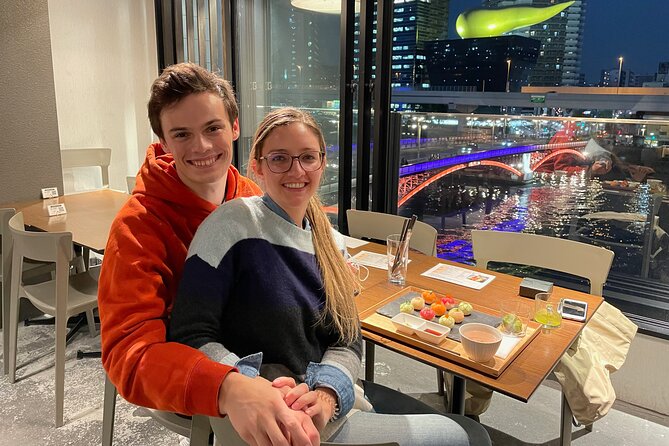
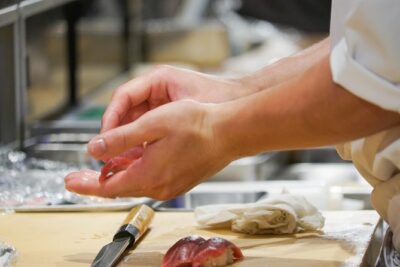
The class also covers nigiri, the hand-formed sushi made with rice and a topping. This gives you a different skill from rolling maki, since the shape and pressure of the rice matter more.
Nigiri can seem harder to make at home because the finished piece looks so neat. Step-by-step demonstrations help break it down. You learn how to form the rice and place the topping rather than treating the process as a mysterious chef trick.
The ingredients and meal are included in the booking. Several class comments specifically praise the quality of the fish and rice, and families appreciated that there was enough food for a full lunch. The precise ingredients can vary, so do not book this expecting a fixed menu unless the provider confirms one for your date.
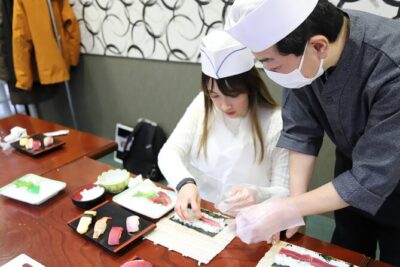
You will prepare several pieces and rolls, then eat what you have made. That final meal gives the lesson a satisfying purpose. Instead of leaving with only notes or a demonstration, you finish with a plate of sushi and a clearer idea of how the process works.
Why the food lesson has real value
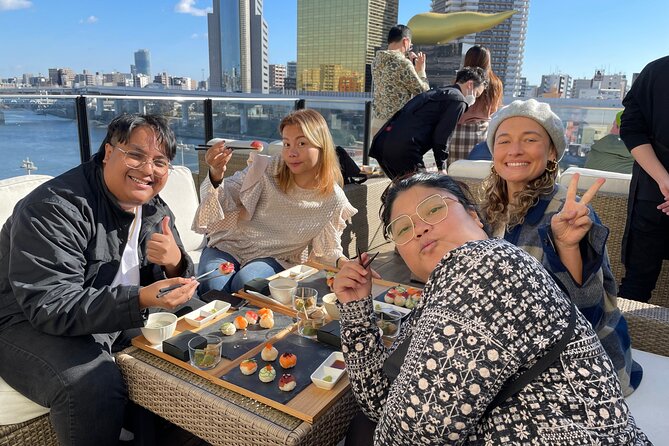
At $59.69 per person, this is not the cheapest way to eat sushi in Tokyo. You can find a quick sushi meal for less, particularly at a casual restaurant or food court.
The value is in the combination. Your price includes an English-speaking instructor, the class ingredients, and the meal. You are paying for food plus about 100 minutes of guided activity in a central Tokyo neighborhood.
That makes the class a stronger choice for a shared experience than for a budget lunch. If you only want to taste the best sushi possible, a respected sushi restaurant is a better match. If you want an activity that gives you something to talk about afterward and lets you participate in the meal, the price is reasonable.
It also replaces a separate paid activity. You do not need to arrange a cooking lesson and then pay for lunch somewhere else. For families, the cost adds up, but the class can fill a useful part of the day and gives children a direct role rather than asking them to sit through another sightseeing stop.
The food quality matters here. The class is not just a craft project with decorative ingredients. The meal is intended to be substantial, and the fish and rice have been praised by people who took part. Still, the amount you eat depends on the class format and ingredients provided that day.
A few more Tokyo tours and experiences worth a look


A class built for conversation
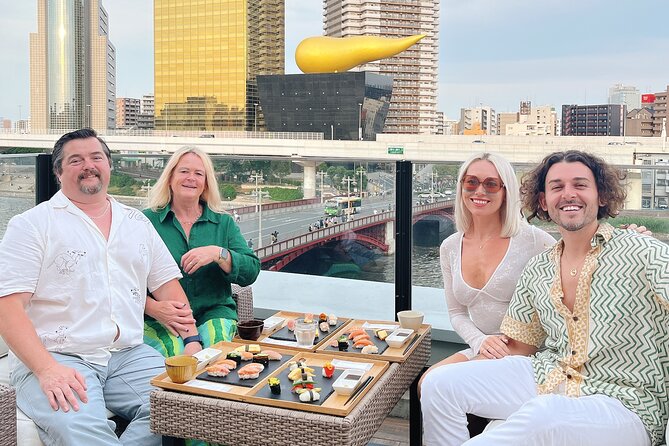
The social side is one of the strongest reasons to book. You make sushi alongside other participants, follow the same demonstrations, and sit down to eat together.
That setup works well for couples, families, and solo visitors who want a more interactive activity. It also creates an easy way to meet people without committing to a long group tour around Tokyo.
The maximum group size is 30. That is not a tiny private lesson, and you should not assume the instructor can stand beside you for every step. Several instructors may help during the session, and the teaching includes visual demonstrations, but the amount of individual attention can depend on attendance.
One class may feel comfortably small, while another may feel more like a lively workshop. If personal coaching is your top priority, ask about the expected group size before booking. If you are comfortable learning from a demonstration and asking for help as needed, the larger capacity should not be a major issue.
The instructors are repeatedly described as friendly, patient, and energetic. Ken, Moe, Kazu, Jun, and other named teachers receive especially warm praise for explaining the process clearly and keeping the mood light. That approach suits a first sushi lesson better than a stern, technical kitchen session.
A good choice for children and teens
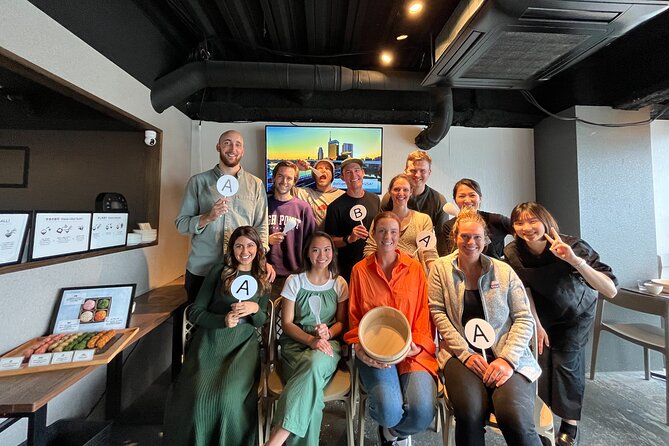
This is one of the better Tokyo food activities for families. Children do not need previous cooking experience, and the class gives them a concrete task to complete.
The age range can work well because the lesson combines a short cultural introduction with hands-on preparation and eating. Younger children may enjoy the rolling and shaping, while teenagers can follow the technique more closely and take photos of the finished food.
I would still consider your child’s attention span. The class includes history and explanations before and during the food preparation, so it is not nonstop action. Children who enjoy making things and trying new food should get more from it than children who dislike fish, rice, or group instruction.
The class is also suitable for a mixed group. One family took part with children as young as six alongside adults, and the instructors adjusted their pace to keep everyone involved. That kind of flexibility is useful when one person in your party is confident in the kitchen and another has never prepared sushi.
Fitting the class into a Tokyo day
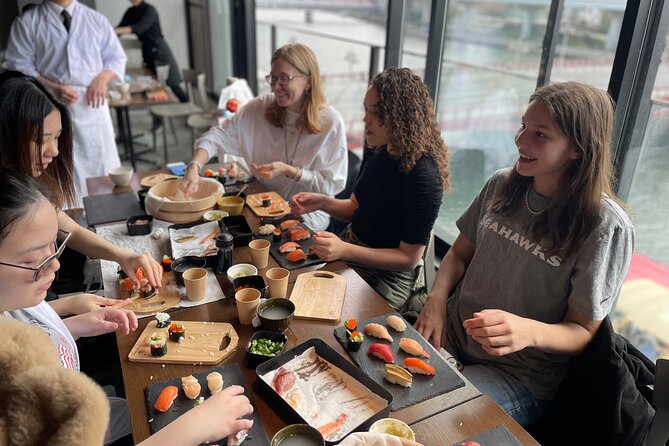
The Asakusa location makes planning simple. Start or finish with Senso-ji, then use the class as the central activity in your visit to the neighborhood.
If you book a morning session, the sushi can serve as lunch. If you choose an afternoon time, plan another meal later rather than treating the class as your only food stop for the day. The class includes a meal, but the schedule is still built around learning first and eating afterward.
Allow extra time before the start. The meeting point is specific, and one person found the venue difficult to locate. Arriving early is also wise if you are coming directly from a station, managing a stroller, or trying to keep children calm.
Hotel pickup and drop-off are not included. You make your own way to the meeting point and return there when the activity ends. That is a drawback if you prefer door-to-door tours, but it also keeps the experience flexible and makes it easy to continue sightseeing in Asakusa.
A mobile ticket is provided, so you can keep the booking details on your phone. Confirmation comes at booking, and free cancellation is available if you cancel at least 24 hours before the local start time. Changes or cancellations inside that window are not accepted for a refund.
What this class does not teach
The word authentic needs a little care here. The class teaches recognizable Japanese sushi techniques and includes cultural background, but it is designed for visitors, not for apprentices entering a sushi kitchen.
One class description calls the approach somewhat Western in presentation. That is not necessarily a weakness. It means the lesson uses clear English, demonstrations, and simple steps rather than assuming you already understand Japanese cooking terms or kitchen etiquette.
You should not expect a full chef-training course, a market visit, or a long discussion of regional sushi styles. Hotel transportation is also not part of the package, and the maximum group size means the experience is not guaranteed to be private.
What you do get is focused and useful: basic sushi history, instruction in rolls and nigiri, guided practice, ingredients, and a meal. For most visitors, that is the right amount of content for a short Tokyo activity.
Who will get the most from it
I would recommend this class to:
- Families looking for an activity children can actively join
- Couples seeking a shared food experience
- First-time sushi makers who want clear instructions
- Solo visitors who enjoy social classes
- Anyone staying near Asakusa or planning to visit Senso-ji
- Sushi fans who want to understand the basic preparation process
I would be more cautious if you want a private lesson, advanced sushi skills, or a highly traditional chef’s counter experience. The class is friendly and practical, but it is also built for a broad international audience.
It is a particularly good choice near the start of a Tokyo visit. After learning how sushi is put together, you may notice the rice, shape, and presentation more carefully at restaurants during the rest of your stay.
The final meal and the lasting memory
The best part of the schedule comes at the end, when you sit down with the sushi you prepared. The food may not have the precision of a professional sushi counter, but that is not the point.
You remember the slightly uneven roll, the careful attempt at nigiri, and the instructor’s advice about getting the shape right. The meal becomes a shared story rather than just another plate of food.
Photos are welcome as a way to remember the experience. The class also works well as a final-day activity because it is light, social, and easy to fit near the temple district. One person described it as a fun way to share time in Tokyo without treating it as a formal culinary qualification.
The class has received a five-star score from 3,971 reviews and a 99 percent recommendation rate, along with two TripAdvisor Best of the Best awards. Those figures suggest a dependable experience, but they do not remove the practical limits: group size, a tourist-friendly teaching style, and a fixed meeting point.
Should you book Sushi Making Tokyo?
Book it if you want to do more than order sushi. The class gives you a useful introduction to maki and nigiri, includes enough food for a proper meal, and places you in one of Tokyo’s most convenient sightseeing districts.
The strongest reasons are the clear English instruction, the friendly teaching style, and the fact that you eat what you make. Families and couples are likely to get the most from the shared activity, while solo visitors can enjoy the social setting.
Skip it if your main goal is a serious professional lesson or the finest sushi meal in Tokyo. For everyone else, $59.69 is a fair price for nearly two hours of food, culture, and hands-on participation, especially when you pair it with Senso-ji.
FAQ
Where does the sushi class meet?
The class begins at 2-chōme-17-9 Kaminarimon, Taito City, Tokyo 111-0034, Japan.
How long does the experience last?
The activity lasts approximately 1 hour and 40 minutes.
Is the class held in English?
Yes. An English-speaking instructor leads the class and explains the sushi techniques and cultural information.
What will I learn to make?
You will learn how to prepare sushi rolls and authentic nigiri. The class also covers sushi history and Japanese culinary culture.
Is the sushi meal included?
Yes. Ingredients for the cooking class and the meal are included, and you eat the sushi you prepare.
Do I need cooking experience?
No. The class is designed for beginners, and no cooking experience is required.
How many people can join the class?
The activity can have a maximum of 30 participants.
Is hotel pickup included?
No. Hotel pickup and drop-off are not included. The activity ends back at the meeting point.
Can I cancel for a refund?
Yes. You can cancel at least 24 hours before the local start time for a full refund. Cancellations or changes made less than 24 hours before the start time are not accepted for a refund.
More Workshops & Classes in Tokyo
More Sushi Making Classes in Tokyo
More tours in Tokyo we've reviewed






Sushi Making Classes, compared.
 ★ 4.9Tokyo: Roll and Authentic Sushi Making Class in AsakusaFrom $581h 40m
 ★ 5.0Make Sushi and Create Unforgettable Memories in TokyoFrom $79
 ★ 4.9Tokyo: Sushi Making Class in a Happi Coat near a Famous SpotFrom $421h 30m
 ★ 5.0Tokyo Sushi Making Class in Tsukiji with Professional ChefFrom $49
 ★ 5.0Tokyo Night Foodie Tour in Shinjuku – Seasonal Sushi, Wagyu BeefFrom $111
 ★ 5.0Tsukiji Fish Market Guided Tour and Sushi Making with Pro ChefFrom $104