
Reviewed · WALKING TOURS
Explore Kichijoji: Walk Through One of Tokyo’s Beloved Districts
Kichijoji is where Tokyo feels pleasantly human-sized. This two-hour walk moves from the 300-meter Sunroad shopping street to a quiet Zen temple, old family shops, cafés, and the narrow lanes of Harmonica Yokocho, ending with one drink and two yakitori skewers.
I like the small group limit of eight, which gives guides such as Kate or Michi room to explain local details and answer questions. I also like the mix of old and new: antique pottery, artisan shops, sweets stores, and newer cafés all appear within an easy afternoon stroll.
The main drawback is pace. One hour of the walk is given to Nakamichi-dori and nearby streets, so you will see more than you can fully explore. The 3:00 p.m. start also means this is better for an afternoon in Kichijoji than for a morning sightseeing plan.
In This Review
- Key Points
- Why Kichijoji Makes a Good Tokyo Side Trip
- Starting on Sunroad’s 300-Meter Shopping Street
- Gesso-ji Temple and the Story Behind the Town
- An Hour Along Nakamichi-dori and Its Side Streets
- Finishing in Harmonica Yokocho
- What You Get for $45.98
- Timing, Meeting Point, and Walking Practicalities
- Who Will Get the Most from This Walk
- Should You Book Explore Kichijoji?
- FAQ
- Where is Kichijoji?
- How long does the tour last?
- What time does the tour start?
- Where does the tour begin?
- Where does the tour end?
- What is included at Harmonica Yokocho?
- How many people can join the tour?
- Can I cancel for a full refund?
Key Points
- Sunroad sets the scene: Walk a 300-meter arcade lined with about 150 shops and daily local life.
- Gesso-ji explains Kichijoji: This quiet temple is tied to the town’s original formation.
- Nakamichi-dori rewards curiosity: Look for long-running stores, antique pottery, cafés, sweets shops, and boutiques.
- Harmonica Yokocho has a memorable finish: End in a maze of tiny bars and eateries with one drink and two yakitori skewers.
- The group stays small: A maximum of eight people makes it easier to hear the guide and ask questions.
- The timing is simple: Meet at 3:00 p.m. near Kichijoji’s south side and finish by the north exit.
Why Kichijoji Makes a Good Tokyo Side Trip
Kichijoji sits in Musashino, about a 15-minute train ride from Shibuya or Shinjuku. That makes it easy to add to a Tokyo itinerary, yet the district feels different from the city’s biggest shopping zones.
You get a town that locals value for its shops, cafés, streets, and connection to nature. This tour focuses on the part many first-time visitors would miss if they simply arrived at the station, walked to one restaurant, and left.
The appeal is not a list of famous monuments. It is the way the neighborhood fits together. A covered shopping street leads to a temple. Traditional stores sit beside newer businesses. A narrow food alley preserves the feel of postwar Tokyo while serving today’s crowds.
That combination makes the walk useful early in a Kichijoji visit. You can learn the basic shape of the district, hear why it developed, and mark places you may want to return to later. The tour does not try to turn Kichijoji into a grand sightseeing spectacle. Its value is in showing you how a popular Tokyo neighborhood works.
If you're still narrowing it down, here are other tours in Musashino we've reviewed.

Starting on Sunroad’s 300-Meter Shopping Street
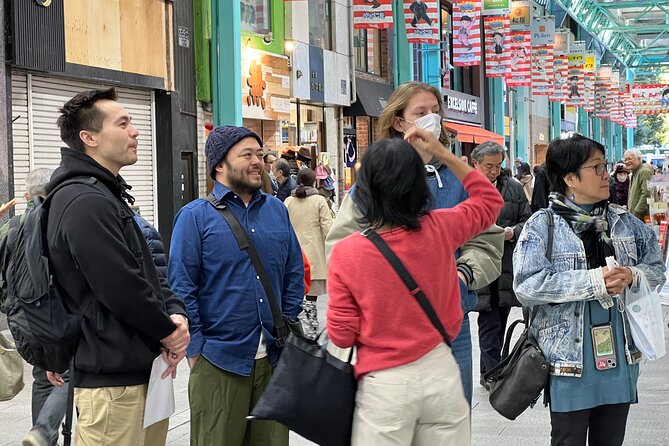
The walk begins at Sunroad, a covered shopping street stretching about 300 meters and lined with roughly 150 shops. Admission is free, and the appeal comes from the steady mix of businesses rather than from one headline attraction.
This is a good opening stop because it immediately places you in local commercial Tokyo. You might see everyday stores, food shops, and small businesses serving people who live nearby. It is not just a passage to somewhere else. Sunroad is part of the town’s social and shopping life.
The street was named Tokyo residents’ second-favorite shopping street in 2022, after Ameyoko. That detail helps explain why Kichijoji is more than a fashionable address. The district has a practical side, and Sunroad gives you a quick look at it.
The scheduled stop lasts about 15 minutes. That is enough for orientation and explanation, but not enough for serious shopping. If a particular store catches your eye, make a note of it and return after the tour. Trying to browse every storefront while keeping up with the group will only make the beginning feel rushed.
Gesso-ji Temple and the Story Behind the Town
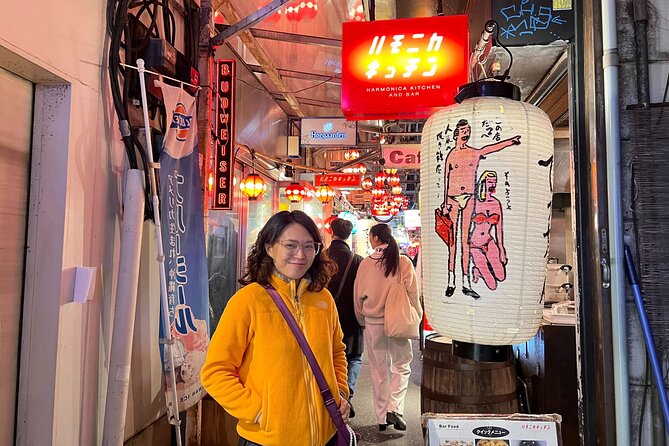
From Sunroad, the walk continues to Gesso-ji Temple. The temple is presented as the heart of Kichijoji’s story and the reason the town was originally formed.
This stop adds needed context. Without it, Kichijoji can look like a pleasant collection of shops with no clear thread connecting them. At Gesso-ji, the guide explains how the town’s past shaped the neighborhood you see today.
The temple is a Zen Buddhist site surrounded by greenery and remains an important gathering place for local people. The scheduled visit is about 15 minutes, so expect a short introduction and time to take in the setting rather than a long temple tour.
The historical background includes the great earthquake that helped trigger the creation of the town about 350 years ago. That is the kind of detail that gives the rest of the walk more meaning. You are not only passing through retail streets. You are seeing a place formed by displacement, rebuilding, and gradual growth.
A small temple visit can also bring you closer to seasonal customs. One account of the walk describes learning about the Tanabata star festival and writing a wish on a tanzaku, a small paper strip hung as part of the celebration. That activity may depend on the season, so do not count on it at every departure. Still, it shows the sort of local cultural detail this tour can provide.
An Hour Along Nakamichi-dori and Its Side Streets

The longest part of the tour takes place along Kichijoji Nakamichidori Shopping Arcade and nearby streets. Plan on about one hour here, with the guide pointing out how older businesses and newer ones share the area.
This is likely the tour’s most useful section for anyone interested in shopping or food. You might find stores that have served the neighborhood for more than half a century beside stylish cafés, sweets shops, and independent boutiques. The contrast is not forced. It is simply how Kichijoji has changed while keeping parts of its older character.
The walk can also introduce you to shops that are easy to overlook in a standard Tokyo guidebook. Small artisan stores and antique shops receive particular attention, including places with pottery gathered from different parts of Japan. If you care about ceramics, household objects, or traditional design, this portion may be the highlight.
I would treat the hour as a guided survey, not a shopping expedition. You will get useful pointers, but you probably will not have time to stop for a full meal, compare every item, or linger in each shop. That is a fair trade for the local orientation, especially if you plan to return later on your own.
The guides’ role matters here. Kate is described as especially familiar with the neighborhood, while Michi is noted for explaining both old and current Kichijoji. Guide assignments can vary, but the experience depends on having someone who can connect storefronts and streets to the town’s larger story.
Finishing in Harmonica Yokocho
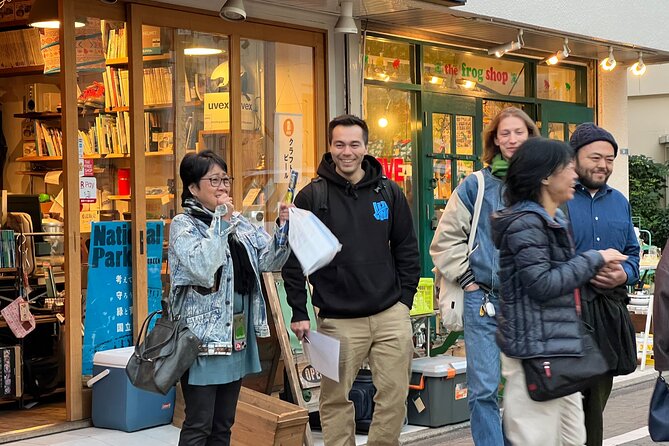
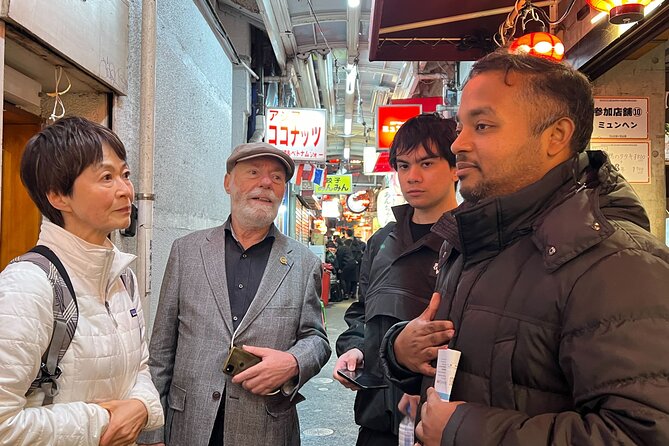
The final stop is Harmonica Yokocho, a tight maze of small bars and eateries near the north exit of Kichijoji Station. The name comes from the way its narrow lanes resemble the reeds of a harmonica.
Its past gives the place extra character. The alley began as a postwar black market, and its small-scale layout still feels very different from a modern shopping center. Red lanterns, compact food counters, and close-set businesses create a more intimate finish to the walk.
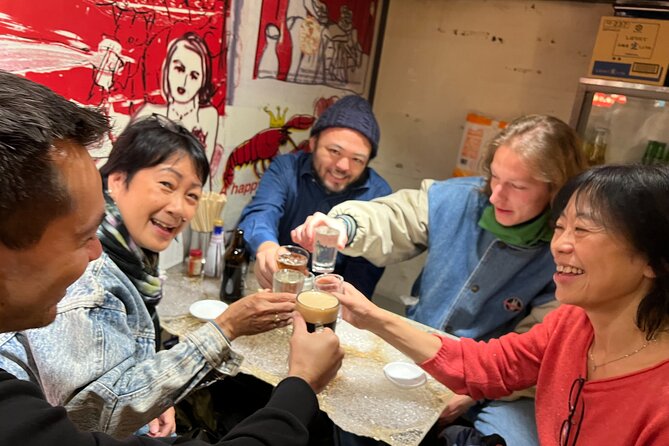
The tour includes one drink and two yakitori skewers here. That gives you a simple introduction to the alley rather than a full dinner. You can expect a taste of the setting and the local bar-and-food culture, but you should plan another meal if you are hungry after the two-hour experience.
This is also the point where the timing makes sense. A 3:00 p.m. start brings you to the food alley around the transition from afternoon to evening. The tour ends at Harmonica Yokocho, a short walk from the station’s north exit, so you can continue eating, shopping, or catch a train without retracing the route.
The narrow lanes may not suit anyone who wants a quiet, spacious finish. They are part of the attraction, but the compact setting can feel close and busy. The guide helps make sense of it, which is useful if you have never encountered this kind of Tokyo alley before.
What You Get for $45.98
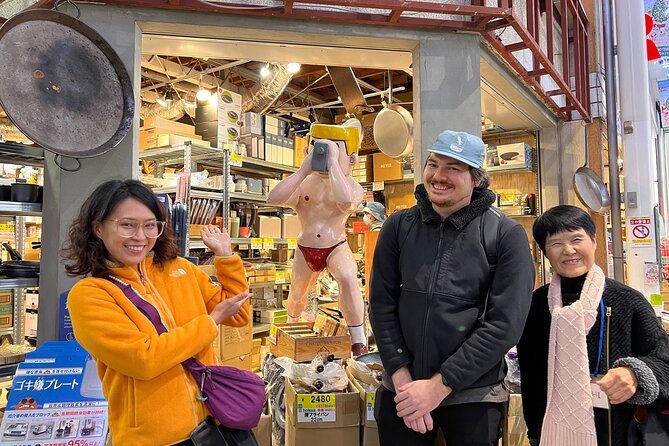
At $45.98 per person, this is not the cheapest way to walk through Kichijoji. You can enter the shopping streets and temple without paying admission, and you could find Harmonica Yokocho on your own.
The price makes more sense if you value interpretation. A guide connects the earthquake story, the temple, the shopping streets, local businesses, and the postwar alley. That context is difficult to assemble during a short independent visit, especially if Kichijoji is one stop among many in Tokyo.
The included drink and two yakitori skewers add a modest practical benefit. They are not enough to make the tour a food tour, but they give you a planned introduction to the district’s most distinctive eating area.
The eight-person maximum is another part of the value. A large group would make the narrow lanes and small stores harder to manage. With fewer people, you have a better chance of hearing explanations and asking about shops or customs that interest you.
I would book this for the local insight, not for admission savings or a long meal. If you already know Kichijoji well, the route may feel introductory. If you are visiting for the first time, the guide can help you understand why the district is so popular with people who live in Tokyo.
Timing, Meeting Point, and Walking Practicalities
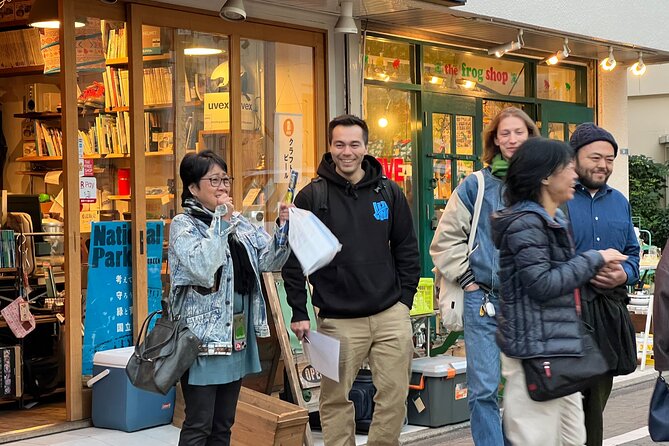
The start time is 3:00 p.m. The listed meeting point is 1-chōme-1-24 Kichijōji Minamichō, Musashino, Tokyo 180-0003. The tour ends at Harmonica Yokocho, 1-chōme-1 Kichijōji Honchō, Musashino, Tokyo 180-0004, near the north exit of Kichijoji Station.
You receive a mobile ticket, and confirmation is sent within 48 hours of booking, subject to availability. Since the group is capped at eight and the experience is often booked about 33 days ahead, reserving early is sensible if your Tokyo dates are fixed.
The walking time is about two hours. The supplied schedule totals roughly one hour and 45 minutes, leaving some room for movement between stops, introductions, and the final food-and-drink portion. Wear shoes you can walk in comfortably, since the experience uses shopping streets and side lanes rather than one single venue.
Most people can participate. The information does not give a detailed accessibility description, so you should contact the provider if you need specific assistance with walking conditions or the route.
You can cancel for a full refund up to 24 hours before the start time. Changes or cancellations inside that window are not accepted for a refund, and the local-time cut-off applies. The tour also requires a minimum number of participants, so a cancellation by the operator can lead to another date, another experience, or a full refund.
Who Will Get the Most from This Walk

This tour suits first-time visitors who want to see a less central side of Tokyo without spending a full day away from the main city. The short train ride from Shibuya or Shinjuku makes it an easy addition to a larger itinerary.
It is also a good fit if you care about ordinary city life, independent shops, Japanese pottery, neighborhood history, and small food alleys. You will get more from the walk if you enjoy asking questions and noticing details rather than rushing from one major sight to the next.
The tour may be less useful for someone who wants a long stop at the Ghibli Museum. The neighborhood is located near the museum, but this experience is a separate walking tour and does not list museum admission or a museum visit. If you plan to do both, allow enough time between activities instead of assuming they form one combined program.
Likewise, shoppers should see this as an introduction. The tour can point you toward artisan stores, antique pottery, cafés, and boutiques, but the two-hour schedule will not allow a leisurely stop at every place.
Should You Book Explore Kichijoji?
I would book this if you want a compact, guided introduction to one of Tokyo’s most appealing residential and shopping districts. The strongest parts are the local explanation, the small group, the contrast between old and new businesses, and the finish in Harmonica Yokocho with a drink and yakitori.
I would skip it if you prefer to wander entirely on your own or if your main goal is a long food crawl. Most stops are free, so the $45.98 fee is paying for the guide’s local knowledge and the structure of the walk.
For a first visit, that is a reasonable trade. You get history at Gesso-ji, neighborhood life on Sunroad and Nakamichi-dori, a look at shops you might not find by chance, and a practical ending near the station. Kichijoji is easy to visit independently, but this walk helps you see why the district has earned such a strong reputation.
FAQ
Where is Kichijoji?
Kichijoji is in Musashino, Japan, about a 15-minute train ride from Shibuya or Shinjuku.
How long does the tour last?
The experience lasts approximately two hours.
What time does the tour start?
The tour starts at 3:00 p.m.
Where does the tour begin?
The listed starting point is 1-chōme-1-24 Kichijōji Minamichō, Musashino, Tokyo 180-0003, Japan.
Where does the tour end?
The tour ends at Harmonica Yokocho, 1-chōme-1 Kichijoji Honchō, Musashino, Tokyo 180-0004, near the north exit of Kichijoji Station.
What is included at Harmonica Yokocho?
The experience includes one drink and two skewers of yakitori.
How many people can join the tour?
The maximum group size is eight people.
Can I cancel for a full refund?
Yes. You can cancel at least 24 hours before the start time for a full refund. Cancellations or changes made less than 24 hours before the start time are not accepted for a refund.
More tours in Musashino we've reviewed
Walking Tours, compared.
 ★ 5.0Tokyo Tsukiji Fish Market Food and Culture Walking TourFrom $99
 ★ 5.0Tokyo: Imperial Palace and Shogun Historical Walking TourFrom $22
 ★ 4.9Tokyo: Shinjuku Local Bar and Izakaya Guided Walking TourFrom $343 hours
 ★ 5.0Tokyo: Tsukiji Fish Market Food and Walking tourFrom $30
 ★ 4.8Tokyo: Asakusa Walking Tour with Sensoji Temple VisitFrom $222 hours
 ★ 4.9Tokyo: Tsukiji Fish Market Guided Walking TourFrom $222 hours