
Reviewed · KAMAKURA & ENOSHIMA DAY TRIPS
Kamakura Temples Private Guided Tour from Tokyo
Kamakura packs a lot into one easy day from Tokyo: a towering bronze Buddha, a flower-filled temple, and one of Japan’s most important Shinto shrines. This private eight-hour tour gives you a guide for the whole outing, with the train ride from Tokyo handled as part of the day’s route rather than left for you to figure out alone.
I like the personal format and the chance to ask questions as you go. I also like the mix of Buddhist and Shinto sites, especially the contrast between the quiet figures at Hase Temple and the broad ceremonial approach to Tsurugaoka Hachimangu. The catch is the price: at $145 per person, you still pay for trains, temple admission, lunch, and drinks.
- A full Kamakura day from Tokyo: Allow about 70 minutes each way by train, plus local travel between sights.
- Hase Temple’s eleven-faced Kannon: See one of Kamakura’s most important Buddhist images and the small Jizo figures near Jizo-do Hall.
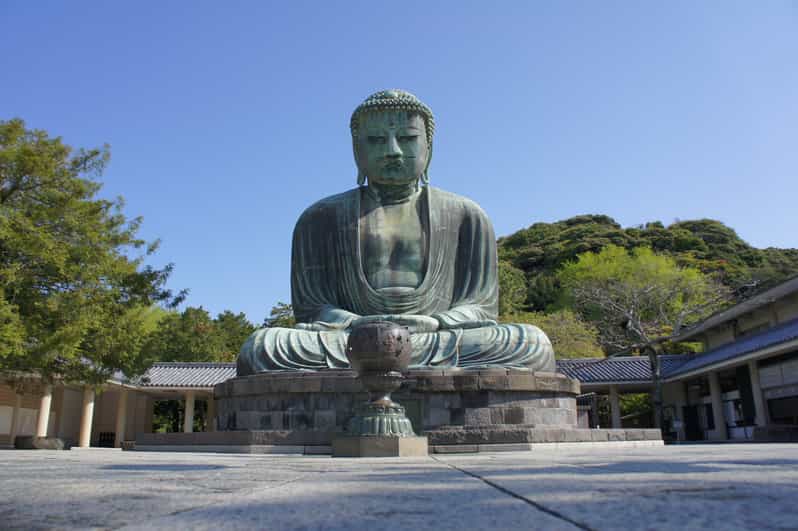
- The 13-meter Great Buddha: Visit Kotokuin Temple and learn why this famous bronze statue dates to 1292.
- Tsurugaoka Hachimangu’s central setting: Explore Kamakura’s leading Shinto shrine, founded in 1063.
- A private English-speaking guide: Guides have included Steve, Take, Mizuma-san, and Richie, though your assigned guide may differ.
- Extra costs matter: Budget for roughly 2,000 yen in public transportation, 700 yen in listed entrance fees, and your meal.
In This Review
- Why Kamakura Makes a Good Day Trip
- Starting in Tokyo and Taking the Train South
- Hase Temple and the Eleven-Faced Kannon
- Walking Ten Minutes to Kotokuin Temple
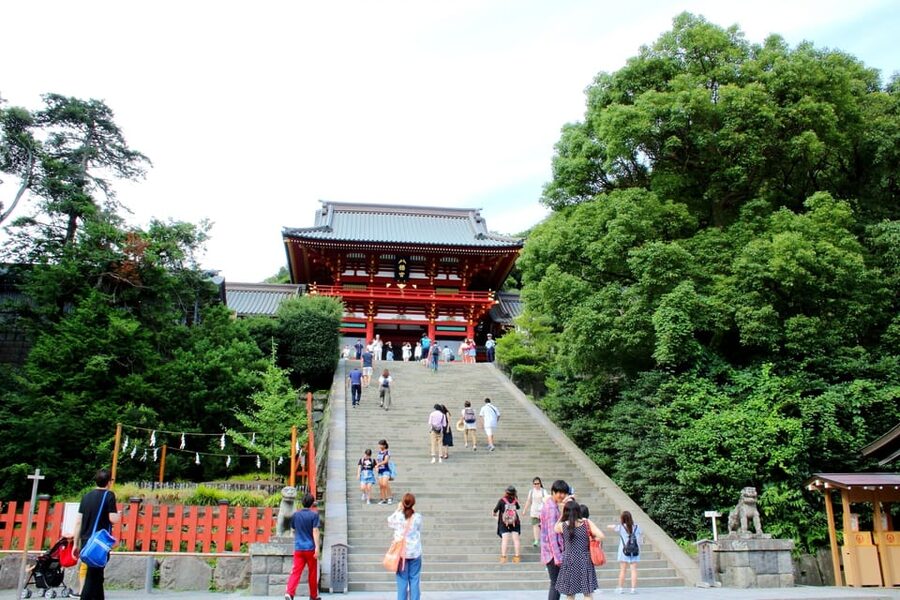
- Tsurugaoka Hachimangu at Kamakura’s Center
- Lunch and Komachi Street
- What the Private Guide Adds
- The Real Cost of the Day
- Timing, Walking, and Crowds
- Who Should Book This Kamakura Tour?
- Should You Book It?
- FAQ
- How long does the Kamakura tour last?
- Where can pickup take place?
- Is hotel pickup included?
- How long is the train journey from Tokyo to Kamakura?
- Are train fares included?
- How much are the temple entrance fees?
- Is lunch included?
- How much walking is involved?
- Is the Great Buddha included in the route?
- What language is the tour conducted in?
Why Kamakura Makes a Good Day Trip
Kamakura is a useful counterpoint to Tokyo’s scale. Within a few hours, you move from commuter trains and city streets to temple grounds, shrine steps, gardens, and historic monuments. The sites are not scattered across a huge region, but you still cover enough ground that a guide can make the day easier.
The route focuses on three major sights rather than trying to cram in every temple in town. That is a sensible choice for a first visit. You get a clear introduction to Kamakura’s Buddhist and Shinto traditions, then have time for lunch and shopping on Komachi Street.
I see this tour as best for people who want context along with photographs. The monuments are easy to admire on your own, but the religious symbols, legends, and historical changes are harder to grasp without help. Some guides, including Take, have used maps and pictures to explain Kamakura’s past. That sort of visual explanation can be especially useful when the site itself offers limited English information.
Starting in Tokyo and Taking the Train South
Pickup is available at four listed points: Tokyo Station, Shinjuku Station, Tokyo, and Shinjuku City. The guide meets you on foot, and both pickup and drop-off are walking arrangements rather than private-vehicle transfers. Tell the operator your hotel when booking if you want the guide to meet you there.
The train ride to Kamakura takes about 70 minutes. That is a meaningful part of the day, not a quick hop, so your starting time affects how much time you have at each site. The return trip takes about an hour.
Train fares are not included for you or the guide. The cost is listed at around 2,000 yen per person for public transportation, while the additional information gives a figure of about 1,200 yen for a one-way train ticket. Since the figures vary by how the route is calculated, confirm the exact amount when you book and carry enough yen for the day.
The train is also one reason this tour is not a private luxury transfer. You are paying for a guide and planning help, not a car. If you are comfortable using Japanese trains and reading route information, you may find the transportation portion easy to handle yourself.
A few more Tokyo tours and experiences worth a look
Hase Temple and the Eleven-Faced Kannon
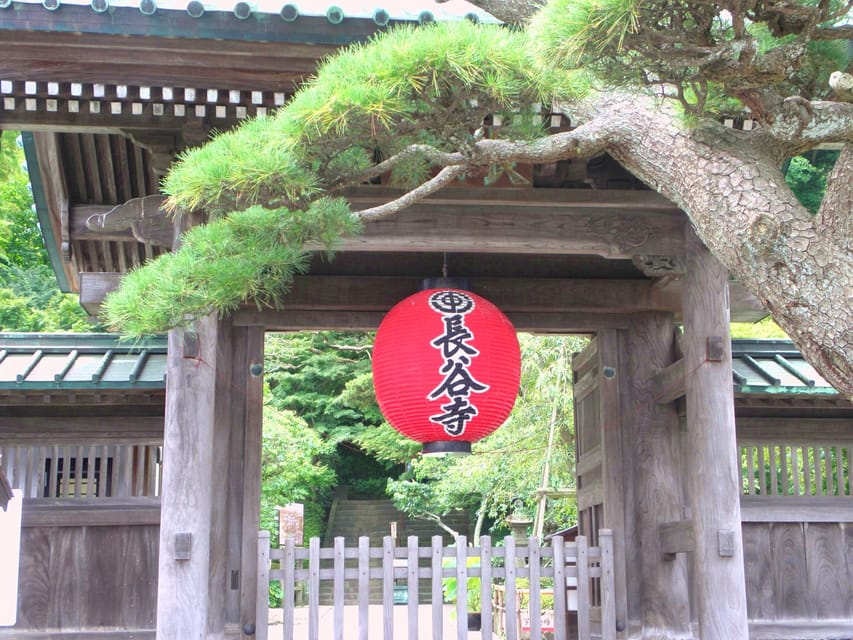
Hase Temple, or Hase-dera, is the first main stop. The visit is scheduled for about 30 minutes, with time for a guided tour and photographs. That is enough for a focused introduction, but it is not a leisurely temple visit.
The central draw is Hase Kannon, the Buddhist statue of Kannon, the Goddess of Mercy. The statue is described as eleven-faced, with the faces representing different stages in the search for enlightenment. Your guide can help connect the statue’s appearance with Buddhist ideas that may otherwise be difficult to read from the image alone.
Outside the hall, the temple’s gardens provide a change of pace. The grounds are known as the Temple of Flowers, and the garden setting gives you a chance to slow down after the train ride. You also see Jizo-do Hall, where hundreds of small Jizo Bodhisattva figures are arranged together.
The Jizo figures have a more intimate feel than the enormous Great Buddha later in the day. They are associated with care and protection, and the sheer number of small statues makes this a memorable corner of the temple grounds. I would pay attention here rather than rushing straight to the best photo angle.
The short visit is the main limitation. Hase Temple has enough to occupy more than half an hour, particularly if you want to linger in the gardens or take photographs. A private guide may be able to adjust the pace, but the day still includes several fixed travel segments.
Walking Ten Minutes to Kotokuin Temple
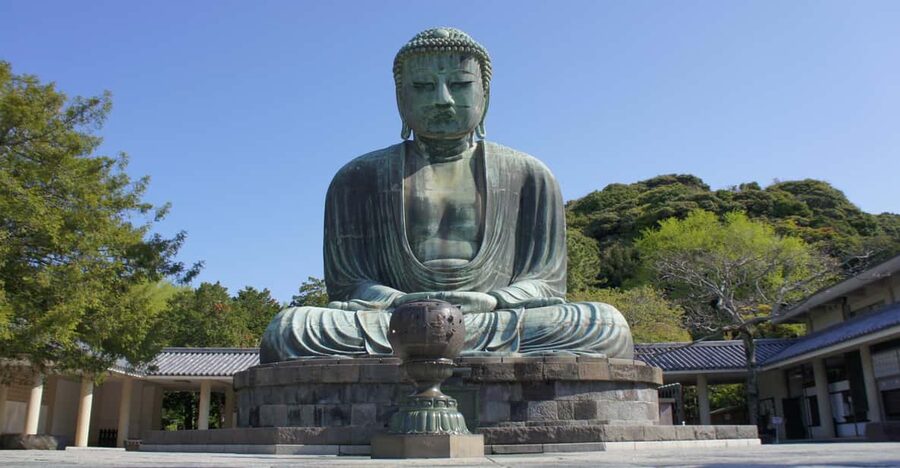
From Hase Temple, you walk about 10 minutes to Kotokuin Temple. This is a simple connection, but it is worth knowing that the day includes regular walking between transport stops and sights. The full tour involves about 3 to 4 kilometers on foot.
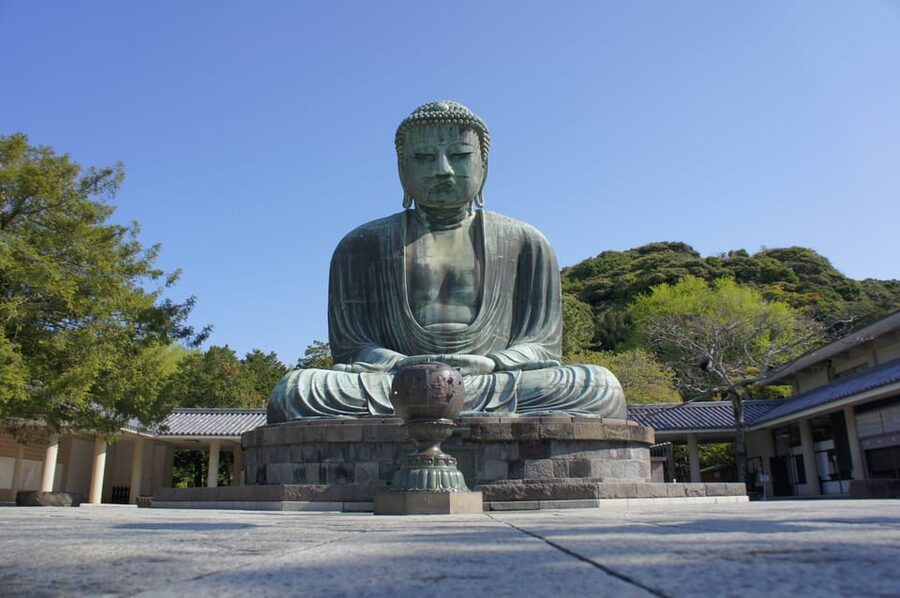
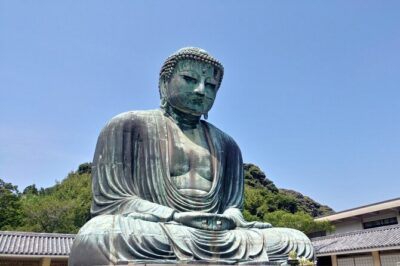
Kotokuin is home to Kamakura’s Great Buddha, a 13-meter bronze statue that dates to 1292. Its scale is impressive without being difficult to take in. You can walk around the statue, study its shape, and listen as the guide explains why it became such an important symbol of Kamakura.
The Great Buddha is one of those places where a guide’s historical explanation adds real value. Without context, you see a large bronze figure and take a picture. With context, you begin to understand how the statue fits into the city’s religious identity and how its age shapes the experience.
The visit is scheduled for about 30 minutes. Admission to Kotokuin is 300 yen per person and is not included. The time works well if this is your first look at Kamakura, though anyone who enjoys photography or wants to study the statue closely may want longer.
The route then includes a roughly 10-minute train ride before the final major sight. Local train travel is part of the day’s structure, and your guide travels with you. That can take the pressure off route planning, though you remain responsible for the fares.
Tsurugaoka Hachimangu at Kamakura’s Center
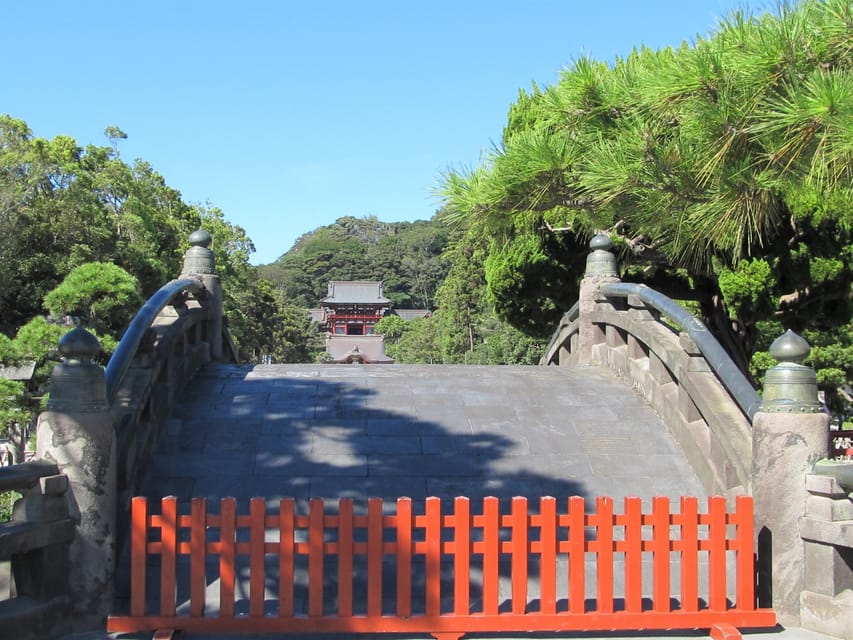
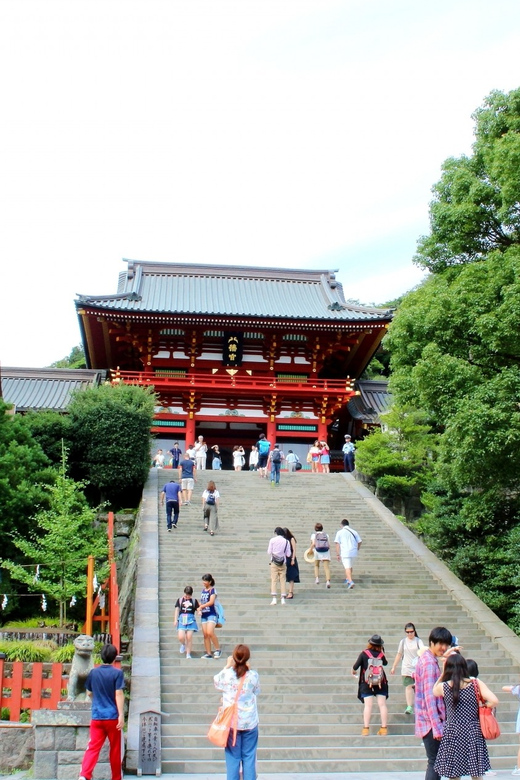
Tsurugaoka Hachimangu Shrine was founded in 1063 and dedicated to Emperor Ojin, who is also associated with war. It is the most important Shinto shrine in Kamakura and sits at the city’s geographical center.
The complex gives the day a different mood. Hase Temple and Kotokuin focus on Buddhist sculpture and temple architecture. Tsurugaoka Hachimangu presents a larger Shinto setting, with a ceremonial layout and a strong connection to Kamakura’s civic identity.
The guided visit lasts about 30 minutes. Your guide can explain the shrine’s history and the role of Emperor Ojin, helping you understand why this is more than a quick photo stop. I would listen for the links between religion, power, and the city’s development, since those connections are what make the site meaningful.
The shrine is also a useful place to notice how people behave in a sacred setting. Follow your guide’s instructions about where to pause and how to approach the shrine. The visit is not only about seeing a historic building. It is also about understanding how Shinto spaces are used.
Again, half an hour is a brisk schedule. If you want a slow walk through every part of the grounds, this tour may feel compressed. The private format gives you a better chance to ask for a little extra time than a large group tour would, but the guide still has to keep the return journey on track.
Lunch and Komachi Street
After the shrine, the route moves to Komachi Street for about 90 minutes of lunch, guided time, free time, and shopping. Lunch is not included, and you also pay for the guide’s meal.
This is a practical break rather than a formal food tour. You can choose a Japanese restaurant, eat at your own pace, and use some of the time to browse. The experience information describes lunch at one of Kamakura’s fine Japanese restaurants, but a specific restaurant is not named, so do not book this expecting a fixed menu or guaranteed reservation.
One useful detail from the day’s feedback is the mention of green tea drinking. That suggests the guide may help add small cultural moments beyond the main monuments, depending on your guide and interests. Ask directly if you would like more explanation about tea, local food, or the shops along Komachi Street.
Ninety minutes is a good length for a meal and a short wander. It may feel short if you want an extended shopping session, but it prevents lunch from swallowing the afternoon. Since the return train still takes about an hour, keeping the meal period defined helps the entire schedule work.
Other guided tours in Tokyo


What the Private Guide Adds
The strongest reason to choose this tour is the private guide, not the admission to the temples. Hase Temple, Kotokuin, and Tsurugaoka Hachimangu can be visited independently, and the train route is possible to manage on your own. The guide’s value comes from connecting the sites and answering questions in real time.
The tour uses a National Government Licensed Guide Interpreter, with English listed as the tour language. Guides have included Steve, Take, Mizuma-san, and Richie. Your guide will depend on the date and assignment, so treat those names as examples rather than a promise.
The guide quality can shape the day. Take has been described as explaining with maps and pictures, while Steve’s day included local sightseeing, lunch, and green tea. Mizuma-san has been praised for explaining Japanese history and culture to a family. Richie has been described as kind and willing to respond to requests, though the level of site explanation may vary.
That last point matters. A private format does not automatically mean a long lecture at every stop. If historical detail is your priority, say so at the start. Ask for explanations at the Kannon, Great Buddha, and shrine, rather than assuming the guide will know exactly how much detail you want.
A private group also gives you more control over questions and pace. Families and first-time visitors may appreciate that. Independent travelers who already know Kamakura’s history may get less value from the guiding fee.
The Real Cost of the Day
The headline price is $145 per person. That is before transportation, entrance fees, lunch, and drinks. The listed temple admissions total 700 yen per person: 400 yen for Hase Temple and 300 yen for Kotokuin. Public transportation is around 2,000 yen per person according to the cost information, with the guide’s fare also covered by the customer.
The real question is not simply if $145 is cheap or expensive. It is what you want to buy. You are paying for a private English-speaking guide, hotel pickup and drop-off on foot, route planning, and company throughout a full day. You are not paying for a private vehicle, admission, or a meal.
For two people, the guiding cost can feel easier to justify because you share the private experience. For a solo visitor, the per-person price is harder to defend unless you place a high value on personal explanations and not having to manage the route.
One low rating attached the price to the sense that too much remained payable on the day. That is a fair concern. Before booking, calculate the total in your own currency and remember that the guide’s lunch and transportation are also listed as customer expenses.
The tour offers free cancellation up to 24 hours in advance and a reserve-now, pay-later option. Those terms are useful if your Tokyo plans are still changing, but they do not alter the total cost.
Timing, Walking, and Crowds
The day lasts about eight hours and usually ends back in Tokyo around 4 or 5 pm. That leaves your evening open, which is useful if you have dinner plans or another Tokyo activity.
You should wear comfortable shoes. The walking distance is listed at 3 to 4 kilometers, and that figure does not make the day strenuous for most people, but it includes temple grounds, shrine areas, station connections, and the walk from Hase Temple to Kotokuin.
Crowds can affect Kamakura, particularly at the most famous sites. One guide, Take, was able to move a group through crowded areas and still reach the important points. A private guide may help you avoid standing around uncertainly, but no guide can remove the crowds from a popular monument.
The schedule is fairly tight at the major sites. You get a strong overview, not a slow scholarly visit. I would choose this format if you want to see Kamakura’s essential sights in one day and return to Tokyo on schedule.
Who Should Book This Kamakura Tour?
I would recommend it to first-time visitors to Japan who want Buddhist and Shinto context without planning a day of train connections. It also suits families, couples, and small private groups who value direct access to an English-speaking guide.
It is a particularly good fit if you want to ask questions about Japanese history and culture as you go. The strongest guide experiences appear to come when the guide explains with maps, photographs, and clear historical storytelling.
I would hesitate if you are watching your budget closely. The $145 fee does not cover the train, 700 yen in listed temple admissions, lunch, drinks, or the guide’s transportation and meal. I would also hesitate if your main goal is to spend a long time at one temple, since the formal stops are short.
Should You Book It?
Book this tour if you want an organized introduction to Kamakura, prefer a private English-speaking guide, and value explanations more than savings. Hase Temple, the Great Buddha, Tsurugaoka Hachimangu, and Komachi Street make a well-chosen first-day route.
Skip it if you are comfortable navigating Japanese trains and reading up on the temples yourself. In that case, the added cost may not match what you receive. If you do book, confirm the full transportation cost, tell the operator your hotel, wear comfortable shoes, and ask your guide at the start for the level of historical detail you want.
FAQ
How long does the Kamakura tour last?
The experience lasts about eight hours. The day usually returns to Tokyo around 4 or 5 pm.
Where can pickup take place?
The listed pickup options are Tokyo Station, Tokyo, Shinjuku City, and Shinjuku Station. Hotel pickup is optional and takes place on foot.
Is hotel pickup included?
Hotel pickup and drop-off on foot are included. You should provide your hotel details when booking.
How long is the train journey from Tokyo to Kamakura?
The outbound train journey takes about 70 minutes. The return trip takes about one hour.
Are train fares included?
No. Public transportation for you and the guide is paid separately. The estimated cost is around 2,000 yen per person, and one-way train tickets are listed at about 1,200 yen.
How much are the temple entrance fees?
Hase Temple costs 400 yen per person, and Kotokuin Temple, home of the Great Buddha, costs 300 yen per person.
Is lunch included?
No. Lunch and drinks are paid separately by you. The guide’s lunch is also your responsibility.
How much walking is involved?
The tour includes about 3 to 4 kilometers of walking. Comfortable shoes are recommended.
Is the Great Buddha included in the route?
Yes. You visit Kotokuin Temple and see the 13-meter Great Buddha, which dates to 1292. Admission costs 300 yen per person.
What language is the tour conducted in?
The listed tour language is English. It is led by a National Government Licensed Guide Interpreter.
More Private Tours in Tokyo

More Guided Tours in Tokyo
More Kamakura & Enoshima Day Trips in Tokyo
More tours in Tokyo we've reviewed



Kamakura & Enoshima Day Trips, compared.
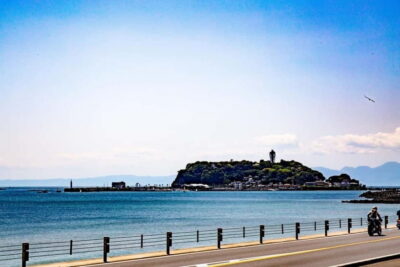 ★ 4.5Tokyo: Kamakura & Enoshima Day Trip including Temple TicketsFrom $589 hours - 570 minutes
 ★ 4.5Tokyo: Mt. Fuji, Kamakura, Big Buddha, & Lake Ashi Day TripFrom $4910 - 11 hours
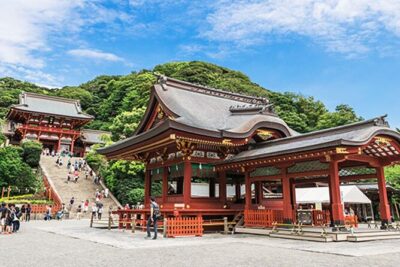 ★ 4.5From Tokyo: Kamakura & Enoshima 1-Day Bus TourFrom $66
 ★ 5.0Kamakura Historical Walking Tour with the Great BuddhaFrom $98
 ★ 5.0Kamakura Private Tour: Temples, Nature, and the Great BuddhaFrom $98
 ★ 5.0Kamakura Walking Tour – The City of ShogunFrom $35