
Reviewed · SUMO EXPERIENCES
Tokyo Shinjuku Sumo Show and Experience with Drinks and Photo
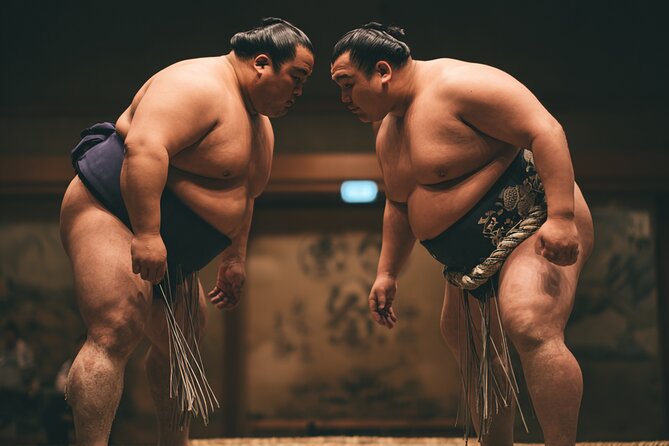
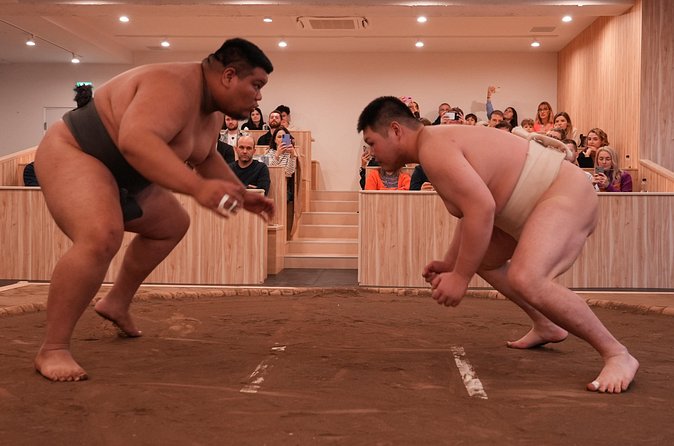
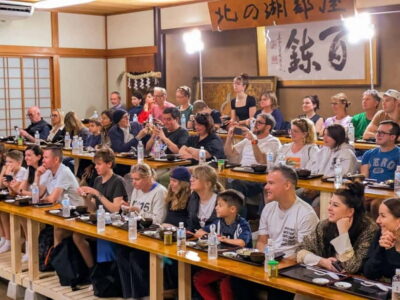
The best thing about this Shinjuku sumo show is the small setting. With about 50 seats around the ring, you are close enough to see the wrestlers’ footwork, salt throwing, and pre-bout rituals without staring at a distant arena floor. The bilingual MC, Manny, explains what is happening in plain English and keeps the pace light.
I like the clear explanations of sumo customs and the chance to step into the ring for the Sumo Challenge. I also like the final photo session, since posing with real wrestlers is not part of a standard tournament ticket. The main drawback is that this is a staged cultural show, not a full training session or a formal tournament, and some of the matches are very short.
In This Review
- Key points at a glance
- A close-up introduction to sumo in Shinjuku
- What happens when you take your seat
- The opening lesson: salt, rituals, and sumo terms
- Watching the wrestlers at close range
- The Sumo Challenge puts you in the ring
- The photo session and meet-and-greet
- How cultural is the experience?
- Is the $70 price fair?
- Who will enjoy this most?
- Practical details before you book
- Should you book the Shinjuku Sumo Club?
- FAQ
- Where does the Shinjuku Sumo Show begin?
- Where does the activity end?
- How long does the sumo experience last?
- How many people can attend each show?
- Is the commentary available in English?
- What happens during the Sumo Challenge?
- Can I take a photo with the wrestlers?
- Is a drink included in the price?
- Can I cancel for a full refund?
Key points at a glance
- Only about 50 seats: The compact room gives you a close view from nearly every place.
- Manny’s bilingual commentary: You learn about sumo rules, rituals, terms, and training without needing prior knowledge.
- Live demonstrations and bouts: Expect several quick matches, traditional ceremonies, and explanations of wrestling moves.
- Audience participation: You may be invited to test yourself against a wrestler in the Sumo Challenge, with six volunteers selected by lottery.
- Photo with the wrestlers: Everyone gets a chance to take a picture at the end.
- Water is the included drink: Other drinks are available for sale, so do not arrive expecting an open bar.
A close-up introduction to sumo in Shinjuku
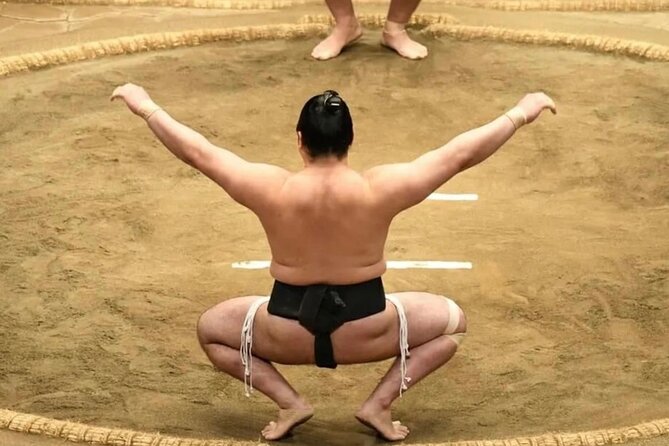
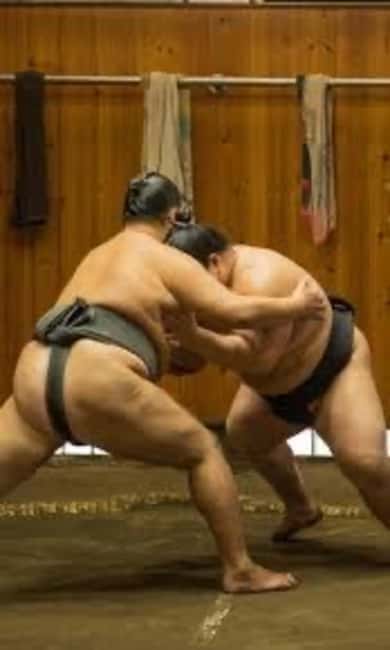
The Shinjuku Sumo Club is designed for people who want more than a quick photograph outside a sumo arena. You sit around a compact dohyo, or sumo ring, and watch the action at close range. That changes the feel of the sport. You can see how much force goes into a short shove, how carefully a wrestler sets his feet, and how much ceremony comes before the actual clash.
The show lasts about 90 minutes. That is a useful length for a busy Tokyo day. It is long enough to explain the sport and include audience activities, but short enough to fit before dinner, shopping, or a night in Shinjuku.
This is not a tournament in the usual sense. You should think of it as a live introduction to sumo, built for an international audience. The bouts are presented for entertainment and demonstration, and the MC helps you understand the action as it happens.
A few more Tokyo tours and experiences worth a look

What happens when you take your seat
You begin at the club’s meeting point in Okubo, at 2-chome 5-22, Sekisaku Building, in Shinjuku City. The activity ends at the same location. The venue is near public transportation, though the address is worth saving on your phone because the building number and nearby streets can be easy to mix up in Tokyo.
Inside, seating surrounds the dohyo. The limited capacity matters here. At a large arena, even a good seat can leave you watching a small ring from a distance. This room keeps the wrestlers within easy view and makes the demonstrations feel more personal.
A bottle of water is provided when you enter. That detail is worth noting because the advertised drink element can sound broader than it is. If you want something else, drinks are sold separately.
The opening lesson: salt, rituals, and sumo terms
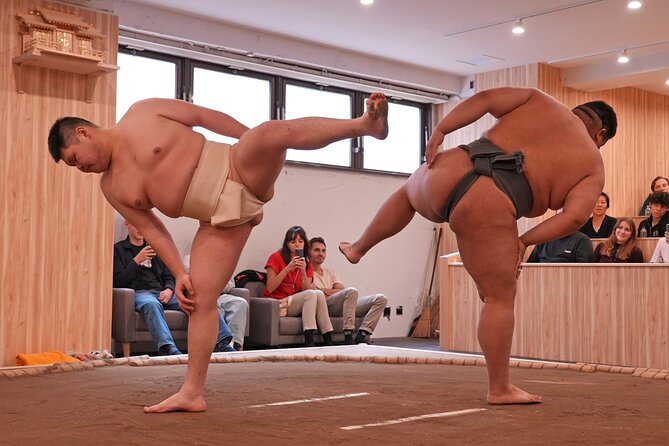
The bilingual MC begins with the basic story of sumo and the customs you are about to see. You learn why wrestlers throw salt, how they prepare before a bout, and what certain movements mean. For a first-time visitor, this explanation gives structure to what might otherwise look like a series of short physical contests.
The instruction is brief, but it is practical. You are not expected to know Japanese terms or the rules before arriving. The commentary explains the sport as it unfolds, which helps children and adults follow along together.
Manny has been praised for making the history and traditions easy to understand while adding humor. His role matters because sumo can look simple at first glance: two large men push until one gives way. The explanations show that balance, timing, stance, and technique matter just as much as size.
You also hear about wrestler training and the discipline behind the sport. The program does not recreate every part of a sumo stable, but it gives you useful context before the action begins.
Watching the wrestlers at close range
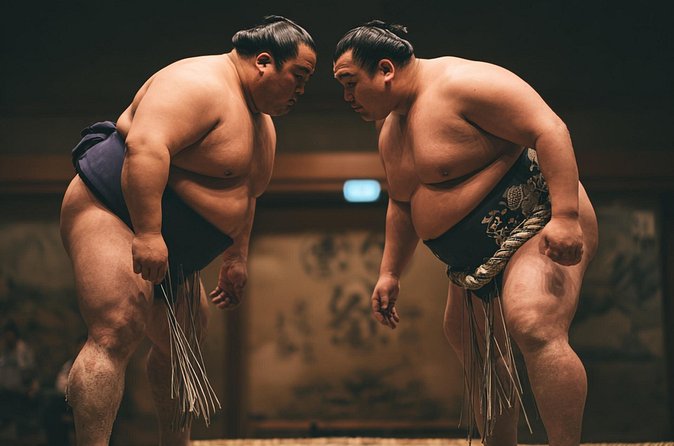
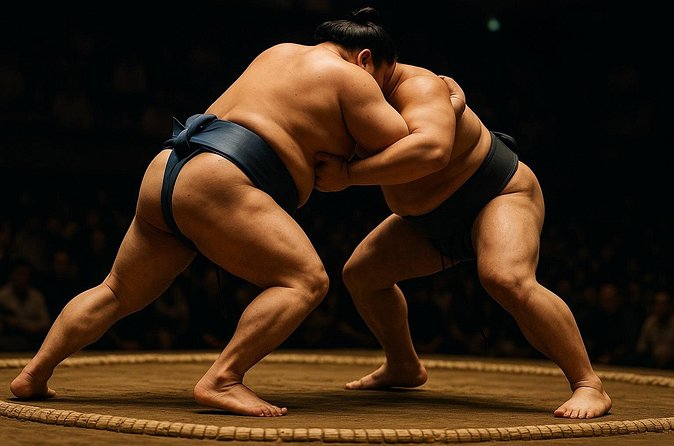
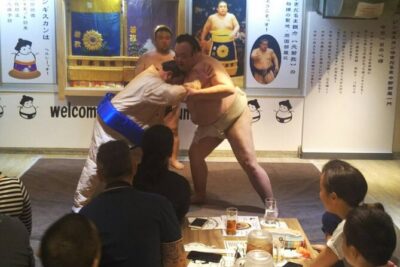
After the introduction, professional wrestlers demonstrate moves and face each other in short bouts. Live commentary explains what they are trying to do, so you are not left guessing why one wrestler shifts his weight or changes direction.
The wrestlers bring plenty of personality to the room. Humor is part of the program, and the interaction between the two men helps keep the mood friendly rather than solemn. This is one reason the show works well for families and mixed groups, including people who know little about Japanese sport.
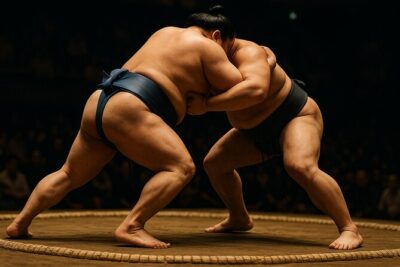
The compact ring also changes your sense of scale. Sumo is often reduced to the idea of brute force, but from a few feet away you can better appreciate the speed of the initial charge and the importance of staying inside the ring. The action is quick, so listen closely to the MC rather than waiting for long, drawn-out matches.
This is where expectations matter most. Some people arrive hoping to watch a longer exhibition with many serious bouts. The show instead uses demonstrations and about three very quick matches as part of a larger program. If you want competition lasting several hours, you should attend an official tournament instead.
The Sumo Challenge puts you in the ring
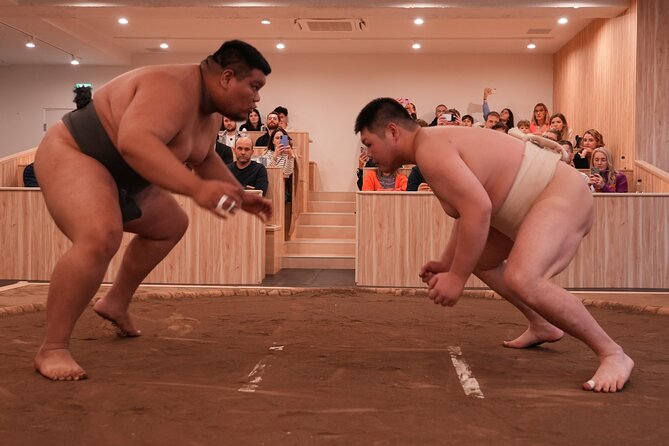
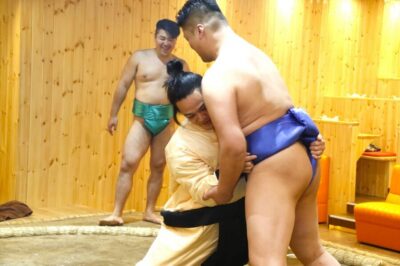
The most unusual part comes when audience members are invited to challenge a wrestler. You can step into the ring and try to push against one of the professionals. It is played for fun, not as a serious test of strength, and the wrestlers are good sports about the mismatch.
Not everyone is selected. One account describes six volunteers being chosen by lottery, which is a fairer system than simply picking the loudest hands in the room. Even if you do not take part, watching the attempts is entertaining and gives the program a lively break from the demonstrations.
The challenge is also the clearest reason to choose this show over simply watching sumo on a screen. You feel the scale of the sport in a way no video can provide. The moment is playful, but it still gives you a better idea of how powerful and stable a professional wrestler must be.
Participation is optional. You can enjoy the event from your seat and still take part in the shared atmosphere, cheering on volunteers and following the MC’s explanations.
A few more Tokyo tours and experiences worth a look

The photo session and meet-and-greet
The program ends with a photo opportunity with the wrestlers. Everyone gets a chance to pose with them, so you do not have to win the Sumo Challenge to leave with a keepsake.
The wrestlers are described as friendly and patient during this part of the evening. That makes the photo session feel less rushed than a quick snapshot taken from a distance. It also gives you a final chance to meet the men who performed in the show.
If you are booking this as a special memory for children, a birthday, or a group of friends, the photograph may be the most lasting part. For serious sumo fans, though, the picture should be treated as an extra rather than the main reason to pay the admission price.
How cultural is the experience?
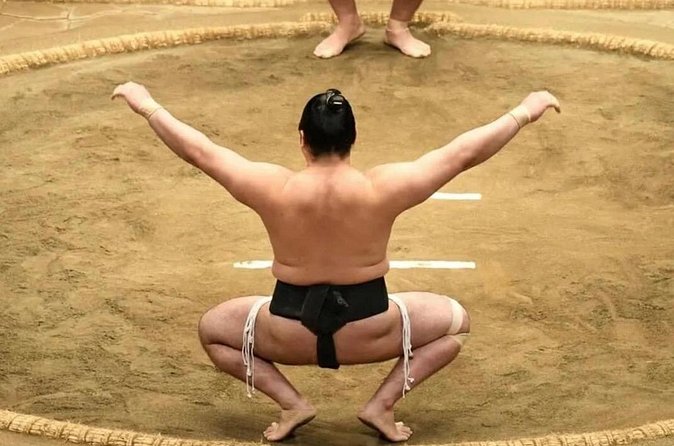
The show teaches real sumo customs, terminology, moves, and rituals. The wrestlers are professional, and the program gives you a genuine close view of the sport. In that sense, it offers real cultural value.
But the setting and format are made for international entertainment. The MC speaks in English and Japanese, the bouts are staged for the program, and humor is central. One criticism is that the wider staff can make the room feel more like an international entertainment venue than a traditional Japanese sumo setting.
That does not make the program worthless. It simply tells you what you are buying. You are getting an accessible performance about sumo, not a visit to a working stable or a formal tournament. If you want the rules explained, the rituals shown, and the wrestlers brought close, this format is effective. If you want to observe everyday sumo life in a less polished setting, choose a different kind of visit.
Is the $70 price fair?
At $70 per person, this is not a cheap night out. The value depends on how you define the event.
You are paying for a 90-minute program, a bilingual presenter, professional wrestlers, a close seat, the audience challenge, and a photo opportunity. The limited seating is important because it prevents the show from feeling like a distant stage performance. You also save yourself the work of learning sumo rules before arriving.
The included drink is a bottle of water, not a broad selection of beverages. Other drinks cost extra. That is a small point, but it affects the value if you booked mainly because you expected drinks to be a major part of the evening.
I think the price works best for first-time visitors who want a simple, central introduction to sumo and a personal photo. It is harder to justify if you already understand the sport, want long matches, or expect an authentic training session.
The rating of 4.2 from 21 reviews reflects that split. The strongest praise focuses on the funny MC, friendly wrestlers, easy explanations, and chance to participate. The sharpest criticism focuses on the short staged matches, the limited cultural setting, and the price.
Who will enjoy this most?
You should consider booking this if you want:
- A first introduction to sumo with English explanation
- A close view without buying a seat in a large arena
- A fun activity for a family, couple, or work group
- A chance to participate rather than only watch
- A photo with professional wrestlers
- A short cultural program in the Shinjuku area
You may want to skip it if you are looking for:
- A full-length official tournament
- A working sumo stable or training session
- Long, competitive bouts
- A program led mainly by Japanese staff
- A quiet or highly traditional cultural setting
The show is particularly useful when your Tokyo schedule does not line up with tournament dates. It gives you a way to see the basic rituals and physical style of sumo without committing half a day to an arena.
Practical details before you book
Confirmation arrives at booking, and the ticket is mobile, so keep the confirmation easy to reach on your phone. The meeting point is in Shinjuku City’s Okubo area, and the activity returns to that same building.
Most people can take part. The venue has an elevator, according to one useful note from a participant who first used the stairs, so look for it rather than assuming the stairs are your only option.
The maximum group size is 50. That is small enough for a clear view, but the room may still feel lively when people are cheering and volunteers enter the ring.
The cancellation rule is simple: cancel at least 24 hours before the local start time for a full refund. Changes or cancellations made inside that 24-hour window are not accepted for a refund.
Should you book the Shinjuku Sumo Club?
Book it if you want accessible sumo with a personal touch. The combination of close seating, bilingual commentary, audience participation, and a photo with the wrestlers gives you more contact than a standard arena performance.
Go in with the right picture. This is a lighthearted demonstration, not a tournament and not a training visit. The matches may be quick, the drink is generally just bottled water, and the setting may feel international rather than traditionally Japanese.
For a first-time sumo experience in Tokyo, I think the format makes sense, especially if you value explanation and interaction. For dedicated fans, the better choice is an official tournament or a genuine stable visit. At $70, this show is worth booking when the Sumo Challenge and personal photo matter to you as much as the wrestling itself.
FAQ
Where does the Shinjuku Sumo Show begin?
It begins at the Shinjuku Sumo Club meeting point in the Sekisaku Building, 2-chome 5-22, Okubo, Shinjuku City, Tokyo 169-0072.
Where does the activity end?
The activity ends back at the same meeting point.
How long does the sumo experience last?
The program lasts approximately 1 hour and 30 minutes.
How many people can attend each show?
The maximum group size is 50 people, and seating is arranged around the dohyo.
Is the commentary available in English?
The MC is bilingual and explains sumo history, rules, rituals, and moves for an international audience.
What happens during the Sumo Challenge?
Audience members can be invited into the ring to test their strength against a professional wrestler. Six volunteers may be selected by lottery, and participation is optional.
Can I take a photo with the wrestlers?
Yes. The experience ends with a photo session and meet-and-greet, and everyone gets an opportunity to take a picture with the wrestlers.
Is a drink included in the price?
A bottle of water is provided. Other drinks are available for purchase.
Can I cancel for a full refund?
Yes, if you cancel at least 24 hours before the scheduled start time. Cancellations or changes made less than 24 hours in advance are not accepted for a refund.
More Shows & Performances in Tokyo


More Sumo Experiences in Tokyo
More Shinjuku Tours in Tokyo


More tours in Tokyo we've reviewed








Sumo Experiences, compared.
 ★ 4.8Tokyo: Sumo Show Experience with Chicken Hot Pot and a PhotoFrom $1032 hours
 ★ 4.8Tokyo: Sumo Show and Dining ExperienceFrom $7990 minutes - 2 hours
 ★ 5.0the SUMO showFrom $89
 ★ 5.0Tokyo Shinjuku Sumo Show & Experience with PhotoFrom $79
 ★ 4.8Tokyo: Sumo Show and Experience in ShinjukuFrom $691h 30m
 ★ 4.6Tokyo: Sumo Tournament Tour with Chair Seat TicketsFrom $141