
Reviewed · SAKE TASTING
Japanese Sake Tasting & Wagyu Sukiyaki Cooking Class in Tokyo
Sake can change character simply by changing its temperature, and this Tokyo class makes that lesson wonderfully clear. You taste the same sake chilled, at room temperature, and warm, then pair each pour with Japanese snacks before cooking Wagyu sukiyaki in a modern kitchen studio. I like the small maximum of eight people and the way the class joins tasting, cooking, and visual craft in one compact session.
I also like the human touch. Hiromi leads the sake portion in English, while the cooking team, including Naoya and chef Kimagai, brings energy to the sukiyaki lesson and vegetable-cutting demonstration. The main consideration is the price: at $129 per person, this is not a budget lunch. You are paying for instruction, several sake tastings, premium beef, equipment, and a cultural lesson, so it makes the most sense if you want more than a meal.
In This Review
- Key points at a glance
- Why the sake tasting is the real opening act
- Japanese snacks make the lesson easier to understand
- Cooking Wagyu sukiyaki in a Tokyo studio
- A vegetable-carving demonstration while lunch cooks
- The meal and what you actually receive
- A small group near Nishiazabu
- Who will enjoy this class most
- Timing, cancellation, and practical details
- Should you book the Wagyu and sake class?
- FAQ
- Where does the Japanese sake and Wagyu sukiyaki class take place?
- What time does the class start?
- How long does the experience last?
- How many people can join the class?
- Is lunch included?
- What types of sake are included?
- Is the class taught in English?
- Is transportation included?
- Can I cancel for a full refund?
Key points at a glance
- Three temperatures of sake: Compare chilled, room-temperature, and warm sake to see how heat changes aroma and taste.
- Small class size: The experience is limited to eight people, which gives the cooking lesson a personal feel.
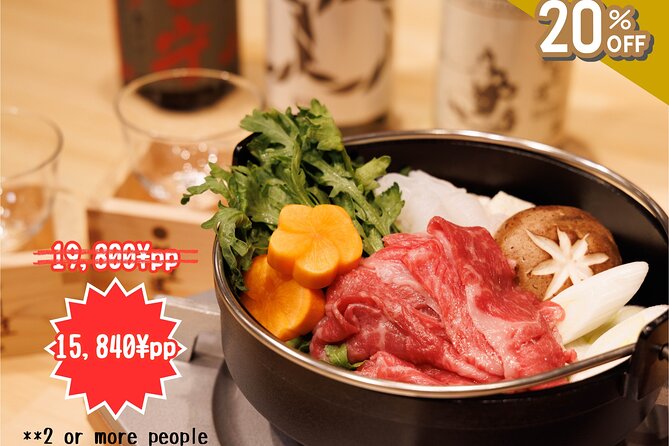
- Wagyu sukiyaki lunch: Prepare and eat a hot pot with premium Wagyu beef as the main dish.
- Live vegetable carving: Watch a professional chef create decorative cuts while the sukiyaki simmers.
- English instruction: Hiromi guides the sake lesson, with clear explanations of sake, pairings, and Japanese food culture.
- Useful shop discount: Your participation certificate includes access to a 10% discount at the first-floor shop on the day of your class.
Why the sake tasting is the real opening act
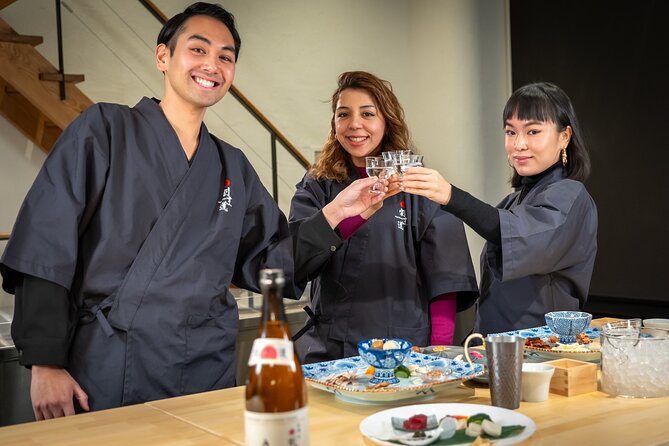
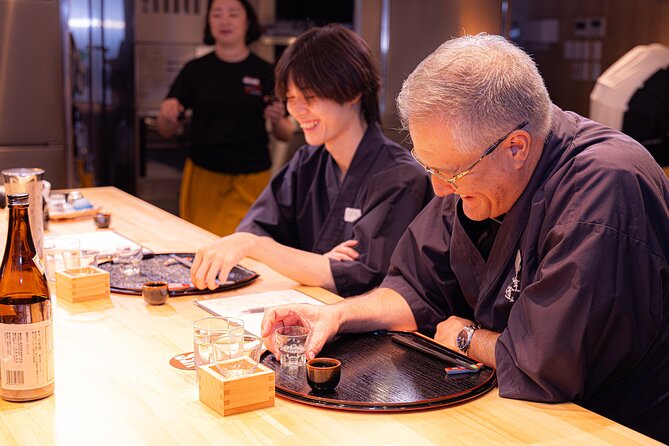
Many visitors first meet sake as a single category: a clear Japanese drink served in a small cup. This class gives you a more useful starting point. You taste sake in three temperature ranges and compare what happens as it warms.
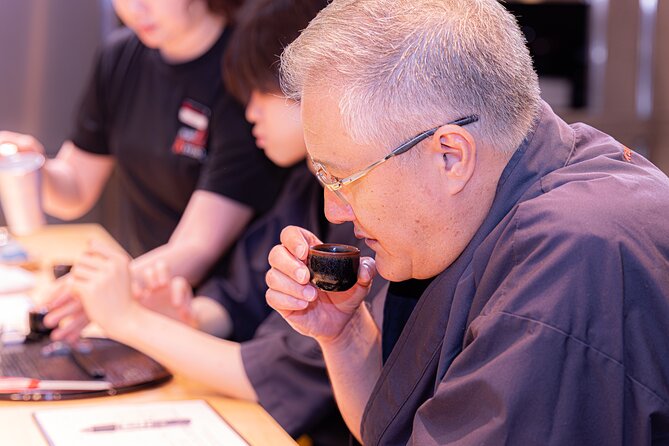
That comparison matters because sake is not fixed in flavor. A chilled pour may seem crisp or restrained, while the same sake at room temperature can show more aroma. Warm sake may bring out softer, fuller notes and work better with certain foods. The class does not simply ask you to drink. It gives you a way to notice what you prefer.
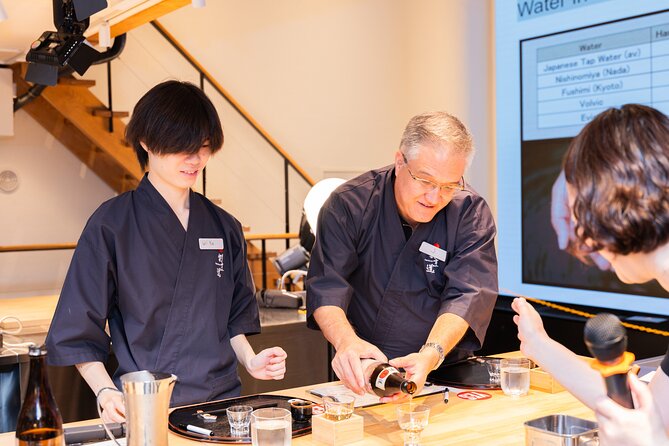
Hiromi leads this part of the session and explains the basics in English. The format is concise rather than academic, which suits a two-hour experience. You get enough background to understand what is in your glass without losing the focus on tasting.
The lesson also covers serving vessels. A cup, glass, or other vessel can change how sake reaches your nose and palate. That is a small detail, but it helps explain why Japanese drinking culture pays attention to presentation. You leave with a practical lesson you can use at an izakaya, restaurant, or sake bar later in your trip.
The class includes more than one kind of sake, not just the temperature comparison. That gives you a broader sense of the drink, though the exact selection can vary. If you are new to sake, this is likely the most useful part of the experience because it turns an unfamiliar drink into a set of clear comparisons.
Other cooking classes in Tokyo
Japanese snacks make the lesson easier to understand
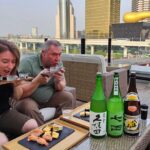
The sake is paired with selected Japanese snacks and side dishes. This is important. Tasting alcohol on its own can make every difference seem abstract, but food shows you how sake works at the table.
A salty, savory, or textured snack can make one pour feel more balanced than another. Warm sake may pair differently from chilled sake, and the class gives you a chance to notice that for yourself. You do not need a trained palate. The point is to compare, ask questions, and find the combinations you enjoy.
I like this food pairing because it keeps the tasting grounded in ordinary Japanese dining. Sake is not only a special-occasion drink. It is meant to accompany food, and the class shows that relationship in a direct way.
The snacks also help pace the alcohol. This is still a tasting, not an open-ended drinking session, but the food gives the first half a relaxed rhythm. If you do not drink often, you should still approach the session at your own pace and let the instructor know if you need to slow down.
Cooking Wagyu sukiyaki in a Tokyo studio
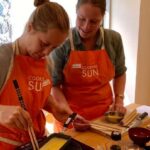
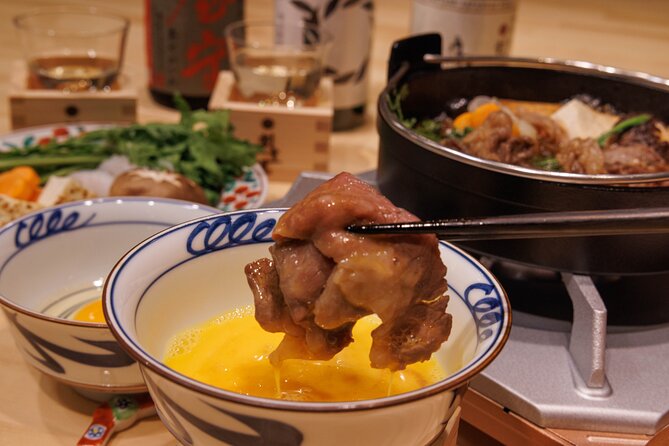
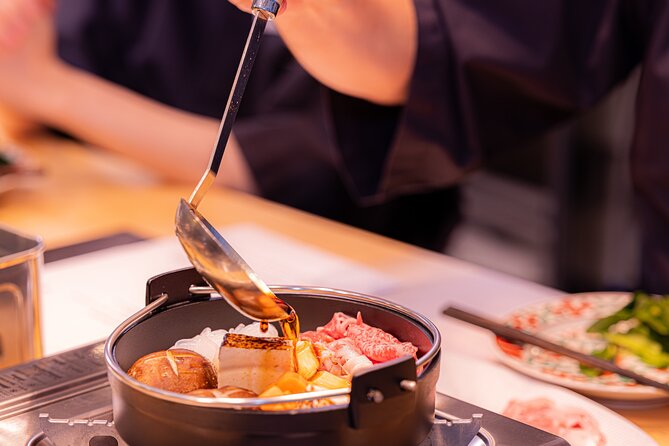
After the tasting, the focus shifts to sukiyaki. This is a hands-on lesson, so you are not simply watching a chef prepare lunch while you wait at the table. You take part in making the hot pot and then eat what you have cooked.
Sukiyaki is a good choice for a short class. It is social, warm, and forgiving. Ingredients simmer together in a seasoned broth, and the dish gives you a clear sense of how Japanese cooking balances sweet, salty, savory, and tender textures.
The premium Wagyu beef is the star. Wagyu is prized for its marbling, and sukiyaki lets you appreciate that richness in thin slices cooked briefly in the hot pot. The best part of this format is that the beef is not hidden under elaborate sauces or complicated technique. You get to focus on the quality of the ingredient and the timing of the cooking.
The experience is also described as a Kano-style sukiyaki lesson. That regional or house style is a useful detail for anyone who wants something more specific than a generic cooking demonstration. The supplied information does not set out every step or ingredient, so you should expect instruction on the class recipe rather than a full professional culinary course.
Chef Naoya is praised for his cooking, and Kimagai is identified with the sukiyaki portion in the class information. The teaching team appears to divide the experience between explanation and practical work, with Hiromi especially associated with the sake lesson. That mix should suit families and small groups with different levels of cooking experience.
A vegetable-carving demonstration while lunch cooks
While the sukiyaki simmers, a professional chef gives a decorative vegetable-cutting demonstration. This is one of the class’s more distinctive touches. It adds a visual craft lesson to the food and drink, rather than filling the cooking time with idle waiting.
Japanese decorative cutting, often seen in formal food presentation, shows how much attention can go into the appearance of a dish. The demonstration is not the main meal, but it gives you a glimpse of the precision behind Japanese presentation.
For families, this may be the moment that keeps younger participants interested while the hot pot cooks. For adults, it adds context to the neat vegetables and careful plating you see throughout Japan. The class information does not promise that you will perform the decorative cuts yourself, so treat this as a live demonstration rather than another hands-on workshop.
That distinction is worth noting. If your main goal is knife practice, a dedicated knife or vegetable-cutting class may suit you better. Here, the carving is a short feature within a broader sake and sukiyaki experience.
The meal and what you actually receive
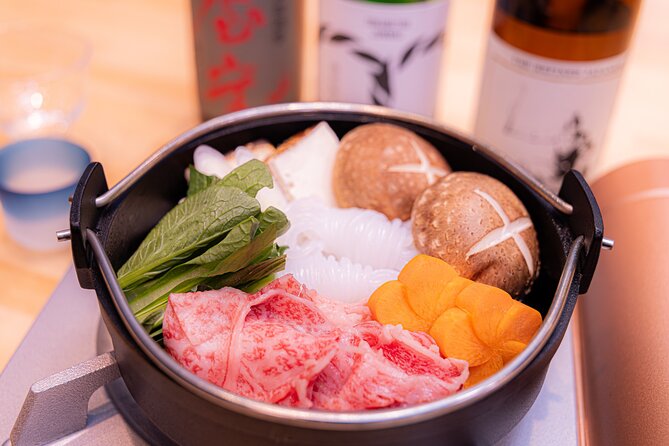
The included lunch is Wagyu beef sukiyaki, served with sake. You prepare the dish and then savor it as part of the class, which makes the meal feel like the result of the lesson rather than a separate restaurant stop.
You also receive alcoholic beverages, sake in three temperature ranges, other sake types, and the equipment used for the pairing lesson. A certificate of participation is included as well. The certificate is a small keepsake, but it may be welcome if you enjoy collecting mementos from food classes.
The meal is likely to be satisfying, but you should keep the scale in mind. This is a two-hour tasting and cooking class, not an extended multi-course feast. The value comes from combining a premium ingredient with instruction, food pairings, and demonstrations.
At $129, the cost is easier to justify for someone who wants cultural context and active participation. If you only want to eat Wagyu, you can find more direct restaurant options in Tokyo. If you want to understand sake, practice a Japanese dish, and have lunch in a small class, the price covers several separate elements in one booking.
A 10% discount at the first-floor shop is available on the same day. It is a useful extra if you are interested in Japanese kitchen goods or other shop items, but I would not book the class for the discount alone. The value depends on whether you want to buy something after the workshop.
Other cooking classes in Tokyo



A small group near Nishiazabu
The class meets at Kappodo H.Q, Tokyo D Kitchen Studio, at DK Building in Nishiazabu, Minato City. The listed address is 2-chome 21-12 Nishiazabu, Tokyo 106-0031, and the activity ends at the same meeting point.
The studio is near public transportation, but private transportation is not included. You will need to make your own way there, so allow time to find the building and get settled before the 11:00 a.m. start. The class lasts about two hours and functions as lunch, making it a practical midday plan.
The maximum group size is eight. That matters in a cooking class because a large group can turn hands-on work into a spectator event. With eight or fewer, you should have a better chance to follow the demonstrations and ask questions, although the exact amount of individual cooking time can depend on the group.
The small format also works well for families and friends. Several of the strongest comments about the class focus on family participation, including the way Hiromi kept the session fun and informative. A group discount is available, though the supplied details do not state the exact discount amount, so check the current booking terms before relying on it.
Who will enjoy this class most
I would recommend this experience to first-time visitors who want a structured introduction to Japanese food culture. You get sake education, food pairing, a cooking lesson, and lunch without committing an entire day.
It is also a good choice for people who are curious about sake but unsure where to begin. The temperature comparison gives you an immediate reference point, and the snacks make the tasting less intimidating. You may leave with a clearer idea of whether you prefer sake chilled, at room temperature, or warm.
Families can benefit from the variety. The activity changes pace several times: explanation, tasting, cooking, watching the vegetable demonstration, and eating. That is more engaging than a long talk, though parents should remember that alcohol is part of the class.
Small groups of friends may find the format especially appealing. You can cook together, compare your impressions of the sake, and use the shop discount afterward if you want a practical souvenir. The class also suits couples who prefer an activity with a meal rather than a standard restaurant reservation.
I would be less likely to choose it if you want a quiet, private meal, a fully private cooking lesson, or a long professional course. The class is a shared experience with a fixed two-hour schedule and a maximum of eight participants.
Timing, cancellation, and practical details
You receive confirmation when you book, and the activity begins at 11:00 a.m. at the Nishiazabu studio. Since the meeting point is fixed and transportation is not included, you should plan your route before the morning of the class.
The cancellation policy is straightforward. You can cancel at least 24 hours before the local start time for a full refund. Cancellations or changes made less than 24 hours before the start are not accepted for a refund, so do not wait until the morning of the class if your plans are uncertain.
The experience requires a minimum number of participants. If the provider cancels because that minimum is not reached, you can choose another date or experience, or receive a full refund.
The class has a 100 percent recommendation rate from the available feedback and a five-star rating based on 10 reviews. The most consistent praise centers on the friendly teaching, sake served at different temperatures, tasty Wagyu, and the clear explanations of Japanese food and drink. Those points match the design of the experience itself, so they are useful signs of what you should expect to gain.
Should you book the Wagyu and sake class?
Book it if you want an active Tokyo lunch with a cultural lesson attached. The strongest reasons are the small group size, the three-temperature sake tasting, the English guidance from Hiromi, and the chance to make your own Wagyu sukiyaki instead of simply ordering it.
At $129, it is a special-occasion activity rather than a cheap meal. Still, the price includes sake, snacks, premium beef, equipment, instruction, the chef’s vegetable-cutting demonstration, lunch, and a participation certificate. For someone who values context and participation, that is a fair package.
Skip it if your priority is a private setting, a large meal, or advanced knife training. For everyone else, this is a focused two-hour introduction to sake and sukiyaki that gives you something useful to remember and perhaps repeat at home.
FAQ
Where does the Japanese sake and Wagyu sukiyaki class take place?
It takes place at Kappodo H.Q, Tokyo D Kitchen Studio, at DK Building, 2-chome 21-12 Nishiazabu, Minato City, Tokyo 106-0031.
What time does the class start?
The class starts at 11:00 a.m.
How long does the experience last?
The experience lasts approximately two hours.
How many people can join the class?
The maximum group size is eight participants.
Is lunch included?
Yes. Wagyu beef sukiyaki is included as lunch, along with sake.
What types of sake are included?
Sake is served in three temperature ranges, chilled, at room temperature, and warm. Other types of sake are also included.
Is the class taught in English?
The class has been offered in English, with Hiromi leading the sake instruction.
Is transportation included?
No. Private transportation is not included. The meeting point is near public transportation.
Can I cancel for a full refund?
Yes, if you cancel at least 24 hours before the experience start time. Cancellations or changes made less than 24 hours before the start are not accepted for a refund.
More Workshops & Classes in Tokyo


More Cooking Classes in Tokyo
More Cooking Classes in Tokyo
More tours in Tokyo we've reviewed







Sake Tasting, compared.
 ★ 5.0Ramen and Sushi Cooking Class with Sake Pairing Set in TokyoFrom $79
 ★ 5.0Sake Tasting Masterclass in Shinjuku (8+ Varieties with a Pro)From $72
 ★ 5.0Sake Omakase in Tokyo: Guided Tasting by Certified SommeliersFrom $79
 ★ 5.0Tasting All Types of Sake with SommelierFrom $62
 ★ 5.0Wagyu & Sake Pairing in Shinjuku – Steak, Shabu-Shabu & MoreFrom $148
 ★ 5.0Tokyo Wagyu & Sake Pairing Tasting Experience with Local FlavorsFrom $151