
Reviewed · ASAKUSA TOURS
Tokyo: Traditional Asakusa Music Show with Dinner
Asakusa’s best evening combination is simple: get your bearings from above, walk through Sensoji’s famous gates, then sit down to dinner while professional musicians play shamisen and traditional folk songs at close range. This small-group experience gives you both a quick history lesson and a proper night out.
I like the clear view from the Asakusa Culture Tourist Information Center, and I like the way the route passes Kaminarimon, Nakamise, Hozomon, and Sensoji’s main hall before dinner. The main drawback is the walking, so tell your guide if you need less of it. One guest specifically suggested taking a cab to the restaurant if walking is difficult.
In This Review
- Key points to know
- Starting at the Asakusa Culture Tourist Information Center
- Walking from Kaminarimon to Sensoji’s main hall
- Finding old Asakusa beyond the temple grounds
- Dinner at a traditional izakaya
- Hearing shamisen and traditional folk songs up close
- What the $140 price covers
- How the three-hour schedule feels
- Who will enjoy this Asakusa evening most
- Booking details worth knowing before you choose
- Should you book this tour?
- FAQ
- How long does the Asakusa music and dinner experience last?
- Where does the tour meet?
- What is included in the price?
- What choices are available for the welcome drink?
- What instruments are used during the performance?
- Can I cancel the booking or pay later?
Key points to know
- The evening begins above Asakusa: Your guide explains the area from the observation deck at the Asakusa Culture Tourist Information Center.
- You walk through Sensoji’s essential sights: The route includes Kaminarimon Gate, Nakamise shopping street, Hozomon Gate, and the main hall.
- Dinner comes with live traditional music: Expect shamisen, drums, and folk songs performed close to your table.
- One welcome drink is included: Choose beer, sake, a cocktail, or a soft drink.
- The guide matters: Akiko received particular praise for her explanations and warm manner.
- Plan for a three-hour evening: The tour begins and ends at the same meeting point beside Kaminarimon Gate.
Starting at the Asakusa Culture Tourist Information Center
Meet your English-speaking guide in front of the Asakusa Culture Tourist Information Center, directly across from Kaminarimon Gate. This is an easy starting point because it is only a one-minute walk from Exit 1 of Tokyo Metro Asakusa Station on the Ginza Line, or two minutes from Exit A4 of Toei Asakusa Station on the Asakusa Line.
The guide will hold up a sign, so you should not need to guess where the group is gathering. The center itself is a useful first stop, not just a place to meet. Its observation deck gives you a broad view over Asakusa and the surrounding area.
Your guide uses this view to point out major sights and explain how the district fits together. That bird’s-eye beginning is useful because Asakusa can feel like a series of separate lanes, gates, shops, and temple buildings when you first arrive. From above, you can connect the pieces before walking among them.
The observation deck also keeps the history lesson focused. You are not sitting through a long lecture. Instead, you get a practical introduction to the sights you will soon see at street level.
A few more Tokyo tours and experiences worth a look


Walking from Kaminarimon to Sensoji’s main hall
From the information center, the route takes you through the Sensoji temple precinct. Kaminarimon, or Thunder Gate, is the grand entrance and one of Asakusa’s most recognizable sights. From there, you continue along Nakamise shopping street toward Hozomon Gate and the temple’s main hall.
This section is where the experience earns its place as more than dinner with entertainment. You are given an explanation of the major sights while moving through them, rather than trying to make sense of the area on your own.
Nakamise is the traditional approach to Sensoji, lined with shops selling food, gifts, and Japanese souvenirs. It can be busy, and the walking pace may vary with the crowd. Keep your group in sight and listen for your guide’s instructions around the gates and shopping street.
Once you pass through Hozomon, the temple grounds open toward the main hall. The route gives you the classic Asakusa view in a short, organized visit. You will not have unlimited time for independent temple exploration, so this is best for an introduction rather than a full Sensoji study.
That is also why the tour works well near the start of an Asakusa visit. You see the main landmarks, learn their place in the district, and can return later if you want more time for shopping, photographs, or a quieter look around.
Finding old Asakusa beyond the temple grounds
After leaving the Sensoji precinct, the group walks through streets linked with ordinary residents during the Edo period. The experience describes this area as nostalgic and quaint, with a more local feel than the formal temple approach.
The change in mood is part of the route’s appeal. Sensoji gives you grand gates and religious landmarks. The nearby streets offer a simpler picture of Asakusa, where the interest comes from the setting and atmosphere rather than one major monument.
The walk is not just a transfer to the restaurant. Your guide uses it to explain how Asakusa developed and how the neighborhood’s older character remains visible. Still, the walking is a real consideration. The full activity lasts about three hours, and the temple visit plus neighborhood route comes before dinner.
If you have limited mobility or simply want to conserve energy for the performance, tell the guide early. A practical tip from the experience is to take a cab to the restaurant and meet the group there. The restaurant itself can be found by going inside and telling the staff you are waiting for the tour.
Dinner at a traditional izakaya
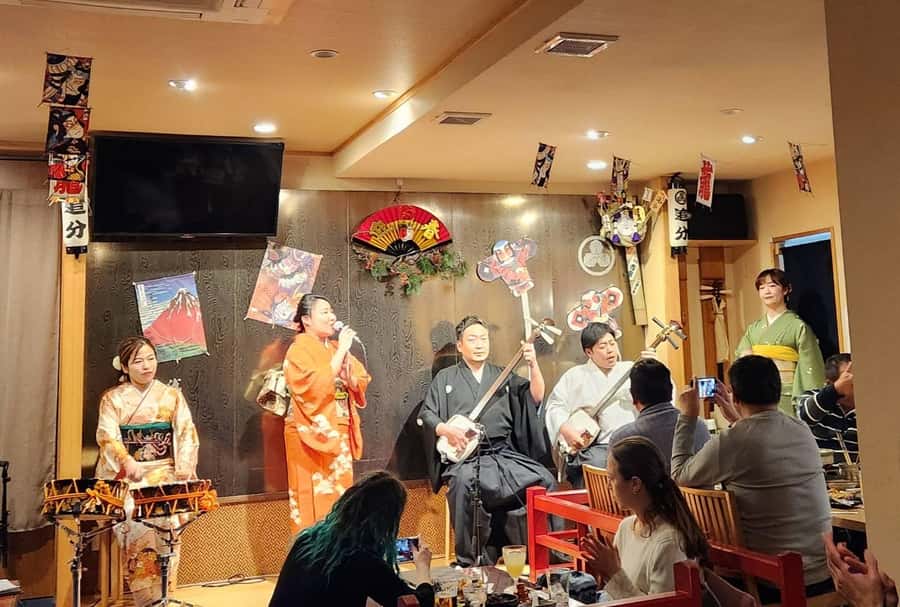
The evening’s restaurant stop is an izakaya, a Japanese dining place with an informal, friendly atmosphere. You receive one welcome drink, with a choice of beer, sake, a cocktail, or a soft drink.
That choice is useful for mixed groups. You can try sake if you want a traditional option, order beer for something familiar, or choose a cocktail or soft drink without paying extra for the included welcome drink. Additional drinks are not included, so keep that in mind when working out your final cost.
Dinner consists of traditional Japanese cuisine and unassuming dishes associated with local dining. The information does not provide a fixed menu, so you should not book this expecting a particular course, specialty, or dietary arrangement. The strength here is the setting and combination of food with music, not a formal fine-dining meal.
One useful detail is the generous feel of the meal. A guest described leaving very full, which suggests you should arrive ready to eat rather than treating dinner as a small snack before the concert.
The izakaya setting also helps keep the evening relaxed. You are not entering a concert hall with a strict, formal mood. You sit down, eat, have a drink, and hear the guide explain what you are about to see and hear.
Hearing shamisen and traditional folk songs up close
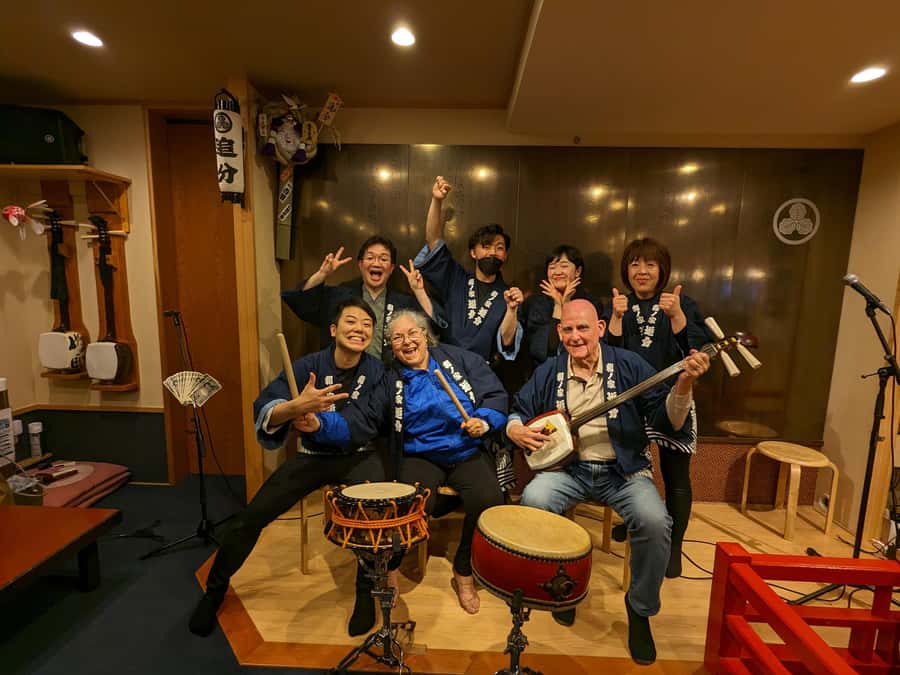
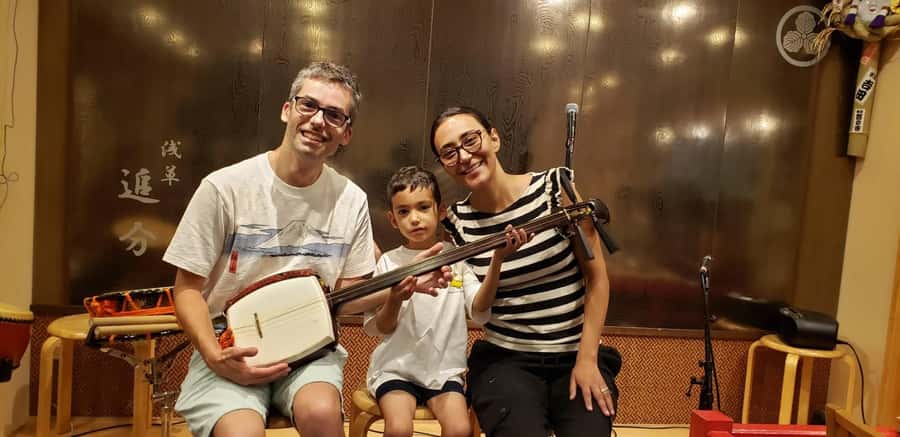
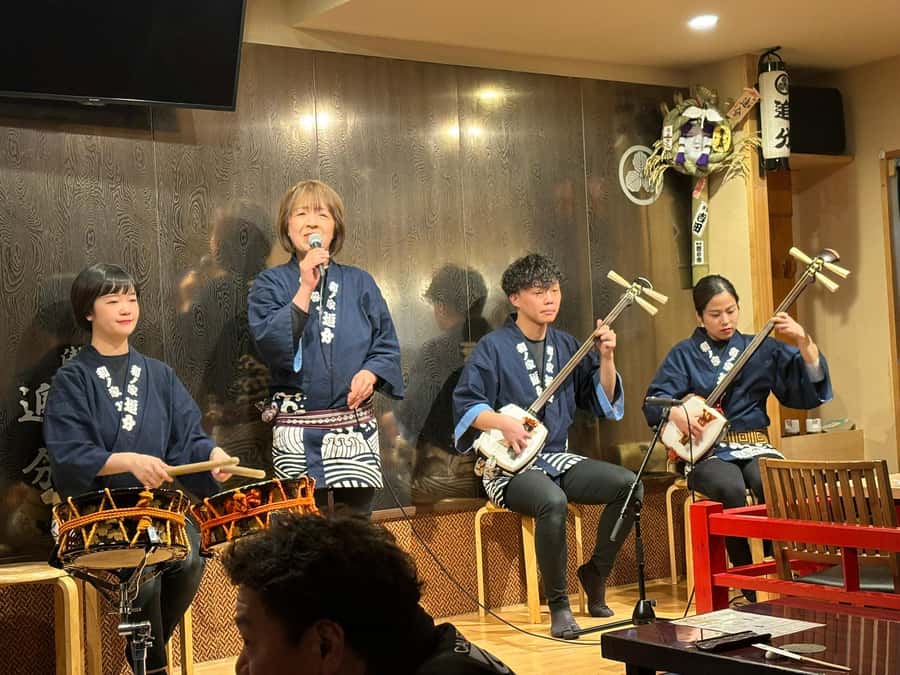
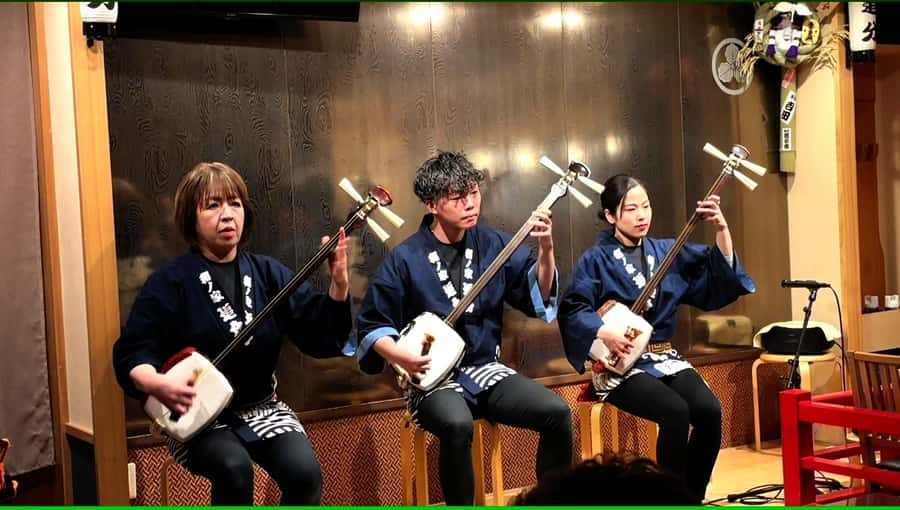
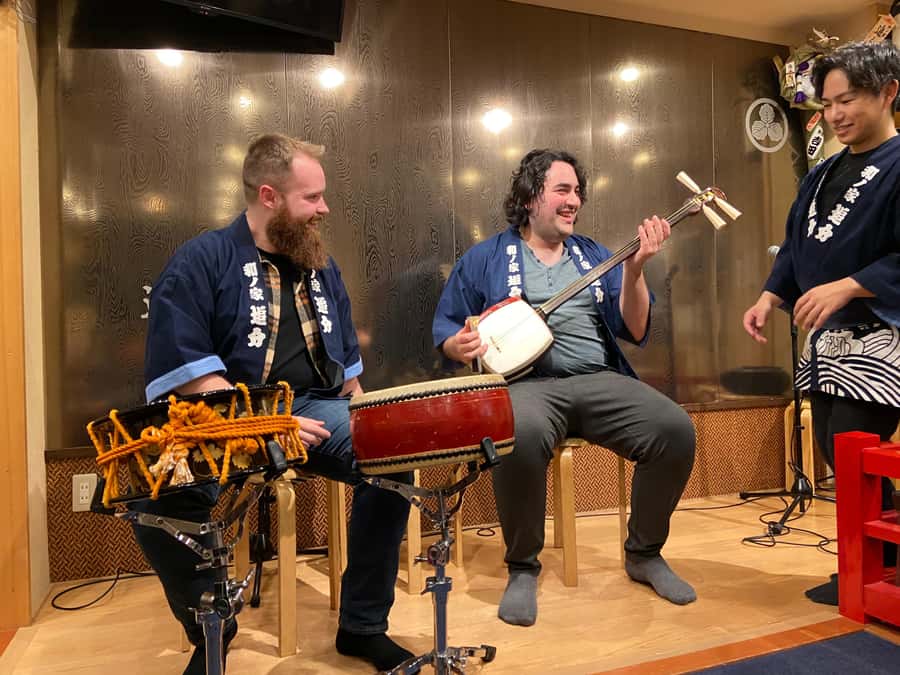
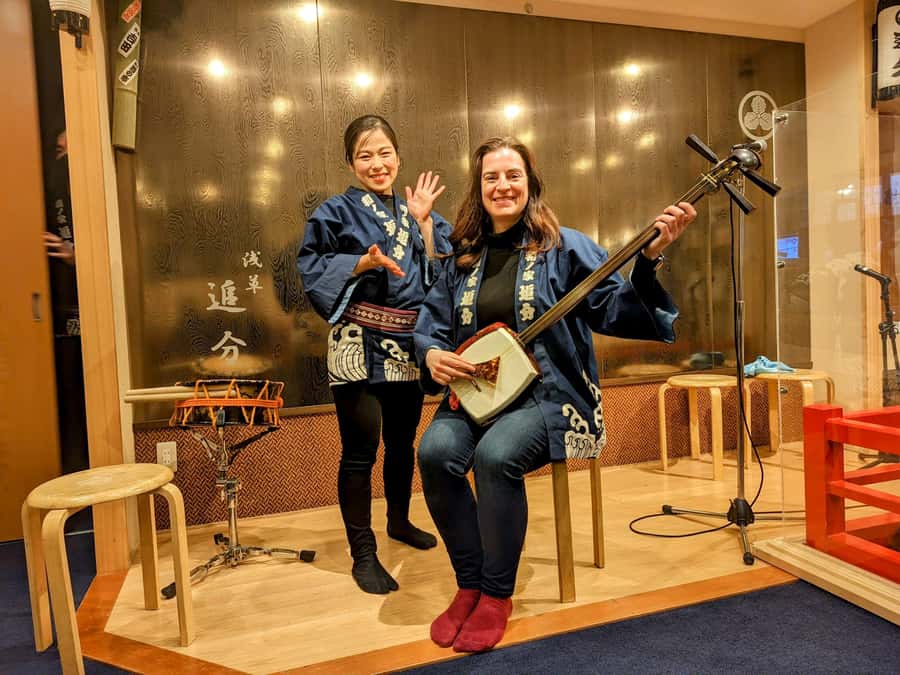
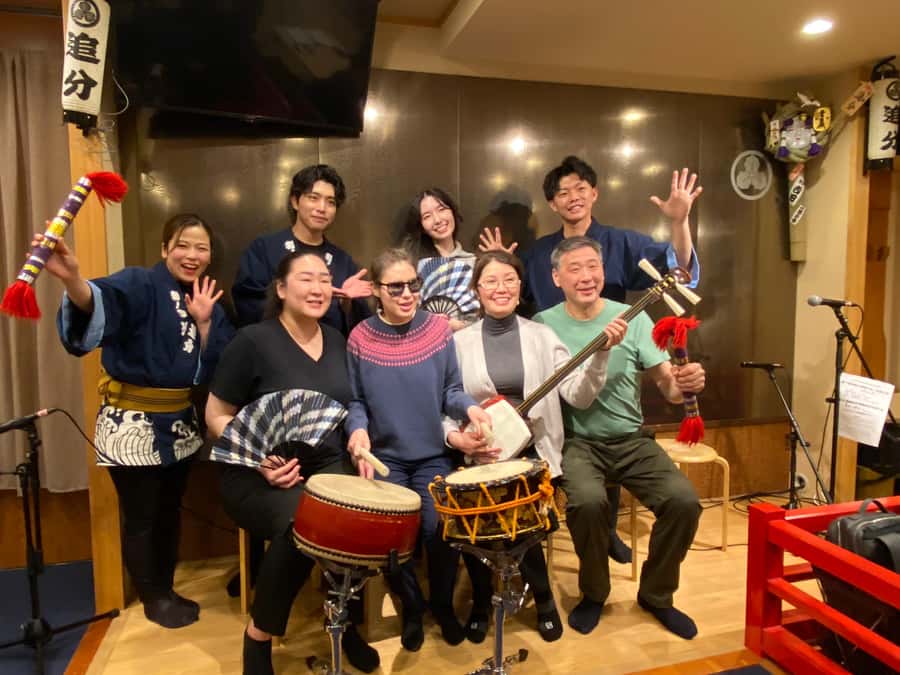
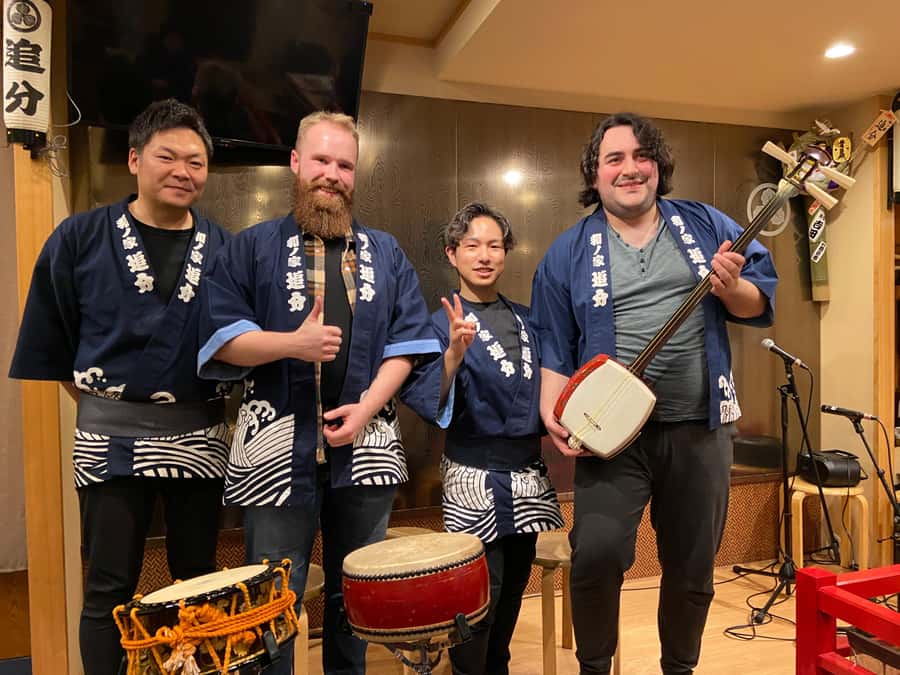
The performance is the evening’s main event. Award-winning musicians play traditional instruments including shamisen and drums, with traditional folk songs sung alongside the music.
The shamisen is a three-stringed Japanese instrument with a sharp, expressive sound. In a restaurant setting, you hear its attack and rhythm more directly than you might during a large stage show. The performance is described as powerful, and the close setting makes the sound a central part of dinner rather than background music.
Your guide gives a short explanation of the instruments before the musicians begin. That context helps you listen with more understanding, especially if you have never heard shamisen music before. You learn what you are hearing before the performance reaches its peak.
The program is also a good fit for people who want traditional culture without spending an entire night at a formal theater. The music comes to you during a meal, and the setting remains friendly and informal.
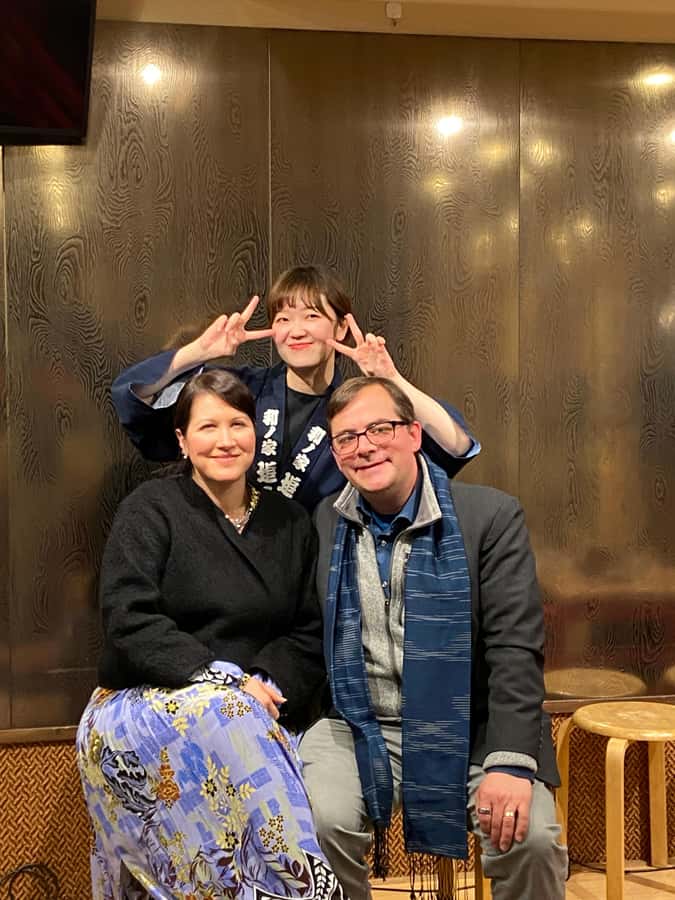
The strongest praise has been directed at the musicians and the sense of privilege that comes from hearing professional performers at close range. The guide, particularly Akiko in one account, also adds value by connecting the music to the evening rather than leaving you to work out its significance alone.
A few more Tokyo tours and experiences worth a look


What the $140 price covers
At $140 per person, this is not the cheapest way to see Asakusa or eat dinner. You can visit Sensoji independently for no tour fee, and the neighborhood has plenty of restaurants where you can order on your own.
The price makes more sense when you treat the experience as three separate services bundled into one evening:
- An English-speaking guide and a short Asakusa history walk
- Dinner at an izakaya
- A welcome drink and live traditional music
The observation deck, organized walk through Sensoji, restaurant arrangement, and performance are the parts that would be harder to combine smoothly by yourself. You are paying for an evening with a clear rhythm, not just a meal.
It is especially good value if you want an introduction to Japanese instruments and would otherwise struggle to find a traditional music performance during your trip. It is less compelling if your main goal is a long temple visit, a detailed food tour, or a quiet dinner without a scheduled group.
Hotel pickup and drop-off are not included. You also pay separately for extra drinks. Since the meeting and ending point are both in central Asakusa, you will need to arrange your own route to and from the area.
How the three-hour schedule feels
The activity lasts three hours, though the exact starting time depends on availability. You begin at the information center, take in the view, walk through the Sensoji area, continue through older Asakusa streets, and finish at the restaurant before returning to the original meeting point.
Because the evening includes both sightseeing and dinner, it works best as a planned block in your schedule. Do not place a major timed attraction immediately afterward unless you have plenty of room. The restaurant performance is the part you most want to enjoy without watching the clock.
The route also gives you an easy way to combine sightseeing with an evening meal. You do not need to decide where to eat after a long day, and you do not need to arrange a separate music event.
The pace may suit most people who are comfortable with ordinary city walking. If you are concerned about distance, say so at the start. The taxi option to the restaurant can reduce the walking portion, though the supplied information does not specify whether the entire route can be adapted.
Who will enjoy this Asakusa evening most
I would recommend this for a first visit to Tokyo, especially if you want a guided introduction to Asakusa before dinner. The route covers the district’s best-known sights without making you plan each stop yourself.
It is also a strong choice for anyone curious about Japanese music. You get live shamisen, drums, and folk songs, plus a short explanation of the instruments. That combination gives the performance more meaning than simply hearing unfamiliar music in the background.
Food-focused visitors should think of this as a cultural dinner rather than a dedicated food tour. You receive dinner, but the restaurant’s role is to support the music and atmosphere. The menu is not specified, and extra drinks cost more.
Families, couples, and small groups can all find something to like here, provided everyone is comfortable with walking and a scheduled group format. The friendly restaurant setting and choice of welcome drink make it less formal than a concert-only evening.
You might skip it if you want complete freedom, a long independent visit inside Sensoji, or a specific restaurant menu. You may also prefer another option if walking is difficult and you cannot arrange the transfer to the restaurant.
Booking details worth knowing before you choose
The activity is offered in English and includes a live English-speaking guide. It begins and ends in front of the Asakusa Culture Tourist Information Center, across from Kaminarimon Gate.
You can reserve now and pay later, which helps if you are still arranging your Tokyo schedule. Free cancellation is available up to 24 hours before the activity for a full refund.
Last-minute reservations may be possible, but arranging a guide and booking a restaurant takes time. If this evening is important to your plans, booking ahead is the safer choice.
The tour has a rating of 5 from 10 reviews, with especially strong praise for the guide, the dinner, and the quality of the music. Akiko is specifically named as an excellent guide, and the comments also highlight how much food and laughter can fill the evening. Those details point to a warm, social experience rather than a stiff lecture followed by a short performance.
Should you book this tour?
Book it if you want Asakusa landmarks, dinner, and live traditional music in one well-organized evening. The observation deck gives you useful orientation, the Sensoji walk covers the major sights, and the shamisen performance supplies something you may not encounter by simply wandering the district.
At $140, the value rests on the music and guiding. If those are central to your Tokyo plans, the bundled price is reasonable. If you only want to see Sensoji or find an inexpensive meal, explore independently instead.
For most visitors, the best approach is to book this early in your Asakusa schedule, keep the evening open for the full three hours, and tell the guide at the start if walking may be a problem. That leaves you free to enjoy the food, the stories, and the music without rushing.
FAQ
How long does the Asakusa music and dinner experience last?
The activity lasts three hours. Check availability for the specific starting times.
Where does the tour meet?
Meet in front of the entrance to the Asakusa Culture Tourist Information Center, directly across from Kaminarimon Gate. The guide will be holding a sign.
What is included in the price?
The price includes dinner, one welcome drink, the live traditional music performance, and an English-speaking guide.
What choices are available for the welcome drink?
You can choose one welcome drink from beer, sake, a cocktail, or a soft drink. Extra drinks are not included.
What instruments are used during the performance?
The live performance includes traditional instruments such as shamisen and drums, along with traditional folk songs.
Can I cancel the booking or pay later?
You can reserve now and pay later. Cancellation is free up to 24 hours in advance for a full refund.
More Dining Experiences in Tokyo

More Shows & Performances in Tokyo
More Asakusa Tours in Tokyo

More tours in Tokyo we've reviewed






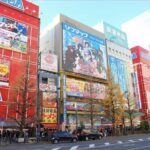
Asakusa Tours, compared.
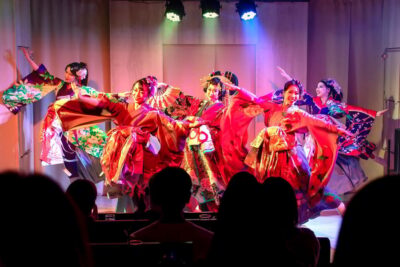 ★ 4.8Tokyo: Japanese Dance Cabaret Theater Asakusa-Kaguwa TicketFrom $492 hours
 ★ 4.7Tokyo: Meiji Shrine, Asakusa, Skytree Bus Tour and CruiseFrom $12210 hours
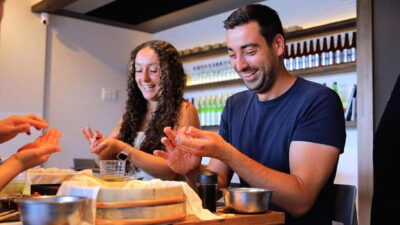 ★ 4.9Tokyo: Roll and Authentic Sushi Making Class in AsakusaFrom $581h 40m
 ★ 4.8Tokyo: Asakusa Walking Tour with Sensoji Temple VisitFrom $222 hours
 ★ 5.0Tokyo Asakusa Rickshaw TourFrom $42
 ★ 4.5Tokyo Panoramic 1 Day: Meiji Shrine, Asakusa, Odaiba and SKYTREE®From $85