
Reviewed · TOKYO FOOD TOURS
Tokyo: Wagyu and 7 Japanese Dishes Cooking Class
The best part of this Tokyo cooking class is the sheer amount you make. In about three hours, you work through a Japanese meal from appetizer to dessert, with Wagyu sukiyaki as the main event. You also learn everyday dishes rather than only the restaurant favorites most visitors already know.
I like the friendly home-style setting and the clear English instruction. I also like that the recipes are practical: dashi, miso soup, cucumber salad, tofu, omelets, and dorayaki are all dishes you can attempt again at home. The one thing to consider is the pace. Seven or eight dishes in one class means plenty of activity, but not a long lesson on advanced knife work.
In This Review
- Key points at a glance
- Arriving at the Shinanomachi cooking studio
- A small group with room to participate
- Welcome tea and the foundations of Japanese flavor
- Making the side dishes and soup
- Tofu, chicken, ginger, and edamame
- The Wagyu sukiyaki main course
- Finishing with dorayaki and a full meal
- What you take home besides recipes
- Is $67 good value in Tokyo?
- Who should book this class?
- Practical details before you reserve
- Should you book the Cooking Sun Wagyu class?
- FAQ
- How long does the Tokyo Wagyu cooking class last?
- How many people are in the class?
- Is the class taught in English?
- What dishes will I prepare?
- Is Wagyu beef included?
- Can dietary requirements be accommodated?
- Where is the cooking studio?
Key points at a glance
- Eight-part Japanese meal: Prepare a broad menu that can include appetizers, dashi-based soup, side dishes, a Wagyu main course, and a sweet.
- Wagyu sukiyaki: Cook tender Japanese beef in a hotpot-style dish and eat it as part of the meal you make.
- Small class size: Groups are limited to eight, so the lesson has a personal feel without being a private class.
- English-speaking local teachers: Instructors such as Yuki, Yuko, Kaori, and Bifuka explain ingredients, methods, and food customs in clear English.
- Recipes for home: You receive the recipes, plus tips on ingredient substitutions and finding Japanese products outside Japan.
- Residential Tokyo setting: The studio is in a beige apartment building in Shinanomachi, giving you a glimpse of a quieter part of Shinjuku.
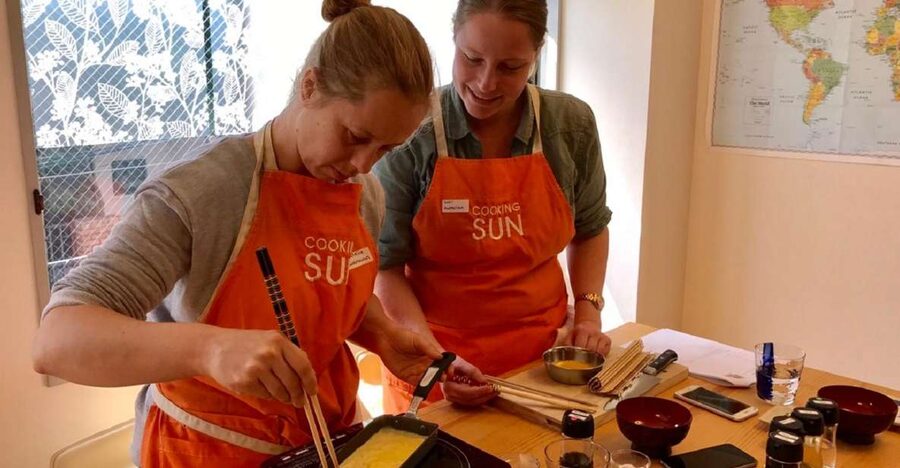
Tokyo is full of food experiences, but many of them leave you watching someone else cook. This class puts you at the counter with a knife, pan, bowl, and apron. You do the work, then sit down to eat the results.
At $67 per person, the class is priced like a substantial meal with a lesson attached. That matters in Tokyo, where a good Wagyu dish alone can take a sizeable bite out of your budget. Here, you get the beef, a full spread of supporting dishes, instruction in English, ingredients, utensils, an apron and towel, welcome tea, and recipes to take away.
The class runs for three hours, with roughly two and a half hours devoted to cooking. The remaining time is used for sitting down and eating what you have prepared. It is a useful format: you learn the basics, stay busy, and finish with a proper meal rather than a small taste.
Arriving at the Shinanomachi cooking studio
The studio is in a residential area of Shinjuku, not inside a grand food hall or a tourist attraction. That gives the experience a more local feel, but it also makes arrival less obvious.
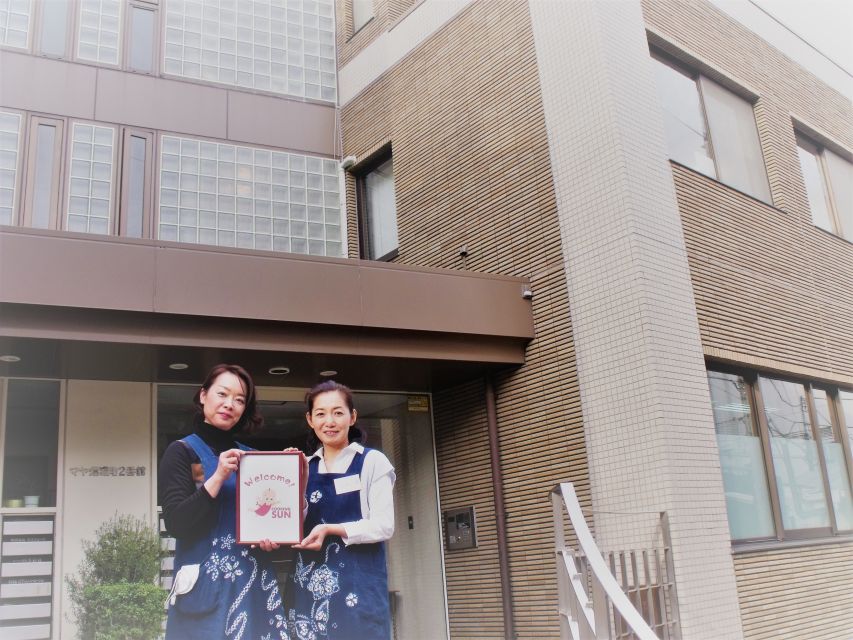
The cooking school is on the second floor of a beige residential building. At the entrance, you will see two doors. Use the door on the right, then press 314 on the intercom to call the studio.
If you have mobile data, search Google Maps for Cooking Sun Tokyo, Shinanomachi 18-39, Shinjuku-ku, Tokyo. If you do not have Wi-Fi, prepare the route before leaving your hotel. The directions are worth checking in advance, since this is not the sort of place you want to hunt for while your class is starting.
A private vehicle can bring you to the area, but it should not wait in front of the building or block the quiet residential street. Ask the driver to use a nearby coin-operated parking lot if a pickup is needed. Hotel pickup and transportation are not included, so you handle the journey yourself.
The setting is part of the appeal. You see an ordinary residential pocket of Tokyo, a place many visitors would otherwise pass by on the train. Just allow a little extra time to locate the entrance.
A few more Tokyo tours and experiences worth a look
A small group with room to participate
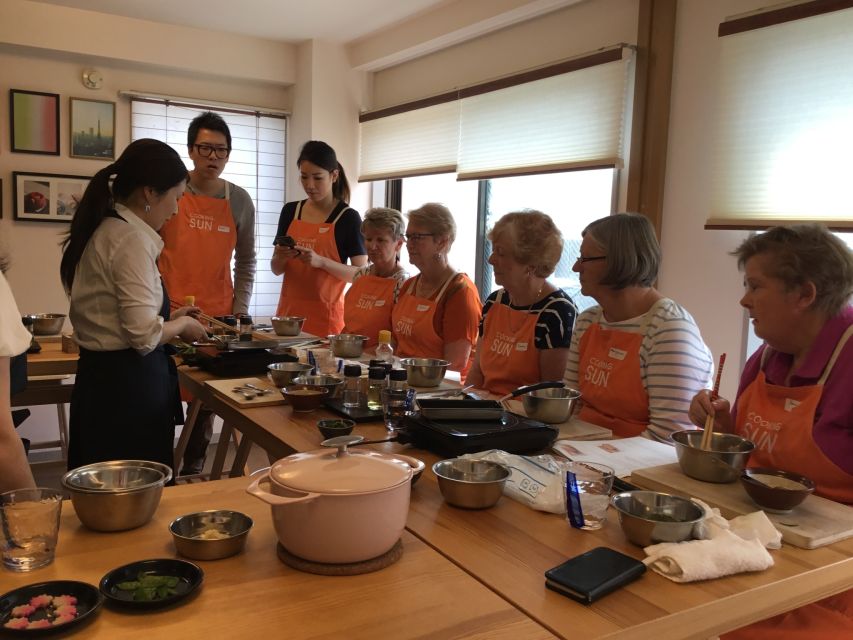
The class is limited to eight participants. That is a useful number for cooking. You are not lost at the back of a large demonstration, yet you still have the chance to chat with people from different countries while the food comes together.
The instructors are English-speaking local cooks. Names mentioned during the classes include Yuki, Yuko, Kaori, and Bifuka, although the teaching team can vary. Their role goes beyond reading out instructions. They explain why an ingredient is used, how a dish fits into Japanese home cooking, and what substitutions may work when you try the recipe abroad.
The atmosphere is friendly and relaxed. Several classes have been especially praised for patient demonstrations, clear explanations, and the way the teachers keep everyone involved. That is important for beginners, since Japanese cooking can look simple while depending on small details such as stock, seasoning order, and cutting style.
The clean, bright studio also earns high marks. You receive an apron and towel, and the necessary utensils and ingredients are supplied. You do not need to arrive with cooking equipment or special clothing.
Welcome tea and the foundations of Japanese flavor
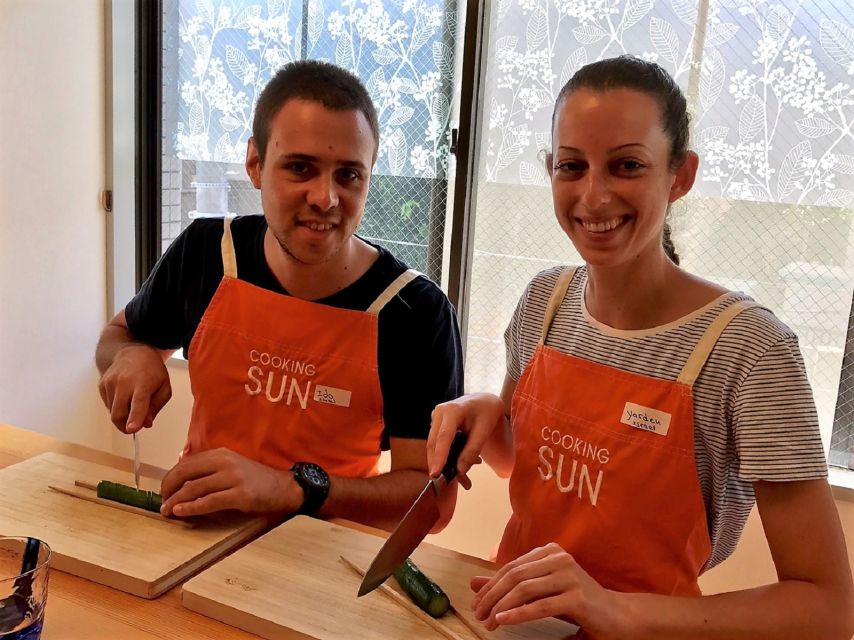
The class begins with welcome tea before the cooking gets underway. From there, the lesson introduces several building blocks of Japanese food.
One key lesson is dashi, the stock used in many Japanese soups and sauces. You make dashi from scratch for miso soup, which gives you a better sense of how Japanese cooks build flavor without relying on heavy sauces or large amounts of fat.
The instructors may also explain the difference between white miso and red miso. That small comparison is useful once you return home, because the two types can taste quite different and are not always interchangeable in a recipe.
This is where the class offers more than a list of dishes. You learn how Japanese food often depends on balance: savory stock, mild sweetness, gentle acidity, sesame, soy, and fresh texture. The flavors are not difficult to reproduce, but you need to understand the purpose of each ingredient.
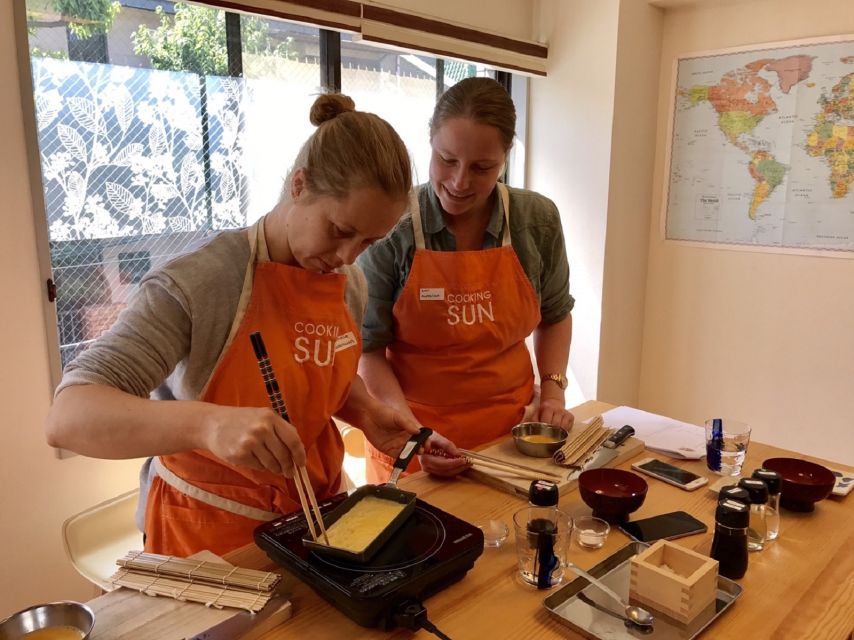
The cooking is practical rather than technical. You might learn an accordion cut for cucumber salad, roll a Japanese-style egg omelet, or prepare a sesame potato salad. These tasks give you a feel for Japanese methods without turning the class into a professional chef course.
Making the side dishes and soup
The early part of the class usually builds the meal one component at a time. Appetizers and side dishes are useful here because they show the range of Japanese home cooking.
A cucumber salad teaches texture and presentation. The accordion cut makes a simple vegetable look special while allowing it to absorb seasoning. A sesame potato salad offers a different lesson, using a familiar ingredient in a Japanese style.
The dashi-based miso soup brings together stock and fermented seasoning. You get to see how a few basic ingredients can create a dish that is light but satisfying. The recipe is also one of the easiest to repeat at home, especially if you can find miso and suitable stock ingredients.
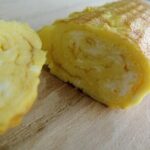
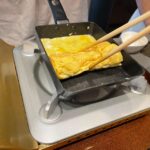
The egg omelet adds a little more hands-on practice. Rolling the omelet can take some coordination, but the class keeps the technique manageable. You are shown the process step by step rather than being expected to produce a perfect restaurant-style result immediately.
These dishes may sound modest beside Wagyu, but they are some of the most useful parts of the lesson. A steak is easy to remember. Knowing how to prepare a balanced Japanese breakfast or home meal takes a bit more guidance.
Tofu, chicken, ginger, and edamame
One of the more substantial preparations combines tofu with ground chicken, ginger, and edamame. It gives you practice handling a filled dish and shows how Japanese meals can use light ingredients without feeling plain.
Ginger brings sharpness, while edamame adds color and a mild, fresh flavor. Tofu provides a soft contrast to the filling. The combination is approachable for beginners and does not depend on complicated equipment.
This part also helps explain the value of the class for people who do not eat fish. The menu focuses on Wagyu and other meat, tofu, vegetables, soup, and sweets rather than sushi. One participant specifically described it as a good choice for someone avoiding fish.
Dietary needs can be accommodated with ingredient substitutions, including allergies, gluten-free diets, religious restrictions, and vegetarian preferences. Tell the provider about your needs when booking. Do not wait until you arrive, since the kitchen needs time to prepare suitable ingredients.
Other cooking classes in Tokyo

The Wagyu sukiyaki main course
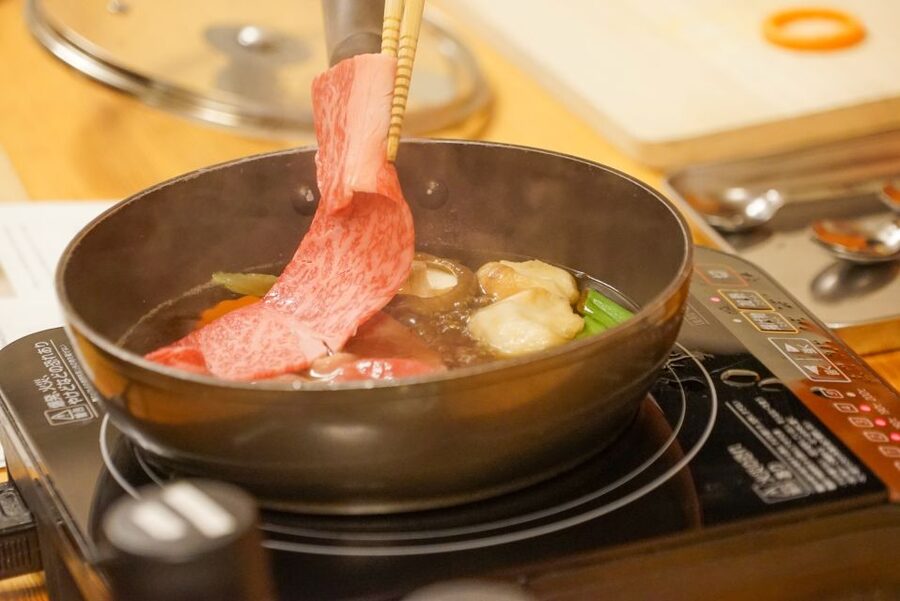
The highlight is the Wagyu dish, prepared in a sukiyaki-style hotpot. Sukiyaki is a familiar Japanese comfort food built around thinly sliced beef, a sweet-savory sauce, and accompanying ingredients cooked together.
The class gives you a chance to handle the beef rather than simply receiving it on a plate. You see how quickly tender Wagyu cooks and how the sauce works with the meat. The beef is described as particularly tender and juicy, and it is the part most likely to draw attention at the table.
Still, keep the Wagyu in proportion. This is not a specialist beef-tasting session with multiple grades and cuts. The beef is the main attraction within a broader cooking lesson. If you mainly want to compare Wagyu varieties, a dedicated steak or tasting experience would be more focused.
For most people, though, the hotpot is a smart choice. It fits naturally into a shared home-style meal, and it shows how an expensive ingredient can be used in a comforting dish rather than treated as a showpiece.
The class also makes a useful comparison with restaurant dining. At a restaurant, you enjoy Wagyu but learn little about preparing it. Here, you cook the beef yourself and understand how it fits with soup, vegetables, side dishes, and rice-flour sweets.
Finishing with dorayaki and a full meal
Dessert may include dorayaki-style rice-flour pancakes. These soft pancakes are a pleasant way to finish the cooking and give you a look at Japanese sweets beyond the usual packaged treats.
By this point, several dishes are ready. The class shifts from work to lunch, and you sit down to eat the full meal with the other participants. That final table is more than a reward. It lets you taste how the dishes balance one another and see how a Japanese meal is arranged.
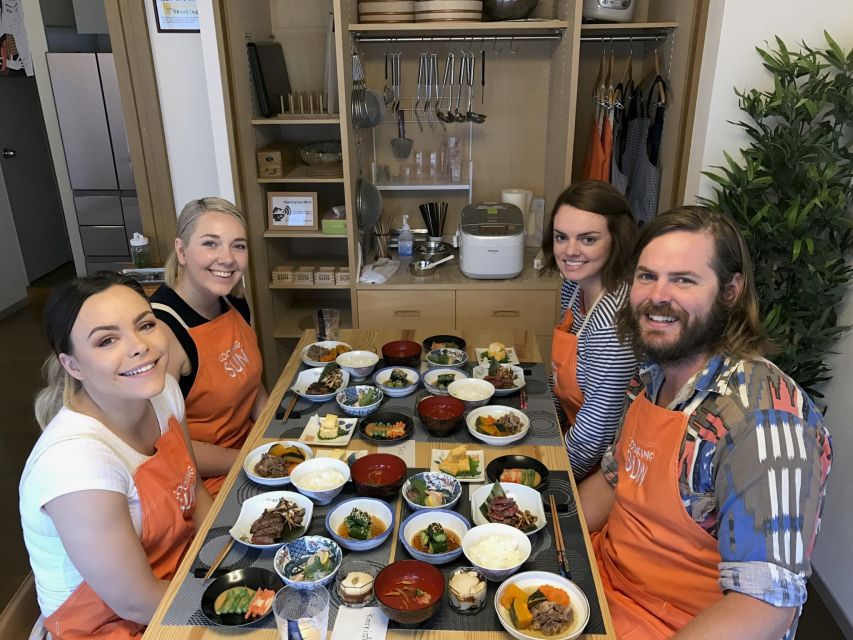
The spread can include seven different types of dishes, with some descriptions counting the complete menu as eight preparations. The exact selection may change with seasonal ingredients, so do not expect one fixed menu on every date.
The meal is generous. One useful tip is to arrive having eaten lightly, rather than expecting only a few samples. You will be proud of what you make, but you may also be surprised by how much food reaches the table after several hours of cooking.
What you take home besides recipes
You receive recipes, but the best takeaway is often the advice around them. The teachers explain how to find Japanese ingredients outside Japan and suggest substitutions when a particular product is unavailable.
That makes the class more useful than a one-time holiday activity. You can try the cucumber salad, miso soup, tofu dish, or dorayaki at home without needing a professional kitchen. The recipes are described as simple enough for beginners, and the techniques are presented in a practical way.
The class is not aimed at advanced cooks seeking difficult knife skills. A participant who wanted serious cutting technique might find the lesson too easy. That is fair. The focus is on everyday Japanese dishes, ingredient use, flavor, and basic preparation.
I would describe the level as beginner-friendly with enough new material for an experienced home cook. You are likely to learn more about Japanese ingredients and meal structure than about advanced culinary precision.
Is $67 good value in Tokyo?
The price works because the class combines three things: a hands-on lesson, a large meal, and a cultural introduction. At $67, you are not paying only for a plate of Wagyu. You are also paying for ingredients, equipment, English instruction, preparation, cleanup, and recipes.
The small group helps the value. Eight is not intimate enough for a private lesson, but it is small enough for the teachers to offer help and answer questions. The clean studio and ready-to-use equipment also save you from dealing with the practical details yourself.
There are cheaper ways to eat in Tokyo, of course. You can find an inexpensive bowl of noodles or a set meal for far less. You can also pay more for a high-end Wagyu restaurant and receive a more polished dining experience.
This class is worth the price if you want to understand what you are eating and learn dishes you can repeat. It is less suitable if you want a quiet meal, a luxury restaurant setting, or an advanced cooking workshop.
Who should book this class?
I would recommend it for couples, families with older children, solo visitors, and anyone who likes to make food part of a trip. It has worked well for an 11-year-old participant, and the hands-on format gives teens something to do besides follow a guide through another landmark.
Solo visitors should feel comfortable booking. The class naturally creates conversation, and the small group makes it easy to meet other people without requiring a full-day social tour.
It also suits a first day in Japan. The class explains basic ingredients, common dishes, and food customs, giving you a useful framework for the meals you will eat during the rest of your stay. You may start noticing dashi, miso, sesame, tofu, and sukiyaki in a new way.
Food-focused couples will enjoy the shared task and the final lunch. Families should note that the class lasts three hours and includes a lot of preparation, so it works best for children who can stay engaged in a kitchen setting.
Practical details before you reserve
The class is taught in English and lasts three hours. Cooking takes about two and a half hours, followed by time to eat.
All ingredients and utensils are included. An apron and towel are provided, along with welcome tea and recipes. Transportation and hotel pickup are not included.
You can cancel up to 24 hours before the class for a full refund, and the reserve-now, pay-later option keeps your plans flexible. Check available start times when choosing a date.
Most important, send dietary requirements when you book. The kitchen can make substitutions for allergies, gluten-free diets, religious restrictions, vegetarian preferences, and other needs, but advance notice is necessary.
Should you book the Cooking Sun Wagyu class?
Book it if you want more than a Wagyu meal. The strongest reason to choose this experience is its range: dashi and miso soup, small vegetable dishes, omelet, tofu, a Wagyu hotpot, and Japanese dessert all fit into one friendly lesson.
I especially like the balance between instruction and eating. You are not left watching a demonstration, yet the recipes remain simple enough to repeat. The English-speaking teachers, clean studio, small group, and useful ingredient advice make the class easy to recommend for beginners.
Skip it if you want advanced culinary training or a dedicated Wagyu tasting. The pace is active, and the class gives each dish limited time. For a first look at Japanese home cooking, though, $67 buys a full afternoon of useful skills, good food, and a quieter view of Tokyo.
FAQ
How long does the Tokyo Wagyu cooking class last?
The activity lasts three hours. About two and a half hours are spent preparing the meal, followed by time to sit down and eat what you made.
How many people are in the class?
The class is limited to eight participants, making it a small-group cooking experience.
Is the class taught in English?
Yes. The local instructors teach in English and explain the dishes, ingredients, cooking methods, and cultural background.
What dishes will I prepare?
The menu includes eight preparations in total, with dishes such as appetizers, dashi-based soup, miso soup, side dishes, a Wagyu main course, and Japanese sweets. The exact menu can vary with seasonal ingredients.
Is Wagyu beef included?
Yes. Wagyu is the main highlight, prepared in a sukiyaki-style hotpot dish and eaten as part of the meal you cook.
Can dietary requirements be accommodated?
Yes. Ingredient substitutions can be made for food allergies, gluten-free diets, religious dietary restrictions, vegetarian preferences, and other needs. You must provide this information when booking.
Where is the cooking studio?
The studio is on the second floor of a beige residential building at Shinanomachi 18-39, Shinjuku-ku, Tokyo. Use the right-side entrance door and press 314 on the intercom.
More Cooking Classes in Tokyo
More Cooking Classes in Tokyo
More Tokyo Food Tours in Tokyo

More tours in Tokyo we've reviewed









Tokyo Food Tours, compared.
 ★ 5.0Tokyo: Shinjuku Food Tour (13 Dishes at 4 Local Eateries)From $86
 ★ 4.9Tokyo: Shinjuku Food Tour (15 Dishes and 4 Eateries)From $853 hours
 ★ 5.0Best of Shinjuku: Izakaya Food Tour (4 Stops, 14+ Tastings)From $92
 ★ 5.0Tokyo Night Foodie Tour in Shinjuku – Seasonal Sushi, Wagyu BeefFrom $111
 ★ 5.0Eat and Drink Like a Local: Tokyo Ueno Food Tour-Taverns&RamenFrom $95
 ★ 5.0Tokyo: Shibuya Food Tour (13 dishes and 4 Eateries)From $77