
Reviewed · SAKE TASTING
Tasting All Types of Sake with Sommelier
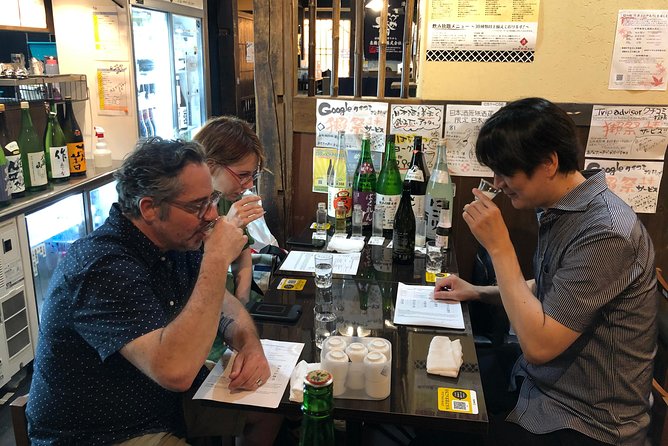
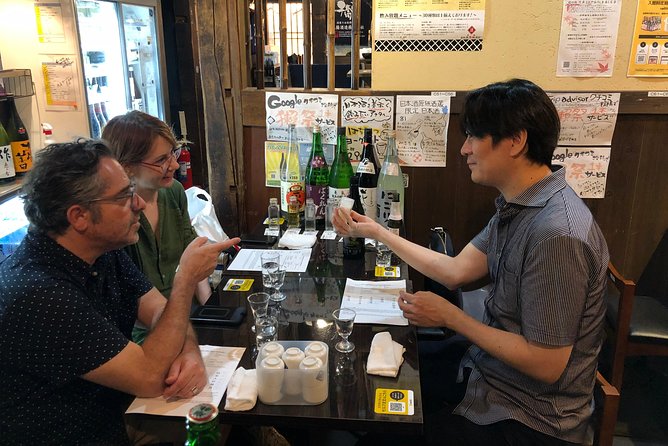
The best part of this Shinjuku experience is that you do not simply sip sake and move on. Aki, the sommelier and host, explains why each pour tastes different, how to read the bottle, and which style may suit your palate. The tasting takes place in a small sake bar near Louis Vuitton Shinjuku, with six or seven types served.
I like two things here: the range of sake, from sparkling and sweet to dry, hot, pasteurized, and unpasteurized, and the practical label-reading lesson you can use in restaurants and shops afterward. The main consideration is that the tasting can be information-heavy, and the session may run closer to two hours, so eat beforehand and do not plan a tight appointment afterward.
In This Review
- Key points at a glance
- Why this sake tasting is more useful than a simple bar stop
- Meeting near Shinjuku San-chome at 4:00 p.m.
- A brief look at Shinjuku 3-chome
- The small sake bar beside Louis Vuitton Shinjuku
- Six or seven pours, with genuine variety
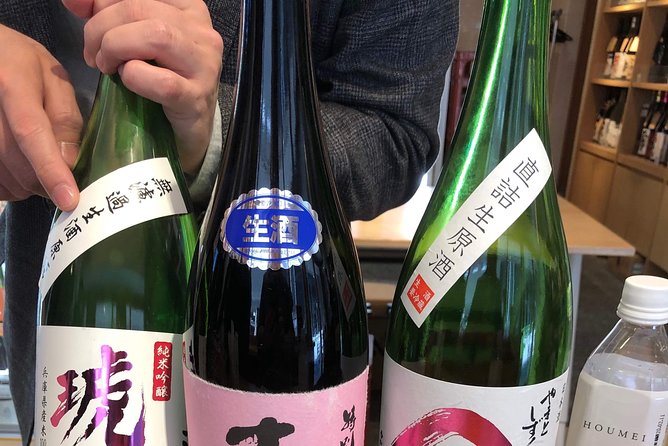
- Learning to read a sake label
- Shinjuku nightlife after the final sip
- Is the $62.76 price good value?
- Who will enjoy this most?
- Booking details that matter
- Should you book the Shinjuku sake tasting?
- FAQ
- Where does the sake tasting begin?
- What time does the experience start?
- How long does the experience last?
- Where does the tasting take place?
- How many types of sake are included?
- Who leads the experience?
- What styles of sake might be served?
- Is the experience suitable for beginners?
- How many people can join?
- Can I cancel for a full refund?
Key points at a glance
- Six to seven sake styles: Expect a broad tasting rather than several near-identical pours.
- Aki leads the session: He explains brewing, flavor, serving temperature, labels, and food pairings in English.
- Small Shinjuku sake bar: The tasting is held near Louis Vuitton Shinjuku, not in a large formal classroom.
- Useful for first-timers and sake fans: Beginners get a clear introduction, while experienced drinkers may encounter unpasteurized sake that is hard to find abroad.
- Tokyo nightlife context: The walk and conversation include Shinjuku 3-chome, Kabukicho, and Golden Gai.
- Plan around the timing: It begins at 4:00 p.m., lasts about 90 minutes, and may take longer.
Why this sake tasting is more useful than a simple bar stop
Sake can be confusing when you first arrive in Japan. Labels use terms that may mean little to you, and a bottle’s price does not always tell you whether it will taste dry, sweet, fragrant, light, or full-bodied.
This session gives you a working vocabulary. Aki discusses how sake is produced, the different types available, and the clues on a bottle label. You are not left guessing at the bar or pointing at a menu. You get enough background to make a more informed choice later in your trip.
I especially like the focus on comparison. Tasting six or seven styles in one sitting lets you notice the differences directly. You may try sparkling sake beside a dry style, or a warm pour beside a chilled one. That is more useful than hearing a long explanation without tasting the examples.
The session also covers how to drink each type and what foods may go well with it. The food-pairing advice matters because sake is not one single flavor category. A style that works with a rich dish may not be the best match for delicate food, and your own preference may change depending on temperature and serving style.
If you're still narrowing it down, here are other tours in Tokyo we've reviewed.
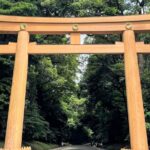

Meeting near Shinjuku San-chome at 4:00 p.m.
The meeting point is in front of 3-chome-4-8 Shinjuku, near Shinjuku San-chome. The activity begins at 4:00 p.m. and finishes back at the same meeting point.
This is a handy time for a Tokyo evening. You can spend the afternoon shopping or sightseeing, attend the tasting, then continue into Shinjuku for dinner and nightlife. The meeting area is near public transportation, but Shinjuku can be disorienting, especially around major crossings and station exits. Give yourself extra time and check the mobile ticket details before you leave.
Aki begins with a short introduction to the Shinjuku area. That opening is not the main reason to book, but it helps place the tasting in its setting. You get a quick orientation to Shinjuku before moving into the sake lesson.
The group can contain up to 12 people. That is still small enough for questions, though the amount of individual attention will depend on the group size. Some sessions may feel almost private if only a few people book, while a full group will feel more like a compact class.
A brief look at Shinjuku 3-chome
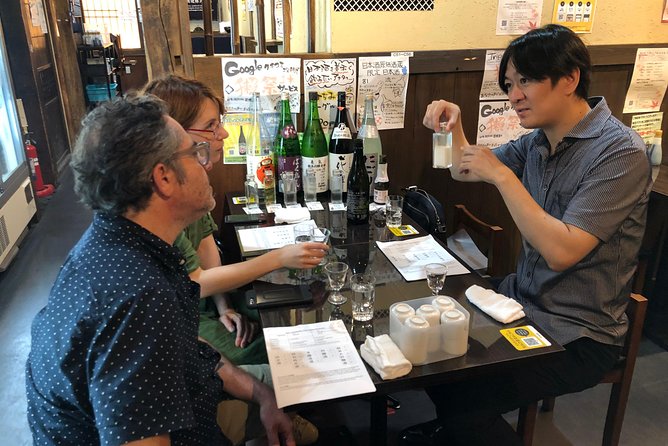
The next stop is around Shinjuku 3-chome, where Aki talks about the immediate neighborhood. The scheduled time is about five minutes, so think of this as a short local introduction rather than a full walking tour.
This part adds context without taking time away from the tasting. If you are new to Tokyo, it can help you understand the difference between the shopping streets, restaurant lanes, and nightlife areas that make up central Shinjuku.
There is a practical benefit, too. You will know where the session begins and ends, and you can use the surrounding area for dinner afterward. The activity does not include a full meal, so plan to eat before or after.
The small sake bar beside Louis Vuitton Shinjuku
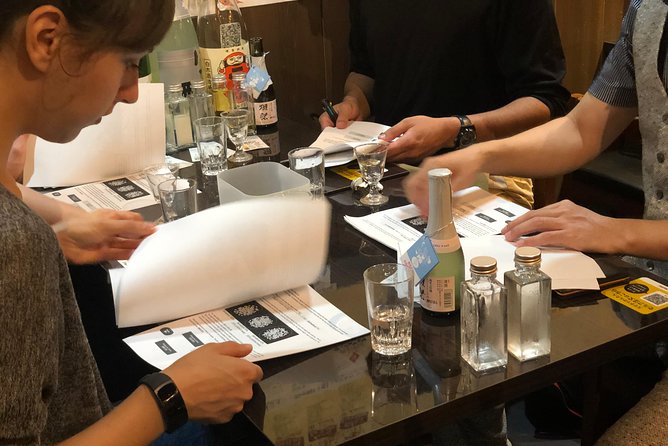
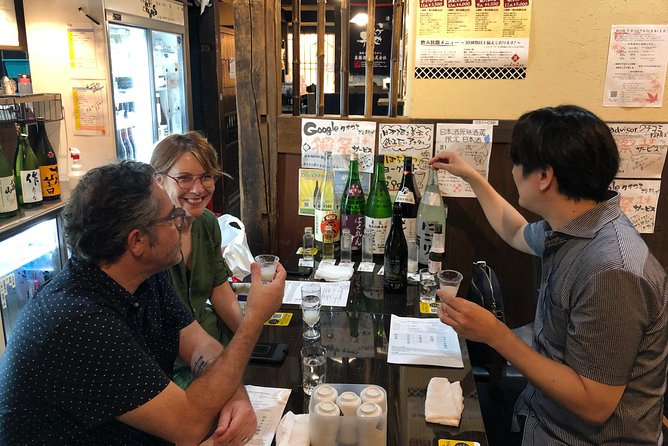
The main tasting takes place at a sake bar close to Louis Vuitton Shinjuku. Once the group reaches the bar, Aki serves the different types and talks through what he notices in each one.
The setting sounds intentionally compact rather than grand. That suits this kind of lesson. A small bar lets the tasting feel social and direct, although you should not expect a large production facility or a tour of a brewery. The value is in the guided comparison and conversation.
Aki’s teaching style is a major part of the experience. He explains how sake is made and why the finished drinks can vary so much. He also answers questions beyond the basic lesson, including questions about other Japanese spirits, Tokyo, and places to visit.
His English is described as strong, and his manner is friendly and funny. That combination matters. Sake production can become technical very quickly, but an approachable guide helps you keep track of the important points without turning the afternoon into a dry lecture.
Six or seven pours, with genuine variety
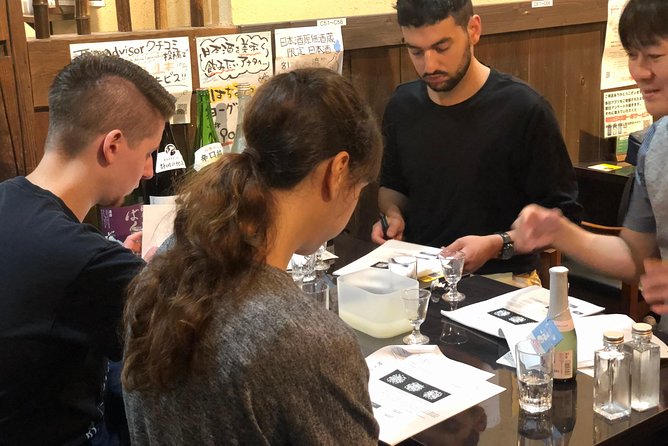
The tasting includes six to seven sake types, with an additional welcome sake described in one account of the experience. The exact selection can vary, so you should not expect a fixed menu of named bottles.
The range is the point. You may taste:
- Sparkling sake
- Sweet and dry styles
- Hot sake
- Pasteurized sake
- Unpasteurized sake
- Other types selected by the host
This broad selection is useful for first-time drinkers. If your only experience with sake is a warm drink at a Japanese restaurant, you may be surprised by how different the other styles can be. Sparkling sake, for example, gives you a very different starting point from a dry, still pour.
It is also useful for people who already enjoy sake. One particularly interesting feature is the chance to try unpasteurized sake that can be difficult to ship to the United States. Special bottles available only in Japan give the tasting a local advantage that you may not get from an international sake list.
Aki explains what he detects in each sake and how he would approach drinking it. You can ask about sweetness, dryness, temperature, production, or how to choose a bottle for your own taste. This is where the session becomes practical rather than decorative.

Learning to read a sake label
The label lesson may be the most valuable part after the tasting itself. Japanese sake bottles can include information on the rice, brewing method, style, and other characteristics, but those details are not always easy to interpret at a shop shelf.
Aki provides a pamphlet covering sake production and the main types. It gives you something to refer back to after the session. One useful improvement would be a full record of every bottle served, including details such as acidity and pasteurization, but you can ask Aki about the pours during the tasting.
The goal is not to memorize every Japanese term. It is to recognize enough information to make a good choice. After the session, you should have a better idea of what to look for when buying sake or ordering at a restaurant.
I would schedule this experience near the start of your Tokyo stay, after you have adjusted to the time difference. That way, the lesson can guide later meals and shopping. If you book it on your first afternoon while exhausted, the technical information may be harder to retain.
Shinjuku nightlife after the final sip
The conversation does not stop with sake. Aki also talks about Kabukicho and Golden Gai, two of Shinjuku’s best-known nightlife areas.
The activity does not promise a full nightlife tour, and the itinerary gives only a short amount of time to these subjects. Still, the local advice can be useful if you plan to explore after the tasting. You can ask Aki for general suggestions about where to go, what to avoid, and how to approach Tokyo nightlife.
Golden Gai is made up of tiny bars and narrow lanes, while Kabukicho is a major entertainment district. These areas can be fun, but they are not always simple for a first visit. A short explanation from someone familiar with Tokyo gives you a bit more confidence before you head out on your own.
The 4:00 p.m. start works well here. You finish around the beginning of the evening and can continue into dinner or nightlife. Just remember that the tasting may last longer than the advertised 90 minutes. One account describes a session of about two hours, so leave room in your schedule.
Is the $62.76 price good value?
At $62.76 per person, this is not the cheapest way to drink sake in Tokyo. You could order several glasses at a bar for less, especially if you skip the instruction.
That comparison misses the main value, though. You are paying for six or seven guided tastings, an English-language lesson, label advice, food-pairing guidance, a pamphlet, and access to bottles that may be difficult to find outside Japan. You also receive local suggestions about Shinjuku and Tokyo nightlife.
For someone who only wants a drink, the price may feel high. For someone who wants to understand what they are drinking and use that knowledge later, it is more reasonable. The small-group format also makes the cost easier to justify than a large tasting where you receive little personal attention.
The value is strongest for a first-time sake drinker, a couple, or a small group of friends who would otherwise spend an afternoon ordering at random. Sake fans should also find value in the unusual bottles, especially unpasteurized styles.
Who will enjoy this most?
I would recommend the experience to you if you want structure and explanation with your drinks. It suits people who are curious about Japanese food and drink but do not know where to begin.
It is also a good choice for families or friends traveling together, provided everyone taking part is legally allowed to drink. The host keeps the mood relaxed, and the session can work for mixed experience levels.
You may not enjoy it as much if you want a quiet, self-directed tasting. Aki explains a lot, and the session can feel like an introductory college class about sake. That is a strength for a curious learner, but a drawback if you simply want to sit at a bar without instruction.
You should also eat first. The tasting includes several pours, and the practical advice is to avoid arriving on an empty stomach. The activity is short enough to fit into a Tokyo itinerary, but it is not a quick one-drink stop.
Booking details that matter
Confirmation is provided at booking, and the experience uses a mobile ticket. The meeting point is near public transportation, and most people can take part.
The maximum group size is 12. The activity begins at 4:00 p.m., lasts approximately one hour and 30 minutes, and returns to the original meeting point.
Cancellation is free if you cancel at least 24 hours before the local start time. Changes or cancellations inside that window are not accepted for a refund. Since the activity is often booked about 23 days ahead, reserve early if your Tokyo dates are fixed, but keep the cancellation deadline in mind.
Should you book the Shinjuku sake tasting?
Book it if you want more than a sampler tray. Aki’s strength is the mix of clear sake instruction, humor, label-reading advice, and Tokyo tips. The chance to compare sparkling, sweet, dry, hot, pasteurized, and unpasteurized styles gives you a much better sense of the drink than ordering one glass at dinner.
I would place it early in your Tokyo schedule, once you are rested enough to listen and taste carefully. It can help you choose sake for the rest of your trip, and the Shinjuku location makes it easy to continue into dinner or Golden Gai afterward.
Skip it if your main goal is a low-cost night out or a formal brewery visit. This is a small-bar tasting led by a personable sommelier, not a factory tour. For curious drinkers, though, the $62.76 fee buys useful knowledge, unusual pours, and a more confident way to order sake in Japan.
FAQ
Where does the sake tasting begin?
It begins in front of 3-chome-4-8 Shinjuku, near Shinjuku San-chome, Tokyo.
What time does the experience start?
The scheduled start time is 4:00 p.m.
How long does the experience last?
The listed duration is approximately one hour and 30 minutes. The tasting may take closer to two hours, so avoid booking a tight appointment afterward.
Where does the tasting take place?
The main tasting takes place at a small sake bar near Louis Vuitton Shinjuku.
How many types of sake are included?
You can expect to taste six to seven types of sake, with an additional welcome sake described as part of one tasting session.
Who leads the experience?
The experience is led by Aki, also referred to as Akira in some tour details. He is presented as a sake sommelier who explains production, types, labels, serving methods, and pairings.
What styles of sake might be served?
The tasting can include sparkling, sweet, dry, hot, pasteurized, and unpasteurized sake. The exact selection may vary.
Is the experience suitable for beginners?
Yes. The session explains the basics of sake production and label reading, making it suitable for people trying sake for the first time.
How many people can join?
The activity has a maximum group size of 12 people.
Can I cancel for a full refund?
Yes. You can cancel at least 24 hours before the local start time for a full refund. Cancellations or changes made less than 24 hours before the start are not accepted for a refund.
More tours in Tokyo we've reviewed




Sake Tasting, compared.
 ★ 5.0Ramen and Sushi Cooking Class with Sake Pairing Set in TokyoFrom $79
 ★ 5.0Sake Tasting Masterclass in Shinjuku (8+ Varieties with a Pro)From $72
 ★ 5.0Sake Omakase in Tokyo: Guided Tasting by Certified SommeliersFrom $79
 ★ 5.0Wagyu & Sake Pairing in Shinjuku – Steak, Shabu-Shabu & MoreFrom $148
 ★ 5.0Tokyo Wagyu & Sake Pairing Tasting Experience with Local FlavorsFrom $151
 ★ 5.0Tokyo: Sushi and Ramen Cooking Class with Sake Pairing SetFrom $1293 hours