
Reviewed · TOKYO FOOD TOURS
Small-Group Wagyu Beef and 7 Japanese Dishes Tokyo Cooking Class
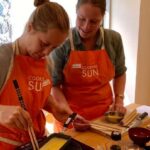
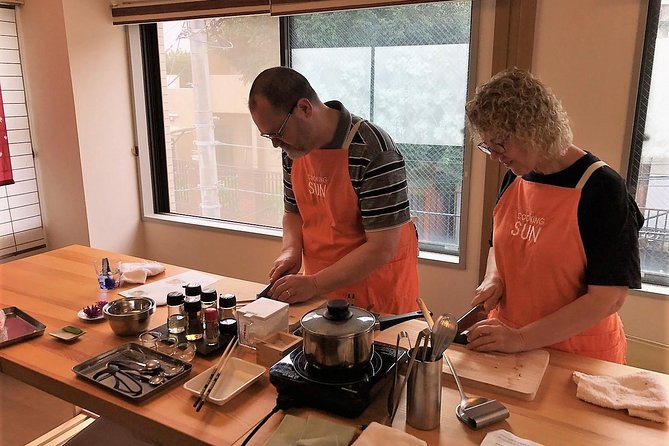
This class turns a famous Japanese meal into something you can actually understand and repeat at home. You begin with dashi, the basic stock behind much of Japanese cooking, then work through a full spread of dishes that includes tender Wagyu beef, Japanese vegetables, traditional seasonings, and dessert. I like that you do not simply watch a chef work. You chop, mix, cook, present, and receive help along the way.
I also like the small size, capped at eight people, and the practical focus on recipes you can take home. The English-speaking instructors, including Aya and Hidemi in some classes, explain the purpose of ingredients instead of tossing unfamiliar Japanese terms at you. The main drawback is finding the studio, which sits in a residential area and can be tricky to locate even though it is near public transportation.
In This Review
- Key points to know before booking
- Starting with dashi at Cooking Sun Tokyo
- Preparing seven Japanese dishes in three hours
- The Wagyu beef centerpiece
- English-speaking instructors who keep the room relaxed
- Sitting down for the meal you prepared
- What the $72.96 price gets you
- Who should book this Tokyo cooking class?
- Practical details for a smooth morning
- Should you book it?
- FAQ
- Where does the cooking class meet?
- What time does the class start?
- How long does the experience last?
- How many people can join the class?
- Is the class taught in English?
- What food will I prepare?
- Is a vegetarian option available?
- What is included in the price?
Key points to know before booking
- Dashi comes first: You learn how Japanese cooks build flavor from the basic soup stock.
- Wagyu is the main event: The class uses Japanese beef in the central dish, often prepared as sukiyaki.
- Up to eight people: The small group keeps the class active and gives you room to ask questions.
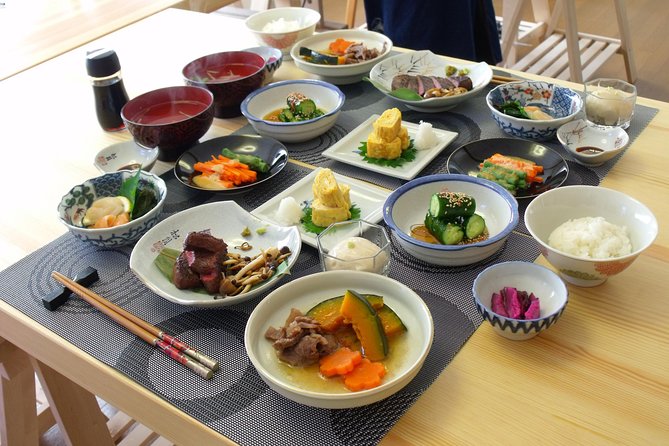
- Seven or eight dishes: The menu covers appetizers, soup, vegetables, a main course, and dessert.
- English instruction: Local instructors explain ingredients, cutting, seasoning, and presentation in English.
- A full meal follows: You sit down to eat what you made, with sake and green tea included.
Starting with dashi at Cooking Sun Tokyo
Your morning begins at 9:30 am at Cooking Sun Tokyo, located at 18-39 Shinanomachi in Shinjuku City. The activity lasts about three hours and ends at the same place, so you can plan another Tokyo activity afterward without arranging a second pickup point.
The first lesson is dashi-making. This is an important choice because dashi is not just one more recipe on the menu. It is a foundation for soups, sauces, and other dishes, and the class uses it in several parts of the meal. If you have eaten Japanese food but never understood why the flavors taste so clear and savory, this opening section helps explain it.
You also get an introduction to common Japanese seasonings. The value here is practical. Japanese cooking can look simple on the plate, but the balance of stock, soy-based seasonings, miso, and other staples requires some care. The instructor explains how these ingredients are used, along with tips that can make the recipes less intimidating once you return home.
The class provides the ingredients, cooking equipment, apron, and towel. You do not need to arrive carrying kitchen supplies. Recipes are included, which makes this more than a one-time meal and gives you a reference for trying the dishes again.
A few more Tokyo tours and experiences worth a look
Preparing seven Japanese dishes in three hours
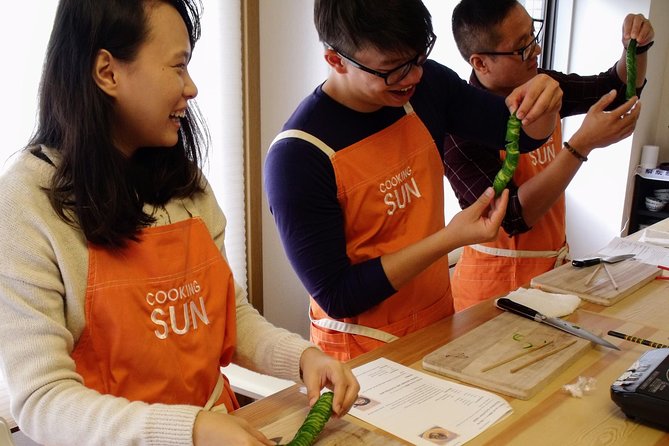
After dashi, the class moves through a broad menu of Japanese cooking methods. The exact food list can vary, but the format covers about seven dishes, sometimes described as eight when the full menu is counted. You can expect a mix of appetizers, vegetables, soup, a main course, and dessert rather than a single specialty lesson.
This variety is one of the strongest reasons to book. A ramen class, for example, teaches you one beloved dish. Here, you get a wider look at the home-style side of Japanese food, including dishes you may not see often on restaurant menus. You learn how Japanese cooks handle several small dishes together and how presentation helps turn a meal into a full course.
The class also introduces elaborate cutting and plating techniques. Do not expect a professional chef apprenticeship in three hours, but you will see how shape, portion, and arrangement affect the finished plate. The instructors keep the explanations short and practical, then let you try the work.
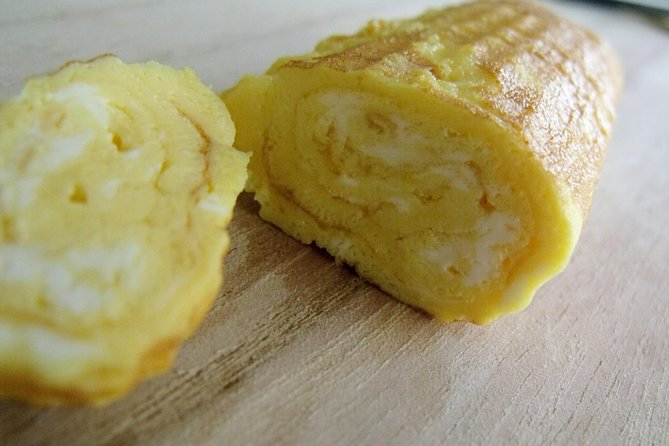
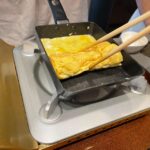
Your level of hands-on cooking may vary by dish. One detailed account of the class noted that some foods, such as rice, potatoes, miso soup, and other components, may be prepared by the staff while participants focus on chopping, mixing dressings, cooking an egg, or searing a prepared lotus stuffed with minced chicken. That is worth knowing if you want every item made entirely from scratch.
Still, the class is not a demonstration where you sit at the back and take notes. The eight-person limit means you take part, receive corrections, and can ask why a certain cut or seasoning is used. The best fit is someone who wants a broad, hands-on introduction rather than a highly technical lesson focused on one dish.
The Wagyu beef centerpiece
Wagyu means Japanese beef, with wa referring to Japan and gyu meaning beef. The class uses Wagyu as the main dish, giving you a chance to work with a product that can cost a great deal at a restaurant.
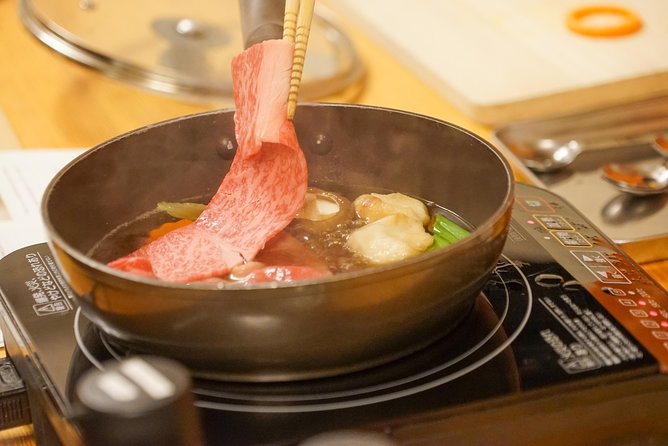
Sukiyaki is a frequent highlight. The tender beef cooks with a sweet-savory seasoning and works well as a teaching dish because it shows how timing and heat affect texture. You also see how a premium ingredient can carry a dish without needing a long list of complicated steps.
I would not book this class solely for a giant Wagyu tasting. The portion and preparation are part of a larger meal, and the real value is learning how the beef fits into a Japanese course. You prepare it, eat it with the other dishes, and gain a better sense of how Japanese home cooking balances meat with soup, vegetables, rice, and small side dishes.
The ingredients are described as fresh and high quality, but this is still a cooking lesson, not a luxury steak dinner. If your main goal is to compare different grades of beef, a dedicated Wagyu restaurant would be a better choice. If you want to learn Japanese cooking and enjoy Wagyu as the main course, this class offers a sensible mix.
English-speaking instructors who keep the room relaxed
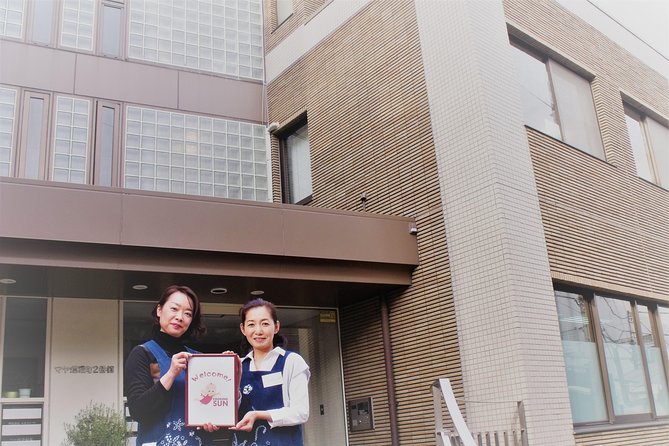
The instructors are local English-speaking cooks who explain recipes, ingredients, and small techniques as you work. Names associated with classes include Aya, Hidemi, Kaori, Megumi, and Yoko. The teaching style is friendly and patient, with a home kitchen feel rather than a formal culinary school atmosphere.
That matters if you are unsure about your cooking skills. The class is designed for beginners as well as people who already cook. You can ask about unfamiliar ingredients, get help with cutting, and learn why a dish is prepared in a certain order.
The instructors also share stories about the recipes and Japanese food culture. This gives the menu some context without turning the class into a long lecture. You learn not just what to add, but how the dish fits into Japanese cooking.
The small group is a real advantage. With no more than eight people, you are less likely to lose the instructor’s attention or spend the whole session waiting for a turn. A family can work together, couples can share the experience, and solo visitors have a natural way to meet people around the cooking table.
The class also suits mixed-skill groups. One person can arrive with professional cooking experience while another rarely enters a kitchen. The feedback can be adjusted to each participant, and the relaxed pace keeps the lesson approachable.
Sitting down for the meal you prepared
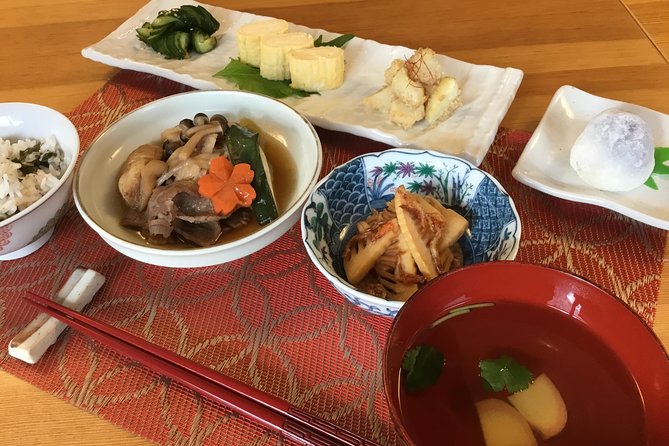
Once the cooking is finished, the class changes pace. You sit down and eat the food you made, beginning with itadakimasu, the Japanese phrase traditionally said before a meal.
This final meal is more than a reward. It lets you see how the individual dishes work together. Dashi appears in more than one preparation, vegetables add contrast to the Wagyu, and the presentation makes the food feel like a planned course rather than a pile of separate cooking exercises.
Sake and green tea accompany the meal. The sake adds a traditional touch, while green tea gives you a familiar non-alcoholic option. If you do not drink alcohol, you should still have plenty to enjoy because the class centers on the food and instruction.
The menu can feel surprisingly generous for a three-hour session. You may make seven dishes, or eight depending on how the menu is counted, and finish with a meal that feels closer to a feast than a quick tasting. The pace is brisk, but that is partly why the class offers good value.
Other cooking classes in Tokyo
What the $72.96 price gets you
At $72.96 per person, this is priced as an activity rather than a luxury dining event. The fee covers the local instructor, recipes, ingredients, apron, and towel rental. You also get the cooking lesson, the meal, sake, and green tea.
I see the value in the range of what is included. A restaurant meal could let you taste Wagyu and several Japanese dishes, but it would not show you how dashi is made, how the food is cut, or how the seasonings work. A private lesson would likely cost more, while a cheaper group class might offer less personal attention.
The eight-person maximum helps justify the price. You are not paying for a large demonstration with limited contact. You get a chance to work and ask questions, even though some parts of the meal may be prepared ahead of time or completed by the instructors.
For a family, the class can replace a morning of separate sightseeing with an activity everyone shares. For a solo visitor, it combines a meal, cultural context, and social time. For someone who already cooks Japanese food often, the value depends on the menu and your desire to learn presentation or work with Wagyu.
Hotel pickup and drop-off are not included. You need to make your own way to Shinanomachi, and the building can be hard to spot. Allow extra time, follow your map carefully, and do not arrive at the last minute. Once inside, the studio is described as clean and homey, but the approach is less obvious than the polished class itself.
Who should book this Tokyo cooking class?
I would choose this experience if you want to understand Japanese food beyond sushi and ramen. It gives you a look at dashi, staple seasonings, vegetable preparation, presentation, and the place of Wagyu in a full Japanese meal.
It also works well for:
- First-time cooks: The instructions are clear and the class welcomes different skill levels.
- Families: The small group and shared meal make it easy to take part together.
- Food-focused visitors: You get both tasting and technique in one morning.
- Home cooks: Recipes and practical tips give you something to use after Tokyo.
- Solo visitors: The small group creates an easy setting for meeting people.
- Visitors with dietary needs: Vegetarian preparation is available if requested at booking, and you should report allergies or other restrictions in advance.
I would look elsewhere if you want a highly specialized lesson, a private class, or a class where every single item is made from raw ingredients by participants. You should also think twice if you dislike a fast pace or have trouble finding residential addresses.
The class is not built around sightseeing. There is no hotel transfer, and the meeting point is the only stop. Its appeal is the time at the counter, the explanations from the cooks, and the meal at the end.
Practical details for a smooth morning
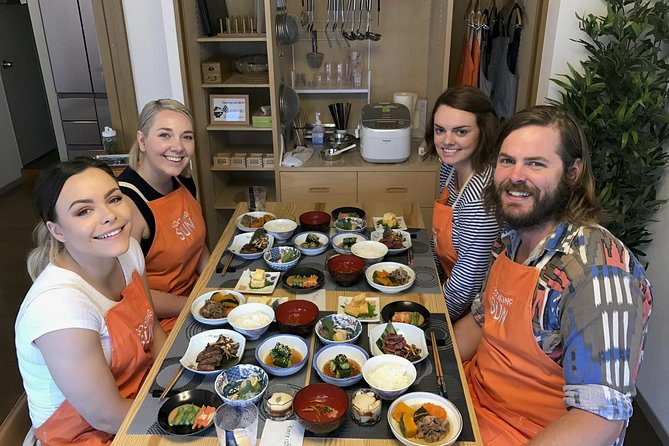
The start time is 9:30 am, and the class lasts about three hours. It ends back at Cooking Sun Tokyo, which makes it easy to plan lunch elsewhere, visit another part of Shinjuku, or return to your hotel.
You receive booking confirmation at the time of reservation, and a mobile ticket is available. The studio is near public transportation, but the building can be difficult to locate. One useful approach is to follow a map closely and give yourself a few extra minutes. The surrounding area includes quieter residential streets and nearby trees, so the walk can be pleasant once you are on the right route.
Wear comfortable clothing that you can move in. An apron is supplied, along with a towel, but you are still taking part in food preparation rather than watching from a seat.
The cancellation policy is simple: cancel at least 24 hours before the local start time for a full refund. Cancellations or changes inside that 24-hour window are not accepted for a refund.
Should you book it?
I would book this class if you want an active, affordable introduction to Japanese cooking with a premium main ingredient. The strongest points are the eight-person limit, the English instruction, the useful dashi lesson, and the unusually broad menu for a three-hour session.
Go in expecting a brisk class, not a slow private workshop. Some components may be prepared by the instructors, and the studio takes a little effort to find. Those limits are fair trade-offs for a full meal, recipes, hands-on practice, and a chance to cook Wagyu in Tokyo for $72.96.
If you leave with one new habit, let it be starting with dashi. If you leave with several recipes, a better feel for Japanese seasonings, and a full stomach, the class has done its job.
FAQ
Where does the cooking class meet?
The class meets at Cooking Sun Tokyo, at 18-39 Shinanomachi, Shinjuku City, Tokyo 160-0016, Japan.
What time does the class start?
The listed start time is 9:30 am.
How long does the experience last?
The class lasts approximately three hours.
How many people can join the class?
The class has a maximum of eight people.
Is the class taught in English?
Yes. The instructors are English-speaking local cooks, and the class instructions are provided in English.
What food will I prepare?
You will begin by making dashi, then prepare seven dishes, or up to eight depending on how the full menu is counted. The meal includes Wagyu beef, Japanese vegetables, traditional seasonings, appetizers, a main dish, and dessert.
Is a vegetarian option available?
Yes. A vegetarian option is available, but you must request it when booking. You should also provide details about allergies or other dietary requirements in advance.
What is included in the price?
The price includes a local cooking instructor, recipes, ingredients, an apron, and towel rental. Hotel pickup and drop-off are not included.
More Cooking Classes in Tokyo
More Cooking Classes in Tokyo
More Tokyo Food Tours in Tokyo

More tours in Tokyo we've reviewed






Tokyo Food Tours, compared.
 ★ 5.0Tokyo: Shinjuku Food Tour (13 Dishes at 4 Local Eateries)From $86
 ★ 4.9Tokyo: Shinjuku Food Tour (15 Dishes and 4 Eateries)From $853 hours
 ★ 5.0Best of Shinjuku: Izakaya Food Tour (4 Stops, 14+ Tastings)From $92
 ★ 5.0Tokyo Night Foodie Tour in Shinjuku – Seasonal Sushi, Wagyu BeefFrom $111
 ★ 5.0Eat and Drink Like a Local: Tokyo Ueno Food Tour-Taverns&RamenFrom $95
 ★ 5.0Tokyo: Shibuya Food Tour (13 dishes and 4 Eateries)From $77