
Reviewed · COOKING CLASSES
Small-Group Osaka-Style Okonomiyaki Cooking Class
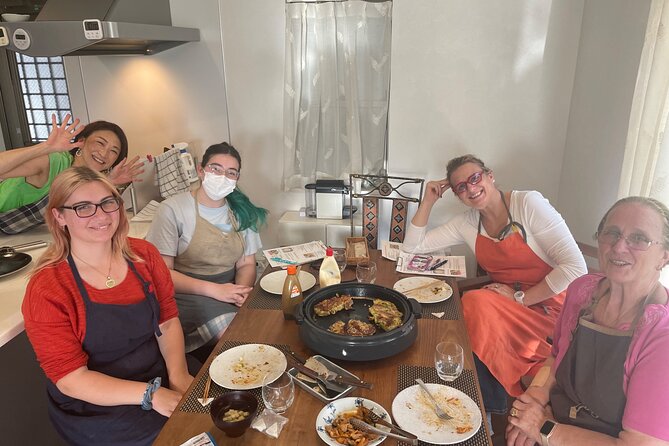
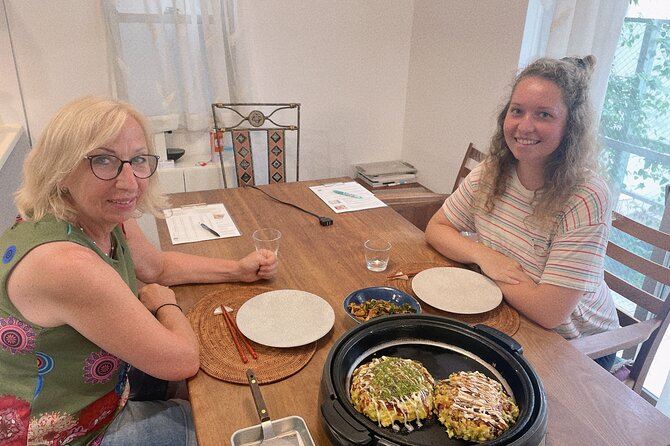
The best part of this Tokyo cooking class is the setting: you leave the tourist studio behind and cook in Eri’s home near Asagaya. In a group capped at five people, you make Osaka-style okonomiyaki, choose your fillings, and learn the tricks that keep it light and fluffy.
I like the practical ingredient advice, especially the substitutions that help you repeat the dish at home. I also like the personal touch, from Eri meeting you at Asagaya Station to the bonus recipe and everyday conversation that past participants have enjoyed.
The main drawback is the price: $150 per person for about two hours is a serious splurge for a meal you cook yourself. The small group and home setting make it more personal, but budget-minded visitors may find it costly.
In This Review
- Key points at a glance
- A home kitchen instead of a cooking school
- The first lesson: Japanese ingredients and fluffy batter
- Choosing fillings and learning the flip
- Stir-fried pork and kimchi while the okonomiyaki cooks
- What makes the small group worthwhile
- The personal touch from Eri
- Is $150 good value?
- Who should book this class?
- Timing, transport, and practical details
- My call: a personal cooking lesson with a high price tag
- FAQ
- How much does the okonomiyaki cooking class cost?
- How long does the class last?
- Where does the class begin?
- Where does the activity end?
- How many people can join?
- Are vegetarian and vegan options available?
- What food will I prepare?
- Can I cancel for a full refund?
- Is the class offered in English?
- Is the meeting point close to public transportation?
Key points at a glance
- Home cooking near Asagaya: You cook in Eri’s home rather than in a purpose-built studio.
- Small group of five: The limited size gives you room to ask questions and receive hands-on help.
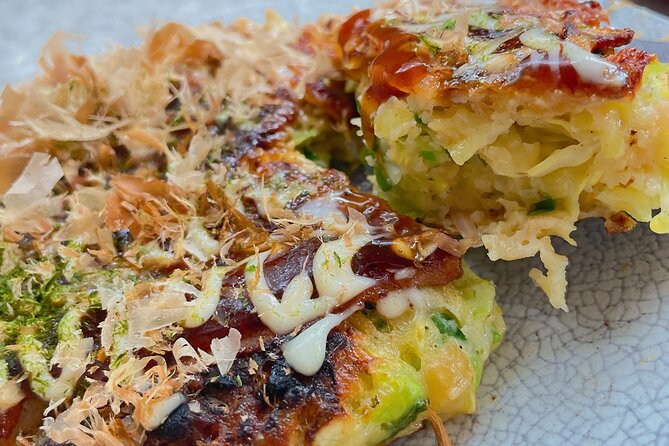
- Build your own okonomiyaki: Choose the ingredients and toppings you want, with Eri guiding the process.
- Useful substitutions: Learn how to replace Japanese ingredients when you cannot find them at home.
- A second dish during the wait: While the okonomiyaki cooks, you prepare stir-fried pork and kimchi.
- Dietary adjustments available: Vegetarian and vegan options can be arranged, along with other dietary needs.
A home kitchen instead of a cooking school
This experience begins at NewDaysJapan outside the ticket gates at JR Asagaya Station. The listed meeting point is on the second-floor concourse at Asagaya-Kita 3-chome, in Suginami City. From there, Eri takes you to her home for the lesson and returns you to the meeting point afterward.
That transfer matters. You are not simply entering a rented classroom with stainless-steel counters and a fixed script. You are being welcomed into a local home, which gives the class a more personal feel and opens the door to conversation about ordinary life in Tokyo.
The home setting can also make the class feel less polished than a commercial cooking studio. That is part of the tradeoff. You gain warmth and a lived-in setting, but you should not expect a large demonstration kitchen or a restaurant-style production.
The location near Asagaya is useful for visitors who want to see a part of Tokyo outside the main sightseeing districts. The experience itself does not include a neighborhood tour, so the value here is the home visit and the cooking, not a guided exploration of Suginami.
Other cooking classes in Tokyo

The first lesson: Japanese ingredients and fluffy batter
Eri begins by explaining key ingredients used in okonomiyaki, including dashi and sauce. This introduction is important because the dish looks simple, but its flavor depends on the balance of batter, seasoning, fillings, and toppings.
The central lesson is how to make the okonomiyaki fluffy. You learn several small techniques that affect the texture, rather than simply mixing everything together and hoping for the best. The class is designed to help you understand why the dish works, so you can repeat it after your trip.
I especially value the discussion of substitutions. Japanese cooking can be frustrating once you return home and discover that the exact dashi, sauce, or other ingredients are unavailable. Eri explains what you can use instead, which turns this from a one-time holiday activity into a recipe you have a fair chance of making again.
The precise substitutes depend on your home country and what you can find there. The useful point is that Eri addresses the problem directly. Tell her what ingredients you can obtain at home, and ask questions during the lesson.
Choosing fillings and learning the flip
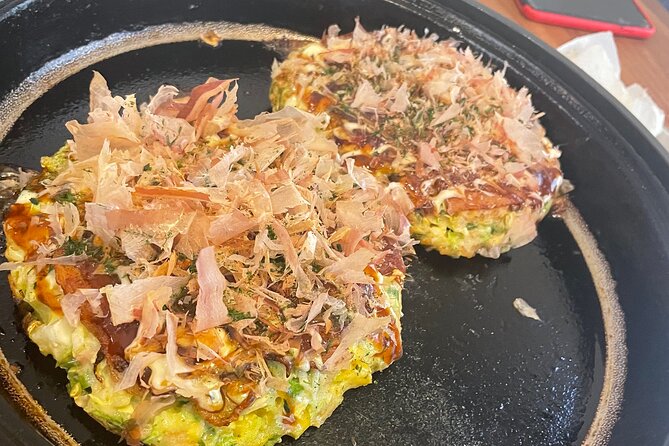
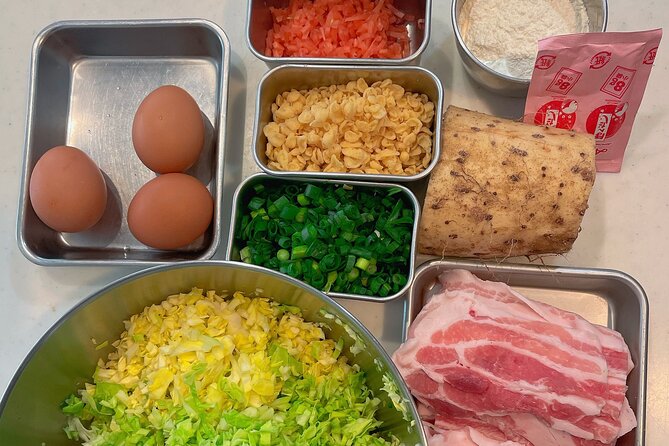
Okonomiyaki means you can cook it to your taste. The activity allows you to choose what goes inside, with Eri’s support as you build the mixture. That freedom is a major advantage for anyone who dislikes a particular ingredient or wants to try a vegetarian or vegan version.
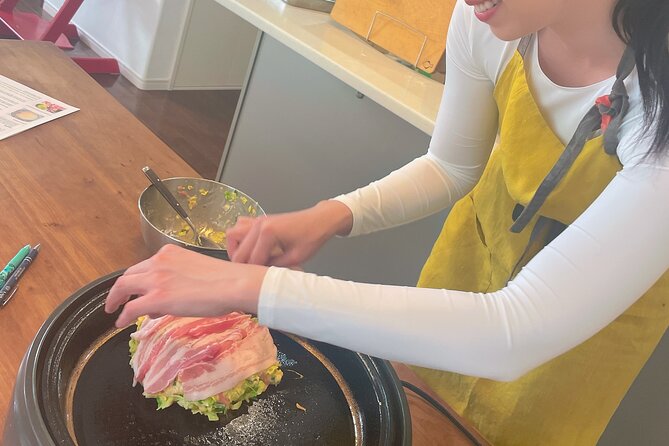
The hands-on stages are simple but satisfying. You layer the ingredients, wait for the cooking process to reach the right point, then flip the pancake. That flip is the moment when a little guidance helps. A poor flip can leave you with a broken pancake, while the right timing and movement keep it together.
You also add the finishing toppings after cooking. These details matter because okonomiyaki is not just a plain cabbage pancake. The sauce and toppings provide much of the familiar flavor and visual appeal.
Eri’s role is part teacher and part safety net. You do the work, but you are not left to guess at each stage. Her English is described as good enough for questions and instruction, so you can ask about ingredients, technique, or substitutions during the class.
Stir-fried pork and kimchi while the okonomiyaki cooks
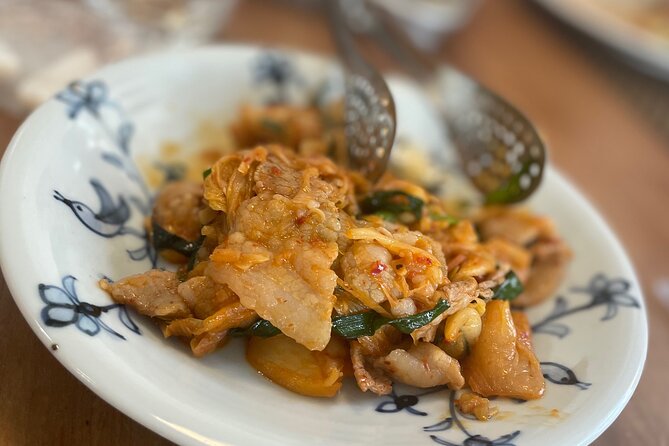
Waiting for the okonomiyaki gives the lesson a second cooking task. You prepare stir-fried pork and kimchi, described as a savory dish that many people enjoy.
This is a smart use of the cooking time. Instead of standing around while the pancake finishes, you make another dish and build a fuller meal. It also gives you a chance to see a different flavor profile from the main okonomiyaki.
The pork and kimchi dish may not suit every diet, so discuss your needs before booking or at the start of the class. Vegetarian and vegan adjustments are available, along with changes for other dietary restrictions, but the information does not specify the exact replacement ingredients. Ask Eri what can be prepared for your particular requirements.
Once the food is ready, you sit down and eat, beginning with Itadakimasu. This shared meal is an important part of the experience. You are not only practicing a recipe, you are also taking part in a familiar Japanese dining custom in a private home.
What makes the small group worthwhile
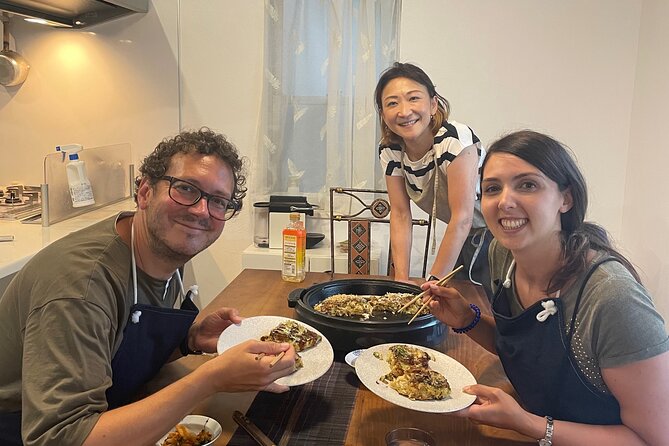
The class accepts a maximum of five people. That is small enough for direct help, and it matters most during the batter preparation and flipping stage. With only a few participants, you should have a better chance to ask about your own ingredients and cooking habits.
One past participant discovered that several techniques used at home were incorrect and received a bonus recipe as well. That is the kind of value a small, personal class can provide: you can explain what you normally do, then get advice aimed at your cooking rather than a general lecture.
The small size also suits families and pairs. A grandmother and grandchild took the class together, with the instructor described as patient and thoughtful. If you are planning a multigenerational activity, this has a gentler pace than a crowded food tour or fast kitchen workshop.
Still, a maximum of five does not guarantee a private class. You may share the experience with other people, and the level of personal attention can vary with the group. The price is high enough that you should choose this for the home interaction and instruction, not just for the food.
Other cooking classes in Tokyo



The personal touch from Eri
Eri’s strongest role is not only teaching the recipe. She welcomes questions about Japanese ingredients and enjoys talking with people from other countries. That makes the class a good fit if you want conversation and contact with a local host, not just a cooking demonstration.
One person was picked up at the station and returned there because the home was a little farther away. The meeting instructions list the station as the start and end point, so you should follow Eri’s directions carefully on the day of the class.
The experience can feel more like being invited into someone’s daily life than attending a formal attraction. That is a plus for visitors who value personal contact. It may be less suitable if you prefer a tightly timed, highly standardized class with a professional kitchen and a polished presentation.
Communication should be manageable in English. Eri describes her English as good enough for the class and encourages questions. If you have complex dietary needs or want detailed technical explanations, it is sensible to raise those points when booking.
Is $150 good value?
At $150 per person, this is not a cheap way to eat okonomiyaki. The session lasts about two hours, and you prepare the meal yourself rather than receiving a restaurant dinner. If your only goal is to taste the dish, visit an okonomiyaki restaurant for far less.
The price makes more sense if you place value on the setting and instruction. You receive a small-group lesson, a home visit, guidance on dashi and sauce, help with making a fluffy texture, ingredient substitutions, a second dish, and time to eat and talk with Eri.
You are also paying for a skill you can take home. The substitutions are particularly useful for cooks outside Japan, since they address the most common problem with foreign recipes: the ingredients disappear once you leave the country.
Group discounts are available, though the supplied details do not state the discount amount. Ask for the current group rate before booking. Since the class is limited to five people, book ahead if this is a priority. It is booked, on average, about seven days before the date.
Who should book this class?
I would choose this experience if you meet one or more of these descriptions:
- You want a small home-based activity rather than a large group tour.
- You enjoy cooking and want to learn a dish you can recreate abroad.
- You are curious about Japanese pantry items such as dashi and sauce.
- You want to speak with a local host in a relaxed setting.
- You need vegetarian, vegan, or other dietary adjustments.
- You are traveling with a family member and want a shared activity.
It is less appealing for a short-stay visitor who wants to pack in as many sights as possible. Two hours, plus the journey to and from the home, takes a meaningful part of a Tokyo day. It is also not the best choice if you dislike cooking, since the food is only one part of the experience.
The activity may work well for people who have already eaten okonomiyaki and want to understand how it is made. It also suits first-time tasters who want Eri’s guidance when selecting fillings and toppings.
Timing, transport, and practical details
The class lasts approximately two hours and begins and ends at the designated NewDaysJapan meeting point at JR Asagaya Station. The exact home transfer is part of the host’s arrangement, so read the meeting instructions carefully and arrive at the station location rather than going directly to an unknown address.
The activity is near public transportation, making it easier to reach than a home far from rail service. A mobile ticket is provided, and confirmation normally arrives when you book. If you book within nine hours of the start time, confirmation comes as soon as possible and depends on availability.
Service animals are allowed. The group limit is five people, and group discounts may be offered.
Cancellation is free up to 24 hours before the local start time for a full refund. Inside that 24-hour window, you cannot receive a refund, and changes are not accepted. That policy is worth noting because a home-based class has limited space and cannot easily replace a late cancellation.
My call: a personal cooking lesson with a high price tag
I would book this class for the home setting, the small group, and the chance to learn useful substitutions. Eri’s instruction covers more than assembling a pancake, and the extra pork and kimchi dish makes good use of the cooking time.
I would skip it if you only want a low-cost meal or a quick taste of okonomiyaki. At $150, the class needs to deliver personal contact and lasting cooking skills to feel worthwhile.
For the right person, this is a warm and practical Tokyo activity. You leave with a full meal, a better sense of Japanese ingredients, and a recipe you can try again at home. That is a better reason to book than simply adding another item to your sightseeing schedule.
FAQ
How much does the okonomiyaki cooking class cost?
The listed price is $150 per person. Group discounts are available, but the discount amount is not specified.
How long does the class last?
The activity lasts approximately two hours.
Where does the class begin?
The meeting point is NewDaysJapan outside the ticket gates at JR Asagaya Station, on the second-floor concourse in Asagaya-Kita, Suginami City, Tokyo.
Where does the activity end?
The class ends back at the same meeting point at JR Asagaya Station.
How many people can join?
The activity has a maximum of five participants.
Are vegetarian and vegan options available?
Yes. Adjustments can be made for vegetarian, vegan, and other dietary restrictions.
What food will I prepare?
You will make Osaka-style okonomiyaki, choosing fillings and toppings with Eri’s help. While it cooks, you also prepare stir-fried pork and kimchi.
Can I cancel for a full refund?
Yes. You can cancel at least 24 hours before the local start time for a full refund. Cancellations and changes made within 24 hours are not accepted for a refund.
Is the class offered in English?
Eri speaks enough English to teach the class and answer questions about cooking, ingredients, and substitutions.
Is the meeting point close to public transportation?
Yes. The activity is near public transportation and begins at JR Asagaya Station.
More Workshops & Classes in Tokyo



More Cooking Classes in Tokyo
More Cooking Classes in Tokyo
More tours in Tokyo we've reviewed









Cooking Classes, compared.
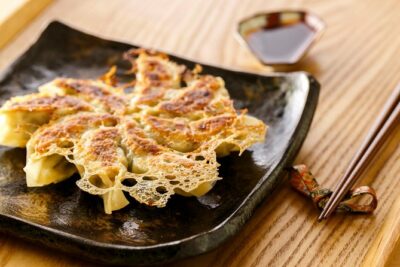 ★ 5.0Ramen & Gyoza Cooking Class in Tokyo with Local Supermarket VisitFrom $122
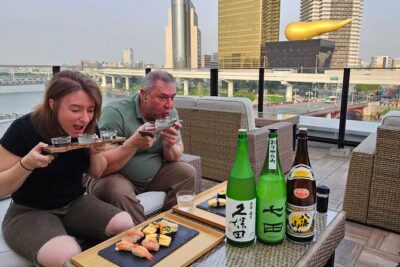 ★ 5.0Ramen and Sushi Cooking Class with Sake Pairing Set in TokyoFrom $79
 ★ 4.9Tokyo: Wagyu and 7 Japanese Dishes Cooking ClassFrom $673 hours
 ★ 5.0Tokyo Washoku 4-hour Cooking Class: From Market to TableFrom $79
 ★ 5.0Professional Ramen & Gyoza with Ramen Chef in a restaurant!From $159
 ★ 5.0Small-Group Wagyu Beef and 7 Japanese Dishes Tokyo Cooking ClassFrom $72