
Reviewed · COOKING CLASSES
Tokyo Washoku 4-hour Cooking Class: From Market to Table
Tokyo’s best cooking lesson may begin not at the stove, but in a supermarket. You’ll meet near Iriya Station, learn how to choose Japanese ingredients with a local guide, then walk to a cooking studio and turn those purchases into a full meal. It’s a practical look at everyday Japanese food, not just a staged demonstration.
I like the supermarket visit, where you can ask what unfamiliar vegetables, seasonings, and cuts of meat are for. I also like the hands-on format: you practice knife work, roll sushi, cook an omelet, and eat what you make. The main drawback is the strict start time. Arrive more than five minutes late without contacting the operator and you may lose the class and your payment.
In This Review
- Key points to know
- Why the supermarket comes first
- Walking from ingredients to the cooking studio
- Four dishes that make a full Japanese meal
- The guides are a major part of the experience
- Food, sake, and the best part of the class
- What the $79.59 price buys you
- Dietary requests and weather matter
- Who should book this cooking class?
- Should you book the Tokyo Washoku cooking class?
- FAQ
- Where does the cooking class begin?
- Where does the experience end?
- How long does the class last?
- What dishes will I prepare?
- Can vegetarians and vegans join?
- Can the class accommodate food allergies?
- What happens if I am late?
- Can I cancel for a full refund?
Key points to know
- The supermarket is part of the lesson: Learn how Japanese shoppers choose ingredients before cooking.
- Four classic dishes are on the menu: Prepare makisushi, miso soup, dashimaki tamago, and nasu dengaku.
- You do the work yourself: Expect cutting, rolling, seasoning, grilling, and other practical tasks.
- Guides shape the experience: April, Yuri, Alice, Mihori, Masai, Suzy, Taka, Minnie, and others have led classes with patient, friendly instruction.
- The meal can include drink pairings: Beer and sake tasting may accompany the food.
- The group stays small: The maximum is seven people, though other participants may join you.
Why the supermarket comes first
This four-hour class starts at 10 a.m. outside FamilyMart at 2-chōme-1-10 Shitaya, in Taito City. The meeting point is near Iriya Station and public transportation, but Tokyo station areas can be confusing, so I would arrive early and locate the convenience store before the start time.
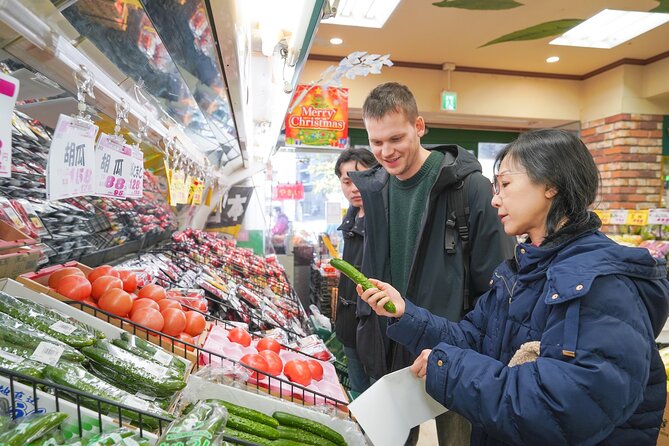
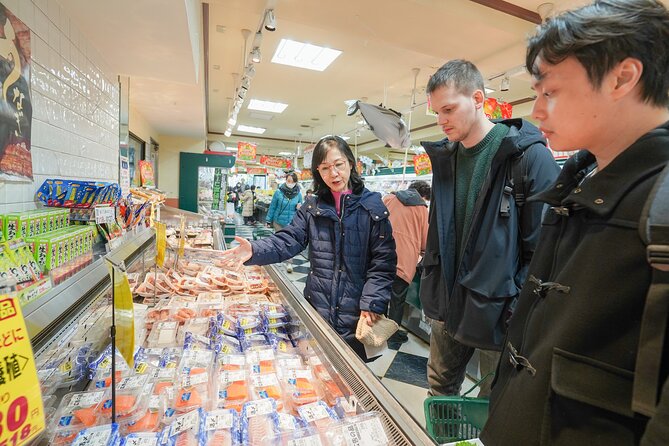
The first stop is a local supermarket. That detail gives the class much of its value. Instead of handing you a premeasured bowl of ingredients, the guide shows you how Japanese food shopping works. You can learn what to look for in vegetables, seafood, meat, seasonings, and other common products.
This is also the best time to ask questions. If you have wondered which miso to buy, how Japanese eggplant differs from varieties at home, or what ingredients belong in a proper home meal, the supermarket provides a useful setting. The guide can explain items as you see them on the shelf, where the information has a clear purpose.
The shopping visit also adds a slice of ordinary Tokyo life. You are not simply looking at famous sights. You are learning how a local meal begins, with choices made in a neighborhood store. That makes the experience useful for anyone who hopes to cook Japanese food after returning home.
The exact supermarket route and selection can vary, so you should think of this as guided ingredient shopping rather than a food market tour. If you want a large market, street-food stalls, or a long tasting session, this is not that kind of outing.
Other cooking classes in Tokyo
Walking from ingredients to the cooking studio
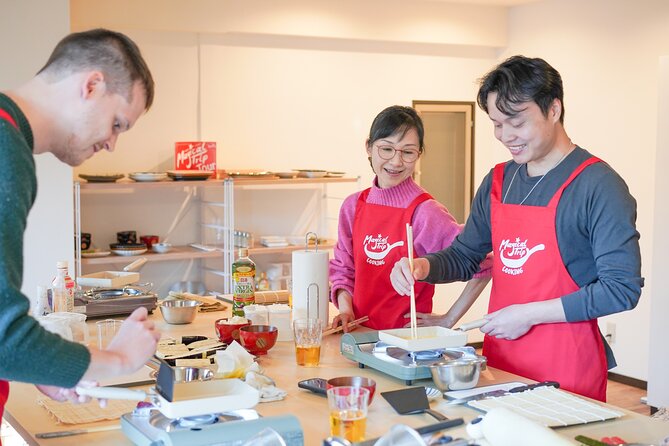
After shopping, you continue to a dedicated cooking studio. The class ends back at the cooking studio, and Kappabashi Dougu Street is nearby for an optional visit afterward on your own.
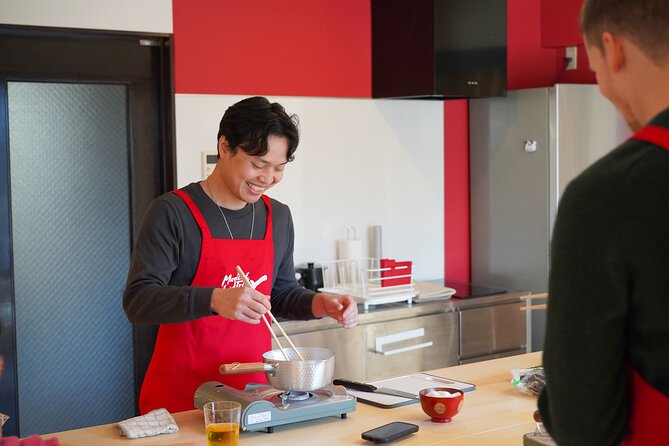
The studio is described as spacious and well set up, which matters in a cooking class. You need room to chop, season, shape, and cook without feeling packed around a single counter. It also makes the class friendlier for a small group, since you can watch the guide and still have space to work.
The class has a maximum of seven people, but it is not necessarily private. You may be cooking with people from other countries, which can add conversation and shared laughs. If you prefer a completely private lesson, check the booking conditions before paying.
The guide leads the group through each dish, but this is not a watch-only demonstration. You receive instruction on traditional Japanese knife and cooking methods, then get a chance to repeat the steps yourself. That hands-on approach helps you remember the process rather than just the finished plate.
Guides have included April, Yuri, Alice, Mihori, Masai, Suzy, Taka, Minnie, and others. Their teaching styles may differ, but the experience consistently centers on clear directions, patience, and conversation about Japanese food and daily life.
Four dishes that make a full Japanese meal
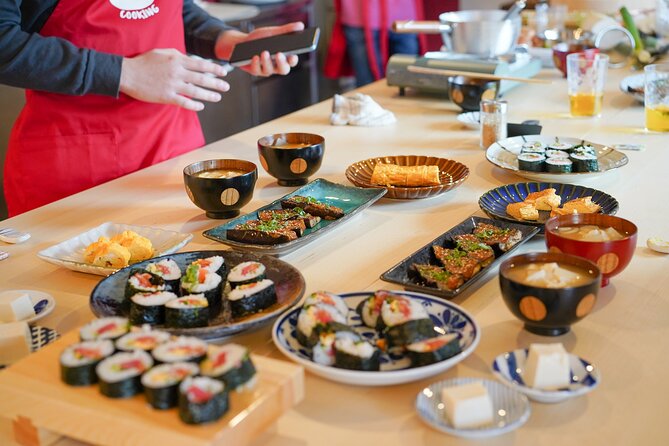
The class includes four familiar dishes: makisushi, miso soup, dashimaki tamago, and nasu dengaku. Together, they show several sides of Japanese home cooking.
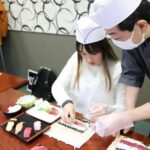
Makisushi gives you the most recognizable hands-on task. You learn how to prepare and roll sushi rather than simply eating pieces made by someone else. Rolling takes a little care, and the class gives you a chance to practice the shape and handling of the ingredients.
Miso soup looks simple, but it teaches an important Japanese cooking habit: building flavor with a few carefully chosen elements. You can ask about the balance of miso and stock, and the recipe lets you repeat the dish at home without needing restaurant equipment.
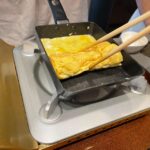
Dashimaki tamago, or rolled Japanese omelet, brings technique to the table. The egg is cooked and rolled in layers, so the process requires attention and a steady hand. It is one of the most useful dishes to learn because it works as part of a meal, in a lunch box, or as a simple side.
Nasu dengaku uses grilled eggplant with a savory miso topping. It shows how a modest vegetable can become a central part of a Japanese meal through seasoning and cooking method. If you are curious about Japanese vegetables, this is a practical dish to take home in your cooking notes.
The class description also refers to traditional foods and homestyle cooking skills, so the emphasis is on food you can make again. You are not being trained for professional restaurant work. You are learning a set of approachable recipes and methods for your own kitchen.
If you cannot eat eggs, your selection drops from four dishes to three. That is worth considering before booking, especially if the rolled omelet is one of the main reasons you want to attend.
The guides are a major part of the experience
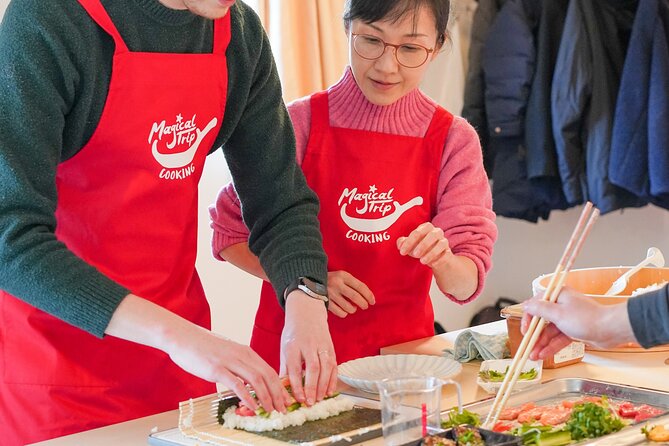
A cooking class can succeed or fail on the teacher’s ability to explain small details without taking over. Here, the strongest part of the experience is the personal guidance.
April has been praised for encouraging people through each step and for adding beer and sake tasting to the lesson. Yuri is known for detailed instruction and sharing recipes so you can recreate the dishes at home. Alice has brought a cheerful manner and stories about Japanese life to the cooking table.
Mihori has guided both the supermarket visit and the cooking session, explaining ingredients and methods in a relaxed way. Masai has helped first-time visitors get a friendly introduction to Japan, while Suzy has been noted for patient instruction and strong English. Taka, Minnie, and Nigiri have also led classes praised for clear explanations and hands-on help.
The guide can answer questions during the class, so you should use that time. Ask about ingredient substitutions, knife handling, the role of miso, or how the recipes fit into a Japanese home meal. The more questions you bring, the more tailored the session can feel.
English ability and teaching style can vary from one guide to another, but the named instructors have received strong praise for communication and patience. The overall rating is 5 out of 5 from 253 ratings, with 100 percent recommending the experience. Those numbers do not remove the need to match your expectations, but they do point to a well-liked teaching format.
Food, sake, and the best part of the class
Once the cooking is done, you sit down and eat the meal together. This is more than a reward at the end. It lets you taste the effect of each technique while the steps are still fresh in your mind.
Beer and sake tasting may be part of the meal, with the chance to try different pairings. That adds a social element and gives you another way to think about Japanese food. Sake can taste quite different depending on the dish, and a guide can help explain the match in simple terms.
You should not assume that a specific number or brand of drinks will be available. The important point is that drink pairings are included as part of the experience described, not that this is a dedicated sake class. If alcohol is not suitable for you, ask the operator about your options before the class.
The meal has also worked well for families with teenagers. The combination of shopping, chopping, cooking, eating, and conversation keeps the four hours varied. It is a better choice for a family that likes to participate than for one that wants a quiet, formal meal.
Other shopping tours in Tokyo



What the $79.59 price buys you
At $79.59 per person, this is not the cheapest way to eat in Tokyo. You could buy prepared sushi, miso soup, and other dishes for much less. The value comes from the instruction, ingredients, studio, meal, and the chance to ask questions in a small group.
I consider the price fair if you want a skill-based activity rather than a single meal. You get several hours of contact with a local guide, a supermarket lesson, practical cooking time, recipes to take home, and food you prepare yourself. The recipes are especially important because they extend the value beyond your Tokyo visit.
The price makes less sense if you dislike cooking, have a very limited schedule, or mainly want a market tour. The class spends a large part of its time preparing food, so you should be ready to work. You may also be sharing the experience with up to six other people.
For a first day in Tokyo, the class can be a good introduction to Japanese food culture. It gives you context for ingredients you may see elsewhere during your trip. For a repeat visitor, it offers a different way to understand the city through its everyday meals.
Dietary requests and weather matter
Vegetarian and vegan participants are welcome, but you must tell the operator about dietary needs or allergies at least one day before the class. Same-day requests cannot be accommodated.
The operator cannot guarantee an allergy-free experience. The food is prepared in kitchens that do not belong to MagicalTrip, and substitutions may not always be possible. The team says it will make efforts to compensate at other parts of the meal, but you should use caution if you have a serious allergy.
The class also depends on good weather. Tokyo can be very hot in summer, with listed highs reaching 40°C, and cold in winter, with lows as low as minus 5°C. The supermarket visit and walk to the studio mean you should dress for the season. Comfortable shoes and a weather-appropriate layer are sensible choices.
The strict timing deserves special attention. The class starts at 10 a.m., and the group will leave on time. If you are more than five minutes late without contacting the operator, it counts as a cancellation, with no refund or rescheduling.
You can change the date or time free of charge up to 24 hours before the start. Cancellation at least 24 hours ahead qualifies for a full refund. Changes or cancellations inside that window are not accepted, except that a weather cancellation offers a new date or full refund.
Who should book this cooking class?
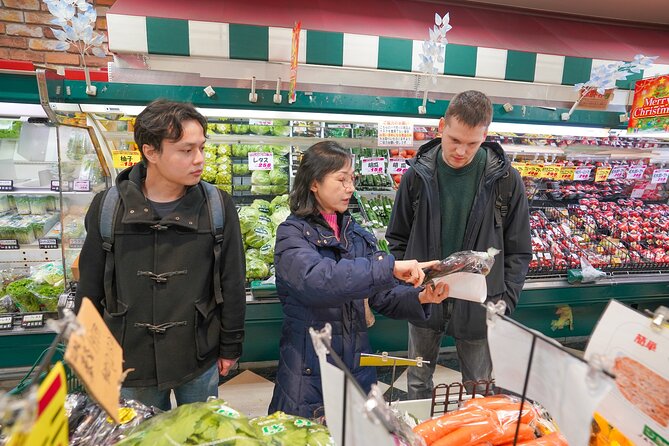
I would choose this experience if you want to understand Japanese food through action. It suits curious eaters, home cooks, families with older children or teenagers, and anyone who likes meeting people while learning a useful skill.
It is also a good fit if you want a guide who can explain cultural details in plain language. The supermarket visit gives you a chance to ask about ordinary Japanese ingredients, while the studio turns those explanations into a meal.
I would think twice if you need a fully private activity, have serious food allergies, or cannot arrive early. The egg-free menu is smaller, and dietary substitutions are not guaranteed. The activity is also less suitable if your main goal is a restaurant meal or a broad tour of Tokyo’s food districts.
After class, you can continue to Kappabashi Dougu Street on your own. That makes a useful add-on for anyone interested in Japanese kitchen tools, though it is not part of the guided class.
Should you book the Tokyo Washoku cooking class?
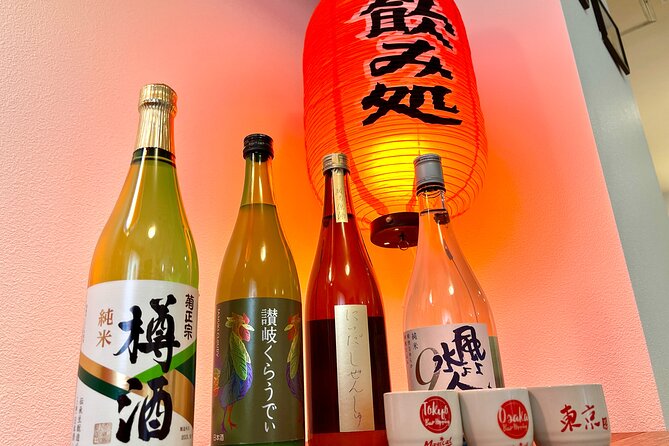
Book it if you want more than a meal. The strongest features are the supermarket lesson, the hands-on practice, the small maximum group size, and the recipes you can use at home. Guides such as April, Yuri, Alice, and Mihori have helped make the experience warm, clear, and personal.
At $79.59, you are paying for instruction and cultural context as much as food. Arrive early, report dietary needs in advance, and expect to cook with other participants. If those conditions suit you, this is a practical and enjoyable way to spend a morning in Tokyo.
FAQ
Where does the cooking class begin?
It begins at 10 a.m. at FamilyMart, 2-chōme-1-10 Shitaya, Taito City, Tokyo 110-0004, Japan, near Iriya Station.
Where does the experience end?
The activity ends back at the cooking studio, which is also the listed end point. You may visit Kappabashi Dougu Street afterward on your own.
How long does the class last?
The experience lasts approximately four hours.
What dishes will I prepare?
You will prepare makisushi, miso soup, dashimaki tamago, and nasu dengaku. The class teaches the dishes from scratch.
Can vegetarians and vegans join?
Yes. Vegetarian and vegan participants are welcome if they provide their requests at least one day before the class.
Can the class accommodate food allergies?
The operator cannot guarantee an allergy-free experience. You should report allergies at least one day ahead, but substitutions may not always be possible.
What happens if I am late?
The class starts on time. If you are more than five minutes late without contacting the operator, it is treated as a cancellation, and you will not receive a refund or reschedule the class.
Can I cancel for a full refund?
Yes, if you cancel at least 24 hours before the start time. Cancellations made less than 24 hours before the class are not refundable.
More Markets in Tokyo
More Shopping Tours in Tokyo
More Cooking Classes in Tokyo


More tours in Tokyo we've reviewed








Cooking Classes, compared.
 ★ 5.0Ramen & Gyoza Cooking Class in Tokyo with Local Supermarket VisitFrom $122
 ★ 5.0Ramen and Sushi Cooking Class with Sake Pairing Set in TokyoFrom $79
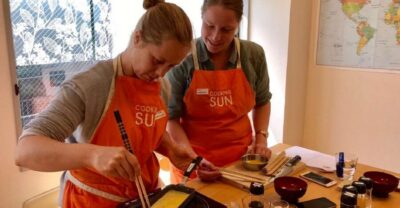 ★ 4.9Tokyo: Wagyu and 7 Japanese Dishes Cooking ClassFrom $673 hours
 ★ 5.0Professional Ramen & Gyoza with Ramen Chef in a restaurant!From $159
 ★ 5.0Small-Group Wagyu Beef and 7 Japanese Dishes Tokyo Cooking ClassFrom $72
 ★ 5.0Tokyo Sushi Making Experience & Japanese Cooking ClassFrom $59