
Reviewed · SAKE TASTING
Sake Omakase in Tokyo: Guided Tasting by Certified Sommeliers
The clever part of this Tokyo experience is that it treats sake as more than a drink. Over about two hours, you taste seven Japan-only selections through four themed courses, with the same sake changing as it is warmed, paired with food, or poured into a different vessel. The tasting becomes a lesson you can actually taste.
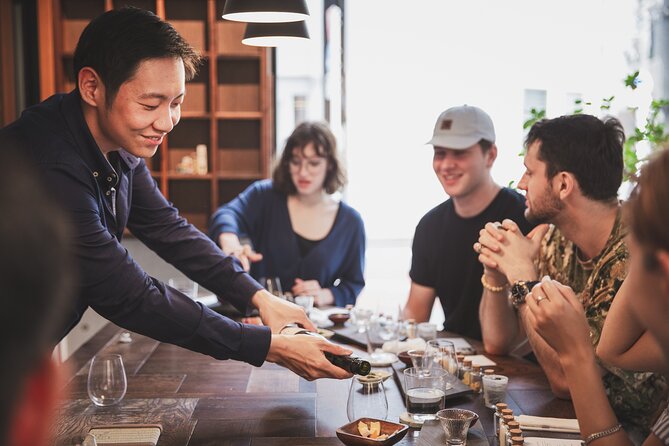
I like the small six-person format, which gives you room to ask plain questions without feeling lost in a large tour group. I also like the English-speaking hosts, including Eric, Aaron, Frank, and Phillip, who explain brewing, styles, and food pairings in a relaxed way rather than turning the session into a technical lecture.
The main consideration is the amount of alcohol. Refills are included, so pace yourself and eat the small bites as they arrive. This is not a good choice if you have an alcohol allergy, and it is best treated as your main evening activity rather than a quick pre-dinner sample.
In This Review
- Key points to know before booking
- A sake lesson built around tasting, not memorizing
- Arriving at Linden House in Kanda Ogawamachi
- Course one: comparing rice and sake character
- Course two: five temperatures from one drink
- Course three: herbs, spices, and a change in direction
- Course four: the vessel changes the experience
- What the sommeliers add to the two hours
- Seven pours and small plates: judging the value
- Who will get the most from this tasting
- Timing, cancellation, and sensible planning
- Should you book the Sake Omakase in Tokyo?
- FAQ
- How long does the sake tasting last?
- Where does the tasting start?
- Where does the activity finish?
- How many people can join?
- How many sake varieties are included?
- Are refills included?
- What food is served?
- What tasting themes are included?
- Is the tasting offered in English?
- Is transportation included?
- Can I cancel for a refund?
Key points to know before booking
- Seven Japan-only sakes: You taste seven hard-to-find-internationally selections, served in different ways over four courses.
- Four tasting themes: Rice comparison, five serving temperatures, spice and herb infusions, and drinking vessels show how much technique affects flavor.
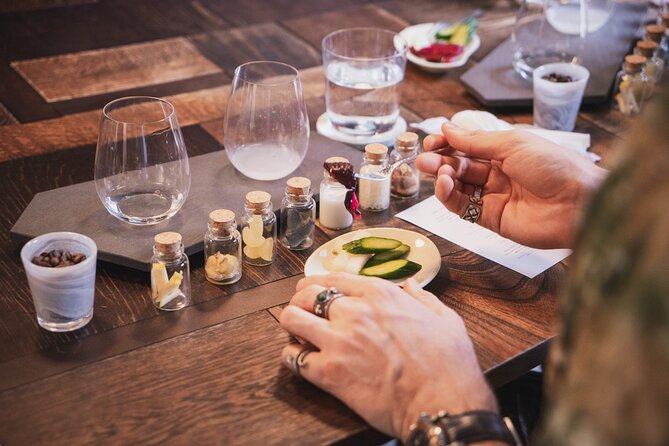
- Small food pairings: Pickles, cheese, cured meats, and dessert help you understand why certain sake styles work with particular foods.
- Six-person maximum: The limited group size makes it easier to ask about your favorite style and get useful advice.
- Central Tokyo meeting point: The experience starts and finishes at Linden House, 1-chōme-9-9 Kanda Ogawamachi, Chiyoda City.
- Free-flow pours: Unlimited refills are included, but this makes a sensible pace and a proper meal beforehand especially important.
A sake lesson built around tasting, not memorizing
Many first sake tastings make you work through a list of labels and brewing terms. This one takes a more useful route. You taste, compare, and then talk about what changed.
That matters because sake can be hard to understand from a single glass. One bottle may taste dry and clean when chilled, softer when warmed, or more aromatic in one cup than another. By showing these changes directly, the session helps you work out what you like instead of simply telling you what you should like.
The four-course structure also gives the two hours a clear rhythm. You are not left with seven unrelated pours. Each course has a purpose, and each comes with small food bites designed to make the sake easier to read.
The hosts speak English, Japanese, and Chinese, according to the experience details. For English-speaking visitors, the native English-speaking sommeliers are a major practical advantage. You can ask about rice, brewing, sweetness, serving temperature, or restaurant pairings without worrying that a language gap will flatten the explanation.
Other guided tours in Tokyo

Arriving at Linden House in Kanda Ogawamachi
The meeting point is Linden House at 1-chōme-9-9 Kanda Ogawamachi in Chiyoda City. The location is near public transportation, but transportation to and from the tasting is not included, so you need to make your own way there.
The activity ends at the same place. That makes planning simple. You do not need to arrange a pickup or guess where the final course will leave you. It also means you can connect the tasting with other central Tokyo plans, as long as you allow enough time to arrive before the start.
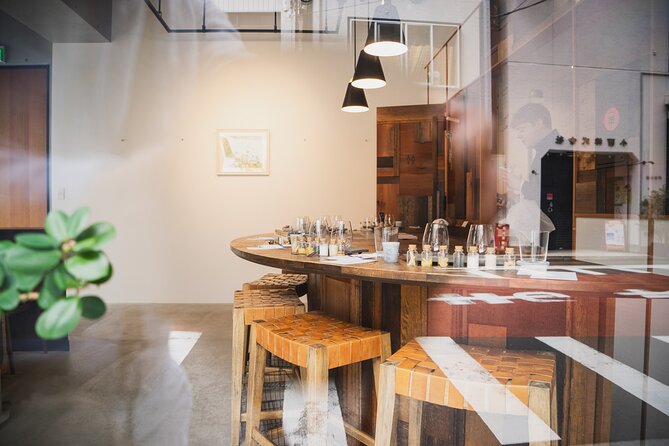
The room itself is part of the appeal. It is designed as a dedicated tasting space, centered on a large table made from reclaimed wood from a Showa-era building. This gives the session a more personal feel than a standing bar tasting. You sit together, watch the pours, and keep the conversation going across the table.
The atmosphere sounds polished, but not stiff. The small group limit of six is important here. With a larger group, a tasting built around questions and comparisons can become passive. At six people, you have a better chance to ask about the bottle in front of you, your own taste preferences, or a sake you saw elsewhere in Japan.
Course one: comparing rice and sake character
The first course focuses on rice comparison. This is a useful starting point because rice is not just a background ingredient in sake. Its variety and treatment can shape the drink’s aroma, texture, and finish.
You taste selected sakes side by side and begin to notice differences that are easy to miss when you drink one glass alone. One may feel light and crisp, another rounder or more fragrant. The point is not to remember every technical term. The point is to connect a flavor with a style and eventually recognize what you want to order.
The small bites served with this course may include items such as pickles, cheese, and cured meats. Those foods give you a simple test: does the sake sharpen the food, soften it, or compete with it?
This is one of the strongest parts of the experience for beginners. If you have tried sake only once, you get a guided introduction without needing prior knowledge. If you already enjoy sake, the side-by-side format can help explain why one bottle suits your palate better than another.
Course two: five temperatures from one drink
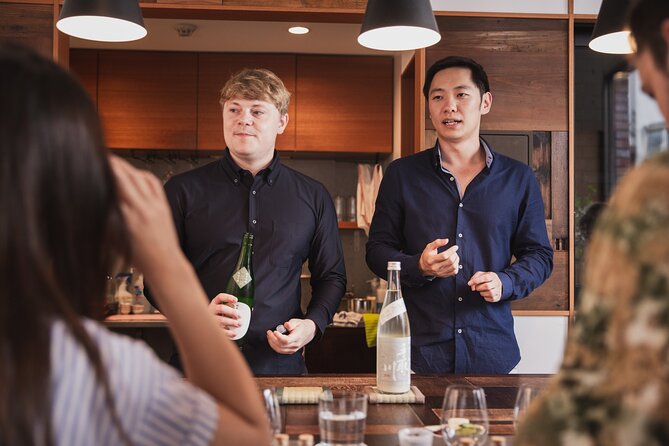
The temperature course is likely to be the most eye-opening part for many people. The experience includes sake served at five different temperatures, showing how warmth and chill can change aroma, weight, and balance.
You may find a sake that seems delicate when cold becomes fuller when warmed. Another might lose some of its appeal as the temperature rises. The lesson is direct: serving advice is not decoration. It can change the whole impression of the drink.
This is also practical information for the rest of your Japan trip. When you order sake at an izakaya or restaurant, you will have a better idea of why the staff recommends it chilled or warm. You may also feel more comfortable asking for a different temperature if the first pour is not quite right for you.
The five-temperature format is more than a novelty. It gives you a way to judge sake beyond the label. If you like softer, warmer drinks, you can say so. If you prefer bright and restrained flavors, the comparison makes that preference clearer.
Course three: herbs, spices, and a change in direction
The infusion course introduces spice and herb flavors. This part moves away from the idea that sake must be served in one traditional way. The additions show how familiar aromas can bring out different sides of the base drink.
You might find this course especially useful if you normally think sake is too plain, too sweet, or too hard to identify. Herbs and spices create recognizable reference points. They can make it easier to talk about what you are tasting and what you would pair with it.
The food bites continue to matter here. Pickles, cured meats, cheese, and other small portions provide contrast without making the session feel like a full meal. The food is there to support the tasting, not overwhelm it.
Do not expect a large dinner. The included snacks are small bites, with dessert also provided during the progression. I would eat something before arriving, particularly because free-flow alcohol is included. A light meal beforehand lets you focus on the flavors and the conversation.

Course four: the vessel changes the experience
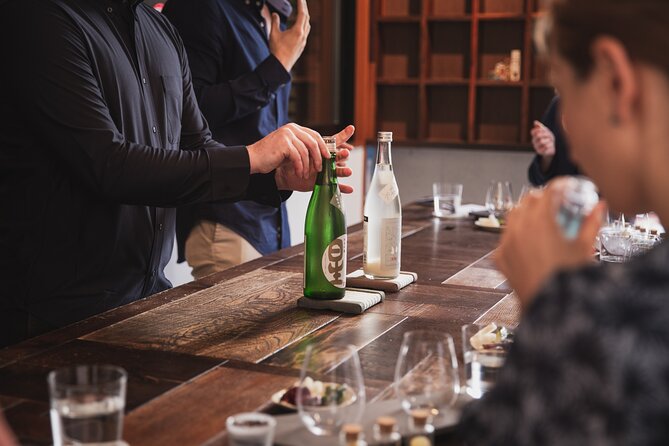
The final theme looks at drinking vessels. This may sound like a small detail, but the shape and material of a cup can affect aroma, temperature, and the way sake reaches your mouth.
Trying the same or similar sake in different vessels gives you another useful comparison. You begin to see why a tasting room uses more than one type of glass or cup, and why a recommendation about serving style can be as important as the bottle itself.
This course also ties the earlier lessons together. Rice, temperature, food, infusion, and vessel are separate ideas, but they all affect your experience of the same drink. By the end, you have a practical vocabulary for choosing sake, not just a collection of names to forget.
Dessert appears among the bites provided during the tasting. A sweet final pairing can help you notice how sake behaves with a different kind of food, and it gives the session a definite finish.
What the sommeliers add to the two hours
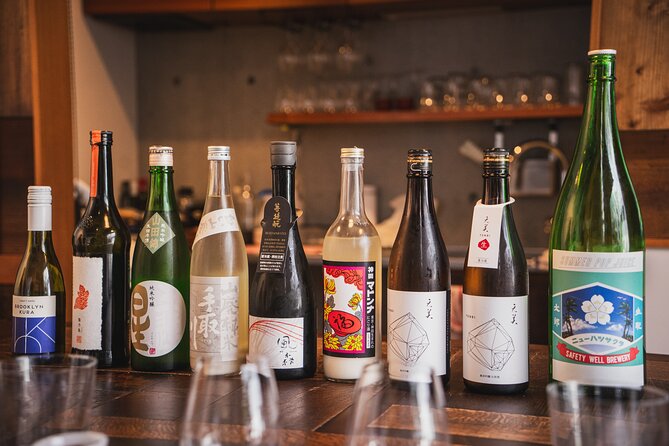
The hosts are the main reason this format works. The experience is led by certified sommeliers with more than 2,500 tasting sessions behind them, and the strongest praise centers on their explanations and easy manner.
Eric is specifically described as thorough, relaxed, and clear while leading a seven-sake tasting. Aaron and Frank are praised for explaining different styles and helping the group feel at ease. Phillip and Aaron are also noted for covering sake-making and types of sake while moving through several tasting stages.
The names may vary by session, so you should not book on the assumption that one particular guide will lead your date. The useful point is the teaching style: expect hosts who can answer questions and connect the tasting to your preferences.
This is where I see real value for people who already drink sake but cannot explain why they like certain bottles. You can ask the question that matters most: what should I look for next? The answer will be more helpful after you have compared rice, temperature, food, and vessels in a single sitting.
The session is also designed for people who are completely new to sake. You do not need to arrive with a working knowledge of brewing terms. The format gives you enough structure to follow along, while the limited group size leaves room for basic questions.
Seven pours and small plates: judging the value
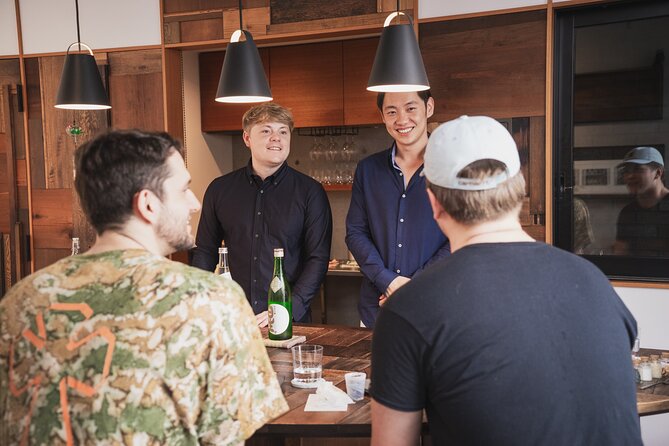
The listed price is $79.52 per person. That is not a casual bar stop, but it includes seven sake varieties, unlimited refills, four themed courses, small food pairings, and roughly two hours with certified sommeliers.
The value depends on how you would otherwise explore sake in Tokyo. If you ordered seven different premium pours on your own, you would pay for the drinks, but you would not necessarily receive a clear comparison or a guide who can explain how each one differs. You would also need to make your own choices from labels that can be difficult to interpret.
Here, you are paying for access, structure, and guidance as much as for the alcohol. The Japan-only selection is another part of the price. These are not presented as ordinary convenience-store or supermarket bottles. They are chosen to show a range of styles and serving methods.
Still, the experience is not ideal for everyone. If you want a full Japanese meal, this will not replace dinner. The food consists of small bites such as pickles, cheeses, cured meats, and dessert. I would treat the snacks as tasting aids, not as a substantial meal.
The included refills can also be a mixed blessing. They add value for someone who wants to compare and revisit a favorite pour, but they can make the session alcohol-heavy. Eat before you arrive, drink water when possible, and do not feel obliged to accept every refill.
Who will get the most from this tasting
I would recommend this experience most strongly to four types of people:
- First-time sake drinkers: The guided comparisons make an unfamiliar drink easier to understand.
- Sake fans who want better vocabulary: You can connect personal preferences with rice, temperature, food, and vessel choices.
- Food-focused visitors: The pairings show how sake works with savory bites and dessert.
- Small-group experience seekers: The six-person limit keeps the session personal and conversational.
It may be less suitable if you are looking for a quick stop, a large dinner, or a nightlife-style party. The tone is friendly and fun, but the heart of the activity is learning through tasting.
Most people can participate, and the experience is near public transportation. It is not recommended for anyone with an alcohol allergy. Since transportation and hotel pickup are not included, plan your route to Kanda Ogawamachi in advance.
Timing, cancellation, and sensible planning
The activity lasts about two hours and begins and ends at Linden House. A mobile ticket is provided, and booking confirmation arrives at the time of booking.
Free cancellation is available if you cancel at least 24 hours before the local start time. Cancellations or changes made inside that window are not refunded or accepted. The session also requires a minimum number of participants, so if the provider cancels because that number is not reached, you are offered another date or experience, or a full refund.
I would schedule this when you can remain unhurried afterward. Since the tasting includes free-flow sake, it is not the best appointment to squeeze between several distant Tokyo attractions. Give yourself time to arrive, enjoy the four courses, and make a safe plan for the rest of the evening.
Should you book the Sake Omakase in Tokyo?
Book it if you want to understand your own sake preferences, not merely collect seven samples. The strongest features are the six-person setting, the English-speaking sommelier guidance, the Japan-only bottles, and the clever comparisons across temperature, food, infusions, rice, and vessels.
I would be especially comfortable recommending it to a first-time sake drinker. You get a friendly introduction without being talked down to, and the pairings make the lesson easier to remember. Experienced drinkers can also get value from the serving experiments and the chance to ask what styles to seek out next.
Skip it if alcohol is a concern, if you need a full meal, or if you prefer to explore bars at your own pace. For everyone else, $79.52 is a fair price for a focused two-hour lesson with seven pours, food, and expert attention in central Tokyo.
FAQ
How long does the sake tasting last?
The experience lasts approximately two hours.
Where does the tasting start?
It starts at Linden House, 1-chōme-9-9 Kanda Ogawamachi, Chiyoda City, Tokyo 101-0052, Japan.
Where does the activity finish?
The activity ends back at the meeting point at Linden House.
How many people can join?
The maximum group size is six travelers.
How many sake varieties are included?
Seven varieties of Japan-only sake are included.
Are refills included?
Yes. The seven selected sakes are served free-flow, with unlimited refills during the four-course tasting.
What food is served?
Small bites are served with each course. The included foods can include pickles, cheeses, cured meats, and dessert.
What tasting themes are included?
The experience covers rice comparison, sake served at five different temperatures, spice and herb infusions, and the effect of drinking vessels on taste.
Is the tasting offered in English?
Yes. The sommeliers guide the session in native English, and guidance is also available in Japanese and Chinese.
Is transportation included?
No. Transportation to and from the activity, as well as hotel pickup and drop-off, is not included.
Can I cancel for a refund?
Yes, if you cancel at least 24 hours before the experience start time. Cancellations made less than 24 hours in advance are not refunded.
More Guided Tours in Tokyo
More tours in Tokyo we've reviewed




Sake Tasting, compared.
 ★ 5.0Ramen and Sushi Cooking Class with Sake Pairing Set in TokyoFrom $79
 ★ 5.0Sake Tasting Masterclass in Shinjuku (8+ Varieties with a Pro)From $72
 ★ 5.0Tasting All Types of Sake with SommelierFrom $62
 ★ 5.0Wagyu & Sake Pairing in Shinjuku – Steak, Shabu-Shabu & MoreFrom $148
 ★ 5.0Tokyo Wagyu & Sake Pairing Tasting Experience with Local FlavorsFrom $151
 ★ 4.9Tsukiji: Outer Market Walking Tour & Sake Tasting ExperienceFrom $703 hours