
Reviewed · DINING EXPERIENCES
Professional Ramen & Gyoza with Ramen Chef in a restaurant!
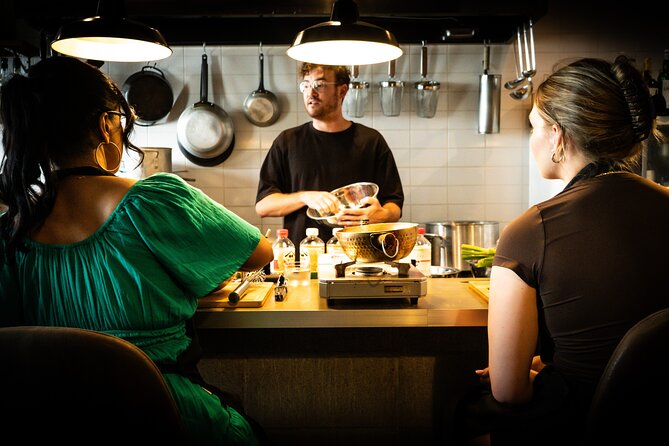
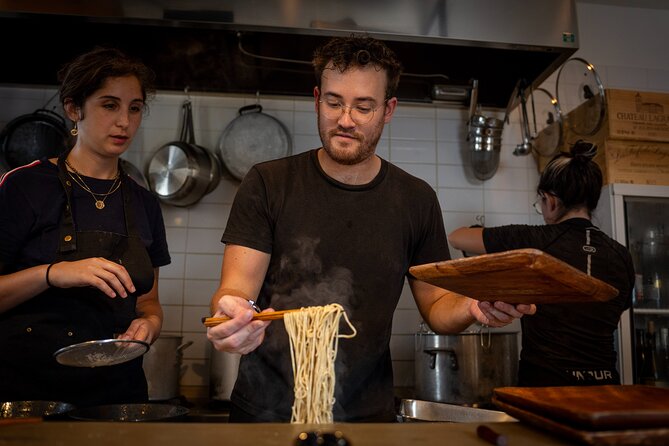
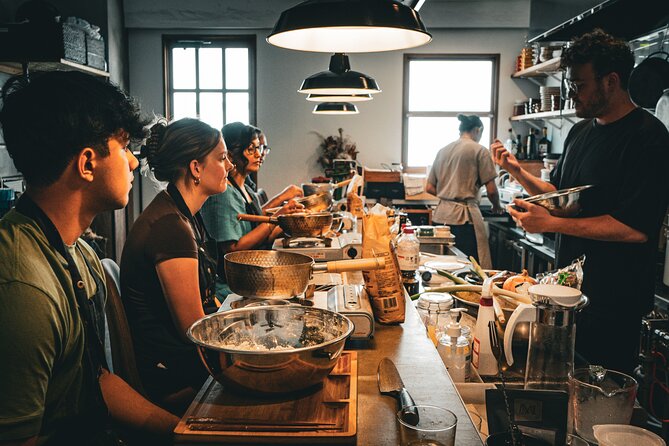
Making ramen from scratch is the heart of this Tokyo class, and you do far more than stir a pot. At Baba Ramen in Meguro, you work in a real restaurant kitchen, use professional equipment, roll fresh noodles, prepare gyoza, and learn how the parts of a bowl come together. The class is genuinely hands-on, not a quick demonstration followed by lunch.
I like the small maximum of six people, which gives the chefs room to correct your technique. I also like the practical follow-up: you receive an e-book with the recipes, so the class can continue in your own kitchen. The main consideration is price. At $159.18 per person, this is a costly meal, but it makes more sense if you want serious instruction, a generous amount of food, and a skill you can take home.
In This Review
- Key points to know before booking
- A real restaurant kitchen in Meguro
- What happens during the four-hour class
- Why the small group makes a difference
- The food: noodles, broth, and gyoza
- Dietary needs and advance notice
- What you take home besides a full stomach
- Is $159.18 a fair price?
- Who should book this experience?
- Cancellation and booking details
- The final call
- FAQ
- Where does the ramen and gyoza class take place?
- What time does the experience begin?
- How long does the cooking class last?
- Where does the activity end?
- How many people can join the class?
- Is the class taught in English?
- Can vegetarian or vegan participants join?
- Can the class accommodate gluten-free or pork-free diets?
- What is the cancellation policy?
Key points to know before booking
- You make the noodles from scratch, rather than simply choosing toppings for a prepared bowl.
- The class takes place in a working restaurant, with kitchen-grade equipment and hot pans, oils, and other active cooking tasks.
- Gyoza is part of the meal, giving you a second Japanese cooking skill beyond ramen.
- The group is capped at six people, allowing direct help from the bilingual English and Japanese chefs.
- Two broth options are available, with vegetarian, vegan, gluten-free, and pork-free adaptations possible if requested in advance.
- You eat what you make and receive recipes afterward, making this more useful than a one-time food tasting.
A real restaurant kitchen in Meguro
Baba Ramen Cooking Meguro is at 3-chome-7-32 Shimomeguro in Meguro City. The class begins at 9:00 a.m. and ends at the same location, with the full experience lasting about four hours.
That setting matters. Many cooking classes happen in a private home or a dedicated teaching studio. Here, you work in a restaurant space that uses professional equipment. The atmosphere is less like a polished tourist demonstration and more like a compact kitchen where you are expected to take part.
You should be ready to work. The class includes hot pans and oils, rolling out noodles, and handling ingredients at several stages. One family described breaking down chicken bones as part of the work, though the exact tasks can vary. This is not the best pick if you want a relaxed morning of watching someone else cook.
The restaurant setting also helps explain the price. You are paying for instruction, ingredients, equipment, a full meal, and a small group, not just a bowl of ramen. At the end, the restaurant reportedly becomes an Italian spot at night, which gives the space a slightly unusual second life. It is a small working food business rather than a purpose-built attraction.
Other cooking classes in Tokyo
What happens during the four-hour class
The class builds ramen in stages. You start with the basic components and work toward the finished bowl, with explanations of the process, ramen varieties, cultural background, and dining etiquette along the way.
The standout task is making the noodles. Fresh noodles give you a clear sense of how much texture and flavor depend on the dough, not only on the soup. You work the dough and roll it into noodles, then see how the finished strands behave in the broth.
You also prepare gyoza. This adds variety to the morning and gives you another chance to practice shaping and cooking a Japanese staple. The class is designed so that everyone takes part in most stages, rather than assigning one person to make noodles while everyone else waits.
The chefs also explain the layered structure of ramen. One detailed account described learning to make all five layers from fresh ingredients, including the noodles. You may also hear time-saving methods that shorten the process at home, with some tradeoffs in exchange for convenience. That is useful advice because restaurant-quality ramen can demand a great deal of time and effort.
At the end, you sit down to eat the ramen and gyoza you helped prepare. Expect a substantial meal. Several accounts describe eating until they were very full, so you should not plan a large lunch immediately afterward.
Why the small group makes a difference
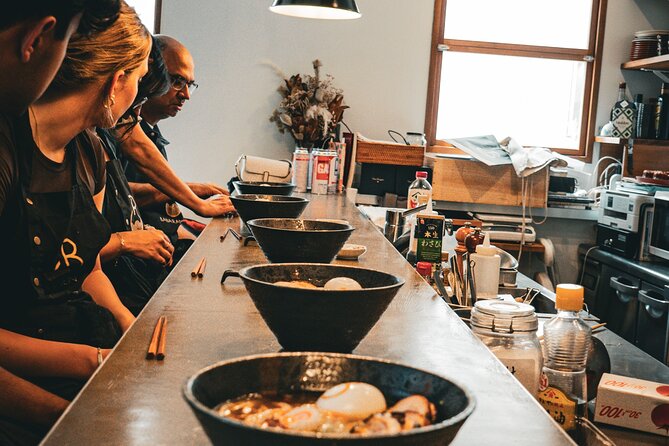
The maximum group size is six people. That is one of the strongest practical features of the experience.
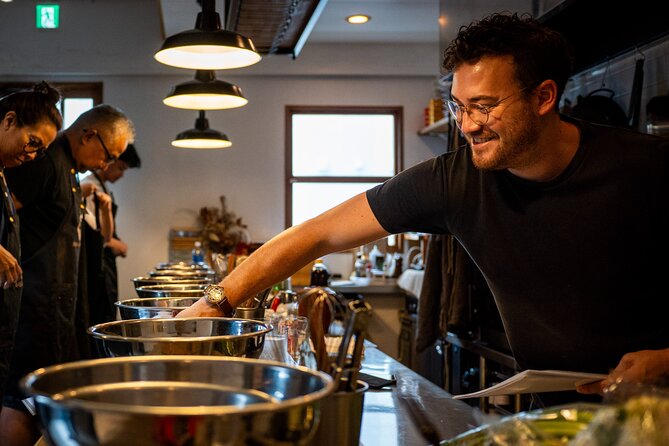
Ramen has many small technical steps. Dough texture, noodle thickness, folding technique, pan heat, and timing all affect the result. In a large class, you might only get a turn at one station. Here, the format is meant to keep you involved and give the chefs time to watch what you are doing.
The teaching team is bilingual in English and Japanese. Andrew is named as a lead figure, and Eric, Jae, and Leo are also identified among the friendly instructors. You should still confirm the day’s exact teaching lineup if a particular chef matters to you, but the class is set up for English-speaking visitors.
The tone is professional without being stiff. The chefs explain the work, keep the group moving, and make conversation while you cook. That balance is important. A class can be technically strong but tiring if the instructors make you feel rushed or awkward. Here, the teaching style is presented as warm, active, and patient.
One small point deserves attention: the supplied information gives a maximum of six, while one account refers to seven people. Group size can occasionally vary by booking or reporting error, so ask the operator if a six-person limit is essential to your decision.
The food: noodles, broth, and gyoza
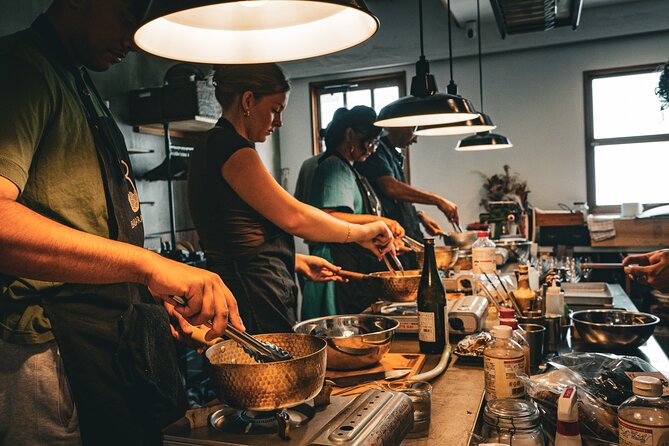
The class focuses on authentic, restaurant-style ramen. You choose between two broth options, which gives you some control over the final bowl without turning the morning into a long menu selection.
The broth is only one part of the finished dish. You learn how noodles, soup, seasoning, and other components work together. The class also covers ramen varieties and the background behind the dish, so you leave with more than a recipe for one particular bowl.
Gyoza makes the meal feel complete. You learn its preparation as a separate skill, then eat it alongside the ramen. If you already cook ramen at home, the gyoza portion may be the most useful new element. If you are new to Japanese cooking, it gives you an easier recipe to repeat soon after returning home.
The finished food receives especially strong praise. The class is repeatedly described as delicious, with some people calling it the best ramen they ate in Japan. That is a personal judgment, not a guarantee, but it points to the value of cooking under a chef’s direction and eating the result immediately.
You should also expect a generous amount of food rather than a small tasting portion. That makes the price easier to justify, especially for people who see the class as both lunch and instruction.
Dietary needs and advance notice
Vegetarian, vegan, gluten-free, and pork-free options are available, subject to availability. You must place the request in your booking comments in advance.
Do not assume that a substitute can be arranged at the door. Ramen broth, noodles, dumpling wrappers, sauces, and cooking surfaces can involve ingredients that are not obvious. If you have allergies or strict dietary requirements, give clear details before the class and confirm that Baba Ramen can accommodate them.
One solo participant with several food allergies described strong communication from the team and said the alternate options did not feel like a burden. That is encouraging, but it does not replace advance confirmation. The more specific your needs, the earlier you should contact the provider.
Service animals are allowed. The class is near public transportation, though the supplied details do not name a particular station or give travel times. Use the exact Meguro address when planning your morning route.
Other cooking classes in Tokyo



What you take home besides a full stomach
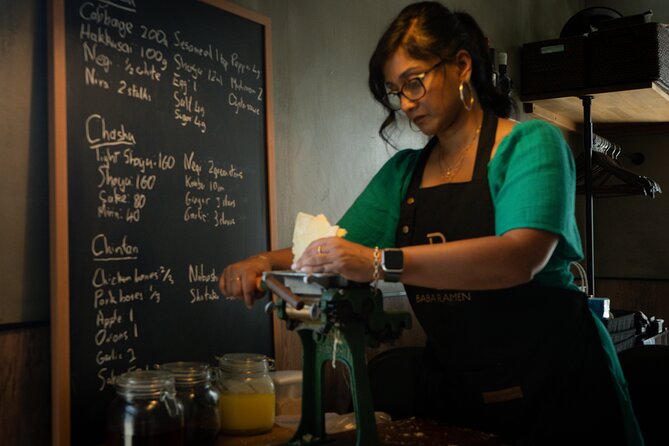
The recipe e-book is a major advantage. Ramen is a difficult dish to recreate from memory because the process contains several stages and many timing details. Written recipes give you a better chance of repeating the meal at home.
The class also teaches useful shortcuts. You learn where time can be saved and where shortcuts may affect the result. That kind of explanation is more practical than simply handing you a traditional recipe that requires a full restaurant schedule.
One person had already started making shoyu tare at home after the class. That is a good example of how the experience can lead to a manageable next step. You may not reproduce the full meal immediately, but you can begin with one component and build from there.
The recipes do not turn this into an inexpensive activity. They do make the $159.18 fee more defensible for people who want a lasting cooking lesson rather than a single meal in Tokyo.
Is $159.18 a fair price?
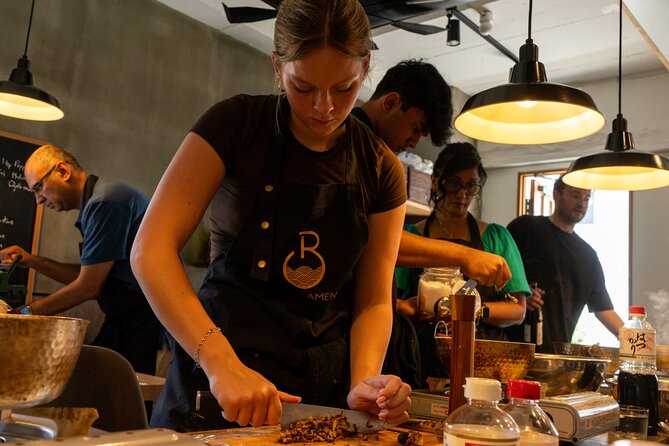
For a casual lunch, no. Tokyo offers excellent ramen at a fraction of this cost.
For a four-hour small-group cooking class in a restaurant, the value is stronger. The fee includes instruction from bilingual chefs, ingredients, ramen and gyoza, use of professional equipment, two broth choices, and recipes for home use. You also receive direct correction instead of following a large-group demonstration from the back of a room.
I would book it if you are enthusiastic about food, enjoy active classes, or regularly cook at home. I would hesitate if you are mainly looking for a cheap meal, have limited interest in cooking, or dislike standing around a hot kitchen.
Families can do well here. One family of five found the class suitable for their group, and another account says the staff accommodated a 1.5-year-old. Still, very young children may not be able to take part in every task because of hot pans, oils, and sharp equipment. Ask the provider about your child’s age and role before booking.
Who should book this experience?
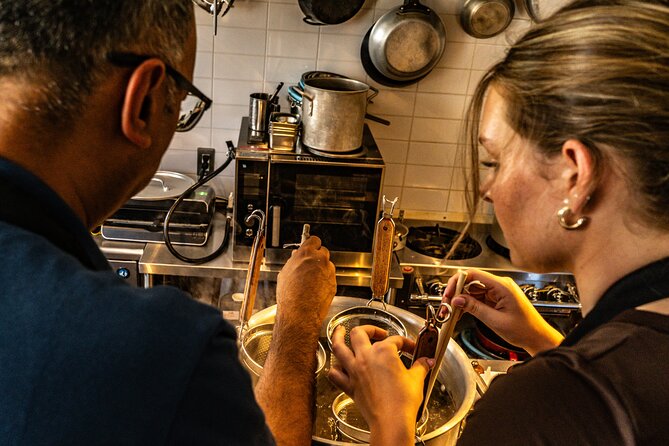
This class suits you best if you:
- Want to learn how ramen is actually built from separate components.
- Prefer making food to watching a chef demonstrate it.
- Enjoy small groups and direct instruction.
- Want a substantial meal during the activity.
- Plan to cook Japanese food at home afterward.
- Need English-language instruction in Tokyo.
- Like adding a food-focused activity to a sightseeing schedule.
It may not suit you if you want a short, passive tasting or a polished studio experience with little mess and no demanding kitchen work. The active format is the point, but it is also the main drawback for anyone seeking an easy morning.
I would also avoid scheduling a tight appointment immediately afterward. The stated duration is approximately four hours, and the class involves many stages. Give yourself a cushion before your next activity.
Cancellation and booking details
You receive confirmation when you book, and free cancellation is available up to 24 hours before the 9:00 a.m. start time for a full refund. Changes or cancellations made within 24 hours are not accepted for a refund.
The experience may be canceled if the minimum number of participants is not met or if poor weather affects operation. In those cases, you are offered another date or experience, or a full refund. The activity ends at Baba Ramen, where it begins.
The final call
I would book Baba Ramen if ramen is more than a food you order occasionally. The class gives you real kitchen work, a small group, bilingual teaching, gyoza, a full meal, and recipes you can use after Japan.
The price is high, and the work is real. That is exactly why it is a better choice for an enthusiastic cook than for someone simply hunting for lunch. Request dietary accommodations early, allow the full morning, and arrive ready to knead, roll, fold, cook, and eat.
FAQ
Where does the ramen and gyoza class take place?
It takes place at Baba Ramen Cooking Meguro, located at 3-chome-7-32 Shimomeguro, Meguro City, Tokyo 153-0064, Japan.
What time does the experience begin?
The class begins at 9:00 a.m. local time.
How long does the cooking class last?
The experience lasts approximately four hours.
Where does the activity end?
It ends back at the meeting point at Baba Ramen Cooking Meguro.
How many people can join the class?
The activity has a maximum of six travelers.
Is the class taught in English?
The local chefs are bilingual in English and Japanese, so English-language instruction is available.
Can vegetarian or vegan participants join?
Vegetarian and vegan options are available subject to availability. You should request them in the booking comments in advance.
Can the class accommodate gluten-free or pork-free diets?
Gluten-free and pork-free options are available subject to availability. Include your request when booking and provide advance notice.
What is the cancellation policy?
You can cancel at least 24 hours before the start time for a full refund. Cancellations or changes made less than 24 hours before the experience are not refunded or accepted.
More Dining Experiences in Tokyo

More Cooking Classes in Tokyo
More Cooking Classes in Tokyo
More tours in Tokyo we've reviewed











Dining Experiences, compared.
 ★ 5.0Tokyo Bar Hopping Tour in Shinjuku (All-You-Can-Drink + Dinner)From $106
 ★ 4.8Tokyo: Sumo Show and Dining ExperienceFrom $7990 minutes - 2 hours
 ★ 4.5Tokyo: Samurai Restaurant Show Ticket with 2 DrinksFrom $551h 30m
 ★ 4.6Sumida River: Japanese Traditional Yakatabune Dinner CruiseFrom $1032h 30m
 ★ 4.5Tokyo Bay Yakatabune Dinner/Day Cruise with Japan Show and DrinksFrom $65
 ★ 4.9Tokyo: Shinjuku Bar Hopping with All-You-Can-Drink & DinnerFrom $1083 hours