
Reviewed · KAMAKURA & ENOSHIMA DAY TRIPS
Historic Kamakura: Temples, Shrines and Street Food Private Walking Tour
Kamakura gives you a welcome change from Tokyo’s towers and traffic: quiet temple grounds, a major Shinto shrine, a cool bamboo grove, and a street-food lunch all fit into one day. I especially like the private format, which lets your guide adjust the pace for children, older parents, or anyone who wants more time at a favorite stop.
I also like that food and drink are part of the experience, rather than an afterthought. You can try local snacks along Komachi-dori and finish with green tea among the bamboo. The main consideration is the price, $220.22 per person, plus your own transportation costs, so this works best when you value personal guiding and a carefully planned day.
In This Review
- Key points at a glance
- Why this Kamakura day works so well
- Engaku-ji, temple buildings and tengu statues
- Tsurugaoka Hachimangu and Kamakura’s public heart
- Komachi-dori, where lunch becomes part of the tour
- Hokoku-ji, bamboo and a cup of green tea
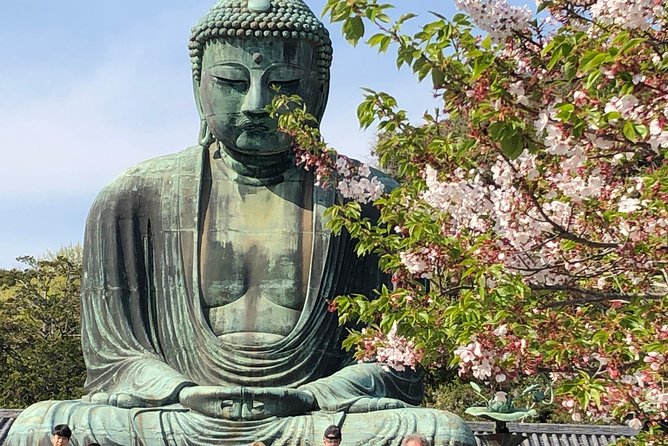
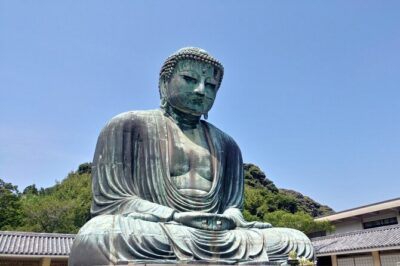
- The Great Buddha and the final landmark
- What the $220.22 price really covers
- Pace, walking, and the practical details
- Who should choose this private walking tour
- Should you book it?
- FAQ
- Where does the tour begin?
- Where does the tour end?
- How long does the experience last?
- Is this a private tour?
- Is transportation included?
- What food and drinks are included?
- Which places does the tour visit?
- Can I cancel for a refund?
Key points at a glance
- Five very different Kamakura stops: You visit Engaku-ji, Tsurugaoka Hachimangu, Komachi-dori, Hokoku-ji, and the Great Buddha.
- A real food stop, not just sightseeing: Lunch includes samples of local street food, snacks, soft drinks, bottled water, and alcoholic beverages.
- Tea in a bamboo grove: Hokoku-ji gives the day a quiet pause after the busy food street.
- Private attention from the guide: Only your group takes part, with guides including Simon and Chuck named in the supplied material.
- A gentle but active six hours: Expect temple paths, shrine grounds, walking between sights, and some slopes, so moderate fitness is needed.
- Convenient one-way route: The tour starts at Kita-Kamakura Station at 9:00 am and ends at Kamakura Station.
Why this Kamakura day works so well
Kamakura is compact enough to visit in a day, yet varied enough that a rushed plan can miss its character. This tour moves from a temple complex to a Shinto shrine, then into the everyday pleasure of food stalls before returning to quieter religious sites and a giant bronze Buddha.
That mix is the tour’s main strength. You are not spending six hours looking at one type of monument. You get architecture, religious customs, wooded paths, local food, tea, views, and time to ask questions along the way.
The private setup matters here. A guide can explain what you are seeing without forcing your group into a large crowd. The supplied comments give special credit to Simon for helping parents and a small child, while Chuck is described as good at knowing when to move on without making the day feel hurried. Those details point to the kind of service you should expect: personal, attentive, and shaped around your group.
The route is also practical. You begin at Kita-Kamakura Station and end at Kamakura Station, so the day has a clear direction instead of sending you back and forth. Your transportation to and from the area is not included, but the tour itself handles entrance fees, food, and guiding.
A few more Tokyo tours and experiences worth a look
Engaku-ji, temple buildings and tengu statues
Your first stop is Engaku-ji, a major temple complex in Kita-Kamakura. You have about 45 minutes here, with admission included.
The visit includes the Busudan hall, which houses a wooden Buddha statue. That gives you a close look at the sort of religious art that can be easy to pass without a guide. The complex also reaches up the slopes behind the temple, where you can see tengu statues and take in views over the area.
I like starting here because it sets the tone for the day. The grounds offer architecture and woodland rather than a single famous object. You can listen to the guide explain the site, notice the design of the buildings, and then climb a little for a different view.
The slope is worth noting. The tour asks for moderate physical fitness, and this is one reason why. You do not need to treat the visit as a serious hike, but uneven paths and uphill sections may be tiring if you have mobility concerns. The 45-minute stop is also fairly focused, so you will get an introduction rather than an exhaustive visit to every corner.
Tsurugaoka Hachimangu and Kamakura’s public heart
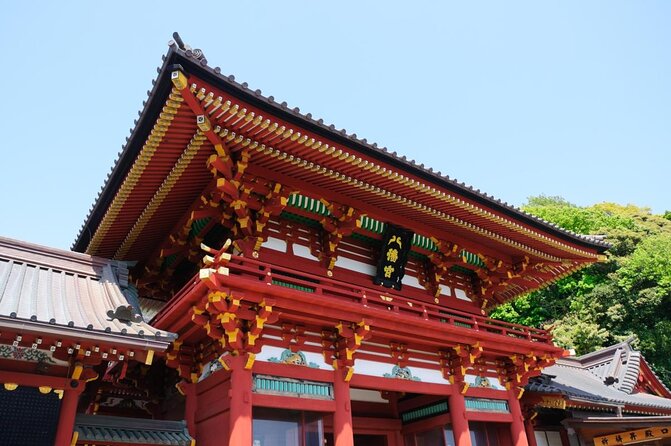
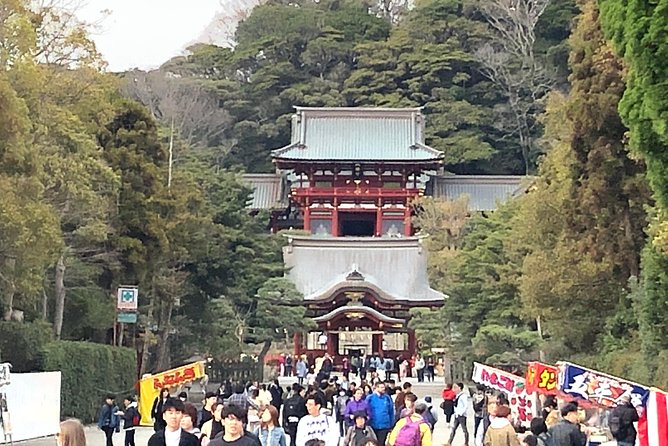
Next comes Tsurugaoka Hachimangu, Kamakura’s most important Shinto shrine. You have about 30 minutes, with admission included.
The visit covers the main hall, the tori gates, and a small museum of treasures. This is a useful contrast with Engaku-ji. You move from Buddhist temple grounds to a Shinto setting, and a guide can help you understand the difference without turning the visit into a lecture.
Thirty minutes is enough for a clear look at the key areas, but it is not a leisurely museum visit. If you like spending long stretches studying artifacts or taking photographs, you may want to keep that in mind. The tradeoff is that the tour keeps moving and still leaves room for food, bamboo, and the Great Buddha later.
This stop also gives you a sense of Kamakura as more than a collection of quiet religious sites. Tori gates and the shrine’s main approach show the city’s public and ceremonial side. Your guide can connect what you see here with the wider story of Kamakura, which is one of the main reasons to choose a guided visit rather than simply walking between landmarks on your own.
Komachi-dori, where lunch becomes part of the tour
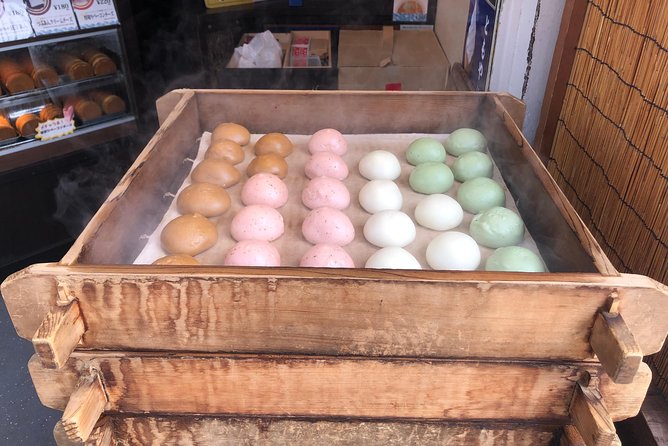
Komachi-dori is the most relaxed and hands-on part of the day. You have one hour to stroll along the famous shopping street and sample a range of sweet and savory food.
Lunch is included, along with snacks, alcoholic beverages, bottled water, and soda. The exact selection is not specified, so you should think of this as a guided tasting of local street food rather than a fixed restaurant meal. The supplied details specifically point to local delicacies and an array of food and drink.
This is where a private guide can add real value. Street stalls can be hard to read when you do not know what is being sold, how to eat it, or which item might suit your taste. One person who took the tour said Simon helped make street food feel approachable and directed the group toward places Japanese people use, rather than keeping to the most obvious tourist choices.
That does not mean Komachi-dori will be quiet. It is a famous shopping street, and the hour can pass quickly. You may need to choose between browsing, eating, and taking photographs. Still, making food part of the route is smart. It gives you a taste of daily Kamakura and breaks up the temple visits with something social and informal.
Alcohol is included, but you should pace yourself. You still have more walking ahead, including the bamboo temple and the Great Buddha. A small drink can be part of the fun, while too much could make the afternoon less comfortable.
Hokoku-ji, bamboo and a cup of green tea
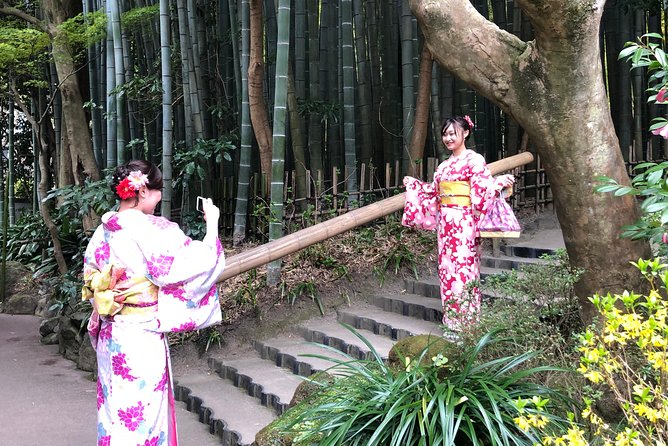
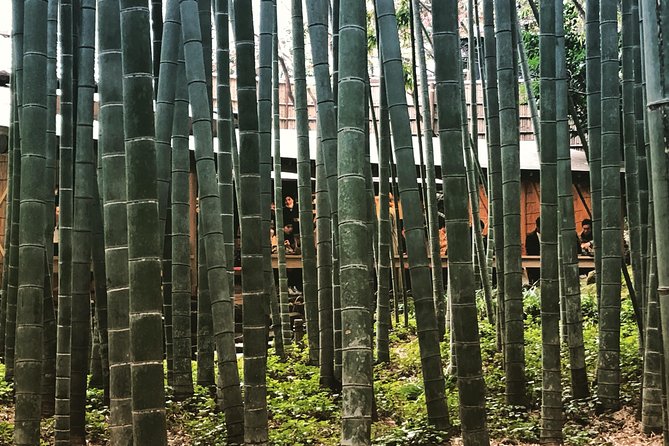
Hokoku-ji is known as the bamboo temple, and you have about an hour here. The main draw is the bamboo grove, where you can slow down after the food street and temple stops.
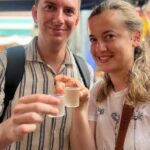
A traditional cup of green tea at the tea house is included. This is one of the most appealing details of the tour because it adds an activity rather than another quick photo stop. You get time to sit, drink tea, and enjoy the cool feel of the grove.
The hour-long visit gives you more breathing room than the 30-minute shrine stop. I would treat it as the day’s quiet center. The temples and shrine provide formal architecture and religious context, while Hokoku-ji offers a calm sensory break: tall bamboo, shade, and tea.
There is a practical limit here. A bamboo grove is a focused experience, not an all-day attraction. If you have already visited several bamboo sites in Japan, this stop may feel brief and familiar. For a first visit, though, the tea house makes it more than a quick walk through green stalks.
Other walking tours we've reviewed in Tokyo

The Great Buddha and the final landmark
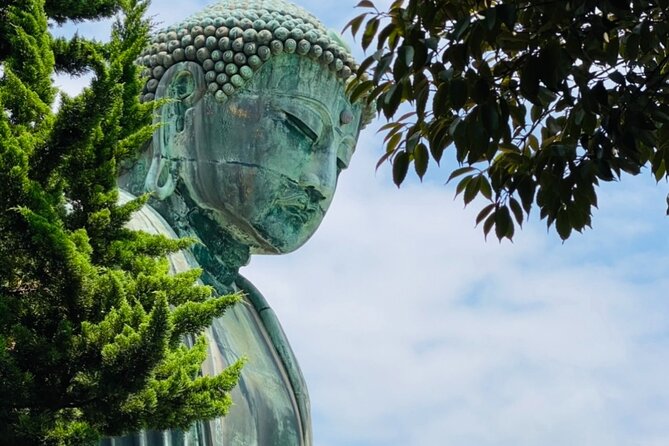
The final listed stop is Daibutsukiritoshi, where you see the Great Buddha of Kamakura, described as Japan’s second-largest bronze Buddha. You have about 30 minutes, with admission included.
This gives the day a strong visual finish. After smaller religious buildings, shrine gates, food stalls, and bamboo, the scale shifts dramatically. The Great Buddha is the sort of landmark that needs little decoration, but a guide can provide context and help you notice details that a fast visit might miss.
Thirty minutes is enough for the main sight and photographs, though not for a long, unhurried exploration of every nearby feature. The tour then ends at Kamakura Station, which is useful if you want to continue exploring or return to Tokyo from there.
The supplied stop name and description do not provide further detail about the exact access route or any separate interior visit, so you should plan on seeing the Great Buddha as the central feature of this final half-hour stop.
What the $220.22 price really covers
At $220.22 per person, this is not a budget walking tour. The value comes from what is bundled into the day and from having a guide devoted only to your group.
Your fee includes:
- A six-hour private guided experience
- Entrance fees
- Lunch and snacks
- Alcoholic beverages
- Bottled water and soda
- Visits to five major stops
Transportation is not included. You must arrange and pay for your journey to Kita-Kamakura Station and your return or onward trip from Kamakura Station. That is important when comparing the total cost with a self-guided day.
For a couple or family who wants a guide, the price may feel reasonable because the tour combines sightseeing, food, drinks, and entrance fees. You also avoid the work of planning a route and deciding what to order at the food stalls. For a solo visitor, the per-person cost is harder to justify unless personal guiding is a top priority.
Group discounts are available, but the supplied details do not state the discount amount. Since only your group participates, the more people in your party, the better the private-tour value may become.
Pace, walking, and the practical details
The tour begins at 9:00 am at Kita-Kamakura Station in Yamanouchi, Kamakura. It ends at Kamakura Station, not back at the starting point.
The six-hour schedule is active but not built around speed. The stop lengths range from 30 minutes to one hour, and the route includes temple grounds, shrine approaches, street walking, slopes, and the bamboo grove. Moderate physical fitness is recommended.
Wear comfortable shoes. That advice is especially useful for the Engaku-ji slopes and the repeated walking between different settings. The tour requires enough stamina to stay engaged through the afternoon, but it is not described as a strenuous hike.
Because the activity requires good weather, poor conditions can lead to a different date or a full refund. You can cancel for a full refund up to 24 hours before the start time. Changes or cancellations inside that 24-hour window are not accepted, and the amount paid is not refunded.
Confirmation is provided at booking, and the start point is near public transportation. The mobile ticket is useful for keeping the booking details on your phone.
Who should choose this private walking tour
I would recommend this experience to you if you want Kamakura’s major sights but do not want to build the day yourself. It suits first-time visitors who want context at the temples, help with food choices, and a clear route from station to station.
It is also a good match for families. The private arrangement lets the guide respond to a child’s needs, and one supplied account specifically praises Simon for helping with a little one. It may also suit a group with older parents, since another account describes Simon taking care with parents and adjusting the day to them.
Food-focused visitors will like the Komachi-dori stop, especially if you are curious about Japanese snacks but unsure where to begin. Tea lovers and photographers will appreciate the hour at Hokoku-ji.
You may want another plan if you prefer a slow, unstructured day with long visits at each temple. The tour covers a lot in six hours, so each stop has a limit. It may also be poor value if you are comfortable arranging transport, buying your own food, and learning about the sites independently.
Guide assignment may vary. Simon is repeatedly named in the supplied material, while Chuck is also identified as a guide. You should not assume one specific guide unless the provider confirms it.
Should you book it?
Book this tour if you want personal guiding, included food, and a balanced route through Kamakura. The strongest reasons are the private format, the mix of temples and everyday food, and the peaceful green-tea stop at Hokoku-ji.
The price is high, and transport is extra. I would choose it for a family, couple, or small group that wants a smooth day with help at every stage. If you are watching your budget or prefer to linger at one site, use the same five-stop plan independently instead.
FAQ
Where does the tour begin?
It begins at Kita-Kamakura Station in Yamanouchi, Kamakura, at 9:00 am.
Where does the tour end?
The tour ends at Kamakura Station.
How long does the experience last?
It lasts approximately six hours.
Is this a private tour?
Yes. Only your group participates in the activity.
Is transportation included?
No. Transportation costs are not included.
What food and drinks are included?
Lunch, snacks, alcoholic beverages, bottled water, and soda are included.
Which places does the tour visit?
The route includes Engaku-ji, Tsurugaoka Hachimangu Shrine, Kamakura Komachi-dori, Hokoku-ji Temple, and the Great Buddha of Kamakura.
Can I cancel for a refund?
Yes. You can cancel at least 24 hours before the start time for a full refund. If poor weather causes the tour to be canceled, you will be offered another date or a full refund.
More Food Experiences in Tokyo

More Walking Tours in Tokyo
More Kamakura & Enoshima Day Trips in Tokyo
More tours in Tokyo we've reviewed


Kamakura & Enoshima Day Trips, compared.
 ★ 4.5Tokyo: Kamakura & Enoshima Day Trip including Temple TicketsFrom $589 hours - 570 minutes
 ★ 4.5Tokyo: Mt. Fuji, Kamakura, Big Buddha, & Lake Ashi Day TripFrom $4910 - 11 hours
 ★ 4.5From Tokyo: Kamakura & Enoshima 1-Day Bus TourFrom $66
 ★ 5.0Kamakura Historical Walking Tour with the Great BuddhaFrom $98
 ★ 5.0Kamakura Private Tour: Temples, Nature, and the Great BuddhaFrom $98
 ★ 5.0Kamakura Walking Tour – The City of ShogunFrom $35