
Reviewed · TOKYO FOOD TOURS
Tokyo: Shinjuku Food Tour (13 Dishes at 4 Local Eateries)
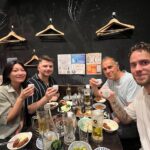
Shinjuku is easiest to understand with a fork in your hand. This three-hour walk moves from tiny food stalls and izakayas to a traditional eatery and gastrobar, serving 13 Japanese dishes and two drinks along the way. You get a fast, flavorful introduction to places that can feel confusing on your own.
I like the small maximum group of 12, which makes a city walk easier to manage, and I like the broad mix of food rather than one long meal. Guides such as May, Hoshi, Igor, and Kei have been praised for explaining local customs, suggesting places for the rest of a Tokyo stay, and helping first-time diners order with confidence.
The main caution is that the experience can vary with the guide and the evening route. Some people received plenty of cultural explanation, while others wanted more detail about the dishes. Golden Gai is listed as a stop, but one account says the group did not visit it, so do not book this solely for time inside that district.
In This Review
- Key points at a glance
- Why this is a smart way to meet Shinjuku
- Meeting at the west side of Shinjuku Station
- Omoide Yokocho: tiny lanes and a first taste of Shinjuku
- Kabukicho: food beside Tokyo nightlife
- Golden Gai: a planned stop with one important caveat
- Four eateries, 13 dishes, and two included drinks
- How much value do you get for $86.22?
- The guide can make or break the evening
- Group size, pace, and who will enjoy it
- Booking details worth knowing before you pay
- Should you book the Shinjuku food tour?
- FAQ
- How long does the Shinjuku food tour last?
- How many dishes are included?
- Are drinks included?
- Which Shinjuku areas does the tour visit?
- Where does the tour start and end?
- Can most people join the tour?
Key points at a glance

- Thirteen tastings in four settings: Food is served at a stall, izakaya, traditional Japanese eatery, and gastrobar.
- Three famous Shinjuku districts: The route includes Omoide Yokocho, Kabukicho, and a planned visit to Golden Gai.
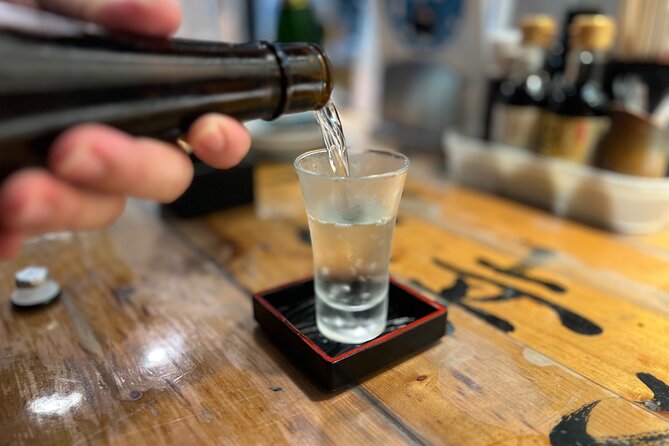
- Two drinks included: You can choose from alcoholic and non-alcoholic options.
- A useful first-night orientation: Guides add food advice, neighborhood background, and tips for the rest of your Tokyo trip.
- A compact walking group: The maximum is 12 people, a practical size for narrow lanes and small restaurants.
- Come hungry: The quantity is substantial, with dishes ranging from tonkotsu and katsu to taiyaki and less familiar bites.
Why this is a smart way to meet Shinjuku
Shinjuku can feel like several cities pressed together. Office towers rise near station exits, neon fills the entertainment streets, and a turn into a narrow lane can lead to a six-seat bar or a smoky grill. The trouble is not finding food. The trouble is knowing where to begin.
This tour gives you a three-hour route through that maze. Instead of spending your first evening comparing menus and guessing which doorway is welcoming to foreign diners, you follow a guide who handles the food order and explains what is happening around you.
I especially like this format for a first or second night in Tokyo. You can sample many small portions, ask questions, and note places you might want to return to later. Guides have also shared restaurant suggestions and neighborhood tips for the rest of a visit, which adds value beyond the meal itself.
The food is not presented as a formal cooking class. You are there to eat, walk, and understand the districts. If your main goal is a polished, detailed explanation of every ingredient, results may depend on the person leading your group. Some guides give a strong account of Japanese food and culture, while one experience was criticized for placing raw items on the table without enough instruction.
A few more Tokyo tours and experiences worth a look
Meeting at the west side of Shinjuku Station
The meeting point is outside AOKI Shinjukunishiguchi Honten at 1-chome-8-5 Nishishinjuku. This is near public transportation, but Shinjuku Station is huge, with many exits and layers of underground passages. Give yourself extra time to find the correct side of the station.
This matters because one person had trouble reaching the starting point on time, even though the guide waited and helped with directions. Use the exact meeting address and check the station exit before you set out. A mobile ticket is provided, so keep your booking details easy to access.
The tour ends near the Southeast Exit of JR Shinjuku Station. If you prefer to return to the Starbucks meeting point, you can ask the guide to escort you back. That finish is useful if you want to continue into Shinjuku nightlife, catch a train, or return toward your hotel.
The walk lasts about three hours. You should expect movement between food stops, narrow lanes, and compact dining rooms. One account says the pace worked even for someone with a leg injury, and another describes help arranging cabs for a parent with mobility problems. Still, this is a walking experience, not a vehicle tour, so tell the guide early if you need assistance.
Omoide Yokocho: tiny lanes and a first taste of Shinjuku
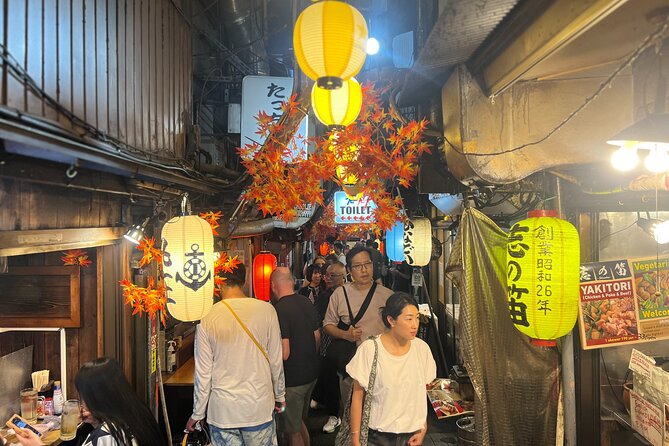
The first main area is Omoide Yokocho, a famous cluster of narrow lanes lined with tiny izakayas and food stalls. The name is often associated with postwar Tokyo, and the cramped setting gives you a quick sense of how different Shinjuku can feel just a few minutes from the station.
This is a good opening stop because the surroundings do part of the work. You see small counters, close-set kitchens, and a style of dining built around quick plates and drinks. The group spends about an hour in this part of the route, including food and local explanation.
The atmosphere can be intimate, but that also creates practical limits. Tiny restaurants have little spare room for a large party, which is one reason the 12-person maximum matters. Your group may be split across tables or arranged closely, depending on the venue.
Food details can vary, but the overall promise is clear: several dishes are included, and you do not need to stop at each place to pay. That makes the experience smoother, especially if you are still learning Japanese restaurant customs or dealing with unfamiliar menus.
Pay attention to the guide here. May has been praised for taking groups to fun places and offering recommendations for later in a Tokyo stay. Hoshi has been described as warm and clear in English, with useful advice about Japanese food. Those small explanations can turn a plate from something you simply eat into a dish you recognize when it appears again.
Kabukicho: food beside Tokyo nightlife
The next part of the walk enters Kabukicho, Tokyo’s best-known entertainment district. Neon, bars, restaurants, and late-night businesses fill this area, and the guide explains how the different establishments fit into the district.
For many people, Kabukicho is easier to understand with a local escort. The streets can seem flashy and confusing, especially after dark. A guide can point out the difference between ordinary restaurants and other businesses, while keeping the focus on food and local life.
The group visits a traditional Japanese restaurant in this section. One account singled out a pork katsu dish and its connection to a long-established restaurant. Other food accounts describe tonkotsu and a broad range of Japanese dishes served across the evening, but the exact selection may change.
You should expect shared or small-portion dining rather than a single main course for each person. That is the key to reaching 13 dishes in three hours. You taste several items, often in a social setting, and move on before any one restaurant takes over the evening.
This stop also shows why the tour can suit solo visitors. You have a ready-made group, food gives everyone an easy topic, and one solo participant ended up exchanging contact details with other people from the walk and meeting them again later in Tokyo. That social side is not guaranteed, but the format makes conversation natural.
Golden Gai: a planned stop with one important caveat
Golden Gai is known for its narrow lanes and more than 200 tiny bars. The area preserves a small-scale form of postwar Tokyo architecture, with buildings and bar fronts packed into a tight grid.
It is one of the most distinctive places in Shinjuku, and the guide is expected to explain its nightlife and cultural setting. You may pass through the lanes, learn how the bars work, and see a side of Tokyo that is easy to miss if you remain on the main streets.
Here is the practical warning: the route description includes Golden Gai, but at least one person reported that the group did not go there. Routes can change because of restaurant schedules, crowd conditions, or timing. If Golden Gai is the main reason you are booking, confirm the plan with the operator before paying, and ask the guide at the start whether the group will enter the area.
Even if the route changes, the wider Shinjuku focus remains useful. The food stops and Kabukicho walk still give you a look at the district’s nighttime character. Just keep your expectations flexible about this particular stop.
A few more Tokyo tours and experiences worth a look

Four eateries, 13 dishes, and two included drinks
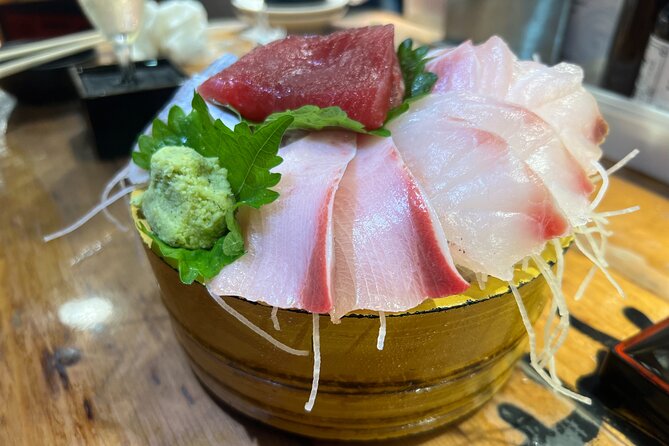
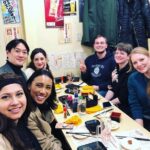
The strongest feature is the variety. Food is served at four types of venues:
- A food stall
- An izakaya
- A traditional Japanese eatery
- A gastrobar
That mix gives the evening a better rhythm than eating at four similar restaurants. You get different settings, different styles of service, and a range of flavors. The included drinks may be alcoholic or non-alcoholic, so you can take part without needing to drink alcohol.
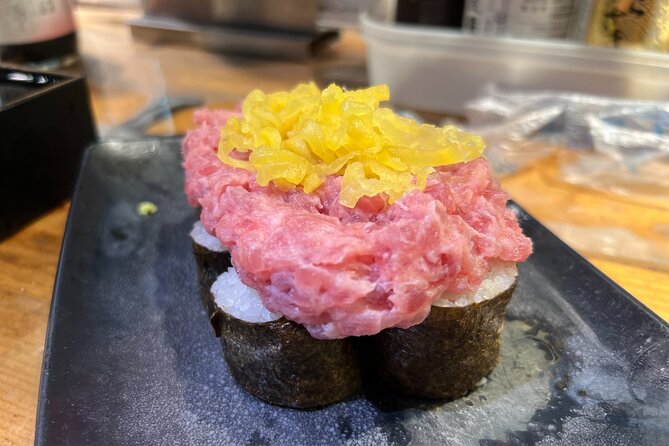
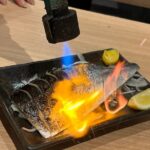
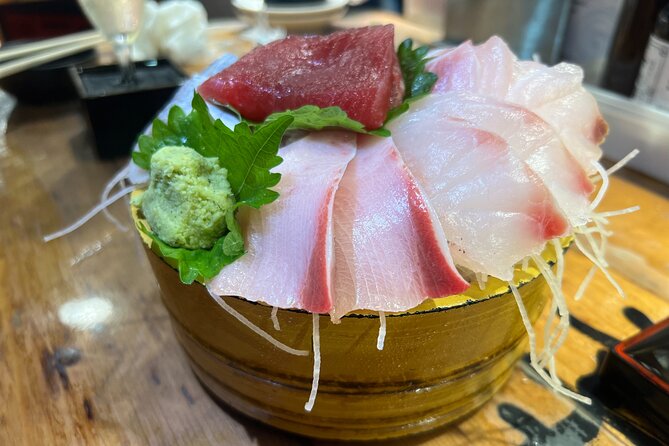
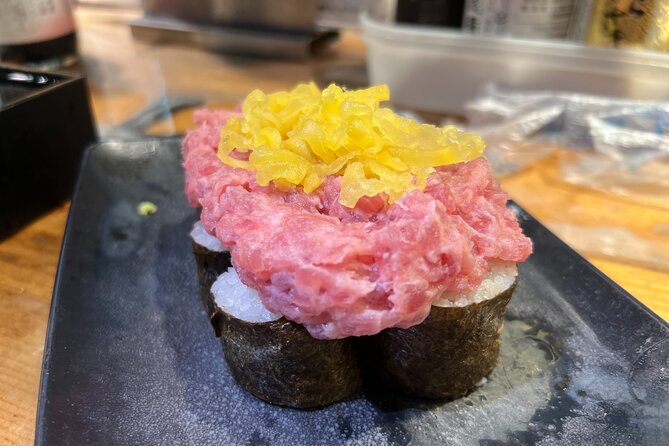
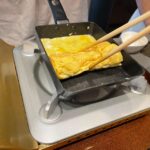
The food list is not fully specified in advance, but the accounts provide useful clues. Tonkotsu, pork katsu, taiyaki, and snails have all appeared in descriptions of the experience. Taiyaki provides a sweet finish, while the snails show that the guide may encourage you to try something outside your usual order.
The tour is built for sampling, not picky control. If you have dietary restrictions or strong dislikes, tell the operator and guide before the food begins. One guide, Kei, was praised for making sure people received food suited to their preferences and restrictions, but the supplied information does not promise that every request can be met.
You also need to pace yourself. Thirteen dishes plus drinks is a lot over three hours. The best approach is to arrive ready to eat but not stuffed from an earlier meal. If you are a light eater, the quantity may feel excessive, even though the small portions help.
How much value do you get for $86.22?
At $86.22 per person, this is not the cheapest way to eat in Shinjuku. You could buy individual dishes for less, especially if you already know where to go and feel comfortable ordering in Japanese.
The price makes more sense when you count what is included: four food venues, 13 dishes, two drinks, a professional guide, walking time through three well-known areas, and help with ordering. You are paying for access and structure as much as for the food itself.
I would consider it good value if you are new to Tokyo, want a full evening meal, or dislike gambling on unfamiliar restaurants. The tour can also save time during a short stay. You taste a wide range of food in one organized outing and leave with a list of places and dishes to seek out later.
The value is weaker if you are already comfortable in Shinjuku or expect rare, high-end food. The venues are local-style eateries, not a fine-dining showcase, and one unhappy account found the food ordinary compared with places discovered independently. That criticism is worth taking seriously. A guided introduction is useful, but it cannot guarantee that every dish will suit your taste.
The high overall score and 99 percent recommendation figure suggest that the format works well for most bookings, but food is personal and guide quality matters. The strongest experiences came with guides who explained the dishes and area, rather than simply leading the group from door to door.
The guide can make or break the evening
The supplied guide names include May, Agathe, Mak, Emma, Nathan, Lloyd, Hoshi, Hina, Izzy, Kei, Ami, Igor, Shane, and Maya. You may not be able to choose your guide, but these accounts show the range of what the staff can add.
Hoshi and Igor were praised for clear English and explanations of Japanese food, culture, and Tokyo districts. May was noted for local tips and an easy meeting process. Kei added extra sights such as the giant 3-D cat, Godzilla on a building, and the red-light district while also watching for dietary needs.
Lloyd helped coordinate transportation for a parent with mobility issues, and one guide helped retrieve a bag left at a restaurant without abandoning the rest of the group. These are practical signs of good tour leadership, especially in a crowded district where small problems can quickly become stressful.
But do not assume every guide will provide the same amount of commentary. One person found the food excellent but wanted more information about the area and restaurants. Another felt the experience was mostly a series of restaurant visits without enough explanation of what was being eaten.
If cultural context matters to you, say so at the beginning. Ask what each dish is, how it is normally eaten, and why the restaurant was chosen. That simple approach may help you get more from the experience.
Group size, pace, and who will enjoy it
The maximum group size is 12. That is small enough for a guide to check on people, but it is not a private tour. In a tiny izakaya or narrow alley, 12 people can still feel like a crowd.
The format suits first-time Tokyo visitors, solo visitors, adventurous eaters, and anyone who wants an organized introduction to Shinjuku. It is also a strong choice if you want to meet other people during your trip without committing to a full-day group excursion.
Families and older people can take part, but consider the walking and the close restaurant seating. The information says most people can participate, and the route is near public transportation. It does not promise full step-free access or a special mobility program, so share your needs in advance.
This is not the best pick for someone who wants a quiet meal, a carefully timed tasting menu, or complete control over every dish. It is also a poor match if you plan to eat a large dinner beforehand. Come hungry, keep an open mind, and expect a lively evening rather than a formal lesson.
Booking details worth knowing before you pay
Confirmation arrives at booking, and the experience uses a mobile ticket. The operator is Traveling Tokyo. Gratuity is optional and not included.
Cancellation is free up to 24 hours before the local start time, with a full refund. Within 24 hours, cancellations and changes are not accepted and the payment is not refunded.
The tour has had more than 10 bookings in a recent six-hour period, so popular departure times may fill. Since Shinjuku Station is easy to misread, I would save the meeting point in your phone and arrive early rather than trying to navigate at the last minute.
Should you book the Shinjuku food tour?
Book it if you want a single, social introduction to Shinjuku food and nightlife. The four-eatery structure, 13 tastings, two drinks, and compact route offer a lot in three hours. You will likely leave better prepared to order on your own, with a clearer sense of where Omoide Yokocho, Kabukicho, and Golden Gai fit into the city.
I would be more cautious if you are a serious food hunter seeking the best dishes in Tokyo, or if you need guaranteed time in Golden Gai. The food selection and explanations can vary, and the experience is only as strong as the guide leading it.
For most first-time visitors, the balance is favorable. Book early in your stay, arrive hungry, tell the guide about restrictions, and ask questions about every dish. That is when the $86.22 price gives you the most: not just food, but a useful map of Shinjuku after dark.
FAQ
How long does the Shinjuku food tour last?
The tour lasts approximately three hours.
How many dishes are included?
You receive 13 Japanese dishes at four eateries.
Are drinks included?
Yes. Two complimentary drinks are included, with alcoholic and non-alcoholic options available.
Which Shinjuku areas does the tour visit?
The route includes Omoide Yokocho, Kabukicho, and a planned visit to Shinjuku Golden Gai.
Where does the tour start and end?
It starts at AOKI Shinjukunishiguchi Honten at 1-chome-8-5 Nishishinjuku. It ends near the Southeast Exit of JR Shinjuku Station. You can ask the guide to escort you back to the Starbucks meeting point.
Can most people join the tour?
Most people can participate, and the tour is near public transportation. The maximum group size is 12 people. If you have mobility needs or dietary restrictions, contact the operator and tell the guide before the food service begins.
More Food Experiences in Tokyo

More Tokyo Food Tours in Tokyo
More Shinjuku Tours in Tokyo


More tours in Tokyo we've reviewed




Tokyo Food Tours, compared.
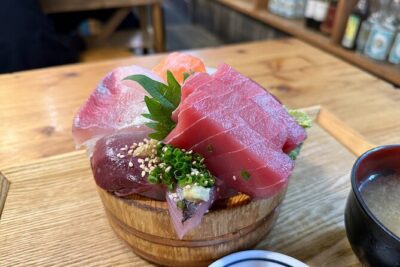 ★ 4.9Tokyo: Shinjuku Food Tour (15 Dishes and 4 Eateries)From $853 hours
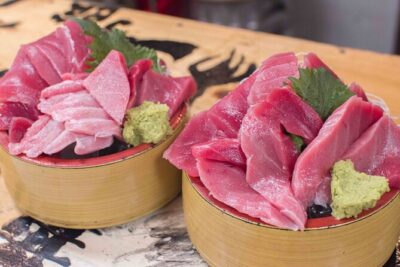 ★ 5.0Best of Shinjuku: Izakaya Food Tour (4 Stops, 14+ Tastings)From $92
 ★ 5.0Tokyo Night Foodie Tour in Shinjuku – Seasonal Sushi, Wagyu BeefFrom $111
 ★ 5.0Eat and Drink Like a Local: Tokyo Ueno Food Tour-Taverns&RamenFrom $95
 ★ 5.0Tokyo: Shibuya Food Tour (13 dishes and 4 Eateries)From $77
Tokyo: Shinjuku Food Tour – 15 Dishes, 3 Drinks, 4 EateriesFrom $723 hours
★ 5.0Tokyo: Shibuya Food Tour (13 dishes and 4 Eateries)From $77
Tokyo: Shinjuku Food Tour – 15 Dishes, 3 Drinks, 4 EateriesFrom $723 hours