
Reviewed · SUMO EXPERIENCES
Tokyo: Visit Sumo Morning Practice with English Guide
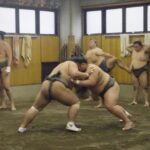
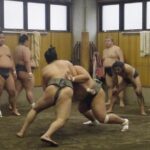
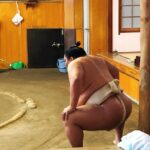
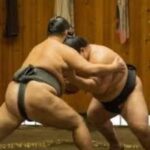
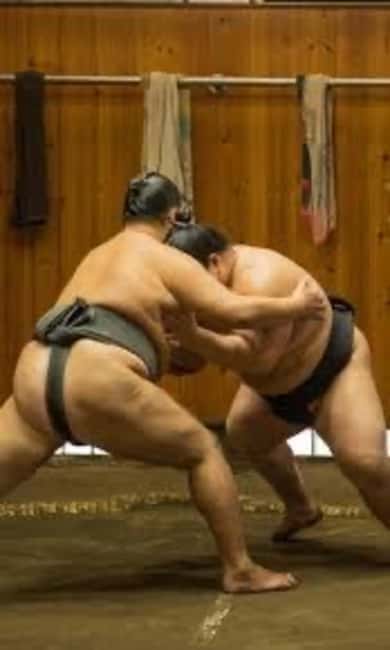
The most compelling part of this Tokyo experience is the close viewing distance. You are not watching a polished tournament from the far side of a large arena. You sit near a working sumo stable and watch wrestlers train seriously, with the sounds, sweat, and force of each bout right in front of you.
I like the access to a part of sumo that is normally closed to spectators, and I like the guide support. Guides such as Naomi have answered long strings of questions in clear English, and some provide a useful fact sheet covering sumo terms, training, and background.
The main consideration is that this is practice, not a show. You may spend most of the 90 minutes to two hours seated on the floor or on small seats, watching quietly. The room can also become crowded, and the early meeting point near Ryogoku Station requires careful planning.
In This Review
- Key points to know before booking
- Why this sumo visit feels different from a tournament
- Getting to Takasago Stable from Ryogoku Station
- What you watch during the 90-minute session
- The stable setting: authentic, but not especially comfortable
- The guide makes the difference
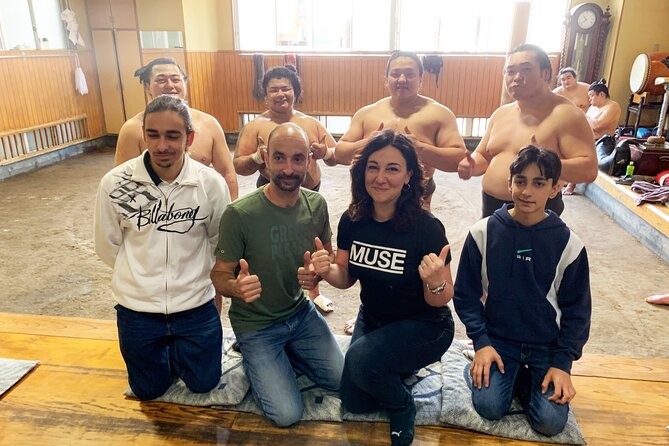
- The commemorative photo after practice
- Price and value at $98.53
- Add Asakusa after the morning visit
- Who should book this experience
- Booking, cancellation, and practical details
- Should you book this Tokyo sumo morning practice?
- FAQ
- What time does the sumo morning practice begin?
- Where do I meet the guide?
- Where does the tour end?
- How long does the experience last?
- Is the tour conducted in English?
- Can I take a photo with the sumo wrestlers?
- Can I cancel for a full refund?
Key points to know before booking
- Watch real morning training at Takasago Stable, a Tokyo sumo stable associated with many champions.
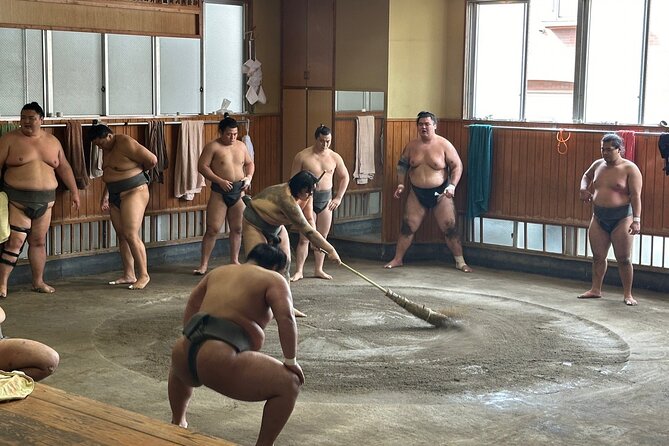
- See the full training rhythm, from stretching and preparation to intense practice bouts.
- Sit close enough to hear the impact, though the traditional floor seating may be uncomfortable.
- Ask questions through an English-speaking guide, with some guides also speaking French and Japanese.
- Take a commemorative photo with the wrestlers after practice.
- Plan extra time for the Ryogoku meeting point, especially if you need to find the A3 station exit.
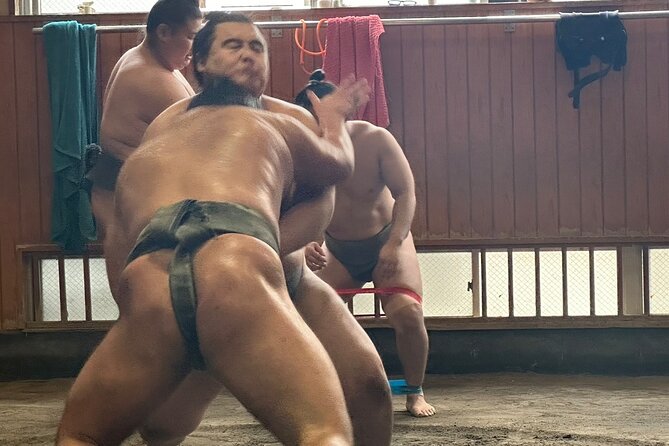
Why this sumo visit feels different from a tournament
A professional sumo tournament is a grand public event. It has ceremony, crowds, formal bouts, and the excitement of a full day at the arena. This morning visit offers something quieter and more direct: a look at how wrestlers prepare before the public ever sees them compete.
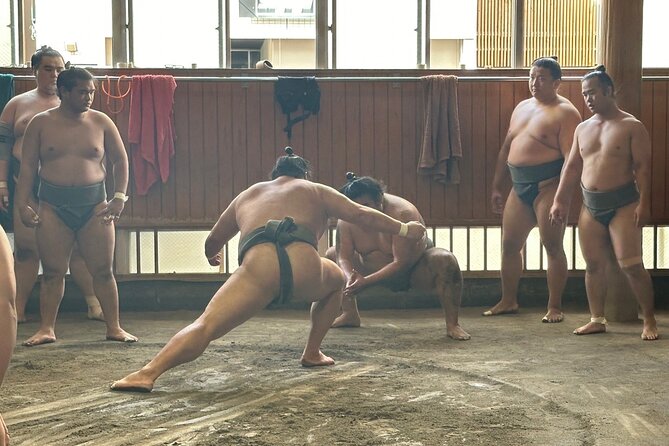
That difference matters. At the stable, you are watching athletes work through repetition. There is no performance built for tourists, and the activity can feel plain at first. Then the training intensifies. Bodies collide, the room fills with sharp sounds, and you begin to see the strength and discipline behind the sport.
I like this format for anyone who wants to understand sumo as a demanding athletic practice rather than only a cultural spectacle. You can watch younger wrestlers challenge one another before more powerful wrestlers take their turns. The progression gives the session a natural shape, even though nobody is presenting it like a stage production.
You should also arrive with the right expectations. A guide leads you from the meeting place to the stable, explains what you are seeing, and answers questions. The stable itself is the attraction. There is no elaborate narration during every minute, and one dissatisfied participant found the long period of simply sitting and watching less engaging than expected.
A few more Tokyo tours and experiences worth a look

Getting to Takasago Stable from Ryogoku Station
The published start time is 8:00 a.m., but practical instructions in the tour information indicate that the group may leave the A3 exit at exactly 7:45. Treat the earlier time as the one that matters. Arriving at the station at 8:00 could mean arriving after the group has started walking.
The meeting point is near Ryogoku Station at 1-chōme-4-29 Yokoami, Sumida City. One useful warning is that station exits can put you on the wrong side of the area. Give yourself an extra 10 minutes to locate the A3 exit and the guide.
The guide is described as easy to identify, often holding a large sign. The operator also says two staff members may be waiting and that a confirmation message is sent the day before with a WhatsApp contact for the guide. Still, I would not cut this close. Early morning transport and an unfamiliar station are a poor place to test your luck.
From the meeting point, you walk a short distance to Takasago Stable. The end point is listed at 2-chōme-30-1 Ishiwara, Sumida City. At the stable, the guide shows you where to sit and explains how the session works.
What you watch during the 90-minute session
The practice can last about one and a half to two hours, with the advertised itinerary listing approximately 90 minutes. The exact flow depends on the stable and the day, so think of the time as a useful estimate rather than a tightly scripted schedule.
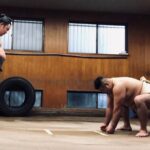
The opening section may include stretching and exercises to prepare the wrestlers’ bodies. This portion can last around 30 minutes or a little longer. It is less dramatic than the bouts, but it helps you see that sumo is built on conditioning, flexibility, balance, and repeated movements.
After preparation, younger wrestlers begin practice bouts. Later, stronger and more experienced wrestlers may take the floor. The difference in size and force becomes clear as the session develops. You are close enough to hear the collisions, not simply see them from a distant seat.
That proximity is the strongest reason to book. During a tournament, you watch from a greater distance and may be surrounded by the energy of a large public event. Here, the stable setting puts your attention on the mechanics of training and the concentration of the wrestlers.
Your guide provides the cultural and sporting context. Guides have used written material explaining basic terms and training details, which is helpful if you know little about sumo. You can also ask questions before or after the practice. This is especially useful because a stable training session can be difficult to interpret on your own.
You are expected to observe respectfully. The wrestlers are working, not posing for constant interaction. The commemorative photo comes after the practice, giving you a clear moment to take home from the visit without turning the training itself into a photo opportunity.
The stable setting: authentic, but not especially comfortable
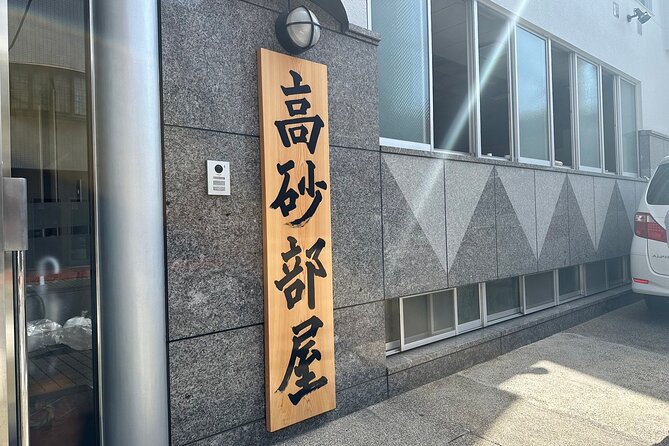
The room is small and traditional. That is part of the appeal, since you are seeing practice in the setting where it actually happens rather than in a visitor center. It also creates the main comfort problem.
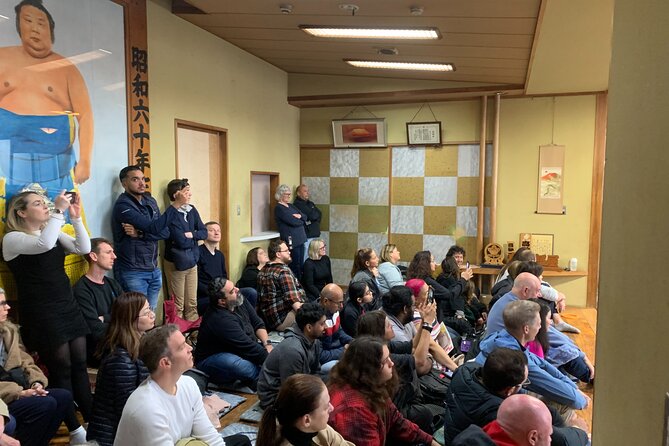
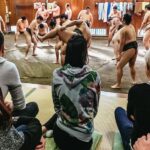
Seating may be on the floor or on small stools and similar low seats. If you are used to Western-style chairs, 90 minutes can feel long. The viewing area may also become crowded, especially when another group or a Japanese fan club arrives unexpectedly.
The operator has acknowledged that sudden fan club visits can affect the number of people present. Group size for this activity is capped at 20, but the stable itself can still feel squeezed when additional people arrive or when another tour joins the session.
This is worth weighing carefully. You gain closeness, but you give up space. The guide may help place the group comfortably, yet you should not book this expecting roomy seating or the freedom to move around.
The setting also rewards quiet attention. You are there to watch a working session in a compact room. If you need a constantly changing program, this may feel slow. If you can sit still and notice the details, the plainness becomes an advantage.
The guide makes the difference
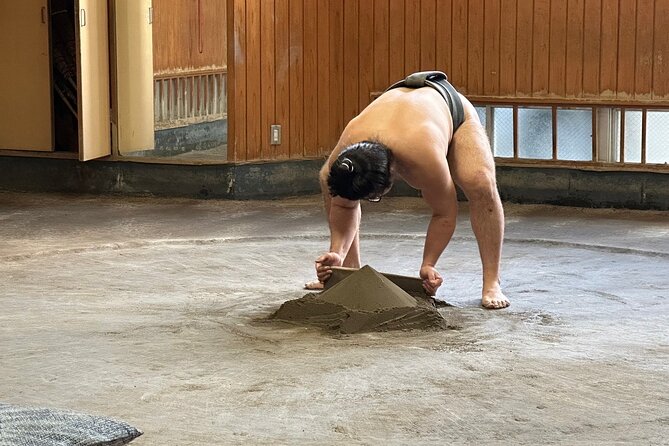
The English-speaking guide is not just a translator. The guide helps you find the stable, explains the training, handles questions, and helps you understand what is happening in front of you.
Several guides have been praised for warm, clear service. Naomi is one name associated with especially attentive explanations, including answering more than 20 questions from one group. Another guide was heard speaking English, French, and Japanese. The specific guide on your date is not guaranteed, but language support is a central part of the experience.
That support matters most during the quieter parts of practice. Stretching and repeated drills can look mysterious if you do not know their purpose. A good explanation turns those minutes into a lesson in the sport rather than dead time.
I also like that you can ask questions without needing a background in sumo. The guide can explain terms and basic traditions, then connect them to what you are seeing. You do not need to arrive as a fan to appreciate the physical work.
There has been one report of a meeting problem in which a participant had to call after the host was not present. The operator said it clarified the meeting information and added clearer contact details. My advice is simple: confirm the meeting time, find the A3 exit in advance if possible, and save the contact number.
Other guided tours in Tokyo




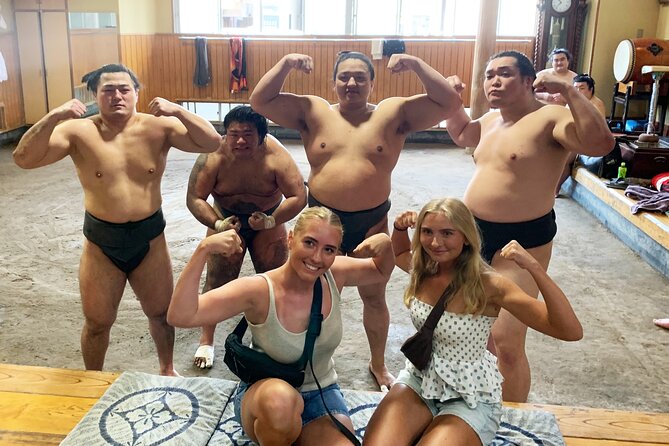
The commemorative photo after practice
A commemorative photo with the wrestlers is included as part of the experience. It gives the morning a definite ending and provides a personal souvenir rather than only memories of sitting in the stable.
Keep your expectations sensible. The main experience is watching practice, not spending extended time with the wrestlers. The photo follows the session, and the wrestlers’ time and attention remain limited because they are athletes finishing their work.
For families with teenagers, the photo can be a memorable final moment. The close viewing also helps younger visitors understand that sumo is not simply a colorful ceremony. It involves serious preparation, strength, and competition.
Price and value at $98.53
At $98.53 per person, this is not a budget activity for a short morning outing. The value comes from access rather than duration. You are paying for a rare chance to enter a sumo training environment, an English-speaking guide, help with the route, explanations, and a commemorative photo.
I think the price is fair for visitors who specifically want to see sumo up close and would struggle to arrange access independently. The guide removes much of the language and navigation worry, which is useful when the destination is a working stable rather than a conventional attraction.
The value is weaker if you expect a formal match, a long presentation, or an interactive demonstration. You may spend most of the visit sitting quietly while the wrestlers practice. There is no promise of a tournament atmosphere or a set number of bouts.
The capped group size of 20 is helpful, but it does not guarantee a spacious room. If the stable is joined by an unexpected fan club or another group, seating can feel tight. For me, the price makes the most sense for a sumo enthusiast, a first-time visitor who wants cultural context, or anyone who values access to ordinary training over a polished show.
Add Asakusa after the morning visit
The tour ends at Takasago Stable, and the guide shows you how to reach your next destination. You are then free to continue sightseeing, with nearby Asakusa suggested as a natural follow-up.
This makes the early start more useful. You can combine the sumo visit with a full morning in Tokyo rather than treating it as an isolated activity. The tour itself does not include an Asakusa sightseeing program, so plan that portion separately.
I like the rhythm of pairing a working sumo stable with a broader sightseeing stop. First you see a private side of a traditional sport. Then you can continue through one of Tokyo’s better-known cultural areas. Just remember that the official experience ends at the stable, not at Asakusa.
Who should book this experience
I would choose this for:
- First-time visitors curious about sumo but unsure how to attend a tournament.
- Sports fans who want to see serious training at close range.
- Families with older children or teenagers who can sit quietly for the session.
- Visitors who want English explanations and the chance to ask questions.
- Photographers and culture-minded visitors who value access over spectacle.
I would hesitate if you dislike floor seating, have difficulty sitting for 90 minutes, or want a highly active tour. The experience asks you to observe rather than participate.
It is also a better fit for people who can handle an early start and careful station navigation. The meeting instructions are manageable, but the A3 exit warning is real and the group may leave before the listed 8:00 start.
Booking, cancellation, and practical details
Confirmation is provided at booking, and the activity uses a mobile ticket. It is near public transportation, and most people can take part. The maximum group size is 20.
You can cancel for a full refund up to 24 hours before the local start time. Cancellations or changes made less than 24 hours before the start are not refunded or accepted, so check your Tokyo schedule before committing.
Wear clothing that lets you sit comfortably. The supplied information does not promise chair seating, and the traditional stable arrangement may place you on the floor or on a low seat. Arrive early, keep your phone charged for the mobile ticket and contact details, and leave room in your morning plans in case the practice runs closer to two hours.
Should you book this Tokyo sumo morning practice?
Book it if you want real training rather than a staged performance. The close view, hard physical work, guide explanations, and final photograph make this one of the more direct ways to encounter sumo in Tokyo.
Skip it if you want a formal competition, comfortable seating, or a tour packed with movement and narration. The honest appeal is simple: you sit quietly in a compact stable and watch athletes train at close range.
For the right visitor, that is exactly the point. Plan for the early meeting, expect floor seating and possible crowding, and treat the $98.53 price as payment for unusual access. If that sounds worthwhile, this is a strong addition to a Tokyo morning, with Asakusa available afterward.
FAQ
What time does the sumo morning practice begin?
The published start time is 8:00 a.m. Practical meeting instructions indicate that the group may leave the A3 station exit at 7:45 a.m., so arrive before then.
Where do I meet the guide?
The meeting point is near Ryogoku Station at 1-chōme-4-29 Yokoami, Sumida City, Tokyo. The guide may be holding a large sign.
Where does the tour end?
The tour ends at Takasago Stable, listed at 2-chōme-30-1 Ishiwara, Sumida City, Tokyo. The guide will explain how to reach your next destination.
How long does the experience last?
The estimated duration is about one hour and 30 minutes to two hours. The itinerary lists approximately 90 minutes of viewing.
Is the tour conducted in English?
Yes. An English-speaking guide accompanies the group and can explain the sport and answer questions. Some guides may also speak French and Japanese.
Can I take a photo with the sumo wrestlers?
Yes. A commemorative photo with the wrestlers is included after the practice session.
Can I cancel for a full refund?
Yes, if you cancel at least 24 hours before the experience start time. Cancellations or changes made less than 24 hours before the start are not accepted or refunded.
More Morning in Tokyo

More Guided Tours in Tokyo
More Sumo Experiences in Tokyo

More tours in Tokyo we've reviewed





Sumo Experiences, compared.
 ★ 4.8Tokyo: Sumo Show Experience with Chicken Hot Pot and a PhotoFrom $1032 hours
 ★ 4.8Tokyo: Sumo Show and Dining ExperienceFrom $7990 minutes - 2 hours
 ★ 5.0the SUMO showFrom $89
 ★ 5.0Tokyo Shinjuku Sumo Show & Experience with PhotoFrom $79
 ★ 4.8Tokyo: Sumo Show and Experience in ShinjukuFrom $691h 30m
 ★ 4.6Tokyo: Sumo Tournament Tour with Chair Seat TicketsFrom $141