
Reviewed · SUMO EXPERIENCES
Tokyo: Sumo Tournament Tour with Chair Seat Tickets
Tokyo’s sumo tournament is not a staged cultural show. It is the real competition, held at Ryogoku Kokugikan with Japanese fans cheering for their favorites. You watch the wrestlers enter, bow, stamp, glare, and finally collide in bouts that can end in seconds.
I especially like the English-speaking guide, who turns a confusing first match into a sport you can follow. Guides such as Taka, Mieko, Mia, Yuko, and Sho have helped visitors understand rankings, rituals, sponsors, tactics, and which wrestler deserves a cheer. I also like the easy access to scarce tickets, since official seats can sell out quickly.
The main drawback is the seating. Standard 2F chair seats can be high and feel distant, even though Ryogoku Kokugikan is compact and the view is generally clear. Check your chosen option carefully, since 1F means a box seat, while 2F means an individual chair, and lunch or the cheer kit may not be included in every package.
In This Review
- Key Points Before You Book
- Why a Real Sumo Tournament Is Worth Your Afternoon
- Meeting at JR Ryogoku Station at 2:15 PM
- Entering Ryogoku Kokugikan
- The Ceremonies at 3:40 and 3:55 PM
- Following the Makuuchi Bouts at 4:10 PM
- Cheering With a Sumo Fan’s Eye
- Food, Lunch Options, and What to Bring
- Is the $141 Price Good Value?
- Who Will Enjoy This Most?
- Practical Booking Advice
- Should You Book the Sumo Tournament Tour?
- FAQ
- Where does the sumo tournament tour begin?
- What time does the tournament finish?
- When are the sumo ceremonies held?
- Are the seats on the first or second floor?
- Can I choose my exact seat?
- Is food included?
- Can children attend?
- Is the tour suitable for wheelchair users or guests with strollers?
Key Points Before You Book
- Watch the powerful afternoon divisions: The Makuuchi bouts begin at 4:10 PM, followed by the tournament’s final matches before the 6:00 PM finish.
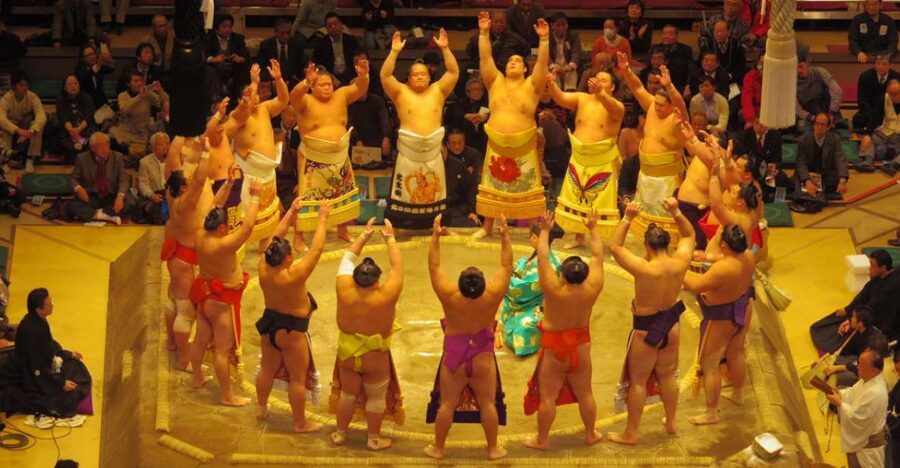
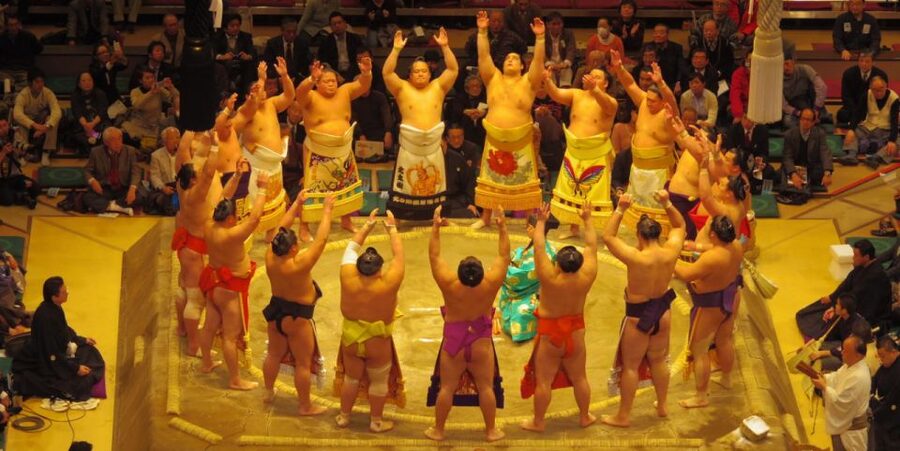
- See the formal ring-entering ceremonies: The Makuuchi ceremony is at 3:40 PM, with the Yokozuna ceremony at 3:55 PM.
- Learn how to follow the action: Your guide can explain rankings, winning techniques, rituals, wrestler identities, and crowd reactions.
- Choose your seat with care: 2F chair seats offer a good overall view, while 1F box seats give your party its own seating space.
- Plan for a busy meeting point: Several groups may gather near the station, so read your booking instructions for the correct meeting place, group color, and number.
- Expect a rare calendar opportunity: Tokyo hosts only limited tournament days each year, so dates may determine whether this experience fits your trip.
Why a Real Sumo Tournament Is Worth Your Afternoon
Sumo makes a strong first impression. The wrestlers are enormous, but the bout itself is not slow. After a long buildup of ceremony and concentration, two men may charge, twist, and force one another out of the ring in a few seconds.
That contrast is the appeal. You are not simply watching a strength contest. You are seeing a sport shaped by rank, ritual, discipline, and old customs. The ring purification, the salt thrown before a bout, the stamping, and the deliberate stare-down all matter. Without context, these moments can seem mysterious. With a guide beside you, they become part of the story.
This is a good choice if you want to see sumo as it is practiced in Japan, rather than attending a demonstration or a dinner show. The atmosphere comes from the local audience and the importance of the tournament itself. Depending on your date, you may even attend near the end of the 15-day competition, when the biggest matches carry extra tension.
The timing also makes sense for a Tokyo sightseeing day. You meet at 2:15 PM, see the most important ceremonies from 3:40 PM onward, and finish around 6:00 PM. You do not need to give up a full day, but you should keep the afternoon and early evening free.
Meeting at JR Ryogoku Station at 2:15 PM
The stated meeting point is the West Gate of JR Ryogoku Station. The exact point can vary by option, so your booking information matters. Several groups may assemble in the same area, and the check-in process can feel confusing if you arrive without the group color or number.
I would arrive early and keep your confirmation available. One useful advantage of meeting near the station is that you are not expected to find the stadium entrance alone. Your guide or entrance assistant helps direct you toward Ryogoku Kokugikan, which removes much of the stress from a first visit.
The entrance assistant option is more limited. Staff take you to the stadium, but they do not go inside with you. If you want explanations during the tournament, choose an option that includes the professional guide rather than simple entry assistance.
The activity ends back at the meeting point. Hotel pickup and drop-off are not included, so you need to make your own way to Ryogoku and back afterward.
Entering Ryogoku Kokugikan
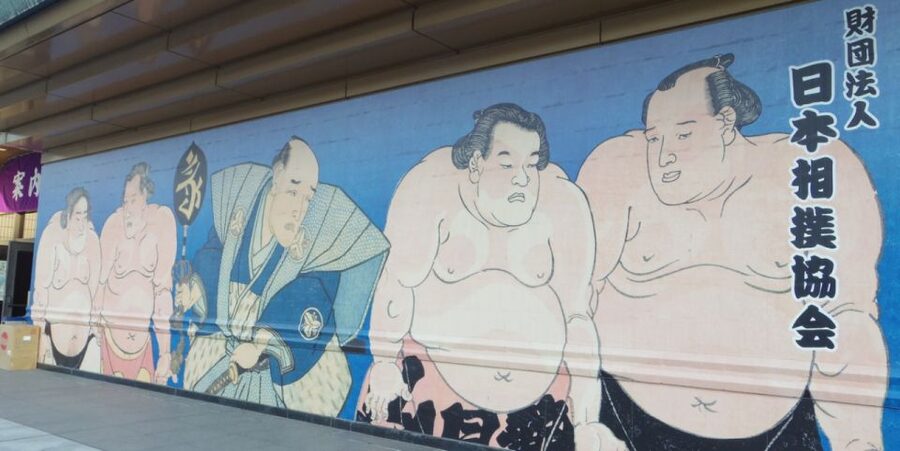
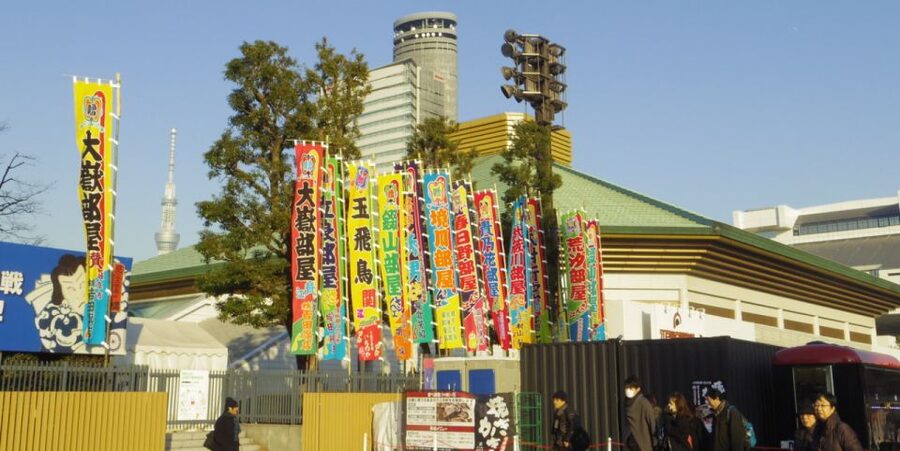
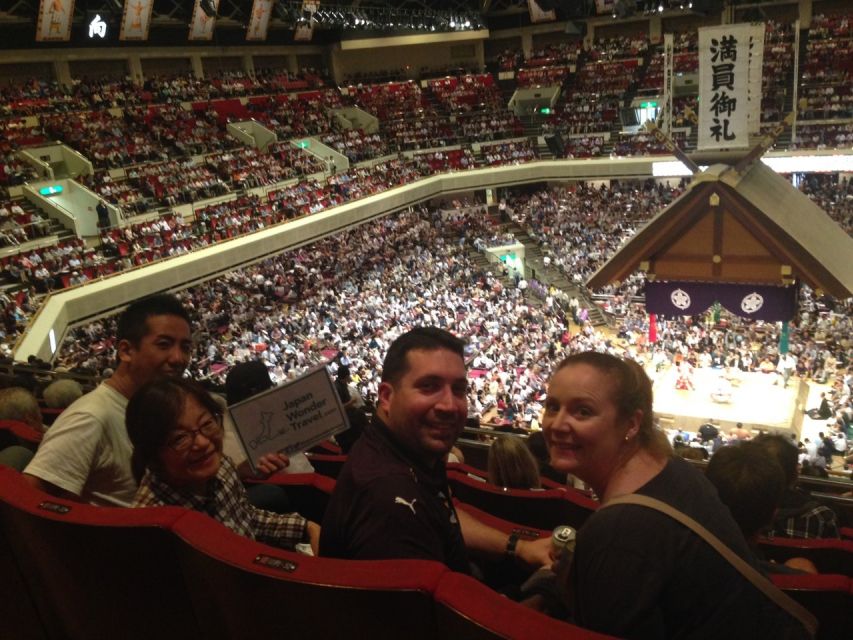
Ryogoku Kokugikan is the traditional home of Tokyo’s major sumo tournaments. The building is compact enough that even seats near the top can provide a workable view of the dohyo, or raised ring.
Your guide typically helps you enter, explains what you are seeing, and directs you to your seats. This is especially useful if you have never attended a Japanese sporting event. The arena has its own rhythm, and the first few minutes can otherwise be spent figuring out where to go and what is happening.
The seating choice affects the feel of the experience. Standard 2F chair seats are individual seats in the upper level. They give you a broad view of the ring and the surrounding crowd, but some people find them farther away than expected. The arena is not huge, so the bouts remain visible, but you may want binoculars if you like studying facial expressions or small details.
The 1F option uses box seats. These provide your group with its own seating space rather than sharing with other parties. That can be more comfortable and sociable, though the exact setup and price depend on the option selected.
You cannot select a specific seat in the 2F section. Your guide hands out the tickets on the day of the tournament, so the package does not let you choose a preferred row or side.
The Ceremonies at 3:40 and 3:55 PM
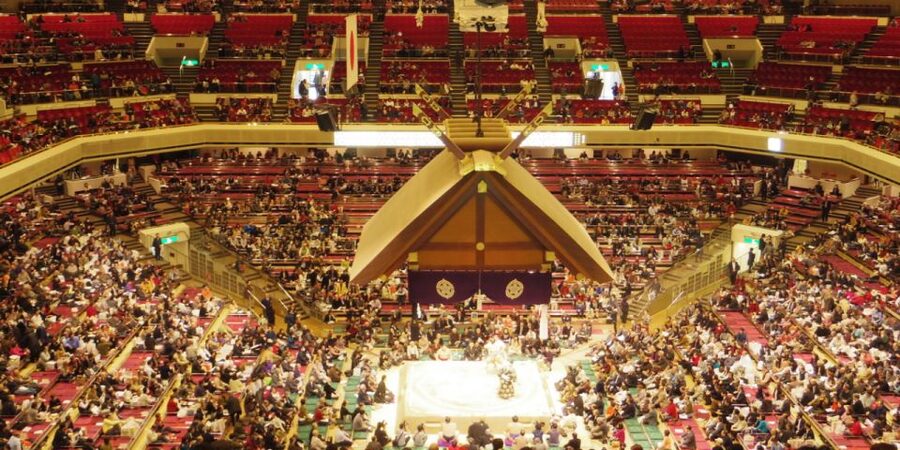
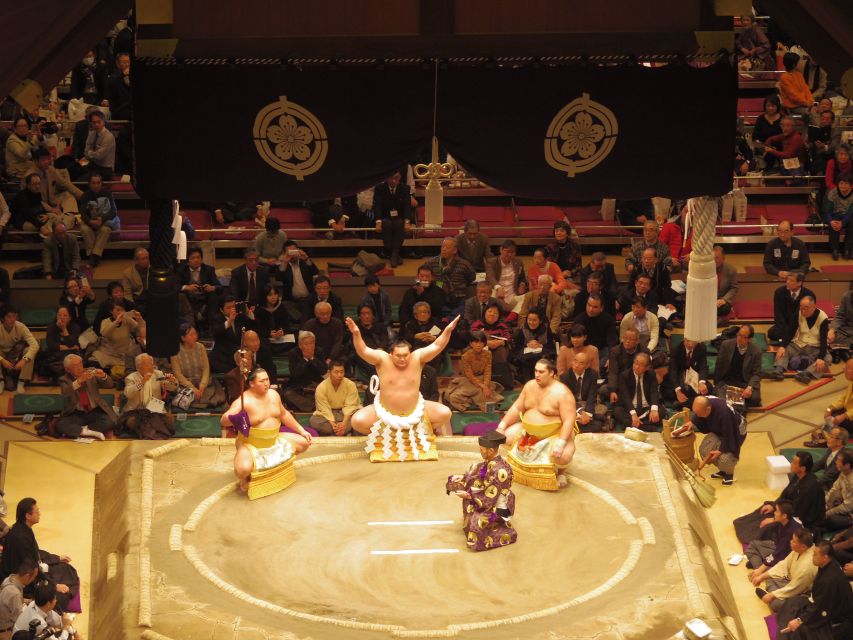
The Makuuchi Division is the top main division, and its wrestlers are the competitors most visitors hope to see. At 3:40 PM, they take part in the ring-entering ceremony.
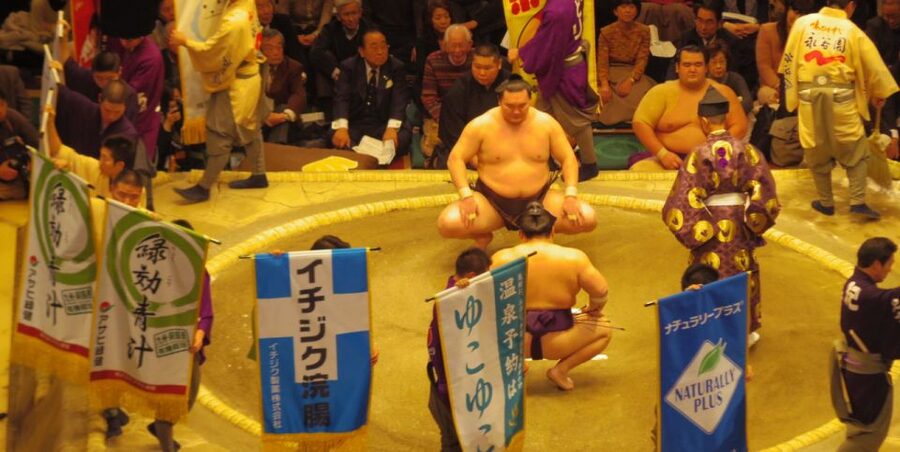
Five minutes later, at 3:55 PM, comes the Yokozuna ceremony. Yokozuna are the highest-ranked wrestlers in sumo, and their entrance has extra ceremony and presence. The wrestlers perform their formal movements while the audience watches closely.
These ceremonies are not filler before the real event. They show how sumo combines sport and ritual. The careful movements, costumes, order of appearance, and respect shown to the ring all reflect the structure of the sport.
A guide adds real value here. Guides including Mieko and Hiro have been praised for explaining why the rituals happen and what the different ranks mean. A guide may also point out the wrestlers, explain why some receive stronger crowd support, and help you understand the importance of sponsor banners around the ring.
Following the Makuuchi Bouts at 4:10 PM
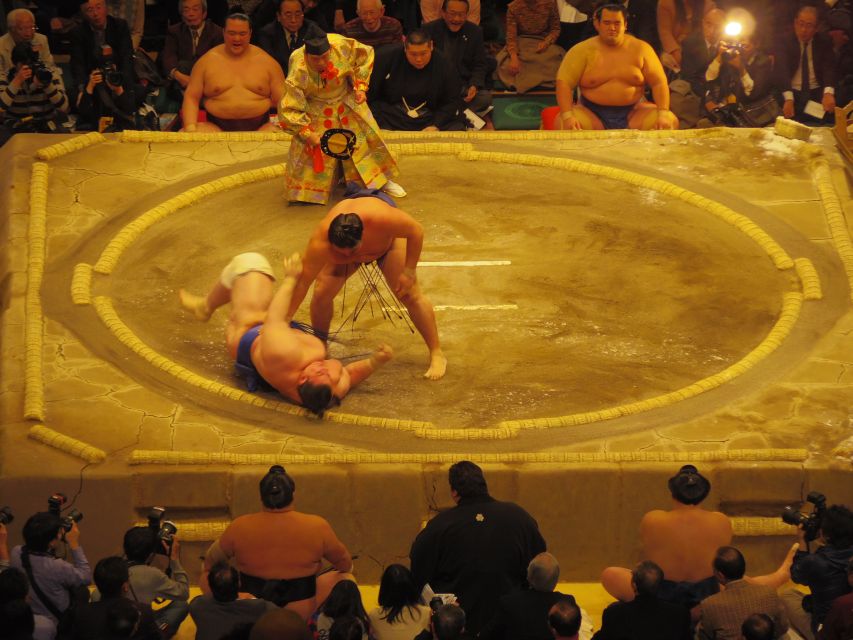
The Makuuchi matches start at 4:10 PM. The basic rule is simple: force your opponent out of the ring, or make any part of his body other than the soles of his feet touch the ground.
The tactics are less simple. Wrestlers use pushes, grips, throws, trips, and sudden shifts of balance. A bout can look like a slow test of strength before changing instantly. This fast finish is one reason the action feels different from Western professional wrestling.
You will see the results of years of training in the wrestlers’ stance, timing, and reactions. The wrestlers are not all trying to win in the same way. A guide can help you notice different techniques and explain why a wrestler with a certain rank or style is receiving attention.
A printed fight sheet can be useful. One guide, Mieko, prepared a page showing the day’s matchups and the wrestlers’ current positions. You may receive comparable information depending on your guide and selected option, but do not count on a specific handout unless it is promised with your booking.
The guide’s commentary is often most useful between bouts. You can ask about the rules, ranking system, wrestler names, or crowd response without needing to follow a constant stream of explanation. Guides such as Taka, Take, Naomi, Maddie, Michiko, and Yuko have been singled out for bringing enthusiasm and clear explanations to the afternoon.
Cheering With a Sumo Fan’s Eye
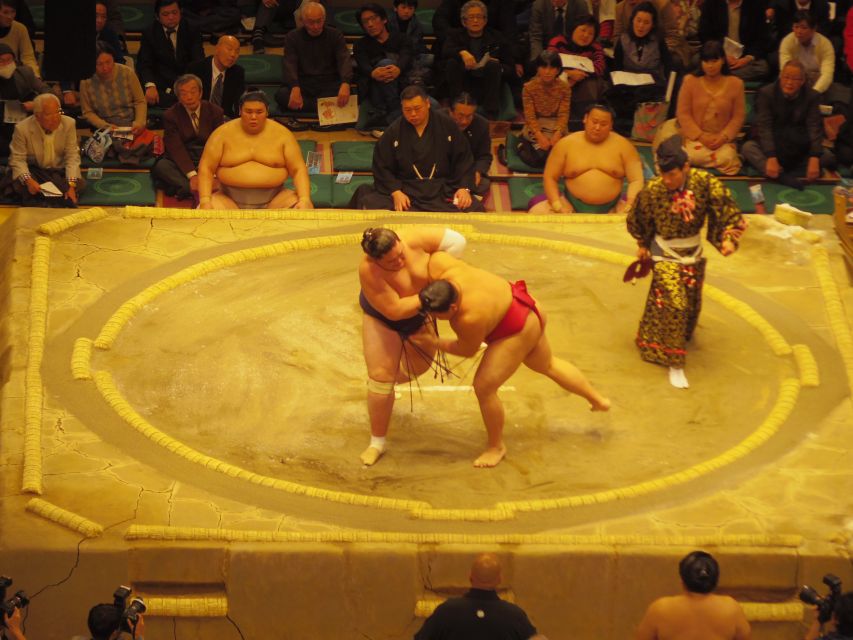
A sumo crowd is not just background noise. Fans follow individual wrestlers, react to a surprising move, and show strong interest in the final bouts. Once your guide suggests someone to support, the tournament becomes more personal.
Some options include a Sumo Fan Cheer Kit. This can help you join the atmosphere, especially if you are unsure how to participate. The kit is not included with every booking, so check the exact option before assuming you will receive one.
The guide may also explain why some wrestlers attract more sponsors or stronger reactions. That detail helps connect what you see around the ring with the wrestlers’ status and popularity.
I like this part of the tour because it gives you a simple way to move from watching to taking part. You do not need to understand every Japanese term. Pick a wrestler, learn a little about the matchup, and cheer when the bout begins.
Food, Lunch Options, and What to Bring
Food and drinks are not included in the standard experience. The arena has food and drinks available for purchase, and the prices have been described as reasonable. You should still plan ahead, since the schedule is long enough to cover much of the afternoon.
Some packages offer lunch, including a boxed meal or chanko nabe. Chanko nabe is the hot-pot style food associated with sumo wrestlers, and it can add a welcome local touch. But lunch is an option rather than a universal feature, and the description of what is included may not always be clear. Read the package details carefully.
If you have allergies or dietary restrictions, provide that information when booking or as soon as possible afterward for the lunch option. Do not assume a meal can be changed on the day.
Large luggage cannot be taken into the seating area. Leave bulky bags at your accommodation or make another storage plan before meeting the group. Baby strollers are not allowed, and the activity is not suitable for wheelchair users.
Children aged three and under can enter free, but they do not receive their own seat and must sit on an adult’s lap. Children aged four and older need their own tickets.
Is the $141 Price Good Value?
At $141 per person, this is not the cheapest way to spend an afternoon in Tokyo. You are paying more than the face value of a ticket, and the standard package may not include food or the cheer kit.
The value comes from access and ease. Tokyo’s tournament tickets can sell out quickly through the official site, making a reputable third-party option useful when you cannot secure seats directly. You also avoid the uncertainty of navigating the station, stadium, ticket process, and Japanese-language sumo customs alone.
For first-time visitors, the guide can make the markup worthwhile. The best guides do more than lead you to a chair. They explain the rankings, identify wrestlers, point out interesting matchups, and help you understand the formal parts of the afternoon. Several guides, including Mieko, Taka, Mia, Yuko, and Hiro, have been praised for their enthusiasm and ability to explain the sport clearly.
The calculation changes if you already understand sumo or have secured tickets yourself. In that case, the guided portion may feel less important, and a direct ticket could be better value. One option appears closer to ticket collection and escorting you to the entrance, with less active touring inside.
The 1F box-seat option should also be judged differently from the 2F chair option. A box gives your party its own space, while the chair ticket is a standard individual seat. Compare the price, lunch, and cheer-kit details rather than choosing based only on the headline cost.
Who Will Enjoy This Most?
I would recommend this experience to anyone visiting Tokyo during a tournament and seeing sumo for the first time. The guide gives you enough background to understand the action without turning the afternoon into a lecture.
Families can enjoy it too, provided children can manage the timing and the seating. Younger children have no separate seat if they are three or under, and the event may feel long for them.
It is also a good fit for solo visitors. A guide gives you someone to ask, and the crowd atmosphere makes the afternoon feel social even if you arrive alone.
You may want to skip the guided version if you are mainly seeking the lowest price or already know sumo well. You should also think twice if high seating is likely to bother you. The 2F view can be good, but the wrestlers will not feel close.
The experience works best when the tournament date is already a priority. Do not book it expecting a flexible daily attraction, since the major Tokyo tournaments occur only during limited periods. One guide explained that sumo tournaments account for about 90 days across the year, with roughly 45 of those days in Tokyo. That limited schedule is part of the appeal, but it requires planning around the dates.
Practical Booking Advice
Check the exact option before paying. Confirm all of the following:
- Whether you receive a 2F chair or 1F box seat
- Whether a professional guide remains with the group inside
- Whether lunch is included
- Whether the Sumo Fan Cheer Kit is included
- Where you must meet, since the point may vary
- Which group color and number apply to you
The experience can be canceled up to 24 hours in advance for a full refund, and you can reserve now and pay later. Those terms help if your Tokyo schedule is still shifting.
Allow time to reach JR Ryogoku Station before the 2:15 PM meeting. Keep your booking information accessible, especially if you will not have reliable internet at the station.
Should You Book the Sumo Tournament Tour?
Book it if you want to attend a genuine Tokyo tournament but cannot obtain official tickets, or if you want help making sense of the ceremony and bouts. The strongest part is not simply the seat. It is having someone like Taka, Mieko, Mia, Yuko, or Sho explain what you are seeing and encourage you to follow the competition.
Choose the 1F box option if personal space matters and the budget allows. Choose 2F chairs if you mainly want a clear view and an affordable route into a sold-out event. Either way, check the package details for lunch and the cheer kit.
For a rare, distinctly Japanese afternoon, this is a strong choice. Just arrive prepared for a high seat, a fixed schedule, and a ticket price that reflects the difficulty of getting into a Tokyo tournament.
FAQ
Where does the sumo tournament tour begin?
The usual meeting point is the West Gate of JR Ryogoku Station at 2:15 PM. The exact meeting point may vary by booking option, so check your confirmation carefully.
What time does the tournament finish?
The tournament portion finishes at about 6:00 PM. The Makuuchi Division bouts begin at 4:10 PM.
When are the sumo ceremonies held?
The Makuuchi ring-entering ceremony is scheduled for 3:40 PM. The Yokozuna ring-entering ceremony follows at 3:55 PM.
Are the seats on the first or second floor?
This depends on the option you choose. The standard option provides 2F chair seats. The 1F option provides box seats, and parties using a box have their own seating space.
Can I choose my exact seat?
No. For 2F chair seats, you cannot choose specific seats. Your guide hands you the ticket on the tour date.
Is food included?
Food and drinks are not included in the standard experience. Some booking options include lunch, so check the details of your selected package. If you choose lunch, provide allergy or dietary information when booking.
Can children attend?
Children aged three and under can enter free, but they do not receive their own seat and must sit on an adult’s lap. Children aged four and older need their own tickets.
Is the tour suitable for wheelchair users or guests with strollers?
The experience is not suitable for wheelchair users. Baby strollers are not allowed, and large luggage cannot be brought into the seating area.
Sumo Experiences, compared.
 ★ 4.8Tokyo: Sumo Show Experience with Chicken Hot Pot and a PhotoFrom $1032 hours
 ★ 4.8Tokyo: Sumo Show and Dining ExperienceFrom $7990 minutes - 2 hours
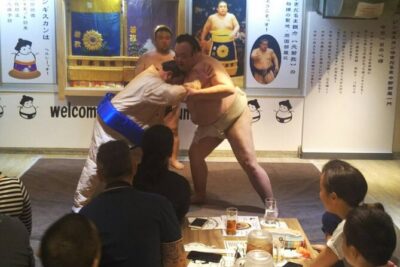 ★ 5.0the SUMO showFrom $89
 ★ 5.0Tokyo Shinjuku Sumo Show & Experience with PhotoFrom $79
 ★ 4.8Tokyo: Sumo Show and Experience in ShinjukuFrom $691h 30m
 ★ 5.0Authentic Sumo Experience in Tokyo: Enter the SanctuaryFrom $171